Why Are African Daisy Leaves Turning Yellow?
Discover why African daisy leaves turn yellow, from overwatering and poor drainage to nutrient deficiencies, pests, and heat stress, with practical solutions.
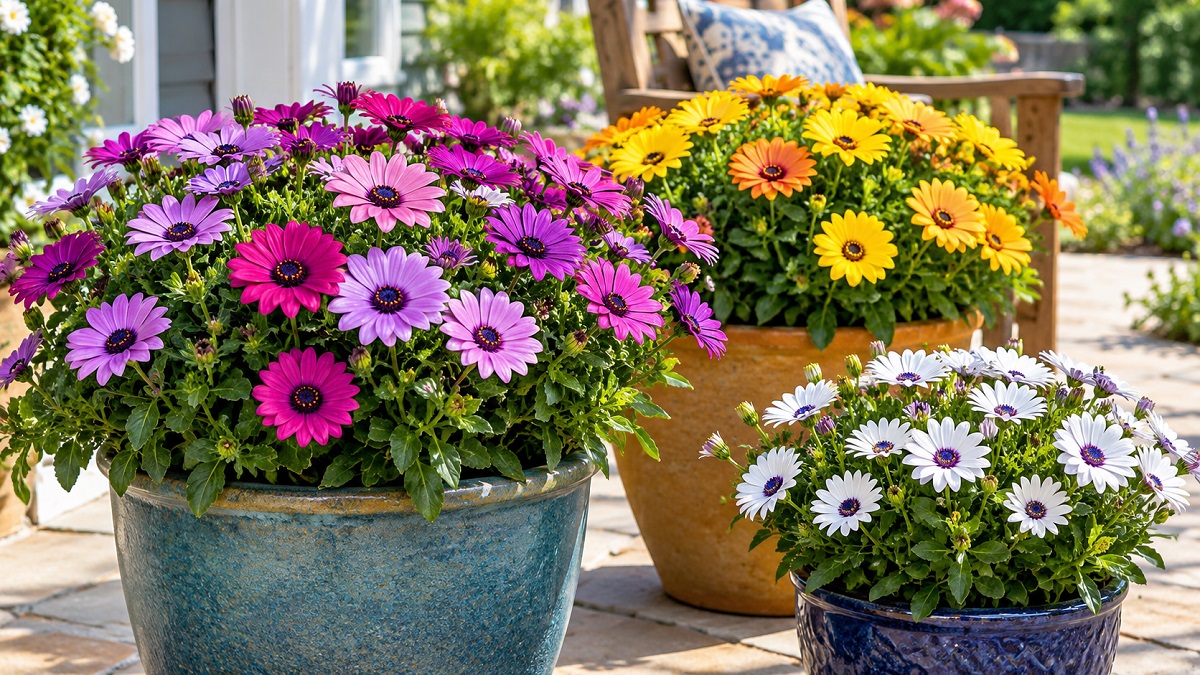
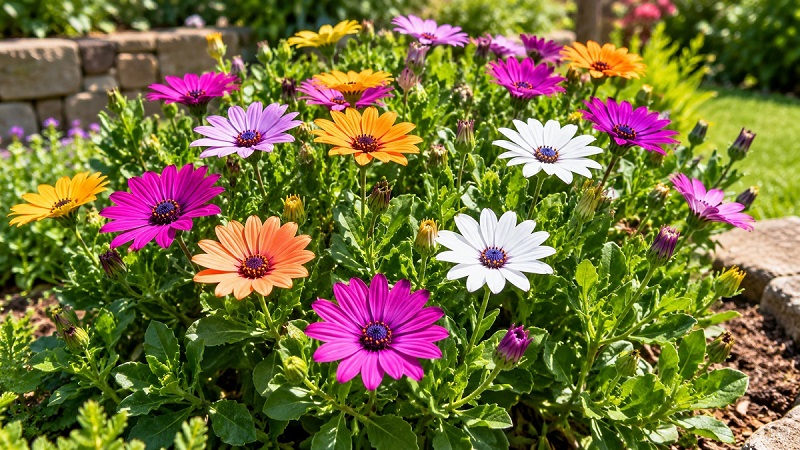
African daisies are an excellent choice for gardeners who want colorful flowers without dedicating an entire garden bed to flowering plants. Their daisy-like blooms come in shades of white, purple, pink, lavender, yellow, orange, and eye-catching combinations, making them easy to match with different outdoor spaces. In containers, they can brighten a balcony, frame an entrance, or provide a cheerful display beside a seating area.
The name African daisy commonly refers to plants in the genus Osteospermum, including numerous ornamental hybrids. Many varieties are compact and naturally bushy, while others develop spreading stems that soften the edges of pots and planters. Most perform best in a sunny position with a free-draining growing medium.
Growing them successfully in pots comes down to a few practical decisions: choosing the right container, preventing waterlogged roots, supplying adequate sunlight, and adjusting watering to the weather. With these basics in place, African daisies can provide a generous display of flowers through much of their growing season.
Best growing conditions: plenty of sunshine, good drainage, and consistent attention to moisture during hot weather.
Containers make African daisies especially convenient because you can move them to take advantage of changing light, shelter them from heavy rain, and bring frost-sensitive varieties into a protected area when necessary. This flexibility is valuable for gardeners working with balconies, paved courtyards, small patios, or limited planting space.
Arrange pots along a sunny walkway, group several containers near a doorway, or place a flowering planter beside outdoor furniture. Compact varieties work well where space is limited, while trailing selections can spill attractively over the edges of wider pots.
A container lets you provide a light, airy potting mix even if the soil in your garden is heavy or poorly drained. You can also monitor moisture more closely and adjust the plant's position during prolonged rain or periods of intense heat.
White and lavender flowers suit restrained, elegant displays. Purple and pink varieties add stronger color, while yellow and orange cultivars bring warmth to a patio. Mixing complementary colors can create a lively arrangement without requiring a large garden.
African daisies are valued for their open, daisy-shaped flower heads and attractive foliage. Depending on the species and cultivar, plants may form tidy mounds, develop upright stems, or spread outward. Many popular hybrids grow approximately 8–18 inches tall, although mature size varies considerably.
Their flowers are often most open in bright sunlight. On overcast days or in low light, some varieties close their petals partially or completely. This is a normal response and does not necessarily indicate a problem with the plant.
Flowering commonly begins in spring and can continue through summer and into autumn in suitable conditions. In regions with mild winters, certain varieties may flower for longer periods. In very hot weather, however, flowering may slow even when the plant remains healthy.
Many African daisies are short-lived perennials or tender perennials, but gardeners frequently grow them as seasonal bedding plants. Whether a plant returns the following year depends on its variety, local climate, drainage, and winter protection.
The best container provides enough room for the roots while allowing excess water to escape freely. African daisies dislike persistently waterlogged growing conditions, so drainage should take priority over decorative appearance.
These are general starting points rather than strict rules. Check the mature size stated on the plant label, particularly when selecting vigorous or trailing varieties. A larger pot holds more moisture, so its growing medium must still drain properly.
| Container Type | Advantages | Things to Consider |
|---|---|---|
| Terracotta | Breathable and attractive; excess moisture can evaporate through the sides. | Dries quickly in hot, windy conditions. |
| Plastic | Lightweight, affordable, and slower to lose moisture. | Can heat up in strong sunlight, depending on color and placement. |
| Glazed ceramic | Decorative, sturdy, and available in many colors. | Heavy; drainage holes are essential. |
| Fabric grow bag | Provides good aeration and drainage. | May dry rapidly and can be less tidy for formal displays. |
| Wooden planter | Natural appearance and useful for larger arrangements. | Needs suitable drainage and weather-resistant construction. |
Before planting, inspect the bottom of the pot. Several unobstructed drainage holes are preferable to a container that holds standing water. If you use a decorative outer pot, empty any water collected inside it after watering.
African daisies grow best in a potting medium that retains some moisture but does not remain saturated. Ordinary garden soil is usually a poor choice for containers because it may become compacted, restrict airflow, and drain inconsistently.
For a general-purpose container mix, combine the following ingredients by volume:
A good commercial potting mix formulated for flowering container plants is also suitable. If your mix already drains well, additional amendments may not be necessary.
Avoid adding excessive compost or heavy garden soil, both of which can make a container too moisture-retentive. Do not place a layer of gravel at the bottom as a substitute for drainage holes; use a suitable growing medium throughout the pot instead.
Most commonly grown African daisy cultivars tolerate a reasonably broad soil pH range. For a simple container planting, a good-quality potting mix formulated for general flowering plants is usually sufficient. Consistent drainage, adequate sunlight, and sensible watering are more important than trying to achieve an exact pH number.
Planting is straightforward when the container and growing medium are prepared first. Healthy nursery plants establish relatively quickly in suitable conditions.
For mixed containers, leave enough room between plants for their mature foliage. Crowded plants compete for water and nutrients and may develop poor airflow around their leaves.
In frost-prone climates, plant outdoors after the risk of damaging frost has passed. In warm regions, establish plants during a period when they can settle in without prolonged extreme heat. A mild spell is often easier for new transplants than the hottest part of the season.
Bright light is one of the most important factors in growing African daisies successfully. A position receiving around 6–8 hours of direct sunlight is a useful target for many varieties, particularly where temperatures are moderate.
If the leaves remain healthy but the plant produces few flowers or develops long, weak stems, check whether it is receiving enough light. Gradually move it toward a sunnier location rather than making a sudden change during extreme heat.
In very hot climates, strong afternoon sun combined with heat radiating from a balcony floor can stress plants even when they are normally considered sun-loving. Morning sun with some protection from the most intense afternoon heat may produce better results during the hottest period.
Container plants dry out faster than plants growing in the ground, especially in small pots, terracotta containers, and exposed balconies. African daisies can tolerate some dryness once established, but prolonged drought may reduce flowering and cause leaves to wilt.
Do not rely on a rigid watering schedule. A small pot exposed to hot sun may need water much more frequently than a large container in mild weather. Check plants daily during hot periods, but water according to soil moisture rather than automatically soaking them every day.
| Symptom | Possible Cause | What to Do |
|---|---|---|
| Wilting with dry potting mix | Insufficient water or rapid moisture loss. | Water thoroughly and check the mix again after it drains. |
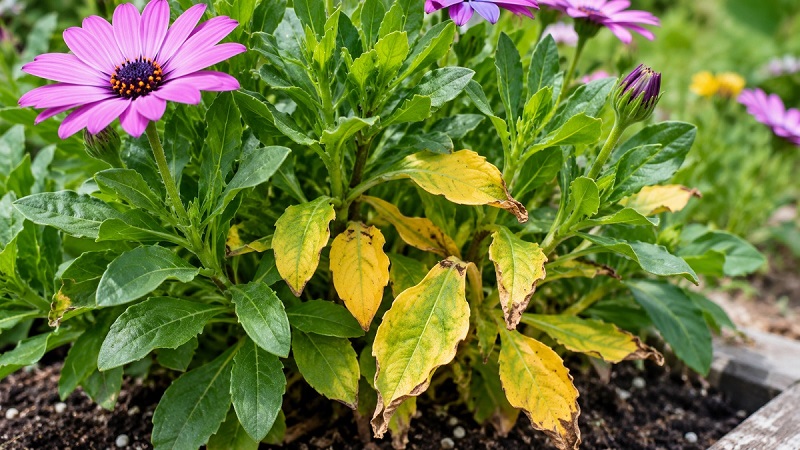
| Yellowing leaves with wet soil | Overwatering or poor drainage. | Allow excess water to escape and correct the drainage problem. |
| Brown, crispy leaf edges | Drought, hot wind, or excessive heat. | Check moisture and protect the pot from harsh reflected heat. |
| Soft stems or darkened roots | Possible root or stem rot. | Inspect the root system and remove rotted material if the plant can be saved. |
Water near the soil surface where practical. Avoid repeatedly wetting the foliage late in the day, especially when air circulation is poor. If a very dry potting mix has become water-repellent, moisten it gradually so the root ball can absorb water evenly.
African daisies need nutrients to produce fresh growth and flowers, but heavy feeding is unnecessary. Too much nitrogen can encourage leafy growth at the expense of flowering, particularly when the plant already receives ample nutrients from its potting mix.
A useful starting approach is to use a controlled-release fertilizer at planting, if appropriate for the potting mix, or feed periodically with a diluted liquid product during active growth. The exact interval depends on the fertilizer, plant size, watering frequency, and growing conditions.
Because frequent watering can wash nutrients from containers, occasional feeding may be needed during a long flowering season. However, do not fertilize a severely wilted plant or a plant with damaged roots until it has recovered.
Healthy African daisies can produce flowers over an extended period when light, moisture, and nutrients are well balanced. Flowering is not always continuous, however. Some cultivars slow down during very hot weather or when light levels fall.
Some newer cultivars are selected for improved heat tolerance or extended flowering. When purchasing plants, look for variety descriptions that match your local climate instead of assuming every African daisy will behave identically.
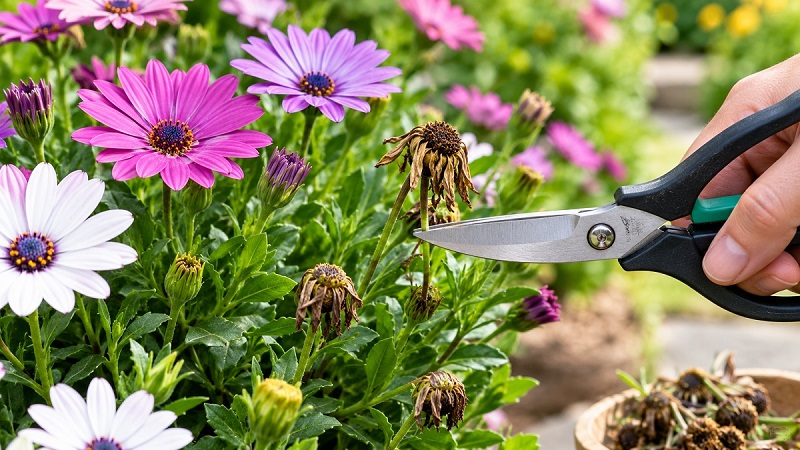
African daisies generally need only light maintenance. Removing faded flower heads and tidying untidy stems helps keep the container looking attractive without the need for elaborate pruning.
If stems become long, sparse, or untidy, lightly shorten them to encourage a neater shape. Avoid removing too much foliage at once, especially during hot weather or when the plant is already stressed. Correct inadequate sunlight or inconsistent watering as well, since trimming alone will not fix those problems.
For perennial plants that have survived the growing season, remove dead material and tidy the plant when conditions are favorable for new growth. Pruning timing should reflect the variety and local climate; avoid severe pruning immediately before damaging cold weather.
African daisies can serve as the main feature in a pot or as one component of a larger arrangement. Choose companions that enjoy similar sunlight and drainage, and avoid filling every available space with plants that have very different watering requirements.
A single compact African daisy in a decorative container creates a simple display for a doorstep, small balcony, or sunny windowside outdoors. Repeat the same color in several pots for a coordinated arrangement, or use different colors to create a more informal look.
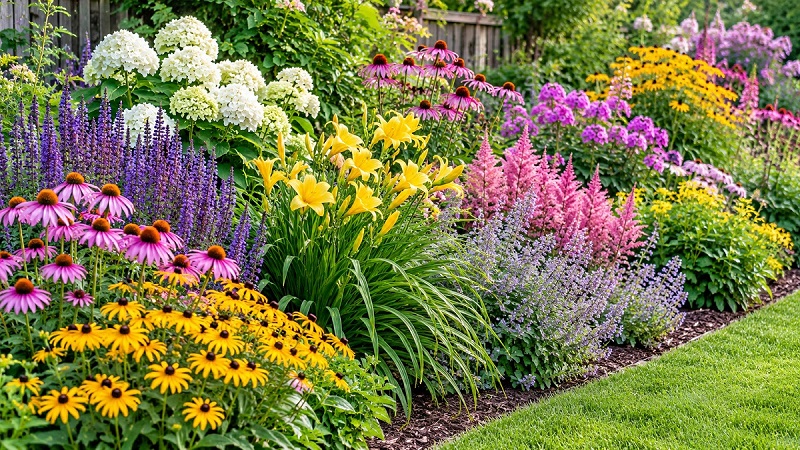
Combine African daisies with compatible sun-loving plants for contrasting foliage and flower shapes. Suitable options, depending on local conditions and cultivar needs, may include:
Give every plant enough space to reach its expected size. A newly planted combination may look sparse at first, but allowing room for mature growth helps prevent overcrowding and reduces competition for water.
Compact or spreading varieties can be used in wide window boxes and suitable hanging baskets. Choose a container with reliable drainage and enough growing medium to prevent excessively rapid drying. Hanging containers exposed to wind and direct sun may need particularly frequent moisture checks.
Warm weather can extend the outdoor gardening season, but prolonged high temperatures may reduce flowering in some African daisy varieties. Pots can become especially hot when placed on concrete, against sun-heated walls, or in exposed afternoon sunlight.
In hot parts of India and other warm regions, the ideal planting window depends on local temperature, rainfall, and seasonal conditions. A mild period with good light and manageable heat is generally preferable to planting a newly purchased daisy during the most intense part of summer.
Do not assume that a sun-loving plant must remain in direct afternoon sunlight under every climate. Observe its response and adjust placement if the leaves repeatedly wilt in hot conditions despite adequate soil moisture.
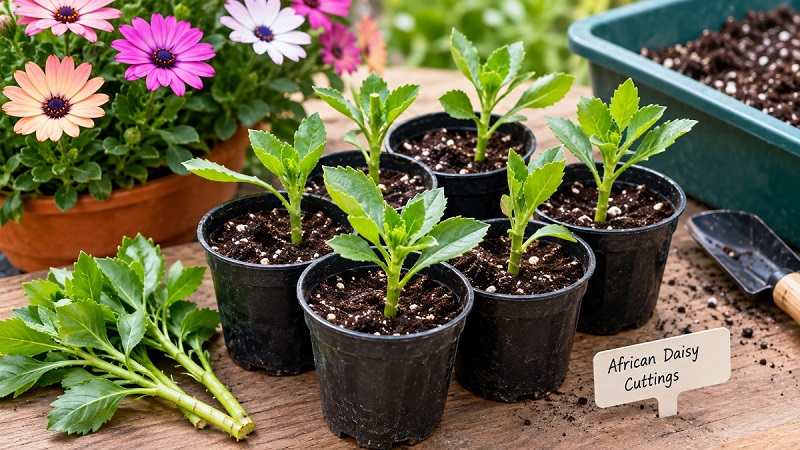
You can grow additional African daisies from seed or, for suitable varieties, from stem cuttings. The best method depends on the plant you own and whether you want to preserve a particular cultivar's flower color and growth habit.
Seed-grown plants may differ from named hybrids, particularly in flower color or other characteristics. If consistency matters, check whether the selected variety is intended to come true from seed.
Many suitable Osteospermum varieties can be propagated from healthy, non-flowering shoots. Softwood or semi-hardwood cuttings are commonly used, with timing depending on the growth stage and local conditions.
Avoid leaving propagation trays waterlogged or enclosed in stagnant, humid conditions. Good hygiene and airflow help reduce the risk of stem rot.
Most problems can be traced to unsuitable moisture levels, inadequate light, temperature stress, or pests. Check the growing conditions before applying treatments, because several different issues can produce similar symptoms.
| Problem | Likely Cause | Recommended Action |
|---|---|---|
| Few or no flowers | Insufficient light, excessive nitrogen, or heat stress. | Improve light where appropriate, review fertilizer use, and manage extreme heat. |
| Leggy stems | Shade, overcrowding, or uneven growth. | Move toward brighter light gradually and trim lightly if needed. |
| Wilting in hot weather | Rapid water loss or excessive root-zone heat. | Check the mix, water when needed, and reduce harsh reflected heat. |
| Yellow leaves | Overwatering, poor drainage, nutrient issues, or natural aging. | Inspect moisture and roots before deciding whether fertilizer is necessary. |
| Root or stem rot | Persistently wet soil, poor airflow, or disease. | Correct drainage, remove badly affected material, and avoid excessive watering. |
| Aphids | Small sap-feeding insects on young shoots or leaf undersides. | Inspect regularly and dislodge small infestations with water; use an appropriate labeled treatment if needed. |
| Gray mold or fuzzy growth | Prolonged leaf wetness and humid, poorly ventilated conditions. | Remove affected debris, improve airflow, and avoid wetting foliage unnecessarily. |
| Flowers close on cloudy days | Normal light-responsive behavior in many varieties. | Observe the plant in brighter conditions before assuming it is unhealthy. |
Examine new growth, flower buds, and the undersides of leaves at regular intervals. Isolate a heavily infested plant when practical, remove badly affected material, and avoid applying pesticides unnecessarily. If a treatment is required, use a product labeled for the pest and ornamental plants, following its safety instructions and any pollinator precautions.
Healthy roots are particularly important for container-grown African daisies. If a plant continues to decline despite reasonable watering, gently inspect the root ball for darkened, soft, or foul-smelling roots. A persistently wet potting mix is a warning sign that drainage or watering practices need attention.
Adjust your care routine to the plant's growth and local weather rather than following the same schedule throughout the year. African daisies can have different flowering periods in cool, mild, and warm climates.
| Season or Stage | Main Tasks | What to Watch For |
|---|---|---|
| Planting and establishment | Choose a suitable pot, use fresh potting mix, and water the root ball thoroughly. | Transplant stress and rapid drying. |
| Active growth | Provide adequate sunlight, monitor moisture, and begin appropriate feeding. | Weak stems, aphids, and nutrient imbalance. |
| Peak flowering | Deadhead regularly and water according to container moisture. | Heat stress and reduced flowering during very hot weather. |
| Heavy rain or monsoon | Keep drainage holes open and shelter pots when the medium stays saturated. | Root rot and fungal problems. |
| Cool weather | Reduce watering as growth slows and protect tender varieties from frost. | Cold damage and excess winter moisture. |
| Renewal or replacement | Tidy surviving plants, take suitable cuttings, or replace declining seasonal specimens. | Whether the variety and local climate support overwintering. |
Use this summary as a practical reference when selecting a plant and planning its container. Individual cultivars may differ in mature size, cold tolerance, heat tolerance, and flowering behavior.
| Characteristic | Details |
|---|---|
| Common Name | African daisy, Cape daisy |
| Botanical Group | Osteospermum species and ornamental hybrids |
| Plant Family | Asteraceae |
| Plant Type | Flowering perennial or tender perennial; often grown as an annual |
| Native Range | Primarily southern Africa, depending on the species |
| Typical Mature Height | Approximately 8–18 inches for many compact container cultivars; some grow larger |
| Growth Habit | Mounding, bushy, upright, or spreading, depending on variety |
| Flower Colors | White, pink, lavender, purple, yellow, orange, and bicolors |
| Flowering Season | Often spring through autumn under suitable conditions |
| Sunlight | Full sun; some afternoon protection may help in extreme heat |
| Soil Requirements | Fertile or moderately fertile, porous, well-drained potting mix |
| Watering | Water thoroughly when the upper layer begins to dry; avoid standing water |
| Container Size | About 8–12 inches for one compact plant, adjusted for cultivar size |
| Fertilizing | Moderate feeding during active growth, following product directions |
| Pruning | Deadhead faded flowers and trim untidy stems as needed |
| Propagation | Seed or stem cuttings, depending on cultivar |
| Common Problems | Aphids, root rot, gray mold, drought stress, and reduced flowering in excessive heat |
| Container Uses | Patio pots, balcony planters, window boxes, and suitable hanging baskets |
Yes. Many African daisy varieties grow very well in containers. Choose a pot with drainage holes, use a free-draining potting mix, and provide sufficient sunlight. Compact cultivars are particularly convenient for balconies and small patios.
Around 6–8 hours of direct sunlight is a useful target for many varieties. In very hot climates, some protection from intense afternoon sun may help prevent stress and maintain flowering.
Check the potting mix regularly and water when the upper 1–2 inches begin to dry. Small pots and containers exposed to hot winds may need much more frequent watering than large pots in cool weather. Always allow excess water to drain away.
Insufficient sunlight, excessive nitrogen, inconsistent watering, and extreme heat can all reduce flowering. Review the growing conditions before adding fertilizer, and remember that some varieties naturally flower less during very hot weather.
Not necessarily. Many varieties flower from spring through autumn in suitable climates, while others may bloom for longer in mild conditions. Temperature, sunlight, and cultivar selection influence the flowering period.
Some varieties tolerate warm weather, but prolonged extreme heat can slow flowering and stress container-grown plants. Use a suitably sized pot, monitor moisture closely, reduce reflected heat, and choose a heat-tolerant cultivar where possible.
This depends on the species, cultivar, and climate. Many are tender perennials but are grown as annuals in areas where winter conditions are unsuitable. Some can survive for several seasons in mild climates with suitable care.
Yes, removing faded flowers keeps plants tidy and may encourage additional blooms. Cut the flower stem back to a healthy leaf or branching point using clean scissors.
A balanced fertilizer or one formulated for flowering container plants is generally suitable. Follow the manufacturer's directions and avoid excessive nitrogen, which can promote leafy growth at the expense of flowers.
Yes, compact and spreading varieties can work well in hanging baskets. Use a container with good drainage and enough potting mix to support the roots. Because hanging baskets often dry quickly, check moisture frequently in warm or windy weather.
Some varieties can overwinter in mild climates, but frost-sensitive plants may need to be moved to a protected location. Keep the potting mix from remaining wet during cold weather, and check the hardiness of your particular cultivar before leaving it outdoors.
Growing African daisies in containers is a rewarding way to bring bright, daisy-like flowers to patios, balconies, and other sunny spaces. The most reliable results come from choosing a suitable variety, providing a well-drained potting mix, and giving the plant enough light without exposing it to unnecessary heat stress.
Pay attention to soil moisture instead of watering by habit, feed moderately during active growth, and remove faded flowers to keep the display looking fresh. With the right balance of light, water, and drainage, these cheerful plants can provide an impressive container display throughout much of their flowering season.
Continue exploring our gardening guides with more plant profiles, growing tips, and practical advice for creating a healthy, productive garden.