Compost in Gardening: The Complete Guide to Making and Using Organic Compost
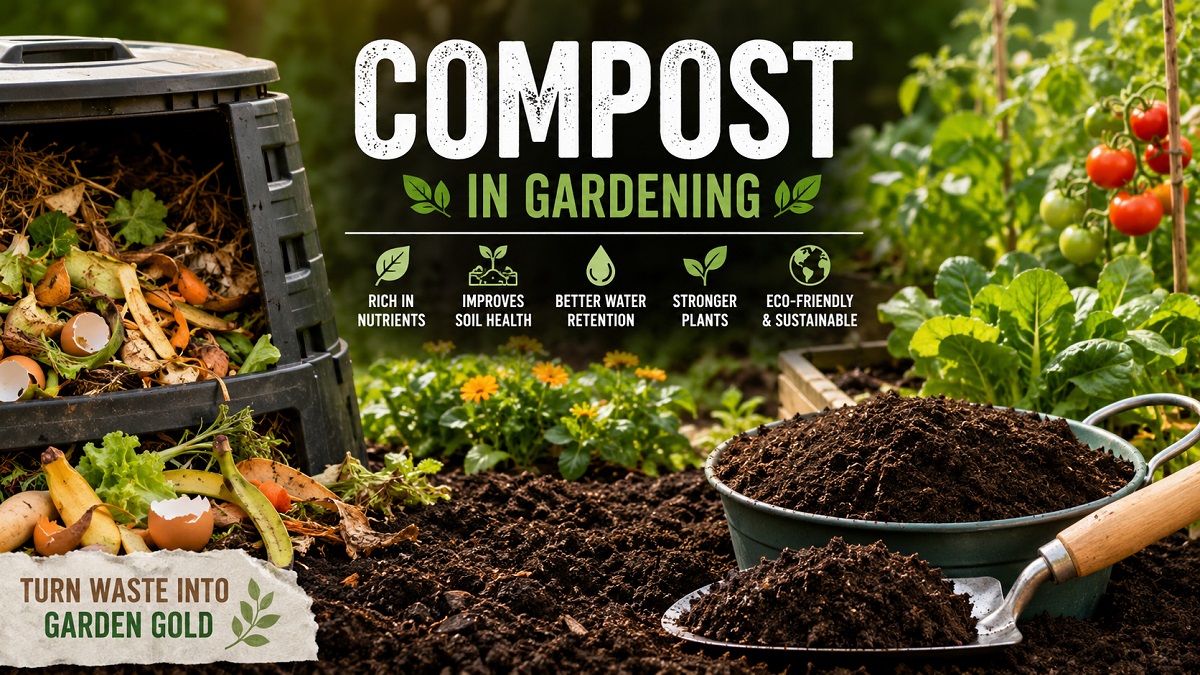
Introduction: The Black Gold of Gardening
Every seasoned gardener shares a single, poorly kept secret: spectacular harvests and breathtaking blooms do not begin with synthetic chemical bottles. They begin beneath the surface, deep within the living matrix of the soil. Compost, frequently and affectionately termed "black gold" by agricultural communities worldwide, stands as the most definitive foundation for ecological gardening success.
At its core, compost is decomposed organic matter. It represents nature's highly sophisticated recycling program, converting fallen leaves, dead wood, discarded crop remnants, and kitchen scraps into a stable, nutrient-dense humus. When introduced into garden environments, it fundamentally modifies the physical, chemical, and biological architecture of the soil, ensuring plants survive and thrive spectacularly across changing seasons.
Whether you manage a sprawling backyard vegetable farm, cultivate fragile native ornamental perennials, or maintain a tight array of raised container beds on an urban balcony, understanding how to generate, choose, and apply compost is an essential horticultural superpower. This extensive operational guide breaks down every critical facet of composting so you can maximize your garden's biological productivity.
The Science of Decomposition
Composting isn't a modern human invention; it is a fundamental planetary cycle driven by an astonishing army of microscopic and macroscopic organisms. When you stack organic materials into a heap, you are essentially engineering an optimal biological incubator for thousands of local decomposers.
The Microbiological Engine
The true heavy lifting within a compost pile is executed by invisible bacteria and fungi. These organisms process raw botanical tissues using specific enzyme secretions, absorbing vital sugars and leaving structurally stable cellular frameworks behind. The biological workflow occurs across three highly distinct, temperature-dependent phases:
- The Psychrophilic and Mesophilic Phase (20°C to 40°C): Initially, common ambient microorganisms colonize the freshly collected raw scraps. They break down easily accessible, soluble compounds like simple sugars, amino acids, and starches. As their metabolic activity intensifies, they emit heat as a byproduct, raising the internal pile temperature.
- The Thermophilic Phase (45°C to 65°C): As internal temperatures climb, specialized heat-loving bacteria take over. These high-energy organisms rapidly process complex compounds like proteins, fats, cellulose, and structural hemicelluloses. This sustained high-temperature window is critically important because it destroys pathogenic organisms, weed seeds, and invasive crop roots.
- The Maturation and Curing Phase: As easily digestible food sources dwindle, the core temperature naturally drops back to match ambient levels. Fungi and actinomycetes settle back in to process highly resilient structural components like lignin. This slow curing process stabilizes volatile elements into highly complex humic acids that will not damage sensitive plant roots.
Macro-Decomposers: The Physical Shredders
As the pile temperature stabilizes during the curing cycle, larger soil life moves in. Earthworms, millipedes, sowbugs, and predatory mites act as mechanical shredders, chewing through dense fibers, thoroughly mixing diverse strata, and depositing nutrient-dense castings that significantly diversify the pile's structural integrity.
The Ingredients: C:N Balancing Act
To keep the microscopic engines running efficiently, you must feed them a carefully calibrated diet. Every piece of organic matter contains carbon and nitrogen, but successful composting requires balancing the relative proportions of these two primary components. This balance is technically calculated as the Carbon-to-Nitrogen (C:N) ratio.
The absolute biological sweet spot for a rapid, odor-free compost pile is an overall initial C:N ratio of approximately 30:1. In plain terms, this means providing roughly 30 parts of structural carbon for every single part of rich, active nitrogen. In practical daily gardening, we categorize these inputs into two accessible color codes: "Browns" (Carbon-rich structural components) and "Greens" (Nitrogen-rich metabolic fuels).
| Material Category | Primary Source Examples | C:N Ratio Type | Function / Benefit |
|---|---|---|---|
| Browns (Carbon) | Autumn Leaves, Straw, Woodchips, Cardboard, Sawdust | High (60:1 up to 400:1) | Provides structural aeration, absorbs moisture, fuels microbes |
| Greens (Nitrogen) | Kitchen Vegetable Scraps, Coffee Grounds, Fresh Grass Clippings | Low (10:1 up to 20:1) | Provides crude protein for rapid microbial cellular replication |
| Strictly Prohibited | Meat, Dairy, Pet Waste, Diseased Foliage, Glossy Colored Inks | N/A | Attracts unwanted vermin, spreads dangerous pathogens, toxic chemicals |
The Art of Laying the Foundations
If you feed a pile exclusively green materials, it will rapidly deplete oxygen and collapse into a foul-smelling, anaerobic slime. Conversely, if you load a pile solely with brown leaves and wood residues, it will remain inert for years due to a lack of nitrogen fuel. Achieving the perfect blend ensures rapid, clean decomposition.
Composting Methods and Systems
Every garden scale, geographic climate zone, and personal physical capacity aligns with a specific composting system. There is no singular correct layout; rather, you choose the method that seamlessly blends into your existing routine.
1. Traditional Backyard Hot Composting (The Berkley Method)
This active strategy involves gathering enough material to build a substantial pile all at once, ideally measuring at least 1 cubic meter (3ft x 3ft x 3ft). By alternating distinct, thick layers of browns and greens and committing to physical aeration via turning every few days, you can create rich, finished humus in as little as 18 to 21 days.
2. Cold or Passive Composting
The perfect configuration for laid-back growers. You simply erect an open enclosure or choose a discreet corner of your yard and continually toss in yard wastes and kitchen items as they become available. Because you rarely turn the mass, decomposition proceeds slowly through natural weathering patterns, taking anywhere from nine months to two full years to reach readiness.
3. Tumbler Systems
Enclosed, rotating plastic barrels mounted on elevated framing axes are ideal for tightly packed urban landscapes or suburban yards sensitive to aesthetic neatness. They provide exceptional rodent exclusion and are simple to spin weekly. However, they require careful monitoring of moisture levels since they lack direct contact with natural ground soil biology.
4. Vermicomposting (Worm Farming)
Utilizing specialized surface-dwelling red wiggler earthworms (Eisenia fetida) inside compact, ventilated indoor boxes allows you to process intensive kitchen food wastes cleanly year-round. The resulting worm castings represent an extraordinarily potent organic bio-stimulant packed with specialized growth hormones.
How to Apply Compost in the Garden
Once your compost pile transforms into a uniform, dark, sweet-smelling substance that crumbles easily between your fingers, it is ready to work its magic. Here are the most effective ways to apply it:
Top-Dressing and Mulching
Distribute a clean layer measuring 1 to 2 inches across your active perennial borders, around orchard tree baselines, and across vegetable growing rows before every active seasonal planting window. This structural barrier suppresses weed germination, insulates roots against dramatic summer temperature spikes, and slowly drips nutrients downward during rain events.
Amending New Growing Beds
When developing pristine garden plots out of degraded lawns or heavy native clay, spread up to 4 inches of mature compost evenly over the soil surface. Gently integrate the organic matter down into the top 6 inches of the existing earth using a broadfork or garden fork to permanently improve drainage, texture, and aeration.
Custom Potting Soil Mixes
Ditch expensive, non-renewable commercial peat-based container mixes. Combine equal volumetric parts of your homemade compost, washed coarse river sand or perlite, and clean garden loam to create a well-draining potting soil that supports strong container root development.
Brewing Rich Compost Tea
Steep a cheesecloth sack full of highly mature compost inside a bucket of aerated water for 24 to 48 hours. The resulting dark, microbial liquid can be sprayed directly onto plant leaves as a foliar shield against fungal diseases or poured directly at root bases as a rapid nutritional boost.
Troubleshooting Common Composting Issues
Even seasoned horticulturists occasionally run into issues with their compost piles. Fortunately, diagnosing and fixing a problematic compost pile is remarkably straightforward once you understand what the microbes are trying to tell you.
Issue: The Pile Has a Bad Odor (Rotten Egg or Ammonia Smell)
This is a classic symptom of anaerobic decomposition. It means the pile is either too wet, packed too tight, or contains way too many green materials. Fix this by turning the pile thoroughly to introduce fresh oxygen, and mixing in plenty of dry, absorbent browns like shredded cardboard or dry autumn leaves to restore balance.
Issue: The Pile Isn't Heating Up
If your compost pile is static and showing no signs of life, it's usually due to a lack of moisture or a lack of nitrogen fuel. Check the moisture level first—it should feel like a wrung-out sponge. If it's dry, water the pile thoroughly while turning it. If it's damp but still cold, toss in some nitrogen-rich greens like fresh grass clippings, blood meal, or kitchen scraps to jumpstart the microbes.
Issue: Pests and Rodents are Rummaging Through the Pile
Unwanted visitors are almost always drawn in by improperly managed food waste. Never add meat, dairy, fats, or oils to an open backyard compost pile. If you're adding fresh kitchen scraps, make sure to bury them deep within the center of the pile and cover them completely with a thick layer of dry leaves or straw to mask the scent.