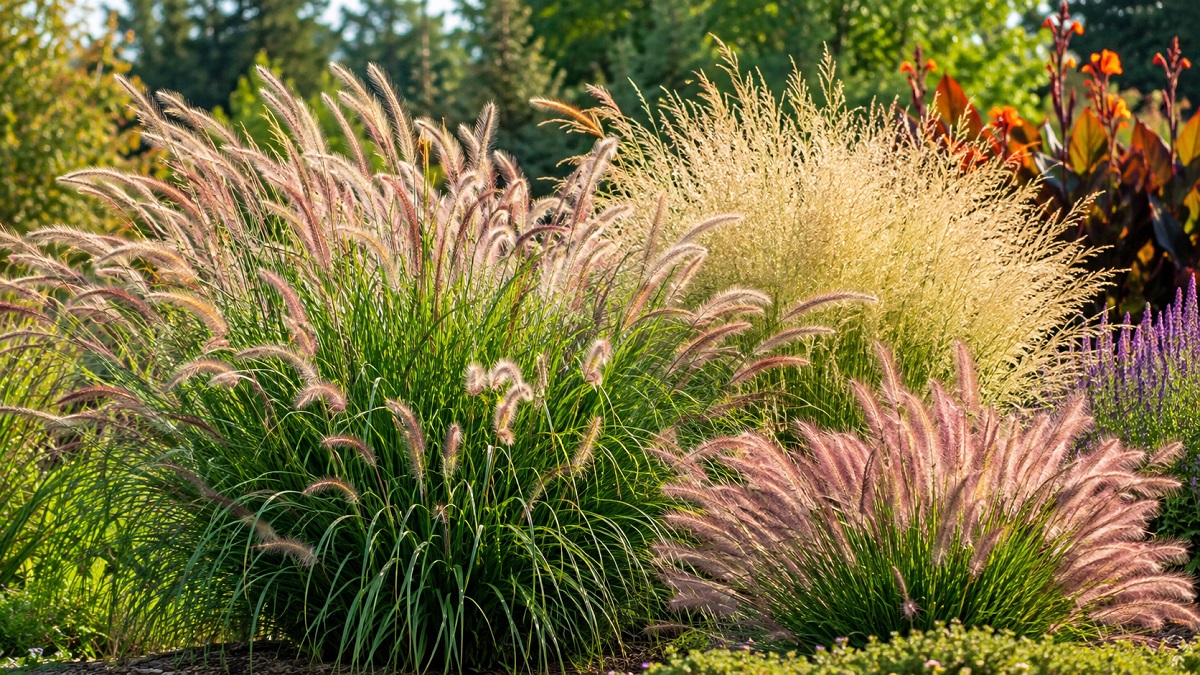
Ornamental grasses add texture, movement, seasonal interest, and structure to garden borders and landscapes.
Ornamental grasses are among the most useful plants for creating a garden that feels natural, layered, and full of movement. Unlike many flowering plants that have a short period of peak interest, ornamental grasses can contribute something to the landscape for much of the year. Their narrow leaves form attractive clumps, their flower plumes rise above the foliage, and many varieties continue to look beautiful after they have dried.
There is also an enormous range of ornamental grasses to choose from. Some remain short and tidy enough for containers and small borders, while others develop into large architectural plants that can become the focal point of a landscape. Foliage may be green, blue, silver, golden, bronze, or variegated, and some grasses develop especially attractive autumn or winter color.
The key to growing ornamental grasses successfully is choosing the right grass for the location. Sunlight, soil drainage, moisture, mature size, winter hardiness, and growth habit all matter. Once established, many ornamental grasses are surprisingly easy to maintain, making them valuable choices for gardeners who want attractive planting without constant pruning or watering.
Quick Care Guide for Ornamental Grasses
Choose the right grass first. Most problems begin with planting a species in conditions that do not match its natural growing requirements.
LightUsually full sun; some tolerate partial shade
SoilWell-drained soil suited to the chosen species
WaterRegularly while establishing; less once mature
FeedingLight feeding is usually sufficient
PruningCut back many deciduous grasses in late winter or early spring
SpacingAllow enough room for mature height and spread
Best FeatureTexture, movement, seed heads, and seasonal interest
Ornamental grasses are grasses grown primarily for their attractive foliage, form, texture, flower heads, seed heads, or seasonal appearance rather than for lawns, pasture, or food production. The term covers a broad collection of plants with very different sizes, colors, growth habits, and environmental preferences.
Some ornamental grasses grow as neat clumps, producing leaves from the base without spreading aggressively. Others spread by underground rhizomes or stolons and can fill a large area over time. This difference is important when selecting plants for a small garden. A beautiful grass can quickly become difficult to manage if its mature growth habit is ignored.
Many ornamental grasses are valued because they provide a softer visual effect than shrubs and trees. Their leaves move in the wind, while their flower plumes catch sunlight and create changing shapes throughout the day. They are particularly effective when planted in groups rather than scattered randomly across a large border.
Why Gardeners Love Ornamental Grasses
Ornamental grasses provide texture without relying entirely on flowers. They can soften hard edges, fill gaps between shrubs and perennials, create privacy, stabilize the visual structure of a border, and provide attractive seed heads late in the season.
A Natural Garden Effect
Planting several grasses together can create a meadow-like appearance. Combine upright varieties with arching forms and flowering perennials to create layers that change with the seasons.
Popular Types of Ornamental Grasses
The ornamental grass category often includes true grasses as well as grass-like plants such as sedges. Choosing by appearance alone can be tempting, but it is better to consider the growing conditions first.
Type
Typical Appearance
Common Garden Use
General Habit
Maiden Grass
Tall, arching foliage with feathery plumes
Borders, screens, focal planting
Clumping
Fountain Grass
Fine foliage and bottlebrush-like flower spikes
Borders, containers, mass planting
Clumping
Blue Fescue
Compact blue-gray foliage
Rock gardens, edging, containers
Small clump
Switchgrass
Upright foliage with airy seed heads
Native-style borders, screening
Clumping
Japanese Forest Grass
Soft, cascading foliage, often striped
Shade gardens, woodland borders
Slow-spreading clump
Mexican Feather Grass
Very fine, flowing foliage and delicate seed heads
Rock gardens, borders, naturalistic planting
Fine-textured clump
Carex
Grass-like evergreen or semi-evergreen foliage
Groundcover, shade borders, containers
Varies by species
These are only broad groups rather than interchangeable plants. Different species and cultivars within the same group can have very different hardiness, moisture needs, mature size, and spreading behavior. Read the plant label carefully before purchasing.
How to Choose the Right Ornamental Grass
The best ornamental grass is not necessarily the most dramatic one at the garden center. It is the plant that fits the available space and continues to perform well under the site's natural conditions.
Consider mature size
Height is only one part of the equation. A grass that grows several feet tall may also become several feet wide. Give it enough space to develop its natural shape without constantly cutting it back to keep it within bounds.
Check the growth habit
Clumping grasses generally stay in a defined area and slowly increase in diameter. Spreading grasses can travel through underground stems or surface runners. If you want a predictable planting, clumping forms are often easier to manage.
Match the moisture level
Some grasses thrive in relatively dry, well-drained soil, while others prefer consistently moist conditions. A moisture-loving grass planted beside a dry rock garden is likely to struggle, even if the plant is otherwise hardy.
Think about winter performance
Some grasses remain attractive through winter, while others become dormant and brown. Deciduous grasses can still provide valuable winter structure, especially when their seed heads are left standing until late winter.
Sunlight Requirements
Most popular ornamental grasses perform best in full sun. Strong light encourages dense growth, sturdy stems, and good flowering. A location receiving several hours of direct sunlight is usually ideal for sun-loving species.
Insufficient light can cause some tall grasses to become floppy or produce fewer flower heads. The foliage may also become less dense. If a grass repeatedly leans toward a brighter area, the problem may be the planting location rather than watering or fertilizer.
There are exceptions. Certain grass-like ornamental plants and shade-tolerant species can perform well beneath trees or in woodland-style gardens. Japanese forest grass, for example, is appreciated for its ability to bring flowing foliage into partially shaded areas.
Before planting, observe the area throughout the day rather than judging sunlight from a single visit. Seasonal changes can also alter the amount of light reaching a garden bed.
Soil and Drainage
Good drainage is one of the most important factors for many ornamental grasses. Although their moisture requirements differ, few plants appreciate sitting in stagnant water around their roots for long periods.
A fertile garden soil containing organic matter is usually suitable for many grasses. Heavy clay can be improved by incorporating organic matter and, where appropriate, creating raised planting areas that improve drainage. Extremely sandy soil may need additional organic matter to improve moisture retention.
Avoid automatically adding large amounts of fertilizer to the planting hole. Rich soil can encourage rapid, soft growth in some grasses rather than the sturdy, naturally shaped growth that makes them attractive.
Before planting, identify whether the site stays wet after rainfall. If water remains around the root zone for extended periods, select a species that tolerates those conditions or improve the site before planting.
How to Plant Ornamental Grasses
Planting ornamental grasses is straightforward, but taking time to prepare the site gives young plants a much better start.
1. Choose the planting location
Select a location that matches the grass's requirements for light, moisture, drainage, and mature size. Remember that a small plant can become a substantial landscape feature.
2. Prepare the soil
Remove competing weeds and loosen compacted soil. Mix in a moderate amount of mature compost if the existing soil is poor. The goal is to create a healthy root environment rather than an excessively rich planting pocket.
3. Dig the planting hole
Make the hole approximately as deep as the root ball and somewhat wider. Avoid planting the crown substantially deeper than it was growing in its container.
4. Position the plant
Place the grass in the hole and check it from several directions. The top of the root ball should sit at an appropriate level with the surrounding soil. Fill around the roots and gently firm the soil.
5. Water thoroughly
Water deeply after planting to settle the soil around the roots. Continue monitoring moisture during the establishment period, particularly during warm or dry weather.
6. Add mulch carefully
A thin layer of organic mulch can conserve soil moisture and reduce weeds. Keep mulch away from the crown and avoid piling it directly against the base of the grass.
Planting is often easiest during mild weather when plants can establish roots before facing extreme heat or cold. Local climate and the specific species should determine the best planting season.
Watering Ornamental Grasses
Newly planted ornamental grasses need more attention than established plants. During the first growing season, water whenever the upper soil begins to dry according to the needs of the species and the weather.
Deep watering is generally more useful than frequent, shallow sprinkling. Water slowly enough that moisture reaches the developing root zone rather than running off the surface.
Once established, many ornamental grasses become relatively drought tolerant, especially species adapted to dry sunny conditions. This does not mean they never need water. Extended heat, drought, container culture, and poor soil can all increase water requirements.
On the other hand, avoid treating every ornamental grass as drought tolerant. Species adapted to consistently moist environments can suffer if allowed to dry excessively.
Signs of Underwatering
Leaves may curl, become unusually dry, lose their normal color, or wilt during prolonged drought. Newly planted grasses are particularly vulnerable because their roots have not yet spread through the surrounding soil.
Signs of Excess Moisture
Persistent wet soil, yellowing foliage, weak growth, and root problems can indicate poor drainage or excessive irrigation. Allow the soil and species requirements to guide watering rather than following a rigid schedule.
Fertilizing and Feeding Ornamental Grasses
Ornamental grasses generally do not require heavy feeding. Excessive nitrogen can encourage lush foliage and rapid growth that may be weaker or more prone to flopping.
If the soil is reasonably fertile, a light application of a balanced fertilizer during active growth may be enough for many plants. Compost or other well-decomposed organic matter can also help maintain soil quality.
Do not assume poor growth always means a fertilizer deficiency. Lack of sunlight, drought, waterlogged soil, root competition, unsuitable temperatures, and incorrect planting depth can all cause similar symptoms.
If a grass is growing strongly and producing healthy foliage, there may be little reason to add additional fertilizer. Ornamental grasses often look best when allowed to develop naturally rather than being pushed into excessive growth.
Pruning and Seasonal Cleanup
Pruning ornamental grasses is usually simple. Many deciduous grasses are cut back once a year, commonly in late winter or early spring before new growth begins.
Leaving dried foliage and seed heads standing through winter has several advantages. The stems can provide structure when many other plants are dormant, and seed heads may add visual interest. They can also provide habitat and food opportunities for wildlife in suitable landscapes.
When cutting back deciduous grasses, remove the old growth close to the base while taking care not to damage emerging shoots. A handful of stems can be useful as a visual marker showing where new growth will appear.
Evergreen or semi-evergreen grasses should generally be handled differently. Instead of cutting the entire plant to the ground, remove dead leaves and comb through the foliage with gloved hands to pull out damaged material.
Always consider the individual plant before pruning. Not every grass responds well to the same treatment, and some grass-like plants should not be cut back severely.
Dividing and Propagating Ornamental Grasses
Many clumping ornamental grasses can be divided when they become crowded. Division is useful for rejuvenating an old clump and producing additional plants for other parts of the garden.
Division is generally easiest when plants are not under severe heat or drought stress. Dig around the clump and lift as much of the root system as practical. Divide the crown into sections using a sharp, clean tool, ensuring each division contains healthy roots and shoots.
Replant divisions promptly at the correct depth and water them thoroughly. Keep newly divided plants adequately hydrated while they rebuild their root systems.
Some ornamental grasses are propagated from seed, while named cultivars are often better maintained through vegetative propagation when maintaining their specific characteristics is important. Seed-grown plants may not always reproduce the exact appearance of a selected cultivar.
Growing Ornamental Grasses in Containers
Ornamental grasses can be excellent container plants. Their vertical or arching shapes add movement to patios, balconies, entrances, and decks, and many varieties combine well with flowering plants.
Choose a container with drainage holes and enough volume for the mature plant. Very small containers dry quickly and can restrict root growth. Tall grasses should also be planted in stable containers that are unlikely to tip over in strong wind.
Use a quality container-growing medium rather than heavy garden soil. Water when the growing medium begins to dry according to the needs of the plant. Containers usually require more frequent attention than plants growing directly in the ground.
Over time, a container-grown grass may become root-bound or too large for its pot. At that point, repotting, dividing, or replacing the plant may be appropriate.
Remember that roots in containers experience greater temperature fluctuations than roots in the ground. In regions with very hot summers or freezing winters, container placement and winter protection may be important.
Common Problems and Pests
Ornamental grasses are generally resilient, but they are not completely free from problems. Most issues can be traced to environmental stress, unsuitable growing conditions, poor airflow, or incorrect watering.
Flopping or falling over
Some grasses naturally arch, but excessive flopping can be caused by insufficient sunlight, excessive fertilizer, too much moisture, or simply a mature clump becoming too large. Selecting a variety with a naturally upright habit can prevent many problems.
Yellowing leaves
Yellow foliage can have several causes. Older leaves may naturally die back, but widespread yellowing can indicate excessive moisture, poor drainage, nutrient problems, or environmental stress.
Brown foliage
Brown leaves may be part of natural dormancy, especially in deciduous grasses. During the growing season, however, browning can be associated with drought, heat stress, root problems, or other environmental conditions.
Root problems
Constantly wet soil is a major concern for grasses that prefer good drainage. Improve drainage where possible and avoid automatic watering when the soil is already saturated.
Pests
Grasshoppers, aphids, mites, caterpillars, and other insects may occasionally feed on ornamental grasses. Healthy plants usually tolerate minor feeding, so inspect the plant before deciding whether treatment is necessary.
Good garden hygiene, adequate spacing, appropriate watering, and avoiding unnecessary fertilizer can reduce many pest and disease problems. If a serious infestation develops, identify the pest before choosing a control method.
Using Ornamental Grasses in the Landscape
One of the greatest strengths of ornamental grasses is their versatility. They can be used as edging plants, focal points, screens, background plants, groundcovers, containers, meadow-style plantings, and companions for flowering perennials.
Medium and tall grasses can provide structure behind lower perennials. Their foliage creates a calm background against which flowers become more noticeable.
Mass planting
Planting one grass repeatedly along a border creates a stronger visual effect than using many unrelated specimens. Repetition helps a garden feel intentional rather than crowded.
Tall grasses can create seasonal screening where a soft, natural appearance is preferred. Choose the species carefully, particularly if you are planting near property boundaries or other areas where spreading could become a problem.
Rock and gravel gardens
Compact grasses with fine foliage are particularly effective among stones and gravel. Blue-gray foliage can provide a striking contrast against warm-colored rocks.
Pollinator-friendly planting
Ornamental grasses can provide shelter and structure within wildlife-oriented gardens. They become especially useful when combined with flowering plants that provide nectar and pollen.
Modern gardens
The clean shapes of clumping grasses work beautifully with contemporary landscaping. Plant them beside paths, walls, gravel, large stones, or architectural plants for a simple but sophisticated effect.
Seasonal Care for Ornamental Grasses
Spring
Spring is an important maintenance period. Remove old foliage from deciduous grasses before fresh shoots become too large. Check plants for winter damage and divide mature clumps if necessary. As temperatures rise, begin monitoring soil moisture more closely.
Summer
During summer, concentrate on watering newly planted grasses and monitoring established plants during extended periods of heat or drought. Keep weeds from competing with young grasses and inspect foliage occasionally for pest problems.
Autumn
Autumn is when many ornamental grasses become particularly attractive. Flower plumes may develop bronze, gold, tan, or silver tones, while foliage can change color. Resist the urge to cut everything down immediately. Many grasses are at their best when their dried forms remain in the garden.
Winter
In winter, dormant grasses can provide structure when flowering plants have disappeared. Leave attractive seed heads in place where appropriate. In regions with heavy snow or strong winds, exceptionally tall grasses may need support or careful cleanup later in the season.
Common Mistakes When Growing Ornamental Grasses
Planting without checking mature size
This is one of the most common mistakes. A grass may look perfectly sized in a nursery container but become much larger after establishment. Always plan for its mature dimensions.
Overwatering
Because grasses are often described as hardy, gardeners sometimes water them automatically. Instead, learn the moisture preference of the specific species.
Overfertilizing
Heavy feeding can produce excessive growth and may reduce the sturdy appearance that makes ornamental grasses attractive. Fertilize only when the plant and soil conditions justify it.
Cutting everything back too early
Removing old growth immediately after flowering can eliminate valuable winter texture. Unless there is a specific reason for early cleanup, consider leaving attractive grasses standing until the appropriate seasonal pruning period.
Ignoring spreading behavior
Some grasses can spread considerably under favorable conditions. Research the growth habit before placing a potentially vigorous plant beside pathways, small borders, or sensitive planting areas.
Using one grass everywhere
Repetition can be effective, but a garden made entirely from one texture may feel flat. Combining fine, broad, upright, and arching foliage creates more visual depth.
Frequently Asked Questions About Ornamental Grasses
Are ornamental grasses easy to grow?
Yes. Many ornamental grasses are relatively low maintenance once established. The most important step is choosing a variety that matches the site's sunlight, soil, moisture, climate, and available space.
Do ornamental grasses need full sun?
Many ornamental grasses prefer full sun, particularly those grown for dense foliage and abundant flower plumes. Some species and grass-like plants tolerate partial shade, so check the requirements of the particular variety.
How often should ornamental grasses be watered?
Newly planted grasses need regular watering while their roots establish. Mature plants often need less frequent irrigation, but the exact schedule depends on species, soil, temperature, rainfall, and container versus in-ground growing.
Should ornamental grasses be cut back every year?
Many deciduous ornamental grasses benefit from annual cutting back in late winter or early spring. Evergreen and semi-evergreen types are usually better cleaned by removing dead or damaged foliage rather than cutting the entire plant to the ground.
Can ornamental grasses grow in containers?
Yes. Compact and medium-sized grasses can be excellent container plants. Use a container with good drainage and enough space for the roots, and remember that container plants generally require closer attention to watering.
Why is my ornamental grass falling over?
Some grasses naturally arch, but excessive flopping can result from inadequate sunlight, excessive fertilizer, overly wet conditions, or a mature clump becoming too large. A variety with a naturally upright habit may be a better choice for some locations.
Can ornamental grasses tolerate drought?
Some are quite drought tolerant after establishment, especially species adapted to dry, sunny conditions. Others require consistently moist soil. Drought tolerance should always be evaluated at the species or cultivar level rather than assumed for all ornamental grasses.
When is the best time to divide ornamental grasses?
Division is often easiest during a mild period when plants are not suffering from severe heat or drought. The exact timing depends on the species and local climate. Divisions should be replanted promptly and kept adequately watered while they establish.
Are ornamental grasses good for wildlife gardens?
They can be useful components of wildlife-friendly landscapes by adding shelter, structure, and seed-head habitat. They are especially valuable when combined with flowering plants that provide food resources for pollinators and other beneficial wildlife.
Final Thoughts
Ornamental grasses bring something different to the garden. Their appeal is not limited to flowers; it comes from the way their leaves catch the light, their stems move in the breeze, and their seed heads continue to provide structure after many flowering plants have finished. Used thoughtfully, they can make a landscape feel more relaxed and natural while still giving it a strong visual framework.
For the best results, start with the growing conditions rather than the plant's appearance. Choose a grass that fits the available sunlight, soil moisture, drainage, climate, and mature space. Give newly planted grasses adequate water while they establish, avoid excessive fertilizer, and allow attractive seasonal growth to remain as long as it continues to contribute to the landscape.
Whether you want a compact grass for a container, a soft edging plant, a dramatic border specimen, or a naturalistic mass planting, there is likely an ornamental grass suited to the job. With the right selection and a little seasonal maintenance, these versatile plants can provide texture, movement, and structure for years.
Explore more practical guides to growing and caring for beautiful flowers and ornamental plants. Discover planting tips, seasonal care, watering, pruning, propagation, and garden design ideas to help you create a healthier and more attractive landscape.