Why Are African Daisy Leaves Turning Yellow?
Discover why African daisy leaves turn yellow, from overwatering and poor drainage to nutrient deficiencies, pests, and heat stress, with practical solutions.
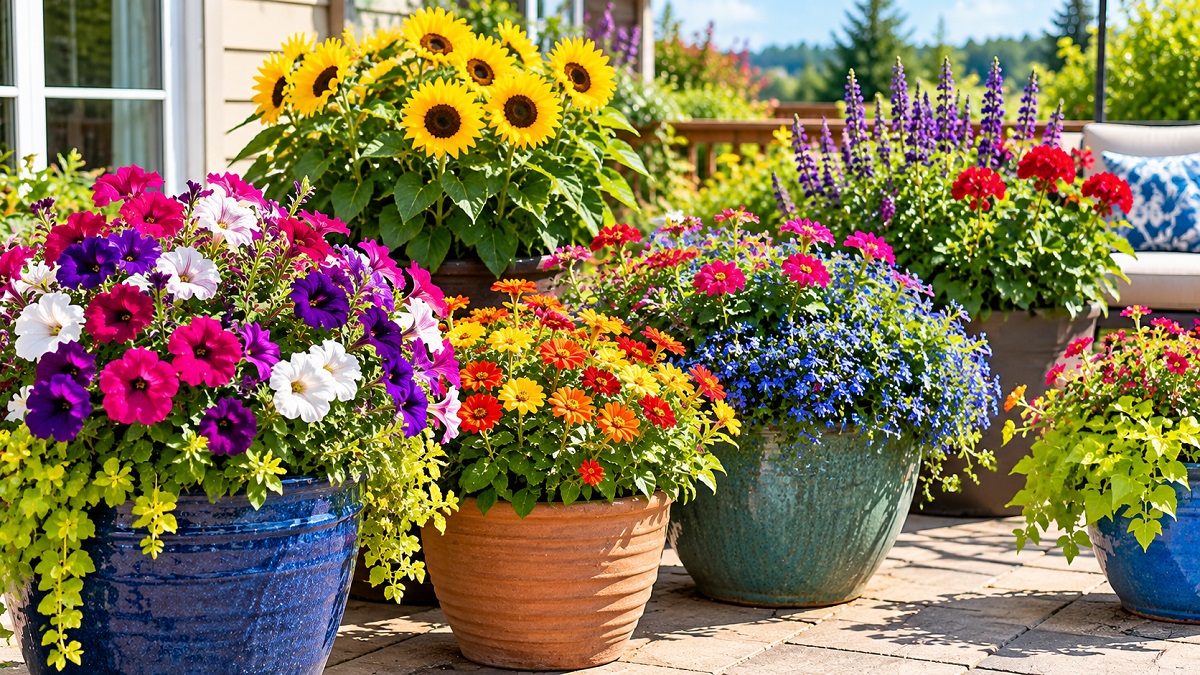
Summer containers are one of the easiest ways to bring flowers into spaces that do not have room for a traditional garden bed. A few well-chosen pots can brighten a patio, balcony, entrance, or sunny windowsill, but containers exposed to strong summer light can be demanding. Plants may dry out quickly, roots can become hot, and flowers often need regular feeding to keep producing new blooms.
The good news is that many flowering plants actually perform better when they receive plenty of direct sunlight. The best choices combine a strong tolerance for heat and bright light with a naturally compact or spreading habit that works well in pots. In this guide, we look at 10 reliable full-sun flowers that can bring long-lasting color to summer containers, along with practical advice for choosing pots, watering, feeding, and arranging them.
For the longest display, choose flowers suited to direct sun, warm temperatures, and regular container watering.
Not every flowering plant enjoys the conditions found on a sunny patio. A container sitting against a south- or west-facing wall can become considerably hotter than the surrounding garden. The pot itself may heat up, while limited soil volume means moisture disappears faster than it would from the ground.
When selecting plants, look for flowers that naturally tolerate bright light and warm conditions. It is also useful to consider how the plant grows. Upright flowers can provide height, trailing varieties soften the edges of a pot, and compact plants are useful for filling the middle.
Another important consideration is maintenance. Some flowers need frequent deadheading, while others naturally shed old blooms and continue flowering with less attention. If your containers are in a location that is difficult to reach, lower-maintenance varieties can make a noticeable difference.
The best candidates usually have a manageable root system, a long flowering period, and good tolerance for the warmer and drier conditions commonly found in containers.
For a mixed container, start with one taller plant, surround it with mounding flowers, and finish the edges with a trailing variety. This creates height and movement without making the pot look crowded.
Geraniums are classic container plants for sunny patios and balconies. Their rounded foliage and clusters of flowers create a strong focal point without requiring an elaborate planting scheme. Depending on the type, blooms may appear in shades of red, pink, white, coral, or purple.
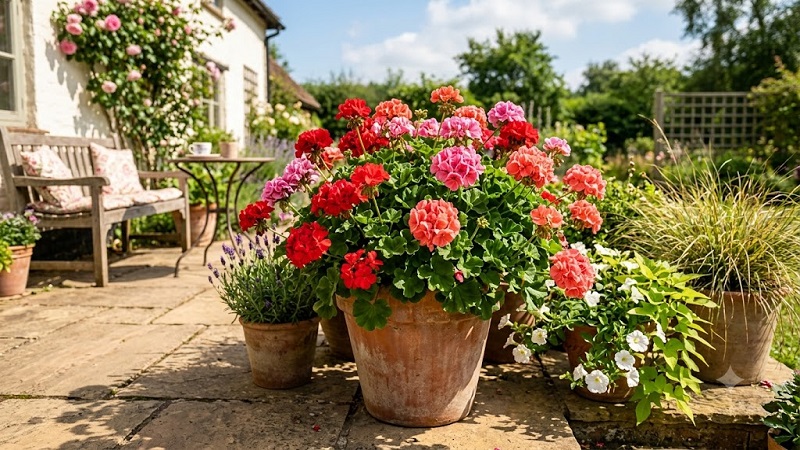
Geraniums are particularly useful when you want a neat, traditional-looking container. They can be planted alone in a decorative pot or combined with foliage plants and trailing companions. Allow the surface of the potting mix to dry slightly between thorough waterings, while avoiding prolonged drought during periods of intense summer heat.
Petunias are among the most versatile flowers for summer containers. They come in an enormous range of colors and forms, making them easy to match with almost any garden style. Compact types work well in smaller pots, while spreading forms can cascade over the edges of hanging baskets and large containers.
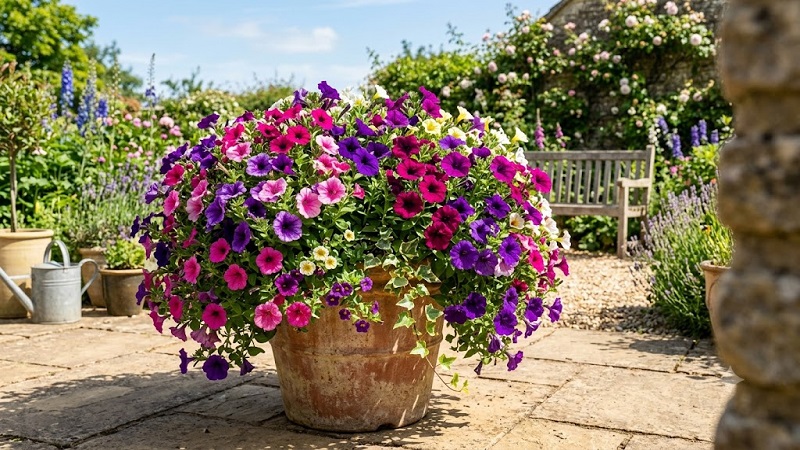
Regular removal of faded flowers can help keep traditional petunias looking tidy and encourage continued blooming. They appreciate fertile, well-drained potting soil and consistent moisture. Avoid allowing the container to remain waterlogged, particularly after heavy rain.
Marigolds bring warm yellow, orange, and gold tones to summer pots. Their naturally sunny appearance makes them especially effective near entrances, outdoor dining areas, and patios where bright color is wanted.
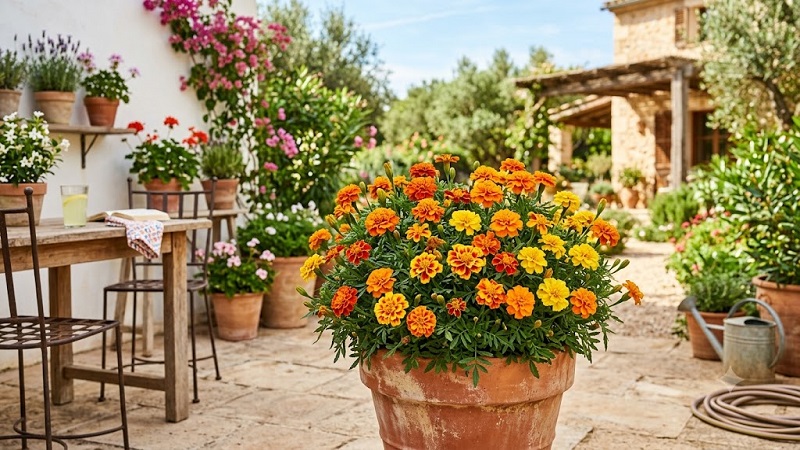
French marigolds are generally compact and well suited to containers, while taller African marigolds can provide more height. They perform best in full sun with good drainage. Removing spent flowers regularly keeps the plants looking fresh and can encourage additional blooms.
Zinnias are excellent choices when you want a container filled with bold, cheerful flowers. Their blooms come in numerous colors, including pink, red, orange, yellow, white, and purple. Many varieties also attract butterflies and other pollinating insects.
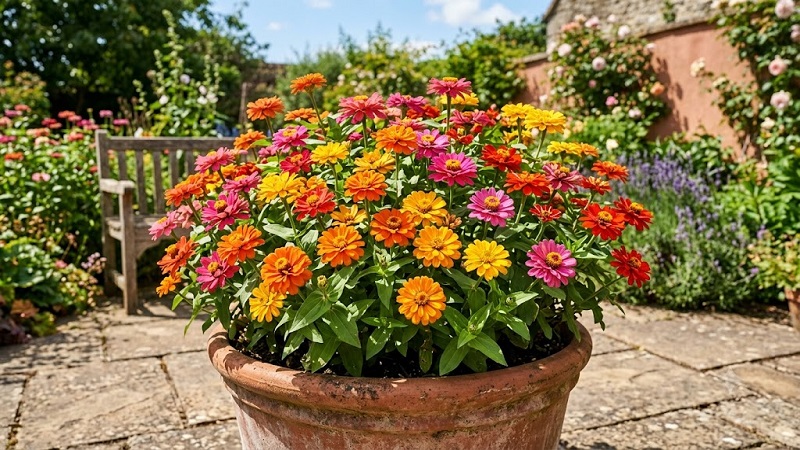
Compact zinnia varieties are particularly useful for pots because they do not overwhelm neighboring plants. Give them plenty of sunlight and avoid crowding the foliage. Good air circulation helps keep the leaves dry and reduces problems associated with overly humid conditions.
Lantana is a strong candidate for hot, sunny containers. Its clusters of small flowers can combine several colors in a single bloom head, creating a lively display that fits naturally into informal summer gardens.
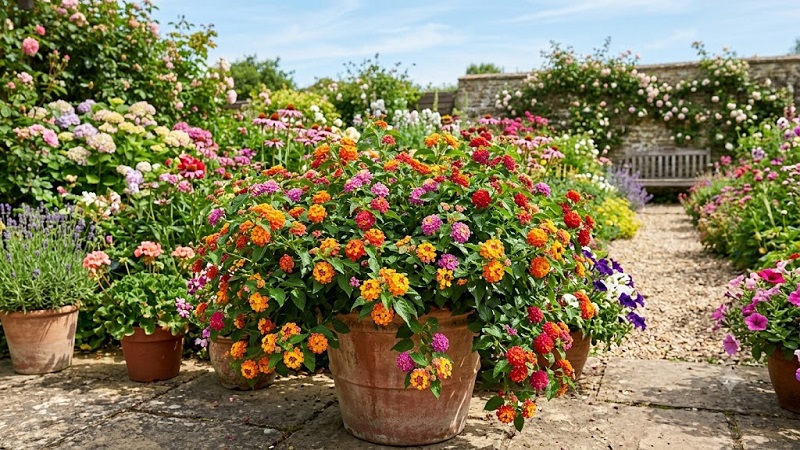
Lantana works especially well when planted on its own in a large container because it can develop into a substantial flowering plant. It also attracts butterflies and other beneficial garden visitors. Water newly planted specimens regularly until established, then allow the upper portion of the potting mix to dry somewhat between waterings.
Portulaca, sometimes called moss rose, is a particularly useful choice for hot and sunny locations. Its succulent foliage helps it cope with periods of dryness better than many conventional bedding flowers.
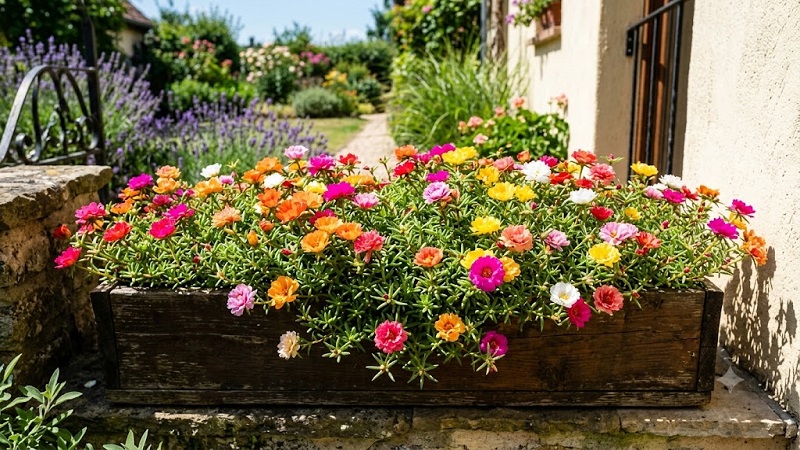
The flowers open most freely in strong sunlight, making portulaca a natural fit for exposed balconies, sunny steps, rock-garden containers, and shallow pots. Excellent drainage is important because consistently wet soil can cause problems for its roots.
Angelonia produces upright spikes of small flowers above narrow foliage. It has a tidy appearance and works beautifully in containers where a little vertical interest is needed without using a very large plant.
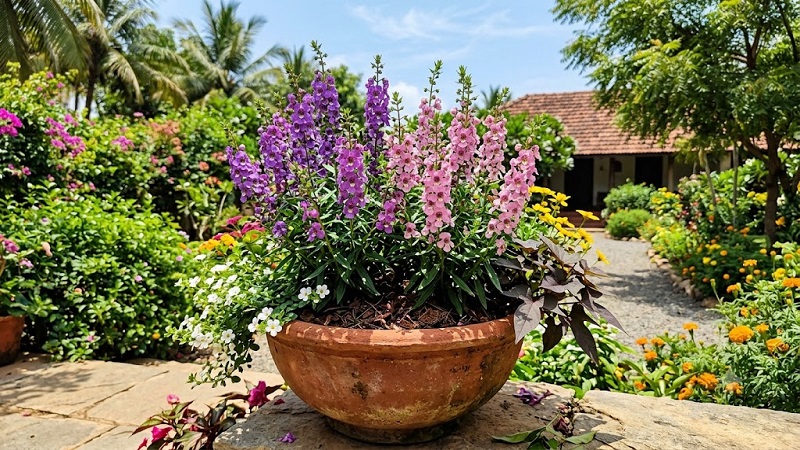
Its flower spikes can provide color throughout the warm season when the plant receives enough sunlight and adequate moisture. Angelonia is particularly useful as the central or rear plant in a mixed container, where its upright form contrasts with rounded or trailing companions.
Calibrachoa produces masses of small, petunia-like flowers and is especially attractive in hanging baskets and containers placed where the stems can spill over the sides. Its compact foliage becomes almost hidden when the plant is in full bloom.
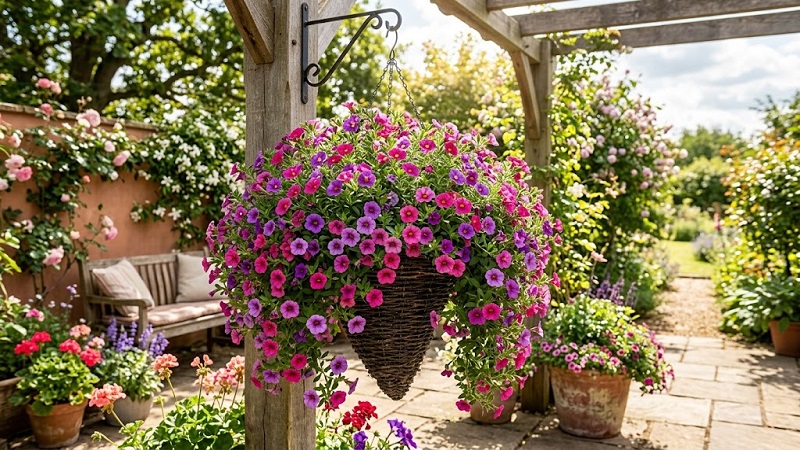
It is an excellent choice when you want a softer, cascading effect rather than a formal upright display. Use a well-drained container mix and pay attention to watering during very hot weather because hanging baskets and small pots can dry rapidly.
Vinca is well suited to hot summer conditions and can provide flowers even when other container plants begin to struggle with heat. The plants have glossy foliage and simple, attractive flowers in colors such as pink, white, and red-purple.
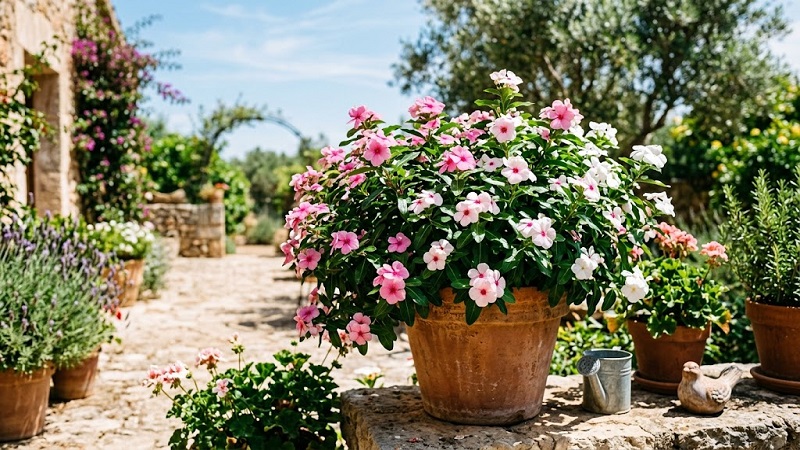
Vinca prefers warm conditions and good drainage. It is particularly useful for gardeners who want a straightforward container plant that does not require constant attention. Avoid keeping the foliage and soil excessively wet, especially in areas with humid summer weather.
Flowering salvias add vertical structure and a slightly more natural look to summer containers. Depending on the variety, flower spikes can appear in shades of red, pink, purple, blue, or white.
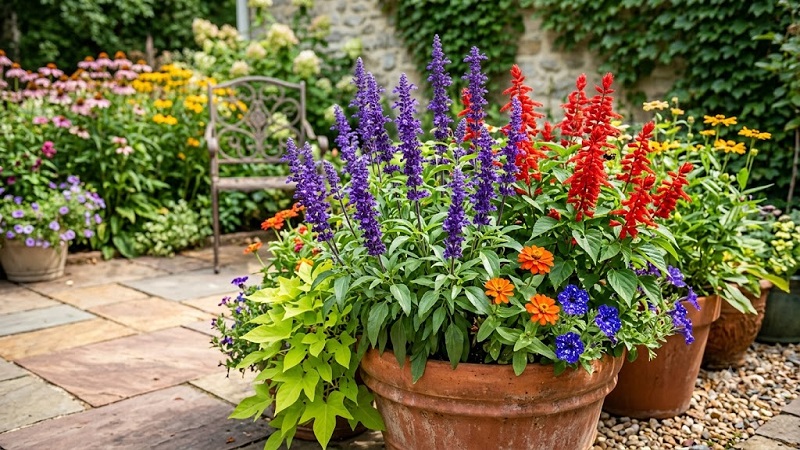
Salvias are especially useful in larger pots where their upright growth can be balanced by lower-growing flowers around the base. Many types are attractive to bees, butterflies, and other pollinators, making them a good addition to a container garden designed for wildlife as well as color.
| Flower | Growth Habit | Best Container Use | Flower Colors | Maintenance |
|---|---|---|---|---|
| Geranium | Mounding/Upright | Patio pots, window boxes | Red, pink, white | Moderate |
| Petunia | Mounding/Trailing | Baskets and mixed pots | Many colors | Moderate |
| Marigold | Compact/Upright | Small and medium pots | Yellow, orange | Low to moderate |
| Zinnia | Upright/Mounding | Colorful patio containers | Many colors | Moderate |
| Lantana | Mounding | Large containers | Yellow, orange, pink, red | Low to moderate |
| Portulaca | Low/Trailing | Shallow pots and baskets | Many colors | Low |
| Angelonia | Upright | Mixed containers | Pink, purple, white | Low to moderate |
| Calibrachoa | Trailing | Hanging baskets | Many colors | Moderate |
| Vinca | Upright/Mounding | Sunny patio pots | Pink, white, red-purple | Low |
| Salvia | Upright | Large mixed containers | Red, purple, blue, white | Low to moderate |
A mixed container can look more interesting than a pot containing a single plant, but combining several flowers requires a little planning. Plants sharing one container should have broadly similar requirements for sunlight, moisture, and soil drainage.
A simple approach is to use the familiar “thriller, filler, spiller” idea. Choose one upright plant for height, one or two rounded plants to fill the middle, and a trailing flower to soften the edges.
Try angelonia or salvia. Their upright flower spikes draw the eye upward and give a mixed pot a stronger silhouette.
Marigolds, zinnias, geraniums, or lantana can provide the rounded, flowering mass that fills the center of a container.
Calibrachoa, petunias, or portulaca can spill toward the sides and create a softer transition between the plant and the container.
The container itself can make a major difference to summer performance. A pot that is too small will dry quickly, while a container without adequate drainage can leave roots sitting in wet soil after watering or rain.
Choose a container with drainage holes and enough volume to support the mature plants. Larger containers generally provide a more stable moisture environment than tiny pots. They are also less likely to experience extreme temperature swings around the roots.
Material matters as well. Terracotta is attractive and porous but can lose moisture quickly. Plastic and glazed containers usually retain moisture longer. In particularly hot locations, placing containers where they receive excellent light without having the pot itself exposed to reflected heat from a wall can help reduce stress.
Even drought-tolerant flowers need water while they are establishing. Container plants have access to a much smaller reservoir of moisture than plants growing in the ground, so watering habits become especially important during hot weather.
Instead of automatically watering every day, check the potting mix. If the upper layer has begun to dry and the plant is showing signs that it needs water, give the container a thorough soaking until excess water drains from the bottom.
During periods of extreme heat, some containers may need attention more than once a day. Hanging baskets and small pots are particularly prone to drying because they have less soil volume.
Flowering plants can use nutrients quickly when they are producing blooms for months. A suitable fertilizer used according to its label directions can help support vigorous growth and flowering.
Avoid the assumption that more fertilizer always means more flowers. Excessive feeding can produce lush foliage at the expense of balanced growth and may damage roots. Follow the product directions and adjust your approach according to the plant's performance.
Some flowers benefit from regular removal of faded blooms. Deadheading keeps containers looking tidy and, for many flowering plants, encourages the plant to redirect energy toward new growth and flowers rather than seed production.
Pruning can also be useful when plants become leggy. Rather than waiting until the container is completely overgrown, trim back selected stems to encourage a fuller shape. Remove damaged or diseased foliage promptly and keep fallen leaves from accumulating on the potting mix.
Small pots may look attractive, but they dry quickly and leave roots with limited space. For a long summer display, choose a container that provides enough room for the plants you intend to grow.
Ordinary garden soil can become compacted inside containers and may not provide the drainage and aeration that roots need. A quality container mix is generally a better choice.
Sun-loving plants still need well-drained soil. Make sure the container has drainage holes and that they are not blocked by compacted soil or debris.
A flower that tolerates heat is not necessarily immune to drought. Extended periods of severe dryness can cause wilting, flower loss, and long-term stress.
Overcrowding can look impressive at first but often creates competition for water, nutrients, and root space. Give each plant enough room to reach its expected mature size.
The best choice depends on the look you want and how much maintenance you are willing to provide. For a classic container, geraniums and petunias are dependable choices. If you want strong heat tolerance, portulaca, lantana, and vinca deserve consideration. For attracting pollinators, zinnias and salvias can make excellent additions.
If your main goal is a cascading basket, look toward calibrachoa and spreading petunias. For a mixed container that needs height, angelonia or salvia can provide structure while lower-growing flowers fill the space around them.
There is no need to limit yourself to one type of container or one color scheme. A few pots using different flower forms can create a surprisingly rich summer display, especially when the plants share similar sunlight and watering requirements.
Geraniums, petunias, marigolds, zinnias, lantana, portulaca, angelonia, calibrachoa, vinca, and salvia are all useful choices for sunny summer containers when their individual growing requirements are met.
Many full-sun flowering plants perform best with around six or more hours of direct sunlight. The exact requirement varies by plant and cultivar, so check the growing information for the specific variety you purchase.
There is no single watering schedule that works for every container. Check the potting mix regularly and water thoroughly when it begins to dry. Small pots and hanging baskets may require more frequent watering during very hot weather.
Yes. Choose plants with similar requirements for sunlight, moisture, and drainage. Combining an upright plant with mounding and trailing flowers can create a balanced container design.
Marigolds, vinca, portulaca, and lantana can be good starting points for gardeners looking for relatively straightforward flowering plants for sunny containers. Even easy-care plants still need appropriate drainage and watering.
Many flowering container plants benefit from supplemental nutrients because frequent watering can gradually reduce available nutrients in the potting mix. Use a suitable fertilizer according to its label directions rather than applying more than recommended.
A sunny container does not have to be difficult to maintain. Start with flowers that naturally suit bright conditions, use a well-drained container mix, choose a pot large enough for healthy root growth, and pay attention to moisture during the hottest part of summer.
Geraniums, petunias, marigolds, zinnias, lantana, portulaca, angelonia, calibrachoa, vinca, and salvia each bring something different to a container garden. Some provide height, others trail over the edge, and several can supply months of colorful flowers when given the conditions they prefer.
With a little planning, even a small balcony or patio can become a bright summer garden. Choose two or three complementary flowers, give them enough room, and let the sunlight do the rest.
← Back to Plant GuidesContinue exploring our gardening guides with more plant profiles, growing tips, and practical advice for creating a healthy, productive garden.