Why Are African Daisy Leaves Turning Yellow?
Discover why African daisy leaves turn yellow, from overwatering and poor drainage to nutrient deficiencies, pests, and heat stress, with practical solutions.
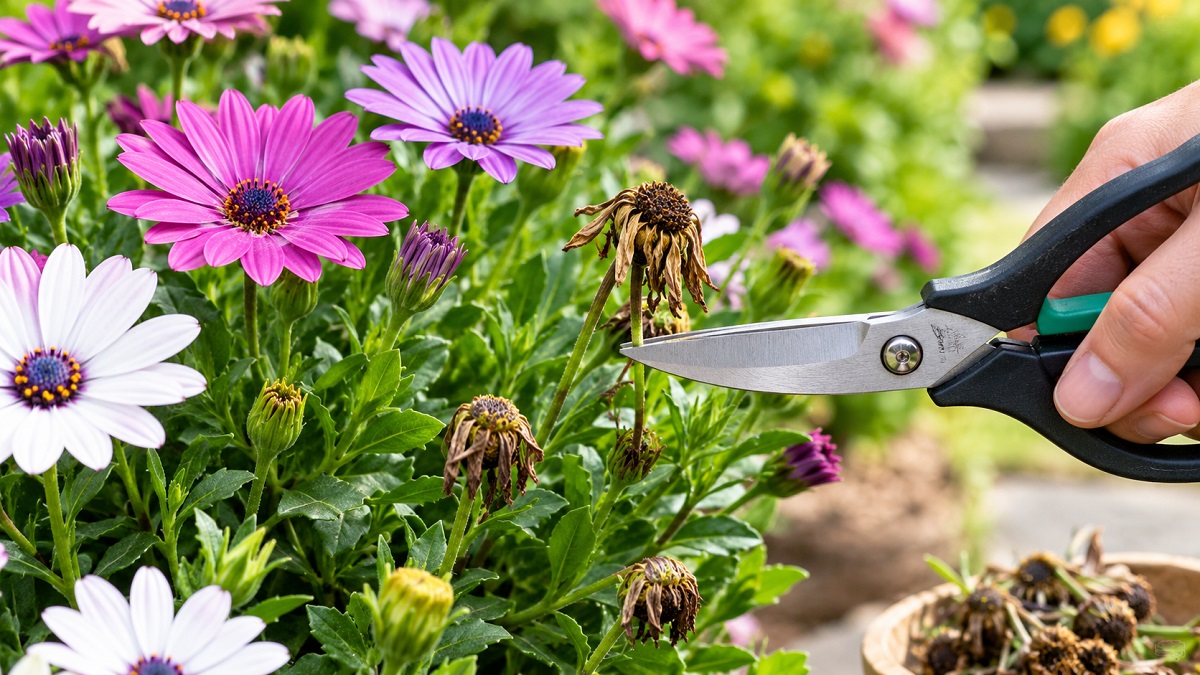
African daisies are at their best when they are covered with fresh, open blooms, but even a healthy plant can start looking tired once its flowers fade. Instead of leaving those old flower heads on the plant, you can remove them with a few simple cuts. This process, known as deadheading, helps maintain a neat appearance and encourages the plant to put its energy into new growth and additional flowers rather than developing mature seed heads.
Deadheading African daisies is not complicated, and you do not need specialist gardening equipment. A clean pair of sharp scissors or pruning snips is usually enough. The important part is knowing where to make the cut and recognizing when a flower has finished its useful display.
In this guide, you will learn when to deadhead African daisies, how to make the cut correctly, how often to repeat the job, what to do with damaged or diseased flowers, and how deadheading fits into the wider care routine. With a little attention every few days during peak flowering, you can keep your plants looking much fresher.
The simple rule: remove faded flowers before they spend too much time developing seeds.
A faded flower may not seem like a problem, especially when a plant has plenty of healthy foliage and unopened buds. However, once pollinated flowers begin producing seeds, the plant has another task to complete. It starts directing resources toward seed development and maturation.
Removing spent blooms interrupts that process before it becomes the plant's main priority. For gardeners who want a long display of flowers, this is one reason deadheading is useful. It also prevents a collection of brown or shriveled flower heads from taking over the plant.
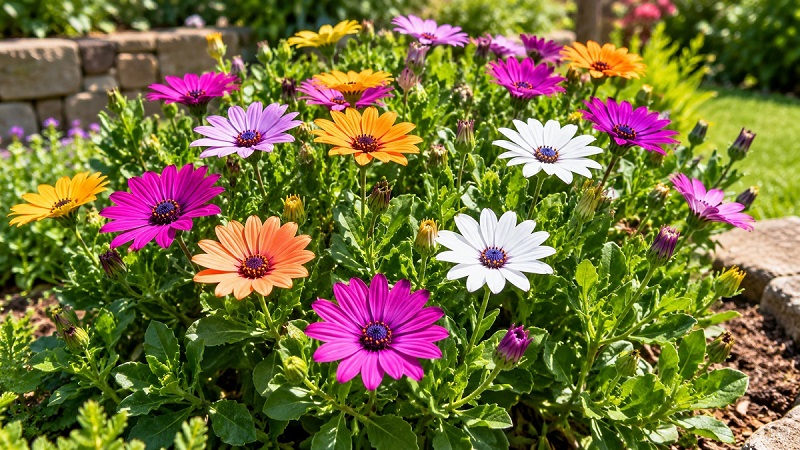
The visual benefit is immediate. Fresh blooms stand out much better when surrounded by clean green foliage rather than old flower heads. This is particularly noticeable when African daisies are planted along paths, in borders, or in containers close to patios and entrances.
Removing spent flowers can encourage a plant to continue producing new flowering growth when growing conditions are favorable. Deadheading is not a guarantee of nonstop blooms, though. Sunlight, temperature, watering, nutrition, plant maturity, and the particular variety all influence flowering.
Regularly handling the plant also gives you an opportunity to inspect the foliage and stems. You may notice aphids, damaged leaves, fungal problems, broken stems, or unusually weak growth before the issue becomes widespread.
The ideal time to deadhead is after a flower has clearly finished blooming but before you allow large numbers of old flower heads to remain on the plant. A flower that has lost its bright color, closed permanently, or developed a dry and shriveled appearance is generally ready to remove.
You do not have to cut every flower the moment it begins to look slightly less fresh. African daisies can have blooms at different stages at the same time, so look closely before making a cut. If a flower still has strong color and is attracting pollinators, leaving it alone for a while is perfectly reasonable.
If your main goal is supporting pollinators rather than maximizing the number of ornamental blooms, you can also leave selected flowers in place for insects to visit and later allow some to develop seed. Deadheading does not have to be an all-or-nothing job.
African daisies usually require no complicated pruning equipment. For individual flowers, your fingers may be enough when the stem is soft and easy to pinch. For cleaner cuts, especially when several flowers need attention, use small bypass pruners, sharp garden scissors, or clean pruning snips.
| Tool | Best use | Important consideration |
|---|---|---|
| Garden scissors | Quick removal of individual spent blooms | Keep the blades sharp and clean |
| Small pruning snips | Precise cuts on individual stems | Useful when stems become firmer |
| Fingers | Pinching soft, easily detached flowers | Avoid tearing healthy stems |
| Disinfectant | Cleaning pruning blades | Especially useful when moving between plants |
Clean equipment is particularly important if you have been cutting stems affected by disease. Dirty tools can transfer pathogens from one plant to another. Wipe or disinfect the blades before moving to a different plant when there is any concern about disease.
Once you know what you are looking for, deadheading becomes a quick maintenance task. Work slowly the first few times so you can identify the relationship between the flower stem, nearby leaves, and new side growth.
Begin by looking over the entire African daisy. Identify flowers that have faded while leaving healthy open blooms and promising buds untouched. This is also a good opportunity to check for broken stems, yellowing foliage, pests, or signs of excessive moisture.
Once you have selected a flower, trace its stem down toward the main plant. Avoid making a random cut immediately below the flower head. Instead, look for a healthy leaf, leaf pair, side shoot, or node farther down the stem.
A useful general approach is to cut just above a healthy leaf node or side shoot. This leaves the plant with a clean stem and avoids removing more healthy growth than necessary.
Use sharp scissors or snips and make a decisive cut rather than repeatedly squeezing or crushing the stem. A clean cut heals more neatly and reduces unnecessary damage to the remaining tissue.
Pick up the removed flower heads rather than allowing a pile of dead material to remain around the plant. If the flowers are healthy, they can usually be added to appropriate garden compost. Diseased plant material should be handled according to your local composting practices rather than automatically added to a home compost pile.
After removing the old bloom, look at the remaining stem. If it is unusually long, damaged, or weak, you may be able to shorten it further to a healthy node, provided you are not removing a large amount of productive growth.
Continue around the plant, but do not feel compelled to make every flower look identical. African daisies naturally have a mixture of open blooms, fading flowers, buds, and developing foliage. A little variation is normal.
The remaining stem should have no large dead flower head attached, and the cut should be neat rather than ragged. Whenever practical, make the cut close to a healthy growth point without damaging the new shoot or leaves.
Avoid cutting deeply into the crown or removing large sections of healthy foliage simply because one flower has faded. Deadheading is light maintenance, not a full pruning session.
One of the most common questions about deadheading is whether the flower should simply be cut off immediately beneath the bloom. While this can remove the unattractive flower head, a better approach is often to follow the stem down to a healthy leaf node or branching point.
Cutting near a productive growth point can leave the plant with a more natural shape and may encourage new side growth. The exact position depends on how the individual plant is growing, so avoid treating one measurement as a universal rule.
If the stem is short and there is no obvious leaf node close to the flower, simply remove the spent portion while retaining as much healthy stem and foliage as practical. The goal is not to make every cut identical. It is to remove old flowering material without unnecessarily weakening the plant.
There is no fixed calendar schedule that works for every African daisy. During a period of heavy flowering, check the plant every few days. A quick inspection when you water can be enough to catch most faded flowers.
Plants in containers may need more frequent attention because they are often placed where their flowers are viewed up close. A few old blooms are much more noticeable on a small patio container than on a large garden border.
You also do not need to remove every faded bloom immediately. If you are busy for a week, the plant will not suddenly fail because a few old flowers remain. Once you have time, simply work through the plant and remove the oldest blooms first.
Young African daisies do not necessarily need intensive deadheading. If a newly established plant has only a handful of flowers, removing every bloom can leave you with very little to enjoy.
Focus first on helping the plant establish healthy roots and foliage. Once it is growing strongly and producing flowers regularly, deadheading becomes more worthwhile. If a young plant produces one or two faded blooms, remove them neatly, but avoid turning routine deadheading into aggressive pruning.
Newly planted specimens can also experience transplant stress. During this period, consistent watering appropriate to the soil and weather is generally more important than trying to maximize flower production immediately.
African daisies are popular container plants because their colorful flowers can brighten balconies, patios, windowsills, and entrances. Container-grown plants benefit from regular inspection because fading flowers are easy to see and can quickly make a small display look untidy.
When deadheading a container plant, rotate the pot as you work. This helps you see flowers hidden on the far side and prevents you from repeatedly trimming only the front-facing growth.
Be especially careful not to confuse deadheading with cutting back the entire plant. A compact container specimen may not have as much foliage as a plant growing freely in the ground. Remove the spent flower stems while preserving the healthy framework underneath.
Check the soil moisture, drainage, and overall condition of the plant. Containers can dry out faster than garden beds, but repeatedly keeping the soil saturated can create a different set of problems. Water according to the plant's needs and local conditions rather than following a rigid daily schedule.
Not every ugly flower is simply an old flower. Heavy rain, strong wind, insects, physical damage, or disease can cause individual blooms to deteriorate prematurely.
If a flower is badly damaged, removing it can improve the appearance of the plant and reduce decaying material around healthy growth. If you suspect disease, take extra care with your tools and avoid touching healthy plants immediately after handling affected material without cleaning the blades.
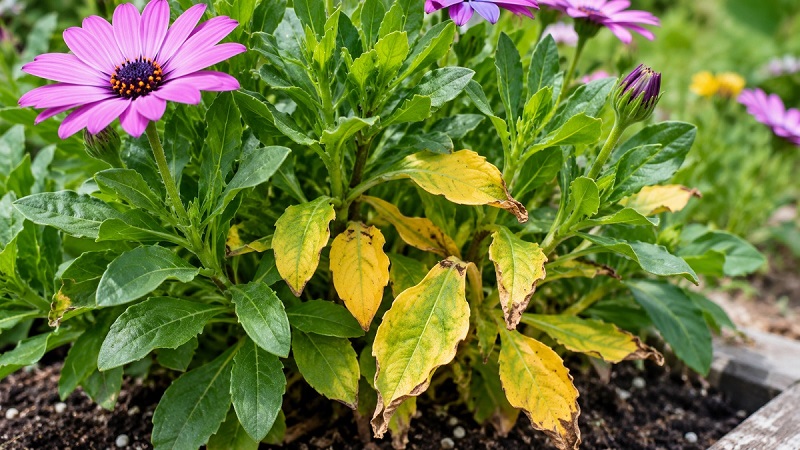
A recurring problem in the foliage may indicate that deadheading alone is not going to solve the issue. Look for unusual spots, widespread yellowing, distorted growth, insect colonies, or persistent wilting. Correcting the underlying growing conditions is more useful than repeatedly removing symptoms.
Good airflow around the plant, appropriate watering, suitable sunlight, and removal of badly affected material can all form part of a broader plant-care routine.
One of the easiest mistakes is treating deadheading like a hard prune. Removing large amounts of healthy foliage can reduce the plant's ability to produce energy. For routine maintenance, concentrate on spent flowers and their individual stems.
Dull blades can crush or tear soft stems. If you have to squeeze repeatedly to make a cut, it is worth sharpening or replacing the tool.
Cutting immediately beneath the flower head every time is not necessarily the best option. Following the stem toward a healthy leaf or side shoot can produce a cleaner result and preserve the plant's natural branching structure.
Some gardeners become so focused on keeping the plant tidy that they remove blooms that are still attractive. Give the flowers time to provide their display. Deadheading is most useful once the bloom has clearly passed its prime.
Deadheading cannot compensate for poor growing conditions. If an African daisy receives insufficient light, experiences severe water stress, or is growing in unsuitable conditions, simply cutting off old flowers will not solve the underlying problem.
Deadheading works best as part of a broader care routine. If you want a long-lasting floral display, pay attention to the conditions that support healthy growth as well.
African daisies generally perform best with plenty of sunlight. A location with strong light can support compact growth and abundant flowering, although the exact requirements can vary among varieties and local climates.
Avoid treating every plant as though it needs the same amount of water. Check the soil and consider recent rainfall, temperature, container size, and drainage. Repeated drought stress can affect flowering, while poorly drained conditions can cause root problems.
Healthy foliage is the foundation for continued flowering. Provide suitable soil, adequate moisture, and appropriate nutrition without relying on excessive fertilizer. Too much fertilizer is not a shortcut to more flowers.
Crowded plants may have poorer airflow and can become difficult to inspect. Adequate spacing also makes routine deadheading much easier because you can reach individual stems without bending or breaking neighboring growth.
Flowering can slow during periods of extreme heat, prolonged rain, drought, or other stressful weather. If your African daisy temporarily produces fewer flowers, do not assume that you are deadheading incorrectly. Seasonal conditions can have a much larger influence.
Removing old flowers gives the plant a cleaner appearance and can support continued flowering, but it cannot force a stressed plant to bloom continuously. Think of deadheading as one part of good cultivation rather than a substitute for sunlight, water, drainage, and suitable temperatures.
Gardeners who want to collect seed or allow some natural reseeding can deliberately leave selected flowers on the plant. You can deadhead most of the display while allowing a few mature seed heads to remain.
Your deadheading routine can change as the season progresses. When African daisies are producing flowers heavily, you may find yourself removing several spent blooms during a single inspection. Later, when flowering naturally slows, there may be little to remove.
Early in the flowering period, concentrate on learning the plant's growth pattern. Identify where flower stems emerge and how new buds form. As the plant fills out, the job becomes much faster because you can recognize spent blooms almost immediately.
During the middle of a strong flowering period, consistency is useful. A quick inspection every few days can prevent the plant from becoming covered in old flower heads.
Toward the end of the season, decide what you want from the plant. If you want to keep the display tidy for as long as possible, continue removing faded flowers while the plant remains productive. If you want seed, leave selected flower heads to mature instead.
| Task | What to do | Why it matters |
|---|---|---|
| Inspect blooms | Look for flowers that have faded or collapsed | Identifies which blooms are ready for removal |
| Follow the stem | Trace the spent flower toward healthy growth | Helps you choose a sensible cutting point |
| Make the cut | Use clean, sharp scissors or snips | Produces a neat cut with less stem damage |
| Protect new growth | Avoid cutting healthy buds or side shoots | Preserves future flowering potential |
| Remove debris | Collect old flowers after cutting | Keeps the planting area tidy |
| Inspect the plant | Check foliage and stems for pests or disease | Allows problems to be noticed early |
| Repeat | Check every few days during peak flowering | Keeps the display fresh without heavy pruning |
Pinching and deadheading are related but serve different purposes. Deadheading removes flowers that have already finished blooming. Pinching involves removing growing tips, usually to influence branching and plant shape.
If your African daisy is young and becoming tall or sparse, selective pinching may sometimes be useful depending on the variety and growing stage. However, do not pinch simply because you see a faded flower. For a flowering plant that is already well branched, routine deadheading is the more appropriate maintenance technique.
No. Deadheading can encourage a longer and cleaner flowering display under suitable conditions, but every plant has biological and seasonal limits. Flower production eventually responds to temperature, day length, plant age, available resources, and the natural behavior of the variety.
A useful way to think about deadheading is that it removes an obstacle to continued flowering rather than creating flowers from nothing. If the plant has enough light, moisture, nutrients, and healthy growth, removing spent blooms can help you get more value from its natural flowering period.
Healthy flower heads can be added to a suitable compost pile where conditions allow them to break down properly. Before composting, make sure the material is free from obvious disease problems.
If you want to collect seed, do not compost every flower. Instead, select a few healthy flowers and allow their seed heads to mature fully. Once mature, they can be collected and stored according to the requirements of the particular African daisy variety.
The easiest way to become good at deadheading is simply to observe your plants. Spend a minute looking at the flowers before reaching for the scissors. You will quickly learn the difference between a fresh bloom, a flower that is beginning to fade, and a completely spent head.
Keep your cuts selective. Remove what is finished while preserving healthy leaves, buds, and side shoots. There is no advantage to making the plant look unnaturally bare just for the sake of uniformity.
Finally, combine deadheading with sensible general care. An African daisy receiving adequate light and growing in suitable conditions is much more likely to reward regular maintenance with an attractive succession of flowers.
Deadheading can support continued flowering by removing spent flower heads before the plant puts more resources into seed development. However, flowering also depends on sunlight, water, temperature, nutrition, plant health, and the individual variety.
Follow the spent flower stem downward and, where practical, make the cut just above a healthy leaf node or side shoot. Avoid cutting into healthy new growth or removing large amounts of foliage unnecessarily.
Check the plants every few days when they are flowering heavily. You do not need to follow a strict schedule; simply remove spent flowers as you notice them.
Soft flower stems can sometimes be pinched or removed by hand, but sharp, clean scissors or pruning snips usually provide a neater cut and reduce the chance of tearing the stem.
Not necessarily. Remove flowers once they are clearly past their best. You can also leave selected flowers if you want to enjoy them longer, provide food for visiting insects, or allow some seed to develop.
Routine deadheading is unlikely to cause problems when done carefully. Damage is more likely when gardeners cut too deeply, remove large amounts of healthy foliage, use blunt tools, or accidentally cut developing shoots and buds.
Yes. Container-grown African daisies can benefit from regular removal of spent flowers, particularly because old blooms are highly visible in small displays. Rotate the container while working so you do not miss flowers hidden behind the foliage.
No. Deadheading can help extend the flowering display when conditions are favorable, but it cannot overcome unsuitable temperatures, inadequate light, water stress, poor growing conditions, or the natural seasonal limits of the plant.
Deadheading African daisies is a small task that can make a noticeable difference to the appearance of your plants. Remove faded flowers with a clean cut, preserve healthy foliage and new buds, and repeat the process whenever old blooms become noticeable. When combined with good growing conditions, this simple routine can help you enjoy a fuller, tidier flowering display for longer.
Continue exploring our gardening guides with more plant profiles, growing tips, and practical advice for creating a healthy, productive garden.