Why Are African Daisy Leaves Turning Yellow?
Discover why African daisy leaves turn yellow, from overwatering and poor drainage to nutrient deficiencies, pests, and heat stress, with practical solutions.
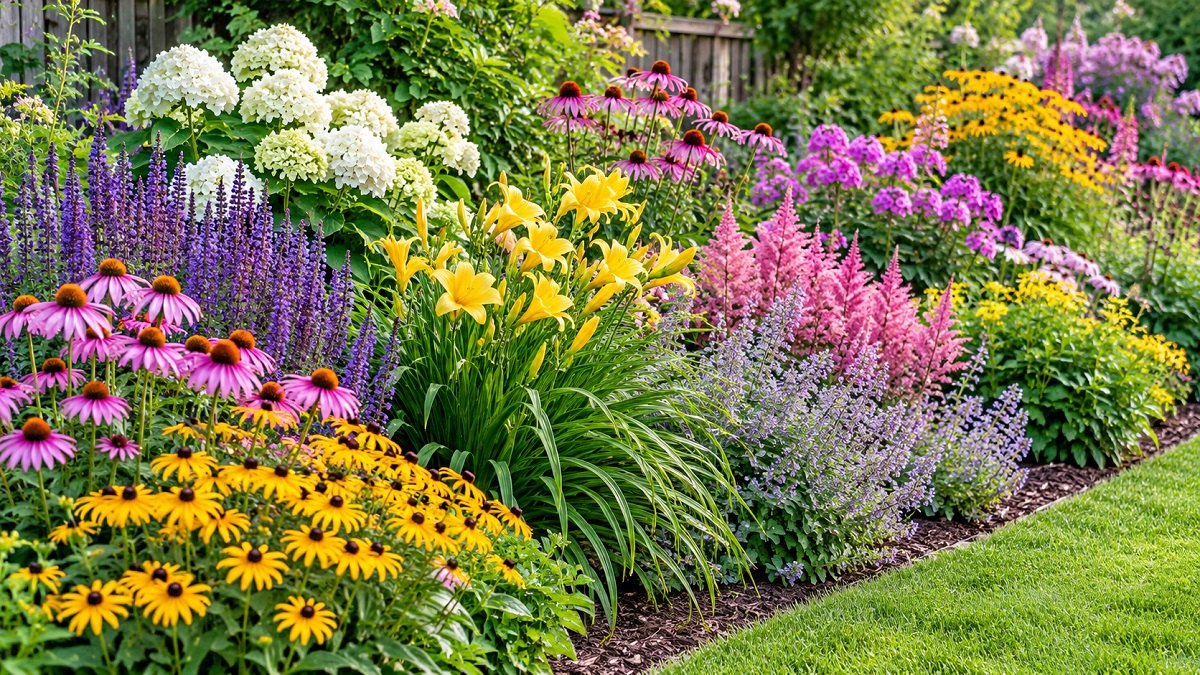
A garden border can look spectacular in early summer, yet lose much of its color before the season is over. One group of flowers finishes blooming, another takes time to develop, and bare patches begin to appear just when the garden should be at its best.
Long-blooming perennials help solve this problem. Unlike plants that put on a brief show and then fade into the background, many dependable perennial varieties produce flowers for several weeks or return with additional blooms after light pruning. When combined thoughtfully, they can keep a border attractive from late spring through summer and into autumn.
The secret is not finding one plant that flowers continuously in every condition. It is choosing varieties that suit your climate, soil and available sunlight, then arranging them so their flowering periods overlap. Catmint and salvia provide early color, coreopsis and blanket flowers brighten the middle of the season, while coneflowers and black-eyed Susans carry the display toward autumn.
In this guide, you will discover 12 long-blooming perennials for vibrant border displays, along with their flowering seasons, preferred growing conditions and practical care requirements. These plants offer options for sunny cottage gardens, pollinator-friendly borders, informal planting schemes and smaller ornamental beds.
Best approach: Combine early, midsummer and late-season flowers instead of relying on a single variety.
A long flowering season is valuable, but it should not be the only consideration when selecting plants for a border. A perennial that flowers for months but struggles in your soil or climate will rarely perform as expected. Start by assessing the site and then choose plants that complement one another.
Many of the longest-flowering ornamental perennials prefer a sunny position with around six or more hours of direct sunlight. Catmint, salvia, coreopsis, yarrow and blanket flower are especially useful in sunny borders. Hardy geraniums are more adaptable, while lavender generally needs generous sunlight and excellent drainage.
If the border receives only a few hours of direct sun, select varieties suited to partial shade rather than forcing sun-loving plants to grow in unsuitable conditions.
Check the expected flowering period of each variety before planting. A border made entirely of early-summer bloomers may look impressive for a few weeks but become less interesting later. Mixing early, middle and late-season performers creates a more reliable sequence of flowers.
Flowers are only part of the display. Silver foliage, fine-textured leaves, upright spikes, rounded flower heads and airy stems give a border structure even when individual plants are between flowering flushes.
For example, lavender's gray-green foliage complements the soft, spreading habit of catmint, while the upright stems of salvia contrast with the daisy-shaped flowers of coreopsis and coneflower.
Some perennials respond well to deadheading, which means removing faded flowers before seeds develop. Others benefit from being lightly sheared after their first flush. These simple tasks can encourage fresh growth and additional blooms, although the results depend on the variety and growing conditions.
If you prefer a relaxed, low-maintenance border, include plants with attractive seed heads and foliage rather than planning to remove every faded flower.
Use this table to compare the general characteristics of these plants before deciding where to place them. Flowering periods and mature dimensions are approximate; cultivar, climate, local growing conditions and care can all influence the results.
| Perennial | Typical Flowering Period | Flower Colors | Sunlight | Border Position |
|---|---|---|---|---|
| Catmint | Late spring to summer; may rebloom | Blue, violet | Full sun to light shade | Front or middle |
| Perennial salvia | Late spring to summer; often reblooms | Blue, violet, purple, pink | Full sun | Middle |
| Coreopsis | Summer to early autumn | Yellow, gold, sometimes pink | Full sun | Front or middle |
| Purple coneflower | Summer to early autumn | Purple, pink, white and other cultivar colors | Full sun | Middle or back |
| Black-eyed Susan | Midsummer to autumn | Golden yellow | Full sun | Middle or back |
| Yarrow | Late spring through summer; may rebloom | Yellow, white, pink, red | Full sun | Middle or back |
| Blanket flower | Summer into autumn | Red, orange, yellow | Full sun | Front or middle |
| Hardy geranium | Late spring to summer; some bloom longer | Pink, purple, blue, white | Sun to partial shade, depending on variety | Front |
| Gaura | Late spring or summer into autumn | White, pink | Full sun | Middle or back |
| Reblooming daylily | Summer; repeat flowering in selected cultivars | Yellow, orange, red, pink and more | Full sun to light shade | Front or middle |
| Agastache | Summer into autumn, depending on variety | Blue, purple, pink, orange | Full sun | Middle or back |
| Lavender | Late spring or summer, depending on variety | Purple, violet, pink, white | Full sun | Front or middle |
For a border that remains colorful for as long as possible, combine plants with different flowering periods and repeat selected varieties in several places. The goal is to create an overlapping display rather than expect every plant to flower continuously.
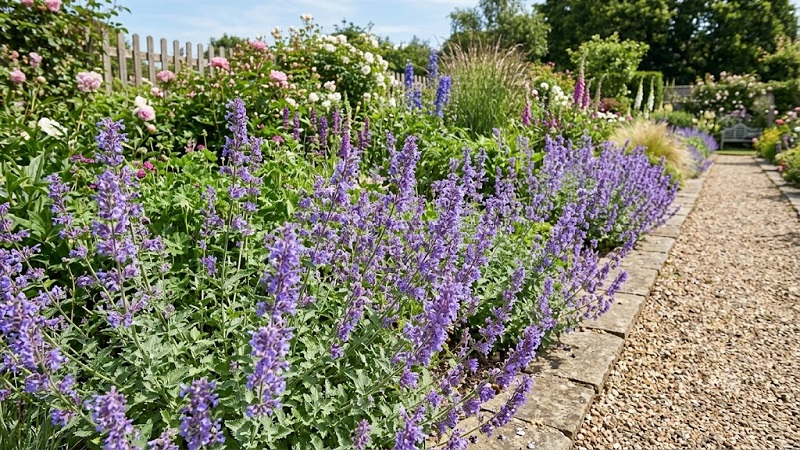
Catmint is a dependable choice when you want a border to feel full without looking overcrowded. Its small blue or violet flowers appear in generous sprays above gray-green foliage, creating a soft haze of color that contrasts beautifully with bold flowers and upright stems.
Many garden catmints flower in late spring or early summer. If the first flush begins to fade, trimming the flower stems can encourage another round of blooms, particularly when the plant is growing vigorously. Some cultivars continue flowering intermittently for much of the growing season.
Plant catmint along the front edge of a sunny border or use it as a soft transition between taller perennials and a lawn or pathway. It combines particularly well with salvia, roses, coreopsis and ornamental grasses.
Allow enough room for the plant to spread. Crowding catmint between larger neighbors reduces air circulation and can hide its naturally attractive shape.
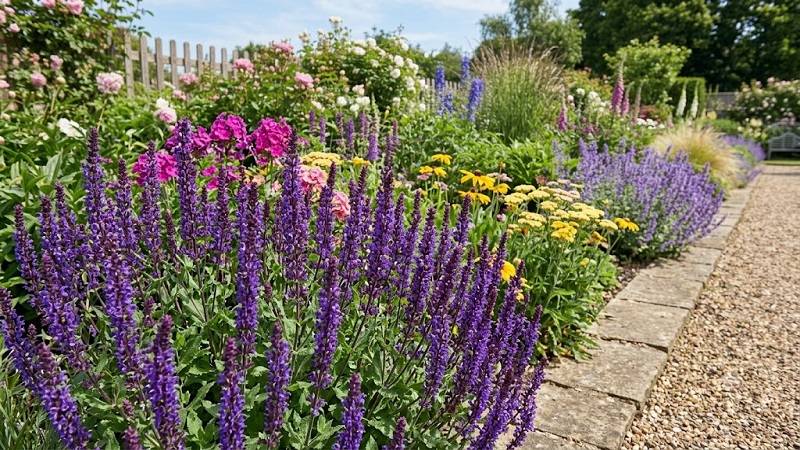
Perennial salvia is useful when a border needs a strong vertical element. Its upright flower spikes create a clear contrast with rounded flower heads, mounded foliage and spreading ground-level plants. Depending on the variety, blooms may be deep purple, blue, violet, pink or white.
Garden salvias such as Salvia nemorosa often produce an early flush followed by additional flowers when spent spikes are removed. Cutting the faded stems back toward the leafy growth encourages the plant to direct energy into fresh shoots rather than seed production.
Repeat salvia in groups of three or five rather than planting a single isolated specimen. Purple flower spikes look especially striking beside golden coreopsis, white daisies and silver-leaved plants.
Choose hardy perennial salvias for your local climate. Not every ornamental salvia is equally cold-hardy, and some species sold as garden salvias are better suited to warm climates.
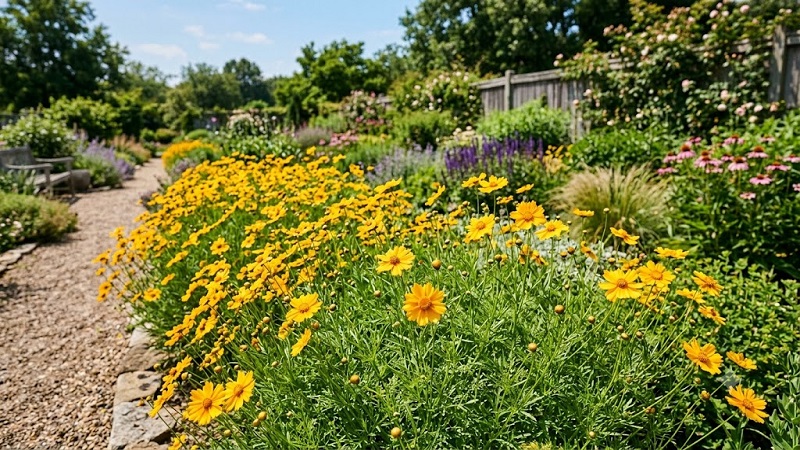
Coreopsis is a strong choice for gardeners who want a bright, sunny border without relying on large, heavy flower heads. Its daisy-like flowers sit above fine foliage, giving the plant a light appearance even when it is producing blooms in abundance.
Flowering often begins in early or midsummer and may continue into autumn. Some cultivars bloom more consistently than others, and removing faded flowers can extend the display. Threadleaf types are particularly attractive when their delicate foliage is allowed to spread around neighboring plants.
Pair coreopsis with purple salvia, blue catmint, coneflowers and ornamental grasses. The yellow blooms bring warmth to cooler flower colors and help visually connect different parts of a mixed planting.
Avoid overfeeding coreopsis with nitrogen-rich fertilizer. Excessively lush growth can come at the expense of flowering, while poorly drained soil can contribute to root problems.
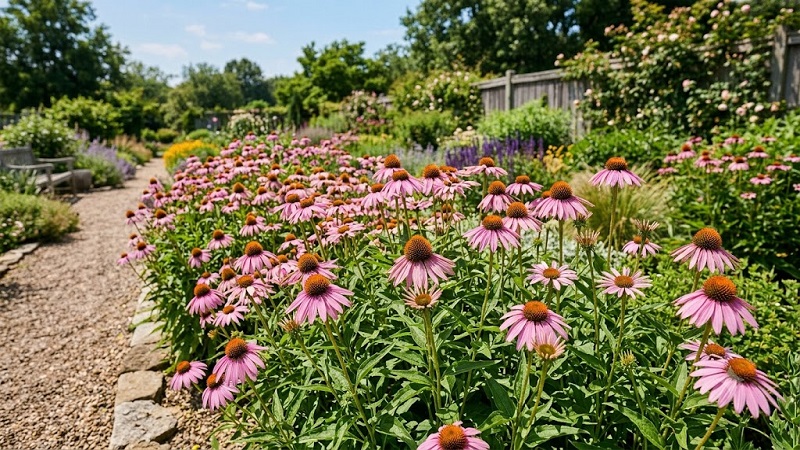
Purple coneflower gives a border a more substantial, naturalistic appearance. Its broad petals surround a prominent central cone, and the sturdy stems rise above leafy clumps without making the planting feel overly formal.
The species typically flowers from summer into early autumn, although the timing varies by region and cultivar. Individual blooms do not last indefinitely, but established plants can produce successive flowers over an extended period.
Coneflowers are also useful in wildlife-friendly borders. Bees and butterflies visit the flowers, while mature seed heads can provide food for birds when left standing.
Use coneflowers in the middle or back of a border, where their strong stems can rise above lower-growing companions. Their pink and purple tones work well with yellow rudbeckia, white daisies and airy ornamental grasses.
Give clumps enough room to develop and avoid keeping the soil constantly wet. If you grow several varieties, check their mature sizes because compact cultivars can be considerably shorter than traditional forms.
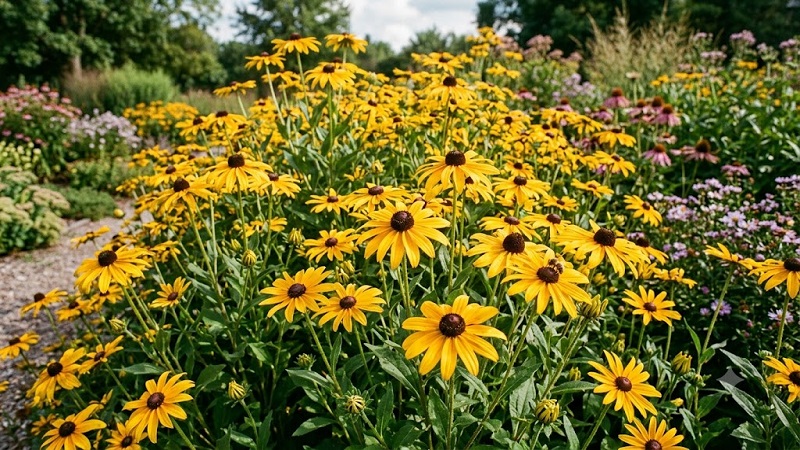
When the garden begins to lose its early-summer freshness, black-eyed Susan can provide a welcome burst of golden color. The familiar yellow petals and dark central disks are easy to recognize, and the flowers combine well with purple, bronze, burgundy and green foliage.
Many garden varieties flower from midsummer into autumn. Established plants often provide a dependable seasonal display without requiring frequent intervention, although the exact flowering period depends on the species, cultivar and local climate.
Black-eyed Susan works well in the middle or rear portion of a sunny border. Plant it with coneflowers and agastache for a pollinator-friendly display, or combine it with pale grasses for a softer, meadow-inspired effect.
Some rudbeckias spread gradually and may self-seed. This can be useful in an informal garden, but gardeners seeking a tightly controlled design should monitor seedlings and divide or thin clumps when needed.
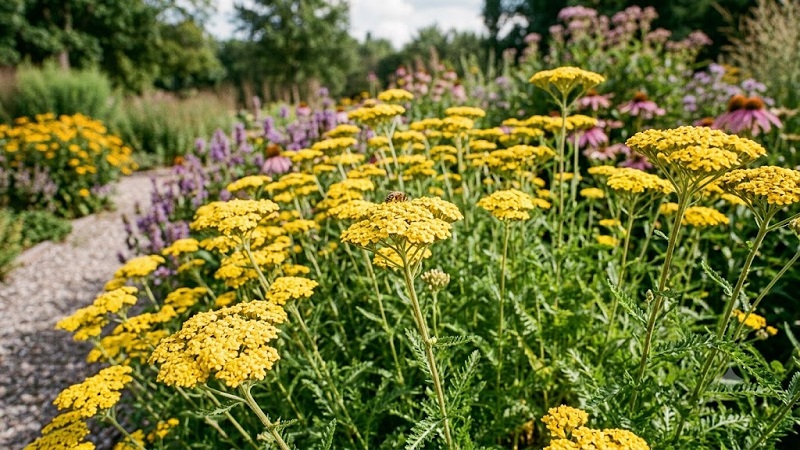
Yarrow offers something different from the rounded or daisy-shaped flowers that dominate many perennial borders. Its broad, flattened clusters form a horizontal layer above finely divided foliage, creating an appealing contrast with upright plants.
Depending on the variety, yarrow flowers may be yellow, white, pink, red or orange. It generally flowers from late spring or early summer through summer, and cutting back faded flower stems can encourage further growth in suitable conditions.
Once established, many yarrows tolerate dry weather and relatively lean soil. They are particularly useful in sunny borders where excessive watering or rich soil would make other plants grow too vigorously.
Plant yarrow beside ornamental grasses, salvia, coreopsis and coneflowers. Its broad flower clusters create a useful visual pause between more dramatic flowers.
Avoid planting yarrow in persistently wet or heavily enriched soil. Some varieties can spread assertively, so allow space for their mature width and choose compact cultivars for small borders.
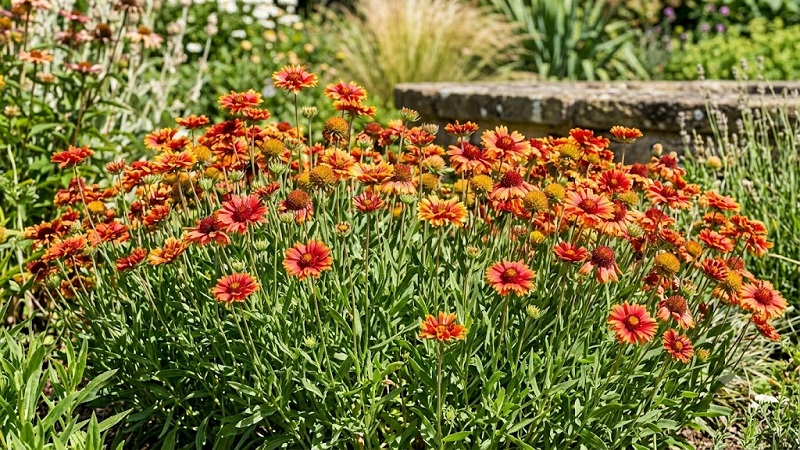
Blanket flower is ideal for gardeners who prefer a vivid, informal planting scheme. Its red, orange and yellow petals create the impression of a small sunset scattered across the border, while its relatively open growth habit allows other plants to remain visible.
Many gaillardias flower over a long summer period and may continue into autumn in favorable conditions. Removing faded flowers can help maintain the display, although some gardeners prefer to leave a few seed heads for a more natural look.
The plant generally performs best in sunny locations with good drainage. It can tolerate heat and relatively dry conditions once established, but prolonged wet soil is a common cause of poor performance.
Place blanket flowers near the front or middle of a sunny border, where their warm colors can be appreciated up close. Combine them with purple salvia, blue catmint or silver foliage for a balanced color scheme.
Some gaillardias are relatively short-lived perennials, so do not assume every plant will remain in place for many years. Good drainage, suitable cultivars and occasional replacement can help maintain a full display.
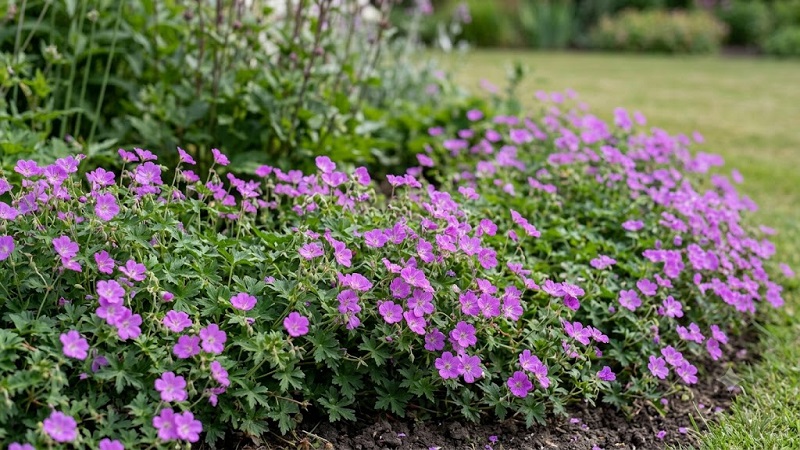
Hardy geraniums are useful for knitting a border together. Unlike the tender bedding geraniums commonly grown in containers, these are perennial garden plants that return from year to year when grown in suitable conditions.
Their flowers may be blue, purple, pink or white, depending on the species and cultivar. Some bloom for several weeks in late spring and early summer, while selected varieties, including 'Rozanne', are known for an especially extended flowering season.
The spreading or mounding foliage helps cover the ground around taller plants, reducing the appearance of bare soil and creating a more established look.
Hardy geraniums are particularly effective at the front of mixed borders, around the base of taller flowers and along informal pathways. Their softer growth makes them good companions for upright salvia, coneflowers and ornamental grasses.
Choose the variety according to its growth habit. Some hardy geraniums form compact clumps, while others spread more widely and can cover neighboring plants if they are not given sufficient space.
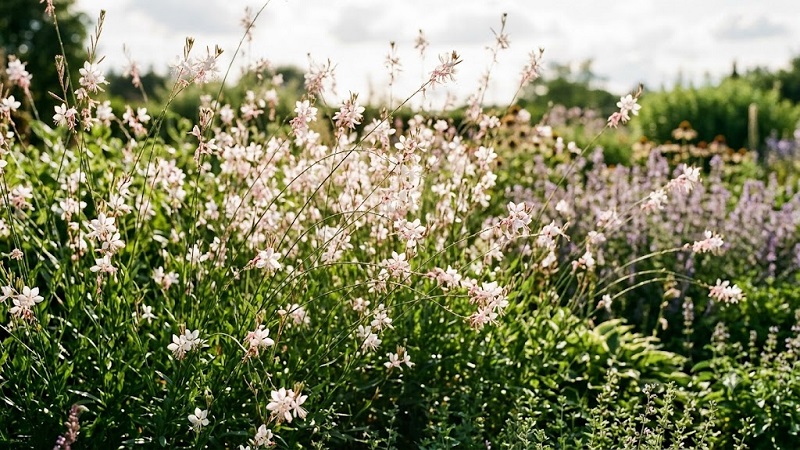
Gaura is a good choice when a border needs movement rather than another dense mass of flowers. Its slender stems carry small white or pink blooms that seem to float above the foliage, creating a light, naturalistic effect.
In warm, sunny conditions, gaura can produce flowers over a long period, often extending from late spring or early summer into autumn. The individual flowers are delicate, but their succession keeps the plant looking fresh.
This perennial is especially effective in informal gardens, gravel gardens and mixed borders with ornamental grasses. It prefers good drainage and can struggle in soil that stays wet for extended periods.
Use gaura between more solid plants such as coneflowers and rudbeckia. The fine stems soften the edges of the planting and create a sense of depth without blocking the flowers behind them.
Allow space for its branching stems, especially in exposed sites. Hardiness varies among varieties, so check whether the selected plant can survive your local winter before treating it as a permanent perennial.
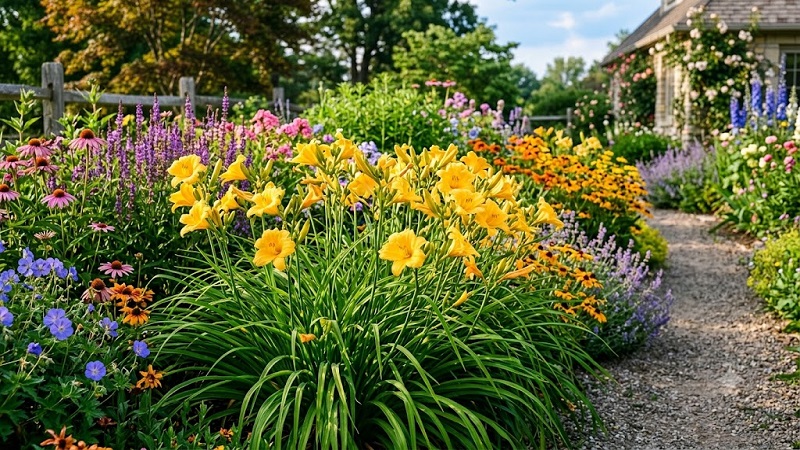
Daylilies are valued for their reliable clumps of arching foliage and large, trumpet-shaped flowers. Although each individual bloom lasts only a day, a mature plant produces multiple buds that open in succession, extending the overall display.
Not all daylilies have the same flowering season. Some bloom once over a relatively concentrated period, while selected reblooming cultivars can produce additional flowers later in summer. Choosing the right variety is therefore more important than relying on the daylily name alone.
Daylilies are useful in the middle of a border or as a repeated edging plant in larger beds. Their foliage provides a strong, grassy shape that contrasts with rounded mounds of catmint and the upright stems of salvia.
For a longer display, combine early-, midseason- and late-flowering cultivars with varieties that rebloom. This approach is more dependable than expecting one daylily to flower throughout the entire summer.
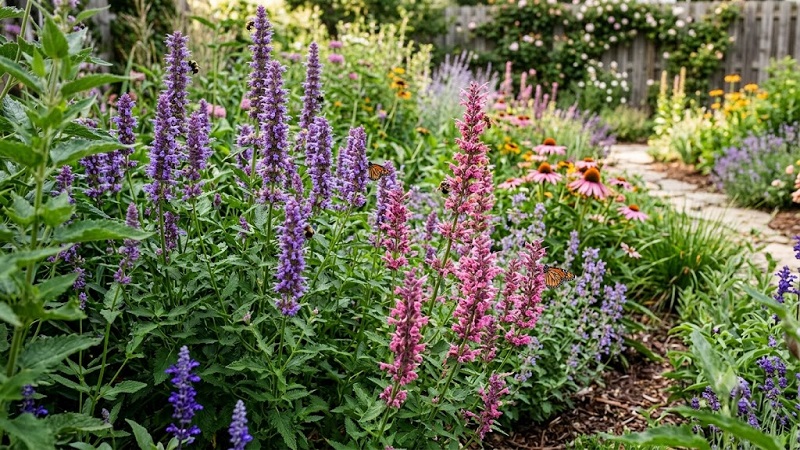
Agastache brings height, fragrance and a slightly wild character to the perennial border. Its upright flower spikes can be blue, violet, pink or orange, depending on the species and cultivar. The flowers are attractive to bees and other visiting pollinators, making the plant a useful addition to wildlife-friendly gardens.
Many agastaches flower from summer into autumn, providing color when earlier perennials begin to fade. The plants generally prefer sunny positions and free-draining soil, although hardiness and moisture requirements vary considerably between species.
Combine agastache with coneflowers, black-eyed Susans and ornamental grasses for a late-summer border with plenty of vertical interest. The flowers also work well with lavender and salvia in gardens that favor purple and blue tones.
Check the hardiness of your chosen cultivar before planting. Some agastaches are much more winter-hardy than others, and a plant that thrives in one climate may behave as a tender perennial elsewhere.
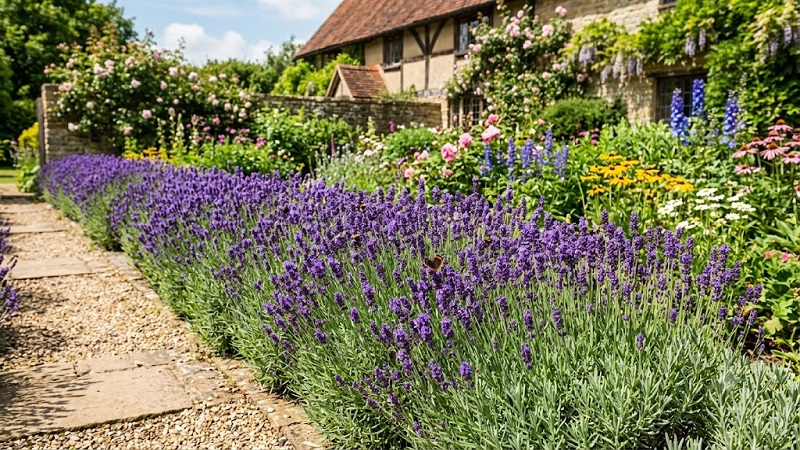
Lavender earns its place in a border through more than its flowers. Its aromatic foliage, compact shape and silvery tones provide structure even when the flowering season has passed. Purple and violet flower spikes are familiar favorites, although pink and white cultivars are also available.
Flowering time depends on the lavender species, cultivar and local climate. Many English lavenders flower in late spring or summer, while other types may begin earlier or continue later in warm regions. Pruning the plant lightly after flowering can help maintain a compact shape.
Good drainage is essential. Lavender is often more likely to struggle in cold, wet soil than in moderately dry conditions, so avoid placing it where water collects after rain.
Plant lavender along a sunny path, at the front of a border or in repeated groups beside roses and catmint. Its tidy mounds contrast with the looser growth of gaura and the bold flower heads of coneflowers.
Choose a lavender species that suits your climate. English lavender is generally more cold-hardy than many French or Spanish types, but all benefit from appropriate drainage and enough sunlight.
The most attractive perennial borders rarely depend on a single plant flowering from spring until frost. Instead, they combine different bloom periods, plant heights and foliage shapes so that the display changes gradually through the season.
Use compact or spreading plants such as hardy geranium, low-growing catmint, compact coreopsis and suitable lavender cultivars. These plants soften the edge and keep the planting connected.
Place salvia, yarrow, blanket flower, daylilies and medium-sized coreopsis here. Their varied flower shapes provide the main body of the display without completely hiding plants behind them.
Use taller coneflowers, agastache, gaura and taller rudbeckia varieties where space allows. Their upright stems help create depth and make the border more visible from a distance.
Too many unrelated colors can make a small border look busy. Choose two or three main flower colors and use foliage to connect the planting.
Repeat the same variety at intervals along the border rather than placing every plant in a separate, isolated group. Repeated clumps create a sense of rhythm and help the design feel intentional.
In a long border, for example, repeat catmint near the front, place salvia at intervals behind it, and distribute coreopsis and coneflowers through the middle. Add late-flowering plants toward the back to maintain interest as summer progresses.
For a sunny border with a mixture of flowers and foliage, start with catmint and compact lavender near the front. Add salvia, coreopsis and blanket flower through the middle, then place coneflowers, agastache and black-eyed Susans toward the back.
This combination brings blue-purple, gold, pink and warm orange tones into the same planting. Its overlapping flowering periods can extend the display from late spring into autumn in suitable climates, while the different plant shapes help the border remain interesting between flowering flushes.
For a small garden, reduce the number of varieties and repeat them more often. A limited selection planted in generous groups usually creates a stronger visual effect than squeezing all 12 plants into a narrow bed.
Remove weeds and loosen compacted soil before installing new perennials. Incorporate organic matter when it is appropriate for the existing soil, but do not assume every flowering plant needs a rich growing medium. Lavender, yarrow and blanket flower generally prefer good drainage and can perform poorly in persistently wet soil.
If the border is waterlogged, improve drainage or select plants adapted to the conditions rather than trying to compensate with frequent feeding.
Newly planted perennials need regular attention while their roots establish. Water deeply enough to moisten the root zone, then adjust the frequency according to rainfall, temperature, soil type and the needs of each plant.
Once established, drought-tolerant plants such as yarrow, lavender and some catmints may require less frequent irrigation than plants growing in hotter or drier conditions. Do not apply the same watering schedule to every plant in the border.
Deadheading removes faded flowers before they develop seeds. It can encourage continued flowering in plants that respond well to this practice, including many salvias, coreopsis and blanket flowers.
Use clean hand pruners or garden scissors and cut back to a suitable leaf, side shoot or branching point. There is no need to remove every spent flower immediately, particularly when seed heads provide food for birds or add winter interest.
Some perennials become leggy or untidy after their first major flowering period. Catmint, for example, often responds well to trimming after its initial display. Certain other varieties may also produce fresh growth and flowers following a suitable cutback.
The timing and extent of pruning depend on the plant. Avoid cutting every perennial to the ground simply because one variety benefits from a harder trim. Follow the needs of each species and cultivar.
Too much nitrogen can encourage soft leafy growth at the expense of flowers in some perennials. If your soil is reasonably fertile and the plants are growing well, additional feeding may not be necessary.
Use a soil test when possible, and apply fertilizer according to the actual needs of the planting rather than following a fixed schedule for every species.
Some perennials gradually form larger clumps that can become crowded or flower less freely. Dividing suitable plants helps rejuvenate the planting and provides extra plants for other parts of the garden.
The best time varies by species and climate. Many clump-forming perennials can be divided during a suitable period of mild weather when they are not under heat or drought stress. Research the preferred timing for each plant before lifting it.
A suitable mulch helps reduce weeds and moderate soil moisture. Keep mulch away from crowns and stems, especially around plants that are sensitive to excessive moisture. Do not use a thick, moisture-retaining mulch to compensate for poor drainage around lavender or other drought-tolerant plants.
Make a note of when each variety begins flowering, when its best display ends and where gaps appear. This information is more useful than a generic flowering calendar because local temperatures, rainfall and sunlight affect plant performance.
If a gap appears in late summer, consider adding a later-flowering perennial or moving a plant that has become too large. Small adjustments each year can steadily improve the border without requiring a complete redesign.
A plant may have the perfect flower color but still be unsuitable for your garden. Check its sunlight requirements, drainage preferences, mature dimensions and climate suitability before buying it.
Even plants described as long-blooming may have short pauses between flushes. Weather, watering, soil fertility and cultivar differences all affect flowering. Overlapping several varieties is more dependable than expecting one plant to carry the entire season.
A border with plants of identical height can look flat. Combine low mounds, medium-sized flowering plants and taller accents to create depth, while avoiding arrangements that completely hide smaller plants.
Small nursery plants can grow considerably wider during their first few seasons. Follow the recommended spacing on the plant label and allow for the mature size of each variety. Crowded plants compete for light, water and nutrients and may require more maintenance.
Lavender, yarrow and blanket flower are particularly poor choices for permanently wet soil. If plants repeatedly decline despite regular watering, examine the drainage and watering frequency rather than automatically adding more water or fertilizer.
A perfectly tidy border is not always the most useful one for wildlife. Seed heads from coneflowers and rudbeckias can add texture and provide food for birds. Leave selected stems standing where appropriate, then remove damaged or unwanted growth during seasonal cleanup.
Catmint, selected hardy geraniums, coreopsis, perennial salvia, blanket flower and gaura can all provide extended flowering under suitable conditions. The actual bloom period varies by cultivar, climate and care, so combine several varieties for the most reliable seasonal display.
Yes. Combine plants with overlapping flowering periods instead of relying on a single long-blooming variety. Catmint and salvia can provide earlier color, coreopsis and blanket flower can brighten summer, and coneflowers, rudbeckias and suitable agastaches can extend the display into autumn.
Coreopsis, salvia, yarrow, blanket flower, lavender and many agastaches perform well in sunny positions with suitable drainage. Check the needs of individual varieties, particularly if your garden experiences intense heat or prolonged dry spells.
Catmint, salvia, coneflower, agastache and yarrow are useful choices for pollinator-friendly borders. Plant several flowering varieties with different bloom periods, and avoid unnecessary pesticide applications when pollinators are visiting the flowers.
Not all of them. Removing faded flowers can encourage further flowering in many salvias, coreopsis and blanket flowers, while some rudbeckias can remain attractive without frequent deadheading. Leave selected seed heads if you want to provide food for birds or maintain winter interest.
Water newly planted perennials regularly while they establish. Afterward, adjust irrigation according to rainfall, soil moisture, temperature and each plant's needs. Lavender and yarrow generally prefer better drainage and less frequent watering than plants that need consistently moist soil.
Yes. Compact coreopsis, lavender, catmint, salvia and some daylilies can grow well in suitably sized containers. Choose pots with drainage holes, use a suitable potting mix and water according to the plant's requirements. Container plants usually need closer monitoring than established plants growing in the ground.
Planting time depends on your climate and the species. Spring and mild autumn weather are suitable for many hardy perennials because temperatures are less stressful than during extreme heat. In hot regions, avoid transplanting during the hottest part of the year when possible, and provide appropriate watering while roots establish.
Catmint, coreopsis, yarrow, coneflower and selected rudbeckias can be relatively easy to maintain when planted in suitable conditions. Match the plants to the soil and sunlight, allow for mature growth, and choose varieties that do not require frequent staking or intensive pruning.
Choose a limited group of compact varieties and repeat them throughout the border. Combine early-, middle- and late-season bloomers, and use foliage contrast to maintain interest between flowering periods. Always check the mature width of each plant before deciding how closely to space it.
A vibrant perennial border does not have to depend on a brief burst of spring flowers or a single peak in midsummer. With a thoughtful selection of long-blooming plants, you can create a garden that changes naturally through the seasons while maintaining plenty of color, texture and interest.
Start with dependable plants such as catmint, salvia and coreopsis, then introduce coneflowers, blanket flowers, rudbeckias and other later-season performers. Add lavender or hardy geranium for attractive foliage and a softer border edge, and use agastache or gaura where a little extra height and movement would improve the design.
Most importantly, match your plants to the growing conditions you actually have. Suitable sunlight, well-drained soil where required, appropriate watering and occasional pruning will do more for a lasting display than simply buying the largest possible selection of flowers.
Plant with the whole season in mind, observe how the border develops and adjust the arrangement as needed. Over time, your garden can become a colorful, layered display that offers something interesting from the first flowers of the season to the final blooms of autumn.
Continue exploring our gardening guides with more plant profiles, growing tips, and practical advice for creating a healthy, productive garden.