Rock Gardens: Design, Plants, Ideas & Complete Care Guide
Learn how to design and build a rock garden with the right rocks, soil, plants, drainage, watering, and maintenance tips for beautiful, low-maintenance spaces.
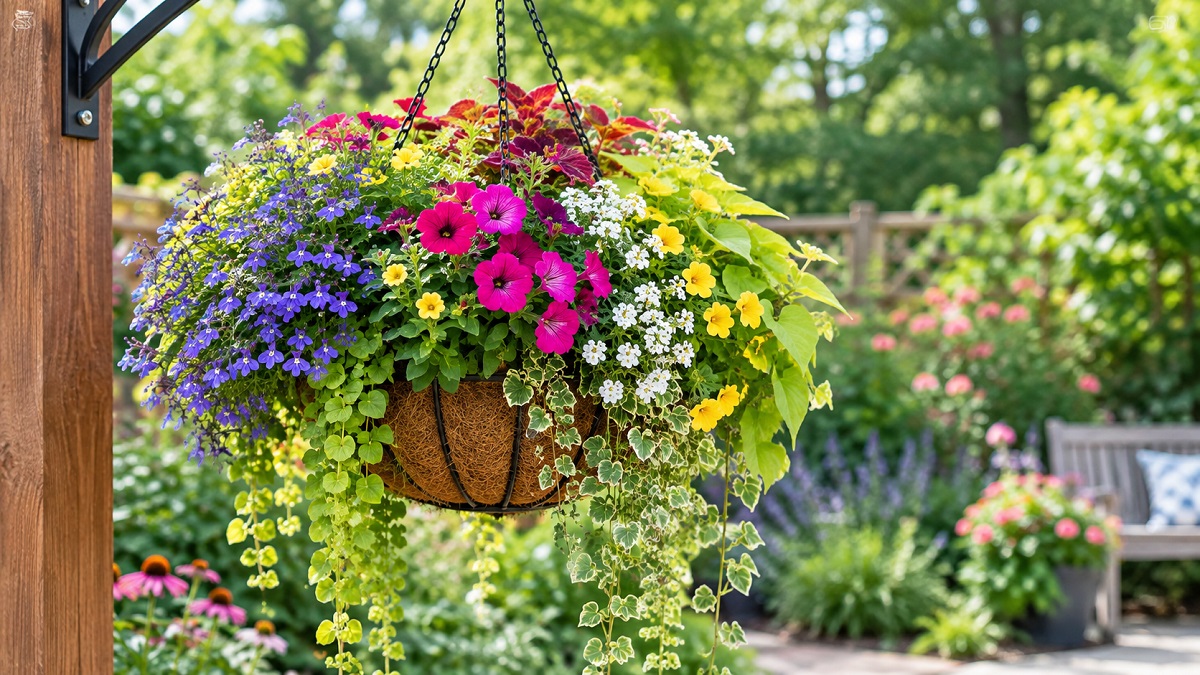
Hanging baskets are one of the easiest ways to bring plants into places where there is little room for a traditional garden bed. A porch, balcony, patio, fence, doorway, or sunny wall can become a useful growing space when a sturdy basket is suspended above the ground.
They are especially useful for gardeners who want seasonal color without committing to a permanent planting area. A single basket can be filled with flowers for summer, foliage plants for a shaded corner, herbs for a kitchen garden, or trailing plants that soften hard edges around a home.
The secret to a successful hanging basket is not simply choosing attractive plants. The container, growing medium, light level, watering routine, plant spacing, and drainage all influence how well the display performs. Hanging baskets also dry out more quickly than many containers sitting on the ground, so they need a little more attention during hot or windy weather.
For the best results: match the plants to the available light and keep the basket consistently watered without leaving it waterlogged.
Hanging baskets make use of vertical space rather than valuable ground area. That makes them particularly practical for balconies, small courtyards, apartments, porches, and compact gardens.
They can also change the way a garden feels. Flowers positioned at eye level are easier to notice, while trailing foliage can soften railings, posts, walls, and other structural features. Several baskets placed at different heights can create a layered effect without requiring a large planting bed.
Another advantage is flexibility. Containers can be moved when conditions change, although larger baskets should be handled carefully because wet growing media can become surprisingly heavy. Seasonal displays can also be replaced without disturbing permanent plants in the garden.
Hanging baskets allow gardeners to grow ornamental plants where there is little or no usable soil. A sunny balcony railing or sheltered porch can become a productive growing area with just a few well-positioned containers.
Because the plants are contained, it is relatively simple to replace tired seasonal displays with fresh plants. This makes hanging baskets useful for gardeners who enjoy changing the appearance of their outdoor space throughout the year.
Hanging baskets are available in plastic, wire, metal, woven materials, ceramic, and other finishes. The appearance matters, but practical features should come first.
A larger basket generally provides more room for roots and holds more growing medium. It may therefore stay moist longer than a very small container. However, larger baskets become heavier after watering, so the supporting structure must be strong enough to carry the load.
Good drainage is essential. Excess water needs a clear route out of the container so roots are not left sitting in saturated conditions.
Lightweight plastic baskets are convenient when weight is a concern. Wire baskets lined with moss or a suitable liner can create a softer, traditional appearance. Solid containers can retain moisture differently depending on their material and exposure to sun.
Never overlook the hardware. Hooks and brackets should be firmly attached to a suitable structure. A mature basket may weigh considerably more than it did when first planted, particularly after heavy watering.
The best hanging-basket plants tend to have one or more useful characteristics: they remain relatively compact, tolerate container conditions, flower for a long period, or naturally trail over the edge.
Petunias, calibrachoa, begonias, fuchsias, lobelia, bacopa, ivy, sweet potato vine, trailing verbena, and many other ornamental plants can work well depending on local climate and light conditions.
You do not necessarily need to combine several species. A single plant variety repeated throughout a basket can look clean and intentional. Mixed baskets are more varied, but they require plants with similar requirements.
| Plant Type | Typical Light Preference | Growth Habit | Basket Use |
|---|---|---|---|
| Petunia | Sun to partial sun | Trailing or mounding | Flowering displays |
| Calibrachoa | Sun | Trailing | Long-flowering baskets |
| Begonia | Partial shade to shade | Mounding or trailing | Shaded displays |
| Fuchsia | Partial shade | Arching and trailing | Cooler, sheltered baskets |
| Bacopa | Sun to partial shade | Trailing | Soft trailing edges |
| Ivy | Shade to partial shade | Trailing | Foliage displays |
A basket exposed to several hours of direct sunlight can become hot and dry, particularly when it is hanging against a wall or positioned where wind can pass around it. Choose plants that can tolerate the conditions rather than selecting varieties based only on flower color.
Petunias and calibrachoa are popular choices for sunny displays because their trailing growth can spill naturally over the sides. Trailing verbena can also create a relaxed, cascading effect.
When growing in strong sun, pay particular attention to watering. A plant that handles full sun in the ground may still need more frequent irrigation when confined to a relatively small basket.
Shaded locations do not have to mean boring containers. Foliage can become the main attraction, while flowers provide seasonal highlights.
Begonias, fuchsias, ivy, and other shade-tolerant plants can work well where direct sunlight is limited. The exact choice should reflect the amount of light available rather than simply labeling the location as “shade.”
Bright indirect light can be very different from deep shade. Observe the location throughout the day before selecting plants, especially if a nearby wall, tree, or building changes the amount of sunlight reaching the basket.
Avoid filling a hanging basket with ordinary garden soil. It can be heavy, compact over time, and difficult to manage in a suspended container.
A quality container potting mix is usually a better choice. The medium should retain enough moisture for the plants while still allowing excess water to drain away.
A lightweight mix also helps keep the finished basket manageable. Remember that the weight of the container increases substantially after watering.
Planting is easier when you plan the arrangement before adding the plants permanently. Think about how each plant will grow rather than judging the basket only by how it looks on planting day.
Make sure the container is clean and that its drainage openings are unobstructed. If the basket requires a liner, position it securely before adding the growing medium.
Fill the basket partially, leaving enough room for the plants and a small space near the top for watering. Avoid packing the mix down excessively.
Place taller or more upright plants toward the center and trailing plants closer to the edges. In a one-sided display, the arrangement can be adjusted so the basket looks attractive from the main viewing direction.
Add more potting mix around each plant and gently firm it into position. Do not bury the stems deeper than they were growing in their original containers unless the particular plant requires otherwise.
Water slowly after planting until moisture reaches the entire root zone and excess water begins to drain from the bottom.
Keep an eye on the plants during the first week. They may need time to adjust to their new environment, especially if the basket is exposed to strong sunlight or wind.
Watering is probably the most important routine task when caring for hanging baskets. Because the container is elevated and surrounded by moving air, it can lose moisture quickly.
Do not water according to a rigid calendar alone. Check the growing medium and consider the weather. Hot, dry, windy conditions may require more frequent watering, while cool or cloudy weather can slow moisture loss.
When watering, apply enough water to moisten the root zone thoroughly rather than giving the basket a quick splash. If water immediately runs down the sides without soaking the medium, the mix may have become excessively dry or hydrophobic.
At the same time, avoid keeping the roots constantly saturated. Good drainage is just as important as adequate moisture.
Plants in hanging baskets have limited access to nutrients because their roots are confined to a relatively small amount of growing medium. Regular feeding can therefore help support vigorous growth and flowering.
Follow the instructions for the fertilizer you choose rather than assuming that more food will produce more flowers. Excess fertilizer can damage roots and create unnecessary salt buildup in the growing medium.
A balanced feeding routine is particularly useful during periods of active growth. Reduce or stop feeding when plants are naturally entering dormancy or when conditions are unsuitable for strong growth.
Regular grooming keeps a hanging basket looking fuller and prevents individual plants from becoming untidy.
Remove faded flowers when appropriate to encourage continued blooming in plants that respond well to deadheading. Long or uneven stems can also be trimmed to maintain a balanced shape.
Do not automatically cut every trailing stem short. Some plants look their best when allowed to cascade naturally over the sides. The aim is to control excessive or damaged growth while preserving the plant's natural form.
Wilting often indicates a lack of available water, but it is not always proof that the plant simply needs more irrigation. Check the growing medium first. If it is wet and the plant remains wilted, root problems may be involved.
Yellow foliage can have several causes, including watering problems, poor drainage, insufficient light, nutrient issues, or natural aging of older leaves. Look at the overall condition of the plant before changing your care routine.
Poor flowering may result from insufficient light, excessive nitrogen, unsuitable temperatures, inconsistent watering, or simply a plant that is not well matched to the location.
Small baskets, strong sunlight, wind, and highly exposed locations can all increase moisture loss. Moving the basket to a slightly more sheltered position or choosing a larger container may help.
Aphids, whiteflies, spider mites, and other pests can occasionally appear on container-grown plants. Inspect leaves and stems regularly, especially when new growth looks distorted or sticky.
Start with practical measures such as removing heavily affected foliage, washing pests from plants with an appropriate water spray, and encouraging beneficial insects. If treatment is necessary, choose a product suitable for the plant and follow its label directions carefully.
Spring is an excellent time to prepare baskets for the growing season. Clean old containers, replace tired growing medium where necessary, inspect hanging hardware, and choose plants suited to the expected temperatures.
Summer usually brings the greatest demand for watering. Check baskets regularly during hot weather and pay close attention to plants positioned in full sun or exposed to drying winds.
Remove declining annuals and replace them with plants that tolerate cooler conditions where appropriate. In frost-prone areas, bring suitable tender plants into protection before damaging temperatures arrive.
Winter care depends heavily on climate and the plants being grown. Some baskets can remain outdoors, while tender plants may need protection. Avoid keeping dormant plants excessively wet.
A successful basket does not need dozens of different plants. Good design often comes from repeating a simple combination of forms and textures.
A common container-design method is to combine an upright focal plant, fuller plants around it, and trailing plants that spill over the edges. This creates height, volume, and movement.
A basket filled with one vigorous flowering variety can have a strong visual impact. This approach is especially useful when you want a simple, coordinated appearance.
Flowers are not essential. Plants with contrasting leaf colors, shapes, and textures can create attractive displays throughout the season.
Some herbs can be grown successfully in hanging containers, particularly where the basket receives enough sunlight. Position edible plants where they can be easily reached for harvesting.
Instead of placing every basket at the same height, stagger them where the supporting structure allows. This creates a more natural arrangement and helps prevent the display from looking like a row of identical containers.
A basket often looks sparse immediately after planting because the young plants have not yet filled the available space. Resist the temptation to overcrowd it simply to make it look mature on day one.
Give plants room to establish and then encourage branching through appropriate trimming. Regular deadheading and balanced feeding can help maintain a fresh appearance during the growing season.
Turning a basket periodically can also help when plants are receiving uneven light. This is particularly useful for baskets viewed from several directions.
Yes. Hanging baskets are not limited to ornamental plants. Compact vegetables and some edible plants can be grown in containers when the basket is large enough and receives suitable light.
Trailing or compact crops are generally easier to manage than large plants. Herbs, compact tomatoes, strawberries, and some leafy crops may be suitable depending on the container, climate, and variety.
Edible plants usually need particularly consistent watering because drought stress can affect both growth and harvest quality. Make sure the basket is also positioned somewhere that makes harvesting convenient.
Before installing a hanging basket, spend a day observing the proposed location. Notice how much direct sunlight reaches it, whether the area becomes windy, and how easily you can reach the basket for watering and maintenance.
Accessibility matters more than many gardeners expect. A basket that looks wonderful but requires a ladder every time it needs water will quickly become difficult to maintain.
Ideally, place baskets where they can be reached safely and where excess water will not cause problems below.
Wind can increase water loss and cause baskets to swing. Exposed plants may also suffer broken stems or damaged foliage. A sheltered position can make routine care much easier.
Leave enough access around the basket to water, prune, inspect leaves, and remove faded flowers. Easy maintenance is one of the best ways to keep a container looking attractive for longer.
Hanging baskets are a simple way to add another layer to a garden. They can brighten a doorway, soften a balcony, bring flowers closer to eye level, or make use of a space that would otherwise remain empty.
The most attractive displays usually begin with a practical decision: choose plants that genuinely suit the light and growing conditions. From there, good drainage, consistent watering, appropriate feeding, and occasional grooming will do most of the work.
Start with one basket if you are new to container gardening. Once you learn how quickly your particular location dries out and how the plants respond to it, adding more baskets becomes much easier. A thoughtfully maintained basket can provide months of color and foliage while taking up almost no ground space.
Continue exploring our gardening guides with more plant profiles, growing tips, gardening design ideas and practical advice for creating a healthy, productive garden.