Yellowing Leaves on Plants: Causes, Diagnosis & How to Fix Chlorosis
Introduction to Chlorosis
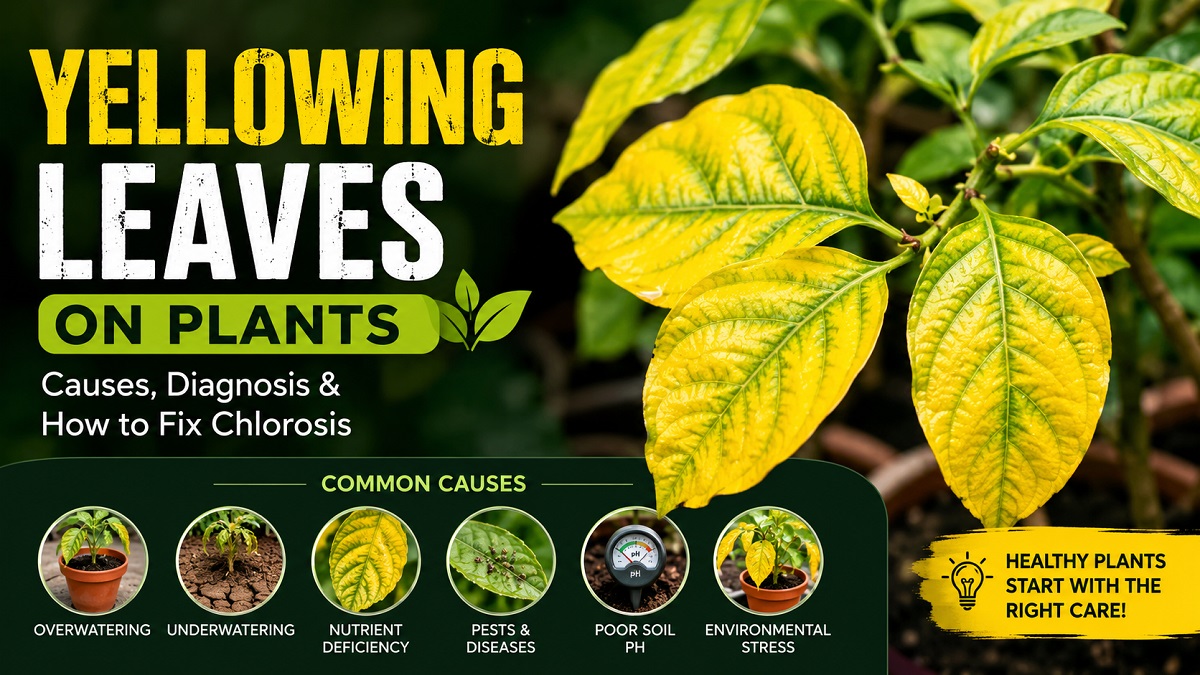
Yellow leaves are one of the most common problems gardeners face. Sometimes it is a natural part of plant growth, but sudden yellowing often indicates a problem with watering, nutrients, roots, pests, or growing conditions. In the botanical world, this phenomenon is formally known as chlorosis. Chlorosis occurs when a plant loses its green pigmentation—specifically chlorophyll—which is crucial for photosynthesis, the process by which plants convert solar light into vital chemical energy.
When chlorophyll production grinds to a halt or existing molecules break down prematurely, the hidden yellow pigments, called carotenoids and xanthophylls, are exposed. While a couple of old yellow leaves near the base of a maturing plant can be entirely natural, a widespread or sudden yellowing layout is an explicit cry for help. Yellow leaves are a signal that something in the growing environment needs attention. Checking watering habits, soil condition, light, and pests can help identify the problem.
Yellow leaves on common plants
| Plant | Common reason |
|---|---|
| Tomato | Nitrogen deficiency, overwatering |
| Peace lily | Too much water |
| Rose | Iron deficiency |
| Pothos | Poor drainage |
| Citrus | Iron deficiency |
Our Yellow Leaf Diagnosis Checklist
- Check soil moisture with a finger test
- Look under leaves for pests
- Check whether new or old leaves are affected
- Inspect roots if the soil stays wet
- Test soil pH if the problem continues
The 6 Main Culprits Behind Yellowing Leaves
Finding the reason behind yellow leaves usually requires checking a few common problems one by one. Leaves can alter colors for a vast assortment of reasons, but almost every issue tracks back to one of six general root categories. Let's dig into each variable to pinpoint what is happening beneath the soil surface.
1. Water Mismanagement (Overwatering vs. Underwatering)
By far, the most frequent driver behind yellowing foliage is incorrect watering cadence. Paradoxically, both an extreme surplus and a severe deficit of moisture can cause your plants to drop their vibrant green shades.
Overwatering: When soil stays wet for too long, roots cannot get enough oxygen. This weakens the plant and reduces its ability to absorb water and nutrients. Deprived of oxygen, the roots drown, rot, and lose their capacity to take up water or minerals. Consequently, the top growth displays classic signs of dehydration, turning a soft, limp, translucent yellow, often initiating from the lower tiers upward.
Underwatering: Conversely, dry soil starves the root hairs of moisture. To conserve resources, the plant deliberately discards foliage. Underwatered leaves tend to feel dry, crisp, and brittle, often browning at the leaf tips and margins before dropping completely.
2. Nutrient Deficiencies
Plants need several nutrients to grow properly. A shortage of nitrogen, iron, magnesium, or potassium can cause different yellowing patterns. The most typical deficiency profiles include:
- Nitrogen (N): As a highly mobile element, nitrogen is siphoned from older, lower leaves to feed vulnerable new growth. This creates a uniform, pale yellowing across older foliage first, while the top leaves remain bright green.
- Iron (Fe): Iron is immobile inside tissue. When missing, the newest, topmost leaves turn a sharp lemon-yellow while the complex network of structural veins remains a striking dark green. This condition is termed interveinal chlorosis.
- Magnesium (Mg): Often found in older leaves, magnesium deficiencies create a marbled or mottled yellowing look between the veins, frequently leaving an inverted "V" shape of green at the leaf base.
- Potassium (K): Leaves lacking potassium display a distinct yellowing or scorching along the extreme outer borders, which eventually advances inward and degrades to a deep brown.
3. Lighting Insufficiencies
Light drives chlorophyll synthesis. If a sun-loving species is cast into a dark, shadowed corner, it cannot produce enough energy to sustain its entire leaf surface area. As a survival response, the plant breaks down chlorophyll in its least productive leaves—typically the lower and interior branches—turning them yellow and shedding them to optimize energy efficiency.
4. Temperature Stress and Drafts
Sudden changes in temperature disrupt the metabolic functions of your plants. Intense heatwaves can cause rapid moisture loss, burning the leaves yellow, while structural exposure to sub-zero cold or frosty windows freezes moisture inside the cell walls, shattering them and manifesting as mushy, blackened, or yellowed patches. Indoor plants positioned next to drafty air conditioning vents or forced-air heaters are exceptionally prone to this brand of environmental shock.
5. Soil pH Inversion
You might be adding ample fertilizer to your garden, but if your soil's pH is unbalanced, those nutrients remain tightly bound chemically, completely inaccessible to the roots. For example, acid-loving plants like azaleas, blueberries, and gardenias cannot absorb iron if the soil pH is alkaline (above 7.0). This generates severe interveinal chlorosis despite iron being naturally abundant in the dirt.
6. Pests and Pathogenic Infections
Tiny sap-sucking insects like spider mites, aphids, thrips, and scale insects puncture individual plant cells to extract essential fluids. Their feeding habits create a characteristic yellow stippling or speckled layout across the foliage. Furthermore, fungal infections (like fusarium wilt) and viral pathogens can disrupt structural vascular channels, choking off nutrients and producing asymmetrical yellow blotches or rings.
Quick Reference Diagnostic Matrix
To assist you in executing a rapid diagnosis, look over the comprehensive reference matrix below. Match your plant's specific symptoms to discover the probable core cause and the target remedy.
| Visual Leaf Symptom | Likely Underlying Cause | Primary Location on Plant | Immediate Resolution Strategy |
|---|---|---|---|
| Uniform, pale yellowing; dropping leaves | Nitrogen Deficiency | Older, lower leaves first | Apply blood meal, fish emulsion, or balanced NPK fertilizer. |
| Yellow blade with distinct dark green veins | Iron Deficiency (Chlorosis) | Newest, top leaves | Apply chelated iron; check and lower soil pH if too alkaline. |
| Soft, limp, wilting yellow leaves; wet soil | Overwatering / Root Rot | Widespread across plant | Cease watering immediately; improve pot drainage; repot if rotten. |
| Crisp, brittle yellow edges; dry soil | Underwatering | Lower foliage & outer tips | Implement a deep, thorough watering cycle; monitor moisture. |
| Fine yellow speckling, stippling, webbing | Sap-Sucking Pests (Mites/Aphids) | Underside and tops of leaves | Spray thoroughly with neem oil or insecticidal soap. |
| Yellowing localized on the side facing away from light | Insufficient Light Exposure | Shaded interior/bottom sections | Relocate plant closer to windows or install dedicated grow lights. |
Step-by-Step Recovery Protocols
Once you have diagnosed the primary culprit utilizing our matrix, it is time to deploy specific rehabilitation processes. Follow these curated step-by-step methodologies to steer your plants back toward lush, vibrant growth.
How to Remediate a Water-Logged Plant
If your diagnostic inspection reveals soggy soil and an unpleasant, marshy aroma emanating from the root zone, your plant is battling root rot. Follow these steps immediately:
- Extract the Plant: Gently slide the root ball completely out of its container.
- Inspect the Roots: Healthy roots should appear firm and white. If you observe soft, mushy, black, or foul-smelling root strands, your plant has structural rot.
- Prune Affected Zones: Sterilize a pair of sharp pruning shears with rubbing alcohol and cut away all diseased, black roots.
- Repot into Fresh Soil: Discard the old, contaminated, oxygen-deprived potting mix. Select a clean container with ample drainage holes and fill it with a well-aerated, loose potting blend augmented with perlite or coarse sand.
- Adjust Habits: Going forward, utilize the "finger test"—only water when the top two inches of soil feel completely dry to the touch.
Fixing Chronic Nutrient Deficiencies
When dealing with mineral shortfalls, adding generic fertilizer blindly isn't always the wisest choice. Precision application delivers far faster turnarounds:
For Nitrogen issues, top-dress your soil with organic compost, well-rotted manure, or a liquid fish emulsion for a rapid nitrogen hit. For Iron deficiencies, spraying the leaves with a foliar application of chelated iron provides near-instantaneous relief, as the leaves absorb the mineral directly through their stomata. Long-term, you should adjust the soil pH to a range of 6.0 to 6.5, which is the sweet spot where iron, magnesium, and phosphorus remain optimally soluble for the majority of plant varieties.
Preventative Gardening Practices
The ultimate strategy to manage yellowing leaves is to avoid them entirely by setting up an environment where chlorosis struggles to take root. Emphasize these core organic habits:
Invest in High-Quality Soil: The foundation of plant vitality rests in the structural composition of the substrate. Always opt for loose, crumbly loam enhanced with rich organic matter. Organic components serve as a natural buffer, gradually releasing micronutrients while supporting proper drainage.
Seasonal Monitoring: Keep a close eye on your garden as seasons transition. A plant that thrives in a south-facing window during the dim winter months might suffer from leaf scorch and yellowing in the height of summer. Be ready to pivot, shifting containers or setting up shade cloths to maintain stable conditions.
Yellow Leaves vs Natural Aging
Not every yellow leaf indicates a problem. Older leaves naturally turn yellow and fall as plants redirect energy toward new growth. The location of yellowing helps identify whether it is normal aging or a care issue.