Chemical Pesticides in Gardening: Types, Safe Use, Benefits & Environmental Risks
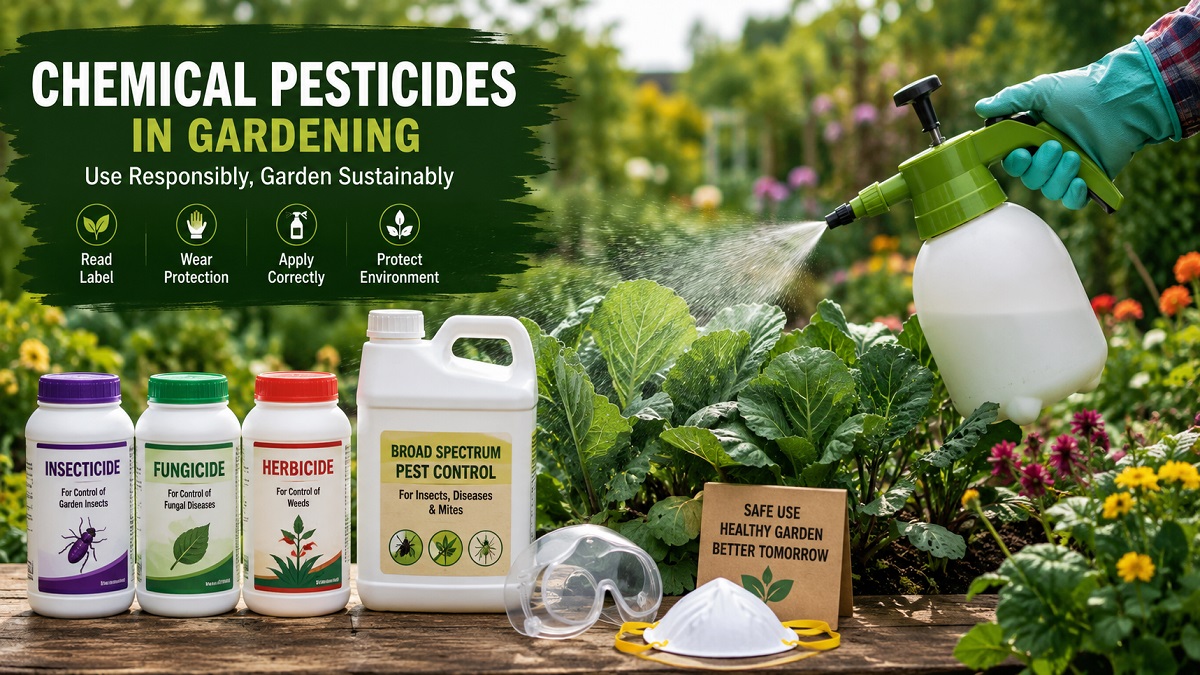
Introduction to Chemical Crop Protection
For centuries, gardeners and agriculturists have engaged in a relentless battle against pests, weeds, and pathogens that threaten the health and yield of cultivated plants. Within home gardening, the introduction of synthetic chemical pesticides during the mid-20th century transformed how horticulturists combat destructive infestations. While organic and cultural control methods remain integral pillars of modern sustainable gardening, chemical pesticides provide unparalleled speed, target specificity, and curative power when pest populations surge beyond acceptable thresholds.
Understanding chemical pesticides requires looking beyond the broad label of "bug sprays." These substances comprise a highly engineered spectrum of synthetic compounds, each designed with distinct modes of action, chemical half-lives, and environmental profiles. When applied with precision, they protect delicate ornamental flowers, stop devastating fungal blights on soft fruits, and preserve the structural integrity of backyard vegetable plots. Improper use, however, can damage soil food webs, encourage pest resistance, and endanger non-target organisms like honeybees and songbirds.
This guide explains how chemical pesticides work, when they are useful, and how gardeners can use them responsibly while protecting beneficial insects and soil health. By examining their chemical structures, mechanical pathways, safe application protocols, and roles within an Integrated Pest Management (IPM) framework, home gardeners can make informed, responsible choices that balance immediate plant protection with long-term ecological stewardship.
Classification by Target Organism
Chemical pesticides are broadly classified by the specific category of pest they are formulated to suppress or eliminate. Using the correct class ensures that target biological pathways are disrupted without wasting resources or risking collateral plant toxicity.
1. Insecticides
Insecticides target members of the class Insecta and related arthropods. These compounds typically attack the nervous system, reproductive capacity, or chitinous exoskeleton development of insects. Common subcategories include contact insecticides, which destroy pests upon direct exposure or ingestion of treated foliage, and systemic insecticides, which migrate through the vascular system of the plant to eliminate sap-sucking pests like aphids, thrips, and whiteflies.
2. Herbicides
Herbicides eliminate unwanted plant species, colloquially known as weeds, which compete with desirable garden plants for sunlight, moisture, and soil nutrients. Herbicides are categorized into selective variants (which kill specific plant groups, such as broadleaf weeds, while leaving turfgrass unharmed) and non-selective variants (which eliminate any green plant tissue they contact). They are further classified by application timing: pre-emergent herbicides halt weed seeds from germinating, while post-emergent herbicides kill established, actively growing weeds.
3. Fungicides
Fungicides counteract fungal pathogens responsible for mildew, rusts, leaf spots, and root rots. Unlike insecticides, which are mostly curative, many chemical fungicides operate protectively. They form a chemical barrier on leaf surfaces to prevent fungal spores from germinating and penetrating plant cells. Modern systemic fungicides can also penetrate plant tissues to halt established internal fungal mycelium development.
4. Miticides and Acaricides
Miticides target arachnid pests, specifically spider mites, which frequently plague indoor and outdoor gardens during hot, dry spells. Because mites possess different physiological structures than insects, standard insecticides often fail to suppress them. Miticides are engineered to disrupt the specific metabolic processes of arachnids, frequently targeting their egg and larval stages to break the reproductive cycle.
Modes of Action and Chemical Behavior
The efficiency of a chemical pesticide depends fundamentally on its mode of action—the specific biological or biochemical mechanism through which it controls a target pest. Understanding these modes prevents gardeners from inadvertently misapplying treatments or accelerating pest resistance mutations.
Chemical pesticides interact with plants and pests via two primary pathways:
- Contact Pesticides: These chemicals remain superficially on the exterior of plant tissues. To be effective, the pest must directly touch the wet chemical spray or consume the treated leaf surface. Contact pesticides are highly vulnerable to degradation by ultraviolet sunlight and can be washed away by rainfall or overhead irrigation, requiring careful timing during application.
- Systemic Pesticides: These compounds are absorbed into the plant's roots or foliage and translocated throughout its vascular system (the xylem and phloem). Once systemic absorption occurs, any part of the plant becomes toxic to chewing or sap-sucking pests. Systemic pesticides offer long-lasting defense and protect newly emerging leaves, though they must be used carefully on food crops to avoid chemical residues in edible yields.
At the microscopic level, most synthetic insecticides affect the nervous systems of pests. For example, synthetic pyrethroids prolong the opening of sodium channels in nerve cells, causing rapid paralysis ("knockdown") and death. Neonicotinoids bind to nicotinic acetylcholine receptors, overstimulating the pest's nervous system until it fails. In contrast, herbicides like glyphosate block crucial enzyme pathways (such as the EPSP synthase pathway) responsible for synthesizing essential amino acids, causing a slow but complete collapse of the weed over several days.
Common Active Ingredients in Residential Gardening
When selecting a chemical control option at a garden center, the retail brand name is less critical than the active ingredient listed in the fine print. The table below details the primary synthetic chemicals utilized in modern home gardening treatments.
| Active Ingredient | Pesticide Class | Primary Target Pests | Typical Mode of Action |
|---|---|---|---|
| Bifenthrin / Permethrin | Synthetic Pyrethroid | Ants, beetles, caterpillars, mosquitoes | Axonic nerve membrane sodium channel disruptor |
| Acetamiprid / Imidacloprid | Neonicotinoid | Aphids, whiteflies, scale insects, leafminers | Systemic nicotinic acetylcholine receptor agonist |
| Glyphosate | Non-selective Herbicide | Perennial weeds, invasive grasses, brush | Inhibits EPSP synthase amino acid pathway |
| 2,4-D (Dichlorophenoxyacetic acid) | Selective Herbicide | Dandelions, clover, broadleaf lawn weeds | Synthetic auxin that induces rapid, uncontrolled growth |
| Chlorothalonil | Broad-spectrum Fungicide | Powdery mildew, tomato blight, rust, anthracnose | Inactivates cellular enzymes and disrupts respiration |
| Myclobutanil | Systemic Fungicide | Black spot on roses, rusts, powdery mildew | Inhibits fungal sterol biosynthesis required for healthy cell membranes |
Each active ingredient exhibits unique residual behaviors. Pyrethroids bind tightly to organic matter and degrade relatively fast under open sunshine, making them ideal for targeted perimeter applications. Systemic neonicotinoids, while highly effective against hidden sap-suckers, remain active inside plant tissues for weeks or months, meaning their application timing must be carefully managed around blooming periods to protect pollinators.
Balancing Efficacy and Ecological Risks
The clear advantage of synthetic pesticides is their reliable efficacy. They can rapidly halt an out-of-control pest outbreak that threatens to kill mature ornamental trees or ruin an entire season's food harvest. They are highly standardized, simple to dose, and widely accessible. However, their potency presents serious ecological trade-offs that home gardeners must navigate responsibly.
The Pollinator Crisis and Non-Target Harm
The primary concern with residential chemical pesticide use is unintended toxicity to beneficial organisms. Honeybees, native bumblebees, butterflies, and predatory insects (like ladybugs and lacewings) are highly vulnerable to broad-spectrum insecticides. When a gardener sprays a blooming plant with a non-selective pyrethroid or organophosphate, beneficial predators are killed alongside the pests. This often causes a "pest resurgence," where secondary pest populations grow unchecked because their natural biological predators have been eliminated.
Runoff, Aquatic Toxicity, and Soil Degradation
Chemicals applied to suburban gardens do not always stay in place. Overhead irrigation or unexpected downpours can wash residues off leaves and flush them through storm drains into local streams, rivers, and ponds. Compounds like bifenthrin are highly toxic to fish and aquatic invertebrates, even in low concentrations. Furthermore, repeated over-application of heavy fungicides can accumulate in the upper soil profile, harming beneficial mycorrhizal fungi webs and earthworms that maintain natural soil aeration and nutrient cycling.
The Integrated Pest Management (IPM) Framework
To reduce ecological harm without sacrificing garden health, modern horticulturists employ Integrated Pest Management (IPM). Within this framework, synthetic chemical pesticides are not used as a first-line defense, but rather as a calibrated final option when alternative control tiers prove insufficient.
1. Cultural Control (The Foundation)
Cultural methods focus on creating an environment where plants thrive but pests struggle. This involves selecting pest-resistant cultivars, rotating annual crops, ensuring proper spacing for air circulation, and maintaining balanced soil fertility. Healthy, unstressed plants possess robust natural defenses and can withstand minor pest feeding without dropping leaves or losing vigor.
2. Physical and Mechanical Control
Before reaching for a chemical spray, gardeners can mitigate pests through physical disruption. This includes hand-picking large pests like tomato hornworms, washing aphid colonies away with a strong jet of clean water, erecting physical floating row covers over vulnerable vegetable beds, and manually pulling or mulching over weed species.
3. Biological Control
Biological controls leverage nature's checks and balances by introducing or supporting natural predators. Encouraging native birds, maintaining habitats for predatory wasps, and purchasing beneficial nematodes to control soil-dwelling grubs can keep pest populations below damaging economic thresholds without chemical intervention.
4. Chemical Control (The Final Tier)
When physical and biological efforts fail, and pest damage crosses an unacceptable aesthetic or structural threshold, chemical intervention is justified. When this occurs, gardeners should choose the most specific, lowest-risk chemical available (e.g., targeting a specific fungal spot with a localized treatment rather than blanket-spraying the entire garden plot).
Protocols for Safe Mixing, Application, and Storage
When using synthetic chemical pesticides, safety requires strict adherence to legal and scientific instructions. Every chemical container is legally required to carry a manufacturer product label outlining precise application parameters. These labels are not optional guidelines; they are federal regulatory mandates designed to ensure user safety and minimize environmental contamination.
Personal Protective Equipment (PPE)
A significant percentage of accidental pesticide exposure occurs during the mixing phase, when the chemical compound is highly concentrated. Gardeners should never mix or spray chemicals in casual clothing. At a minimum, standard safety equipment includes long-sleeved shirts, heavy-duty pants, closed-toe chemical-resistant footwear, safety goggles to protect against wind drift, and unlined nitrile gloves. Avoid canvas or leather gloves, as they absorb liquids and hold concentrated chemicals against the skin.
Executing the Application
Timing is a critical variable when spraying pesticides. Never apply chemical sprays during windy conditions, as this causes chemical drift onto non-target plants, neighboring properties, or your own face. Avoid applications during mid-day heat; spraying liquid chemicals when ambient temperatures exceed 85°F (29°C) can cause phytotoxicity, burning the plant's foliage. Instead, schedule applications for early dawn or late dusk, when wind speeds are minimal and vital insect pollinators are not actively foraging on flowers.
Responsible Storage and Disposal
Always store pesticides in their original containers with labels completely intact. Never transfer chemicals into food or beverage bottles, which can lead to accidental ingestions. Keep chemicals in a locked, cool, dry cabinet away from children, companion pets, and food storage areas. When disposing of leftover product or empty containers, never pour residues down household sinks, outdoor storm drains, or directly onto the ground. Follow local municipal hazardous waste collection guidelines to ensure safe, legal disposal.