Best Companion Plants for African Daisies
Discover 12 of the best companion plants for African daisies, including lavender, salvia, verbena, alyssum, and gazania, plus planting and design tips.
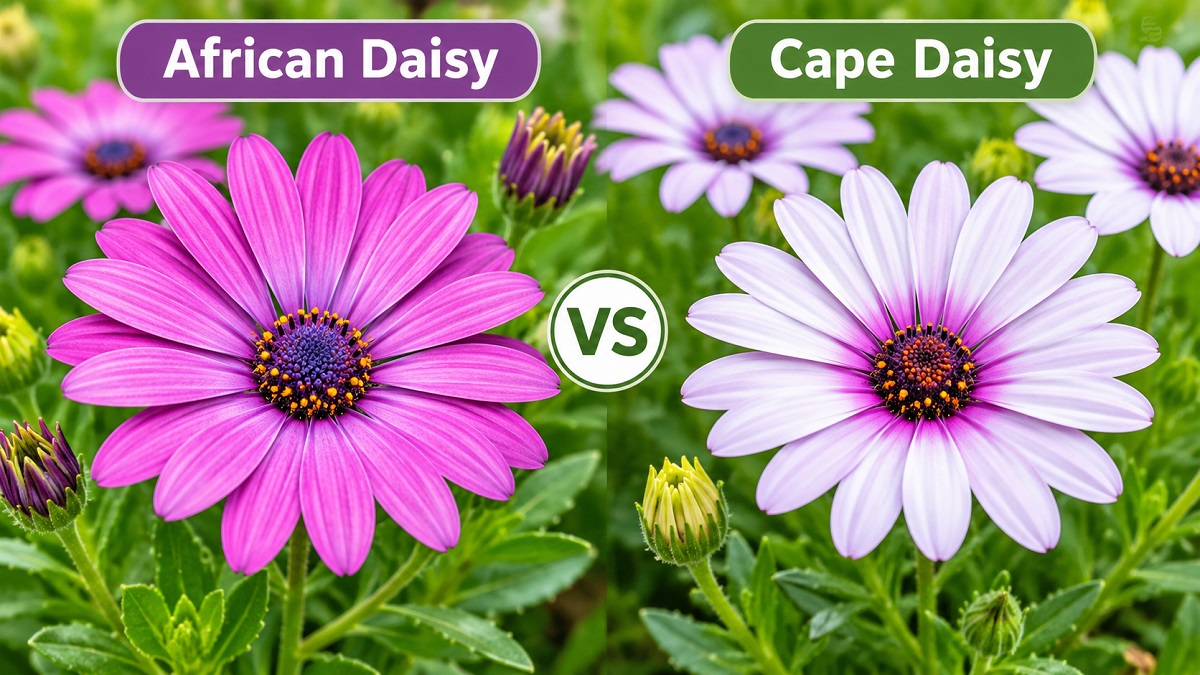
African daisies and Cape daisies are often sold under different names, even though the plants may belong to the same botanical group. Their colorful, daisy-shaped flowers, dark centers and preference for sunny locations make them popular choices for borders, containers and flower beds. Naturally, this leads to a common question: are African daisies and Cape daisies actually different plants?
In many cases, they are the same plant. Osteospermum, a genus of flowering plants native to southern Africa, is widely marketed as both African daisy and Cape daisy. However, these common names are not exclusive to one botanical species. Some plants in the related genus Dimorphotheca also carry one or both names.
Understanding the scientific name is therefore more useful than relying on the name printed on a nursery label. This guide explains how the two names are used, where genuine differences occur, and how to identify and grow these attractive flowers.
Are they the same? Often yes, but not always. The botanical name determines the actual plant.
African daisy and Cape daisy are frequently interchangeable common names for Osteospermum cultivars. Garden centers may use either name when selling the same flowering plant. The difference in labeling does not necessarily indicate a difference in species, flower color or growing requirements.
The confusion comes from the fact that both names describe daisy-like flowers originating from Africa. Several genera in the daisy family have similar appearances, and common names have developed independently across different regions and gardening markets.
For example, Dimorphotheca pluvialis is known as white African daisy as well as Cape daisy in some references. Meanwhile, Osteospermum is commonly sold as Cape daisy and African daisy. This overlapping usage makes identification by common name unreliable.
If a plant is labeled Osteospermum, the names African daisy and Cape daisy may describe the same cultivar. Its botanical identity remains unchanged regardless of the nursery label.
If one label identifies Osteospermum and another identifies Dimorphotheca, they are different botanical genera. Both belong to Asteraceae, but they can differ in growth habit, flowering characteristics and life cycle.
The names African daisy and Cape daisy developed from the plants' geographic origins and familiar flower appearance. Many popular garden varieties come from southern Africa, particularly the Cape region.
African daisy is a broad common name used for several daisy-like flowering plants native to Africa. It is associated with Osteospermum, Dimorphotheca, Arctotis and even Gazania in different gardening references.
Depending on the species, African daisies may produce white, pink, purple, yellow or orange flower heads. Some are compact bedding plants, while others spread along the ground or develop into small flowering shrubs.
Cape daisy is another widely used name for flowering plants associated with southern Africa. It is especially common in the nursery trade for cultivated Osteospermum hybrids.
The name is also applied to certain Dimorphotheca species. Consequently, seeing Cape daisy on a label does not automatically confirm that the plant belongs to Osteospermum.
In short, these are gardening names rather than precise botanical classifications. The scientific name provides the dependable identification.
Although these plants look similar, their botanical identities are not always the same. Osteospermum and Dimorphotheca are recognized as distinct genera in botanical references, although some species have historical synonyms or alternative generic names. Accurate identification may require examining flower structures, foliage, growth habit and accepted scientific names. Flower color alone is not reliable.
Osteospermum includes many popular ornamental varieties grown for their colorful, long-lasting displays. Cultivars may have white, pink, purple, lavender, yellow, orange or multicolored petals. Their centers can be dark purple, blue or yellow, depending on the variety.
Many garden selections form compact, rounded or spreading plants with green, sometimes slightly fleshy leaves. They are commonly used in containers, flower borders, rock gardens and mass plantings.
Garden cultivars are often grown as annuals in colder climates, although some are perennial or shrubby in suitable frost-free conditions.
Dimorphotheca includes several African daisy species, including the well-known Cape marigolds. Some species are annuals with a spreading growth habit and showy flowers.
Dimorphotheca sinuata, for example, produces colorful yellow or orange flowers and is commonly associated with Namaqualand daisy and Cape marigold. Dimorphotheca pluvialis is recognized for its white flowers and is also called white African daisy or Cape daisy in some references.
An interesting feature of this genus is that its flower heads can close during cloudy weather or at night. The plants are particularly associated with sunny conditions and seasonal flowering.
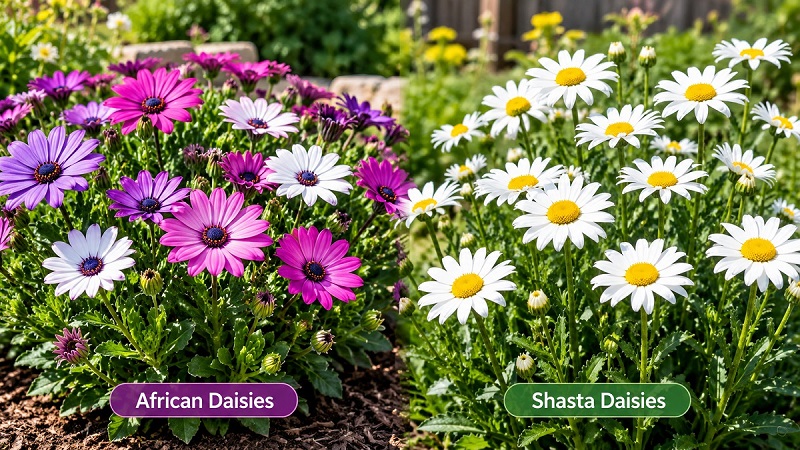
Although these genera look similar, they are not interchangeable scientific names. Botanists can distinguish them through combinations of flower structures, including ray-floret characteristics and involucral bracts. Flower color alone is not a dependable identification method.
If you have two flowering plants without nursery labels, start by examining their leaves, stems, flowers and overall growth habit. These characteristics can provide useful clues, although a precise identification may require a species name or botanical reference.
Look at the flower head, including its central disc and the surrounding ray florets. Many Osteospermum garden cultivars have broad, colorful petals and contrasting centers. The petals can be slightly spoon-shaped, narrow or unusually shaped depending on the cultivar.
Dimorphotheca species also have prominent ray florets, but the colors and proportions vary considerably between species. Some produce white flowers, while others have yellow or orange petals.
Many Osteospermum cultivars have alternate, green leaves with smooth, toothed or lobed margins. Their foliage can be somewhat fleshy.
Leaf shapes in Dimorphotheca vary by species. Some have narrow or deeply divided leaves, while others produce broader foliage. A combination of leaf and flower features is more useful than examining either one alone.
Ornamental Osteospermum cultivars commonly form mounds or spreading clumps. Some remain compact, making them suitable for pots and small garden spaces.
Annual Dimorphotheca species may grow as upright, branching or low-spreading plants, depending on the species. Their seasonal growth cycle can also help with identification.
The following comparison explains how the two names are generally used in gardening. It is not a comparison between two fixed botanical species because both common names can refer to multiple plants.
| Feature | African Daisy | Cape Daisy |
|---|---|---|
| Common name | African daisy | Cape daisy |
| Botanical identity | May refer to several genera | May refer to several genera |
| Popular association | Osteospermum, Dimorphotheca | Osteospermum, Dimorphotheca |
| Plant family | Asteraceae | Asteraceae |
| Native region | Several African regions, depending on species | Often associated with southern Africa |
| Flower colors | White, pink, purple, yellow and orange | White, pink, purple, yellow and orange |
| Flower shape | Daisy-like flower heads | Daisy-like flower heads |
| Growth habit | Upright, compact or spreading | Upright, compact or spreading |
| Life cycle | Annual or perennial, depending on species | Annual or perennial, depending on species |
| Sunlight | Generally full sun | Generally full sun |
| Soil requirement | Well-drained soil | Well-drained soil |
| Garden uses | Containers, borders and beds | Containers, borders and beds |
| Identification | Scientific name is essential | Scientific name is essential |
Comparison takeaway: There is no universal botanical difference between African daisy and Cape daisy. When both names refer to the same Osteospermum cultivar, their appearance and care requirements are identical.
One reason these plants are so popular is their wide range of flower colors. Modern ornamental selections offer more variety than the simple white-and-yellow daisies found in traditional wildflower displays.
Flower shape also varies. Some cultivars have broad, flat petals, while others produce narrow or spoon-shaped rays. Certain varieties have darker undersides that become visible as the petals move or curl.
A useful characteristic to watch is flower opening. Many African daisy relatives respond to sunlight, with blooms closing at night or during dull weather. This behavior varies between species and cultivars.
Plant size depends more on the actual species and cultivar than on whether the nursery calls it an African daisy or Cape daisy.
Many garden Osteospermum selections form neat, rounded clumps. Their manageable size makes them suitable for window boxes, pots, raised beds and the front of flower borders.
Some selections develop outward-growing stems and create a carpet of flowers. These plants are useful for filling gaps between other ornamentals or covering sunny sections of a garden.
Certain Dimorphotheca species, such as D. sinuata, grow as annual flowering plants. They can develop branching stems and spreading foliage, producing an abundant seasonal flower display.
Always check the mature height and spread of the selected cultivar before planting. This is particularly important when growing several varieties together.
If you are growing ornamental Osteospermum, the following conditions provide a useful starting point. Individual species and cultivars may have different requirements, so adjust care according to the plant label.
Full sunlight is important for healthy growth and abundant flowering. Choose a position that receives approximately six or more hours of direct sunlight daily.
Plants grown in insufficient light may produce elongated stems, fewer flowers and weaker growth. In very hot climates, some afternoon protection can help reduce heat stress.
Well-drained soil is essential. These plants generally perform best in loose soil that does not remain saturated after watering.
For container growing, use a quality potting mix amended with suitable drainage materials such as perlite or coarse horticultural grit. Always choose a container with drainage holes.
Water newly planted daisies regularly while their roots become established. Once established, allow the upper layer of soil to dry slightly before watering again.
Avoid keeping the root zone continuously wet. Excess moisture can encourage root rot and other fungal problems, particularly in containers.
Many ornamental Cape daisies flower best in mild to warm conditions. Extremely high temperatures may slow flowering or cause plants to become stressed. Some cultivars are frost-sensitive, while others tolerate light cold for short periods.
In humid environments, good air circulation and well-drained growing media are especially important. Avoid overcrowding plants or allowing water to remain around the foliage.
These plants do not generally need heavy feeding. Incorporate a moderate amount of compost into the soil before planting. During active growth, a balanced, diluted fertilizer can be applied according to its label.
Excessive nitrogen can encourage leafy growth at the expense of flowers. Use fertilizer carefully rather than feeding frequently.
African and Cape daisies can be propagated through seeds or vegetative methods, depending on the species. The best method also depends on whether you want to reproduce a particular garden cultivar.
Seed-grown plants may show natural variation in flower color and growth habit, especially when growing from collected seeds of hybrid garden plants.
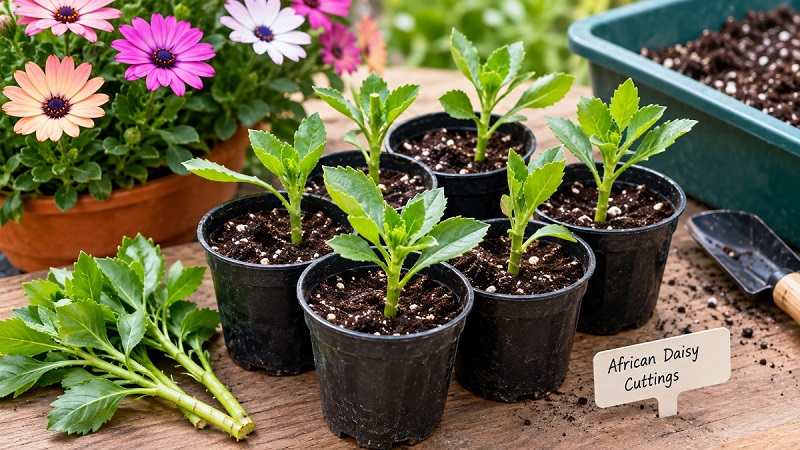
Softwood or semi-hardwood cuttings can be used to propagate suitable Osteospermum cultivars. This method is particularly useful when you want new plants that retain the characteristics of a selected parent plant.
Propagation success varies with the cultivar and environmental conditions. Some plants root more readily than others.
Leave enough space between plants for mature foliage to develop and for air to circulate. Follow the recommended spacing for the variety rather than planting all daisies at the same distance.
Once established, many ornamental African and Cape daisies are relatively easy to maintain. A little regular attention helps keep their growth compact and encourages a longer flowering display.
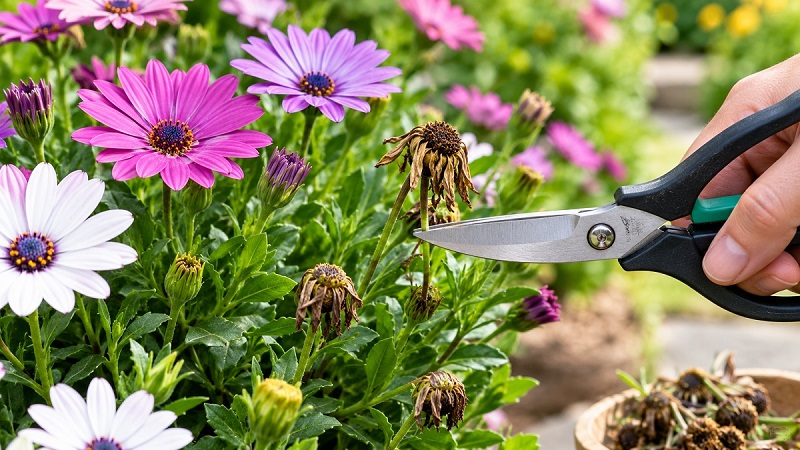
Remove faded flowers regularly when the goal is to encourage continued blooming and maintain a tidy appearance. Cut spent flower stems back to a healthy leaf joint or suitable branching point.
Light trimming helps prevent leggy growth and encourages branching in suitable cultivars. Avoid cutting too aggressively, particularly when plants are under heat or drought stress.
In frost-prone areas, tender cultivars can be moved into a sheltered location or treated as seasonal bedding plants. In mild climates, some perennial varieties may continue growing through winter with suitable protection.
Container-grown daisies need more frequent monitoring because potting mix dries faster than garden soil. Check moisture regularly, avoid standing water in saucers and repot plants when their roots outgrow the container.
Most problems with ornamental daisies are related to growing conditions rather than the common name used to describe them.
| Problem | Possible Cause | What to Do |
|---|---|---|
| Yellowing leaves | Overwatering, poor drainage or nutrient stress | Check soil moisture and improve drainage. |
| Few flowers | Insufficient sunlight or excessive nitrogen | Provide more light and moderate fertilizer use. |
| Wilting foliage | Dry soil, root damage or extreme heat | Check the root zone before adjusting watering. |
| Root rot | Waterlogged soil | Improve drainage and remove badly affected roots or plants. |
| Leggy growth | Insufficient light or lack of trimming | Move to a sunnier location and prune lightly. |
| Powdery mildew | Poor airflow and favorable fungal conditions | Improve spacing and remove badly affected foliage. |
| Flower buds failing | Heat stress, water stress or unsuitable growing conditions | Maintain consistent moisture and reduce heat stress. |
Aphids, whiteflies, spider mites and thrips may occasionally attack ornamental daisies. Inspect young shoots and the undersides of leaves, where small insects are often difficult to notice.
Remove heavily infested plant parts when appropriate and use a suitable insecticidal soap or other targeted treatment according to the product label. Avoid spraying pollinators and flowering plants when bees and other beneficial insects are active.
Whether sold as African daisies or Cape daisies, ornamental Osteospermum cultivars are versatile flowering plants. Their compact growth and colorful blooms make them useful in different garden designs.
Plant compact varieties along the front of sunny borders. Their flowers provide color without overwhelming taller perennials and ornamental grasses.
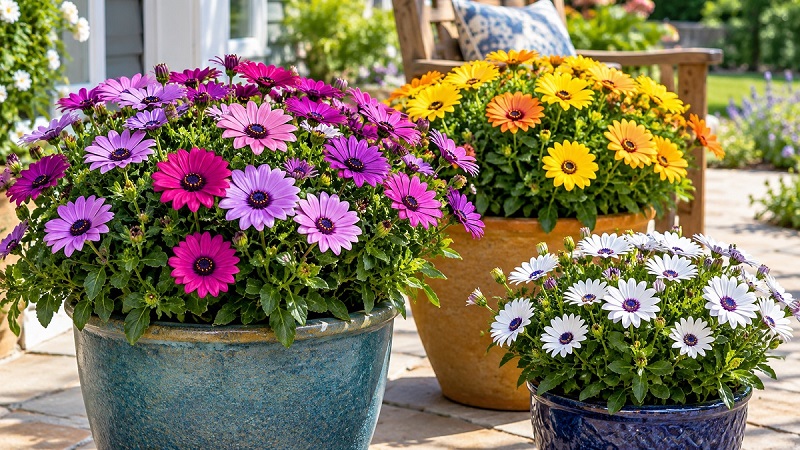
These daisies work well in pots, window boxes and patio planters. Combine them with plants that have similar sunlight and watering requirements.
Well-drained rock gardens can provide suitable growing conditions for many African daisy relatives. Their flowers add color among stones and low-growing groundcovers.
Growing several plants together creates a fuller flowering display. Mixing different flower colors can produce an attractive seasonal arrangement.
Open daisy-like flower heads may attract bees and other flower-visiting insects. For a more diverse pollinator garden, combine daisies with other nectar- and pollen-producing plants that bloom at different times.
Since African daisy and Cape daisy are often names for the same plant, choosing between the two labels is not particularly useful. Instead, select a plant based on its botanical identity, mature size, flower color and suitability for your local climate.
For a colorful ornamental container or flower border, cultivated Osteospermum is a good starting point. If you prefer seasonal wildflower-style displays, explore suitable Dimorphotheca species.
Whichever plant you choose, check its botanical name and growing requirements before purchasing. This avoids confusion and helps ensure that the plant receives the care it actually needs.
African daisy and Cape daisy are not always two separate plants. In the ornamental nursery trade, both names frequently describe Osteospermum varieties. However, they can also refer to different species in related genera such as Dimorphotheca.
Their similar flowers and overlapping common names explain why gardeners often mistake one for another. The simplest way to avoid confusion is to identify the scientific name rather than relying on the common name alone.
With plenty of sunlight, suitable drainage and sensible watering, many of these African flowering plants can provide an attractive display in containers, borders and sunny garden beds.
Often, yes. Both names are commonly used for Osteospermum garden varieties. However, they are also applied to other related African flowering plants, so the scientific name is needed for accurate identification.
Cape daisy is commonly associated with Osteospermum, particularly cultivated garden hybrids. The name is also used for certain Dimorphotheca species, including Dimorphotheca pluvialis.
There is no single scientific name for African daisy. It is a common name used for plants in several genera, including Osteospermum, Dimorphotheca, Arctotis and Gazania.
It depends on the species and local climate. Some Osteospermum cultivars are perennial in mild, frost-free conditions, while others are grown as annual bedding plants. Several Dimorphotheca species are annuals.
Most popular ornamental varieties flower best in full sun. Around six or more hours of direct sunlight is a useful target, although some protection from intense afternoon heat may benefit plants in very hot climates.
Some do, particularly perennial Osteospermum varieties grown in suitable climates. Annual Cape marigolds generally complete their life cycle in one growing season, although they may produce seeds for a new generation.
Certain African daisy relatives respond to changing light conditions. Their flower heads close at night and may remain closed during cloudy weather. This behavior varies by species and cultivar.
Yes. Many compact Osteospermum cultivars grow well in containers. Use a pot with drainage holes, a well-drained growing mix and a sunny position. Water according to the moisture level of the potting mix.
Not necessarily. Cape marigold is commonly associated with Dimorphotheca species, especially D. sinuata. Cape daisy is a broader common name that can also refer to Osteospermum and other plants.
Their open flower heads can attract bees and other flower-visiting insects. The value to pollinators depends on the particular species, cultivar and flower structure.
Many established varieties tolerate short periods of dry soil better than prolonged waterlogging. However, drought tolerance varies, and newly planted or container-grown specimens need regular moisture monitoring.
The common names alone cannot reliably distinguish them. Check the botanical name on the plant label or identify the plant using its flower, foliage and other botanical characteristics.
Continue exploring our gardening guides with more plant profiles, growing tips, and practical advice for creating a healthy, productive garden.