Woodland Edges: How to Design, Plant and Maintain a Natural Garden Border
Learn how to create a beautiful woodland edge with layered trees, shrubs, ferns and ground covers, plus practical design, soil, watering and wildlife tips.
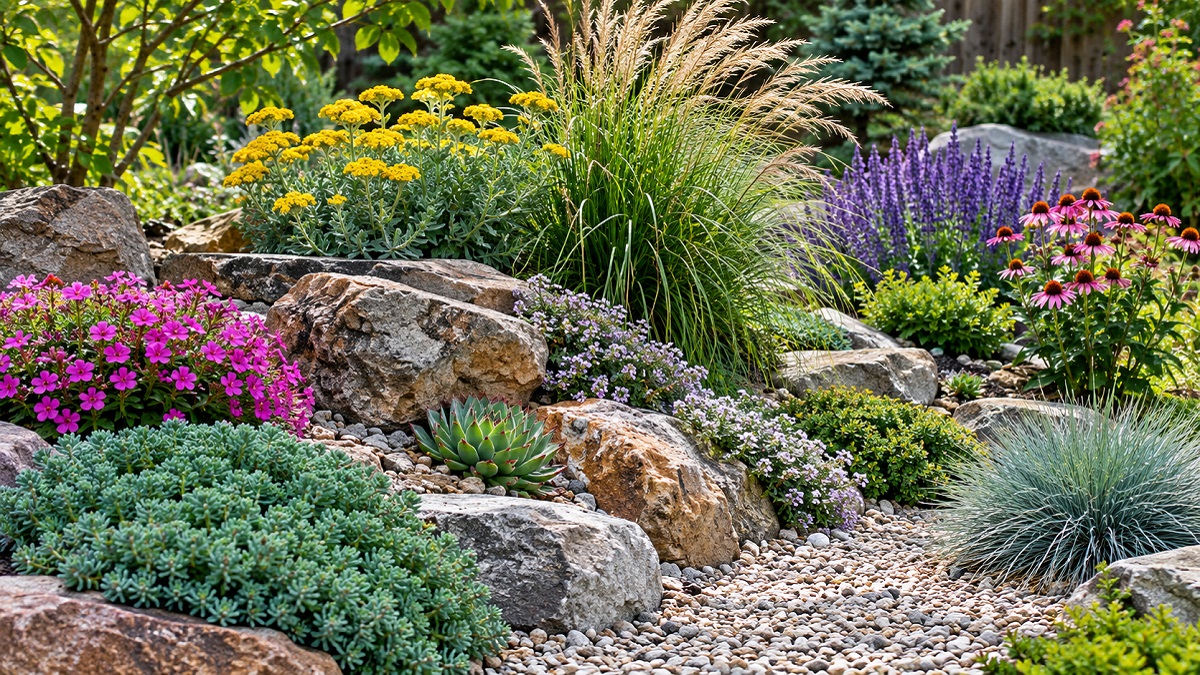
A rock garden can turn an awkward slope, dry corner, sunny border, or otherwise difficult patch of ground into one of the most distinctive areas of the landscape. Instead of relying on deep beds of rich soil and thirsty plants, a well-designed rock garden combines stones, gravel, sharply drained soil, and plants that are comfortable with leaner growing conditions.
The appeal is not simply the rocks themselves. The best rock gardens look as though the stones and plants belong together. Low-growing flowers soften hard edges, creeping plants weave through gravel, and small shrubs or ornamental grasses provide occasional height without overwhelming the composition. Once established, many rock-garden plants also need less watering and routine maintenance than a conventional flower bed.
Good design starts with drainage, proportion, and the right plants. Choose the site and rocks first, then build the planting scheme around the conditions.
A rock garden is a landscape area designed around rocks, gravel, and plants that naturally tolerate relatively dry, fast-draining conditions. The style can range from a simple gravel bed with a few carefully positioned stones to a detailed alpine-inspired planting with layers of rocks, crevices, miniature shrubs, and flowering perennials.
Rock gardens do not have to be completely covered with stone. In fact, leaving spaces between rocks is important because those openings provide planting pockets and make the arrangement feel more natural. The aim is to create a convincing relationship between the hardscape and vegetation rather than simply scattering decorative stones across a flower bed.
Rock gardens are particularly useful where ordinary lawn or moisture-loving plants struggle. Sloping ground, areas beside retaining walls, gravelly soil, and hot exposed corners can all become opportunities for this style of gardening.
A rock garden offers both practical and visual advantages. It can solve a difficult landscaping problem while creating a planting area with a very different character from a traditional border.
Slopes and areas with shallow or poor soil can be challenging to mow and difficult to plant conventionally. Rocks can help create terraces and planting pockets while reducing the need for a continuous lawn surface.
Many rock-garden plants dislike constantly wet roots. Gravelly soil and carefully positioned stones allow excess water to move away from the root zone, making the environment suitable for plants adapted to drier conditions.
Rocks remain attractive after flowers fade. Evergreen groundcovers, compact shrubs, ornamental grasses, and weathered stones can keep the garden interesting even when fewer plants are in bloom.
Site selection is one of the most important decisions when creating a rock garden. The plants may be selected for dry conditions, but they still need enough light and a suitable growing environment.
Many traditional rock-garden plants prefer plenty of sunlight. A location receiving several hours of direct sun is particularly useful for alpine-style plants, succulents, creeping herbs, and many compact flowering perennials.
If the site receives afternoon shade, choose plants according to the actual light conditions rather than assuming every rock-garden plant requires full sun. Rocks can also become very hot when exposed to intense summer sunlight, so plant selection should take the local climate into account.
Excellent drainage is usually more important than simply choosing a sunny location. Watch the site after heavy rain. If water remains around the planting area for long periods, improve the soil structure or consider building the garden slightly above the surrounding ground.
Sloping ground can be especially attractive because rocks can be partially buried into the hillside, giving the planting a naturally layered appearance. A gentle rise also makes it easier to see low-growing plants from nearby paths.
Rocks form the backbone of the garden, so their appearance and placement deserve careful consideration. Local stone often looks most natural because its color and texture already belong to the surrounding landscape.
A convincing arrangement normally includes a mixture of large anchor stones, medium rocks, and smaller stones or gravel. Large pieces establish the visual structure while smaller material fills gaps and helps transition between stones and plants.
One of the easiest ways to make a rock garden look artificial is to place every stone directly on the surface. Instead, partially bury larger rocks so they appear to emerge from the soil. This also gives them greater stability.
Using too many unrelated rock colors and textures can make the garden appear cluttered. Repeating one dominant stone type creates visual continuity. A small amount of contrasting stone can then be used as an accent.
Consider how the rocks look from the main viewing points before finalizing their positions. Walk around the garden and adjust them while the soil is still easy to work.
Soil preparation should reflect the needs of the plants you intend to grow. A rock garden does not automatically require poor soil; rather, it needs a growing medium that drains efficiently and does not remain saturated around the roots.
Heavy clay soil may need improvement with suitable coarse material and organic matter, depending on the plants being grown. In some situations, creating a raised mound is more effective than trying to change a large area of compacted ground.
Before adding gravel or decorative stone, remove persistent weeds and loosen compacted soil. Build the planting surface with gentle changes in elevation rather than making it completely flat. Small rises and depressions create useful planting pockets and give the finished garden more depth.
For many drought-tolerant plants, aim for a loose, free-draining medium containing mineral material such as grit, coarse sand, or small gravel together with enough soil and organic matter to support healthy roots.
Excessively rich soil can encourage lush growth that becomes floppy or out of proportion with a rock-garden setting. Fertility should match the plants rather than being maximized.
Plant selection determines whether a rock garden feels natural or simply looks like a collection of unrelated plants surrounded by stones. Choose species according to sunlight, soil, moisture, winter conditions, and the scale of the garden.
Low-growing plants are especially useful because they soften the hard lines of rocks without hiding the stonework. Plants with spreading or trailing habits can also move naturally over gravel and down small slopes.
Many hardy succulents are excellent candidates for sunny, sharply drained rock gardens. Their fleshy leaves allow them to cope with periods of dryness, while their compact growth fits naturally among stones.
Creeping thyme, creeping phlox, sedums, and other low-growing groundcovers can fill spaces between rocks. Their spreading habit helps blend individual planting pockets into one cohesive scene.
Small ornamental grasses add movement and fine texture. They are particularly useful when a rock garden contains many broad or rounded stones and needs a contrasting foliage form.
Dwarf conifers and compact shrubs can provide year-round structure. Use them sparingly because a small rock garden can quickly become crowded if too many large plants are introduced.
Flowering perennials provide seasonal color and attract attention to particular parts of the garden. Choose plants with mature sizes appropriate to the space rather than planting too closely for immediate impact.
Good rock-garden design is less about following a strict formula and more about creating believable relationships between height, texture, color, and space.
Repetition creates rhythm. Similar foliage shapes, repeated stone colors, or several plants with the same growth habit can visually connect different areas of the garden.
A completely flat rock garden can look dull. Use gently raised sections, larger rocks, and taller plants to create changes in height. Keep taller elements toward the back or center where they will not hide smaller specimens.
Empty gravel areas are not wasted space. They provide breathing room between plants and allow the shapes of the rocks to remain visible. Crowding every gap with plants often makes the garden harder to maintain.
A rock garden beside a walkway is experienced differently from one viewed from a patio or window. Position distinctive rocks and flowering plants where they can be appreciated from the locations where people normally spend time.
Planting is easiest after the major rocks have been positioned. This prevents digging around established plants and allows you to see where the natural planting pockets are.
Avoid planting everything in straight rows. Slightly irregular spacing usually looks more natural, although mature plant size should always guide the final distance between specimens.
Newly planted rock-garden plants need regular attention while their root systems become established. The frequency depends on temperature, rainfall, soil, plant type, and exposure.
Once established, many plants selected for dry rock gardens can tolerate longer intervals between watering. That does not mean they never need water. During prolonged heat or drought, check the root zone rather than relying on the appearance of the gravel surface.
Fertilizer should be used conservatively and according to the needs of individual plants. Many compact rock-garden plants are adapted to relatively lean soils and do not require heavy feeding.
Excessive nitrogen can produce soft, overly vigorous growth that does not fit the compact character of the planting. A soil test can be useful when plants consistently perform poorly despite appropriate light and watering.
Rock gardens are often described as low-maintenance, but low-maintenance does not mean maintenance-free. A little regular attention prevents small problems from becoming difficult ones.
Weeds are easiest to remove when they are young. Pull them carefully from gravel before their roots become established among desirable plants.
Spreading groundcovers can eventually cover rocks and smaller plants. Trim or divide vigorous plants when they begin to dominate the planting area.
Gravel can gradually become mixed with soil and organic debris. A light refresh can restore the clean appearance of the surface, but avoid repeatedly adding thick layers that bury plant crowns.
Heavy stones can shift over time, particularly on slopes. Reposition unstable rocks carefully and make sure they are firmly supported before working around them.
Dead leaves and damaged stems should be removed when appropriate. Good airflow and sensible spacing help reduce problems in dense plantings.
| Mistake | Why It Causes Problems | Better Approach |
|---|---|---|
| Using only tiny stones | The garden can look flat and lack structure. | Use a mixture of large, medium, and small stones. |
| Leaving rocks sitting on the surface | The arrangement may appear artificial. | Partially bury larger stones. |
| Planting too densely | Plants quickly hide the rocks and compete for space. | Allow room for mature growth. |
| Ignoring drainage | Roots may remain too wet, especially during rainy periods. | Improve drainage before planting. |
| Choosing plants only for flower color | Plants may not tolerate the site's soil, light, or moisture. | Match plants to growing conditions first. |
| Using too many unrelated rock types | The landscape can look visually chaotic. | Repeat a dominant rock type and texture. |
Alpine gardens use rocks, gravel, compact plants, and crevice-like planting spaces to recreate the visual character of mountainous landscapes. They work particularly well with small plants that would disappear in a large conventional border.
A dry gravel garden takes a simpler approach, using gravel as a major surface material with drought-tolerant plants spaced through it. This style can work well in hot, sunny locations where conventional turf requires considerable maintenance.
A slope provides natural elevation and drainage. Large stones can be arranged to visually anchor the hillside while smaller plants occupy pockets between them.
You do not need a large yard to enjoy the style. A small bed, raised planter, trough, or compact section beside a path can contain a carefully selected collection of miniature or low-growing plants.
Planting low-growing species beside stepping stones can create a gentle transition between a walkway and the surrounding garden. Keep plants low enough that they do not spill excessively onto the walking surface.
A rock garden can be attractive beyond the main flowering season if plants are selected for different forms of interest. Evergreen foliage provides structure, while flowering perennials can provide bursts of color at different times of the year.
Foliage texture is particularly important. Fine grasses, fleshy succulent leaves, broad leaves, and tiny mats of groundcover create contrast even when flowers are absent. The rocks themselves contribute another layer through their shape, color, and weathered surfaces.
Consider the garden as a composition rather than a collection of individual plants. A few well-positioned specimens can have more impact than dozens of plants competing for attention.
Rock gardens can be useful in landscapes where summer heat and limited rainfall make water management a priority. However, plant choice should always be based on the actual climate. A plant described as drought-tolerant may still need regular irrigation during establishment or extreme weather.
Gravel surfaces can also influence how quickly the planting area heats and dries. Observe the site throughout the season and group plants with similar moisture requirements together. Plants that prefer slightly more moisture can be placed in lower or partially shaded pockets, while the driest areas can be reserved for species that tolerate those conditions.
A small rock garden benefits from restraint. Choose one or two dominant rock sizes, a limited plant palette, and a clear focal point. Too many varieties can make a small area feel busy.
Raised beds and containers are another option where the existing soil is unsuitable. A shallow trough filled with a free-draining planting medium can provide a miniature rock-garden environment for appropriately sized plants.
Place one visually interesting rock toward the rear or center of a compact bed, then use smaller stones and low plants to lead the eye toward it.
A restrained selection of foliage and flower colors can make a small rock garden appear larger and more intentional.
| Feature | Recommended Approach | Why It Matters |
|---|---|---|
| Site | Sunny or appropriately bright location with good drainage | Supports plants suited to dry, exposed conditions. |
| Soil | Loose and well-drained | Helps prevent prolonged root saturation. |
| Rocks | Use several sizes with a consistent visual character | Creates structure and a natural appearance. |
| Planting | Use plants suited to the site's light and moisture | Improves long-term performance. |
| Watering | Regular during establishment; adjust after plants mature | New plants need more support while roots develop. |
| Fertilizer | Use only when appropriate for the plants and soil | Many rock-garden plants do not require heavy feeding. |
| Mulch | Use gravel or suitable mineral mulch where appropriate | Complements the design and helps keep the surface tidy. |
| Maintenance | Weed, prune, divide, and refresh gravel as needed | Prevents vigorous plants and weeds from overwhelming the design. |
Natural-looking rock gardens usually avoid obvious symmetry. Instead of placing identical stones at equal intervals, vary their position while maintaining an overall sense of balance.
Think about how rocks occur in nature. They often appear in groups, with larger pieces partly embedded in the ground and smaller fragments scattered nearby. Plants frequently occupy cracks, edges, and pockets rather than appearing in perfectly spaced rows.
Repeating a few visual elements helps tie everything together. For example, the same stone color can appear throughout the bed while several plants repeat at different points. This gives the garden continuity without making it look overly formal.
A successful rock garden starts with the site rather than the plant list. Once you understand the amount of sunlight, drainage, available space, and climate, it becomes much easier to choose suitable rocks and plants.
Focus on strong bones first: place the largest stones, establish gentle changes in elevation, and create open spaces for planting. Then add plants for texture, seasonal color, and movement. With thoughtful spacing and modest maintenance, the garden can mature into a landscape that feels established rather than freshly assembled.
Whether you have a broad sunny slope or a small corner beside a walkway, a rock garden can make productive use of challenging space while providing year-round structure. The key is to work with the site's natural conditions instead of fighting them.
A location with good drainage and suitable sunlight is generally ideal. Many traditional rock-garden plants prefer sunny conditions, although plants should always be selected according to the actual light and climate of the site.
Yes. Plants still require a suitable growing medium for their roots. The difference is that rock gardens generally use loose, well-drained soil rather than heavy, moisture-retentive conditions.
Suitable choices depend on the climate and site, but low-growing succulents, sedums, creeping groundcovers, compact ornamental grasses, alpine-style perennials, and appropriately sized shrubs are commonly useful.
Newly planted areas generally need more frequent watering while roots establish. After establishment, watering can often be reduced for drought-tolerant plants, but frequency should be adjusted for rainfall, temperature, soil, and individual plant requirements.
Larger rocks usually look more natural and remain more stable when they are partially buried. Smaller gravel and stones can then be used around them to create transitions between the rocks and planting areas.
Absolutely. A small bed, raised planter, trough, or narrow border can work well. Use fewer plant varieties, appropriately sized rocks, and compact plants to keep the composition balanced.
They can be relatively low maintenance when plants are well matched to the site. Regular weeding, occasional pruning or division, watering during dry periods, and periodic gravel maintenance are still necessary.
Continue exploring our gardening guides with more plant profiles, growing tips, gardening design ideas and practical advice for creating a healthy, productive garden.