Best Companion Plants for African Daisies
Discover 12 of the best companion plants for African daisies, including lavender, salvia, verbena, alyssum, and gazania, plus planting and design tips.
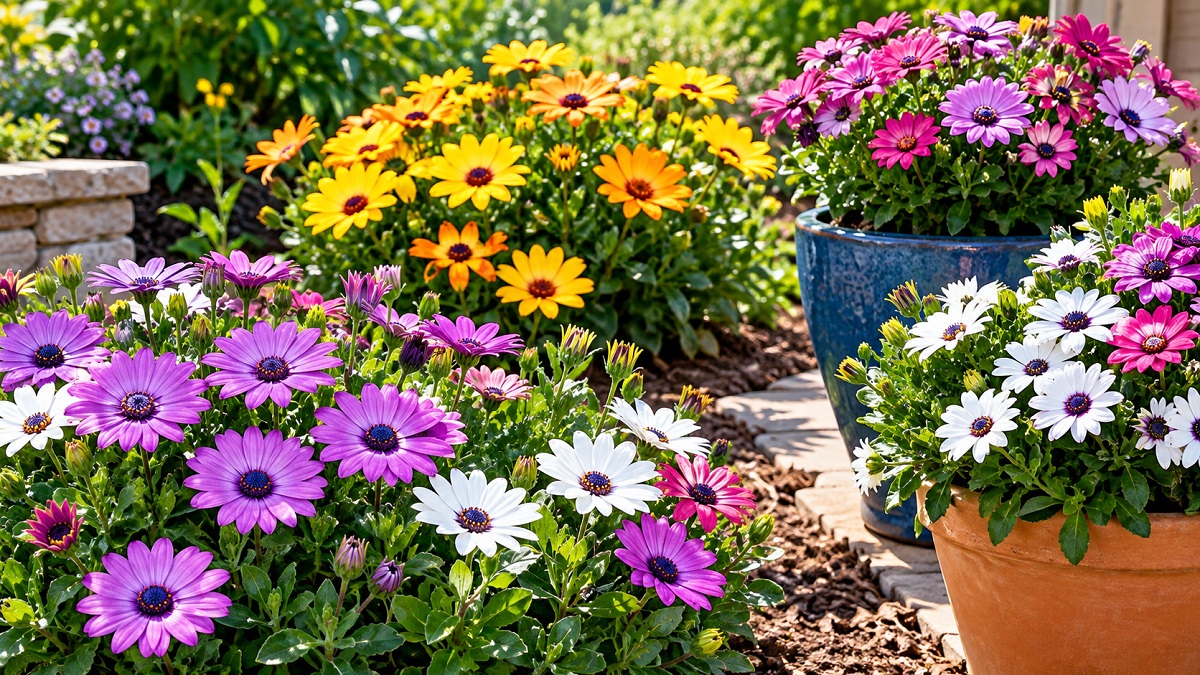
African Daisies are among the easiest flowering plants to use when you want plenty of color without creating a complicated garden. Their daisy-like flowers open above compact or spreading foliage, and modern varieties are available in shades ranging from clean white and soft pink to purple, orange, yellow and striking bicolors.
The name African Daisy is commonly used for several closely related ornamental plants, particularly Osteospermum and related hybrids. This is worth knowing when choosing a variety because different selections can vary considerably in flower color, plant habit, heat tolerance and performance in containers.
If you are looking for an African Daisy for your own garden, the best choice is not necessarily the variety with the brightest flower. Consider how much sun the planting area receives, whether you need a compact plant for a pot or a spreading one for a border, and how hot your summers become. The following varieties and cultivar groups are good starting points.
Choose your variety according to light, space and the flower colors you want to see.
Before buying a plant, look beyond the flower photograph on the label. African Daisies can have quite different growth habits, even when their flowers look similar.
Compact or mound-forming selections are usually the easiest choice for small beds and patio containers. They stay visually tidy and do not need a large area to show off their flowers.
Spreading varieties can be more useful where you want flowers to soften the edge of a path or fill an open section of a sunny border. Give them enough room to develop naturally rather than packing several plants too closely together.
Choose compact plants with a naturally rounded habit. Containers also make it easier to move plants into a more sheltered position during periods of extreme heat or heavy rain.
There are many named African Daisy cultivars and hybrid series available from different nurseries. Availability also changes by country and season. Rather than treating one cultivar as universally “best,” it is more useful to group popular choices by their flower color, growth habit and garden use.
| Variety or Type | Flower Color | Growth Habit | Best Use |
|---|---|---|---|
| White-flowered selections | White | Compact to spreading | Mixed borders and containers |
| Pink-flowered selections | Pink to rose | Mounding | Patios and flower beds |
| Purple-flowered selections | Purple to violet | Compact to spreading | Borders and mass planting |
| Orange selections | Orange to copper | Compact or mounding | Containers and warm-color gardens |
| Bicolor selections | Two-tone combinations | Usually compact | Focal containers and mixed beds |
White African Daisies are a reliable choice when you want a calm, clean-looking planting. The flowers work particularly well beside darker foliage, silver-leaved plants and stronger purple or blue flowers.
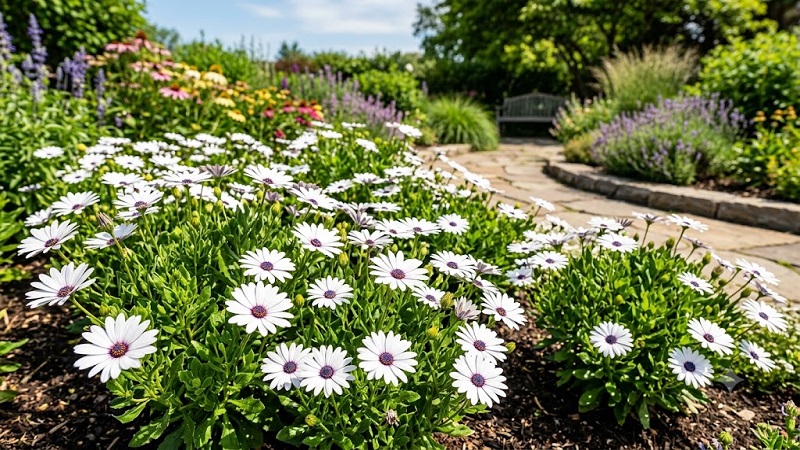
White flowers also become useful in small gardens because they stand out in lower evening light. A container of white African Daisies placed near a seating area can remain noticeable after the stronger colors in the garden begin to fade.
Pair white African Daisies with lavender, purple petunias, ornamental grasses or silver foliage for a simple planting that does not look overly busy.
Pink and rose-flowered selections give African Daisies a softer appearance. Depending on the cultivar, the petals may range from pale blush to vivid pink and deeper rose.
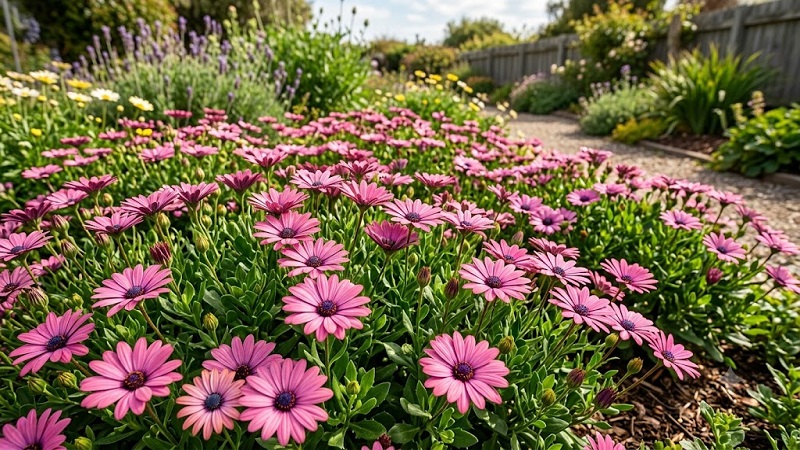
These colors fit naturally into cottage gardens and mixed perennial borders. They also combine nicely with white flowers when you want a planting that feels light rather than intensely colorful.
Try combining pink African Daisies with white alyssum, purple salvia, blue flowers or fine-textured ornamental grasses. Avoid filling the same container with too many competing flower colors; one or two supporting colors usually give the daisies more visual impact.
Purple African Daisies are some of the most eye-catching choices for a sunny planting. Their flowers can range from soft lavender through violet and deeper purple, sometimes with contrasting dark centers.
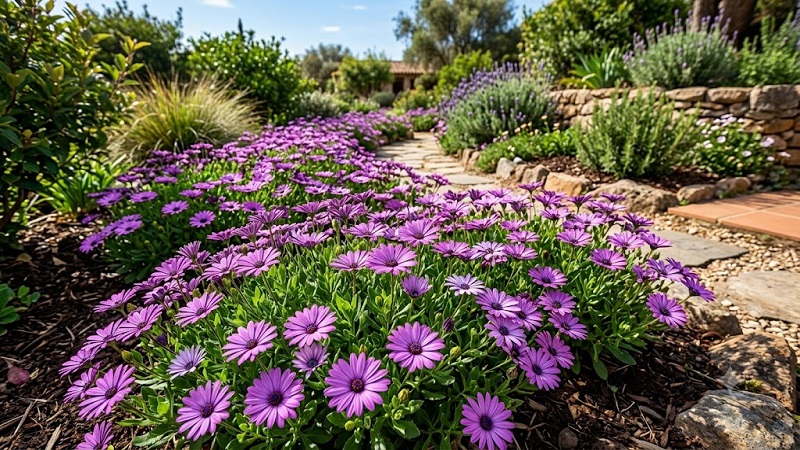
They are especially effective when planted in groups rather than scattered randomly throughout a large bed. Repeating the same color several times creates a stronger visual rhythm and makes the border look more intentional.
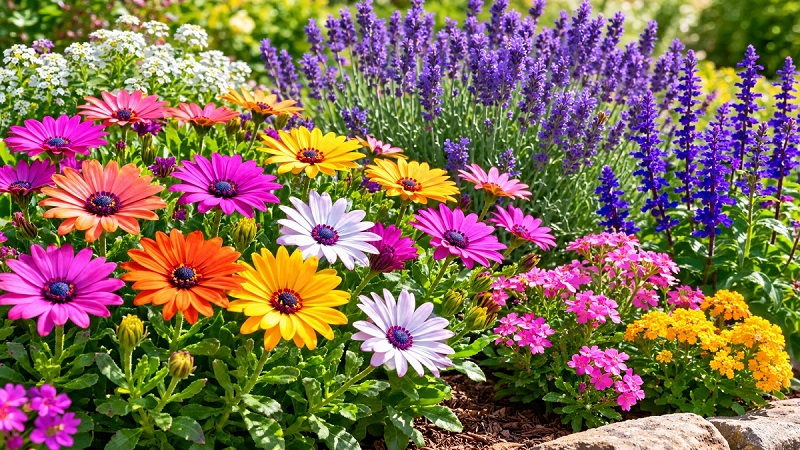
Combine purple African Daisies with white flowers, silver foliage and soft blue plants. This combination works particularly well around seating areas and pathways.
Use purple flowers beside yellow or golden foliage for a stronger contrast. Keep the rest of the planting relatively simple so the colors do not compete.
Orange, apricot and copper-toned African Daisies bring a warmer character to the garden. These shades are particularly useful if your planting already includes yellow, red or bronze foliage.
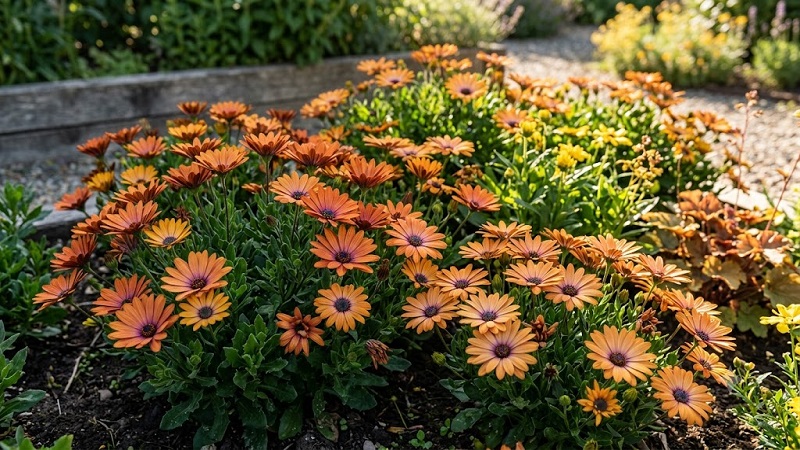
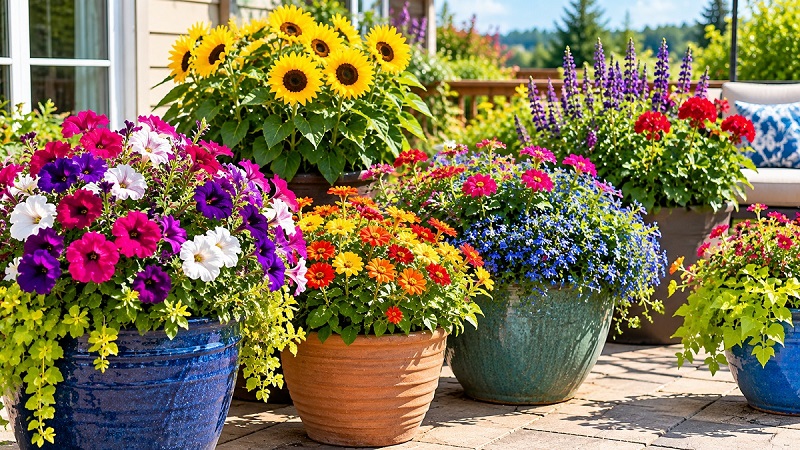
Warm-colored varieties are also excellent in containers where the flowers can be viewed close up. A terracotta pot, for example, can reinforce the warm tones without needing additional flowering plants.
In a larger border, use orange African Daisies as accents rather than filling the entire space with warm colors. Their unusual tones are most effective when there is enough green foliage around them to provide breathing room.
If you want something more distinctive, look for bicolor African Daisy cultivars. These flowers may have one color toward the tips of the petals and another shade closer to the center.
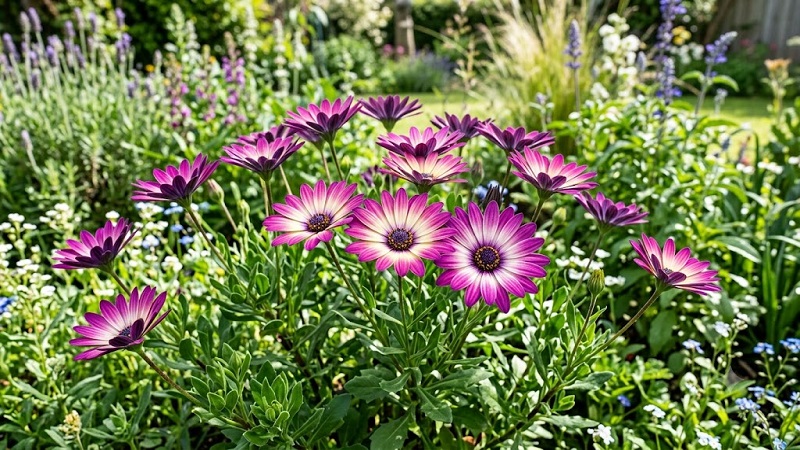
Some flowers can appear almost painted, with dark centers and contrasting petals. They are excellent focal plants for containers and smaller garden beds because you do not need many plants to create an interesting display.
Bicolor selections are best combined with simple companion plants. Too many highly patterned flowers in the same container can make the planting appear crowded.
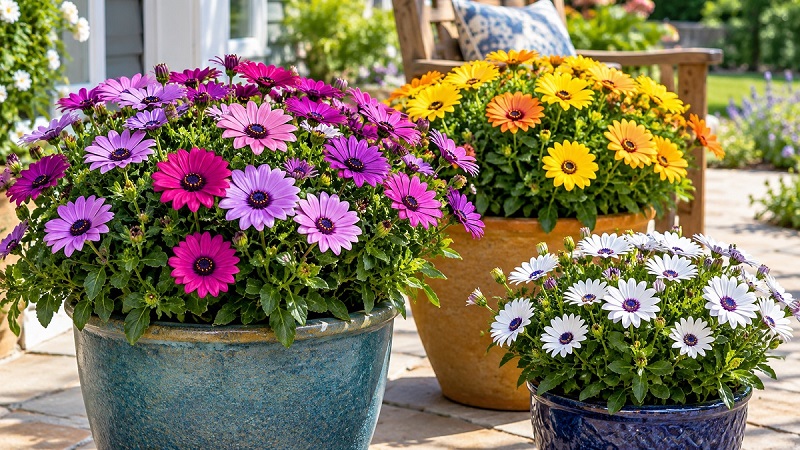
African Daisies are well suited to containers because their flowering habit makes an immediate impact. Choose a pot with drainage holes and use a loose, well-draining potting mix rather than heavy garden soil.
A single African Daisy can look surprisingly full in a medium-sized pot when the plant is well branched. Larger containers can accommodate several plants, but leave enough space between them for air movement.
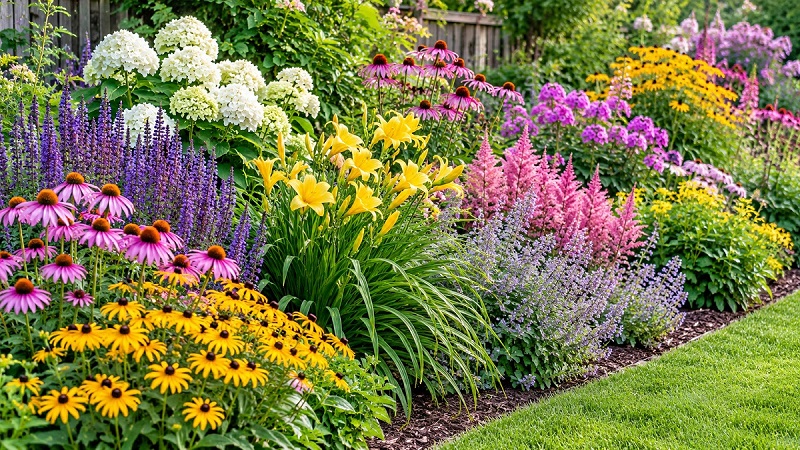
In a border, consider the mature spread of the plant rather than its size at the nursery. Spreading forms can fill gaps beautifully, while compact forms are easier to arrange around taller plants.
African Daisies also work well near the front of a border because their flowers sit relatively close to the foliage. Taller plants behind them can provide a layered effect without completely hiding the flowers.
| African Daisy Color | Good Companion Colors | Garden Effect |
|---|---|---|
| White | Purple, blue, silver | Fresh and calm |
| Pink | White, lavender, blue | Soft and romantic |
| Purple | White, yellow, silver | Strong contrast |
| Orange | Yellow, bronze, green | Warm and energetic |
| Bicolor | Green and neutral flowers | Eye-catching focal point |
Even the best cultivar will struggle if it is planted in the wrong location. African Daisies generally perform best with plenty of sunlight and soil that does not remain waterlogged.
Choose a bright, sunny location whenever possible. Good light encourages stronger growth and abundant flowering. In very hot climates, some afternoon protection can help prevent plants from becoming stressed during periods of extreme heat.
Water thoroughly when the plant needs it, then allow excess water to drain away. Container-grown plants may require more frequent attention because their soil dries faster than soil in a garden bed.
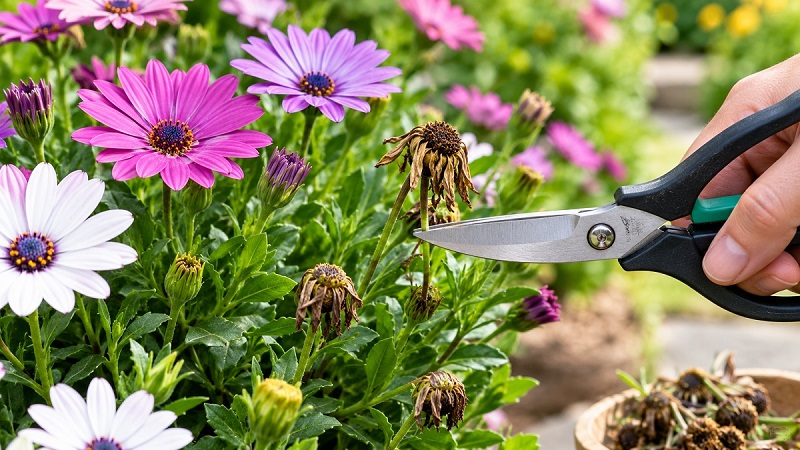
Removing spent flowers keeps the plant looking tidy and can encourage continued production of new blooms. Snip faded flower heads just above a healthy set of leaves rather than removing large sections of the plant.
Avoid planting African Daisies so closely that foliage remains wet and crowded for long periods. Good spacing improves air movement and makes it easier to notice pests or disease before they become widespread.
Poor flowering can result from insufficient light, excessive nitrogen, heat stress or general growing conditions. Check the location first before adding more fertilizer.
Occasional older yellow leaves are not necessarily a serious concern, but widespread yellowing can indicate watering problems, poor drainage or stressed roots. Check the soil before watering again.
Plants that become stretched and open may not be receiving enough light. Pinching or trimming can help create a bushier shape, but improving the growing conditions is more important than repeatedly cutting the plant back.
Tender new growth can occasionally attract aphids and other small sap-feeding insects. Inspect the growing tips and undersides of leaves regularly. A strong spray of water can dislodge small infestations, while beneficial insects can help keep pest populations under control.
There is no single best variety for every garden. Compact cultivars are usually better for containers and small spaces, while spreading selections can be more useful for borders and larger beds. Flower color and local growing conditions should also influence your choice.
Yes. African Daisies are available in white, pink, rose, purple, violet, orange, yellow and various two-tone combinations, depending on the species, hybrid and cultivar.
Compact and mounding varieties are generally the easiest to grow in containers. Choose a pot with drainage holes and use a well-draining growing medium.
African Daisies generally flower best in a bright, sunny location. In extremely hot conditions, some afternoon protection can help reduce heat stress.
Absolutely. Combining colors can create an attractive display, although limiting the palette to two or three related colors usually produces a more cohesive result.
Yes. Compact African Daisy cultivars are particularly useful in small beds, containers, window-side plantings and sunny patio gardens.
The best African Daisy for your garden is the one that fits the space rather than simply the one with the most impressive flower on the plant label. Compact varieties are excellent for pots and smaller borders, spreading selections can fill open areas, and unusual bicolor flowers make attractive focal points.
When choosing between colors, think about the plants that are already growing nearby. White and purple varieties are easy to combine with other flowers, while pink and warm-colored selections can give a softer or more energetic character to the planting.
Give African Daisies plenty of light, avoid persistently wet soil, remove faded flowers when needed, and provide enough room for healthy growth. With the right variety in the right location, these cheerful daisy-like flowers can bring a long-lasting splash of color to containers, borders and sunny garden beds.
← Back to Plant GuidesContinue exploring our gardening guides with more plant profiles, growing tips, and practical advice for creating a healthy, productive garden.