Why Are African Daisy Leaves Turning Yellow?
Discover why African daisy leaves turn yellow, from overwatering and poor drainage to nutrient deficiencies, pests, and heat stress, with practical solutions.
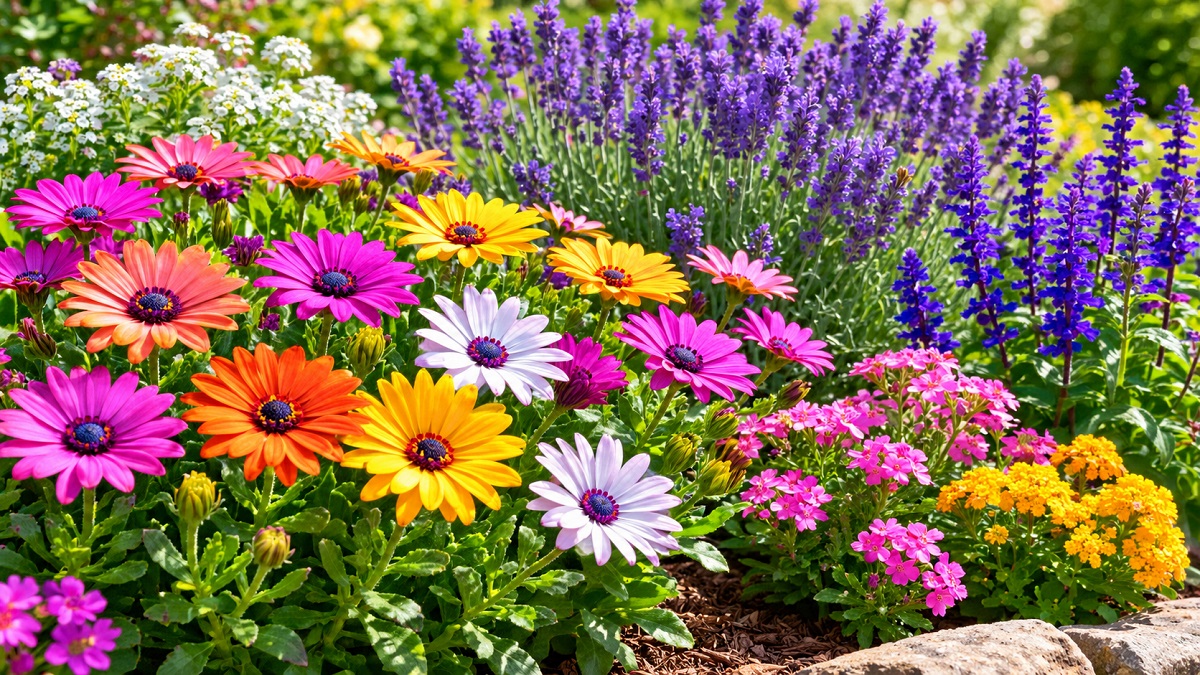
African daisies bring bold color and a cheerful, daisy-like shape to sunny flower beds, borders, patio pots, and rock gardens. Their blooms come in shades of white, pink, purple, lavender, and yellow, often with contrasting centers. Choosing the right companions helps these flowers stand out while adding different textures, heights, and colors to the planting scheme.
The best companion plants for African daisies (Osteospermum hybrids) enjoy plenty of sunlight, reasonably fertile soil, and good drainage. Lavender, salvia, verbena, blue fescue, dusty miller, calibrachoa, and alyssum are useful choices for different garden settings. Some add upright flower spikes, others spill over container edges, and a few provide attractive foliage even when flowering slows.
The key is to combine plants that look good together and have compatible watering needs. African daisies can slow their flowering during intense heat, so thoughtful companion planting also helps maintain interest as the seasons change.
Best approach: Match sunlight and drainage first, then combine contrasting flowers and foliage.
African daisies are generally grown for their colorful flowers and compact, spreading growth. Many garden varieties perform best in full sun and well-drained soil. They can tolerate some dry weather once established, but prolonged drought may reduce flowering and leave plants looking tired.
Before choosing companions, consider the available space, local climate, and whether you are planting in the ground or in containers. A plant that thrives in a dry border may struggle beside a flower that needs consistently moist soil.
Lavender, blue fescue, and many salvias are suitable partners for sunny, freely draining beds. Verbena and alyssum can also work well, provided the planting receives appropriate moisture. Calibrachoa is useful in mixed containers, although it may need more regular watering than lavender.
Do not assume that every drought-tolerant plant needs exactly the same amount of water. Soil type, container size, temperature, and the maturity of each plant all affect watering frequency.
African daisies typically form rounded clumps of foliage topped with prominent flowers. They look more interesting when paired with plants that grow differently.
Flowering varies by cultivar and climate. In many regions, African daisies flower especially well in mild weather, while hot conditions can reduce bloom production. Pairing them with plants that flower at slightly different times helps the garden remain attractive through seasonal changes.
Lavender is an excellent choice for a sunny border where African daisies grow in freely draining soil. Its narrow, gray-green foliage and upright purple flower spikes contrast with the broad petals and rounded shape of the daisies.
Try lavender with white or pale pink African daisies for a restrained, cottage-garden look. Purple daisies create a richer combination, while yellow varieties provide a stronger color contrast.
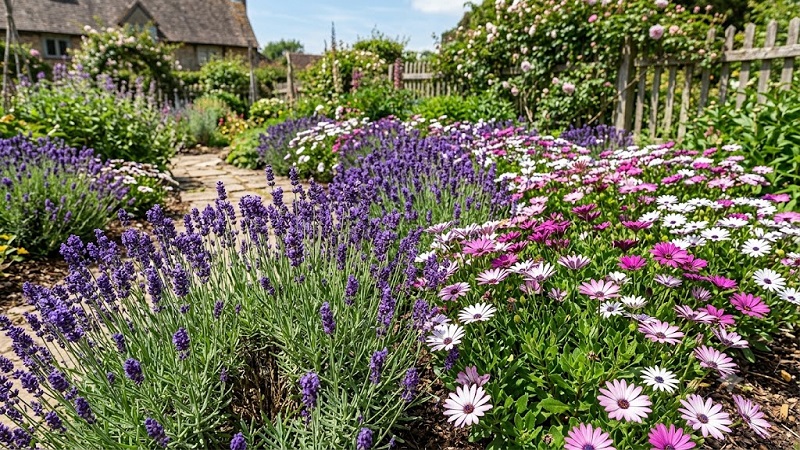
Both plants appreciate good drainage, but lavender generally prefers soil on the drier side once established. Avoid keeping the root zone constantly moist just to accommodate nearby flowers.
Salvias add height and a different flower shape without making the planting feel crowded. Their upright stems carry tubular flowers in shades that include blue, violet, purple, pink, red, and white, depending on the species.
Compact ornamental salvias are particularly useful behind low-growing African daisies. Purple or blue flowers work well with white, pink, and yellow daisy varieties, while red-flowering salvias can create a vivid, warm-colored border.
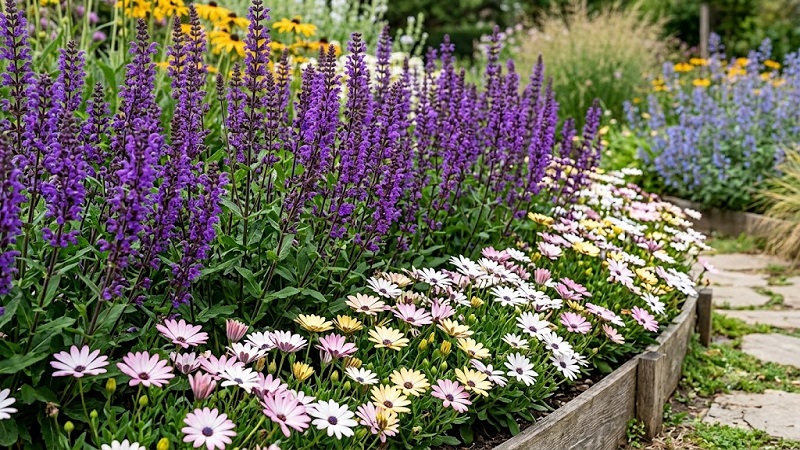
Choose a salvia suited to your local conditions. Some species prefer relatively dry soil, whereas others appreciate more consistent moisture. Check mature height so taller plants do not shade the daisies.
Verbena is useful when a flower bed needs airy texture rather than another dense mound. Depending on the variety, it may form low spreading growth or tall, branching stems with clusters of small flowers.
Low-growing verbena can fill gaps near the front of a border. Taller forms, such as Brazilian verbena (Verbena bonariensis), can create a light, see-through backdrop for African daisies without completely hiding the flowers.
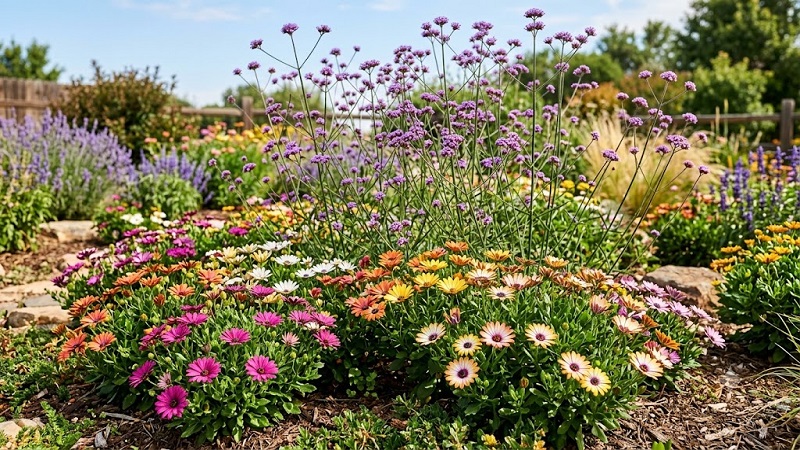
Purple verbena looks especially attractive beside white, yellow, and pale pink daisies. Allow taller varieties enough room, and remember that they may self-seed in suitable conditions.
Sweet alyssum produces small flowers in dense clusters and often forms a low, spreading mound. It is a useful edging plant for African daisies because its finer texture contrasts with their larger blooms.
White alyssum creates a bright border around purple or pink daisies, while lavender and pink varieties offer a softer, coordinated look. Its flowers can also attract small pollinating insects.
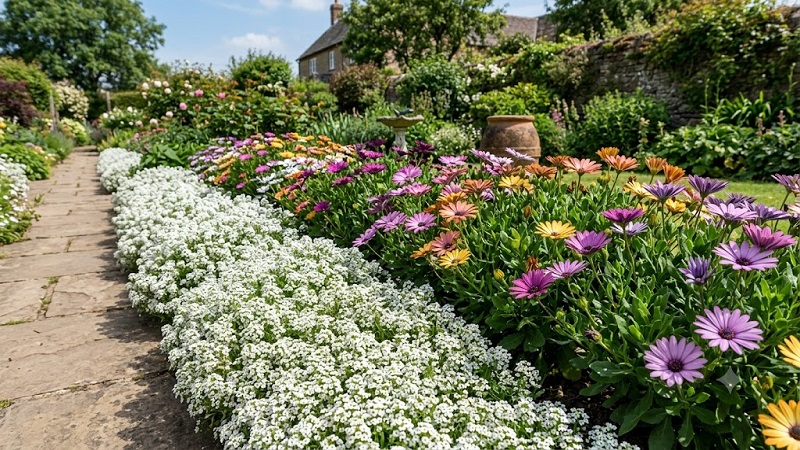
Alyssum is suitable for the front of a flower bed, the edges of a raised planter, or gaps between compact plants. Give both species enough room to develop rather than packing them tightly together.
Blue fescue is a compact ornamental grass grown mainly for its blue-gray or silvery foliage. Its fine, spiky leaves provide a striking contrast to the rounded leaves and broad flowers of African daisies.
This combination works particularly well in contemporary borders, gravel gardens, and sunny planting areas where a limited color palette creates a clean, deliberate appearance. Purple, white, and yellow daisies all stand out against the cool-toned foliage.
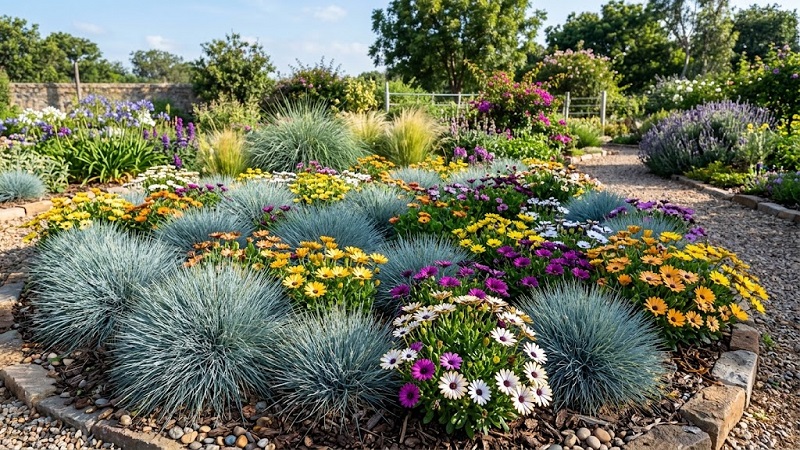
Blue fescue prefers a sunny position and well-drained soil. In humid climates or heavy, wet ground, it may struggle, so choose a suitable grass for your conditions if drainage is poor.
Dusty miller is valued for its pale, silvery foliage, which provides a neutral backdrop for colorful flowers. Its deeply divided leaves add a different texture to the planting, especially beside purple, pink, and dark-centered African daisies.
Use it as a low edging plant or in small groups between flowering clumps. The silver leaves help tie together flowers of different colors, making a mixed border look more coordinated.
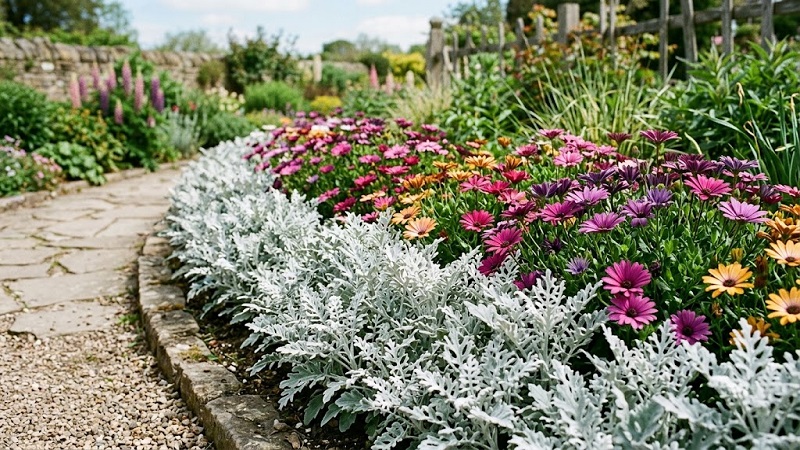
Dusty miller generally prefers sunny conditions and well-drained soil. It is often grown as an annual in colder climates, while its persistence depends on local temperatures and growing conditions.
Calibrachoa, often called Million Bells, produces many small, petunia-like flowers on spreading stems. It is especially useful in pots and window boxes where African daisies provide the central display and calibrachoa trails toward the edges.
Purple calibrachoa pairs well with white or yellow daisies, while pink and coral varieties complement pink, lavender, and cream-colored blooms. A trailing plant also helps a container feel fuller without requiring taller companions.
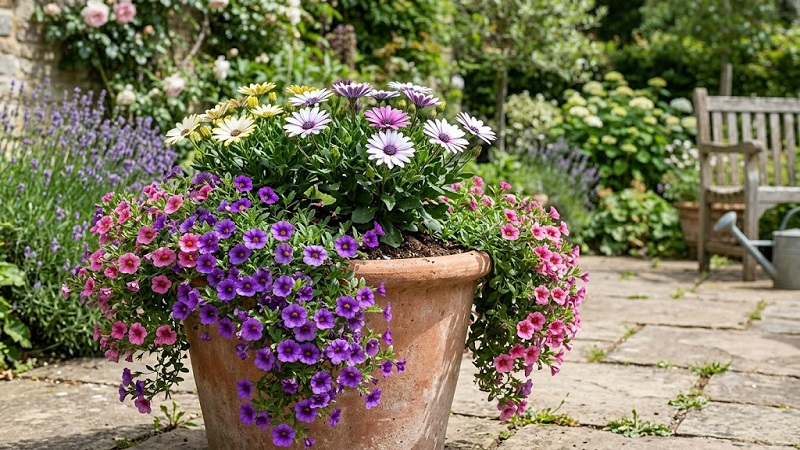
This pairing needs a little more attention to watering. Calibrachoa in a sunny container can dry quickly, and its moisture requirements may exceed those of lavender or blue fescue. Use compatible companions and a free-draining potting mix.
Angelonia, also known as summer snapdragon, offers upright stems covered with small flowers. It adds height and color while retaining a relatively neat shape, making it useful in sunny beds and larger containers.
White angelonia looks fresh beside purple African daisies, while violet or pink varieties create a coordinated display. Its upright form works particularly well behind compact daisy varieties or toward the center of a mixed pot.
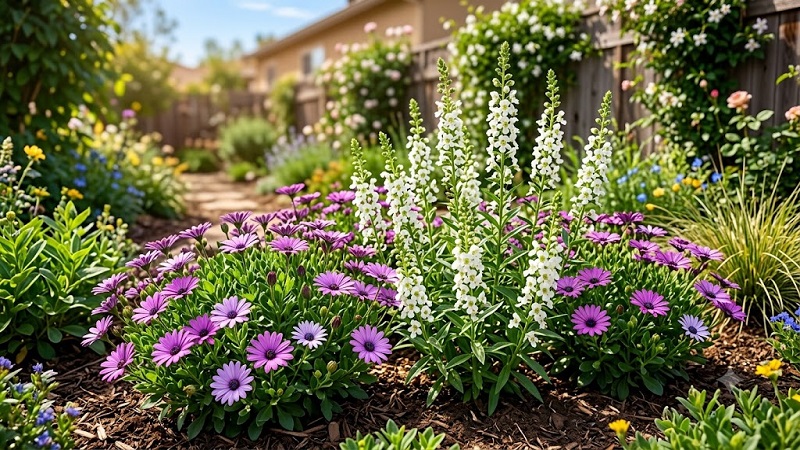
Angelonia is generally heat tolerant, although its performance still depends on the cultivar and local conditions. It can help maintain the display when some African daisies reduce flowering during hot spells, but it does not guarantee continuous blooms.
Gazanias are sun-loving flowers with bold, daisy-like blooms, so they complement African daisies naturally. Their vivid orange, yellow, bronze, pink, and striped flowers create a lively display in sunny beds and dry borders.
For a coordinated look, combine yellow gazanias with purple African daisies or orange gazanias with white varieties. Plant them in repeated groups for a stronger visual effect than scattering individual plants throughout the bed.
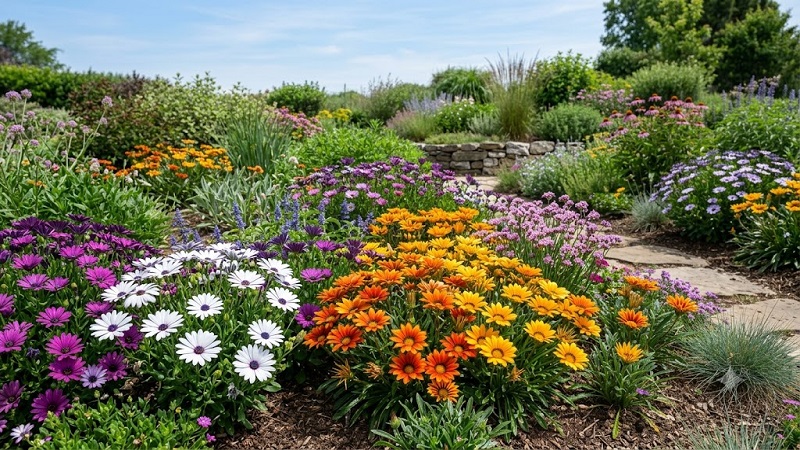
Gazanias generally prefer excellent drainage and can tolerate dry conditions once established. Make sure the selected varieties have compatible water needs, especially in containers.
Creeping thyme is a low-growing aromatic plant that can soften the spaces around African daisies. Its small leaves form a dense mat, and its tiny flowers add seasonal detail without competing visually with the larger daisy blooms.
It is best used along the edge of a sunny bed, between suitable stepping stones, or in a gravel garden where the soil drains freely. Once established, creeping thyme generally prefers conditions on the drier side.
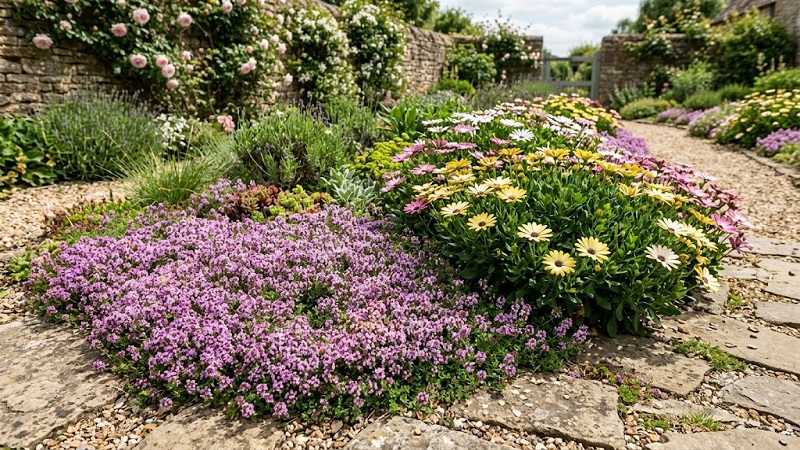
Do not use it as a thick groundcover immediately around young daisies. Leave enough open soil for the daisies to establish, and keep thyme away from areas that remain wet after rain or irrigation.
Nemesia produces delicate flowers in combinations of white, yellow, pink, orange, and purple. Its smaller blooms provide a softer contrast to African daisies and work well in seasonal bedding displays.
This pairing is especially useful in mild weather, when both plants can contribute to a colorful spring or autumn container. Nemesia may struggle during intense heat, so it is not the best choice for every hot-season planting.
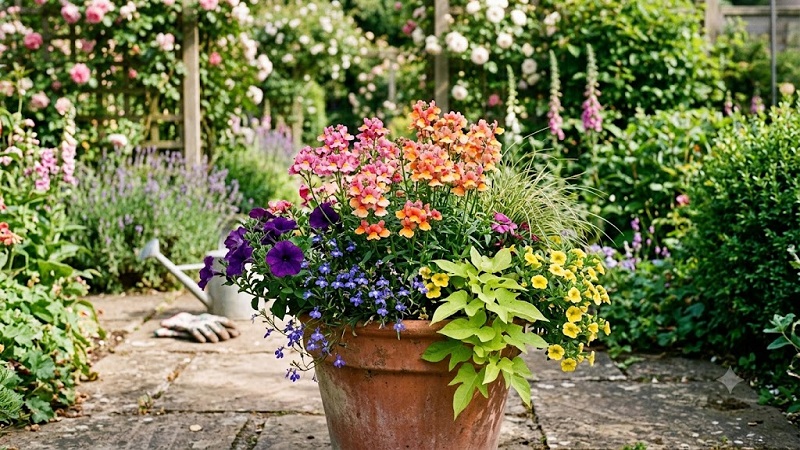
Petunias are versatile flowering companions for African daisies, especially in containers and seasonal bedding. Their broad range of colors makes it easy to create either a coordinated display or a bold contrast.
Trailing petunias can soften the edge of a large planter, while compact varieties fit neatly beside smaller daisies. White petunias work with almost any daisy color, and purple petunias look particularly striking beside yellow or pale pink flowers.
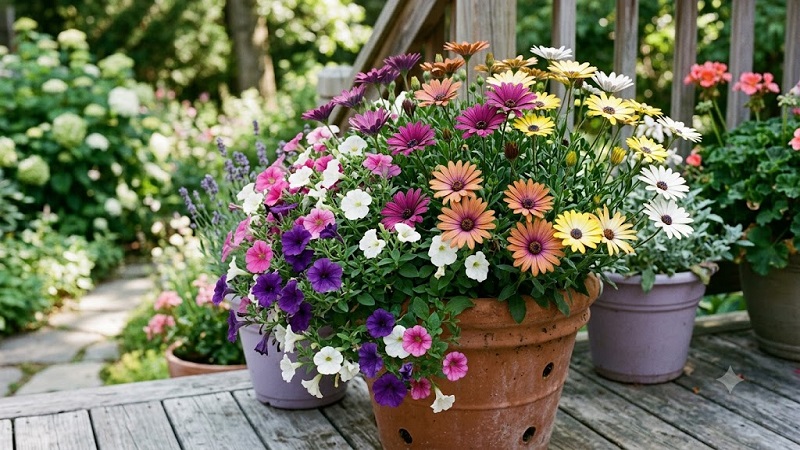
Petunias generally need regular moisture and good drainage, so monitor the pot closely if the combination is exposed to hot sun. Avoid pairing them with plants that must be kept very dry unless you can manage the watering carefully.
Use this table to narrow down the choices according to your garden's size, desired appearance, and growing conditions. These are general guidelines; the requirements of individual species and cultivars can differ.
| Companion Plant | Main Benefit | Best Use | Water Considerations |
|---|---|---|---|
| Lavender | Fragrance and purple flower spikes | Sunny borders | Allow soil to dry appropriately between watering |
| Salvia | Upright blooms and height | Mixed flower beds | Depends on species and cultivar |
| Verbena | Airy flower clusters | Borders and large pots | Match moisture needs to the selected variety |
| Sweet alyssum | Low-growing floral edging | Bed edges and containers | Do not allow prolonged drying in hot weather |
| Blue fescue | Fine blue-gray foliage | Gravel and rock gardens | Excellent drainage is important |
| Dusty miller | Silver foliage contrast | Borders and bedding | Prefers well-drained soil |
| Calibrachoa | Trailing color | Mixed containers | Containers may need frequent watering |
| Angelonia | Vertical flowers and warm-weather color | Sunny beds and pots | Keep moisture appropriate to the soil and weather |
| Gazania | Bold, daisy-like blooms | Sunny, dry borders | Avoid waterlogged soil |
| Creeping thyme | Aromatic, low-growing foliage | Gravel beds and edging | Prefers freely draining soil |
| Nemesia | Small flowers and seasonal color | Cool-season containers | Keep evenly moist without waterlogging |
| Petunia | Broad color range and trailing growth | Planters and bedding | Often needs regular moisture in containers |
African daisies are available in both soft pastel shades and vivid colors. Choosing a simple palette makes companion planting easier and prevents a mixed bed from looking overly busy.
Combine purple African daisies with dusty miller, blue fescue, and lavender where the growing conditions suit all three. The cool foliage and flower colors create a calm, contemporary appearance. White alyssum can brighten the foreground without disrupting the palette.
White African daisies look fresh with green foliage, silver-leaved plants, and small white flowers. Add a few purple salvia spikes if you want a restrained accent. This combination is especially effective in small courtyards and formal borders.
Yellow and purple are contrasting colors, so the combination creates a strong focal point. Try yellow African daisies with purple verbena, salvia, or calibrachoa. Keep the surrounding foliage relatively simple so the flowers remain the main attraction.
Pink African daisies, white alyssum, and pale pink or white petunias make a softer display. This palette works well in patio containers, cottage-style gardens, and small flower beds.
For a bright, warm-colored border, combine orange or yellow African daisies with similarly colored gazanias. Green foliage helps separate the blooms visually. Use this combination in open, sunny locations where the flowers can be seen from a distance.
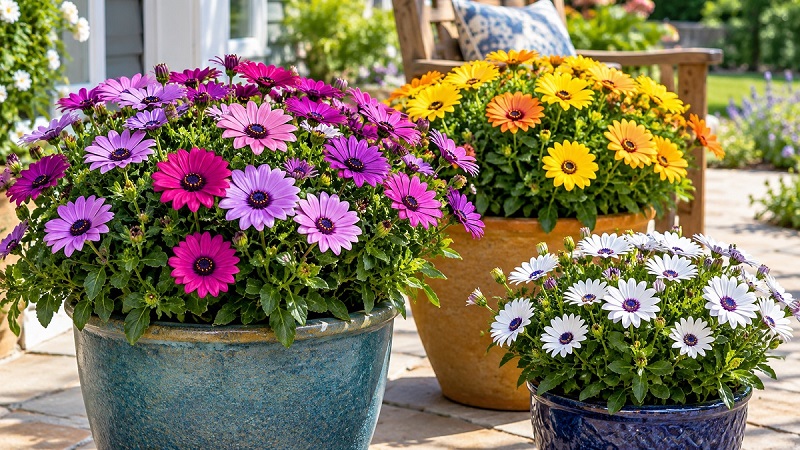
African daisies are well suited to containers, where their rounded growth and colorful flowers can become the main feature. The most attractive mixed pots combine a central or upright plant with a lower companion and, where space allows, a trailing flower.
Place one or more African daisies near the center or back of a wide planter, then position calibrachoa toward the edges. Add a small amount of alyssum to soften gaps between the plants. Choose a pot large enough to accommodate their roots without crowding.
In a larger container, use compact salvia for height, African daisies for the main flowers, and a suitable silver-leaved plant for contrast. This arrangement works well in a sunny patio or entrance area. Check the mature size of each plant before planting.
Nemesia provides a delicate layer of flowers around the larger daisy blooms. This is a useful combination for spring or autumn displays in regions with mild weather. Move or replace heat-sensitive plants if temperatures become unsuitable.
Avoid placing lavender and moisture-loving annuals together in a small pot unless you can meet their different needs. A beautiful planting will not last long if one companion is continually too wet or too dry.
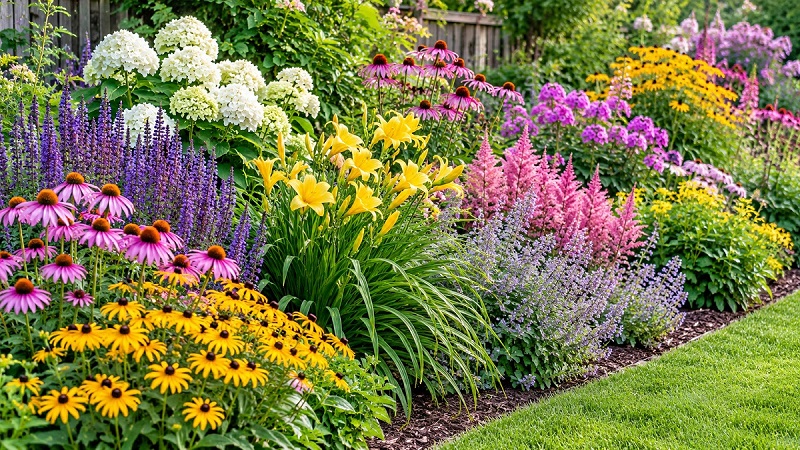
Plant African daisies in small groups near the front or middle of a sunny border. Position taller salvias behind them and use blue fescue or dusty miller between the flowering groups. Repeat the same combinations at intervals to create a unified design.
Combine African daisies with gazanias, blue fescue, and creeping thyme where the soil drains freely. Leave visible pockets of gravel between groups rather than filling every gap. This gives the plants room to spread and makes the arrangement look more natural.
Mix white or pink daisies with verbena, alyssum, and suitable salvias. Repeat a few flower colors throughout the bed instead of introducing every available shade. Allow some variation in plant height while ensuring that all the daisies receive sufficient sunlight.
Use a wide planter with African daisies as the main feature and calibrachoa or petunias around the edges. For a more structured display, choose a compact upright companion. Containers on exposed balconies may need additional watering and protection from strong winds.
Most African daisy varieties flower best with plenty of direct sunlight. Choose a location that receives several hours of sun each day, and account for nearby shrubs, walls, or tall flowers that may cast shade as they grow.
Use soil that drains freely and contains enough organic matter to support healthy growth. In heavy clay, improve the planting area or consider raised beds and containers. Adding compost can improve soil structure, but it will not solve poor drainage by itself.
Plant spacing depends on the mature width of each variety. Many compact African daisies need approximately 25–35 cm between plants, but larger cultivars may require more room. Check the nursery label and allow space for the companions to reach their full size.
Keep the center of each daisy plant open to sunlight and airflow. Crowded foliage dries slowly after rain or irrigation, increasing the risk of fungal problems in humid conditions.
Water newly planted African daisies regularly while their roots establish. Once established, allow the soil to dry slightly between watering sessions, without leaving plants in prolonged drought. Adjust the schedule for rainfall, temperature, soil type, and container size.
When companions have different water requirements, group them in separate areas or use containers where watering can be controlled more easily. Avoid frequent shallow watering that keeps the surface wet while leaving the root zone dry.
African daisies generally benefit from reasonably fertile soil, but excessive nitrogen can encourage leafy growth at the expense of flowers. Apply fertilizer according to the product label and the needs of the plants. Containers may need feeding more often than garden beds because nutrients are gradually used or washed out.
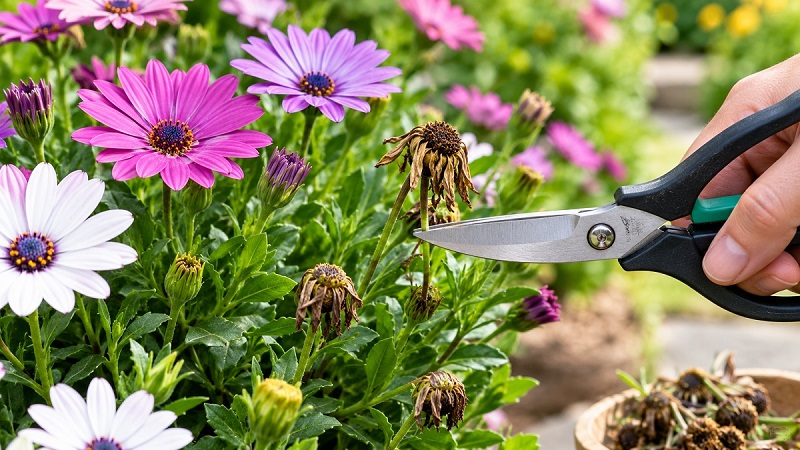
Deadhead African daisies when flowers fade, unless you want to collect seed. Remove damaged stems and trim companions that begin to cover neighboring plants. Regular light maintenance is usually more effective than allowing a mixed planting to become overcrowded and cutting it back heavily later.
African daisies often perform well in mild weather and may flower less during extreme heat. In hot regions, including much of India, choose a planting season when temperatures are more favorable, provide good drainage during the rainy season, and monitor pots carefully during hot, dry spells.
Heat-tolerant companions such as suitable angelonia and gazania varieties can help maintain seasonal color, but their performance depends on local conditions. Lavender and blue fescue may be less reliable in persistently humid, waterlogged, or very hot settings. Select cultivars and alternative plants that are known to perform well in your area.
There is no single list of plants that must never grow beside African daisies. Most problems arise when neighboring plants have incompatible needs or grow so aggressively that they compete for light, moisture, and space.
Avoid combining African daisies with moisture-loving plants that require saturated or persistently wet soil. African daisies prefer good drainage, and waterlogged roots can become unhealthy. If a plant needs much wetter conditions, give it a separate bed or container.
Tall shrubs, vigorous perennials, and large ornamental grasses can reduce the sunlight reaching compact daisies. These plants can still be used as a backdrop if they are positioned far enough behind the flowers and do not spread excessively into the planting.
Vigorous groundcovers can grow into the crowns of African daisies, restrict airflow, and make maintenance difficult. Choose compact edging plants and trim them before they cover the daisy foliage.
A heavily fertilized container may suit one flowering annual but produce excessive foliage or poor growth in a companion that prefers leaner soil. Group plants with broadly similar requirements, especially when using pots or raised planters.
Lavender, salvia, verbena, sweet alyssum, blue fescue, dusty miller, gazania, and creeping thyme are useful choices for suitable sunny, well-drained locations. Calibrachoa, petunias, and nemesia are also good options for containers when their moisture and temperature needs can be met.
Yes. Lavender and African daisies can make an attractive combination because both suit sunny positions and well-drained soil. However, lavender generally prefers drier conditions once established, so avoid overwatering it to satisfy other plants nearby.
Yes. Their compact, flowering growth makes many varieties suitable for pots, window boxes, and patio planters. Combine them with a trailing plant such as calibrachoa or petunia, or use compact salvia for height. Ensure the container drains freely and is large enough for all the roots.
Their open flower heads can attract visiting insects, depending on the variety and local conditions. Combining African daisies with other flowering plants that provide nectar or pollen at different times can make a garden more useful to pollinators throughout the season.
Yes. Compact ornamental grasses such as blue fescue add fine foliage and contrast with the large daisy flowers. Select grasses suited to the local climate and soil, and leave enough space to prevent them from shading or crowding the flowers.
Depending on the region, suitable gazanias, heat-tolerant angelonia, and certain verbena varieties may work well. Choose plants adapted to local heat and humidity, provide good drainage, and remember that African daisies themselves may flower less during extreme heat.
Spacing depends on the mature spread of each plant. Many compact African daisies need around 25–35 cm of space, but larger cultivars need more. Check plant labels and allow enough room for airflow, root growth, and maintenance.
A diverse planting can support beneficial insects, but companion plants do not guarantee pest control. Inspect African daisies for aphids and other problems, maintain good airflow, and use an appropriate treatment if a pest infestation develops.
The best companion plants for African daisies combine compatible growing conditions with contrasting colors, heights, and foliage. Lavender and salvia suit many sunny borders, alyssum softens the edges, blue fescue adds texture, and calibrachoa or petunias can bring a container planting together.
Start with a small number of plants, check their mature sizes, and choose varieties suited to your local weather. With thoughtful spacing, good drainage, and appropriate watering, African daisies can become the centerpiece of a colorful and balanced garden display.
Continue exploring our gardening guides with more plant profiles, growing tips, and practical advice for creating a healthy, productive garden.