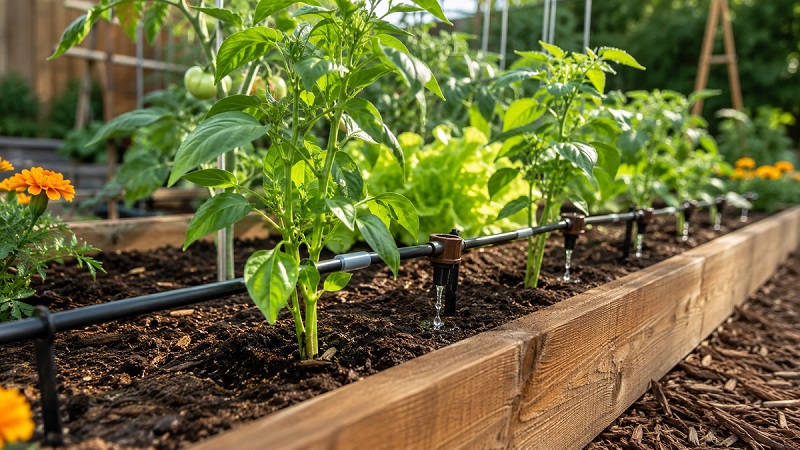
Drip Irrigation Systems for Home Gardens
Learn how to plan, design, and install a drip irrigation system for your home garden. Save water and boost plant health with our step-by-step setup guide.
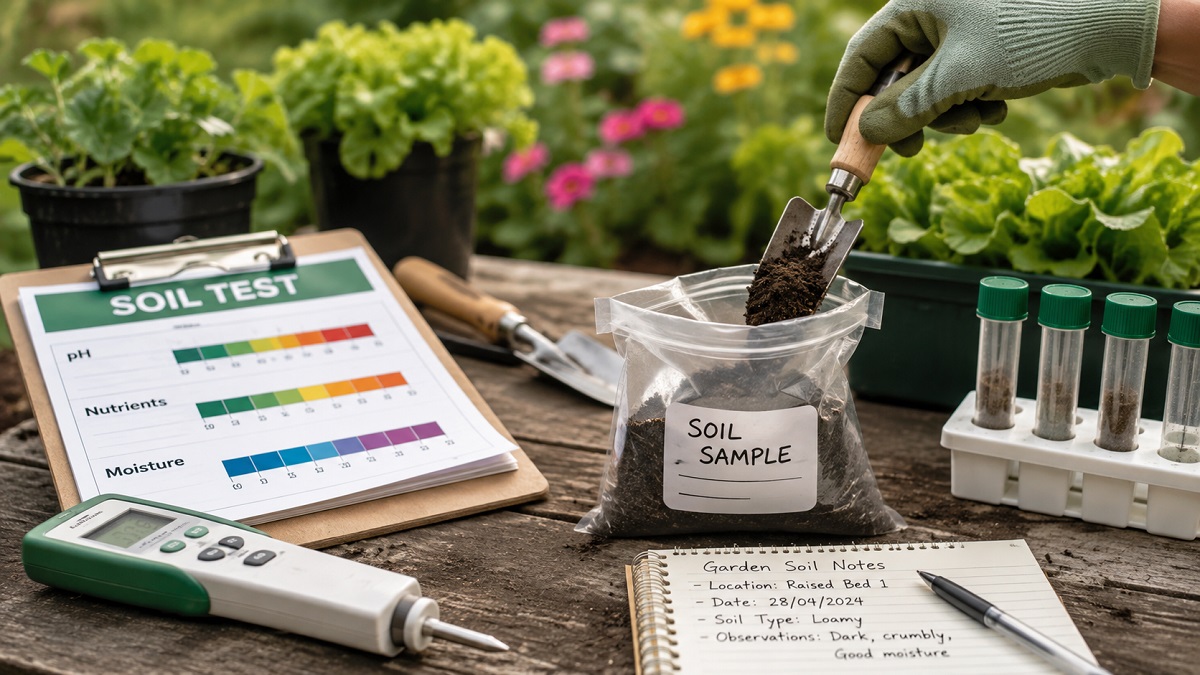
Healthy plants begin with healthy soil, but good-looking soil is not always healthy soil. A garden bed may appear dark, loose, and fertile while still having a nutrient imbalance, unsuitable pH, poor drainage, or excessive levels of certain nutrients. This is why a soil test in gardening is one of the most useful steps you can take before adding fertilizer, lime, sulfur, or large amounts of compost.
A soil test gives you a clearer picture of what is happening below the surface. Depending on the type of test, you can learn about soil pH, available nutrients, organic matter, salinity, and other characteristics that influence plant growth. More importantly, testing helps you avoid guessing. Instead of applying fertilizer because a plant looks weak, you can investigate whether the problem is actually related to nutrition, soil acidity, drainage, watering, roots, or another growing condition.
Soil testing is useful for vegetable gardens, flower beds, lawns, raised beds, fruit trees, containers, and new planting areas. It is particularly valuable when you are preparing a new garden, experiencing repeated plant-growth problems, or planning to grow crops with specific soil requirements.
Test first, amend second. A soil test can help you make more informed decisions about fertilizers, lime, sulfur, compost, and other amendments.
A soil test is an analysis of a soil sample used to determine selected physical and chemical properties of the growing medium. The exact information provided depends on the test, but common garden soil tests measure pH and the availability of important plant nutrients such as nitrogen, phosphorus, and potassium.
Some laboratory tests provide additional information about calcium, magnesium, sulfur, organic matter, soluble salts, cation exchange capacity, texture, or micronutrients. The appropriate test depends on the plants you are growing and the problems you are trying to solve.
Think of a soil test as a report card for the soil rather than a complete diagnosis of the garden. It can tell you a great deal about chemical conditions, but it does not automatically explain every plant problem. Drainage, sunlight, temperature, pests, diseases, compaction, root damage, irrigation, and planting depth can all affect plant health.
A basic soil test does not necessarily identify every possible plant problem. It may not reveal poor drainage, root disease, physical compaction, insect damage, irrigation problems, or unsuitable light. These conditions need to be evaluated separately.
Gardeners often focus on what they can see above ground: yellow leaves, weak stems, poor flowering, slow growth, or disappointing harvests. It is tempting to respond immediately with fertilizer. However, adding nutrients without knowing the existing soil condition can sometimes create a new problem instead of solving the original one.
For example, if a soil already contains adequate phosphorus, repeatedly applying a fertilizer high in phosphorus may not improve plant growth. Likewise, adding lime to soil that does not need it can raise the pH beyond the preferred range of some plants. A soil test provides useful information before you make these decisions.
Testing is also valuable when starting a new garden. New beds may contain imported topsoil, construction soil, fill material, compost, or a mixture of several sources. Their fertility and pH can vary considerably. Testing the soil before planting allows you to establish a baseline and correct major issues early.
Regular testing can also help gardeners understand long-term changes. Vegetable gardens, for example, receive repeated additions of compost and fertilizer. Over several seasons, nutrient levels can change. A periodic soil test can show whether amendments are maintaining a useful balance or whether certain nutrients are accumulating.
More fertilizer does not automatically mean more growth. Plants require nutrients within certain ranges, and excessive amounts can interfere with nutrient availability, contribute to salt buildup, or move into waterways through runoff. Testing allows you to use fertilizer more deliberately.
Soil pH affects the availability of many nutrients. A soil can contain a nutrient but still make that nutrient difficult for plants to access if the soil reaction is unsuitable. Knowing the pH helps explain some nutrient-related symptoms and guides decisions about amendments.
Soil tests vary widely. A simple home kit may provide a rough indication of pH and a few nutrients, while a professional laboratory analysis can provide a much more detailed report. Always check what your selected test actually measures before interpreting the results.
| Soil Property | Why It Matters | What It Can Help Explain |
|---|---|---|
| pH | Influences nutrient availability | Nutrient deficiencies and unsuitable growing conditions |
| Nitrogen | Supports leafy and vegetative growth | Pale foliage and weak vegetative growth when deficient |
| Phosphorus | Important for energy transfer and reproductive growth | Potential nutrient imbalance |
| Potassium | Supports several plant functions and stress tolerance | Potential nutrient deficiency or imbalance |
| Organic Matter | Influences soil structure, water holding, and biological activity | Poor structure and low fertility potential |
| Salinity | Excess soluble salts can stress plants | Problems in heavily fertilized or poorly drained soils |
| Micronutrients | Plants require them in smaller quantities | Specific nutrient concerns when a test includes them |
Not every garden requires every measurement. A basic soil test is often a sensible starting point for an established garden, while a more comprehensive analysis may be appropriate for unusual problems, specialty crops, new properties, or soils with a history of contamination or heavy amendment use.
Soil pH describes how acidic or alkaline the soil is. The pH scale is logarithmic, so relatively small numerical changes represent meaningful changes in soil reaction. Most common garden plants perform well in a mildly acidic to near-neutral range, although the preferred range varies between species.
Some plants naturally prefer more acidic conditions, while others tolerate or prefer soils closer to neutral or slightly alkaline. This is one reason it is better to consider the plants you actually want to grow rather than trying to make every garden bed have exactly the same pH.
Soil pH influences the chemical form and availability of several nutrients. When the pH moves outside a plant's preferred range, certain nutrients may become less available even when they are physically present in the soil.
If your soil test reports an unsuitable pH, do not immediately add a large quantity of lime or sulfur. The correct amendment and application rate depend on the soil, the target pH, soil texture, and the recommendations associated with the test. Follow the laboratory or local extension recommendations whenever possible.
Acidic soil has a lower pH. Some plants thrive in acidic conditions, while others may experience nutrient-availability problems if the soil becomes too acidic.
Alkaline soil has a higher pH. Some plants tolerate it well, while others may show nutrient-related symptoms when certain elements become less available.
Most gardeners have seen the three numbers printed on fertilizer packages, such as 10-10-10. These numbers represent the fertilizer's analysis for nitrogen, phosphate expressed as P2O5, and potash expressed as K2O. They are commonly referred to as N-P-K.
Nitrogen is strongly associated with vegetative growth, including leaves and stems. Plants with insufficient available nitrogen may develop pale foliage and weak growth, although yellowing can have many other causes. Excessive nitrogen can encourage lush growth that may not be desirable for every plant and can affect flowering or fruiting in some situations.
Phosphorus participates in energy transfer and several important plant processes. Gardeners sometimes add phosphorus to encourage flowering or root development, but adding it without a demonstrated need is not automatically beneficial. Soil testing can help determine whether additional phosphorus is appropriate.
Potassium supports many plant functions, including water regulation and stress responses. Deficiency symptoms vary between plants, so a visual diagnosis should not be treated as proof of potassium deficiency.
Plants also need nutrients such as calcium, magnesium, sulfur, iron, manganese, zinc, copper, boron, molybdenum, and chlorine. These are required in different quantities, and not every garden soil test measures all of them.
A good soil-testing strategy is therefore not simply to collect the longest possible list of numbers. Instead, choose a test that provides information useful for your particular garden and then interpret the results in context.
The best time to test soil depends on your gardening schedule and the reason for testing. For a new garden, testing before planting and before major amendments is particularly useful. It establishes a baseline and gives you time to make gradual corrections.
Established vegetable beds can benefit from periodic testing, especially when fertilizer and organic amendments are added regularly. There is no universal requirement to test every garden every year. The appropriate interval depends on soil conditions, cropping intensity, amendment practices, and recommendations from the testing laboratory or local agricultural service.
If you are planning to add substantial quantities of lime, sulfur, fertilizer, manure, or other amendments, test first. Once a large amount of material has been incorporated, it becomes more difficult to determine what the original soil condition was.
If plants repeatedly struggle despite appropriate watering and care, a soil test can be one part of the investigation. It is particularly useful when the same bed consistently produces weak plants while another nearby bed performs normally.
A soil test is only as useful as the sample submitted for analysis. One of the most common mistakes is collecting soil from a single convenient spot and assuming it represents the entire garden. Garden beds can vary considerably over short distances.
Separate areas that are managed differently. For example, a vegetable bed, lawn, fruit-tree area, ornamental border, and recently amended raised bed should generally be considered separately rather than mixed into one sample.
Remove leaves, mulch, stones, plant debris, and other surface material before collecting the soil. You want the sample to represent the actual soil layer being tested rather than the mulch sitting on top of it.
Take several small samples from different locations within the area. For a typical garden bed, samples are commonly collected from the main root-zone depth, often around 4–6 inches for many vegetable and ornamental beds. Follow the instructions supplied by the laboratory because sampling depth can vary with the crop and purpose.
Place the individual samples in a clean plastic or non-contaminating container and mix them thoroughly. Remove obvious roots, stones, and debris. The mixed soil becomes a composite sample representing the area.
Transfer the required quantity into the laboratory's sample container or bag. Clearly identify where the sample came from and provide the information requested on the submission form, including the crops or plants you intend to grow when requested.
Do not combine soil from areas with clearly different histories or growing conditions. A raised bed amended heavily with compost should not automatically be mixed with an untouched section of native soil.
Home soil test kits are convenient and can be useful for getting a quick indication of certain soil properties. They are particularly appealing to gardeners who want a simple way to monitor changes over time.
However, home kits can differ substantially in quality, testing method, calibration, and interpretation. If you need reliable recommendations for correcting a significant soil problem, a professional laboratory analysis is usually the better choice.
| Feature | Home Test Kit | Laboratory Test |
|---|---|---|
| Convenience | Very convenient | Requires sample submission |
| Cost | Varies by kit | Varies by laboratory and test package |
| Testing Range | Usually limited | Can be comprehensive |
| Interpretation | Often simplified | Usually includes recommendations or reference ranges |
| Best Use | Quick monitoring and basic information | Detailed assessment and amendment planning |
If you are unsure which option to choose, consider how important the decision is. For routine curiosity, a basic kit may be enough. For a new vegetable garden, persistent problems, substantial soil amendments, or specialized crops, laboratory testing provides more useful information.
Soil reports can look complicated at first because they may contain abbreviations, numerical values, units, ratings, and recommended amendment rates. The easiest approach is to read the report in sections rather than trying to interpret every number at once.
First determine whether the soil pH falls within a suitable range for your intended plants. Do not assume that a single pH value is ideal for every crop.
Look at the laboratory's rating system. Terms such as low, medium, adequate, high, or very high are more useful when interpreted according to the laboratory's own standards. Different testing methods can produce values that should not be compared directly across laboratories.
If the report provides recommendations for lime, fertilizer, or other amendments, read them carefully. Application rates can depend on the crop and soil characteristics. A recommendation for a lawn is not necessarily appropriate for a vegetable garden.
Soil reports may use different units for nutrient concentrations. Never compare numbers from two reports without checking the units and extraction methods. A larger number does not automatically mean a more fertile soil.
The purpose of soil testing is not simply to collect numbers. The real benefit comes from using those results to make sensible management decisions. Once you know what the soil needs, choose the smallest practical intervention that addresses the identified problem.
Lime is commonly used to raise soil pH, while sulfur-containing amendments may be used to lower it. The correct amount depends on the soil and the desired change. Soil texture and buffering capacity can affect how much amendment is required.
Avoid trying to change pH dramatically in a single application unless a reliable soil recommendation specifically calls for it. Gradual correction is often easier to manage, especially in established gardens.
Organic matter can improve soil structure and contribute to water and nutrient management. Compost is commonly used in garden beds, but compost should not be treated as a substitute for a soil test. Different composts have different nutrient concentrations and salt levels.
Incorporating excessive quantities of compost year after year can also change nutrient levels. The goal is not to create the darkest possible soil; the goal is to create a balanced growing environment.
If a soil test indicates that a nutrient is needed, choose a fertilizer that supplies the appropriate nutrient and apply it according to the recommendation. Avoid automatically using a high-nitrogen, high-phosphorus, or complete fertilizer when the soil does not require those nutrients.
A soil test may identify chemical characteristics, but poor drainage requires physical observation as well. If water remains around plant roots for long periods, investigate compaction, soil structure, grading, irrigation practices, and drainage before simply adding fertilizer.
A single sample may not represent an entire garden. Collect multiple samples from the area and combine them as recommended.
Combining soil from a vegetable bed with lawn soil, compost-rich raised beds, or an area beneath trees can produce a result that represents none of them accurately.
Recent fertilizer applications can influence soil-test results. Follow the sampling instructions provided by the testing service regarding when to collect samples after amendments.
Soil recommendations make more sense when the intended crop is known. A soil condition suitable for one plant may not be ideal for another.
If you suspect a soil problem, resist the urge to add several amendments at once. If you add lime, fertilizer, compost, and other materials before testing, you may make the original problem harder to understand.
Yellow leaves can result from many causes, including watering problems, root damage, pests, disease, unsuitable pH, nutrient deficiencies, nutrient excesses, or natural aging. Soil testing is useful, but it should be combined with careful observation.
Soil testing is particularly useful in vegetable gardens because these beds are often cultivated intensively and receive repeated nutrient inputs. Test before establishing a new bed and periodically thereafter according to local recommendations.
Flowering plants can have different nutritional and pH preferences. Test the bed if plants repeatedly perform poorly or if you are establishing a new ornamental border.
Raised beds may contain a mixture of topsoil, compost, garden soil, and other materials. Their nutrient levels can change quickly when large amounts of compost or fertilizer are added. Keep records of what you add so future soil tests can be interpreted more effectively.
Lawn soil is often managed differently from garden beds. Soil-test recommendations for turf can therefore differ from recommendations for vegetables or ornamental plants.
Fruit trees occupy the same soil for many years, making long-term soil management important. A soil test before planting can help identify major problems, while periodic testing can help monitor nutrient management.
Container growing media behave differently from native garden soil. Many potting mixes contain little or no mineral soil, and their nutrient content changes as plants are watered and fertilized. Use testing methods designed for the growing medium when available rather than automatically applying a field-soil testing method.
A satisfactory soil test does not guarantee healthy plants. If the soil pH and nutrient levels appear suitable but plants still perform poorly, broaden the investigation.
| Possible Problem | What to Check |
|---|---|
| Too much water | Drainage, irrigation frequency, compacted soil, and weather |
| Too little water | Soil moisture, irrigation coverage, mulch, and root-zone depth |
| Poor sunlight | Hours of direct light and seasonal shade patterns |
| Root problems | Root rot, physical damage, compacted soil, and planting depth |
| Pests | Leaves, stems, roots, undersides of foliage, and soil surface |
| Disease | Spots, wilting, lesions, rotting tissue, and abnormal growth |
| Temperature stress | Recent heat, cold, frost, or sudden temperature changes |
Soil testing is therefore best viewed as one tool within a larger gardening process. Good plant care combines soil information with observation of the plant, its roots, environment, and growing conditions.
You do not need complicated equipment to make soil testing part of a sensible gardening routine. Start by identifying the beds or areas you want to evaluate. Decide which plants will be grown there, collect representative samples, and submit them to an appropriate testing service or use a suitable home test kit.
Once you receive the results, resist the temptation to focus on a single number. Read the complete report and its recommendations. Compare the findings with the needs of your plants and consider how the soil has been managed in previous seasons.
Keep a simple garden record containing the test date, bed location, pH, major nutrient results, amendments applied, and crops grown. Over time, these records become surprisingly valuable. They can reveal whether a soil problem is improving, whether nutrients are accumulating, or whether your amendment strategy needs to change.
Soil testing is not only about growing bigger plants. It can also support more responsible gardening. When you know what nutrients are already present, you are less likely to apply fertilizer simply because it seems like the right thing to do.
Avoiding unnecessary fertilizer can reduce waste and help prevent excess nutrients from leaving the garden through runoff or leaching. It also saves money and reduces the number of products that need to be purchased and applied.
Soil testing also encourages a more balanced approach to soil improvement. Instead of continually adding amendments, gardeners can make targeted changes and monitor the results. Combined with composting, mulching, appropriate crop rotation, sensible irrigation, and careful planting, soil testing can become part of a long-term soil stewardship strategy.
A soil test is one of the simplest ways to replace guesswork with useful information. It can reveal soil pH, nutrient availability, and other characteristics that are difficult to determine simply by looking at the ground. For gardeners preparing a new bed, dealing with persistent problems, or managing soil over many seasons, that information can be extremely valuable.
The most important lesson is that a soil test should guide your decisions rather than dictate every aspect of gardening. Start with representative samples, understand what the test measures, read the recommendations carefully, and make amendments according to the needs of the plants and soil.
Healthy soil is a long-term project. Regular observation, thoughtful amendment, organic matter management, proper watering, good drainage, and appropriate plant selection all work together. Soil testing simply gives you a clearer starting point and helps you make better decisions along the way.
There is no single schedule that works for every garden. New beds and gardens with persistent problems may benefit from testing before major amendments are made. Established gardens can be tested periodically according to crop needs, amendment practices, and local recommendations.
A basic laboratory test that includes pH and major plant nutrients is a useful starting point for many vegetable gardens. If your garden has unusual problems, a history of heavy amendments, or other concerns, a more comprehensive analysis may be appropriate.
Yes. Home soil-testing kits are available and can provide useful basic information. For more dependable measurements and amendment recommendations, particularly when making significant changes to soil, laboratory testing is generally preferable.
For many garden beds, samples are commonly taken from the main root-zone area, often around 4–6 inches deep. However, the correct depth can vary by crop and testing purpose, so always follow the instructions supplied by the testing laboratory or kit.
Testing before major amendments can be helpful because it establishes a baseline. Compost also varies in nutrient content, so repeated heavy applications can affect soil nutrient levels over time.
Not necessarily. A soil test can identify certain chemical conditions, but plant decline may also be caused by watering, drainage, pests, diseases, root damage, temperature, sunlight, planting depth, or other environmental factors.
Soil-test results describe the soil, but different plants have different preferences. Interpret the results according to the requirements of the crops or ornamental plants you intend to grow.
No. Soil color alone does not provide a complete picture of fertility. Dark soil may contain substantial organic matter, but pH, nutrient availability, drainage, structure, salinity, and other factors also influence plant growth.
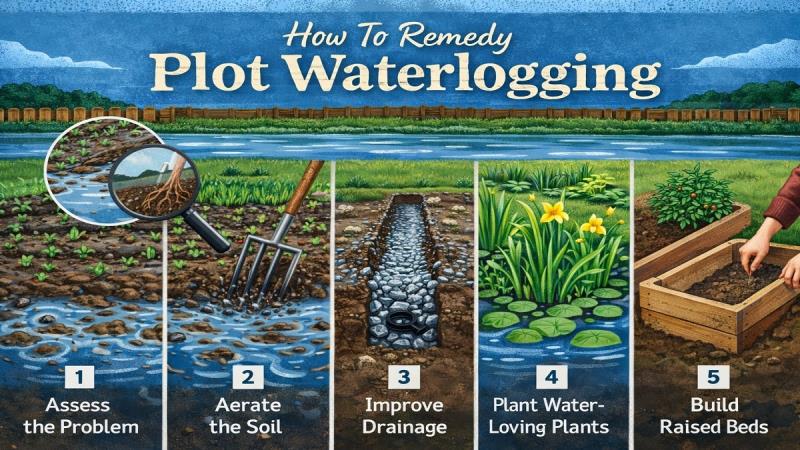
Keep your garden healthy and productive with practical tips for managing soil, water, drainage, and moisture. Explore guides on efficient irrigation, choosing the right mulch, and solving common drainage problems to create better growing conditions while conserving water and protecting plant roots.