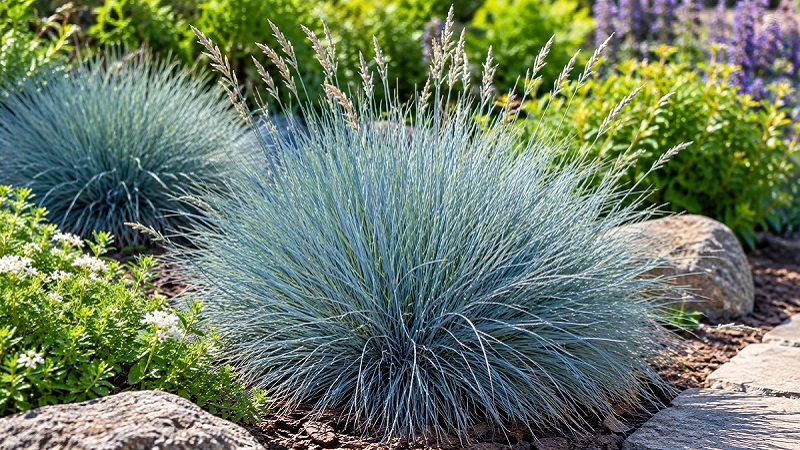
Growing & Caring for Blue Fescue Grass
Learn how to grow and care for Blue Fescue Grass, including sunlight, soil, watering, planting, pruning, division, containers, and common problems.
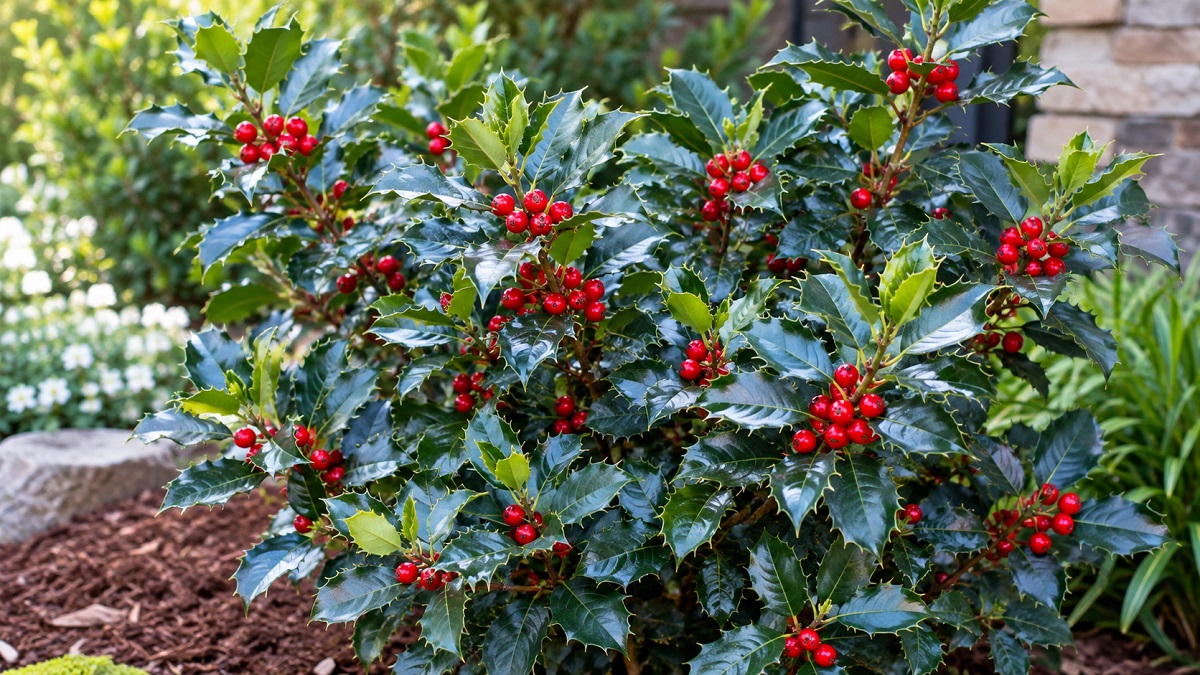
'Blue Princess' Holly (Ilex × meserveae 'Blue Princess') is a female evergreen holly prized for its glossy blue-green leaves, purplish stems, dense growth, and clusters of bright red berries. Unlike a number of hollies that can become unruly or lose their character in winter, Blue Princess keeps its broadleaf evergreen structure throughout the year and becomes particularly striking when the red fruit contrasts with its dark foliage.
One important detail sets this cultivar apart from many ordinary shrubs: Blue Princess is a female holly. It can flower without a male plant, but abundant berry production requires pollen from a compatible male cultivar. 'Blue Prince' is the traditional pollinating partner.
With the right location, Blue Princess works well as a foundation shrub, evergreen screen, hedge, specimen planting, or mixed border plant. It prefers moist, well-drained soil and performs in full sun to partial shade. In hot-summer climates, some afternoon protection can help reduce stress.
Blue Princess Holly is a female evergreen shrub that needs a compatible male holly nearby for reliable berry production.
Blue Princess is one of the well-known female cultivars of Meserve holly, a group of hybrid hollies commonly called blue hollies. The leaves have a distinctive blue-green cast and are glossy, leathery, and armed with spiny margins. Purplish stems add another layer of color, especially when the shrub is viewed closely during the winter months.
Small pale flowers appear in spring. They are not the main ornamental feature, but they are important because successful pollination leads to the berries for which the female cultivar is grown. Once pollinated, the flowers develop into red fruit that can remain on the plant through much of the colder season.
Blue Princess is not a tiny foundation plant. Depending on climate, growing conditions, pruning, and the reference used, mature plants can reach roughly 8 to 12 feet, with some horticultural references documenting plants capable of becoming considerably larger. Give it enough room from the beginning rather than planting it where frequent severe cutting will eventually be necessary.
Use the table below as a practical reference when choosing a planting site and planning routine maintenance.
| Characteristic | Blue Princess Holly |
|---|---|
| Botanical name | Ilex × meserveae 'Blue Princess' |
| Common names | Blue Princess Holly, Blue Holly, Meserve Holly |
| Family | Aquifoliaceae |
| Plant type | Broadleaf evergreen shrub |
| Sex | Female cultivar |
| Typical mature height | Approximately 8–12 feet; some references report larger specimens |
| Typical mature spread | Approximately 6–10 feet, depending on conditions |
| Growth habit | Dense, upright to broadly spreading shrub |
| Growth rate | Slow to moderate |
| Foliage | Glossy, leathery, blue-green evergreen leaves |
| Leaf margins | Spiny or sharply toothed |
| Stem color | Purplish to reddish-purple |
| Flowers | Small white to greenish-white flowers |
| Bloom period | Spring, commonly April–May |
| Fruit | Showy red berries on pollinated female plants |
| Berry season | Fall into winter, often persisting well into the cold season |
| Sun exposure | Full sun to partial shade |
| Hot-climate preference | Some afternoon shade can reduce heat stress |
| Soil | Moist, well-drained, fertile, slightly acidic soil |
| Water needs | Moderate; consistent moisture during establishment |
| USDA hardiness | Commonly grown in Zones 5–8; colder exposed sites may require protection |
| Pollinator | 'Blue Prince' is a commonly used male pollinator |
| Pollination ratio | About one male for every 3–5 female plants is a common guideline |
| Pruning | Light shaping as needed; early spring is commonly recommended |
| Landscape uses | Hedges, screens, foundation planting, borders, and specimen planting |
Mature size varies between references because climate, soil, cultivar age, and pruning all influence the final dimensions. The important practical point is to allow several feet of horizontal space rather than treating Blue Princess as a compact shrub.
The appeal of Blue Princess is its combination of evergreen foliage and seasonal fruit. The shrub does not disappear when deciduous plants drop their leaves. Instead, its blue-green foliage provides structure through the colder months, while red berries add a strong seasonal contrast.
Its dense growth also makes it useful where a gardener wants year-round screening without relying entirely on conifers.
Blue Princess has distinctly spiny leaf margins. That makes it useful as part of a barrier planting, but it also means placement matters. Avoid putting it directly beside narrow walkways, children's play areas, or places where people routinely brush against the shrub.
Choose a site that provides good light, reliable drainage, and enough room for the shrub to develop without constant hard pruning. Blue Princess tolerates both sun and partial shade, but light levels influence density, flowering, and overall appearance.
A sheltered location is particularly useful in colder climates. Winter wind combined with frozen soil can place additional stress on evergreen foliage. In warmer regions, some afternoon shade can help protect the plant from excessive summer heat.
Before planting, look above and around the site as well. Blue Princess can eventually become a substantial shrub, so leave enough clearance from buildings, utility areas, paths, and other mature plants.
Blue Princess Holly grows well in full sun to partial shade. A location receiving several hours of direct sunlight generally encourages dense growth and good flowering. The plant can also be grown with some shade, particularly where summer heat is intense.
Full sun can help produce a fuller shrub and supports flowering and fruit development when pollination conditions are suitable. Keep the root zone adequately moist, because a sunny position can dry out faster than a shaded one.
Partial shade is useful in hot climates. Morning sun followed by afternoon protection can be a sensible compromise where summers are long and bright. Avoid deep, dense shade if you want the strongest growth and best fruit display.
Blue Princess prefers moist but well-drained soil. Slightly acidic soil is particularly suitable for Meserve hollies. Poor drainage can create root problems, while strongly alkaline conditions may contribute to chlorosis and pale or yellowing foliage.
Before planting, improve compacted soil with organic matter where appropriate. The goal is not simply to make the planting hole rich; the surrounding soil should also allow excess water to move away from the roots.
Blue Princess likes consistent moisture but should not sit in stagnant water. If the site remains saturated after rain, improve drainage or choose another location rather than trying to compensate with more frequent watering.
Planting is easiest during mild weather when the soil can be worked without becoming either waterlogged or excessively dry. Container-grown shrubs can establish successfully when watered carefully after planting.
Select a sunny or partly shaded location with good drainage. Remember the mature size and the sharp leaf margins when deciding how close to paths and entrances the shrub should be planted.
Loosen the soil over a broad area rather than creating an extremely deep pocket of loose soil surrounded by compacted ground. Incorporate suitable organic matter if the existing soil is poor.
Place the shrub so the top of the root ball sits at approximately the same level as the surrounding soil. Avoid burying the trunk or planting substantially deeper than the original container depth.
Backfill around the roots, gently firm the soil, and water thoroughly. This settles the soil around the root ball and removes large air pockets.
Apply a moderate layer of organic mulch over the root zone, keeping it away from direct contact with the main stems. Mulch helps moderate soil temperature and slows moisture loss.
Newly planted Blue Princess Holly needs more attention to watering than an established shrub. Water deeply enough to moisten the developing root zone, then allow the soil surface to begin drying before watering again.
During prolonged hot or dry weather, check the soil rather than following a rigid calendar. Container-grown plants and shrubs planted in exposed sunny positions may require water more often than established specimens in naturally moisture-retentive soil.
Once established, Blue Princess has moderate water needs, but prolonged drought can still cause stress. Maintaining even soil moisture is especially important during periods of active growth and extreme summer weather.
Blue Princess generally does not require an aggressive fertilizer program. Start with healthy soil containing organic matter, then use a suitable slow-release or holly fertilizer if growth is weak or soil testing indicates a nutrient requirement.
Avoid repeatedly adding fertilizer without knowing what the plant needs. Excess nutrients can encourage soft growth and do not solve underlying drainage, watering, or pH problems. If leaves become unusually yellow while the veins remain greener, check soil pH and drainage before assuming the plant simply needs more fertilizer.
Pollination is one of the most important points to understand when growing Blue Princess. This cultivar is female, and hollies are generally dioecious, meaning male and female flowers occur on separate plants. A female Blue Princess can flower without producing the impressive berry crop gardeners expect unless suitable pollen reaches its flowers.
'Blue Prince' is the commonly recommended male partner for Blue Princess. Other compatible male blue holly cultivars may also be used, but the male plant must flower at an appropriate time for pollination to occur.
A common horticultural guideline is approximately one male plant for every three to five female plants. The exact arrangement depends on the planting design and local growing conditions, but the key is to have a compatible male close enough for pollinating insects to move pollen between plants.
If a mature Blue Princess flowers but produces few or no berries, lack of compatible male pollen is one of the first things to investigate. Other factors can influence flowering and fruit set, but the female nature of this cultivar makes pollination essential for a reliable berry display.
Blue Princess naturally develops a dense form, so it usually needs only selective pruning rather than repeated severe cutting. Prune to remove damaged branches, correct an unwanted branch, maintain a hedge, or keep the plant within its available space.
Early spring, before vigorous new growth begins, is a commonly recommended pruning period. For hedges, pruning can be used to maintain the desired outline while avoiding unnecessary removal of healthy structure.
Avoid turning a large evergreen shrub into a small shrub through constant hard cutting. If the planting site is too small for its eventual dimensions, pruning will become a continuing chore. It is better to choose a suitably sized cultivar or move the plant while it is still young.
Wear gloves and protective clothing when pruning because the leaves have sharp spiny margins. The Royal Horticultural Society specifically notes the need for protective equipment when handling this holly.
Evergreen foliage is one of Blue Princess Holly's greatest landscape advantages, but evergreen does not mean completely immune to winter stress. Cold winds, frozen soil, bright winter sun, and dry conditions can all increase moisture loss from foliage.
Plants growing near the lower edge of their hardiness range benefit from sheltered positioning. Water adequately before the ground freezes when conditions are dry, and maintain a layer of organic mulch over the root zone without piling mulch against the stems.
In exposed cold locations, protection from drying winter winds can be more useful than simply adding fertilizer. Meserve hollies are among the more cold-tolerant broadleaf evergreen hollies, although references differ on the precise lower-zone performance of individual cultivars and exposed plants.
Blue Princess can be propagated from cuttings, although producing a large landscape plant this way takes time. Semi-ripe cuttings taken in late summer or early autumn are one documented method, while hardwood cuttings can also be used under suitable propagation conditions.
For gardeners who simply want one or two plants, purchasing a correctly identified nursery-grown female cultivar is generally much more straightforward. This is also important when berry production matters, because a seed-grown holly may not reproduce the exact characteristics of the named cultivar.
Blue Princess is generally a relatively low-maintenance shrub, but it can still encounter pest and disease problems. Potential insect pests reported for Meserve hollies include holly leaf miner, spider mites, whiteflies, aphids, and scale insects.
Disease issues can include leaf spots, leaf blight or rot, tar spot, powdery mildew, and root problems associated with unfavorable soil conditions. Good airflow, appropriate watering, proper drainage, and avoiding unnecessary stress can reduce many problems.
Yellowing foliage should not automatically be treated as a fertilizer deficiency. High-pH soil can contribute to chlorosis in Meserve holly. Poor drainage, drought, root damage, and other stresses can also produce abnormal foliage, so inspect the planting conditions before choosing a treatment.
Leaf scorch can become more noticeable when evergreen foliage is exposed to strong sun, dry soil, heat, or winter wind. Keeping the root zone adequately moist and choosing a sheltered site can help reduce environmental stress.
The dense evergreen structure and seasonal red berries give Blue Princess several useful roles in a residential landscape.
| Landscape Use | Why It Works |
|---|---|
| Foundation planting | Evergreen foliage provides structure throughout the year. |
| Hedge | Dense growth and spiny foliage can form a substantial boundary planting. |
| Privacy screen | Mature plants can provide useful visual screening. |
| Specimen shrub | Blue-green leaves, purple stems, and red berries provide multiple seasons of interest. |
| Mixed shrub border | Evergreen structure contrasts with deciduous shrubs and perennials. |
| Winter garden | Red berries and persistent foliage remain attractive after many plants become dormant. |
The berries can also attract birds. The dense, spiny foliage provides additional cover, making blue hollies useful in wildlife-oriented landscapes as well as ornamental plantings.
Check whether a compatible male holly is present. Blue Princess is female and requires pollination to produce its characteristic fruit.
Check soil pH, drainage, watering, and root health. High-pH soil can contribute to chlorosis in Meserve hollies.
Consider drought, intense heat, winter wind, or excessive sun exposure. Make sure the plant is not repeatedly drying out.
Growing Blue Princess Holly is relatively straightforward when its basic requirements are met. Give it a sunny to partly shaded position, fertile and well-drained soil, consistent moisture during establishment, and enough space to reach its mature size.
The biggest difference between an ordinary evergreen shrub and a successful berrying Blue Princess is often pollination. Because this is a female cultivar, plant a compatible male such as Blue Prince if you want the characteristic red fruit.
Once established, the shrub can provide glossy evergreen foliage, spring flowers, red autumn and winter berries, and dense year-round structure. Its relatively modest maintenance requirements make it suitable for hedges, screens, foundation plantings, specimen locations, and mixed shrub borders.
'Blue Princess' Holly earns its place in the garden through a combination of year-round foliage, distinctive blue-green leaves, purple stems, spring flowers, and vivid red berries. Its most important special requirement is simple: remember that it is a female holly and provide a suitable male pollinator if berries are part of the plan.
Plant it in well-drained, moderately fertile soil, keep young plants consistently watered, protect exposed specimens from severe winter conditions, and give the mature shrub enough room to develop naturally. With those basics in place, Blue Princess can become a long-lived evergreen feature for hedges, screens, foundations, borders, and winter-interest plantings.
Continue exploring our gardening guides with more plant profiles, growing tips, and practical advice for creating a healthy, productive garden.