Growing & Caring for Blue-Eyed Grass (Sisyrinchium angustifolium)
Learn how to grow and care for Blue-Eyed Grass, including sunlight, soil, watering, planting, pruning, propagation, seasonal care, and common problems.
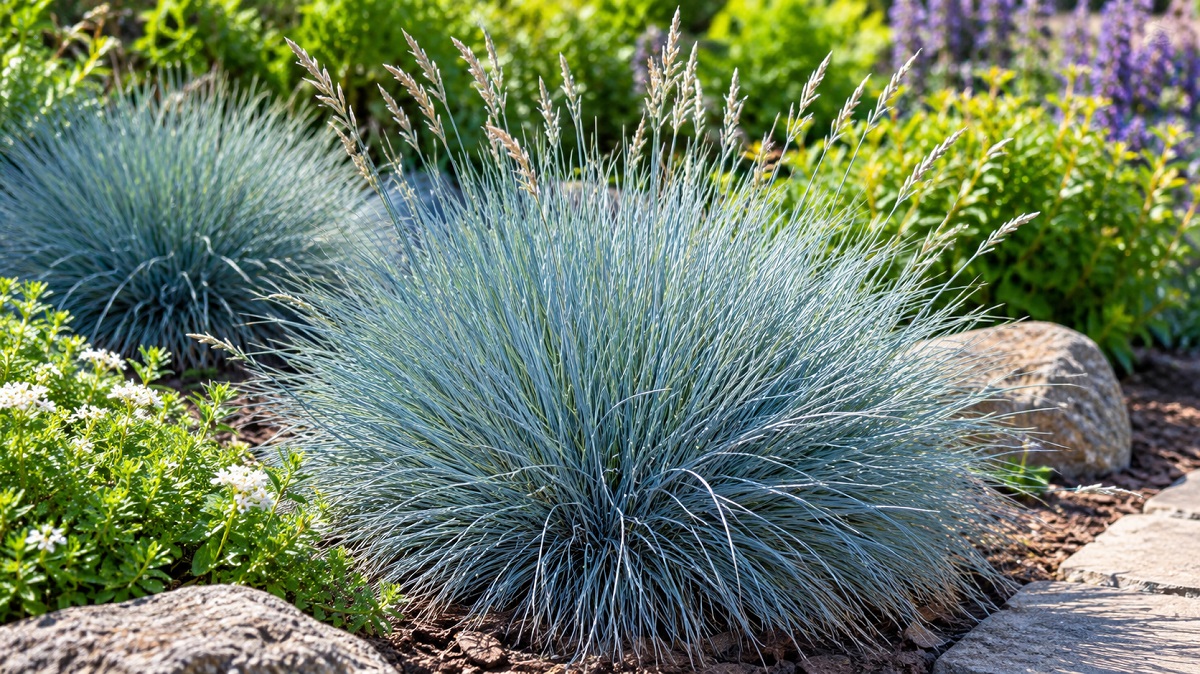
Blue Fescue Grass is one of those ornamental grasses that can change the character of a planting without taking over the entire garden. Its narrow, needle-like leaves form neat, rounded tufts, and the blue-gray foliage provides a cool contrast to green shrubs, flowering perennials, and warm-colored flowers. Unlike many larger ornamental grasses, Blue Fescue stays relatively small, making it useful for edging, rock gardens, containers, gravel gardens, and smaller landscape beds.
The plant most commonly grown as Blue Fescue is Festuca glauca. It is a cool-season perennial grass valued primarily for its foliage rather than its flowers. In favorable conditions, slender flower stems rise above the clumps in late spring or early summer, producing inconspicuous greenish to tan flower heads.
Growing Blue Fescue is generally straightforward when the plant receives plenty of sunlight and the soil drains well. The biggest problems usually come from conditions that remain too wet, especially around the crown and roots. Choosing the right location before planting is therefore more important than providing constant attention afterward.
Small, tidy and drought-tolerant once established — give Blue Fescue sunlight, drainage and occasional deep watering rather than constantly moist soil.
Blue Fescue is a compact ornamental grass grown for its distinctive blue-gray foliage. The leaves are extremely narrow and tend to point outward and upward from the center of the plant, creating a rounded tuft. This growth habit gives the grass a tidy appearance even when it is planted among more loosely growing perennials.
Festuca glauca belongs to the grass family, Poaceae. Several cultivars are available, and they can differ in foliage color, size, density and overall form. Some selections develop a particularly strong steel-blue appearance, while others are more blue-green.
Blue Fescue is a useful choice when a garden needs structure without a large plant. It can be repeated along a pathway, grouped around larger plants, planted between stones, or used to soften the edge of a hardscape.
Its compact size is one of its greatest advantages. Blue Fescue does not require the large planting space associated with many tall ornamental grasses.
Blue Fescue is especially useful in sunny locations where a low-growing plant is needed. It can be planted along walkways, at the front of perennial borders, around stepping stones, or beside ornamental rocks.
The following table summarizes the main growing requirements and characteristics of Blue Fescue. Individual cultivars can vary, so check the plant label for the mature size and hardiness of the particular selection you purchase.
| Characteristic | Blue Fescue |
|---|---|
| Botanical name | Festuca glauca |
| Common names | Blue Fescue, Blue Sheep Fescue |
| Family | Poaceae |
| Plant type | Perennial ornamental grass |
| Season of interest | Primarily foliage; flower stems appear in late spring or early summer |
| Foliage color | Blue-gray to steel-blue, depending on cultivar and growing conditions |
| Growth habit | Compact, clump-forming and rounded |
| Typical foliage height | Approximately 6–12 inches |
| Typical spread | Approximately 6–12 inches |
| Light requirement | Full sun; some cultivars tolerate light shade but color is generally stronger with good sunlight |
| Soil | Well-drained, preferably not heavy or persistently wet |
| Soil pH | Adaptable to moderately acidic through neutral soils when drainage is good |
| Water requirement | Regular watering during establishment; relatively drought-tolerant once established |
| Fertilizer | Light feeding is usually sufficient; avoid excessive nitrogen |
| Pruning | Remove dead foliage and flower stems as needed; avoid cutting deeply into the crown |
| Propagation | Division is the practical method for established clumps |
| Best landscape use | Rock gardens, borders, edging, containers, gravel gardens and mass plantings |
| Main concern | Poor drainage and prolonged wet conditions |
Full sun is the preferred growing condition for Blue Fescue. A location receiving roughly six or more hours of direct sunlight is generally suitable, with stronger light helping the foliage maintain its characteristic blue coloration and compact shape.
In partial shade, the plant may survive, but its appearance can change. The foliage can become greener and the clump may lose some of its dense, rounded form. In humid climates, reduced air movement combined with shade and wet soil can also make the plant less attractive.
A sunny planting bed that receives both morning and afternoon light is ideal. If the choice is between bright morning sun and a location that is shaded for most of the day, choose the brighter site.
In very hot regions, afternoon conditions can be intense. Good soil drainage becomes especially important because irrigation in hot weather should not result in water remaining around the roots for long periods.
Drainage is one of the most important factors in growing Blue Fescue successfully. The plant performs best in soil that allows excess water to move away from the root zone rather than remaining saturated after rain or irrigation.
Sandy or gravelly soil can be particularly suitable. Garden soil that is naturally heavy may need improvement before planting. Incorporating suitable organic matter can improve soil structure, but the goal should be a balanced planting medium rather than soil that holds large amounts of water.
Raised beds and rock gardens can be excellent locations because excess water tends to drain away more easily. If a planting area remains muddy long after rainfall, choose a better-drained position rather than attempting to compensate with frequent maintenance.
Plant Blue Fescue in spring or early fall when temperatures are relatively moderate. Planting during mild weather gives the roots time to establish before the most demanding part of summer or winter arrives.
Choose an area with good sunlight and reliable drainage. Consider the mature width of the cultivar and leave enough space between plants for air circulation and natural growth.
Remove weeds and large stones that interfere with planting. Break up compacted soil and improve drainage if necessary. Avoid creating a rich, heavily fertilized pocket that is dramatically different from the surrounding soil.
Dig a hole approximately as deep as the root ball and somewhat wider. Place the plant so that the crown sits at approximately the same level as it did in its nursery container.
Fill around the roots with the excavated soil, gently firming it as you go. Avoid burying the central crown under a thick layer of soil.
Give the newly planted grass a deep watering to settle the soil around its roots. After that, allow the planting area to begin drying before watering again.
Spacing depends on the cultivar and the appearance you want. Plants placed close together create a more continuous border, while wider spacing allows each rounded clump to remain visually distinct. Check the mature spread listed for your specific variety before deciding on final spacing.
Newly planted Blue Fescue needs more consistent moisture while its root system becomes established. This does not mean the soil should remain constantly wet. Water deeply enough to moisten the root zone, then allow excess water to drain away.
Once established, Blue Fescue can tolerate periods of dry weather. The exact frequency of watering depends on temperature, rainfall, soil type, container size and exposure to wind.
Check the soil near the root zone rather than watering automatically on a fixed schedule. If the upper soil has dried and the plant is beginning to show signs of drought stress, provide a thorough watering.
Container-grown plants usually require more frequent attention than plants growing in the ground because containers lose moisture more quickly.
Blue Fescue generally does not need heavy feeding. Excessive fertilizer, particularly high-nitrogen fertilizer, can encourage softer, greener growth and may reduce the compact appearance that makes this grass attractive.
If the soil is reasonably fertile, little additional fertilizer may be necessary. A light application of a balanced fertilizer in spring can be considered when plants show poor growth and soil fertility is known to be low.
Avoid applying large amounts of fertilizer simply to make the grass grow faster. With Blue Fescue, compact and healthy growth is usually more desirable than rapid growth.
Blue Fescue does not require the same aggressive annual cutting that some tall ornamental grasses receive. Its compact form can usually be maintained by removing dead or damaged foliage and tidying the plant when necessary.
In late winter or early spring, gently remove old brown leaves from the clump. A gloved hand can sometimes be enough to pull away loose dead material. Hand pruners can be used for stubborn or damaged growth.
If trimming is necessary, avoid cutting deeply into the center of the crown. The growing point is located within the clump, and overly severe cutting can leave the plant slow to recover.
The flowering stems can be left in place if you enjoy their subtle texture. They can also be removed when they become untidy or when you want to keep the planting looking especially neat.
Established Blue Fescue clumps can eventually become crowded or develop an unattractive dead center. Division is useful for rejuvenating an older plant and producing additional clumps.
Cool-season grasses are generally easiest to divide during a period of active but moderate growth, such as spring or early fall, depending on the local climate.
Do not make divisions so small that they contain little root material. Healthy divisions establish more quickly and produce better-looking clumps.
Blue Fescue is particularly well suited to containers because of its compact growth habit. It can be grown alone as a simple architectural accent or combined with flowering plants that have contrasting foliage and colors.
Use a container with drainage holes and a well-draining potting mix. Avoid placing a small container in a location where it receives intense heat from reflected pavement unless you are prepared to monitor moisture closely.
Container plants dry out faster than those planted in the ground. Check the potting mix regularly, especially during hot and windy weather. At the same time, make sure excess water can escape freely through the drainage holes.
Roots in containers are exposed to temperature fluctuations that are less severe in the ground. In colder climates, a container may need additional protection during severe freezes. The exact approach depends on the hardiness of the cultivar and the local winter conditions.
Blue Fescue is most effective when its fine texture and cool foliage are used intentionally. Rather than treating it as a background plant, use it where its rounded shape can be seen.
The blue-gray leaves work naturally with stone and gravel. Plant individual clumps between rocks or repeat them throughout the bed to create visual rhythm.
Its relatively small size makes Blue Fescue useful along paths and the front of borders. Repeated plants can create a clean transition between lawn, paving and flower beds.
Pairing blue foliage with green, silver, purple, yellow or warm-colored flowers can produce strong contrast. Taller plants behind the grass provide height while Blue Fescue fills the lower portion of the planting.
Gravel gardens often provide the combination of sunlight and excellent drainage that this grass appreciates. Use several plants rather than relying on a single specimen when you want a stronger visual effect.
Blue Fescue can act as a compact foliage anchor in a mixed container. Its narrow leaves contrast especially well with broader-leaved annuals and perennials.
Blue Fescue is generally a low-maintenance plant, but its appearance can decline when growing conditions are unsuitable. Many problems are related to moisture, age or excessive shade rather than a lack of fertilizer.
Blue Fescue may become greener when it receives insufficient sunlight. Excessive nitrogen can also encourage greener, softer growth. Cultivar differences matter as well, since not every plant sold as Blue Fescue has exactly the same intensity of blue coloration.
Some browning is normal as older leaves age. Extended drought, extreme heat, winter damage or unsuitable soil moisture can increase browning.
Remove dead material and examine the growing conditions before immediately adding fertilizer or water. If the soil is already wet, additional irrigation can make the situation worse.
Older clumps can develop an open or dead center. This is one reason division is useful for rejuvenating mature plants. Lift and divide the healthy portions, then replant them in well-drained soil.
Weak or sprawling growth can occur when plants receive insufficient light or are grown in conditions that promote excessive soft growth. Move new plants into brighter locations and avoid excessive fertilizer.
Persistently wet soil is one of the most important conditions to avoid. If the planting area stays saturated, improving drainage or relocating the plant is generally more useful than changing the watering schedule alone.
Spring is a good time to inspect the clumps, remove dead foliage and assess whether older plants need division. Check drainage before increasing irrigation as temperatures rise.
During summer, monitor plants during prolonged periods without rain. Established Blue Fescue is relatively drought-tolerant, but newly planted specimens need more reliable moisture.
Fall can be an excellent planting season in areas where winters are not immediately severe. Newly planted grass should be watered as needed while roots establish.
In colder regions, the foliage may lose some of its fresh appearance during winter. Avoid heavy cutting when the plant is dormant unless there is a specific reason to do so. Wait until late winter or early spring to perform most cleanup.
The blue-gray color of Blue Fescue gives gardeners plenty of opportunities to play with contrast. Plants with green foliage create a softer combination, while purple or burgundy foliage makes the blue tones more noticeable.
Flowering plants with yellow, pink, white or warm orange blooms can also stand out against the cool foliage. In a rock garden, combine Blue Fescue with low-growing plants that appreciate similar sunny, well-drained conditions.
Think about texture as well as color. The fine blades of Blue Fescue look especially attractive beside plants with large leaves, rounded leaves or soft, silvery foliage.
Blue Fescue Grass is a practical choice when you want ornamental foliage without introducing a large, aggressive grass into the garden. Its compact clumps and blue-gray leaves bring structure to borders, rock gardens, pathways and containers, while its relatively modest water requirements make it useful in sunny landscapes.
The key to keeping it attractive is simple: provide plenty of light, give the roots well-drained soil, water more carefully during establishment, and avoid excessive fertilizer. Older clumps can be divided when they become crowded or lose their shape.
Once planted in the right location, Blue Fescue needs surprisingly little attention. Its fine foliage provides a dependable textural element, allowing surrounding flowers and larger plants to take center stage while the grass quietly holds the planting together.
Continue exploring our gardening guides with more plant profiles, growing tips, and practical advice for creating a healthy, productive garden.