Growing & Caring for Blue Atlas Cedar (Cedrus atlantica 'Glauca')
Learn how to grow and care for Blue Atlas Cedar, including planting, sunlight, soil, watering, pruning, winter care, common problems, and landscape uses.
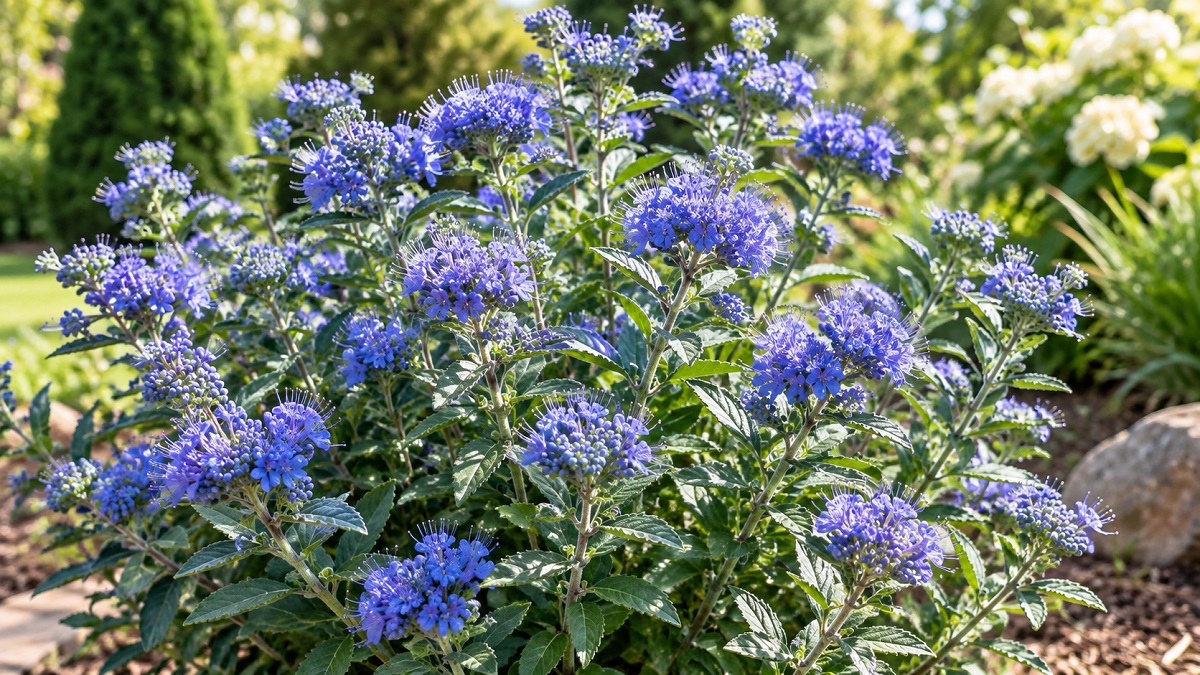
Bluebeard is one of those shrubs that becomes especially valuable when much of the summer garden is beginning to slow down. Its small size, airy habit, aromatic foliage, and clusters of blue flowers make it useful in borders, pollinator gardens, cottage-style plantings, and sunny foundation beds. Unlike many shrubs that demand constant attention, Bluebeard generally needs little more than good drainage, plenty of sunlight, sensible watering, and a hard prune at the right time.
The name Bluebeard commonly refers to plants in the genus Caryopteris, but one of the most widely grown garden plants is Caryopteris × clandonensis. This hybrid is a deciduous, woody shrub in the mint family, Lamiaceae. It typically forms a rounded, mounded plant about 2 to 3 feet tall and wide, although individual cultivars can differ in mature size.
Its flowers appear on new growth, usually toward late summer and into early fall. That timing gives the garden a fresh burst of color when many spring and early-summer bloomers have already finished. The flowers are particularly useful for pollinators, attracting Bees, butterflies, and other beneficial insects.
Bluebeard is a sun-loving, drought-tolerant shrub that rewards good drainage and annual late-winter pruning.
Bluebeard, especially Caryopteris × clandonensis, is a compact deciduous shrub valued for its late-season flowers and attractive foliage. The plant is a hybrid involving Caryopteris incana and Caryopteris mongholica. It develops a low, rounded form rather than becoming a large woody shrub, which makes it suitable for smaller gardens.
The flowers are usually the main attraction. Small blue flowers occur in clusters around the upper portions of the stems, creating a soft, misty appearance when the plant is in full bloom. This explains another commonly used name, Blue Mist Shrub.
The foliage adds another layer of interest. Leaves are opposite, simple, and generally blue-green to gray-green, with a somewhat silvery appearance underneath. When crushed, the foliage has a noticeable aromatic scent.
Bluebeard is also useful because it flowers on new growth. A severe winter may kill the older stems back, particularly in colder climates, but the plant can regenerate from its base when growing conditions are suitable. Annual pruning encourages fresh stems and helps maintain a compact shape.
The following table summarizes the most useful identification and growing information for Caryopteris × clandonensis. Exact size and flower color can vary among cultivars, so check the plant label when selecting a particular variety.
| Characteristic | Bluebeard Details |
|---|---|
| Common Name | Bluebeard, Blue Mist Shrub |
| Botanical Name | Caryopteris × clandonensis |
| Family | Lamiaceae |
| Plant Type | Deciduous woody shrub |
| Growth Habit | Low, rounded, mounding, multi-stemmed |
| Typical Height | 2–3 feet |
| Typical Width | 2–3 feet |
| Growth Rate | Medium |
| Light Requirement | Full sun; at least 6 hours of direct sunlight daily |
| Soil Type | Loose, well-drained loam; sandy or similarly well-drained soil is suitable |
| Soil Drainage | Good drainage is important |
| Water Requirement | Moderate during establishment; drought tolerant once established |
| Flower Color | Typically bright blue to violet-blue; cultivar colors vary |
| Flowering Season | Late summer into early fall |
| Flower Position | Clusters around the upper leaf axils and stems |
| Foliage | Opposite, simple, blue-green to gray-green and aromatic when crushed |
| Pruning | Cut back in late winter before new growth begins |
| Pollinator Value | Attracts bees, butterflies, and other beneficial insects |
| Deer Resistance | Generally seldom browsed |
| Drought Tolerance | Good once established |
| USDA Zones | 6a–9b for Caryopteris × clandonensis |
| Common Landscape Uses | Borders, small groups, mass plantings, low hedges, pollinator gardens and cottage gardens |
| Major Concern | Root or crown rot can develop in poorly drained soil |
North Carolina Extension lists Caryopteris × clandonensis at roughly 2–3 feet tall and wide, with full-sun requirements, good drainage, blue flowers, and hardiness from USDA Zone 6a through 9b.
Bluebeard fills a useful gap in the seasonal garden. It waits until later in the growing season to produce its strongest display, giving borders a new focal point after many early flowering shrubs have faded.
Its compact size also makes it easier to fit into mixed borders than large shrubs. The blue flowers contrast nicely with yellow, white, pink, and warm-toned flowers, while the silvery foliage can soften areas containing darker green plants.
The flowers provide nectar for a range of insects during a time when fewer shrubs may be flowering heavily. Bees and butterflies are particularly attracted to the blooms, making Bluebeard useful in pollinator-focused planting schemes.
For the strongest wildlife value, combine it with other plants that flower at different times rather than relying on a single species.
Bluebeard performs best in full sun. For Caryopteris × clandonensis, that means at least six hours of direct sunlight per day. A position that receives strong afternoon sunlight is generally preferable to a shaded corner beneath trees or beside a large building.
Good light does more than improve flowering. It helps the plant maintain a fuller, more balanced form. When shrubs are grown with inadequate sunlight, they can become less compact and may not produce the heavy flower display that makes Bluebeard worthwhile.
Look for an open location with plenty of air movement and direct light. A sunny mixed border, gravel garden, dry garden, pollinator bed, or south-facing planting area can work well as long as the soil drains efficiently.
If your garden receives only a few hours of direct sunlight, Bluebeard is probably not the best choice for that particular spot. It is better to reserve shadier areas for plants that naturally tolerate lower light.
Drainage is one of the most important considerations when planting Bluebeard. The shrub prefers loose, well-drained soil rather than ground that remains saturated after rain.
A fertile loam is a good starting point, but Bluebeard can also handle relatively lean conditions. The priority is avoiding persistent wetness around the roots. Poor drainage can contribute to root and crown rot.
If your garden has heavy clay, do not simply dig a small planting hole and fill it with a dramatically different soil mix. In poorly drained sites, that can sometimes create a basin that holds water around the roots.
Instead, improve drainage across the planting area where practical. A raised planting position or a gently elevated bed can be particularly helpful where water tends to collect.
Bluebeard is not generally grown for a particular soil-pH-dependent flower color. The more important issue is physical soil condition: roots need access to oxygen, and excess moisture should be able to move away.
Newly planted Bluebeard needs regular watering while its root system becomes established. During this stage, water deeply enough to moisten the root zone, then allow the soil to begin drying before watering again.
Once established, Bluebeard is notably tolerant of dry conditions. That does not mean it should be left completely without water during prolonged heat or drought. Newly planted shrubs are especially vulnerable to moisture stress, and even established plants benefit from an occasional deep watering during extended periods of severe dryness.
Check the soil rather than watering according to a rigid calendar. If the upper soil has dried and the plant is showing signs of drought stress, give the root zone a thorough drink.
Plant Bluebeard in spring or early in the growing season when the soil can be worked easily. Fall planting can also be successful in suitable climates when there is enough time for roots to establish before severe winter weather.
Select a sunny position with well-drained soil. Remember the mature spread when deciding how close to place the shrub beside paths, walls, other shrubs, or perennial borders.
Loosen the soil across the planting area rather than creating only a narrow pocket around the root ball. Remove competing weeds and large stones that interfere with planting.
Place the shrub so the top of the root ball sits level with, or slightly above, the surrounding soil. Avoid burying the crown deeper than it was growing in its nursery container.
Water after planting to settle the soil around the roots. Continue monitoring moisture closely during the first growing season.
A modest layer of organic mulch can help reduce evaporation and competition from weeds. Keep mulch away from direct contact with the stems.
Bluebeard generally does not need heavy feeding when it is growing in reasonably fertile soil. In fact, excessive fertilizer can encourage soft, lanky growth rather than the compact habit most gardeners want.
If a soil test or plant performance indicates that nutrients are lacking, use a balanced fertilizer at the recommended rate rather than repeatedly applying large amounts. Improving the soil and maintaining appropriate moisture is usually more useful than trying to push rapid growth with fertilizer.
Avoid assuming that more fertilizer means more flowers. Bluebeard's flowering performance depends heavily on sunlight, healthy new growth, and proper pruning.
Pruning is one of the most important annual care tasks for Bluebeard. Because the plant flowers on new growth, it can be cut back in late winter before the new season's growth begins.
Do not be alarmed if the shrub looks bare after winter. Bluebeard is deciduous, and in colder climates its older stems can die back significantly. New shoots can emerge from the base as temperatures rise.
Before new growth starts, remove dead stems and cut the remaining framework back to encourage fresh shoots from the base. This helps produce a compact shrub with plenty of new flowering growth later in the season.
NC State Extension specifically recommends cutting Bluebeard back in late winter to improve its form and notes that its flowers appear on new growth.
There is usually little benefit in aggressively cutting the plant down immediately after flowering. Leaving the stems through winter can provide some structure, and waiting until late winter makes it easier to see which growth has survived.
Dead, broken, or obviously damaged branches can be removed whenever necessary. Always use clean, sharp pruning tools to make neat cuts.
Winter behavior depends on climate. In colder regions, Bluebeard can die back to the ground while the root system survives. This is one reason the plant may look much less impressive in winter than it does during its flowering season.
Avoid assuming that bare stems mean the shrub is dead. Wait until the weather warms and new growth begins before removing the entire plant.
A layer of mulch over the root zone can help moderate soil temperature, particularly in areas where winter conditions fluctuate between freezing and thawing. Do not pile mulch directly against the crown.
The NC State profile places Caryopteris × clandonensis in USDA Zones 6a through 9b. Individual cultivars can differ, however, so use the hardiness information supplied for the specific variety you purchase.
Bluebeard can be propagated from seed or stem cuttings. For gardeners who want to reproduce a particular named cultivar, cuttings are generally more useful because seedlings may not reproduce the exact characteristics of the parent plant.
Take healthy cuttings from suitable new growth and place them into a clean, well-drained propagation medium. Keep the medium lightly moist and provide bright, indirect light while roots develop.
Once a cutting has produced a strong root system and begins active growth, it can gradually be moved into a larger container and eventually planted outdoors.
Propagation success depends on timing, cutting condition, temperature, humidity, and the particular cultivar, so expect some variation between attempts.
Bluebeard is generally considered a low-problem shrub. NC State Extension reports no serious pest or disease problems for Caryopteris × clandonensis, although crown rot can occur when the plant is grown in poorly drained soil.
| Problem | What You May Notice | What to Do |
|---|---|---|
| Root or crown rot | Weak growth, decline, or poorly performing roots in wet soil | Improve drainage and avoid persistent saturation. |
| Leggy growth | Long, weak stems with an open appearance | Provide more sunlight and prune correctly in late winter. |
| Poor flowering | Lots of foliage but relatively few flowers | Check sunlight, pruning timing, and excessive nitrogen fertilizer. |
| Winter dieback | Older stems become brown or die back | Wait for spring growth; remove dead stems during late-winter pruning. |
| Drought stress | Wilting or reduced vigor during prolonged dry weather | Water deeply during extended drought, especially for young plants. |
The most important preventative measure is simple: do not plant Bluebeard where water remains around the roots for long periods. A sunny site with free-draining soil will usually create far fewer problems than a damp location, even if the latter initially appears more fertile.
One of Bluebeard's strongest landscape qualities is its value to pollinating insects. Its blue flowers provide nectar during late summer and early fall, when seasonal bloom gaps can become noticeable in the garden.
Bees and butterflies are among the visitors attracted to the flowers. The shrub can therefore become part of a broader pollinator planting rather than functioning only as an ornamental feature.
For a more wildlife-friendly garden, combine Bluebeard with native or well-adapted flowering plants that bloom in spring, summer, and fall. A succession of flowers provides a more reliable food supply than a bed that blooms heavily for only a few weeks.
The compact form of Bluebeard gives it several uses around the garden. It works especially well where a gardener wants a flowering shrub without committing to a large specimen.
Plant Bluebeard toward the middle or back of a low border, depending on the mature size of the cultivar. Its blue flowers can provide a useful contrast against yellow-flowering perennials and plants with silver or dark foliage.
Its late-season flowers make Bluebeard a natural fit for butterfly and pollinator gardens. Grouping several plants together can create a stronger visual effect while making the flowers easier for visiting insects to locate.
A row of Bluebeard can create a loose, informal low hedge. It should not be treated like a tightly clipped evergreen hedge; its natural rounded habit is part of its appeal.
Several shrubs planted together can produce a broad cloud of blue when they flower. Massing also helps give the plant greater visual impact in larger beds.
Bluebeard's slightly loose appearance works naturally with informal planting styles. Pair it with ornamental grasses, late-blooming perennials, coneflowers, salvias, sedums, and other plants that enjoy sunny conditions.
NC State Extension lists Bluebeard among plants suitable for butterfly, cottage, cutting, drought-tolerant, and pollinator gardens, as well as borders, mass plantings, and small groups.
| Season | Recommended Tasks |
|---|---|
| Late Winter | Cut back old growth, remove dead stems, and prepare the plant for new shoots. |
| Spring | Watch for new growth, water newly planted shrubs, control weeds, and check drainage. |
| Early Summer | Maintain appropriate moisture during dry spells and avoid excessive fertilizer. |
| Late Summer | Enjoy the main flower display and watch for bees and butterflies. |
| Early Fall | Continue normal observation and watering when prolonged drought occurs. |
| Late Fall | Allow the plant to enter dormancy naturally; avoid unnecessary heavy pruning. |
| Winter | Expect dormancy and possible stem dieback in colder areas. Protect the root zone with appropriate mulch if needed. |
Caryopteris × clandonensis is a woody, deciduous shrub. In colder climates its stems can die back heavily or to the ground during winter, which can make it look more like a perennial, but it develops woody stems during the growing season.
Bluebeard prefers full sun, with at least six hours of direct sunlight each day. A sunny position generally produces the strongest growth and flowering.
Prune Bluebeard in late winter before new growth begins. Because the flowers develop on new growth, late-winter pruning helps encourage the stems that will carry the coming season's flowers.
Yes. Good drainage is important. Bluebeard tolerates dry conditions once established but does not perform well when its roots remain in saturated soil for extended periods.
Yes. Established Bluebeard is drought tolerant, although newly planted shrubs need consistent moisture while their root systems develop. Extended periods of extreme drought can still cause stress.
Yes. Its late-season blue flowers are attractive to bees, butterflies, and other beneficial insects, making the shrub useful in pollinator gardens.
Bluebeard is generally considered resistant to deer browsing and is reported as seldom browsed in the NC State Extension plant profile. However, no plant should be considered completely deer-proof under every local condition.
Insufficient sunlight, excessive nitrogen fertilizer, poor plant health, or pruning at an unsuitable time can reduce flowering. Check that the shrub receives full sun and that it is being pruned in late winter rather than removing new flowering growth later in the season.
Compact Bluebeard cultivars can be grown in containers when the pot provides adequate drainage and enough room for the root system. Container-grown plants require closer attention to watering than shrubs planted directly in the ground because their soil dries faster.
Bluebeard is a practical choice for gardeners who want late-season color without the maintenance demands of a large shrub. Caryopteris × clandonensis stays relatively compact, tolerates drought after establishment, attracts pollinators, and produces its strongest floral display when many other garden plants are beginning to wind down.
The recipe for success is straightforward: give it plenty of sun, plant it in well-drained soil, water it carefully while it establishes, avoid excessive feeding, and prune it back in late winter. Those simple habits encourage the fresh growth needed for the next season's flowers.
If your garden has a sunny space that needs a small flowering shrub, Bluebeard can provide both ornamental interest and wildlife value. Its combination of blue flowers, aromatic foliage, compact growth, and late-season bloom makes it particularly useful in mixed borders and pollinator-friendly landscapes.
Continue exploring our gardening guides with more plant profiles, growing tips, and practical advice for creating a healthy, productive garden.