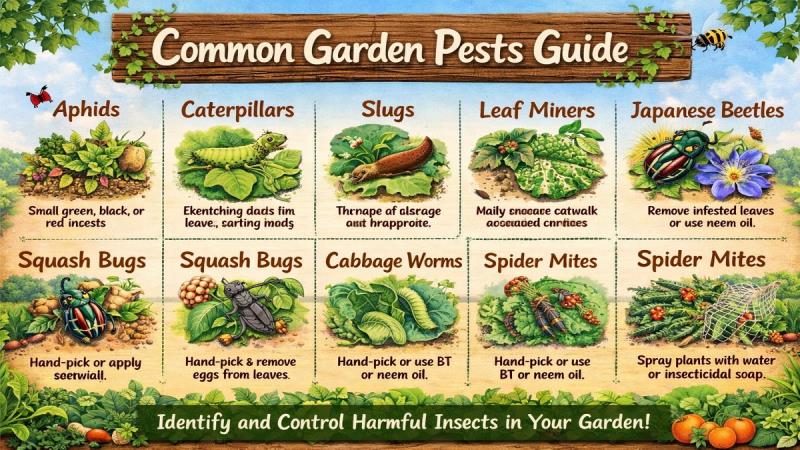
Common Garden Pests Guide
Learn to identify common garden pests and control them naturally. Complete guide covering aphids, caterpillars, mites, beetles, and eco-friendly pest management tips.
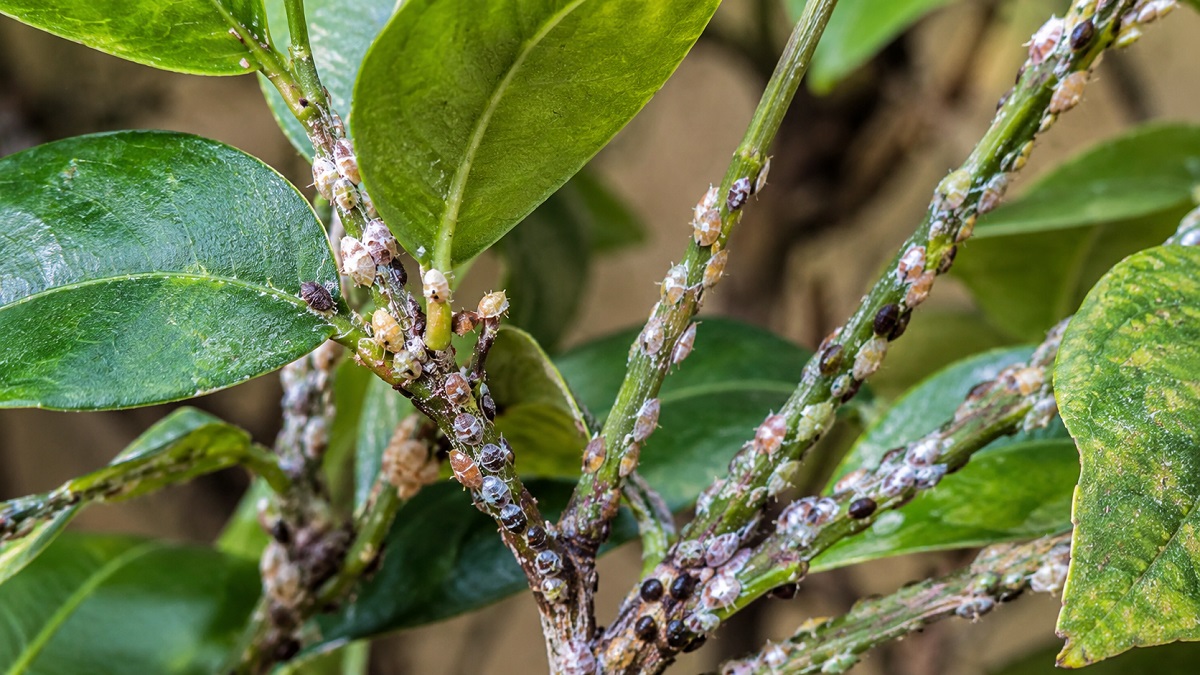
Scale insects are among the most easily overlooked garden pests. Unlike caterpillars, beetles or aphids, they often do not look like insects at all. Many species remain almost motionless on leaves, stems or branches and develop a protective covering that makes them resemble tiny bumps, shells, scales or bits of bark. A plant may appear healthy at first, but a closer inspection can reveal dozens or even hundreds of scale insects hiding in plain sight.
Scale insects feed by piercing plant tissue and sucking sap. A small infestation may cause little noticeable damage, but a heavy population can weaken branches, cause yellowing leaves, reduce plant vigor, stunt new growth and, in severe cases, lead to branch dieback or plant death. Some species also produce honeydew, a sticky substance that encourages the growth of sooty mold on leaves and stems.
The good news is that scale insects can usually be managed successfully when they are detected early. The most effective approach is not simply spraying a plant once. Successful control combines careful identification, pruning, physical removal, monitoring, encouragement of beneficial insects, appropriate horticultural oils or soaps, and good garden maintenance.
Early detection is the key. Treating young, mobile scale crawlers is generally easier than trying to control mature insects protected by waxy or shell-like coverings.
Scale insects are small sap-feeding insects belonging primarily to the insect group commonly known as Coccoidea. They occur on ornamental plants, fruit trees, shrubs, houseplants, vegetables and many wild plants. Their unusual appearance is one reason gardeners often mistake them for fungal growth, plant disease or harmless bumps.
Adult female scales of many species are particularly difficult to recognize as insects. They may have a flattened, rounded, oval or elongated body and can be covered by wax, a hardened shell-like covering, or material derived from the insect's own body. Male scales can look very different, while the youngest stage, called the crawler, is usually much more mobile.
Scale insects use piercing-sucking mouthparts to reach the plant's vascular tissues or cells and withdraw fluids. As populations increase, their feeding can divert nutrients and weaken affected tissues. Some species also inject substances into plants while feeding, which can contribute to distorted growth or discoloration.
Scale insects frequently remain attached to one location for long periods. Once mature, many individuals no longer resemble conventional insects. Their protective covering can also reduce the effectiveness of contact sprays.
Newly hatched crawlers are generally tiny and mobile. They move across the plant before settling and beginning to feed. This stage is especially important for monitoring because young scales are less protected than mature individuals.
Gardeners generally encounter two broad groups: armored scales and soft scales. Although both groups feed on plant sap, they differ in appearance, biology and management.
| Type | Typical Appearance | Honeydew | Common Locations |
|---|---|---|---|
| Armored scale | Hard, flattened or shell-like covering | Usually little or none | Leaves, stems, twigs and branches |
| Soft scale | Rounded, waxy or leathery body | Often produced | Leaves, stems and young branches |
| Crawler | Very small and mobile | Not usually noticeable | Moves before settling |
Armored scales are protected by a separate waxy or hardened covering. The covering can be circular, oval, elongated or irregular depending on the species. Because the protective cover is not simply the insect's exposed body, contact treatments may need to be timed carefully against the vulnerable crawler stage.
Armored scales can occur on leaves, twigs and branches. Heavy infestations may cause yellow spots, premature leaf drop and twig damage. On woody plants, persistent infestations can gradually weaken branches.
Soft scales have a more exposed body and often produce honeydew as they feed. The sticky residue can attract ants and create an ideal surface for sooty mold. Sooty mold itself is usually not the original cause of the problem; it develops because honeydew provides food for the fungi growing on the plant surface.
Common soft-scale pests include several species associated with ornamental shrubs, fruit trees and indoor plants. Correct identification is useful because species differ in their life cycles and preferred hosts.
Correct identification is the foundation of effective pest control. Do not assume every bump on a plant is scale. Some plants naturally have lenticels, glands, buds or other structures that resemble insects.
Look closely at stems, leaf veins, leaf undersides and branch junctions. Scale may appear as tiny brown, black, gray, white, tan or reddish bumps. Depending on the species, individuals can be nearly flat or distinctly raised.
Ants are particularly interesting. Some ants collect honeydew from soft scales and may protect them from predators. Therefore, a sudden increase in ants climbing a plant can sometimes be an indirect clue that a honeydew-producing pest is present.
One simple inspection technique is to gently scrape a suspicious scale with a fingernail, toothpick or soft tool. A true scale insect can often be lifted from the plant surface. However, identification from appearance alone can be difficult, particularly when several scale species look similar.
If the infestation is persistent or causing significant damage, a local extension service, nursery professional or qualified plant diagnostician can help identify the pest more accurately.
Scale damage varies widely. A few insects on a mature ornamental plant may have little effect, while a dense population covering stems and leaves can seriously reduce plant vigor.
Feeding can interfere with normal plant function and produce pale, yellow or mottled foliage. With armored scales, individual feeding sites can sometimes create localized yellow spots.
Young plants and heavily infested container specimens may produce shorter shoots and smaller leaves. Repeated feeding over several growing seasons can be especially damaging to shrubs and trees.
When scales become concentrated on young branches or twigs, persistent feeding may weaken those tissues. Severe infestations can contribute to twig or branch dieback.
Soft scales can produce honeydew, which coats foliage with a sticky film. Sooty mold may subsequently develop on this residue, turning leaves and nearby surfaces black. Although the mold can reduce photosynthesis when it becomes heavy, controlling the honeydew-producing insect is usually the more important step.
Scale control becomes much easier when gardeners understand that scale insects do not remain equally vulnerable throughout their lives.
Many species begin life as eggs or develop within the female's body. Young crawlers emerge and move across the plant. Once they find a suitable feeding location, they settle down. After settling, their appearance changes and protective structures develop.
This is why a treatment that works well against crawlers may have a much smaller effect on mature insects. Monitoring for crawler activity can therefore be more useful than repeatedly spraying after mature scales have already established.
Depending on the species, eggs may be laid beneath a female scale or young insects may develop within the female. This stage can be protected from many contact treatments.
Crawlers are small and mobile. They search for suitable feeding sites and are generally more exposed to environmental conditions and contact treatments.
After settling, the insect feeds and develops a protective covering or body structure. At this stage, physical removal, horticultural oils, pruning and properly selected treatments may be needed.
Scale insects occur on an enormous range of plants. They can attack ornamental shrubs, fruit trees, shade trees, houseplants, palms, citrus, roses, evergreen plants and many other hosts.
Particularly vulnerable plants vary according to the scale species present in a region. Common garden hosts may include citrus, camellias, gardenias, hollies, magnolias, ficus, palms, fruit trees and many woody ornamentals.
Indoor plants are also susceptible. Houseplants that remain warm throughout the year can provide favorable conditions for scale populations to continue reproducing without the seasonal interruptions found outdoors.
Regular inspection is one of the simplest ways to prevent a minor infestation from becoming a major problem. You do not need to examine every leaf every day. A short inspection once a week can reveal developing pest populations early.
Inspect the undersides of leaves, along major veins, where leaves join stems, around branch forks and on young twigs. Scale insects often concentrate in protected areas where they are less exposed to weather and predators.
Sticky surfaces beneath a plant can indicate honeydew. If leaves, containers, garden furniture or pavement beneath a plant feel unusually sticky, inspect the foliage and stems carefully.
Newly purchased plants can introduce scale to a collection or garden. Inspect stems and leaf undersides before planting. When practical, keep new plants separate from established houseplants for a period of observation.
Natural control works best as a combination of several small actions rather than one miracle treatment. Begin by reducing the pest population physically, improving plant conditions and protecting beneficial organisms.
When scale is limited to a few stems or leaves, simply removing the insects can be surprisingly effective. Use a fingernail, soft brush, cotton swab or suitable tool to dislodge individual scales.
On houseplants, a cotton swab lightly moistened with rubbing alcohol is sometimes used to remove individual scale insects. Test the method on a small area first because some plants are sensitive to alcohol.
If an entire twig or branch is covered with scale, pruning may be more effective than trying to treat every insect individually. Remove affected material and dispose of it appropriately rather than leaving heavily infested cuttings beside healthy plants.
Lady beetles, lacewings, parasitoid wasps and other beneficial organisms can attack scale insects. Avoid broad-spectrum insecticides when they are not necessary, because they may kill beneficial insects along with the pests.
If ants are protecting honeydew-producing scales, reducing ant access to the plant can help natural enemies reach the infestation. Ant management should be approached as part of an integrated pest-management program rather than as a replacement for scale control.
Horticultural oils can be useful against many scale insects because they work primarily by physically affecting exposed insects. They can be especially valuable when applied during an appropriate vulnerable stage.
Coverage is critical. A spray that only wets the upper surface of a leaf may miss insects hiding beneath leaves or inside dense foliage. Always follow the product label regarding concentration, application timing, temperature limits, compatible plants and protective equipment.
Insecticidal soaps can also be effective against exposed, soft-bodied stages. However, mature scale insects protected by a hard covering may be much more difficult to control with soap alone.
Never assume that a product is safe simply because it is described as natural or organic. Plant injury can occur when oils or soaps are applied during excessive heat, drought stress, freezing conditions or other unfavorable circumstances. Read and follow the label before use.
Physical control is often underestimated. A gardener who removes hundreds of scales from an easily accessible shrub has already reduced the pest population before applying any spray.
Begin by removing the most heavily infested leaves and small branches. For woody plants, use clean pruning tools and avoid removing more healthy growth than necessary. The goal is to reduce pest pressure while maintaining enough foliage for the plant to recover.
Dispose of infested material away from susceptible plants. Do not place severely infested branches directly into garden beds where crawling insects may have opportunities to spread.
Scale insects have numerous natural enemies. In a balanced garden, predators and parasitoids can suppress populations before they become damaging.
Some lady beetles specialize in scale insects, while lacewing larvae may consume young scale stages and other soft-bodied pests. Tiny parasitoid wasps also attack certain scale species by laying eggs in or on the pest.
Beneficial insects are especially valuable for long-term management because they can continue searching for pests after a gardener has stopped spraying.
Systemic insecticides are absorbed by plants and can provide control of certain sap-feeding insects. They may be considered for serious infestations on valuable ornamental plants when other approaches are inadequate.
However, systemic insecticides are not automatically the best choice. Their use can affect beneficial insects and may carry restrictions depending on the product, crop, location and timing. Some products are also unsuitable for edible plants or flowering plants visited by pollinators.
Always identify the pest and read the complete product label before using an insecticide. The label is the legal instruction for where, how and when the product may be used.
Completely preventing scale insects is difficult because they are widespread and can arrive from neighboring plants. The practical goal is to prevent small populations from becoming damaging infestations.
Inspect nursery plants before purchase. Look beneath leaves and examine stems carefully. Avoid bringing home plants with obvious scale colonies unless you are prepared to isolate and treat them.
Keep new indoor plants away from established plants while you monitor them. This simple habit can prevent a single infested plant from spreading scale throughout an indoor collection.
Overfertilization can encourage lush, tender growth that may be attractive to some sap-feeding pests. Fertilize according to the needs of the plant rather than applying large amounts of nitrogen simply to force rapid growth.
Proper watering, suitable light, appropriate soil conditions and adequate air circulation help plants tolerate pest pressure. Healthy plants are not immune to scale, but good growing conditions can improve their ability to recover from moderate damage.
Container plants are often easier to treat because they are accessible from all sides. Move an infested plant away from healthy plants and inspect it carefully.
Start by removing visible insects and heavily infested leaves. Wash the foliage gently if the plant tolerates it. Follow with an appropriate treatment when necessary, paying special attention to leaf undersides and stems.
Continue monitoring after the first treatment. Scale insects can survive in protected locations, and newly hatched crawlers may appear later. Several monitoring and treatment cycles may be needed depending on the species and product.
Scale on mature trees and shrubs requires a different strategy from scale on houseplants. A large tree may have thousands of leaves and many branches, making complete coverage impractical.
Begin by determining whether the infestation is actually causing significant damage. A small population on a healthy mature tree may be manageable through natural enemies and monitoring.
When scale is concentrated on individual branches, selective pruning can reduce the population. For severe infestations, consult a qualified arborist or local plant-health professional, particularly when the plant is large, valuable or showing extensive dieback.
Not every brown bump is scale. Confirm the pest before beginning a treatment program.
One treatment may kill exposed insects while eggs or protected stages survive. Continued monitoring is essential.
The crawler stage is often one of the most useful targets for control. If gardeners only react after mature scales cover the plant, treatment becomes harder.
Repeated broad-spectrum spraying can disrupt beneficial insects and sometimes create new pest problems. Use targeted management whenever possible.
Ants may protect honeydew-producing scales from predators. If ant activity is unusually high, investigate whether a scale infestation is providing the food source.
Scale populations often change throughout the year. Temperature, host growth, species and local climate all influence their development.
Spring is an excellent time to inspect overwintering woody plants. Look closely at twigs and branches before new growth becomes dense. Early detection can make management considerably easier.
Monitor foliage and young shoots regularly. Depending on the species, crawler activity may occur during the growing season. Watch for sticky honeydew, ants and new colonies.
Inspect plants again before winter. Remove severely infested material and address plant stress. Avoid unnecessary fertilization that encourages late, tender growth.
Deciduous plants without leaves can be easier to inspect because scale colonies are more visible on bare branches. In suitable climates and on appropriate plants, dormant-season treatments may be useful, but product labels and local conditions should always guide application.
A small population may cause little noticeable damage, but heavy or persistent infestations can weaken plants, cause leaf yellowing, reduce growth, encourage sooty mold and contribute to branch dieback.
Yes. Hand removal can be very effective for small infestations, especially on houseplants and small shrubs. Scrape or wipe visible insects away and continue monitoring for newly developing crawlers.
Horticultural oil can control susceptible scale stages when it is applied correctly and achieves adequate coverage. Timing is important because mature scales may be protected by coverings.
Some soft scale insects produce honeydew, a sugary substance that ants collect. Ants may protect honeydew-producing insects from predators, which can make scale infestations more persistent.
Severe, prolonged infestations can seriously weaken some trees and contribute to branch dieback. Healthy mature trees can often tolerate modest populations, so the severity of the infestation and the condition of the tree both matter.
Yes. Crawlers can move from their original feeding site, and scale insects can also be introduced on infested nursery plants, cuttings or plant material. Isolating new or affected plants can reduce the chance of spread.
No. Sooty mold is a fungal growth that can develop on honeydew produced by insects such as soft scales. The scale infestation should be addressed rather than treating the mold as the primary problem.
The best approach depends on the plant, scale species and severity of the infestation. Early detection, physical removal, pruning, protection of beneficial insects and appropriately timed treatments generally work better together than relying on one method alone.
Scale insects can be frustrating because they hide in plain sight and mature individuals can be surprisingly difficult to kill. But they are not a reason to give up on an otherwise healthy garden. The most important step is learning to recognize the early signs: tiny bumps on stems, unusual leaf discoloration, sticky honeydew, sooty mold and increased ant activity.
Once scale is detected, start with the least disruptive method that makes sense for the situation. Remove visible insects, prune heavily infested growth, isolate affected houseplants, encourage natural enemies and monitor the plant regularly. When a treatment is necessary, choose a product appropriate for the plant and pest, and pay close attention to timing and coverage.
Most importantly, do not treat scale insects as a one-day problem. Their life cycle means that surviving individuals can establish another generation after an apparently successful treatment. Regular inspection and timely intervention are what turn scale management from a difficult battle into a routine part of good gardening.
Browse our gardening guides to identify and manage common insect pests, plant diseases, and other plant problems.