Healthy Soil Practices for Stronger Plants and Sustainable Gardening
Introduction
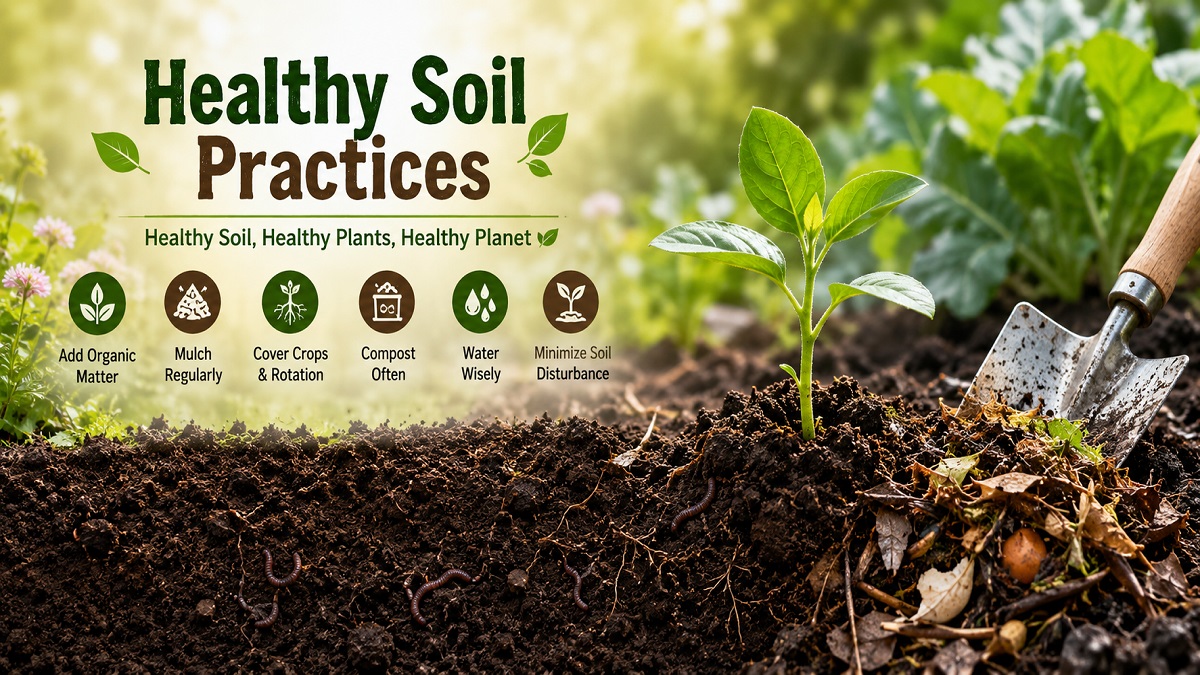
Healthy soil is the foundation of every productive garden. Whether you grow vegetables, herbs, flowers, shrubs, or fruit trees, the condition of the soil determines how well plants absorb water, nutrients, and oxygen. Rich soil encourages strong root development, reduces plant stress, improves disease resistance, and creates an environment where beneficial organisms thrive.
Many gardeners focus primarily on fertilizers, but fertilizers alone cannot compensate for poor soil structure or depleted organic matter. Healthy soil is a living ecosystem containing billions of bacteria, fungi, earthworms, insects, and other organisms that work together to recycle nutrients and maintain natural fertility. When these living communities are supported, plants often require fewer chemical inputs and become more resilient to environmental stress.
Practicing good soil management also benefits the environment. Healthy soil stores carbon, reduces erosion, filters rainwater, conserves moisture, and supports biodiversity above and below ground. Over time, these improvements create gardens that are easier to maintain while producing healthier crops and more attractive landscapes.
This guide explores practical, science-based healthy soil practices suitable for home gardens, raised beds, containers, orchards, and landscapes. Whether you're establishing a new garden or improving existing beds, these methods will help you build fertile soil that continues improving year after year.
Why Healthy Soil Matters
Healthy soil is much more than dirt beneath your feet. It is a complex ecosystem made of minerals, organic matter, water, air, and countless living organisms working together. Every teaspoon of healthy garden soil contains millions of microorganisms that continuously decompose organic material and make nutrients available for plants.
When soil becomes compacted, depleted, or stripped of organic matter, plants struggle to establish strong roots. Water either drains away too quickly or remains trapped around roots, increasing disease risk. Nutrients become unavailable, resulting in slow growth, yellow leaves, and poor harvests.
Maintaining healthy soil creates long-term benefits that extend beyond a single growing season. Instead of relying heavily on fertilizers each year, gardeners build a naturally productive growing environment that becomes richer and more fertile over time.
Benefits of Healthy Soil
- Supports vigorous root development.
- Improves nutrient availability naturally.
- Enhances water retention during dry periods.
- Increases drainage in heavy clay soils.
- Encourages beneficial bacteria and fungi.
- Reduces erosion and nutrient runoff.
- Improves resistance to pests and diseases.
- Produces healthier vegetables, flowers, and fruit.
- Stores carbon and supports environmental sustainability.
Understanding Soil Components
Healthy soil contains several essential components that work together to create an ideal growing environment. Understanding these components helps gardeners identify problems and make informed improvements.
Mineral Particles
Minerals originate from weathered rocks and consist primarily of sand, silt, and clay. Each particle size influences drainage, nutrient retention, and soil texture.
- Sand provides excellent drainage but stores fewer nutrients.
- Silt retains moderate moisture while remaining workable.
- Clay holds nutrients well but may become compacted.
A balanced mixture called loam combines the advantages of all three particle sizes and is considered ideal for most garden plants.
Organic Matter
Organic matter includes decomposed leaves, compost, roots, manure, and plant residues. It acts like a sponge by holding water while improving aeration and providing food for beneficial organisms.
Increasing organic matter is one of the fastest ways to improve almost any soil type.
Water
Plants require consistent moisture to transport nutrients from the soil into roots. Healthy soil stores water while allowing excess moisture to drain, preventing root rot.
Air
Roots require oxygen for healthy growth. Soil that becomes compacted contains fewer air spaces, reducing oxygen availability and limiting root development.
Living Organisms
Earthworms, fungi, bacteria, nematodes, insects, and microscopic organisms continuously recycle nutrients while improving soil structure. Encouraging these organisms is one of the most important goals of sustainable gardening.
Improve Soil with Organic Matter
Adding organic matter is widely regarded as the single most effective healthy soil practice. Compost, leaf mold, shredded leaves, aged manure, and other organic materials gradually improve soil texture while feeding beneficial organisms.
Organic matter loosens compacted clay soils and helps sandy soils retain moisture. It also increases microbial activity, which releases nutrients in forms plants can absorb naturally.
Excellent Sources of Organic Matter
- Homemade compost
- Well-aged animal manure
- Leaf mold
- Shredded autumn leaves
- Grass clippings (chemical-free)
- Finished vermicompost
- Pine needles for acid-loving plants
- Composted bark
Apply one to three inches of compost across garden beds each year and gently incorporate it into the upper soil layer. Avoid excessive digging that may disturb beneficial soil organisms.
Over several growing seasons, repeated additions of organic matter significantly improve soil fertility, moisture retention, drainage, and overall plant performance.
Protect Soil with Mulch
Mulching is one of the easiest and most effective methods for maintaining healthy soil throughout the year. A protective layer of mulch shields the soil surface from heavy rain, intense sunlight, drying winds, and temperature extremes.
Organic mulches gradually decompose, enriching the soil while feeding earthworms and beneficial microorganisms. As mulch breaks down, it contributes valuable organic matter that improves soil structure naturally.
Popular Organic Mulches
- Shredded bark
- Wood chips
- Straw
- Leaf mulch
- Pine needles
- Grass clippings
- Compost
- Cocoa hulls (where appropriate)
Maintain a mulch layer approximately two to four inches thick while keeping mulch a few inches away from stems and tree trunks to reduce the risk of rot and pest problems.
Besides improving soil health, mulch suppresses weeds, reduces evaporation, minimizes soil erosion, and keeps garden beds looking tidy throughout the growing season.
Practice Crop Rotation
Growing the same crop in the same location year after year gradually depletes specific nutrients and allows certain pests and diseases to build up in the soil. Crop rotation interrupts these cycles by changing plant families from one season to the next, helping maintain healthier soil and stronger plants.
Vegetables from the same botanical family often share similar nutrient requirements and are vulnerable to the same soil-borne pathogens. Rotating crops encourages balanced nutrient use while reducing the likelihood of recurring disease outbreaks.
Simple Four-Year Rotation
- Year 1: Legumes (beans and peas)
- Year 2: Leafy vegetables (lettuce, spinach, cabbage)
- Year 3: Fruiting crops (tomatoes, peppers, eggplants)
- Year 4: Root vegetables (carrots, onions, beets)
Legumes are particularly valuable because they work with beneficial bacteria to fix atmospheric nitrogen, naturally enriching the soil for future crops.
Grow Cover Crops
Cover crops, also called green manures, are planted primarily to improve soil rather than for harvest. Instead of leaving beds bare between growing seasons, cover crops protect the soil from erosion, suppress weeds, and add organic matter when turned into the soil or left as mulch.
Their roots improve soil structure, increase biological activity, and help recycle nutrients that might otherwise be lost through leaching.
Common Cover Crops
- Crimson clover
- White clover
- Winter rye
- Annual ryegrass
- Buckwheat
- Field peas
- Hairy vetch
- Mustard
Allow cover crops to grow until just before flowering, then cut them down and allow the plant material to decompose. This returns valuable nutrients and organic matter to the soil.
Reduce Soil Compaction
Compacted soil contains fewer air spaces, making it difficult for roots to penetrate and beneficial organisms to survive. Water infiltration also decreases, causing runoff during rain and poor drainage around plant roots.
Heavy foot traffic, repeated cultivation, and working soil while it is wet are common causes of compaction.
Ways to Prevent Compaction
- Create permanent garden paths.
- Avoid walking directly on planting beds.
- Do not work wet soil.
- Use raised beds where practical.
- Add compost regularly.
- Encourage earthworm activity.
- Limit unnecessary tilling.
Healthy soil naturally becomes loose and crumbly over time when protected from excessive disturbance and enriched with organic matter.
Water Soil Correctly
Proper watering is essential for maintaining healthy soil biology. Both excessive watering and prolonged drought can damage beneficial microorganisms and negatively affect plant growth.
Deep, infrequent watering encourages roots to grow downward while conserving moisture within the soil profile. Frequent shallow watering often produces weak, shallow root systems that are more vulnerable to heat and drought.
Best Watering Practices
- Water early in the morning.
- Use drip irrigation or soaker hoses.
- Avoid wetting foliage whenever possible.
- Water deeply rather than lightly.
- Adjust irrigation after rainfall.
- Maintain mulch to reduce evaporation.
Healthy soil with abundant organic matter absorbs rainfall more effectively and stores moisture for longer periods, reducing irrigation needs.
Test Your Soil Regularly
A soil test provides valuable information about nutrient availability, pH, organic matter content, and possible deficiencies. Rather than applying fertilizers blindly, testing allows gardeners to make informed decisions that improve soil health without wasting resources.
Testing every two to three years is generally sufficient for most home gardens unless significant problems develop.
Information Provided by Soil Tests
- Soil pH
- Nitrogen levels
- Phosphorus availability
- Potassium content
- Organic matter percentage
- Micronutrient deficiencies
- Recommended amendments
Maintaining an appropriate soil pH helps plants absorb nutrients efficiently. Even nutrient-rich soil may perform poorly if the pH is outside the preferred range for your crops.
Encourage Beneficial Soil Life
Healthy soil depends on an active community of living organisms. Earthworms, bacteria, fungi, protozoa, insects, and countless microscopic organisms break down organic matter, recycle nutrients, and improve soil structure.
These organisms form a complex food web that naturally supports healthy plant growth.
How to Support Soil Biology
- Add compost annually.
- Leave plant roots in the soil after harvest.
- Reduce unnecessary digging.
- Limit synthetic chemical use.
- Maintain year-round mulch.
- Grow diverse plant species.
- Use cover crops during off-seasons.
A thriving soil ecosystem creates long-term fertility that cannot be duplicated with fertilizers alone.
Adopt No-Dig or Low-Dig Gardening
Traditional tilling disrupts soil structure, damages fungal networks, exposes microorganisms to drying conditions, and accelerates the breakdown of organic matter. No-dig gardening minimizes disturbance while allowing natural soil processes to continue.
Instead of turning the soil every season, gardeners add compost to the surface where earthworms and microorganisms gradually incorporate it into deeper layers.
Benefits include reduced erosion, improved moisture retention, healthier microbial populations, and lower maintenance requirements over time.
Healthy Soil Practices Comparison
Different soil-improvement techniques provide unique benefits. Combining several approaches generally produces the best long-term results.
| Practice | Main Benefit | Best Time | Frequency |
|---|---|---|---|
| Add compost | Improves fertility and structure | Spring & Autumn | Yearly |
| Mulching | Conserves moisture | Growing season | As needed |
| Cover crops | Adds organic matter | Off-season | Annually |
| Crop rotation | Reduces pests and diseases | Each season | Every year |
| Soil testing | Guides amendments | Early spring | Every 2–3 years |
| No-dig gardening | Protects soil biology | Year-round | Continuous |
| Reduce compaction | Improves root growth | Always | Continuous |
Common Mistakes That Harm Soil
Even experienced gardeners occasionally adopt practices that gradually weaken soil quality. Recognizing these habits helps prevent long-term damage.
- Overusing synthetic fertilizers.
- Leaving soil exposed year-round.
- Removing all fallen leaves and plant residue.
- Walking repeatedly on planting beds.
- Digging excessively every season.
- Ignoring soil pH.
- Applying fresh manure directly before planting.
- Watering too frequently.
- Growing identical crops repeatedly.
- Neglecting compost additions.
Correcting these issues gradually restores soil health and creates better growing conditions for future harvests.
Long-Term Benefits of Healthy Soil
Improving soil is one of the most rewarding investments a gardener can make. Unlike many gardening tasks that require constant repetition, healthy soil continues improving as organic matter accumulates and biological activity increases.
Over time, fertile soil produces stronger root systems, healthier plants, larger harvests, brighter flowers, improved drought tolerance, fewer pest problems, and lower maintenance costs. Gardens become more resilient during extreme weather while requiring fewer fertilizers and less irrigation.
By consistently adding compost, protecting soil with mulch, rotating crops, minimizing disturbance, and supporting beneficial organisms, gardeners build a sustainable growing environment that remains productive for decades.