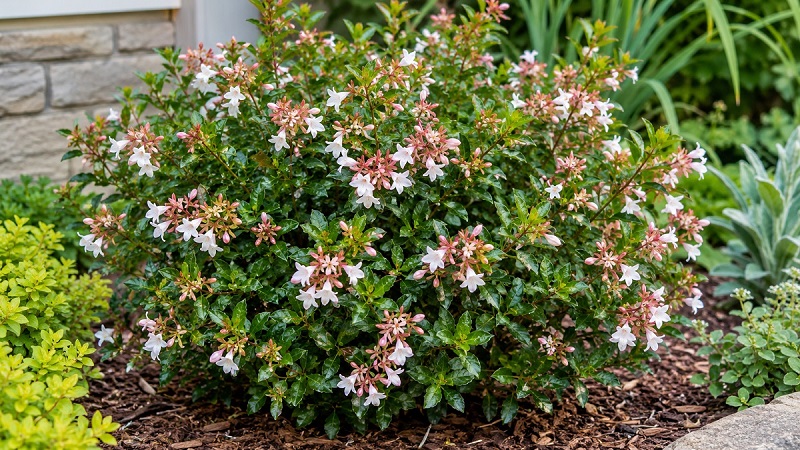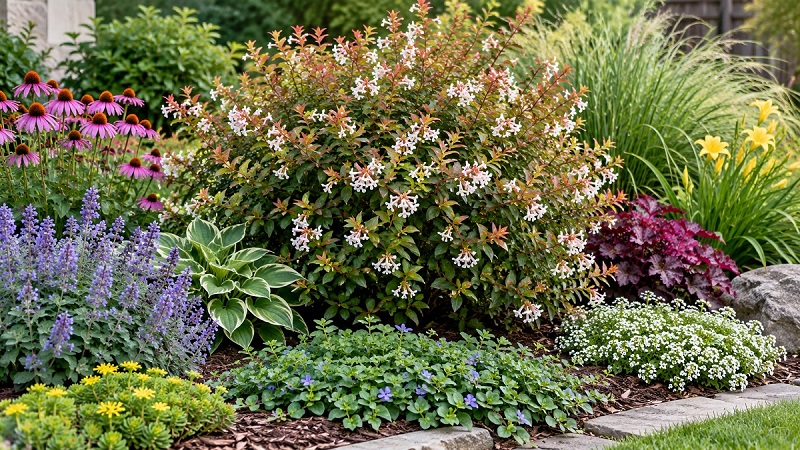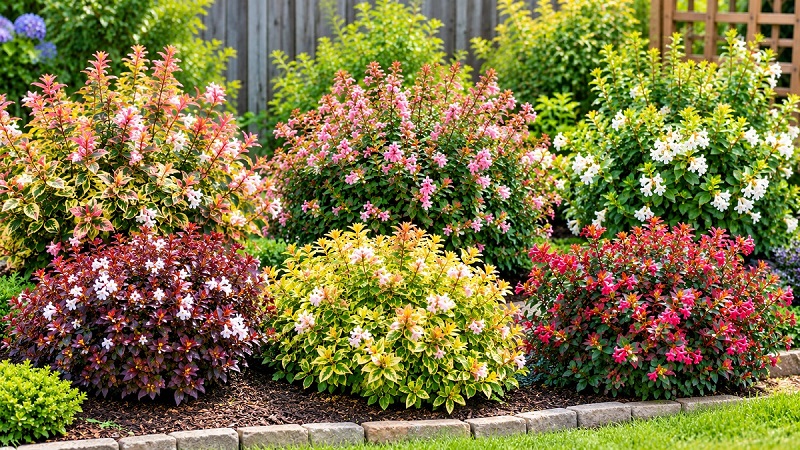
Best Abelia Varieties for Your Garden
Discover the best Abelia varieties for your garden, including 'Kaleidoscope', 'Rose Creek', 'Edward Goucher', 'Little Richard', 'Canyon Creek', and 'Ruby Anniversary'.
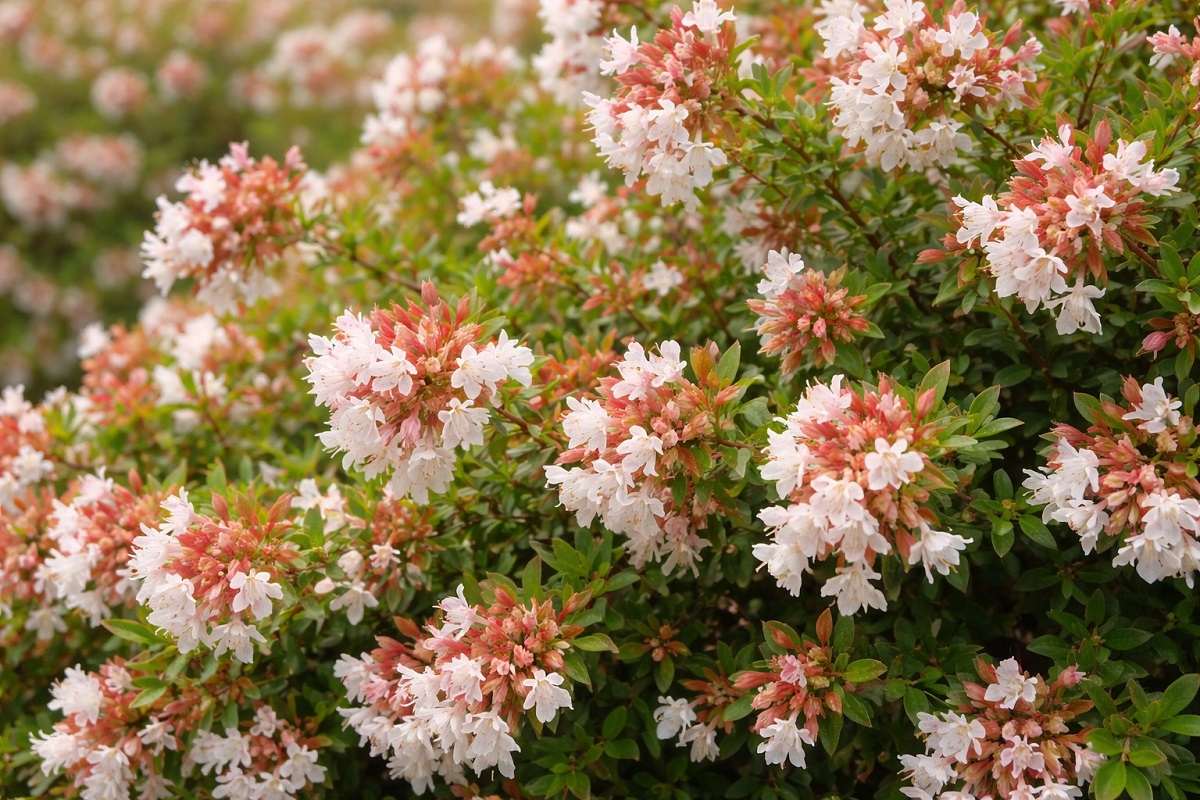
Abelia is one of those shrubs that can quietly earn a permanent place in a garden. Its arching branches, glossy foliage, long flowering season, and generally relaxed growth habit make it useful in mixed borders, foundation plantings, informal hedges, pollinator gardens, and containers. Many varieties also develop attractive reddish or bronze tones in their foliage as the growing season changes.
The name Abelia refers to a group of deciduous, semi-evergreen, and evergreen shrubs. One of the most widely grown garden forms is Glossy Abelia, Abelia × grandiflora, a hybrid known for its small tubular flowers and long bloom period. Modern cultivars vary considerably in mature size, foliage color, and habit, so choosing the right variety is important when planning a bed or hedge.
Although Abelia is relatively easy to grow, it performs best when planted in well-drained soil and given plenty of light. Regular watering is particularly important while plants establish, while mature specimens are considerably more tolerant of short dry periods. Pruning is usually straightforward and can be used either to maintain a compact shape or to preserve the shrub's naturally arching form.
Abelia is a long-flowering shrub that responds well to sunlight, drainage, and occasional shaping.
Abelia is valued for its combination of flowers, foliage, branching structure, and relatively long season of interest. The plants belong to the honeysuckle family, Caprifoliaceae, and are generally grown as ornamental shrubs.
Glossy Abelia, Abelia × grandiflora, is particularly popular in warm and temperate gardens. It forms a rounded to arching shrub with opposite leaves and slender branches. Depending on the cultivar, foliage may remain green for much of the year or develop bronze, burgundy, copper, or reddish shades as temperatures change.
The flowers are small rather than showy individually, but they are produced in clusters and can appear over an extended period. The tubular blooms are often white or pale pink and are attractive to bees, butterflies, and other flower-visiting insects.
One of Abelia's strengths is its versatility. Taller cultivars can provide a loose flowering screen, medium-sized plants fit naturally into shrub borders, and compact cultivars can be used around pathways or grown in large containers.
Abelia is not a single uniform plant. Mature dimensions, cold tolerance, leaf retention, flower color, and pruning needs can differ between species and cultivars. Before planting, check the mature size of the specific variety rather than relying only on the general characteristics of the genus.
The following table provides a practical starting point for growing commonly cultivated Abelia, especially Glossy Abelia and related garden cultivars. Exact performance varies with species, cultivar, climate, and growing conditions.
| Characteristic | Abelia Details |
|---|---|
| Common Name | Abelia, Glossy Abelia |
| Botanical Name | Abelia spp.; Abelia × grandiflora is a widely grown hybrid |
| Plant Family | Caprifoliaceae |
| Plant Type | Flowering ornamental shrub |
| Growth Habit | Rounded, arching, branching shrub; habit varies by cultivar |
| Light | Full sun to partial shade; flowering is generally better with more sunlight |
| Soil | Well-drained, moderately fertile soil with good organic matter |
| Soil Drainage | Important; avoid locations that remain waterlogged |
| Watering | Regular during establishment; moderate watering once established |
| Flower Color | Usually white to pale pink, depending on species or cultivar |
| Flower Form | Small tubular flowers produced in clusters |
| Flowering Season | Typically summer into fall in suitable climates |
| Foliage | Glossy green on many common forms; some cultivars develop bronze or reddish tones |
| Pollinator Value | Flowers can attract bees, butterflies, and other insects |
| Pruning | Light shaping as needed; heavier renewal pruning is generally done in late winter or early spring |
| Propagation | Stem cuttings are commonly used; methods vary by cultivar |
| Garden Uses | Borders, hedges, informal screens, foundation planting, containers, wildlife gardens |
Abelia grows best with plenty of sunlight. A position receiving full sun encourages compact growth, stronger flowering, and good foliage development. In many gardens, several hours of direct sunlight each day is enough to keep the shrub productive and attractive.
The plant can tolerate partial shade, especially in hot climates where intense afternoon sunlight can be stressful. However, too much shade often results in looser growth and fewer flowers. If your main reason for growing Abelia is its extended bloom period, choose the brightest practical location.
A site with morning sun followed by light afternoon shade can be useful in very hot regions. This arrangement provides strong morning light while reducing exposure to the harshest afternoon heat.
Avoid planting Abelia directly beneath dense tree canopies where roots compete aggressively for water and the shrub receives very little direct light. A bright, open position usually produces a more balanced plant.
Good drainage is more important than creating a highly specialized soil mix. Abelia appreciates moderately fertile soil that holds enough moisture for healthy growth while allowing excess water to move away from the root zone.
Heavy clay can be improved with organic matter and, where appropriate, by creating raised planting areas that improve drainage. Sandy soil may need additional compost or other organic material to improve moisture retention.
Before planting, loosen compacted soil over a broad area rather than preparing only a narrow hole. This encourages new roots to move outward and makes it easier for the shrub to establish.
Newly planted Abelia needs consistent moisture while its root system develops. Water deeply enough to moisten the root zone rather than applying a small amount of water every day.
During the first growing season, monitor the soil regularly. Hot, dry, or windy weather can increase water demand, particularly for recently planted shrubs. Once established, Abelia generally becomes more tolerant of short periods of dry weather.
There is no single watering schedule that works in every garden. Soil type, rainfall, temperature, plant size, and exposure all affect how quickly the root zone dries.
Instead of watering according to the calendar alone, check the soil several inches below the surface. If it is beginning to dry, water thoroughly. If the soil is still moist and the plant looks healthy, additional irrigation may not be necessary.
Planting is best done when weather conditions are mild and the soil can be worked easily. In regions with cold winters, spring is a convenient planting time, while gardeners in milder climates may also plant in fall.
Select a site with good drainage and adequate sunlight. Consider the mature width of your chosen cultivar before deciding how close to paths, walls, fences, or other shrubs it should be planted.
Remove competing weeds and loosen the soil around the planting area. Incorporate organic matter if the soil is poor, compacted, or lacking structure.
Dig a hole approximately as deep as the root ball and noticeably wider. Set the plant so the top of the root ball is level with, or slightly above, the surrounding soil surface. Avoid burying the stem or trunk deeper than it was growing in the nursery container.
Fill around the root ball with the excavated soil, gently firming it without heavily compacting the planting area. Water thoroughly after planting to settle the soil around the roots.
Apply a layer of organic mulch around the plant to conserve moisture and reduce weed competition. Keep mulch away from direct contact with the base of the stems.
Abelia usually does not require aggressive fertilization when planted in reasonably fertile soil. Excessive fertilizer can encourage soft, leafy growth at the expense of balanced plant development and may create unnecessary nutrient problems.
A slow-release balanced fertilizer can be used in spring if the plant shows weak growth or if soil fertility is known to be low. Follow the product label rather than applying fertilizer by guesswork.
Compost or well-decomposed organic matter can also be useful as a soil amendment or mulch. Soil testing is the best way to identify genuine nutrient deficiencies before making major fertilizer applications.
Abelia naturally develops an attractive arching habit, so it rarely needs heavy pruning simply to look good. In many landscapes, the best approach is to remove damaged, dead, crossing, or badly positioned branches while allowing the plant to retain some of its natural shape.
Major shaping and renewal pruning are generally best carried out in late winter or early spring, particularly in climates where the plant experiences winter dormancy. The exact timing should be adjusted to the local climate and the growth pattern of the cultivar.
Light trimming can be performed during the growing season when necessary, but repeated shearing can create a dense outer layer of foliage and reduce the graceful branching habit that makes Abelia attractive.
Use selective cuts rather than repeatedly cutting every branch to the same height. This preserves Abelia's gently arching form and allows flowers to appear along the outer growth.
Reduce overly long stems during the appropriate pruning window, but avoid removing large amounts of healthy growth at once unless a deliberate renovation is needed.
Abelia's flowers are small but numerous. They are usually tubular and appear in clusters toward the ends of branches and around the foliage. Common garden forms produce white to pale pink flowers, sometimes with a rosy tint as the blooms age.
Flowering commonly extends through summer and into fall in suitable growing conditions. The exact bloom period depends on the species or cultivar, climate, sunlight, water availability, and pruning practices.
Abelia can also contribute seasonal interest through its foliage. Some cultivars develop bronze, copper, red, or burgundy tones during cooler periods, while others remain predominantly green.
Poor flowering can have several causes. Insufficient sunlight is one of the first factors to consider. Heavy pruning at an unsuitable time, excessive nitrogen fertilization, drought stress, or general plant weakness can also affect flowering.
If an otherwise healthy plant is producing lots of leaves but few flowers, examine its light exposure and fertilizer routine before reaching for additional nutrients.
Abelia can be propagated from stem cuttings. Propagation is particularly useful when you want additional plants that retain the characteristics of a preferred cultivar.
Rooting success varies with timing, cutting maturity, cultivar, temperature, humidity, and propagation conditions. Commercial growers may use additional propagation techniques and controlled environments.
Compact Abelia cultivars can make attractive container plants. Container growing is particularly useful when you want flowering shrubs on patios, balconies, entrances, or other areas where planting directly into the ground is not practical.
Choose a container with drainage holes and enough room for the cultivar's mature root system. Use a high-quality, well-draining potting mix rather than heavy garden soil.
Container-grown plants generally dry out faster than shrubs planted in the ground. Check them more frequently during hot weather, especially when exposed to afternoon sun or drying winds.
Abelia can be used for informal hedges and screening, particularly when you want something softer and more natural-looking than a tightly clipped evergreen hedge.
Choose the cultivar according to the desired mature height and width. Allow enough space between plants for them to reach their natural dimensions. Planting shrubs too closely together can increase competition for water and nutrients and may reduce air movement through the foliage.
For a flowering hedge, avoid excessive shearing. Selective pruning generally produces a more attractive structure and allows flowering shoots to develop naturally.
Abelia is generally considered a relatively trouble-free landscape shrub when grown under suitable conditions. Problems are more likely when plants are stressed by poor drainage, drought, overcrowding, or unsuitable light.
Aphids, scale insects, and other sap-feeding insects may occasionally appear, particularly on tender new growth. Inspect the undersides of leaves and young stems if you notice distorted growth, sticky residue, or unusually heavy insect activity.
Small infestations can sometimes be managed by pruning affected growth or washing insects from the plant with an appropriate stream of water. Larger or persistent infestations should be identified before treatment so that the response matches the pest.
Excessive moisture around the roots can contribute to root problems. Poor air circulation and persistently wet foliage can also increase the likelihood of some fungal issues.
Good spacing, appropriate irrigation, removal of damaged plant material, and proper drainage are useful preventive measures.
Winter performance depends strongly on the species and cultivar. Some Abelia are more cold tolerant than others, while certain forms retain their foliage better in mild climates.
In regions with occasional cold snaps, a healthy plant growing in the ground may need little special attention. A layer of organic mulch around the root zone can help moderate soil temperature and protect roots from rapid temperature changes.
Newly planted shrubs are generally more vulnerable than established specimens. Avoid heavy pruning immediately before severe winter weather because it can stimulate tender new growth at an inconvenient time.
Container roots are more exposed to temperature fluctuations than roots insulated by surrounding garden soil. Where winter temperatures are severe, move container-grown Abelia to a sheltered location appropriate for the cultivar.
| Problem | Possible Cause | What to Check |
|---|---|---|
| Few flowers | Too much shade, unsuitable pruning, stress, or excessive nitrogen | Light exposure, pruning timing, watering, and fertilizer use |
| Yellowing leaves | Water stress, poor drainage, nutrient problems, or normal seasonal change | Soil moisture, drainage, roots, and recent weather |
| Wilting | Drought stress, root problems, heat, or newly planted roots | Soil moisture and root-zone conditions |
| Leggy growth | Insufficient light or excessive growth without shaping | Sun exposure and pruning history |
| Root decline | Persistently wet or poorly drained soil | Drainage and irrigation practices |
| Sticky leaves | Possible sap-feeding insects such as aphids or scale | Undersides of leaves and young stems |
| Leaf damage | Insects, environmental stress, or physical damage | Look closely for insects, feeding marks, or weather-related injury |
Leaf loss does not always indicate a serious problem. Depending on the species, cultivar, and climate, Abelia may be evergreen, semi-evergreen, or deciduous in practice. Seasonal temperature changes can therefore affect how much foliage remains on the plant.
Sudden or excessive leaf drop outside the expected seasonal pattern should be investigated more closely. Check soil moisture, drainage, recent weather, transplanting history, and the foliage for signs of insects or disease.
Brown leaf edges can occur after drought, heat, drying winds, root stress, or other environmental pressures. Container plants are especially prone to rapid drying because their root volume is limited.
Do not respond automatically by watering every day. First determine whether the soil is actually dry. If the soil is consistently wet while leaves are browning, poor drainage may be contributing to the problem.
Yes. Abelia is generally an adaptable ornamental shrub when planted in suitable soil with good drainage and adequate sunlight. Established plants are usually easier to maintain than newly planted shrubs because their root systems are better developed.
Abelia generally performs best in full sun to partial shade. More sunlight usually supports denser growth and better flowering, while some afternoon shade can be helpful in very hot climates.
Water newly planted Abelia regularly while it establishes. Mature plants usually need less frequent irrigation, although watering should increase during prolonged hot or dry periods. Check soil moisture rather than relying on a fixed schedule.
Major pruning is generally carried out in late winter or early spring. Light removal of damaged or poorly positioned branches can be done when needed. Avoid excessive shearing if you want to preserve the shrub's natural arching shape.
Yes. The tubular flowers of many cultivated Abelias can provide nectar for bees, butterflies, and other flower-visiting insects. Flowering performance and wildlife activity vary with cultivar, climate, and the surrounding garden.
Yes. Compact cultivars are particularly suitable for containers. Use a pot with drainage holes and a well-draining growing medium, and monitor moisture more frequently than you would for a shrub planted in the ground.
It depends on the species, cultivar, and climate. Some Abelias are evergreen or semi-evergreen in mild conditions, while others can lose a substantial portion of their leaves in colder climates.
Insufficient sunlight is one possible cause. Other factors include excessive nitrogen, drought stress, unsuitable pruning, poor plant health, or the normal flowering characteristics of the cultivar. Check growing conditions before increasing fertilizer.
Abelia does not demand an elaborate care routine. The biggest difference between a struggling shrub and a healthy one often comes down to choosing a suitable planting location in the first place.
Give the plant good light, provide soil that drains freely, and keep newly planted shrubs consistently watered while they establish. Once the root system becomes established, allow the soil to dry somewhat between thorough waterings rather than keeping it permanently wet.
Prune with restraint. Abelia's naturally arching branches are part of its appeal, and selective cuts usually produce a better-looking shrub than frequent shearing. Remove damaged and crossing branches, thin older growth when necessary, and shape the plant according to its intended use.
Finally, select cultivars according to the space available. A compact Abelia can work beautifully beside a patio or walkway, while a larger form may be better suited to a border or informal screen. Matching the mature plant to the site makes long-term care considerably easier.
Continue exploring our gardening guides with more plant profiles, growing tips, and practical advice for creating a healthy, productive garden.