Best Compact Abelia Cultivars for Small Gardens
Discover the best compact Abelia cultivars for small gardens, including 'Kaleidoscope', 'Rose Creek', 'Little Richard', 'Confetti' and 'Funshine'.
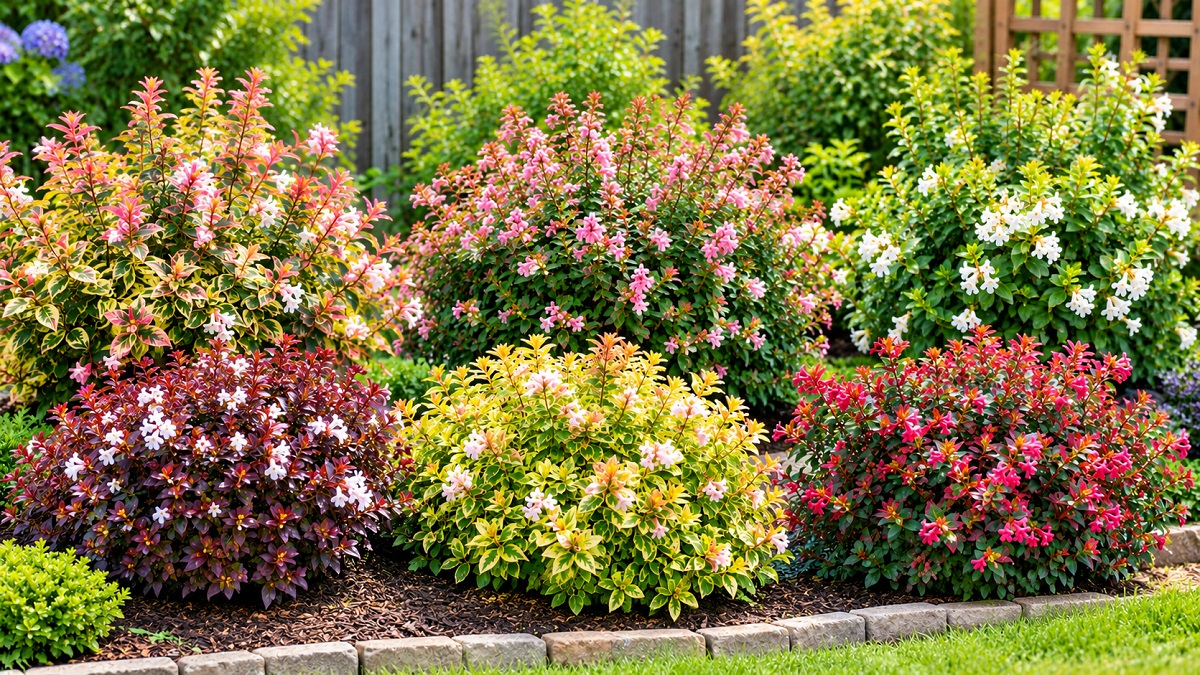
Choosing an Abelia for the garden can be surprisingly difficult. The plants share many appealing qualities, yet different varieties can look quite different once they mature. Some stay compact enough for a foundation bed or container, while others develop into broad shrubs that work better as informal hedges or background plants. Foliage color also ranges from deep green to gold, cream, bronze, and burgundy tones.
The flowers are another reason these shrubs have remained popular. Abelia produces clusters of small, tubular or bell-shaped flowers that can continue appearing for months during the warmer part of the growing season. Many varieties also attract bees, butterflies, and other pollinating insects.
This guide looks at some of the most useful Abelia varieties for home gardens and explains how their mature size, foliage, flowers, and growth habits differ. Rather than choosing a plant simply because its name sounds appealing, consider how much space you have and what you want the shrub to do in the landscape.
The right variety depends largely on available space, desired foliage color, and how you plan to use the shrub.
Abelia is useful when you want a shrub that provides more than one season of interest. Its flowers are attractive during the growing season, but the foliage can continue contributing to the garden after individual blooms have faded. Depending on the variety, leaves may change color as temperatures shift, adding another layer of interest.
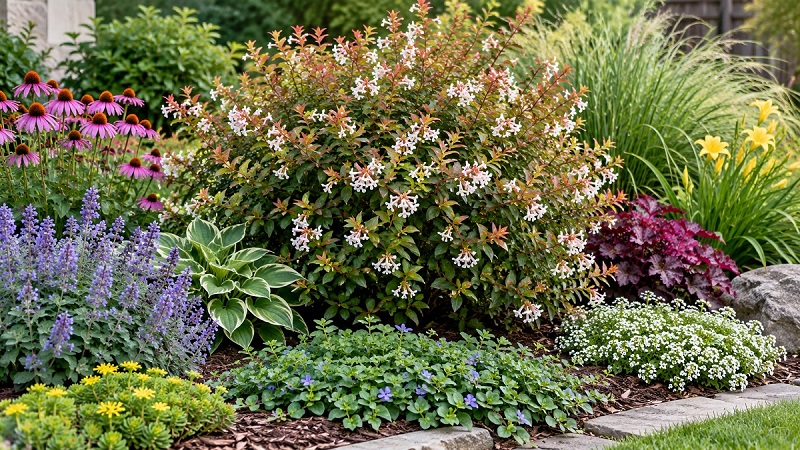
The arching growth habit of many Abelias gives them a softer appearance than tightly clipped evergreen hedges. They can be allowed to grow naturally, lightly shaped with pruning, or incorporated into mixed borders alongside perennials and ornamental grasses.
Another advantage is versatility. Compact selections can fit into relatively small planting areas, whereas larger varieties can fill gaps between trees and lower-growing plants. Their flowers also provide useful forage for pollinating insects when flowering plants are limited elsewhere in the garden.
The best feature of Abelia is its ability to combine attractive foliage with a long flowering period. Instead of relying entirely on flowers for visual interest, the shrub can contribute through leaf color, shape, branching structure, and seasonal changes.
That makes it particularly useful in mixed shrub borders where plants need to look good for an extended period rather than providing a single short-lived display.
The tubular flowers can be visited by bees, butterflies, and other insects. Planting Abelia alongside other nectar-rich shrubs, herbs, and flowering perennials can create a more continuous food source through the season.
There is no single Abelia variety that fits every garden. A compact cultivar can be more practical than a vigorous shrub in a narrow border, while a larger variety may be better when the goal is screening or filling a broad planting bed.
The following selections are worth considering for their combination of foliage, flowers, growth habit, and landscape usefulness.
Use this table as a starting point when comparing the main characteristics of several popular selections. Actual mature size can vary with climate, soil, pruning, and growing conditions.
| Variety | Foliage | Growth Habit | Flower Color | Best Landscape Use |
|---|---|---|---|---|
| 'Kaleidoscope' | Green, yellow and seasonal orange-red tones | Compact and rounded | White to pale pink | Containers, borders and foundation planting |
| 'Rose Creek' | Glossy green | Low and spreading | White with pink tones | Low borders and mass planting |
| 'Edward Goucher' | Glossy green | Arching, moderately vigorous | Lavender-pink | Mixed borders and informal hedges |
| 'Little Richard' | Rich green | Compact and dense | White to pink | Small gardens and foundation beds |
| 'Canyon Creek' | Green with bronze and copper seasonal tones | Upright to spreading | Pale pink | Mixed shrub borders |
| 'Ruby Anniversary' | Green with reddish seasonal color | Compact, mounded | White to pink | Accent planting and smaller spaces |
'Kaleidoscope' is one of the most recognizable Abelias because of its colorful foliage. The leaves typically combine green and yellow tones, while cooler weather can bring stronger orange, red, or bronze coloration. This makes the shrub useful even when it is not flowering.
Its relatively compact habit makes it a practical choice for smaller landscapes. Instead of allowing it to dominate a border, gardeners can use it as a bright foliage accent among darker green shrubs.
Give this variety enough sunlight if you want the strongest foliage coloration. In deep shade, variegated foliage may appear less vibrant and the plant can become less compact.
'Rose Creek' is valued for its low, spreading growth and attractive flowers. New growth can have a reddish cast before maturing to green, creating a subtle change as the plant develops through the season.
The shrub works particularly well toward the front of a mixed border. Rather than relying on heavy pruning to keep it in place, allow its naturally spreading form to contribute to the layered appearance of the planting.
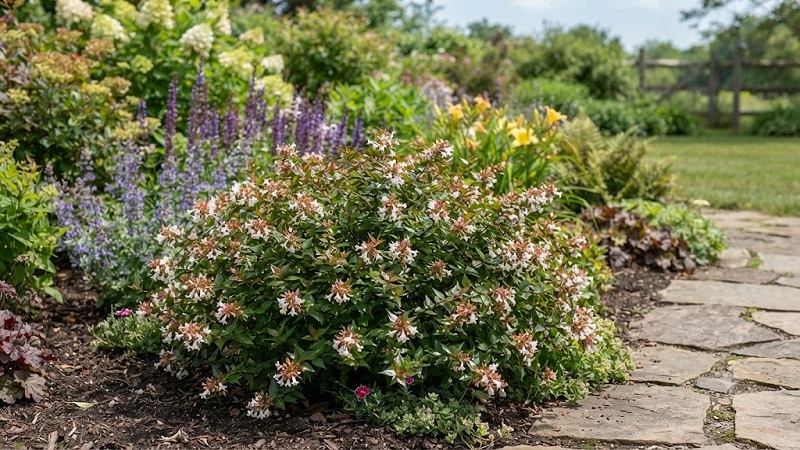
Consider it for low shrub borders, foundation plantings, informal groupings, and areas where a softly spreading plant is preferable to an upright shrub. It can also be useful as a transition between taller shrubs and low-growing perennials.
'Edward Goucher' is an established Abelia selection known for its arching branches and lavender-pink flowers. Its more open growth gives it a relaxed appearance, particularly when it is allowed to develop naturally.
The flowers provide a pleasant contrast against the glossy foliage, and the shrub can become a substantial presence in the garden as it matures. For that reason, give it enough room rather than planting it directly against a path or building.
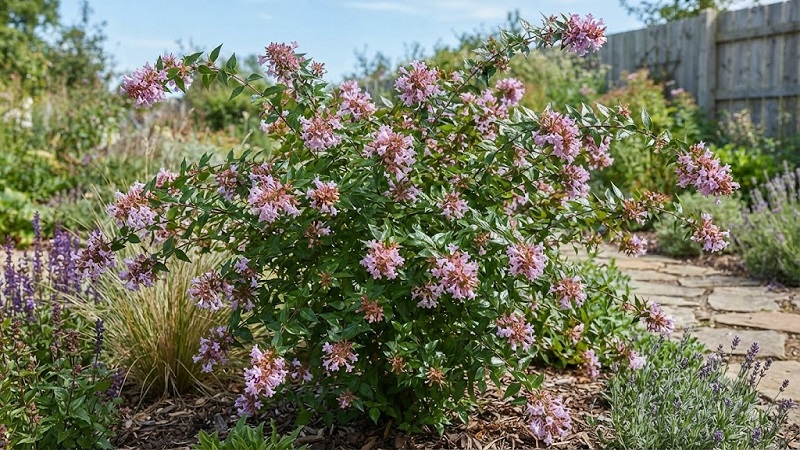
This variety suits mixed shrub borders, informal hedges, cottage-style plantings, and larger foundation beds. It can also be useful as a flowering transition between taller background plants and shorter perennials.
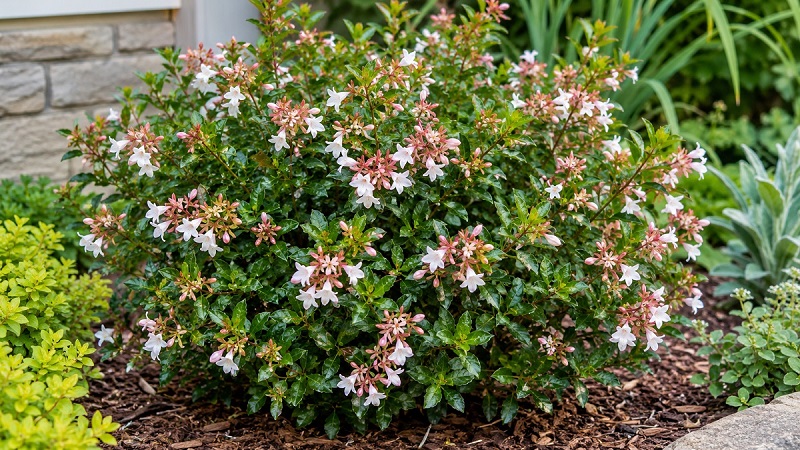
For gardeners working with limited space, 'Little Richard' is an appealing option. It develops a compact, dense form while retaining the characteristic flowering and foliage qualities associated with Abelia.
Its smaller stature makes it easier to fit into foundation beds and compact landscape designs. It is also useful when you want several shrubs grouped together without quickly creating an oversized mass.
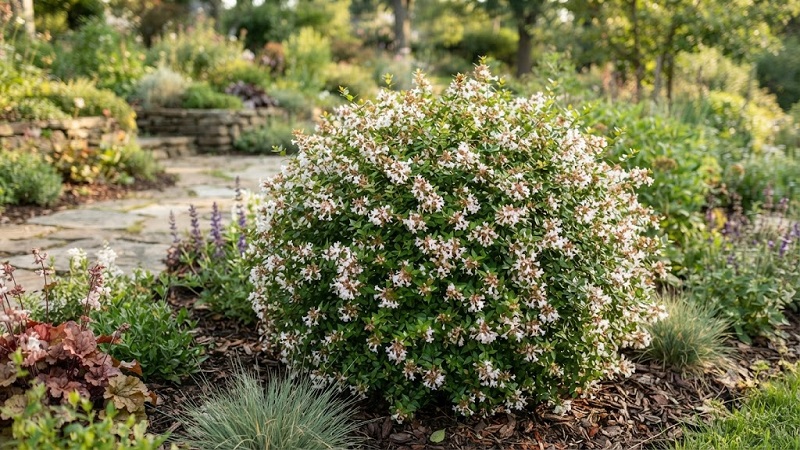
Plant several specimens in a repeating line to create a low informal screen, or combine the shrub with ornamental grasses and flowering perennials. Its relatively restrained size makes it easier to maintain visual balance in smaller gardens.
'Canyon Creek' offers a particularly interesting foliage display. New leaves can emerge with bronze or copper coloration before developing into greener mature foliage, while cooler conditions can bring additional warm tones.
This seasonal change makes the variety useful in gardens where foliage provides as much visual interest as flowers. It works especially well alongside shrubs with dark green, blue-green, or silver foliage.
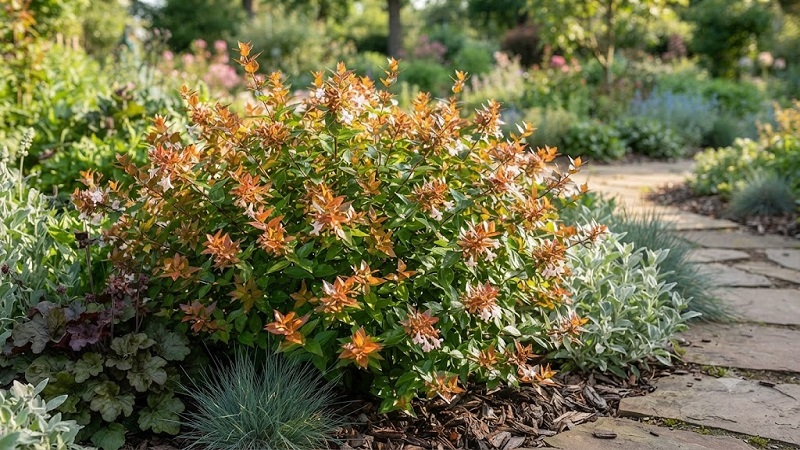
Avoid placing it where its eventual width will be constantly restricted. A plant that can develop naturally tends to require less corrective pruning and retains a more graceful shape.
'Ruby Anniversary' is another selection worth considering when foliage color is an important part of the planting design. The shrub can develop reddish seasonal tones that contrast nicely with the surrounding green foliage of the garden.
Its relatively compact habit makes it suitable for accent planting, mixed borders, and smaller landscape spaces. It can be particularly effective when repeated at intervals rather than planted as a single isolated specimen.
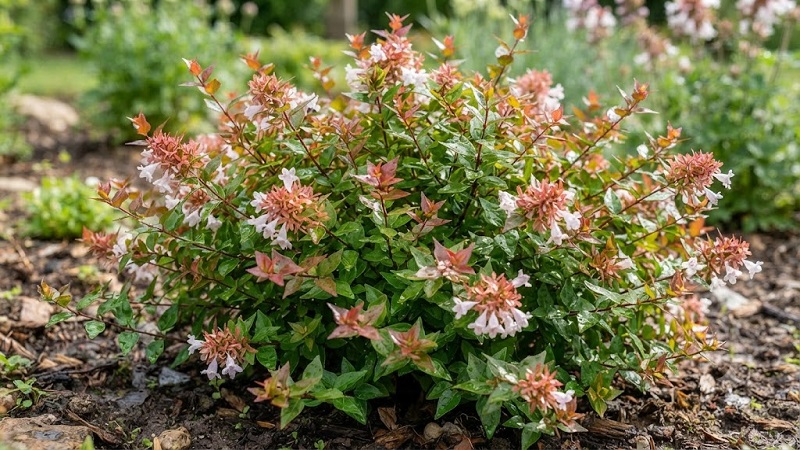
Combine it with plants that have contrasting foliage rather than several shrubs with similar reddish tones. Green-leaved shrubs, blue-green ornamental grasses, and pale-flowering perennials can help the seasonal color stand out.
Start with the space available rather than the flower color. Measure the planting area and consider the mature width of nearby plants. A shrub that constantly needs cutting back to keep a walkway clear may become more work than expected.
Compact selections are better suited to narrow foundation beds, small courtyards, and containers. Larger varieties have more potential as informal screens, background shrubs, or broad border plants.
If your garden already contains plenty of flowering plants, an Abelia with colorful or seasonally changing foliage may add more value than another shrub selected primarily for flowers.
Most Abelias perform best with plenty of sunlight, although they can tolerate some partial shade. Morning or afternoon sun is especially useful in gardens where intense heat makes full-day exposure stressful.
More shade generally means weaker growth and less intense foliage coloration. Before planting, observe the location throughout the day rather than judging light conditions from a single visit.
For a formal-looking landscape, a compact variety can provide a neat foundation without demanding constant shaping. For a relaxed garden, an arching cultivar allowed to grow naturally may fit much better.
Abelia can behave differently from one climate to another. In mild areas it may retain much of its foliage, while colder conditions can cause greater leaf loss and some seasonal dieback.
Choose a cultivar suited to your local climate and avoid assuming that a plant will behave exactly like a specimen photographed in a warmer region.
Once you have selected a suitable variety, good planting conditions will make a noticeable difference. Abelia generally appreciates a sunny position, fertile soil, and reliable drainage.
Poor drainage is more troublesome than temporarily dry soil. If water regularly remains around the roots after rain, improve the planting area before installing the shrub or choose a naturally better-drained location.
Use the expected mature width when deciding spacing. Newly planted shrubs often look too small for their allotted space, but filling the gap with additional plants can create crowding within a few years.
Water new Abelias deeply after planting and continue monitoring moisture while the root system becomes established. Once established, many varieties are reasonably adaptable, but prolonged drought can reduce flowering and cause foliage stress.
A layer of organic mulch can help conserve soil moisture and moderate temperature around the roots. Keep mulch slightly away from the base of the stems rather than piling it directly against the plant.
Abelia does not need to be heavily fertilized to look attractive. If growth is healthy and foliage has good color, excessive feeding is unnecessary. Where soil fertility is poor, a balanced fertilizer or compost-based improvement may help support steady growth.
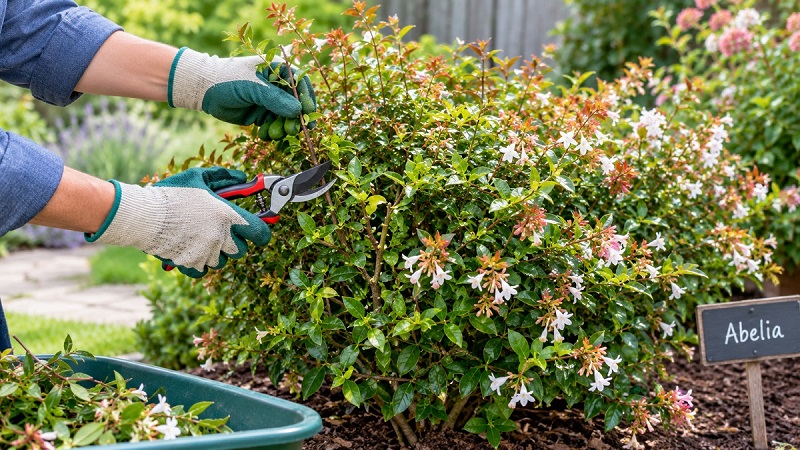
One of the easiest ways to spoil the natural appearance of an Abelia is to shear it repeatedly into a rigid shape. Most varieties look better when their natural branching pattern is retained.
Light pruning can remove damaged, crossing, or excessively long branches. If an older shrub has become congested, selective removal of some of the oldest stems can encourage new growth from the base.
Timing depends on the variety and climate, but heavy pruning is generally best avoided immediately before a period when the plant is expected to flower heavily. If you need to reduce size substantially, remove selected branches rather than cutting everything back to the same height.
The goal should be to maintain a healthy shape and appropriate size rather than constantly forcing the plant into a smaller space. If an Abelia requires severe pruning every year, it may simply be planted in an area that is too small for its natural growth habit.
Planting the root ball too deeply can create unnecessary stress around the stem and roots. Position the plant at an appropriate depth and avoid burying the crown beneath excess soil or mulch.
Height gets most of the attention when buying shrubs, but width can become the bigger problem. Check both measurements before deciding how many plants will fit into a border.
Variegated and colorful foliage selections need adequate light to show their best coloration. A location that is too shady may produce less impressive foliage and a looser growth habit.
Regular watering does not mean permanently wet soil. Allow the soil and local weather conditions to guide irrigation, especially after the shrub becomes established.
Frequent shearing can remove the natural arching structure that makes many Abelias attractive. Use selective cuts when possible and allow the plant to retain some of its natural form.
The best Abelia for your garden is the one that fits the space, climate, and planting style you already have. 'Kaleidoscope' stands out when colorful foliage is the priority, while 'Little Richard' offers a more compact option. 'Rose Creek' works well where a low, spreading habit is useful, and 'Edward Goucher' suits gardeners looking for a larger, arching shrub with attractive flowers.
Selections such as 'Canyon Creek' and 'Ruby Anniversary' are worth considering when seasonal foliage color is an important part of the design. Whichever cultivar you choose, give it adequate light, well-drained soil, enough room to mature, and sensible pruning.
Abelia is at its most useful when it is allowed to become part of the overall planting rather than treated as a shrub that has to be constantly reshaped. Pair the foliage with contrasting plants, leave enough room for the branches to develop, and the shrub can provide flowers, texture, and seasonal color for years.
Continue exploring our gardening guides with more plant profiles, growing tips, and practical advice for creating a healthy, productive garden.