Growing & Caring for Blue Star Fern (Phlebodium aureum)
Learn how to grow and care for Blue Star Fern, including light, watering, humidity, soil, fertilizing, repotting, propagation, pruning, and common problems.
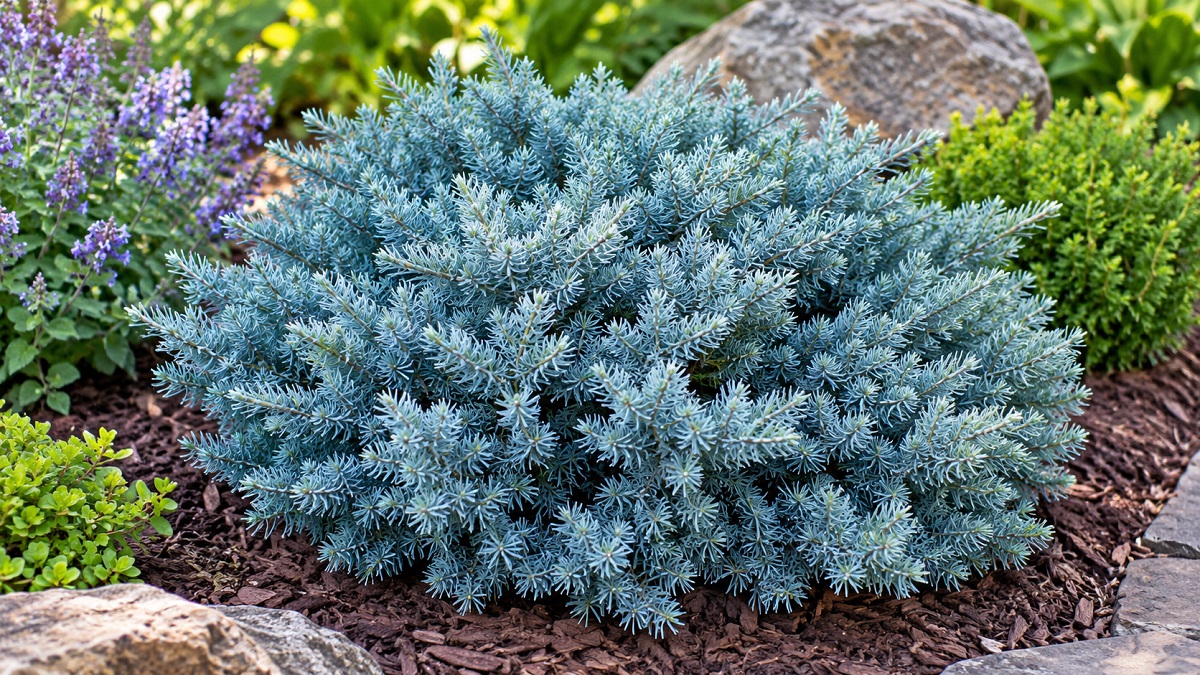
Blue Star Juniper is a small evergreen conifer that brings cool blue color and year-round structure to garden beds, rock gardens, and container displays. Unlike many shrubs grown primarily for flowers, this compact juniper makes its impression through its foliage. Its short, densely arranged needles create a textured, starry appearance that stands out against green ground covers, ornamental grasses, and flowering perennials.
Botanically known as Juniperus squamata 'Blue Star', this dwarf cultivar develops a low, rounded mound and grows slowly. It is particularly useful where a small evergreen accent is needed without the regular pruning required by larger shrubs. Once established, it can tolerate relatively dry conditions, provided the soil drains freely.
The most important parts of successful Blue Star Juniper care are choosing a sunny position, avoiding waterlogged soil, and allowing enough room for the plant to spread. It is generally a low-maintenance shrub, but its appearance can deteriorate when roots remain wet or when it is repeatedly cut back into old, bare wood.
The essentials for keeping Blue Star Juniper compact, colorful, and healthy.
Blue Star Juniper belongs to the cypress family, Cupressaceae. The species Juniperus squamata is native to parts of Asia, and the cultivar 'Blue Star' was introduced into cultivation in the Netherlands during the 1960s. It became popular because of its small size, distinctive foliage, and relatively undemanding care requirements.
The shrub forms a dense, rounded to bun-shaped mound. Its short branches carry overlapping, awl-shaped needles in shades of steel blue, silvery blue, and gray-blue. A pale band on the needles contributes to the plant's frosted appearance. The foliage remains on the plant throughout the year, providing winter interest when many deciduous plants have lost their leaves.
Blue Star Juniper is a cultivar rather than a separate species. Its compact form makes it particularly suitable for smaller gardens, although its mature width should not be underestimated. Depending on growing conditions and the reference used, a mature plant may reach approximately 1–3 feet tall and 1–4 feet wide.
This juniper does not produce showy flowers. Like other junipers, it can produce small, berry-like seed cones, which are botanical cones rather than true berries. Its primary ornamental feature is its foliage.
Use the following table as a reference when selecting a planting site and planning routine care. Mature dimensions vary with climate, soil, plant age, and growing conditions. These are typical horticultural ranges rather than guaranteed measurements for every plant.
| Characteristic | Details |
|---|---|
| Common Name | Blue Star Juniper, Blue Star Singleseed Juniper, Blue Star Flaky Juniper |
| Botanical Name | Juniperus squamata 'Blue Star' |
| Plant Family | Cupressaceae |
| Plant Type | Dwarf, woody, evergreen coniferous shrub |
| Origin of Species | Parts of Central and East Asia |
| Mature Height | Approximately 1–3 feet (30–90 cm) |
| Mature Spread | Approximately 1–4 feet (30–120 cm) |
| Growth Rate | Slow; often only a few inches of growth per year |
| Growth Habit | Dense, rounded, low-mounding |
| Foliage Color | Steel blue, silvery blue, and gray-blue |
| Foliage Type | Evergreen, awl-shaped needles |
| Flowering | No significant ornamental flowers |
| Fruit | Small, blue to dark bluish, berry-like seed cones may develop |
| Sunlight | Full sun preferred; light partial shade may be tolerated |
| Soil Type | Well-drained sandy, loamy, or gravelly soil; adaptable to other soils if drainage is good |
| Soil pH | Adaptable to acidic, neutral, or alkaline soils with suitable drainage |
| Water Requirements | Regular moisture during establishment; lower requirements once established |
| USDA Hardiness Zones | Generally 4–8, depending on local climate and site conditions |
| Pruning | Minimal; remove dead or damaged branches and avoid severe cuts into bare old wood |
| Fertilizer | Usually little or none needed in reasonably fertile soil |
| Propagation | Semi-hardwood cuttings; rooting may be slow |
| Landscape Uses | Rock gardens, foundation plantings, borders, containers, and small-space gardens |
Sunlight has a noticeable influence on the shape and color of Blue Star Juniper. Choose a position that receives at least six hours of direct sunlight daily. In a bright, open location, the shrub generally develops denser growth and its characteristic blue-gray foliage is more prominent.
Full sun is the preferred exposure in climates where summer temperatures are not excessively hot. It helps maintain a compact outline and reduces the tendency for branches to become sparse. Good air circulation around the foliage is also useful, particularly in regions with humid summers.
The plant can tolerate some partial shade, especially where afternoon sunlight is intense. However, prolonged shade may lead to looser growth and less attractive foliage. Avoid placing it directly beneath dense trees or against a wall where sunlight is limited for most of the day.
In hot climates, a site with morning sun and some protection from harsh late-afternoon heat may reduce stress. The soil must still drain efficiently, and the plant should not be crowded by neighboring shrubs.
Well-drained soil is essential for a healthy juniper. The plant can grow in sandy, gravelly, loamy, and some clay-based soils, but heavy soil that remains saturated for long periods creates a risk of root damage and root rot.
Before planting, examine the ground after rain or irrigation. If water collects around the intended planting area and drains slowly, choose a raised position or improve the planting site's drainage. In very heavy clay, simply placing a small amount of sand in the planting hole is not a reliable solution; a better-drained location or a properly constructed raised bed is preferable.
For ordinary garden soil, loosen the surrounding ground and break up compacted areas without excessively disturbing the soil structure. If organic matter is needed, incorporate a modest amount across a broader planting area rather than creating an isolated pocket of rich material around the roots.
Blue Star Juniper tolerates a range of soil pH levels. There is generally no need to adjust the pH unless a soil test identifies a specific problem. Excessive fertilization or unnecessary soil amendments may encourage growth that is less compact than expected.
Avoid planting in persistently wet depressions, poorly drained lawn edges, or areas where irrigation water regularly accumulates.
Watering needs depend on the plant's age, soil texture, temperature, rainfall, and whether it grows in the ground or in a container. The goal is to establish a healthy root system without keeping the soil continuously wet.
During the first growing season, check the root zone regularly. Water thoroughly when the surrounding soil begins to dry, allowing moisture to penetrate the original root ball and the adjacent soil. Newly planted shrubs may need more frequent watering in hot, windy weather or sandy soil.
Do not follow a rigid daily schedule without checking conditions. A small plant in cool weather may need much less water than the same plant during a hot spell.
Once established, Blue Star Juniper is relatively drought tolerant. Water during prolonged dry periods, particularly when the soil is dry several inches below the surface. Deep, occasional watering is generally preferable to frequent shallow sprinkling.
A plant can suffer from drought even in winter, especially in exposed locations with dry winds and little rainfall. Check the soil before watering and avoid adding moisture when the ground is frozen or already saturated.
Brown foliage alone does not identify the cause. Examine drainage, soil moisture, recent weather, and the distribution of damaged branches before changing your watering routine.
Planting is easiest when the ground is workable and the shrub can establish roots before severe heat or freezing weather arrives. In many temperate climates, spring and early autumn are suitable periods. In warmer regions, choose a mild season and avoid planting during the hottest part of the year.
For multiple plants, allow sufficient spacing for their eventual spread. Crowding may initially create a full-looking border, but it can reduce airflow and make maintenance more difficult as the shrubs mature.
Avoid heavy pruning immediately after planting. The priority is to maintain consistent moisture while the root system becomes established.
Usually, very little fertilizer is needed. This slow-growing conifer is not intended to produce rapid, lush growth, and excessive feeding will not necessarily improve its color or shape. If the plant is growing in reasonably fertile soil and its foliage looks healthy, routine fertilization may be unnecessary.
If growth is unusually weak, first investigate drainage, sunlight, root damage, and watering. A soil test can help determine whether nutrients are actually deficient. When feeding is justified, use a suitable slow-release fertilizer according to its label and apply it during active growth rather than immediately before winter dormancy.
A thin layer of bark or another suitable organic mulch helps moderate soil temperature, limit weed competition, and reduce moisture loss. Keep the mulch a few inches away from the base of the shrub so that the crown does not remain damp.
Avoid piling mulch against the stems or covering the root flare. Excessively deep mulch can retain unwanted moisture and interfere with healthy growth.
Blue Star Juniper naturally develops a compact mound, so regular shaping is rarely necessary. Its slow growth makes it a useful choice for gardeners who prefer a shrub that retains its general outline without repeated trimming.
Light maintenance pruning can be carried out when conditions are mild and the plant is not under heat or drought stress. Remove dead, broken, or diseased branches when noticed, using clean, sharp pruning tools.
If a branch has grown beyond the desired outline, selectively shorten it where healthy foliage remains. Make cuts carefully so the plant retains its natural rounded form.
Junipers do not reliably produce new growth from old, leafless wood. Cutting deeply into bare interior branches may leave permanent brown gaps. Avoid shearing the entire shrub into a tight shape or reducing its size drastically in a single session.
If the plant has become too large for its position, selective reduction may help when green growth is available at suitable cutting points. If it has extensive bare areas or a severely distorted shape, replacing it may be more successful than attempting a drastic renovation.
Blue Star Juniper can be propagated from cuttings, although rooting is not always quick. Because 'Blue Star' is a named cultivar, vegetative propagation is the preferred way to preserve its characteristic compact form and blue foliage.
Rooting may take several months, and not every cutting will succeed. Avoid pulling cuttings out repeatedly to check their progress. Once roots have developed sufficiently, gradually acclimatize the young plants before potting them individually.
Seed propagation is possible in junipers, but it is not the best choice when the goal is to reproduce the named 'Blue Star' cultivar. Seed-grown plants may not retain the parent plant's distinctive foliage color, growth habit, and compact dimensions.
The compact growth habit of Blue Star Juniper makes it suitable for large pots, patios, entrances, and sunny balconies. Container culture requires closer attention to drainage and watering than growing directly in the ground because potting media can dry quickly or remain wet if the container has poor drainage.
Select a sturdy pot with drainage holes and enough room for the root ball to expand. A wider container can complement the shrub's rounded form. Do not choose an unnecessarily oversized pot filled with wet, heavy soil, particularly when the plant is still small.
Use a free-draining potting mix formulated for woody ornamentals or conifers. A suitable mix should retain some moisture without becoming saturated. Avoid garden soil that compacts easily inside containers.
Check moisture below the surface before watering. Apply water until excess drains through the holes, then empty any standing water from the saucer. During hot weather, containers may require more frequent checks; during cool or rainy periods, watering should be reduced.
In hot, humid tropical and subtropical climates, Blue Star Juniper may struggle despite careful container care. It generally performs best where winter chilling and moderate summer conditions suit its climatic requirements. A cool-season nursery plant should not be assumed to thrive outdoors in every warm region.
Blue Star Juniper is generally considered a low-maintenance shrub, but environmental stress can lead to foliage discoloration and branch dieback. Many apparent pest problems are actually associated with poor drainage, drought, or unsuitable growing conditions.
Brown foliage can result from drought, waterlogged roots, winter drying, physical damage, or disease. Examine whether the problem affects individual branch tips, the shaded interior, one side of the plant, or the entire shrub. Check soil moisture and look for damaged bark or suspicious lesions before deciding on treatment.
Prolonged soil saturation can damage roots and encourage root-rotting organisms. Symptoms may include poor growth, widespread discoloration, and progressive branch decline. Improve drainage and correct excessive irrigation. Severely affected plants may not recover, particularly when much of the root system has been damaged.
Twig blight can cause individual shoots or branches to turn brown and die, particularly in wet weather. Improve air circulation, avoid unnecessary overhead irrigation, and remove affected material when appropriate. Disinfect pruning tools between cuts when disease is suspected.
If symptoms continue to spread, seek a reliable diagnosis before applying a fungicide. Different diseases can produce similar symptoms, and treatment depends on the cause.
Some junipers can host rust fungi that cause abnormal swellings, damaged twigs, or orange, gelatinous growth during wet conditions. Rust diseases differ in their life cycles, and not every rust fungus infects every juniper species. Remove affected material when recommended and avoid unnecessary treatment without identification.
Scale insects may appear as small, immobile bumps on stems or foliage. Spider mites can cause stippling, dull foliage, or fine webbing. Inspect the plant closely, especially during hot, dry weather.
For a confirmed infestation, consider a targeted horticultural treatment appropriate for junipers and follow the product label. Avoid applying oils during extreme heat or to drought-stressed plants, and protect beneficial insects wherever possible.
Junipers are often less attractive to deer than many broadleaf shrubs, but browsing is still possible. Protect young plants where deer pressure is high. Also keep lawn trimmers, snow piles, and heavy foot traffic away from the crown and lower branches.
| Problem | Possible Cause | Recommended Response |
|---|---|---|
| Brown tips | Drought, heat, or physical damage | Check root-zone moisture and inspect damaged shoots. |
| Widespread browning | Waterlogging, root injury, or severe environmental stress | Assess drainage and inspect the root zone. |
| Individual dying branches | Twig blight, injury, or localized dieback | Inspect affected branches and prune damaged material appropriately. |
| Fine webbing and stippling | Possible spider mites | Inspect closely and use a suitable targeted treatment if confirmed. |
| Small bumps on stems | Possible scale insects | Confirm the pest before selecting a treatment. |
| Weak, open growth | Insufficient light, overcrowding, or natural aging | Improve light and spacing where practical. |
The cool blue foliage of Blue Star Juniper works as a visual anchor in planting schemes. It creates contrast against green foliage, warm-colored flowers, and plants with fine or upright textures. Because the shrub grows slowly, it is particularly effective in carefully arranged borders where the overall composition should remain stable.
Blue Star Juniper is a natural choice for rock gardens, gravel borders, and raised beds with good drainage. Position it among stones of contrasting sizes and use low-growing plants around the edges. Leave some open space so its rounded shape remains visible.
Use the shrub near the front of a mixed border or as a low evergreen accent beside a building. Allow adequate mature width rather than planting it tightly against walls or windows. Repeated groupings can create rhythm, while individual specimens work as focal points.
In a large container, Blue Star Juniper can serve as a permanent structural plant. Seasonal flowers may be added around the edge, provided they have compatible watering requirements. Avoid combining it with plants that need constantly wet soil.
| Companion Plant | Design Benefit | Important Consideration |
|---|---|---|
| Sedum species | Succulent foliage and a low-growing texture complement the blue needles. | Choose varieties suited to the same sunny, well-drained site. |
| Festuca glauca | Fine, blue-gray grass creates a coordinated cool-color planting. | Provide good airflow and avoid persistently wet soil. |
| Thymus species | Low mats of foliage soften the edge of gravel beds and rock gardens. | Choose a suitable creeping or ornamental thyme for the climate. |
| Lavandula species | Purple flowers contrast with the juniper's silvery foliage. | Requires abundant sun and excellent drainage. |
| Heuchera cultivars | Colorful leaves add burgundy, lime, or bronze tones. | Select cultivars that suit the available light and climate. |
| Compact ornamental grasses | Upright or arching leaves contrast with the juniper's rounded mound. | Check mature size so the juniper is not crowded. |
Companion planting is most successful when plants share broadly compatible light, drainage, and moisture requirements. In warm, humid areas, choose locally adapted plants and avoid combinations that require consistently damp soil around the juniper's roots.
Inspect the shrub for winter damage, remove dead branches, and check that the root zone drains properly after seasonal rain. Refresh mulch if necessary, keeping it away from the crown. This is also a suitable time for planting in many temperate climates.
Monitor soil moisture during prolonged hot or dry periods, especially for newly planted and container-grown shrubs. Check for mites and other pests when foliage appears dull or stippled. In hot regions, a site with some protection from intense afternoon heat may help reduce stress.
Plant early enough for roots to begin establishing before the ground becomes too cold. Remove weeds and inspect drainage before wetter weather arrives. Avoid heavy pruning or excessive fertilization late in the growing season.
Established plants in suitable climates usually require little intervention. Protect container-grown roots where severe freezing is expected, and monitor plants in exposed locations during extended dry spells. Do not allow heavy snow or stored materials to crush the branches.
Poor drainage is one of the most serious problems for this shrub. Always assess the site before planting and correct drainage issues rather than attempting to compensate with a strict watering schedule.
Limited sunlight can produce a less compact form. Select a bright site and allow the plant room to develop its natural mound.
Junipers need water while establishing, but they do not benefit from permanently wet soil. Check moisture before watering, especially in cool weather and heavy soil.
Deep cuts into leafless interior branches can leave lasting gaps. Prune selectively and preserve healthy foliage at the ends of the remaining shoots.
A small nursery plant can eventually become several feet wide. Account for mature spread so neighboring plants do not hide or crowd the juniper.
Blue Star Juniper is adapted to temperate conditions and is generally listed for USDA zones 4–8. In persistently hot, humid tropical climates, it may struggle even with careful maintenance. Confirm local suitability before investing in several plants.
Yes, in a suitable climate and a sunny site with well-drained soil. Once established, it generally needs little pruning and can tolerate periods of dry weather. Poor drainage and excessive shade are common causes of difficulty.
It commonly reaches around 1–3 feet tall and 1–4 feet wide. Growth is slow, and the eventual size varies with growing conditions and the length of time the plant has been established.
Its foliage remains blue-gray throughout the year. The apparent intensity can change with lighting, weather, and growing conditions, but the shrub is valued for its evergreen color.
Full sun is preferred, ideally with six or more hours of direct sunlight. Some partial shade can be tolerated, particularly where afternoon conditions are very hot, but too much shade may result in looser growth.
Water regularly while the plant establishes, then reduce watering as the roots develop. Established plants usually need additional water during prolonged drought. Check soil moisture rather than following a fixed daily schedule.
Yes. Use a container with drainage holes and a free-draining growing medium. Monitor moisture carefully because pots can dry out faster than garden soil, but avoid leaving the roots in standing water.
Usually, only light maintenance is needed. Remove dead or damaged branches and make selective cuts where green foliage remains. Avoid severe pruning into old, bare wood because new growth may not develop there.
Possible causes include drought, waterlogged roots, winter drying, branch injury, or disease. Check soil moisture, drainage, and the pattern of browning before deciding on treatment.
It may struggle in regions with prolonged heat and high humidity, particularly when nights remain warm. A cooler, temperate climate is generally more suitable. Local growing experience and the plant's specific cultivar requirements should guide the decision.
It is often less attractive to deer than many other ornamental shrubs, but browsing is still possible. Protection may be necessary in gardens with substantial deer pressure.
Semi-hardwood cuttings are a common method for preserving the cultivar's characteristics. Rooting can be slow, so use clean cuttings, a suitable propagation medium, and consistent moisture without waterlogging.
It is a low, mounding shrub rather than a true spreading carpet. It can work as a low evergreen accent or be planted in groups, but other spreading juniper cultivars may be more suitable when broad ground coverage is the main objective.
Blue Star Juniper is a distinctive evergreen shrub for gardeners who want year-round color without a demanding maintenance routine. Its compact, rounded habit and silvery blue foliage make it useful in rock gardens, mixed borders, foundation plantings, and containers.
For the best results, give it ample sunlight, well-drained soil, and enough space to reach its natural size. Water consistently while it establishes, reduce irrigation as it matures, and prune only when necessary. Most importantly, match the plant to your local climate: a well-sited juniper in suitable conditions will generally perform better than one planted in an environment that remains too hot, humid, or wet.
With thoughtful placement and modest care, Blue Star Juniper can provide a long-lasting blue accent that complements a wide range of garden styles.
Continue exploring our gardening guides with more plant profiles, growing tips, and practical advice for creating a healthy, productive garden.