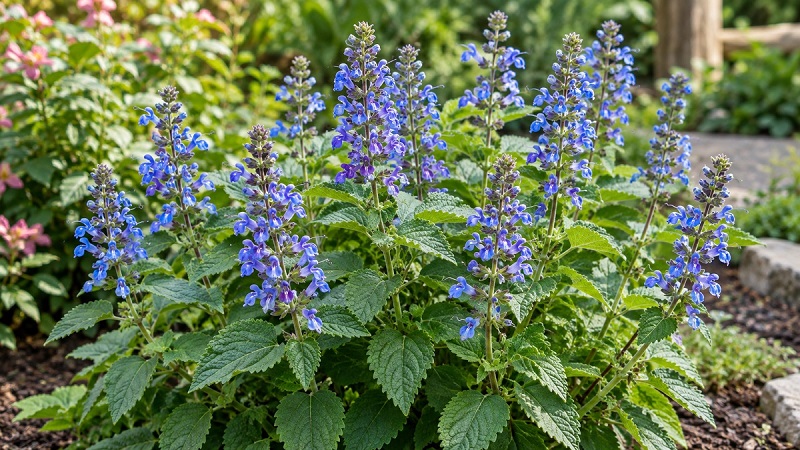
Growing & Caring for Blue Spur Flower (Plectranthus barbatus)
Learn how to grow and care for Blue Spur Flower (Plectranthus barbatus), including sunlight, soil, watering, pruning, propagation, containers, pests, and winter care.
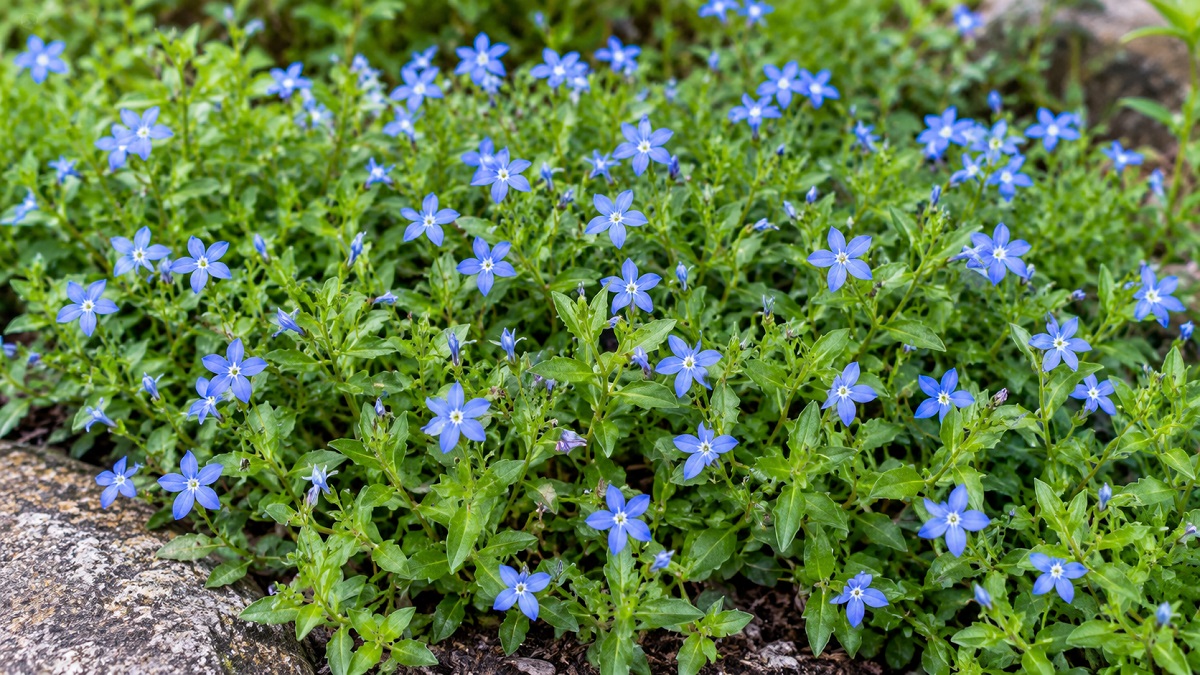
Blue Star Creeper (Isotoma fluviatilis) is a low-growing perennial ground cover valued for its tiny blue flowers, soft green foliage, and ability to fill spaces between stepping stones and along garden paths. Unlike taller border plants that demand attention from a distance, this little creeper works close to the ground, creating a living carpet that can soften hard edges and connect different parts of a landscape.
Its delicate appearance can be misleading. Once established in suitable conditions, Blue Star Creeper spreads steadily through its trailing growth and can cover open soil surprisingly well. It is particularly useful where a lawn would be awkward to maintain or where a low planting is preferred around rocks, pavers, retaining walls, and garden borders.
Growing it successfully comes down to getting the basic conditions right: adequate light, consistently moist but well-drained soil, and enough room for its spreading habit. It tolerates some foot traffic once established, although it should not be treated as a complete substitute for turf in heavily used areas.
Blue Star Creeper is a compact, spreading perennial that works especially well as a ground cover and between garden pavers.
Blue Star Creeper belongs to the family Campanulaceae and is native to Australia and New Zealand. It is also commonly associated with the name Laurentia fluviatilis in older horticultural references. Modern plant references generally place it under the genus Isotoma.
The plant stays remarkably short, usually forming a mat only a few inches tall. Its stems spread horizontally and produce small green leaves along the growth. During the flowering season, numerous tiny flowers appear above the foliage. Their five-pointed, star-like shape gives the plant its familiar common name.
Blue Star Creeper is often selected for places where taller ground covers would overwhelm nearby plants. It can occupy the narrow spaces between stepping stones, spill gently over the edges of containers, or create a low layer beneath larger perennials and shrubs.
One of its greatest strengths is its ability to knit together open spaces. Instead of leaving bare soil around individual stepping stones, gardeners can allow the creeping stems to spread through those gaps and create a softer transition between planting beds and pathways.
The following table summarizes the main characteristics and growing requirements to keep in mind when choosing a location for Isotoma fluviatilis.
| Characteristic | Details |
|---|---|
| Botanical Name | Isotoma fluviatilis |
| Older Synonym | Laurentia fluviatilis |
| Plant Family | Campanulaceae |
| Common Names | Blue Star Creeper, Star Creeper, Blue Star |
| Plant Type | Low-growing perennial ground cover |
| Typical Height | Approximately 2–4 inches |
| Typical Spread | Approximately 12–18 inches or more |
| Growth Habit | Trailing, mat-forming, spreading |
| Flowers | Small, five-pointed, star-shaped flowers |
| Flower Color | Usually pale blue to blue |
| Flowering Period | Primarily spring through summer, with timing varying by climate |
| Light | Full sun to partial shade |
| Soil | Moist, fertile, well-drained soil |
| Soil Moisture | Evenly moist; avoid prolonged waterlogging |
| Watering | Regular watering during establishment and dry periods |
| Pruning | Light trimming to control spread or refresh the planting |
| Propagation | Division, stem cuttings, and seed |
| Best Uses | Ground cover, stepping-stone gaps, rock gardens, borders, containers |
Choose a position where the soil does not remain bone dry for long periods. Blue Star Creeper performs particularly well in areas that receive reliable moisture without becoming saturated.
A location along a garden path can be especially attractive. The low foliage stays below most edging plants, while the flowers provide small flashes of blue close to the ground. It can also be tucked around larger ornamental plants to cover exposed soil.
Although the foliage is short, the stems can travel outward. Avoid placing new plants directly against aggressive neighboring ground covers. Leaving enough space at planting time makes it easier to manage the developing mat and prevents overcrowding.
Blue Star Creeper grows in full sun to partial shade. The amount of light available can influence both density and flowering. A position receiving several hours of direct sunlight generally encourages compact growth and good flower production.
In hot climates, some afternoon protection can be helpful, particularly when the soil dries rapidly. Morning sun followed by light afternoon shade can provide a useful balance between flower production and moisture retention.
Very deep shade is less suitable. Plants grown with insufficient light may become thinner and less floriferous, and the ground-cover effect can take longer to develop.
Good drainage is important, but Blue Star Creeper also appreciates soil that holds enough moisture to prevent repeated drying. The ideal planting bed is loose, fertile, and rich in organic matter.
Before planting, loosen compacted ground and work in mature compost if the soil is poor. Heavy clay can be improved by incorporating organic matter and creating better drainage rather than simply adding a thin layer of material to the surface.
Avoid locations where water stands around the roots after rain. Constantly saturated soil can weaken the root system and encourage rot-related problems.
Remove weeds and competing roots before installation. Break up compacted areas and level the surface so water can spread evenly. If you are planting between pavers, make sure the planting pockets contain actual soil rather than relying on a thin layer of dusty material trapped between stones.
Planting is easiest when the weather is mild and the soil can be worked without becoming either muddy or excessively dry. Container-grown plants can usually be installed whenever suitable growing conditions are available in your region.
Clear away weeds, grass, stones, and debris. Loosen the upper layer of soil and mix in compost if the ground is low in organic matter.
Set each plant at approximately the same depth at which it was growing in its nursery container. Do not bury the crown beneath a thick layer of soil or mulch.
Allow enough room for the plants to expand horizontally. Closer spacing gives quicker visual coverage, while wider spacing reduces the initial number of plants needed and allows the ground cover to fill in gradually.
Give the planting bed a deep watering immediately after installation. This settles the soil around the roots and removes large air pockets.
Newly planted Blue Star Creeper should not be allowed to repeatedly dry out while its root system is developing. Check the soil regularly and adjust watering according to temperature, rainfall, soil type, and exposure.
Consistent moisture is one of the most important aspects of establishing a dense planting. Young plants generally require more frequent watering than established patches because their roots have not yet explored the surrounding soil.
Once established, watering can be reduced when natural rainfall provides adequate moisture. During hot or dry weather, however, the foliage may lose vigor if the soil remains dry for extended periods.
Rather than watering the surface lightly every day, aim to moisten the root zone thoroughly and then allow the upper soil to begin drying before watering again. The exact interval depends heavily on the soil and weather.
Persistent wilting, poor growth, browning foliage, and gaps developing in a previously dense mat can indicate inadequate moisture or root problems. If the soil is already wet when the plant looks stressed, investigate drainage rather than adding more water.
Blue Star Creeper generally does not require heavy feeding. Excessive fertilizer can encourage soft, leafy growth without necessarily producing a better ground cover.
If the soil is reasonably fertile, incorporating compost before planting may be enough. In poor soil, a balanced, slow-release fertilizer can be applied according to the product label during active growth.
Avoid allowing granular fertilizer to sit directly against the foliage or crown. Water after application when required by the fertilizer directions, and do not repeatedly fertilize simply because the plant is spreading slowly.
Blue Star Creeper rarely needs formal pruning. Its low-growing habit is part of its appeal, and most plants can be left to develop naturally.
Trimming becomes useful when stems move beyond the intended planting area or begin growing into pathways where they are not wanted. A light cutback can also tidy an older planting after periods of stress.
Use clean, sharp garden shears and remove only the growth necessary to restore the desired shape. Avoid repeatedly cutting the plant extremely short, particularly during periods of heat or drought.
After trimming, check the soil moisture and give the plants appropriate care while new growth develops.
Blue Star Creeper can be propagated in several ways, although division and stem cuttings are practical options for gardeners who want to reproduce a plant with known characteristics.
Established clumps can be divided when growing conditions are favorable. Lift a portion of the plant, separate rooted sections carefully, and replant them promptly in prepared soil.
Keep divided sections evenly moist while they recover. Avoid placing freshly divided plants in a hot, dry location until they have re-established.
Healthy non-flowering or lightly flowering stems can be used for cuttings. Remove the lower foliage, place the cutting into a suitable moist rooting medium, and keep it in bright light away from harsh direct afternoon sun while roots develop.
Once a cutting has formed a healthy root system and begins producing fresh growth, it can be gradually moved into its permanent growing position.
Seed propagation is possible but generally takes more time than multiplying established plants. Seedlings also require careful moisture management during their early development because they have a very small root system.
The trailing habit makes Blue Star Creeper a useful choice for containers, troughs, window boxes, and mixed planters. It can soften the edge of a pot while taller plants occupy the center.
Choose a container with drainage holes and use a quality potting mix rather than dense garden soil. Because containers dry more quickly than garden beds, check moisture regularly during warm weather.
Avoid leaving the pot standing in a saucer full of water for extended periods. Good drainage is just as important in a container as it is in the landscape.
Its small scale pairs well with compact ornamental grasses, small flowering perennials, herbs, and other plants with compatible moisture and light requirements. Keep especially vigorous plants from overwhelming the creeping stems.
Blue Star Creeper is generally valued as a relatively low-maintenance ground cover, but no plant is completely free from pest or disease problems. Stress caused by poor drainage, drought, overcrowding, or inadequate light can make problems more noticeable.
Slugs and snails may feed on low-growing foliage, particularly where conditions are consistently damp and shaded. Watch for irregular holes, ragged leaf edges, and slime trails.
Aphids and other sap-feeding insects can occasionally appear on tender growth. Small infestations are often manageable by washing the foliage with a strong but gentle stream of water and encouraging natural predators.
Excessively wet soil is more concerning than occasional dryness for plants growing in poorly drained ground. If foliage declines despite adequate moisture, inspect the root zone and correct drainage problems before applying additional fertilizer or water.
| Problem | Possible Cause | What to Check |
|---|---|---|
| Thin or sparse growth | Insufficient light, drought, or competition | Sun exposure, soil moisture, nearby plants |
| Few flowers | Too much shade or excessive stress | Available sunlight and watering pattern |
| Wilting despite wet soil | Poor drainage or root damage | Drainage and root condition |
| Brown or dry foliage | Drought, heat, or root stress | Soil moisture and recent weather |
| Growth spreading too far | Natural trailing habit | Planting boundaries and nearby beds |
| Chewed leaves | Slugs, snails, or other leaf-feeding pests | Inspect plants at night and around damp areas |
Spring is an excellent time to inspect the planting after winter, remove dead material, refresh the soil surface if needed, and begin monitoring new growth. As temperatures rise, gradually increase watering when rainfall is insufficient.
This is also a useful period for planting new specimens or dividing established plants where local conditions are suitable.
Pay close attention to moisture during hot weather. A low-growing ground cover can dry quickly when planted around paving because surrounding hard surfaces absorb and radiate heat.
Light afternoon shade can be particularly beneficial in hot climates, especially if the planting bed receives strong reflected heat from concrete or stone.
Cooler weather often reduces the need for irrigation. Remove weeds and damaged growth, but avoid excessive trimming simply to make the planting look unnaturally tidy.
Winter appearance depends on climate and local growing conditions. In colder regions, growth may slow considerably or experience seasonal damage. Avoid keeping the soil excessively wet during cool weather.
The plant's low profile gives it several uses that are difficult to achieve with taller ground covers. It can create a green transition between paving and planting beds without hiding the shape of the pathway.
This is one of the most recognizable uses for Blue Star Creeper. The trailing stems can occupy soil-filled spaces between stones, creating a softer appearance than bare gravel or exposed soil.
Its tiny scale works well around rocks and other low-growing plants. Provide adequate soil and moisture rather than treating a rock garden as automatically dry.
Use it at the front of a border where a short carpet can visually connect taller flowering plants without competing strongly for height.
It can tolerate occasional light foot traffic once established, particularly when used between stepping stones. However, it should not be expected to withstand the repeated traffic that a traditional lawn is designed to handle.
For a pathway, place the stepping stones where people naturally walk and let the Blue Star Creeper occupy the surrounding spaces. This protects the plant while still giving the path a lush, planted appearance.
Blue Star Creeper is a small plant with a useful role in garden design. Its low stature, creeping habit, and delicate blue flowers make it especially effective where taller ground covers would hide paving, stones, or the lower portions of neighboring plants.
The most important part of its care is choosing the right site. Give it suitable light, soil that remains reasonably moist without becoming waterlogged, and enough room to spread. Once established, it generally needs much less attention than many formal edging plants.
Whether planted between stepping stones, tucked into a rock garden, allowed to spill from a container, or used as a living carpet along a border, Isotoma fluviatilis can bring a softer, more natural finish to the lower level of the garden. Monitor its spread in your local climate, and trim it when necessary to keep the planting where you want it.
Continue exploring our gardening guides with more plant profiles, growing tips, and practical advice for creating a healthy, productive garden.