Growing & Caring for Blue Star Creeper (Isotoma fluviatilis)
Learn how to grow and care for Blue Star Creeper, including sunlight, soil, watering, planting, pruning, propagation, containers, pests, and landscape uses.
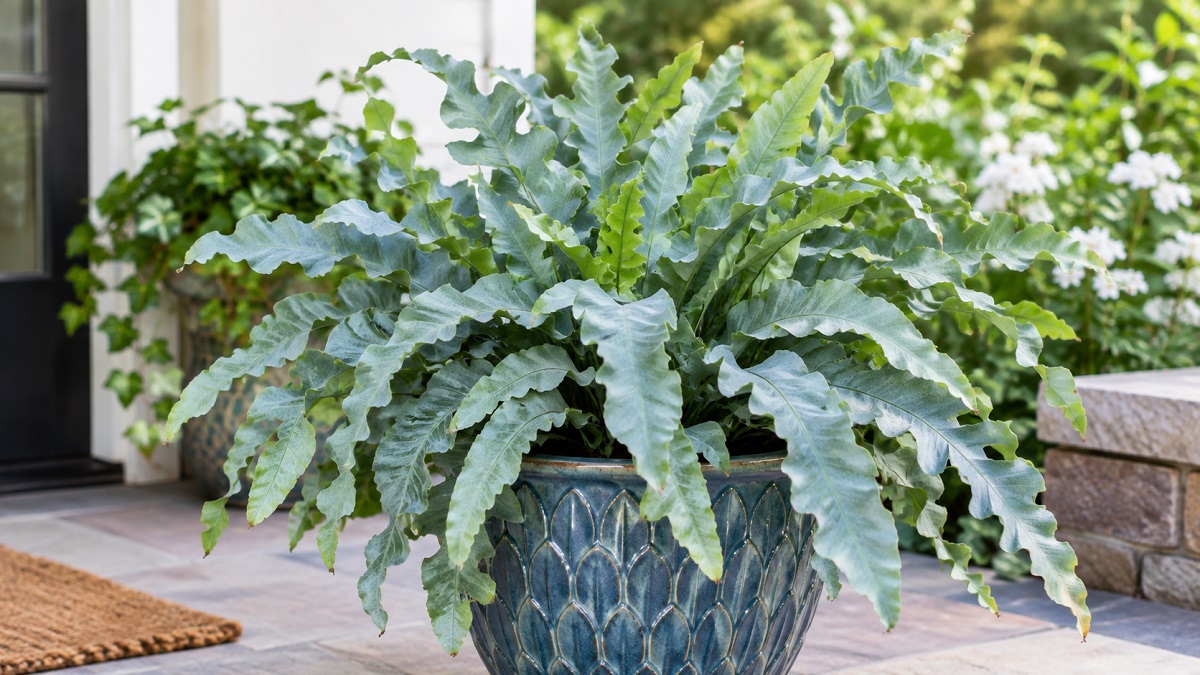
Blue Star Fern (Phlebodium aureum 'Blue Star') is an unusual fern with soft, blue-green foliage rather than the bright green leaves associated with many familiar houseplants. Its arching fronds emerge from creeping, scaly rhizomes and develop into a relaxed, spreading form that works particularly well in hanging baskets, decorative pots, and sheltered indoor spaces.
Although it has a tropical appearance, Blue Star Fern is not especially demanding once its basic needs are understood. It prefers bright filtered or indirect light, an airy growing medium that holds some moisture without becoming soggy, moderate to high humidity, and protection from harsh direct sun. The most common care problems usually come from extremes: letting the root zone become excessively dry for too long, keeping the compost constantly saturated, or placing the plant beside strong sunlight, heaters, or cold drafts.
This guide explains how to grow Blue Star Fern successfully, from choosing the right position and potting mix to watering, feeding, repotting, pruning, propagation, and troubleshooting common problems.
The key to a healthy Blue Star Fern is filtered light, airy soil, moderate moisture, and good humidity.
Blue Star Fern is a cultivated form of Phlebodium aureum, a tropical fern in the Polypodiaceae family. The species is also known by names such as golden polypody and gold foot fern. It is native to tropical regions of the Americas and has a naturally creeping growth habit.
One of its most recognizable features is the rhizome. Instead of forming a tight crown at soil level, the plant produces creeping rhizomes that spread across the surface of the growing medium. These rhizomes are covered with fine golden-brown scales, while the fronds rise from points along the rhizome.
The foliage is the main attraction. Blue-green fronds have a slightly glaucous appearance and may be divided into broad, wavy sections. The unusual color becomes especially noticeable beside darker green foliage, making the fern useful as a specimen plant rather than simply a background houseplant.
Blue Star Fern is commonly grown indoors, but it can also be grown outdoors in suitable frost-free conditions. It is particularly well suited to containers and hanging baskets because the rhizomes and arching fronds can spill naturally over the edge of the pot.
The blue-green foliage gives this fern a different look from many common houseplants. Its relaxed shape also works well where a plant is allowed to arch or trail rather than remain upright.
It is also relatively forgiving about occasional drying compared with some moisture-sensitive ferns. That does not mean it should be neglected, but it gives the plant some flexibility when watering cannot be perfectly consistent.
Do not bury the creeping rhizomes under a thick layer of potting mix. They naturally grow across or close to the surface, and keeping them exposed allows you to appreciate their unusual texture while reducing the risk of excessive moisture around them.
Use the following table as a practical reference when choosing a location, container, or potting mix. Individual plants can vary with growing conditions, pot size, cultivar selection, and climate.
| Characteristic | Blue Star Fern Details |
|---|---|
| Botanical name | Phlebodium aureum 'Blue Star' |
| Family | Polypodiaceae |
| Plant type | Evergreen, rhizomatous fern |
| Native range | Tropical regions of the Americas |
| Growth habit | Creeping and spreading from rhizomes |
| Foliage color | Blue-green to glaucous blue-green |
| Light requirement | Bright filtered light, partial shade, or indirect light |
| Direct afternoon sun | Best avoided indoors because it can scorch the fronds |
| Water requirement | Moderate; allow the surface to dry slightly before watering again |
| Humidity | Medium to high humidity is beneficial |
| Soil | Loose, organic, moisture-retentive but fast draining |
| Preferred pH | Acidic to neutral |
| Temperature | Warm indoor conditions; approximately 18–24°C is a useful target range |
| Height | Approximately 0.5–1 m at maturity for 'Blue Star' |
| Spread | Approximately 0.5–1 m at maturity for 'Blue Star' |
| Propagation | Rhizome division or spores |
| Pruning | Remove dead, damaged, or badly deteriorated fronds |
| Common growing location | Houseplant, container, hanging basket, greenhouse, or sheltered frost-free position |
Blue Star Fern grows best in bright, filtered light or partial shade. Indoors, a position near a window with plenty of natural light but protection from strong direct rays is usually a good starting point.
A north- or east-facing window can work well, while a bright south- or west-facing window may require the plant to be moved farther from the glass or protected by a sheer curtain. The aim is to give the foliage enough light for steady growth without exposing it to intense midday or afternoon sunlight.
Harsh sunlight can cause pale, bleached, crispy, or scorched areas on the fronds. If damage appears mainly on the side facing a bright window, move the plant farther back rather than immediately increasing watering.
Very dim conditions may lead to slower growth and fewer new fronds. The foliage may still look acceptable for a while, so slow growth is often a more useful warning sign than a dramatic change in leaf color.
Rotate the container occasionally if one side receives substantially more light than the other. This encourages more balanced growth and keeps the plant from leaning toward the window.
Blue Star Fern is a tropical plant and appreciates warm, stable conditions. For indoor growing, a temperature around 18–24°C provides a comfortable target. Avoid placing the pot directly beside air-conditioning vents, heaters, radiators, or doors where cold drafts are frequent.
Humidity is also important. The plant can tolerate ordinary household conditions better than some delicate ferns, but medium to high humidity generally produces more attractive foliage and reduces the likelihood of dry, brown frond edges.
Misting can temporarily increase moisture around the foliage, but it should not be treated as a substitute for proper watering or adequate room humidity.
The potting medium should hold enough moisture to support the roots while allowing excess water to drain quickly. Dense, heavy soil that remains saturated for days is a poor choice because the roots and rhizomes need access to air as well as water.
A loose, organic, slightly acidic to neutral mix is suitable. A quality peat-free houseplant mix can be improved with materials such as fine bark, perlite, or another drainage component to create a more open structure.
For a practical homemade mix, combine a good-quality organic potting medium with fine orchid bark and perlite. The finished mix should feel springy and open rather than compacted.
The exact ratio is less important than the result: water should move through the pot readily, while the mix should still retain enough moisture to prevent the plant from drying immediately after watering.
Watering is one of the most important parts of Blue Star Fern care. The plant likes moisture, but it does not want permanently saturated compost. Instead of following a rigid calendar, check the growing medium before watering.
When the upper part of the mix has begun to dry, water thoroughly until some water drains from the bottom of the pot. Empty excess water from the saucer or outer container so the roots are not left sitting in water.
Blue Star Fern can tolerate some drying between waterings, but repeated severe drying can lead to brown or crispy fronds. On the other hand, watering every time the surface looks slightly dry without checking deeper into the pot can keep the root zone excessively wet.
During periods of active growth, the plant may need water more frequently because warmer conditions and stronger light increase evaporation. In cooler or darker periods, growth slows and the compost usually takes longer to dry.
Always adjust the schedule according to the actual conditions around the plant. A small pot in a warm room can dry much faster than a large container in a cool, humid space.
Blue Star Fern does not require heavy feeding. During active growth, a balanced liquid houseplant fertilizer used according to the manufacturer's dilution instructions can support new foliage.
A monthly feeding during the growing season is a reasonable approach when the plant is actively producing new fronds. Avoid applying concentrated fertilizer to dry soil because this can stress the roots.
If the plant is barely growing because of low light, cold conditions, or root problems, adding more fertilizer will not solve the underlying issue. Correct the growing environment first.
Choose a container with drainage holes. Blue Star Fern benefits from an airy root environment, so decorative cachepots without drainage should only be used as outer containers with the actual plant kept in a pot that allows excess water to escape.
The plant does not need to be moved into a dramatically larger container every year. Repot when the roots and rhizomes have filled the existing space, the potting medium has broken down, or watering and drainage have become difficult to manage.
Spring is generally a convenient time to repot because the plant can recover as active growth resumes. Avoid unnecessary root disturbance when the fern is already stressed by temperature extremes or severe watering problems.
When planting Blue Star Fern in a container, first make sure the pot has adequate drainage. Add enough growing medium to position the root system correctly, then spread the roots gently rather than tightly compressing them into a small space.
The rhizomes deserve special attention. They are naturally creeping structures, so they should remain at or close to the surface. Once planted, water the medium thoroughly and place the container in bright filtered light.
Avoid immediately placing a newly potted fern in intense sun. Give it time to settle into its new container and monitor moisture carefully during the first few weeks.
Blue Star Fern needs little formal pruning. Most grooming involves removing fronds that have died, become badly damaged, or have deteriorated with age.
Use clean, sharp scissors or pruning snips. Cut unwanted fronds close to their base without damaging emerging new growth or the creeping rhizomes.
Do not remove healthy green fronds simply because they are older. Each healthy frond contributes to photosynthesis and supports the plant while new growth develops.
If a frond is mostly brown, dead, or badly damaged, removing it improves the plant's appearance and makes room for fresh growth. If only the tips are brown, trimming the damaged portions can make the plant look tidier, but it is more useful to investigate why the browning occurred.
Common causes include dry air, inconsistent watering, excessive fertilizer, intense direct sunlight, or root stress.
Blue Star Fern can be propagated by dividing its rhizomes or by growing plants from spores. For most home gardeners, rhizome division is the more practical method because it produces an established plant more quickly than starting from spores.
Division is best performed when the plant is actively growing and has enough healthy rhizome material to support the separated sections.
Ferns reproduce through spores rather than flowers and seeds. Spore propagation is possible, but it is considerably more involved and slower than division. It requires controlled moisture, suitable growing conditions, and patience through the early stages of fern development.
For gardeners who simply want another Blue Star Fern for a home collection, division is generally much more straightforward.
In frost-free climates, Blue Star Fern can be grown outdoors in a sheltered position with partial shade or filtered light. It should be protected from harsh afternoon sun, drying winds, and cold conditions.
A shaded patio, covered porch, greenhouse, or protected container garden can provide suitable conditions. Outdoor plants may dry faster than indoor specimens, particularly during hot weather, so check the growing medium more frequently.
In climates where freezing temperatures occur, container-grown plants should be moved indoors or otherwise protected before damaging cold arrives. Blue Star Fern is better treated as a tender tropical fern rather than a cold-hardy garden fern.
| Problem | Likely Cause | What to Do |
|---|---|---|
| Brown, crispy fronds | Dry conditions, low humidity, inconsistent watering, or strong sunlight | Check moisture, increase humidity when needed, and move away from harsh direct sun |
| Yellowing foliage | Overwatering, poor drainage, or prolonged root stress | Check the root zone and drainage before watering again |
| Soft or rotting roots | Waterlogged growing medium | Improve drainage, reduce watering frequency, and remove severely damaged roots when repotting |
| Slow growth | Low light, cool conditions, insufficient moisture, or natural seasonal slowdown | Review light, temperature, watering, and nutrition together |
| Scorched patches | Strong direct sunlight | Move the fern into bright filtered or indirect light |
| Wilting despite wet soil | Possible root stress caused by poor drainage | Inspect the roots and replace compacted or waterlogged mix if necessary |
| Scale insects | Pest infestation | Inspect stems and fronds regularly and treat promptly with an appropriate houseplant pest-control method |
| Fronds dropping after moving | Environmental change or stress from altered light, humidity, temperature, or watering | Stabilize conditions and avoid repeatedly moving the plant |
Brown foliage is often a sign that the plant has experienced excessive dryness or another environmental stress. Start by checking how dry the potting mix becomes between waterings and whether the room is unusually dry.
If the compost is staying wet for a long time, do not respond to brown leaves by adding more water. Instead, inspect drainage and the condition of the roots. A plant can show wilt-like symptoms even when the pot contains too much water if damaged roots are no longer functioning properly.
Older fronds naturally decline, but widespread frond loss can indicate a change in growing conditions. Sudden temperature changes, very dry air, poor watering practices, low light, or root problems can all contribute to stress.
Check the entire growing environment rather than focusing on one factor. Look at the light level, temperature, humidity, potting mix, drainage, and recent watering pattern before making major changes.
Spring is a useful time to repot, divide established plants, and resume regular feeding as new growth becomes more active. Check the growing medium after winter and replace it if it has become compacted or broken down.
Warm weather can increase the rate at which containers lose moisture. Check the plant more frequently and protect the fronds from intense direct sunlight. Good air circulation is particularly useful in warm, humid conditions.
As light levels decline, growth may slow. Reduce fertilizer as active growth decreases and adjust watering according to how quickly the potting medium dries.
Keep the plant away from cold drafts and direct heat sources. Watering should respond to the slower drying rate rather than following the summer schedule. Avoid keeping the compost constantly wet during cool, low-light periods.
The simplest approach is to create a stable growing environment and make small adjustments rather than constantly changing the plant's location. Give it bright filtered light, use an open potting mix, water when the growing medium begins to dry, and maintain reasonable humidity.
Watch the plant itself. New fronds are one of the clearest signs that the growing conditions are working. Healthy foliage should have the characteristic blue-green appearance, while repeated browning, yellowing, or decline calls for an examination of the root zone and surrounding conditions.
Blue Star Fern also benefits from being given enough room for its rhizomes to spread. A hanging basket or shallow, attractive container can showcase this growth habit particularly well.
Blue Star Fern is a manageable houseplant when its basic tropical-fern requirements are met. It is more forgiving than some ferns when the growing medium briefly dries, but it still performs best when moisture, humidity, light, and temperature remain reasonably consistent.
The biggest advantage for beginners is that the care routine does not need to be complicated. Instead of watering on a fixed schedule, check the soil. Instead of putting the plant in the darkest corner because it is a fern, provide bright filtered light. Instead of keeping the pot constantly wet, combine regular moisture with excellent drainage.
Once those habits become routine, the distinctive blue-green foliage and creeping rhizomes make Blue Star Fern a rewarding addition to an indoor plant collection.
No. Blue Star Fern generally performs best in bright filtered or indirect light. Strong direct sunlight, particularly through a hot window, can scorch the fronds. A bright position protected from intense midday or afternoon sun is usually preferable.
Water when the upper part of the growing medium has begun to dry rather than following a fixed number of days. Water thoroughly and allow excess water to drain. The exact interval varies with temperature, humidity, pot size, light, and growing medium.
Yes. Medium to high humidity is beneficial because the plant originates from tropical environments. Higher humidity can help maintain attractive foliage, especially when indoor air becomes dry.
It can tolerate lower light better than some ferns, but very dim conditions are unlikely to produce vigorous growth. Bright indirect or filtered light is a better long-term choice.
No. The creeping rhizomes naturally grow near the surface. Keep them exposed or only lightly positioned on the surface of the growing medium rather than burying them deeply.
Brown fronds or tips can result from dry conditions, low humidity, inconsistent watering, excessive direct sunlight, or root stress. Check both the foliage and the growing medium before changing your care routine.
Yes, in suitable frost-free conditions. Outdoors, provide a sheltered position with partial shade or filtered light and protect the plant from cold temperatures, drying winds, and harsh direct sun.
Blue Star Fern can be propagated by dividing healthy rhizomes or by growing from spores. Rhizome division is generally the more practical method for home gardeners.
The RHS lists 'Blue Star' at approximately 0.5–1 metre in both height and spread at maturity. Actual size can vary considerably depending on the container, growing conditions, and available space.
Final tip: Blue Star Fern does best when its environment is steady rather than constantly adjusted. Give it filtered light, an airy growing medium, sensible watering, and adequate humidity, and allow its distinctive blue-green fronds and creeping rhizomes to develop naturally.
← Back to Plant GuidesContinue exploring our gardening guides with more plant profiles, growing tips, and practical advice for creating a healthy, productive garden.