Woodland Edges: How to Design, Plant and Maintain a Natural Garden Border
Learn how to create a beautiful woodland edge with layered trees, shrubs, ferns and ground covers, plus practical design, soil, watering and wildlife tips.
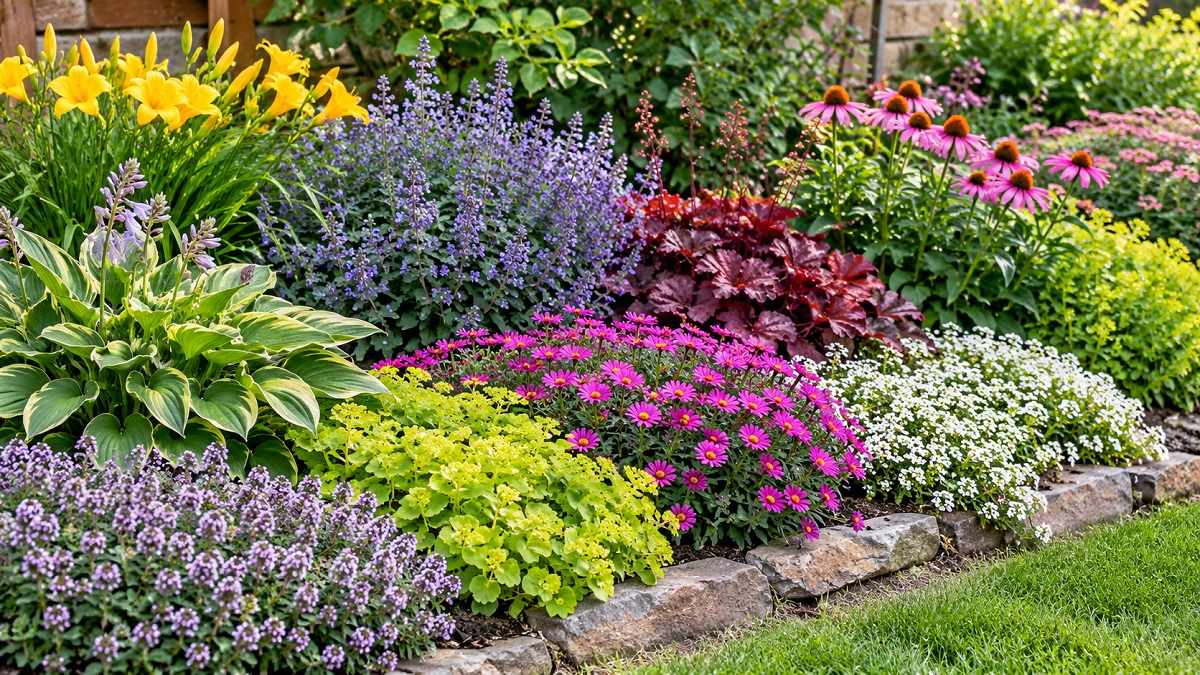
Low-growing perennials are some of the most useful plants for creating a garden that feels full without becoming crowded. They stay close to the ground, return for several growing seasons, and can soften the edges of paths, fill spaces between taller plants, cover bare soil, or bring color to the front of a border. Depending on the species, they may form tidy clumps, spread gradually, trail over walls, or create a dense living carpet.
One of the biggest advantages of these plants is their versatility. A sunny rock garden may call for creeping thyme or creeping phlox, while a partly shaded bed can be transformed with coral bells, barrenwort, or woodland ground covers. Some low perennials are valued mainly for flowers, others for foliage, and a few provide both.
Choosing the right plant is less about finding the shortest perennial and more about matching its growth habit with the space. A plant that behaves beautifully between stepping stones may become difficult to manage in a narrow border if it spreads too aggressively. Likewise, a sun-loving perennial may struggle if planted beneath dense tree cover. Understanding light, soil, moisture, mature size, and spreading behavior makes the selection much easier.
Choose plants according to the conditions of the planting site, rather than mature height alone.
Low-growing perennials are perennial plants that remain relatively close to the ground for most or all of their growing season. The category includes compact clump-forming plants, spreading ground covers, trailing plants, and small flowering perennials. There is no single botanical group called “low-growing perennials”; the term describes plants by their growth habit and garden use.
Some remain only a few inches tall, while others reach around a foot or slightly more. Their width can vary even more dramatically. A compact perennial may form a neat mound only a few inches across, whereas a spreading ground cover can gradually occupy several feet.
This difference is important when planning a garden. Height tells you how tall the plant becomes, but it does not tell you how quickly it spreads. Always consider the mature width and whether the plant spreads by runners, rhizomes, stolons, or simply expands from the crown.
A garden can look unfinished when soil is visible between larger plants. Low-growing perennials provide a natural way to fill those spaces while adding texture and seasonal interest. They are especially useful where taller plants would block a view or overwhelm a narrow planting area.
Compact perennials create a transition between a lawn, walkway, patio, or planting bed. Plants such as creeping thyme and compact dianthus can form a softer edge than a bare strip of soil or mulch.
Many low perennials produce flowers close to the ground, making them excellent companions for taller shrubs and flowering plants. A combination of foliage and flower colors can keep the front of a border interesting even when taller plants are between bloom periods.
Small planting pockets around rocks, along retaining walls, beneath shrubs, and beside paths can often be planted successfully with compact perennials suited to those conditions.
There are many suitable plants, and the best choice depends on the amount of sunlight, soil drainage, winter climate, moisture, and the look you want. The following plants represent several different growth habits and garden situations.
Creeping thyme is a favorite for sunny, well-drained locations. It forms a low mat of aromatic foliage and produces small flowers during its blooming period. Once established, it can tolerate relatively dry conditions and works particularly well in rock gardens, between stepping stones, along paths, and over the edges of raised beds.
Give creeping thyme plenty of sunlight and avoid planting it in heavy, constantly wet soil. It is best suited to places where water drains freely.
Creeping phlox creates a spreading carpet that becomes especially attractive when covered with flowers in spring. Flower colors include shades of pink, purple, white, and other tones depending on the cultivar.
It is particularly effective on slopes, rock gardens, retaining walls, and the front edge of sunny beds. Good drainage helps prevent problems associated with persistently wet roots.
Low-growing sedums are valued for their succulent foliage, spreading habit, and ability to handle sunny, relatively dry sites. Different species and cultivars vary considerably in height, color, texture, and flowering time.
They are useful in rock gardens, gravel gardens, containers, green-roof-style plantings where appropriate, and other areas where soil is lean and drainage is excellent. Avoid treating all sedums as interchangeable because their moisture and hardiness preferences vary.
Ajuga forms attractive foliage close to the ground and sends up short flower spikes in spring. It is often used as a ground cover in partly shaded gardens, although it can also tolerate sun when moisture is adequate.
Its ability to spread makes it useful for filling open areas, but that same characteristic means it should be planted thoughtfully. Keep it within its intended area and check local recommendations before using spreading plants.
Coral bells are grown primarily for their foliage, which can range from green and silver to burgundy, purple, bronze, and other shades. They form compact clumps rather than a flat carpet, making them excellent for the front of borders and partly shaded beds.
Morning sun or filtered light often works well, while intense afternoon sun can be stressful in hot climates. Soil should drain well but should not become excessively dry for prolonged periods.
Barrenwort is a useful perennial for dry or partly shaded areas, particularly beneath trees where competition from established roots can make gardening difficult. Its heart-shaped foliage and delicate flowers provide a softer appearance than many conventional ground covers.
It generally spreads gradually rather than forming an instant carpet, so patience is useful when establishing a new planting.
Evergreen candytuft forms a low mound and produces clusters of white flowers in spring. It works especially well in sunny borders, rock gardens, retaining-wall plantings, and along the edges of paths.
Excellent drainage is important, particularly during winter in regions where cold, wet soil can persist. Light pruning after flowering can help maintain a compact appearance.
Low-growing dianthus includes several species and cultivars suitable for borders, rock gardens, and containers. The narrow foliage creates a fine texture, while the flowers often have a sweet fragrance.
These plants generally perform best with plenty of sunlight and well-drained soil. Avoid excessive moisture around the crown, particularly where air circulation is poor.
Creeping Jenny is known for its trailing stems and rounded leaves. It can create a bright ground-level accent around ponds, containers, walls, and moist garden areas.
Because it can spread rapidly in favorable conditions, it deserves more careful placement than a slow-growing clump-forming perennial. In some regions it is considered invasive or problematic, so check local guidance before planting.
Lily of the valley is a traditional woodland perennial valued for its fragrant white bell-shaped flowers and attractive foliage. It prefers shade or partial shade and generally performs best in moist, well-drained soil.
It spreads through underground rhizomes and can form dense colonies. Every part of the plant is poisonous if eaten, so it should be planted where children and pets will not be tempted to consume it.
Mature size and behavior vary among species and cultivars, so use these figures as general garden-planning ranges rather than exact measurements for every variety.
| Plant | Approx. Height | Light | Moisture | Common Use |
|---|---|---|---|---|
| Creeping Thyme | 2–6 in | Full sun | Low to moderate | Paths, rocks, edging |
| Creeping Phlox | 4–6 in | Full sun | Moderate | Slopes, borders, rock gardens |
| Low-Growing Sedum | 2–8 in | Full sun | Low | Rock gardens, containers |
| Ajuga | 4–8 in | Sun to partial shade | Moderate | Ground cover, woodland beds |
| Coral Bells | 8–18 in | Partial shade to sun | Moderate | Front borders, containers |
| Barrenwort | 8–18 in | Partial to full shade | Moderate | Woodland gardens |
| Candytuft | 6–12 in | Full sun | Low to moderate | Edges, rocks, walls |
| Dianthus | 6–18 in | Full sun | Moderate | Borders and containers |
| Creeping Jenny | 2–4 in | Sun to partial shade | Moderate to high | Moist beds and containers |
| Lily of the Valley | 6–10 in | Partial to full shade | Moderate | Woodland ground cover |
Sunny areas are often easier to fill with compact perennials because many naturally low-growing plants evolved for exposed sites. Creeping thyme, creeping phlox, sedums, candytuft, and many dianthus varieties can perform well where they receive several hours of direct sunlight.
Sunlight alone is not enough, however. A sunny location with heavy clay that stays wet after rain is very different from a sunny gravel bed that dries quickly. Match the plant to both light and moisture conditions.
In hot climates, some plants that prefer full sun in cooler regions may benefit from afternoon protection. Watch the foliage during the hottest part of the year. Scorched leaves, wilting despite adequate water, and faded foliage can indicate that a plant needs a more suitable position.
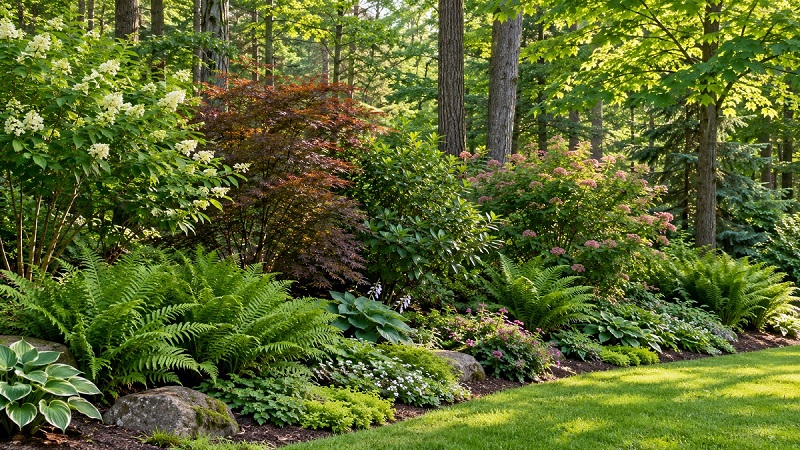
Shaded spaces can be challenging because many flowering ground covers need more sunlight than gardeners expect. Fortunately, several low-growing perennials are adapted to woodland conditions.
Barrenwort and many coral bells are useful choices for partial shade. Lily of the valley can form a dense planting in suitable woodland conditions, while other shade-loving perennials can be combined to create layers of foliage rather than relying entirely on flowers.
Before planting beneath a mature tree, remember that the soil may be dry even though the area receives little direct sun. Tree roots compete aggressively for available moisture. In such locations, selecting a perennial that tolerates root competition is often more successful than simply choosing a plant labeled “shade-loving.”
Plants that stay close to the ground can make hard landscaping look more natural. Creeping thyme is particularly attractive between stepping stones because its foliage remains low and its flowers provide seasonal color.
Creeping phlox and certain sedums can also work around stones where drainage is good. Avoid planting vigorous spreaders in narrow joints unless you are prepared to trim them regularly.
A useful approach is to leave enough room around the stones for the plants to spread without immediately covering the walking surface. This gives the planting a relaxed appearance while keeping the path practical.
The front of a perennial border is one of the easiest places to use compact plants. They create a gradual transition from lawn or pathway to taller flowers behind them.
Instead of planting one species in a perfectly straight row, consider repeating small groups. Three, five, or seven plants of the same variety can create rhythm without making the planting look overly formal.
Coral bells are especially useful where foliage is more important than a low carpet. Dianthus, candytuft, creeping phlox, and compact sedums can provide different textures in sunny beds.
Ground cover is one of the most common reasons gardeners look for low-growing perennials. The goal is usually to reduce the amount of exposed soil while creating an attractive living layer.
However, not every ground cover behaves in the same way. Some spread slowly and remain easy to contain. Others can move quickly into neighboring beds. Before choosing a spreading perennial, determine whether you want a contained planting or a plant that can gradually occupy a larger area.
For a small garden, slow or moderately spreading plants are often easier to manage. In a large area where rapid coverage is the goal, a more vigorous plant may be useful, provided it is appropriate for the region and does not pose an invasive-plant concern.
Start with sunlight. Observe the area during different parts of the day rather than relying on a quick glance. A bed that looks sunny in the morning may become shaded by a building, fence, tree, or taller plants later.
Remove weeds and loosen compacted soil before planting. Add organic matter when appropriate for the existing soil and the needs of the selected plant. Avoid creating a planting hole filled with dramatically different soil from the surrounding bed because roots eventually need to grow outward into the native soil.
Many compact perennials dislike sitting in waterlogged soil. If rainwater remains around the planting area for long periods, improve drainage where practical or choose plants that tolerate wetter conditions.
It can be tempting to plant small perennials very close together to achieve an instant full appearance. That usually means more plants, more competition, and greater disease risk as the planting matures.
Use the mature width provided for the specific cultivar as your primary guide. If rapid coverage is important, modestly closer spacing may be appropriate, but do not ignore the plant's eventual size.
Water new plants deeply enough to settle soil around their roots. During the establishment period, check moisture regularly rather than relying solely on a fixed watering schedule.
Once established, many low-growing perennials are relatively straightforward to maintain. Their care still depends on the individual plant, but several general practices apply.
Watering requirements vary widely. Creeping thyme and many low-growing sedums can handle relatively dry conditions once established, while plants such as creeping Jenny generally prefer more consistent moisture.
Newly planted perennials require more attention than established plants. During the first growing season, check the soil near the root zone and water when the upper soil begins to dry according to the plant's requirements and local weather.
Avoid shallow, frequent watering when conditions allow deeper watering. The objective is to encourage roots to occupy the surrounding soil rather than remaining concentrated at the surface.
Low-growing perennials do not all need the same pruning routine. Some benefit from a light trim after flowering, while others are best left largely alone until the appropriate seasonal cleanup.
For flowering plants such as candytuft, removing spent blooms can improve appearance and may encourage useful new growth. Creeping plants can sometimes be trimmed when they begin covering paths or neighboring plants.
Avoid cutting plants indiscriminately just because they look untidy at the end of the season. Some seed heads provide winter interest or food for wildlife, and some plants benefit from retaining foliage until new growth begins.
Spacing is particularly important with low-growing perennials because their horizontal growth may be much greater than their height. A plant that is only four inches tall can still spread several feet.
Keep spreading plants away from areas where they will constantly need cutting back. Installing a physical edge between a planting bed and lawn can also make maintenance easier.
For vigorous ground covers, inspect the planting several times during the growing season. Pull or trim unwanted growth before it becomes deeply established in neighboring beds.
Compact perennials can be excellent container plants. Their low profile allows them to spill over the edge of pots while leaving room for taller companion plants.
Choose a container with drainage holes and use a suitable potting mix rather than ordinary garden soil. Containers dry out faster than garden beds, especially during hot weather, so moisture should be monitored more closely.
Trailing sedums, creeping thyme, compact dianthus, and some coral bells can create attractive combinations. When mixing plants, group species with similar light and watering requirements rather than choosing companions based only on appearance.
A short plant can still become wide and vigorous. Check mature spread before planting.
Many rock-garden and Mediterranean-style perennials perform poorly in constantly wet soil. Improve drainage or select a plant adapted to the conditions.
Filling every gap immediately can create overcrowding later. Allow enough room for mature plants to develop naturally.
Excessive fertilizer can encourage soft, fast growth that does not necessarily improve flowering or long-term health. Base feeding on the plant's needs and the condition of the soil.
A vigorous ground cover can move beyond its intended location. Research the plant's behavior and check whether it is considered invasive in your area before planting.
Plant a narrow ribbon of compact perennials along a walkway. Use one main species for continuity and add small groups of another plant for seasonal contrast.
Place low-growing plants at the front, medium-height perennials in the middle, and taller flowers or shrubs toward the back. This creates depth while allowing each layer to remain visible.
Flowers are only part of the picture. Pair fine-textured creeping thyme with broader foliage, or combine colorful coral bells with green ground covers. Differences in leaf shape can keep a planting interesting even when little is blooming.
Rock gardens naturally suit compact plants. Position stones first, then plant low-growing perennials in the pockets and spaces between them. Leave enough room for each plant to expand without completely hiding the stones.
Trailing and spreading perennials can soften the hard edge of a retaining wall. Plants that tolerate the wall's sun, heat, and drainage conditions are particularly useful.
Rather than beginning with a list of attractive plants, begin with the site. Ask a few practical questions before buying anything.
The most successful low-growing perennial gardens are rarely built around one characteristic. Height, spread, light, soil, moisture, flowering period, winter behavior, and maintenance all work together. A plant that is perfect for a sunny rock garden may be completely unsuitable for a damp woodland bed, even if both spaces need something short.
One reason gardeners choose perennials is their ability to return year after year. Annual plants can provide fast seasonal color, but they generally need to be replanted each growing season. Perennials take more time to establish but can become increasingly useful as they mature.
This does not mean perennials are maintenance-free. They may need division, trimming, watering during dry periods, weed control, or occasional replacement. Their main advantage is that they form a longer-term framework for the garden.
Low-growing plants are particularly effective when used as the bottom layer of a mixed planting. Taller plants provide height and structure, medium-sized plants fill the center, and compact perennials tie everything together near the soil surface.
Try repeating the same low perennial in several sections of a bed rather than using it in only one isolated location. Repetition helps connect separate areas and makes a garden feel intentionally designed.
You can also vary texture without introducing too many species. For example, a fine-leaved plant can sit beside a broad-leaved perennial, while a flowering mat can provide a visual transition beneath taller stems.
| Season | Useful Tasks |
|---|---|
| Spring | Remove winter debris, inspect new growth, weed beds, divide overcrowded plants when appropriate, and begin regular watering as growth resumes. |
| Summer | Monitor soil moisture, trim plants that invade paths, remove spent flowers where useful, and watch for pests or disease. |
| Autumn | Reduce watering as weather cools when appropriate, remove diseased foliage, and prepare newly planted perennials for winter. |
| Winter | Protect suitable plants from extreme conditions, avoid waterlogging, and leave beneficial winter structure where practical. |
A low-growing perennial is a plant that remains relatively short while returning for multiple growing seasons. The category includes compact clumping plants, spreading ground covers, and trailing perennials. Mature height varies by species and cultivar.
Creeping thyme, creeping phlox, many low-growing sedums, candytuft, and several dianthus varieties are useful options for sunny gardens. The best choice depends on soil drainage, moisture, climate, and the intended use.
Barrenwort, many coral bells, and lily of the valley can work in shaded or partly shaded gardens. Conditions vary, so check the particular species or cultivar before planting.
Yes. They are especially useful along the front edge of borders because they create a low transition between paths, lawns, and taller plants behind them.
Some can. Creeping thyme is a popular choice for sunny, well-drained locations. Choose plants that tolerate occasional foot traffic and avoid vigorous spreaders where they would quickly obstruct the path.
No. Low-growing perennials range from sun-loving plants such as creeping thyme to shade-tolerant species such as barrenwort. Match the plant to the actual light conditions of the site.
Spacing depends on mature width and growth rate. Use the specific plant's recommended spacing whenever available rather than relying on height alone. Spreading varieties generally need more room than compact clump-forming plants.
Some do and some remain as compact clumps. Creeping plants such as ajuga and creeping Jenny can spread considerably, while plants such as coral bells generally form clumps. Always check the mature growth habit before planting.
Yes. Compact sedums, creeping thyme, dianthus, coral bells, and other suitable varieties can grow successfully in containers with good drainage and an appropriate potting mix.
Many are relatively easy to maintain after establishment, but maintenance varies. Spreading ground covers may need regular trimming, while clump-forming plants may occasionally need division. Correct planting conditions usually reduce maintenance problems.
Low-growing perennials can do far more than simply cover bare soil. They provide the finishing layer that connects paths, borders, rocks, shrubs, and taller flowers into one cohesive planting. With choices ranging from flowering mats and trailing plants to colorful foliage clumps, there is a compact perennial for almost every garden situation.
The key is to choose according to the site rather than the plant's appearance alone. Consider sunlight, drainage, moisture, mature width, growth rate, and maintenance before planting. When those factors line up, low-growing perennials can establish a durable, attractive layer that returns season after season and makes the garden feel more complete.
Continue exploring our gardening guides with more plant profiles, growing tips, gardening design ideas and practical advice for creating a healthy, productive garden.