Why Are My BloomStruck Hydrangea Flowers Turning Pink?
Wondering why your BloomStruck hydrangea flowers are turning pink? Learn how soil pH, aluminum, water, aging, weather, and growing conditions affect flower color.
BloomStruck Hydrangea is one of the most rewarding bigleaf hydrangeas for gardeners who want large, colorful flower heads and a longer blooming season. Unlike many traditional bigleaf hydrangeas that flower mainly on old stems, BloomStruck can produce flower buds on both old and new growth. This reblooming habit gives the plant more opportunities to flower during the growing season and can also make it more forgiving after winter damage.
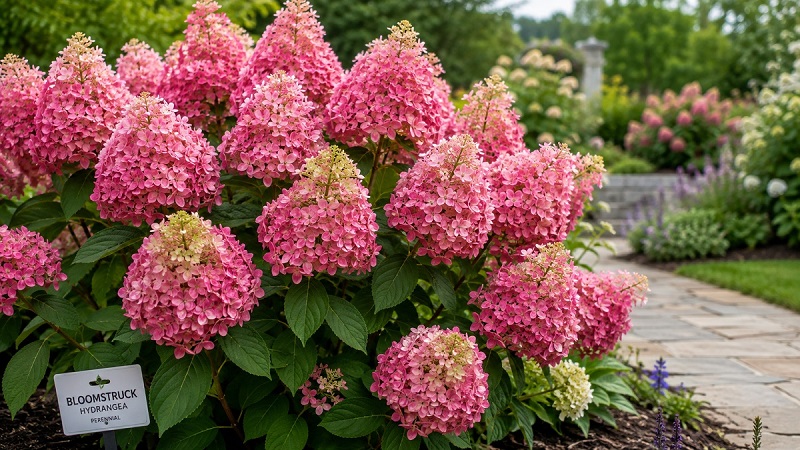
Its rounded flower clusters can appear in shades of pink, purple, violet, or blue depending partly on soil conditions, while the dark reddish-purple stems provide an attractive contrast against the foliage. The plant has a naturally rounded form and works beautifully in borders, foundation plantings, woodland-style gardens, cottage gardens, and large containers.
Although BloomStruck Hydrangea is relatively easy to grow when planted in the right location, it does have a few important requirements. Consistent moisture, protection from harsh afternoon sun, fertile soil, and sensible pruning are especially important. With these conditions in place, BloomStruck can become a dependable summer flowering shrub with repeated flushes of blooms.
BloomStruck Hydrangea performs best with morning sun, evenly moist soil, and protection from intense afternoon heat.
BloomStruck Hydrangea is a cultivar of bigleaf hydrangea, botanically known as Hydrangea macrophylla ‘BloomStruck’. It belongs to the Endless Summer collection of reblooming hydrangeas and was selected for its ability to flower on both old and new stems.
This characteristic is particularly useful in areas where winter temperatures can damage flower buds. Traditional bigleaf hydrangeas often form their flower buds on older stems during the previous growing season. If those buds are killed by a cold winter, the plant may produce plenty of healthy leaves but very few flowers. BloomStruck has the added advantage of producing flowers from new growth as well, giving it another opportunity to bloom later in the season.
BloomStruck is a reblooming hydrangea, meaning it can produce multiple flushes of flowers during the growing season when conditions are favorable. Deadheading spent flower heads, maintaining consistent moisture, and avoiding unnecessary pruning can help the shrub make the most of its reblooming habit.
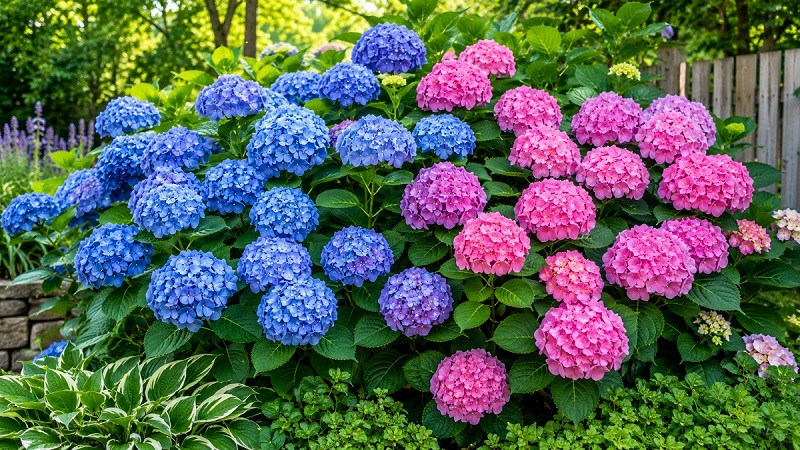
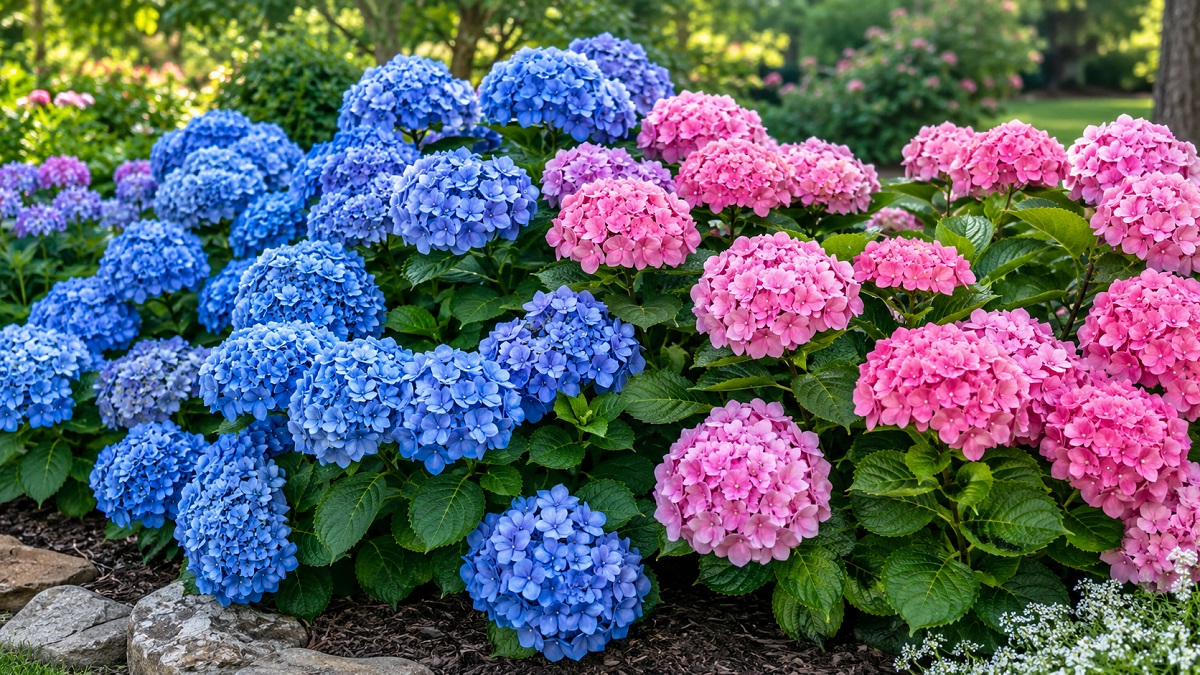
The flowers are typically produced in large rounded mophead-style clusters. Depending on soil chemistry and growing conditions, blooms may range from pink to purple or blue. In some gardens, different shades can appear on the same plant or during different parts of the season.
The most important feature is its ability to bloom on both old and new wood. This makes BloomStruck particularly useful for gardeners who have experienced disappointing flowering after cold winters. Even when some older stems are damaged, new growth may still produce flowers later in the season.
BloomStruck generally remains around 3 to 4 feet tall and wide, making it easier to fit into residential landscapes than many larger hydrangeas. Its rounded habit works well as a specimen, foundation plant, border shrub, or container plant.
BloomStruck has the classic appearance many gardeners expect from a bigleaf hydrangea, but several characteristics make it stand out. Its large, glossy green leaves create a full background for the flowers, while the stems can develop attractive dark coloration. The overall plant forms a rounded mound rather than growing as a narrow upright shrub.
The flower heads are one of its biggest attractions. Individual blooms are relatively small, but they are grouped into large rounded clusters that create a strong visual display. The flowers can be particularly striking when several clusters develop at once.
Flower color is influenced by soil chemistry, especially the availability of aluminum. Acidic soil conditions generally encourage blue or purple shades, while more alkaline conditions tend to encourage pink shades. However, changing soil pH is not an instant process, and the final color can also depend on the plant, soil composition, aluminum availability, and environmental conditions.
BloomStruck is deciduous. Its leaves normally drop in autumn, and the plant enters a period of dormancy during winter in colder climates. In spring, new shoots emerge and the shrub begins rebuilding its leafy framework before producing flowers.
Use the following table as a quick reference when planning a location or routine for BloomStruck Hydrangea. Local climate can affect exact timing, especially for flowering, dormancy, and winter protection.
| Characteristic | BloomStruck Hydrangea |
|---|---|
| Botanical Name | Hydrangea macrophylla ‘BloomStruck’ |
| Common Name | BloomStruck Hydrangea |
| Plant Type | Deciduous flowering shrub |
| Hydrangea Group | Bigleaf hydrangea |
| USDA Hardiness Zones | 4–9 |
| Mature Height | Approximately 3–4 feet |
| Mature Width | Approximately 3–4 feet |
| Growth Habit | Rounded, mounded shrub |
| Light | Morning sun with afternoon shade is ideal in warm climates |
| Soil | Rich, fertile, moisture-retentive but well-drained soil |
| Soil Moisture | Consistently moist, but not waterlogged |
| Flower Type | Large rounded mophead-style clusters |
| Flower Colors | Pink, purple, violet, or blue depending on conditions |
| Blooming Habit | Reblooming; flowers can develop on old and new growth |
| Best Planting Time | Spring or fall when conditions are mild |
| Pruning | Light pruning; remove dead or damaged wood and spent flowers as appropriate |
| Propagation | Stem cuttings |
| Container Growing | Yes, with adequate drainage and regular watering |
Light is one of the most important factors when growing BloomStruck Hydrangea. In many climates, the plant performs best with several hours of gentle morning sunlight followed by protection from strong afternoon sun.
Gardeners in cooler climates can often give BloomStruck more sunlight, particularly where summer temperatures are moderate. In hot climates, however, intense afternoon sunlight can quickly cause leaf scorch and flower wilting. A location with morning sun and afternoon shade is usually a safer choice.
Bright filtered light beneath high trees can also work well, provided the plant receives enough light to flower. Avoid placing the shrub in extremely deep shade. Too little light can result in weak growth and fewer flowers.
A spot may appear sunny and attractive in the morning but become extremely hot later in the day. When choosing a planting location, consider how the sunlight changes throughout the entire day. A wall or paved surface that reflects heat can make conditions even more stressful.
If your garden experiences hot summers, an east-facing location or a position protected by taller shrubs can provide a useful balance of sunlight and shade.
BloomStruck Hydrangea appreciates fertile soil that holds moisture while still draining efficiently. The ideal soil should never remain saturated for long periods, because constantly wet roots can become stressed and are more vulnerable to root problems.
Before planting, improve poor soil with well-decomposed organic matter such as compost. Organic matter can improve soil structure, help sandy soil retain moisture, and make heavy soil more workable.
Avoid planting directly into compacted soil. If water collects around the planting hole after rainfall or irrigation, improve drainage before planting or choose a raised location.
One of the fun features of bigleaf hydrangeas is their ability to produce different flower colors depending on soil conditions. In general, more acidic conditions favor blue and purple flowers, while more alkaline conditions tend to favor pink flowers.
If you want to influence flower color, test the soil first rather than adding amendments based on guesswork. Soil pH changes gradually, and simply adding a large quantity of an amendment can create nutritional problems. The natural color of BloomStruck can also be attractive without attempting to manipulate it.
Planting BloomStruck correctly gives the shrub a much better start. Spring is a convenient planting time in colder regions because the plant has the full growing season to establish its root system. Fall can also be excellent where winters are not immediately severe.
Choose a site with suitable light, good air circulation, fertile soil, and enough room for the mature shrub. Avoid locations where the plant will be exposed to severe afternoon heat or strong drying winds.
Loosen the soil over a broad area rather than creating a narrow hole surrounded by compacted ground. Mix compost into poor soil when needed, but avoid creating a dramatically different soil pocket around the roots.
Dig a hole roughly as deep as the root ball and wider than its current width. Set the plant so the top of the root ball is level with, or slightly above, the surrounding soil. Planting too deeply can create unnecessary stress.
Fill around the root ball with the prepared soil and gently firm it into place. Water thoroughly to settle the soil around the roots.
Apply a layer of organic mulch around the root zone. Keep mulch slightly away from the base of the stems rather than piling it directly against the plant. Mulching helps slow evaporation and keeps soil temperatures more stable.
Consistent watering is essential for BloomStruck, especially during hot weather and the first growing season after planting. Bigleaf hydrangeas can wilt noticeably when soil moisture drops, and repeated severe drying can affect flowering and overall plant health.
Water deeply enough to moisten the root zone instead of giving the plant frequent, shallow sprinkles. During dry weather, check the soil regularly with your finger before deciding whether additional water is needed.
Container-grown BloomStruck plants usually require more frequent attention because containers dry out faster than garden soil. Hot, windy weather can increase water loss considerably.
More water is not always better. If the soil stays saturated, roots may not receive enough oxygen. Good drainage combined with consistent moisture is the goal.
BloomStruck generally benefits from fertile soil rather than heavy feeding. If the plant is growing in rich soil and producing healthy foliage and flowers, excessive fertilizer is unnecessary.
A balanced, slow-release fertilizer formulated for flowering shrubs can be used according to the product label. Apply fertilizer during the active growing season rather than late in the year when new growth should be slowing down.
Avoid excessive nitrogen. Too much nitrogen can encourage lush leafy growth at the expense of flowering and can produce soft new growth that is more vulnerable to environmental stress.
BloomStruck's flower color is one of the reasons gardeners enjoy growing it. Depending on soil chemistry, flowers may appear blue, purple, violet, pink, or combinations of these shades.
In acidic soil where aluminum is available to the plant, blue or purple tones are more likely. In more alkaline conditions, pink tones are generally favored. This does not mean every BloomStruck plant will immediately change color when soil pH changes.
Soil amendments should therefore be used carefully. A soil test is the best starting point if changing flower color is an important goal. It is also worth remembering that flower color can naturally change as blooms mature.
Rather than chasing a particular color, many gardeners simply enjoy whatever shades the plant naturally produces. The combination of green foliage and changing flower tones can provide interest throughout the blooming period.
Pruning is an area where BloomStruck's reblooming habit provides an advantage, but it is still important to prune thoughtfully. Because the plant can flower on old and new growth, aggressive pruning can reduce the number of flowers produced from older stems.
In general, avoid cutting the entire shrub back hard every year. Instead, remove dead, broken, weak, or crossing stems as needed. If the plant has become overcrowded, selectively remove some of the oldest stems near the base.
The safest approach is to prune lightly after the main flowering period or when necessary to remove damaged wood. Because older stems can carry flower buds for the following season, avoid routine heavy pruning in late winter or early spring.
If winter has caused damage, wait until new growth begins to show where possible. This makes it easier to identify which stems are alive and which have died back.
Spent flower heads can be removed to improve the plant's appearance. However, deadheading is not mandatory for plant health. Some gardeners leave old flower heads in place because they provide winter interest.
If you do deadhead, make clean cuts just above a healthy set of leaves or buds and avoid removing large amounts of healthy stem unnecessarily.
BloomStruck is relatively cold hardy for a bigleaf hydrangea, but winter conditions can still affect flower buds. This is especially important because old stems can carry buds that may produce some of the earliest flowers of the season.
A thick layer of organic mulch over the root zone can help protect roots from dramatic temperature fluctuations. In particularly cold or exposed gardens, additional protection around the stems may be useful.
Avoid fertilizing late in the growing season with products that encourage tender new growth. The goal as autumn progresses is to allow the plant to gradually prepare for dormancy.
Do not immediately assume that a leafless stem is dead. Wait until spring growth begins and inspect the stems. Scratching a small section of bark can sometimes help reveal whether tissue underneath is alive, although unnecessary damage should be avoided.
Once winter damage becomes clear, prune only the dead portions. Because BloomStruck can flower on new growth, even substantial winter damage does not necessarily mean the entire flowering season is lost.
BloomStruck's relatively compact size makes it a good candidate for container growing. A large pot can showcase the shrub on a patio, porch, balcony, or entrance area.
Choose a container with generous drainage holes and enough volume to support the root system. Use a quality potting mix rather than heavy garden soil, which can become compacted in containers.
Container plants dry out faster than plants growing in the ground, so check moisture frequently during summer. At the same time, make sure excess water can drain freely from the pot.
A container-grown hydrangea may also need protection during severe winter weather because roots are more exposed to freezing temperatures above ground. In cold areas, move containers to a sheltered location when appropriate.
BloomStruck Hydrangea can be propagated from stem cuttings. Softwood cuttings taken during the active growing season are commonly used for hydrangea propagation.
Rooting can take time, and success varies according to the cutting, temperature, humidity, and growing conditions. Once a cutting has developed a healthy root system and new growth, it can gradually be established in a larger container.
If BloomStruck is being propagated for commercial sale, remember that named cultivars may be protected by plant patents or other intellectual-property restrictions. Check the applicable restrictions before propagating for commercial purposes.
BloomStruck is generally a sturdy garden shrub, but stressed plants can experience several common hydrangea problems. Most problems become easier to manage when the plant is grown in the right location and receives consistent moisture and good air circulation.
Leaf spot diseases can produce brown, purple, or reddish spots on foliage. Wet foliage and poor air circulation can encourage disease development. Watering at the soil level rather than repeatedly wetting the leaves can help reduce favorable conditions.
Remove heavily affected fallen leaves from around the plant and avoid overcrowding the shrub with neighboring vegetation.
Powdery mildew can appear as a pale, powdery coating on leaves. It is more likely to become noticeable when plants experience poor air movement and unfavorable environmental conditions.
Give BloomStruck adequate space and avoid creating persistently humid, stagnant conditions around the foliage.
Aphids may gather on tender stems and new growth. Small populations are often controlled naturally by beneficial insects such as lady beetles and lacewings. A strong spray of water can also dislodge aphids from vulnerable growth.
Spider mites are more likely to become troublesome during hot, dry conditions. Leaves may look dull, stippled, or stressed. Maintaining appropriate moisture and reducing severe plant stress can help make conditions less favorable for outbreaks.
Poor drainage is a more serious concern than simply having soil that is occasionally dry. If the roots remain saturated, the plant can decline even when the foliage initially looks healthy. Always prioritize well-drained soil and containers with open drainage holes.
Spring is the time to watch for new shoots and assess winter damage. Remove clearly dead wood and begin regular watering as growth resumes. Apply a suitable slow-release fertilizer if needed, following the product label.
Spring is also a good time to refresh mulch around the root zone. Keep mulch away from direct contact with the stems.
Summer is BloomStruck's main show. Monitor soil moisture carefully, especially during heat waves. A plant that receives morning sunlight and afternoon protection will usually have an easier time maintaining healthy foliage during hot weather.
Watch the flowers as they develop and remove spent blooms if you prefer a cleaner appearance. Continue watering consistently rather than allowing the plant to repeatedly wilt and recover.
As temperatures cool, flowering may continue depending on the local climate and growing conditions. Reduce unnecessary fertilization as the plant moves toward dormancy.
Leave some flower heads in place if you enjoy their dried appearance. Once leaves fall, inspect the structure of the shrub but resist the temptation to perform major pruning simply because the plant is dormant.
Winter care is primarily about protecting the root system and minimizing exposure to severe temperature swings. Maintain an appropriate mulch layer and protect young or exposed plants when local conditions warrant it.
BloomStruck is versatile enough to fit into many garden styles. Its rounded shape and large flower heads make it an excellent focal point, while its relatively compact mature size allows it to work well in smaller residential landscapes.
Plant BloomStruck near the front or side of a house where it receives suitable light. Leave enough space between the shrub and the building for mature growth and air circulation.
Combine BloomStruck with shade-tolerant perennials, ferns, ornamental grasses, and other shrubs. Its large flowers can provide a strong seasonal focal point among plants with finer textures.
The traditional hydrangea appearance fits naturally into cottage-style gardens. Pair it with roses, salvias, hostas, coneflowers, and other long-season plants to create a relaxed planting scheme.
A partially shaded woodland setting can provide the filtered light BloomStruck prefers in warmer climates. Use it alongside plants that enjoy similar moisture levels.
A large container of BloomStruck can become a seasonal centerpiece on a patio or entrance. The plant's flower clusters are especially effective when viewed at close range.
BloomStruck already has a strong flowering advantage because it can bloom on both old and new growth, but good care still matters. The most important step is avoiding unnecessary stress.
Start with the right light. Too much harsh afternoon sun can cause repeated wilting and leaf scorch, while too much shade can reduce flowering. Next, keep the soil consistently moist without allowing it to remain waterlogged.
Pruning also has a major effect on flowering. Avoid cutting the entire plant back simply to make it look tidy. Older stems may contain valuable flower buds. Remove dead wood and selectively thin the shrub instead.
Finally, be patient after a difficult winter. BloomStruck's ability to flower on new growth means that the plant may still produce flowers later even when some older stems have suffered cold damage.
If a BloomStruck Hydrangea produces lots of leaves but few flowers, first examine the growing conditions. Excessive shade is a common possibility. The plant may also be stressed by drought, extreme heat, poor nutrition, or winter damage.
Excessive pruning is another possibility. Although BloomStruck can flower on new wood, cutting away too much of the plant can still reduce the number of flowering stems available during the season.
Newly planted shrubs may also need time to establish. A plant that is concentrating energy on root development may not flower as heavily as an established specimen.
Check the entire growing environment before assuming the cultivar is the problem. Consistent moisture, appropriate light, good soil, and sensible pruning usually make the biggest difference.
Yes. BloomStruck is known for its reblooming habit and can produce flowers on both old and new growth. This gives it more opportunities to flower during the growing season than many traditional bigleaf hydrangeas.
BloomStruck is commonly grown in USDA Hardiness Zones 4 through 9. Actual performance can vary with winter exposure, microclimate, snow cover, and local growing conditions.
BloomStruck can tolerate more sun in cooler climates, but in warm areas it generally performs better with morning sun and afternoon shade. Strong afternoon heat can cause excessive wilting and leaf scorch.
BloomStruck typically reaches around 3 to 4 feet in height and width, although mature size can vary with climate, soil, pruning, and growing conditions.
Flowers can range from pink and purple to violet and blue. Soil chemistry, particularly soil acidity and aluminum availability, influences the color of bigleaf hydrangea flowers.
Yes. One of BloomStruck's advantages is its ability to produce flowers on new growth. If winter damages older stems, new shoots may still flower later in the season.
Heavy annual pruning is usually unnecessary. Remove dead, damaged, or weak stems and selectively thin the plant when needed. Avoid cutting back healthy older stems unnecessarily because they may contain flower buds.
Yes. Its relatively compact size makes it suitable for large containers. Use a well-draining potting mix, choose a container with drainage holes, and monitor moisture carefully because container plants dry out faster.
Wilting can occur when the soil becomes too dry, especially during hot weather. Excessive sun and heat can also increase water loss. Check the soil moisture and make sure the plant is not sitting in poorly drained, saturated soil.
Flower color can often be influenced by soil conditions, with acidic conditions generally favoring blue or purple tones. However, color changes take time and depend on soil chemistry and aluminum availability. Test the soil before making major amendments.
BloomStruck Hydrangea is an excellent choice for gardeners who love the classic appearance of bigleaf hydrangeas but want the added flowering reliability of a reblooming cultivar. Its rounded form, large mophead-style flowers, colorful blooms, dark stems, and ability to flower on both old and new growth give it plenty of garden value.
The secret to growing a healthy BloomStruck is not complicated. Give it the right amount of light, keep the soil evenly moist, provide fertile and well-drained soil, and avoid unnecessary heavy pruning. In hot climates, afternoon shade can make a major difference, while gardeners in colder regions should pay attention to winter protection and spring recovery.
Once established, BloomStruck can provide an impressive succession of flowers throughout the growing season. Its ability to bloom on new growth also offers some insurance when cold weather damages older stems. With a little patience and regular care, this hydrangea can become a dependable centerpiece in a mixed border, foundation planting, cottage garden, woodland-style landscape, or large container.
For the best results, focus less on forcing the plant into a particular shape or flower color and more on creating stable growing conditions. A healthy BloomStruck with adequate moisture, suitable light, and minimal unnecessary pruning will usually reward you with vigorous foliage and an impressive display of flowers year after year.
← Back to Plant GuidesContinue exploring our gardening guides with more plant profiles, growing tips, and practical advice for creating a healthy, productive garden.