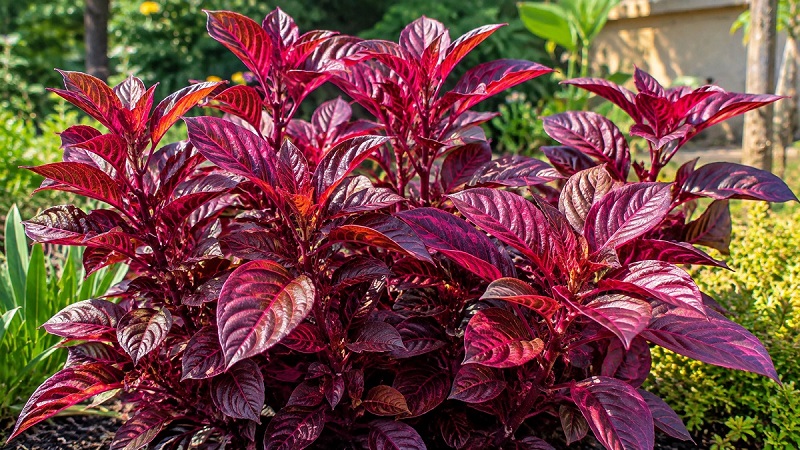
Growing & Caring for Blood Leaf Plant (Iresine herbstii)
Learn how to grow and care for Blood Leaf Plant (Iresine herbstii), including light, soil, watering, pruning, propagation, pests, containers, and winter care.
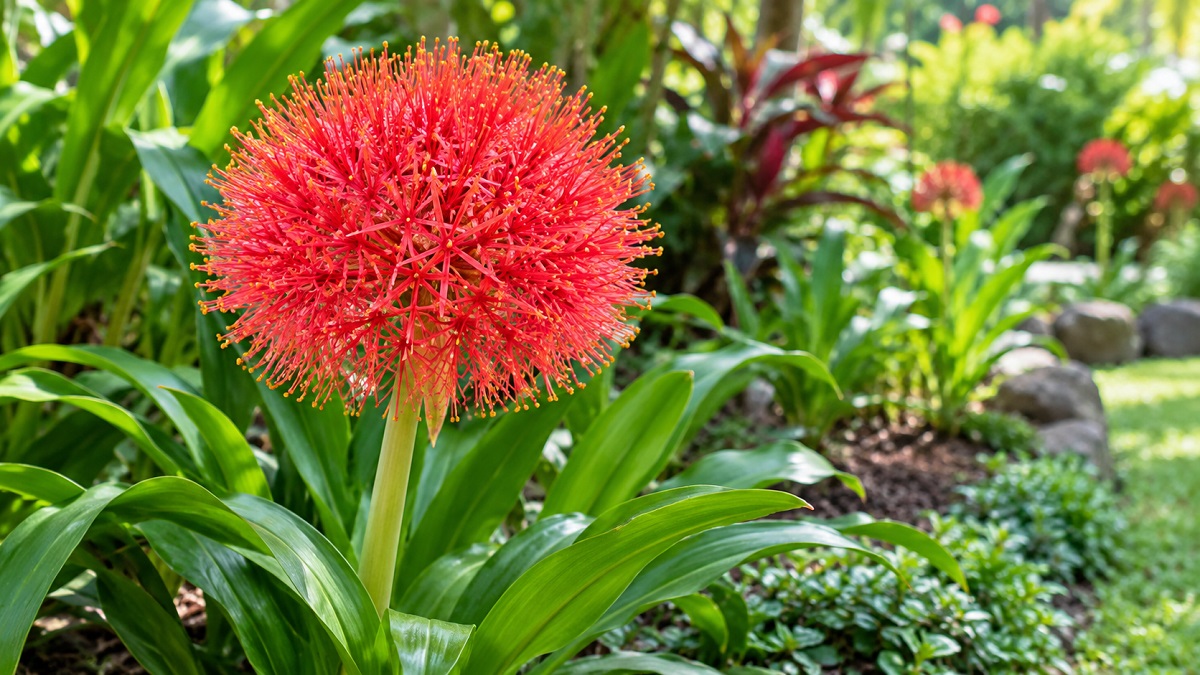
Blood Lily (Scadoxus multiflorus) is one of those plants that can completely change the look of a garden when it comes into bloom. Instead of producing an ordinary cluster of flowers, it sends up a striking spherical flower head packed with numerous tiny scarlet blooms. The rounded flower head can look almost like a red pincushion floating above the foliage, which explains another common name, pincushion flower.
Although the flowers are the main attraction, Blood Lily is also interesting because its growth cycle is somewhat different from that of many familiar garden plants. The flower stalk can emerge before the foliage is fully developed, while the leaves expand into a lush rosette after flowering. Understanding this seasonal rhythm makes it much easier to provide the right amount of water, light, and feeding at the right time.
Blood Lily is a bulbous plant in the amaryllis family, Amaryllidaceae. The accepted botanical name is Scadoxus multiflorus, while Haemanthus multiflorus is an older synonym that still appears in older gardening references and plant listings. Kew records the species as native across tropical and southern Africa and into the southwestern Arabian Peninsula.
Best results: Give Blood Lily warmth, bright filtered light, rich organic soil, good drainage, and consistent moisture during active growth.
Blood Lily is a bulbous perennial prized primarily for its unusual flowers. The species belongs to the genus Scadoxus within the Amaryllidaceae family. Its accepted botanical name is Scadoxus multiflorus. Older references may identify it as Haemanthus multiflorus, but that name is now treated as a synonym.
The plant is native to a broad region extending through tropical and southern parts of Africa and into the southwestern Arabian Peninsula. In its natural habitats, it can occur around forest margins, secondary woodland, savanna woodland, and other seasonally suitable environments.
In cultivation, gardeners generally grow Blood Lily for its dramatic summer flowers and attractive foliage. It works particularly well as a specimen plant where the unusual flower head can be appreciated up close. It can also be grown in containers, making it a useful choice for gardeners who live outside its preferred warm climate.
One of the most distinctive features of the plant is its flower head. Rather than producing a few large individual flowers, Blood Lily produces a rounded umbel containing many small, densely packed flowers. Extension information describes the flower head as a four- to six-inch terminal umbel containing hundreds of tiny red florets with yellow-tipped stamens.
Blood Lily has a bold appearance despite its relatively compact growth habit. The foliage forms a green rosette, while the flower stalk rises above it and carries the large spherical flower head. The combination of a tall flower stem and rounded red bloom gives the plant a strong architectural quality.
| Characteristic | Description |
|---|---|
| Botanical name | Scadoxus multiflorus |
| Older botanical name | Haemanthus multiflorus |
| Family | Amaryllidaceae |
| Plant type | Bulbous perennial |
| Flower form | Large rounded terminal umbel |
| Flower color | Scarlet, red, and red-toned shades |
| Foliage | Broad green leaves forming a rosette |
| Typical landscape role | Accent or specimen plant |
| Preferred soil | Rich, organic, well-drained soil |
| Light | Bright light, partial shade, or filtered sun |
| Hardiness | Best suited to warm, frost-free climates |
| Container growing | Well suited when drainage is excellent |
The North Carolina Extension Gardener Plant Toolbox lists Blood Lily for USDA Zones 9a through 11b and describes it as suitable for full sun or partial shade, with high-organic-matter soil and good drainage.
The flower head is the main reason to grow this plant. Its unusual spherical form creates a strong focal point in beds, containers, woodland-style gardens, and tropical plantings.
It also provides seasonal interest because the flowering and foliage stages have a distinctive rhythm. Once established, a healthy bulb can return and flower again under suitable conditions.
Blood Lily is not a plant that needs constant attention. The important part is getting the basic conditions right. Avoid waterlogged soil, protect the plant from damaging cold, and provide adequate light without exposing it to harsh conditions that scorch the foliage.
Light is one of the first things to consider when choosing a location for Blood Lily. The plant can tolerate full sun or partial shade, but the best placement depends on climate and the intensity of the available sunlight. Extension guidance lists both full sun and partial shade as suitable conditions.
In a mild or humid climate, a location receiving morning sun followed by afternoon shade can provide a useful balance. The plant gets enough light for healthy growth without being exposed to the strongest afternoon heat.
In very hot regions, filtered sunlight beneath a light tree canopy can be particularly useful. Avoid placing the plant in a location where reflected heat from walls, paving, or concrete creates excessive temperatures around the foliage.
If the plant receives too little light, growth may become weaker and flowering may be reduced. On the other hand, sudden exposure to intense direct sunlight can scorch leaves, especially if a plant has previously been growing in shade.
Blood Lily can grow in full sun to partial shade, but gardeners should adjust the amount of direct sunlight according to local conditions. In cooler climates, more sun can be beneficial. In very warm climates, bright filtered light or partial shade may produce better-looking foliage.
Blood Lily grows best when its roots have access to moisture and organic matter without sitting in saturated soil. The goal is a soil that holds some moisture but drains excess water quickly.
A rich garden soil amended with compost can work well. For container growing, combine a quality potting mix with additional organic matter and a drainage component such as perlite or coarse material. The exact mix is less important than achieving a balance between moisture retention and drainage.
Heavy clay soil can be troublesome because it may remain wet around the bulb after irrigation or rain. If your garden soil drains poorly, consider improving the planting area with organic matter and drainage amendments, or grow the plant in a raised bed or container.
Handle Blood Lily bulbs carefully during planting. Set the bulb in prepared soil and avoid burying it unnecessarily deeply. The growing point should remain oriented correctly, and the planting depth should follow the instructions supplied with the bulb because bulbs and cultivars can vary in size.
Water lightly after planting to settle the soil around the bulb. After that, adjust watering according to the season and the plant's growth stage rather than keeping the soil constantly saturated.
Select a site that receives good light, has protection from damaging frost, and drains well after rain. A sheltered position near other plants can also provide a more stable microclimate than an exposed location.
Watering should change according to the plant's growth cycle. During active growth, Blood Lily appreciates consistent moisture. However, consistent moisture does not mean permanently wet soil.
Water thoroughly when the upper layer of soil begins to dry, then allow excess water to drain away. In a container, never allow the pot to stand in a saucer of stagnant water for extended periods.
During periods of active growth and flowering, the plant may require more frequent watering, particularly in warm weather. During cooler or dormant periods, reduce watering because the plant's water requirements decrease.
Excessive moisture can lead to soft or damaged bulb tissue and root problems. Persistent wet soil, unpleasant odors, yellowing foliage, or general decline should prompt you to check drainage before adding more water.
A plant that is consistently too dry may develop wilted or stressed foliage and fail to produce strong growth. Container-grown plants can dry out particularly quickly during hot weather, so check them more frequently than plants growing in the ground.
Blood Lily is best suited to warm growing conditions. Its natural distribution includes tropical and southern Africa, and cultivated plants perform best when protected from frost and prolonged cold.
If you live in a climate with cold winters, growing Blood Lily in a container can make seasonal protection much easier. The container can be moved to a protected location when temperatures become unsuitable.
Humidity is generally less of a concern when the plant is grown outdoors in a naturally humid environment. In dry indoor conditions, avoid placing the plant directly beside heating or cooling vents. Good air circulation is more useful than keeping the foliage continuously wet.
Frost is a major concern. If cold weather is expected, move container-grown plants indoors or into a sheltered area. Garden-grown bulbs may require additional protection or may be better grown as containers in climates where winter temperatures regularly fall below their preferred range.
Fertilizer can support healthy foliage and flowering, but feeding should complement good soil rather than compensate for poor growing conditions. A plant growing in rich, organically amended soil may require less supplemental fertilizer than one growing in depleted soil.
During active growth, a balanced fertilizer used according to the manufacturer's instructions can be appropriate. Avoid applying excessive fertilizer because more nutrients do not automatically mean more flowers.
Fertilize when the plant is actively growing rather than during dormancy. If the foliage begins to yellow naturally as the plant enters a resting phase, do not respond by repeatedly adding fertilizer.
Flowering is the highlight of growing Blood Lily. The plant produces a prominent flower stalk topped by a large rounded cluster of small flowers. The North Carolina Extension Gardener Plant Toolbox describes the flower head as a terminal umbel four to six inches across, with hundreds of densely packed red florets and yellow-tipped stamens.
One fascinating feature of Blood Lily is the relationship between its flowers and foliage. The flower stalk may appear while the plant has little visible foliage, followed by the development of the leaves into a rosette. Kew's botanical descriptions also note that the leaves can fully expand after flowering.
Do not assume that a plant has died simply because the leaves are absent around flowering time. The bulb stores energy underground and follows a seasonal growth cycle.
A Blood Lily that produces leaves but no flowers may be too young, insufficiently established, receiving unsuitable light, or experiencing poor seasonal conditions. Inadequate nutrition or excessive disturbance of the bulb can also contribute.
Give the plant time to establish, maintain appropriate moisture during active growth, and avoid moving or dividing it unnecessarily often. Healthy bulbs generally perform better when allowed to develop an established root system.
Blood Lily does not require complicated pruning. Most maintenance involves removing spent flower heads and damaged or completely dead foliage.
After flowering, allow healthy green leaves to remain in place. These leaves are important because they continue photosynthesis and help the bulb build energy for future growth.
Once foliage has naturally yellowed and died back, it can be removed with clean pruning shears. Avoid cutting healthy green leaves simply to make the plant look tidier.
You can remove spent flower heads after flowering if you do not want the plant to produce berries. If you are interested in observing the fruit, you can leave the flower head in place and allow the berries to develop.
The North Carolina Extension Gardener Plant Toolbox describes the fruit as orange-red, globular berries that develop in fall.
Blood Lily can be propagated from seed or by dividing established bulbs or offsets when suitable plant material is available. Division is generally the more practical approach for gardeners who want a new plant sooner.
Avoid unnecessary disturbance. Bulbs need time to establish roots, and repeatedly dividing a plant can reduce its strength and delay flowering.
Seed propagation is slower and requires more patience. Fresh seed should be handled according to the requirements of the particular species and growing conditions. Young seedlings need warmth, moisture, light, and protection from drying out.
Seed-grown plants can take considerably longer to reach flowering size than established bulbs. For most home gardeners, purchased bulbs or offsets are therefore the simplest way to begin.
Container growing is an excellent option for Blood Lily, particularly when you need to protect the plant from cold weather. Extension guidance specifically lists containers and houseplant-style use among its landscape applications.
Choose a container with drainage holes and enough room for the bulb and developing roots. Avoid selecting an excessively large pot because a huge volume of wet soil can remain moist for too long after watering.
Use a loose, organic-rich potting medium that drains freely. Place the container where the plant receives appropriate light, and rotate it occasionally if growth becomes noticeably uneven.
Container plants often need more frequent monitoring than plants in the ground. Check the soil before watering rather than following a rigid calendar. During hot weather, the container may dry quickly; during cool or rainy weather, it may stay wet much longer.
Blood Lily does not need to be repotted constantly. Repot when the growing medium has broken down, drainage has deteriorated, the plant has become severely crowded, or the container is no longer appropriate.
In warm climates, Blood Lily can be planted directly into the landscape. It makes an excellent accent plant in a sheltered garden bed, tropical border, woodland-style planting, or partially shaded area.
Plant it where the soil drains well and where nearby plants do not completely overwhelm it. The dramatic flower head deserves enough visual space to stand out.
Blood Lily can also be combined with plants that have contrasting foliage. Broad-leaved tropical plants, ferns, groundcovers, and other shade-tolerant ornamentals can create an attractive background for the red flowers.
Because the flower head is round and strongly colored, even a single flowering plant can attract attention. Rather than scattering individual bulbs randomly throughout a large bed, consider grouping several plants where their flowering period can create a stronger visual statement.
| Problem | Possible Cause | What to Do |
|---|---|---|
| No flowers | Young bulb, poor light, weak growth, or unsuitable conditions | Improve growing conditions and allow the bulb time to mature |
| Yellowing leaves | Overwatering, stress, nutrient problems, or natural seasonal decline | Check soil moisture and drainage before changing fertilizer |
| Soft bulb | Excessive moisture or poor drainage | Improve drainage and inspect for rot |
| Leaf scorch | Intense sun, heat, or sudden exposure | Provide suitable filtered light and acclimate gradually |
| Wilting | Dry soil, root damage, heat stress, or other environmental problems | Check soil moisture, roots, drainage, and temperature |
| Weak growth | Insufficient light, poor soil, or inadequate establishment | Correct the growing conditions and avoid unnecessary disturbance |
Yellow leaves do not always mean the plant needs fertilizer. First determine whether the yellowing is occurring as part of the natural seasonal cycle. If the plant is actively growing and several leaves are turning yellow unexpectedly, inspect the roots and soil for drainage problems.
Rot is one of the more serious problems for bulbous plants. Constantly saturated soil creates conditions in which the bulb and roots can deteriorate. Prevention is much easier than trying to rescue a badly damaged bulb, so drainage should always be a priority.
A healthy-looking plant may occasionally fail to flower. Young bulbs often need time to mature, while established plants may be affected by insufficient light or poor growing conditions. Avoid forcing the plant with excessive fertilizer. Focus on light, drainage, moisture, and overall plant health.
Blood Lily can experience the usual range of problems associated with cultivated bulbous ornamentals, particularly when plants are stressed or growing conditions are poor. Regular inspection is the best first line of defense.
Check leaves, stems, and the soil surface for signs of insects. Look for distorted growth, sticky residue, spotting, chewing damage, or unusual discoloration. Early detection makes management much easier.
Fungal and bacterial problems are more likely to become troublesome when foliage remains wet for long periods or when soil drainage is poor. Water the soil rather than repeatedly wetting the foliage, provide adequate air circulation, and avoid overcrowding.
Understanding dormancy is important because Blood Lily does not remain in the same visual state throughout the year. Depending on growing conditions and the plant's seasonal rhythm, foliage may decline after the active growing period.
When the plant naturally enters a resting period, reduce watering rather than maintaining the same irrigation schedule used during active growth. The goal is to prevent the bulb from sitting in cold, wet soil.
Do not fertilize heavily during dormancy. Resume regular watering and feeding gradually when new growth begins.
In warm climates where the plant can remain outdoors safely, there may be little reason to disturb established bulbs. In colder regions, container cultivation or carefully lifting and storing bulbs may be necessary to protect them from damaging temperatures.
If you store bulbs, keep them in a suitable dry, protected environment according to the needs of the particular plant and local conditions. Avoid storing damaged or diseased bulbs alongside healthy ones.
Blood Lily should be treated as a poisonous ornamental plant and should not be eaten. The North Carolina Extension Gardener Plant Toolbox rates its poisoning severity as low but lists symptoms including salivation, nausea, vomiting, and diarrhea. It identifies lycorine and other alkaloids among the toxic principles and lists the flowers as the poisonous part.
Keep bulbs and plant material away from children and pets. Gardeners should also avoid deliberately consuming any part of the plant. When handling bulbs or removing plant material, ordinary gardening hygiene such as washing hands afterward is sensible.
If a person or pet is suspected of ingesting Blood Lily, seek appropriate medical or veterinary advice promptly rather than attempting home treatment.
Blood Lily becomes much easier to grow when you concentrate on a few basic principles instead of trying to micromanage every aspect of its care.
Think "moist but never stagnant." Organic matter helps retain moisture, while good drainage prevents the bulb from remaining saturated. If your native soil stays wet after rain, a raised bed or container may be the better option.
Check the soil instead of watering automatically. Active growth generally calls for more moisture, while resting plants need less. This simple adjustment can prevent many common bulb problems.
Continue exploring our gardening guides with more plant profiles, growing tips, and practical advice for creating a healthy, productive garden.