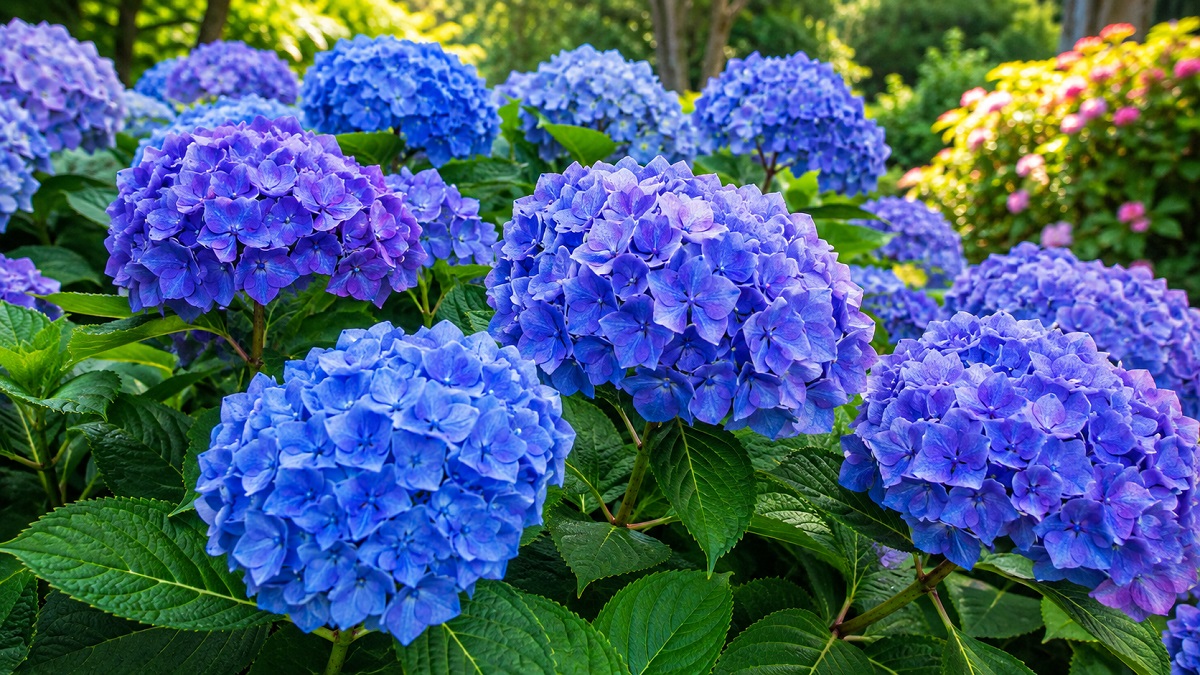
BloomStruck Hydrangea producing beautiful blue to purple-blue flowers after careful soil acidification and pH management.
BloomStruck Hydrangeas are famous for their large mophead flowers and their ability to produce different flower colors depending on growing conditions. If your goal is to turn a BloomStruck Hydrangea blue, the most important thing to understand is that flower color is not controlled simply by adding a product labeled “blue hydrangea fertilizer.” Soil chemistry, pH, aluminum availability, moisture, and the plant's overall health all work together.
The good news is that you can often encourage a BloomStruck Hydrangea to produce bluer flowers by gradually lowering the soil pH and making aluminum more available to the roots. The process is not instant, however. A hydrangea that is already growing in neutral or alkaline soil may need several months of consistent soil management before the flowers show a noticeable change.
This guide explains how to acidify the soil safely, which soil acidifiers are commonly used, how much to apply, when to apply them, how to avoid over-acidification, and what to do if your BloomStruck Hydrangea remains pink or purple despite your efforts.
Quick Care Snapshot: Turning BloomStruck Hydrangea Blue
Best results come from gradual soil management rather than heavy applications of acidifying products.
Target Soil pHAbout 5.0–5.5
Key FactorAcidic soil + available aluminum
Preferred LightMorning sun and afternoon protection
Yes. BloomStruck is a reblooming bigleaf hydrangea, and like other color-changing bigleaf hydrangeas, its flowers can shift among pink, blue, purple, and intermediate shades depending largely on soil conditions. However, changing the flowers from pink to blue is not as simple as watering the plant with an acidic solution.
The most important combination is acidic soil and sufficient available aluminum. When the soil is acidic enough for aluminum to remain available to the plant, the hydrangea can take up aluminum through its roots. This influences the pigments in the flowers and can move the color toward blue.
If the soil is alkaline, aluminum may be present in the ground but unavailable to the plant. In that situation, simply adding more aluminum is not necessarily the solution. Lowering the pH is usually the first step.
It is also worth remembering that flower color can vary naturally. One season may produce blue flowers while another produces more purple or pink blooms because rainfall, irrigation water, soil chemistry, fertilizer use, and weather conditions have changed.
The Blue-Flower Formula
Think of blue BloomStruck flowers as the result of several conditions working together:
Acidic soil
Available aluminum
Healthy active roots
Consistent moisture
Appropriate nutrition
Time for the soil chemistry to change
A Common Misunderstanding
Lowering soil pH does not automatically guarantee brilliant blue flowers. The goal is to create conditions in which aluminum becomes available to the plant. If the plant is stressed, the soil remains too alkaline, or nutrients are out of balance, the flowers may remain purple or pink.
The Science Behind Blue Hydrangea Flowers
Hydrangea flower color is associated with naturally occurring pigments called anthocyanins. The way these pigments appear to the human eye can be influenced by soil chemistry and the availability of certain elements, particularly aluminum.
In acidic conditions, aluminum is generally more available in the soil solution. The roots can absorb it, and the aluminum interacts with flower pigments in a way that encourages blue coloration. When soil pH is higher, aluminum becomes less available, and the flowers are more likely to remain pink or move toward purple.
This explains why two BloomStruck Hydrangeas growing only a short distance apart can have noticeably different flower colors. Their soils may have different pH levels, mineral compositions, organic matter content, or irrigation histories.
Soil pH is therefore the central control point for gardeners who want to influence BloomStruck flower color. Instead of thinking of an acidifier as a “blue flower treatment,” think of it as a tool for changing the root-zone environment.
The Best Soil pH for Blue BloomStruck Hydrangeas
For encouraging blue flowers, a soil pH around 5.0 to 5.5 is a useful target range. Some plants can show blue coloration outside this range, but moderately acidic conditions generally make aluminum more available than neutral or alkaline soil.
Soil pH
Likely Flower Color
What It Means
Below 5.0
Blue possible
Very acidic; monitor carefully rather than continually adding acidifier.
5.0–5.5
Blue to blue-purple
Good range for encouraging blue coloration.
5.5–6.0
Purple to mixed
Blue may occur, but results can be less consistent.
6.0–6.5
Purple to pink
Aluminum availability is generally reduced.
Above 6.5
Pink
Often unfavorable for strong blue coloration.
These ranges should be treated as practical gardening targets rather than absolute rules. BloomStruck flower color depends on more than a single pH reading, and different soils can behave differently at the same measured pH.
Test Your Soil Before Adding Acidifier
Soil testing should come before acidification. This is one of the most important steps in the entire process because you cannot manage pH effectively if you do not know where you are starting.
Collect soil from the root zone rather than from the surface alone. If the hydrangea is established in the garden, take several small samples from around the plant's drip line and combine them into a representative sample. Avoid sampling immediately after applying fertilizer or soil amendments.
What to Look For in a Soil Test
Current soil pH
Soil texture
Organic matter
Major nutrient levels
Potential nutrient imbalances
A simple home pH test can be useful for monitoring, while a laboratory soil test can provide a much more complete picture. If the soil is already around pH 5.0–5.5, there is usually no reason to keep adding sulfur simply to force the number lower.
Best Soil Acidifiers for BloomStruck Hydrangeas
Several products and amendments can influence soil acidity, but they do not all work at the same speed or in the same way. Choosing the right one depends on your starting pH, soil type, growing location, and how quickly you need the change.
Acidifying Material
Speed
Best Use
Important Consideration
Elemental sulfur
Slow to moderate
Long-term soil pH adjustment
Requires microbial activity and moisture.
Hydrangea acidifier
Varies
Convenient garden application
Follow the product label carefully.
Acid-forming fertilizer
Gradual
Routine feeding where appropriate
Not a substitute for proper pH testing.
Acidic organic matter
Slow
Improving soil structure and organic matter
Usually not sufficient by itself for a major pH correction.
Using Elemental Sulfur to Acidify Soil
Elemental sulfur is one of the most useful long-term tools for lowering soil pH. Soil microorganisms gradually convert sulfur into acidic compounds, which lowers the pH over time.
The important word here is gradually. Elemental sulfur does not work like an instant color-changing treatment. Depending on soil type, temperature, moisture, microbial activity, and the amount applied, the response may take weeks or longer.
Sandy soils generally respond more quickly to amendments than heavy clay soils. Clay soils and soils with substantial buffering capacity may require more careful management because their pH resists change.
Do Not Guess the Sulfur Rate
There is no single safe sulfur dose for every BloomStruck Hydrangea. The amount required depends heavily on the current pH, desired pH, soil texture, and soil buffering capacity.
Rather than applying a large amount based on a generic internet recommendation, use the application rate provided by your soil test or the product manufacturer. Apply modestly, water it into the soil as directed, and retest before making another application.
The Role of Aluminum in Blue Flowers
Lowering pH is only half of the blue-flower equation. Aluminum must also be available to the plant. This is why some gardeners become frustrated after successfully lowering their soil pH but seeing little change in flower color.
Garden products containing aluminum sulfate are sometimes used to encourage blue hydrangea flowers. However, aluminum sulfate should be treated as a soil amendment that needs careful application, not as something to pour around the plant whenever the flowers look pink.
Excessive aluminum or excessive soil acidity can create root and nutrient problems. If your soil test shows that the soil is already acidic and aluminum is available, adding more may not improve the flowers.
Think in Two Steps
Step 1: Adjust soil pH into a moderately acidic range.
Step 2: Make sure aluminum is available without creating excessive acidity.
Patience Matters
Flowers already forming on the plant will not necessarily change dramatically after one application. Soil amendments affect the root environment first, and future flower development reflects those changing conditions.
Step-by-Step Method to Turn BloomStruck Hydrangeas Blue
Step 1: Identify the Current Flower Color
Record what your BloomStruck Hydrangea is producing now. Is it bright pink, pale pink, purple, blue-purple, or blue? This gives you a useful baseline when you evaluate changes later.
Step 2: Test the Soil
Measure the pH of the soil around the hydrangea's root zone. Do not assume that soil is alkaline simply because the flowers are pink. Pink flowers can occur for several reasons, and testing provides a better starting point.
Step 3: Decide Whether Acidification Is Necessary
If the soil is above your target range, choose an appropriate acidifying amendment. If the pH is already strongly acidic, do not continue adding acidifier merely to chase a blue color.
Step 4: Apply the Acidifier Correctly
Follow the product label or soil-test recommendation. Spread granular amendments evenly over the appropriate root-zone area rather than concentrating them directly against the stems.
Step 5: Water Thoroughly
Water according to the product instructions. Good soil moisture is particularly important because microbial activity and nutrient movement depend on adequate moisture.
Step 6: Maintain Consistent Moisture
BloomStruck Hydrangea performs best when the soil does not repeatedly swing from extremely dry to saturated. A layer of organic mulch can help moderate soil temperature and moisture.
Step 7: Wait and Retest
Give the amendment time to work. Retest the soil rather than automatically applying another dose. The objective is a stable root environment, not the lowest possible pH.
Step 8: Evaluate New Flowers
Look at newly developing flowers over the growing season. Color changes may be gradual, and a transition from pink to purple to blue-purple may happen before the flowers become noticeably blue.
Turning Container-Grown BloomStruck Hydrangeas Blue
Container-grown BloomStruck Hydrangeas can be easier to manage because the root environment is more isolated from surrounding garden soil. However, containers also require more careful monitoring because nutrients and minerals can build up or wash out more quickly.
Use a quality potting mix suitable for acid-loving plants and choose a container with adequate drainage. Avoid using garden soil in a container because it can compact and restrict drainage.
If you are using a commercial hydrangea acidifier, follow the label exactly. Container plants have a smaller volume of growing medium, so an amount that is reasonable for a garden bed may be excessive in a pot.
Container-grown plants should also be watered carefully. Allowing the root ball to become extremely dry can stress the plant, while constantly saturated soil can damage roots. Healthy roots are essential for successful nutrient and aluminum uptake.
When Should You Apply Soil Acidifier?
Soil acidification works best as a planned process rather than an emergency treatment. Many gardeners begin soil preparation before the main flowering period so that the root-zone chemistry has time to respond.
If your BloomStruck Hydrangea is actively growing, make changes gradually. Avoid repeatedly disturbing the root zone during hot, dry weather, especially if the plant is already under water stress.
Time
Recommended Action
Why
Before active growth
Test soil pH
Provides a baseline for amendments.
Early growing season
Apply acidifier if needed
Allows time for soil chemistry to change.
During growth
Maintain even moisture
Supports healthy roots and nutrient uptake.
Mid-season
Retest if necessary
Prevents unnecessary repeat applications.
After flowering
Evaluate results
Helps determine the next season's strategy.
Water Quality Can Affect Your Results
Gardeners sometimes focus entirely on soil amendments and overlook irrigation water. Water containing significant amounts of dissolved minerals, including bicarbonates, can gradually influence soil chemistry.
If you repeatedly add an acidifying amendment but the soil pH keeps moving upward, your irrigation water may be contributing to the problem. This is particularly worth investigating when the same soil treatment produces inconsistent results from year to year.
A water-quality test can provide useful information when soil pH is difficult to manage. However, do not attempt to dramatically alter irrigation water without understanding its chemistry.
Fertilizing BloomStruck Hydrangeas for Healthy Blue Flowers
Soil acidity is important, but the plant still needs balanced nutrition. A BloomStruck Hydrangea struggling with nutrient deficiencies, drought, root damage, or excessive fertilizer may not produce the strong flower display you expect.
Avoid treating fertilizer as a shortcut to blue flowers. Fertilizer primarily supports plant growth and flowering; it does not replace the need for appropriate soil pH.
Excessive nitrogen can encourage lush foliage at the expense of balanced flowering. Use a fertilizer appropriate for hydrangeas and follow its recommended application rate.
Light and Water Still Matter
A blue-flower strategy cannot compensate for poor growing conditions. BloomStruck Hydrangea generally appreciates bright light with protection from the harshest afternoon heat in hot climates.
Morning sunlight followed by afternoon shade can be particularly useful in warm regions. The plant also benefits from consistently moist but well-drained soil.
During prolonged dry weather, water deeply enough to moisten the root zone. Mulching around the plant can reduce evaporation and moderate soil temperature. Keep mulch away from direct contact with the stems.
Common Mistakes to Avoid
1. Adding Acidifier Without Testing
This is probably the most common mistake. A pink hydrangea does not automatically mean that its soil needs a large amount of sulfur.
2. Using Too Much Aluminum Sulfate
More aluminum sulfate is not equivalent to more blue color. Overapplication can make the root environment excessively acidic and may contribute to nutrient problems.
3. Expecting Immediate Results
Soil chemistry changes over time. Applying a product today and expecting next week's flowers to turn blue can lead to unnecessary repeat applications.
4. Ignoring Soil Type
Sandy soil and heavy clay soil do not respond to amendments in exactly the same way. Soil texture and buffering capacity influence how much amendment is needed.
5. Acidifying the Entire Garden Bed
If the goal is to change the color of one hydrangea, do not automatically acidify a large area containing plants that prefer neutral or alkaline soil.
6. Letting the Plant Dry Out
Soil chemistry is only useful when the plant has healthy, functioning roots. Severe drought stress can interfere with growth and flowering.
7. Confusing Purple With Blue
A transition toward purple can be a sign that the plant is responding, but it does not necessarily mean the soil has reached the ideal conditions for a strong blue color.
Why Your BloomStruck Hydrangea Is Still Pink
If you have applied an acidifier and the flowers remain pink, do not immediately add more. Work through the following checklist.
Possible Problem
What to Check
What to Do
Soil pH is still too high
Retest soil
Continue gradual management according to test results.
Insufficient available aluminum
Soil chemistry and amendment history
Consider appropriate aluminum amendment only when justified.
Excessive fertilizer
Fertilizer history and soil test
Reduce unnecessary feeding.
Dry roots
Soil moisture
Improve irrigation consistency.
Hard irrigation water
Water test
Investigate mineral and alkalinity levels.
Very young plant
Plant maturity
Give the plant time to establish.
Can You Turn a Pink BloomStruck Hydrangea Blue in One Season?
Sometimes you can see meaningful color movement within one growing season, but there is no guarantee of a dramatic transformation. The starting soil pH, soil composition, available aluminum, weather, and plant health all influence the result.
If your soil is only slightly above the desired range, gradual adjustment may produce visible changes relatively quickly. A strongly alkaline, heavily buffered soil can take much longer to modify.
The better approach is to think of blue flowers as a long-term soil-management project. Consistent conditions usually produce more predictable results than aggressive one-time treatments.
Long-Term Soil Maintenance for Blue Flowers
Once you achieve the color you want, the job is not necessarily finished. Soil pH can gradually change because of irrigation water, rainfall, fertilizer, decomposition, and the natural characteristics of the soil.
Test the soil periodically rather than following a fixed acidifier schedule forever. If the pH remains within your target range, there is no reason to keep adding large amounts of sulfur or another acidifying amendment.
Organic mulch can help maintain a healthy root environment, but mulch should not be treated as a replacement for soil testing. Keep the soil consistently moist, feed the plant appropriately, and avoid unnecessary disturbance of the root zone.
A Simple Annual Blue-Hydrangea Routine
Test the soil at the beginning of the growing season.
Record the pH and compare it with previous readings.
Apply an appropriate acidifier only if needed.
Maintain consistent irrigation.
Use a suitable fertilizer at the recommended rate.
Monitor new flower color as the season progresses.
Retest before making additional soil amendments.
Natural Ways to Support Acid-Loving Hydrangeas
Good soil management begins with improving the overall growing environment. Incorporating suitable organic matter can improve soil structure, water retention, and biological activity. These benefits are valuable for hydrangea roots even though organic matter alone should not be expected to dramatically lower soil pH.
Pine-based organic materials and composted organic matter are sometimes used around acid-loving plants, but the actual effect on pH varies. Do not assume that every brown organic material will reliably acidify the soil.
Mulching is especially useful in warm climates because BloomStruck Hydrangea can struggle when the root zone repeatedly becomes hot and dry. A stable root environment makes it easier for the plant to respond to appropriate soil-management practices.
Blue, Purple, or Pink: Embrace the Transition
One of the enjoyable features of BloomStruck Hydrangea is that the flowers do not always have to be one perfect shade. A plant can produce flowers ranging from pink through lavender and purple to blue depending on the conditions.
If your first attempt produces purple flowers instead of blue, that does not necessarily mean the treatment failed. It may simply mean the soil conditions are moving in the desired direction but have not reached the conditions needed for stronger blue coloration.
The best results usually come from patience. Test, amend carefully, maintain moisture, observe the plant, and test again.
Final Tips for Turning BloomStruck Hydrangeas Blue
Do
Test your soil before applying amendments.
Work toward a moderately acidic pH.
Use a suitable acidifier at the recommended rate.
Maintain consistent soil moisture.
Monitor flower color over time.
Retest before applying additional products.
The key to turning a BloomStruck Hydrangea blue is understanding that flower color is a consequence of the plant's root environment. Aim for appropriately acidic soil, maintain good plant health, and make aluminum available without overdoing soil amendments. With patience and regular soil testing, you can encourage attractive blue and blue-purple flowers while keeping the plant healthy for future seasons.
Frequently Asked Questions About Turning BloomStruck Hydrangeas Blue
Can BloomStruck Hydrangea produce blue flowers?
Yes. BloomStruck Hydrangea is a bigleaf hydrangea capable of producing blue, purple, pink, and intermediate flower colors. Soil chemistry, particularly acidity and aluminum availability, strongly influences the color.
What pH should I aim for to get blue BloomStruck flowers?
A moderately acidic soil around pH 5.0–5.5 is a practical target for encouraging blue coloration. Avoid trying to make the soil extremely acidic.
Does coffee ground acidify soil enough to turn hydrangeas blue?
Coffee grounds should not be relied upon as a precise soil-acidification treatment. Their effect on established soil pH is limited and variable. Use a soil test and an appropriate acidifying amendment when a measurable pH change is needed.
Is aluminum sulfate necessary for blue hydrangeas?
Not necessarily. Blue coloration depends on aluminum availability as well as soil pH. If the soil already provides adequate available aluminum, adding more may not improve the flower color and can create excessive acidity if misused.
How quickly will a BloomStruck Hydrangea turn blue after adding sulfur?
Sulfur works gradually rather than instantly. The time required depends on soil type, moisture, temperature, microbial activity, and the starting pH. Give the amendment time to work and retest rather than repeatedly applying it.
Why is my BloomStruck Hydrangea purple instead of blue?
Purple flowers can occur when conditions are intermediate between those that strongly favor pink and those that strongly favor blue. Soil pH and aluminum availability are two important factors, but plant health and growing conditions also matter.
Can I make my hydrangea blue by adding vinegar to the soil?
Vinegar is not a good long-term soil-acidification strategy. It can temporarily alter conditions where it is applied, but it does not provide the controlled, lasting soil management that a suitable acidifying amendment can provide.
Should I add more acidifier if the flowers remain pink?
No. Test the soil first. If the pH is already in the desired range, adding more acidifier may do more harm than good. Investigate aluminum availability, water quality, plant health, and fertilizer practices instead.
Will blue flowers stay blue permanently?
Not necessarily. Soil pH and mineral availability can change over time, and irrigation water and fertilization can influence the root environment. Periodic soil testing helps maintain the conditions that encourage blue flowers.
Is soil acidifier safe for BloomStruck Hydrangea?
Appropriate acidifiers can be used safely when applied according to soil-test recommendations and product directions. Overapplication can damage roots or cause nutrient problems, so gradual adjustment is safer than aggressive treatment.
Explore more practical guides to growing and caring for beautiful flowers and ornamental plants. Discover planting tips, seasonal care, watering, pruning, propagation, and garden design ideas to help you create a healthier and more attractive landscape.