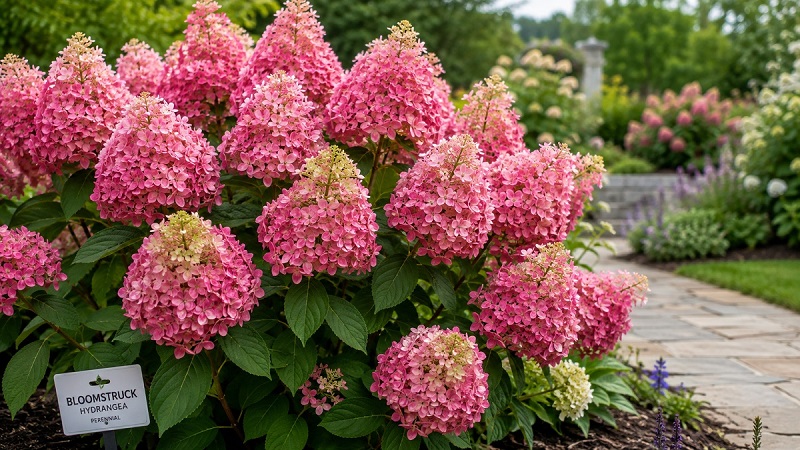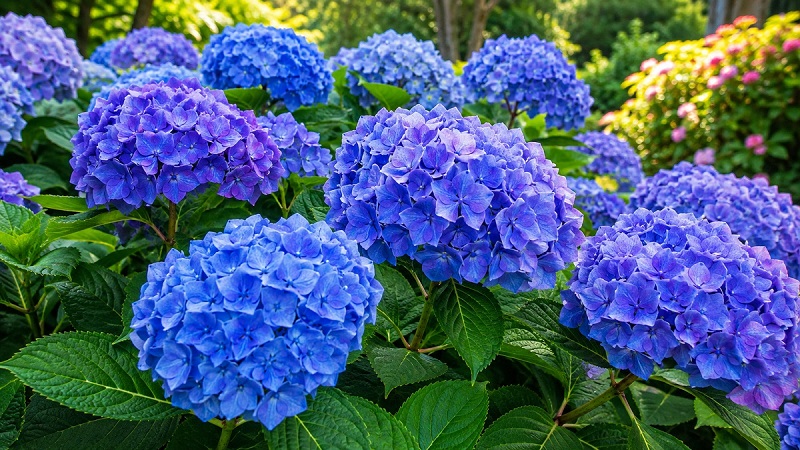
How to Turn BloomStruck Hydrangeas Blue
Learn how to turn BloomStruck Hydrangeas blue by lowering soil pH, improving aluminum availability, using soil acidifiers, and avoiding common mistakes.
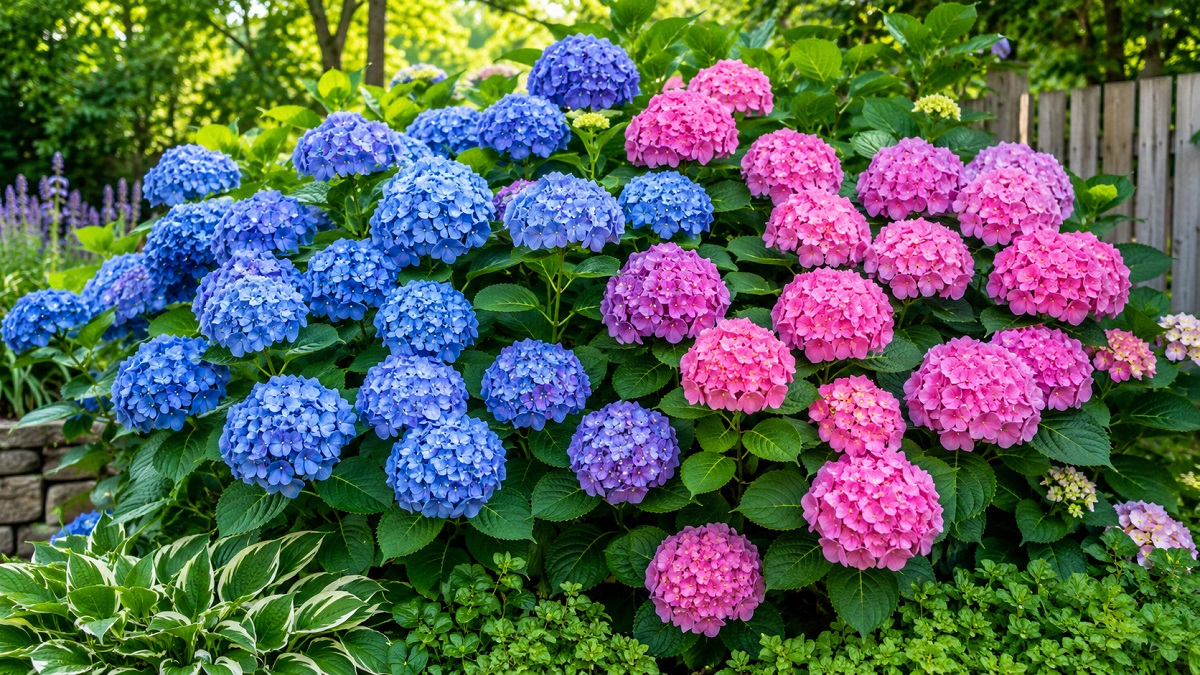
Soil pH matters more with Endless Summer BloomStruck hydrangeas than it does with many ornamental shrubs. It influences how efficiently the roots obtain nutrients, but it also helps determine whether the flowers lean toward rich blue-purple, violet, or vivid rose-pink. That color-changing ability is one of the reasons Hydrangea macrophylla 'PIIHM-II', commonly sold as BloomStruck®, attracts so much attention in home gardens.
There is not one magical pH number that every BloomStruck plant must have. Instead, the best range depends partly on what you want from the shrub. A moderately acidic soil is generally comfortable territory for bigleaf hydrangeas, while gardeners who want a particular flower color can move the pH toward the acidic or less-acidic end of the suitable range.
As a practical starting point, a soil pH of about 5.5 to 6.0 provides a useful middle ground for BloomStruck. Gardeners seeking stronger blue-purple flowers often manage the soil closer to pH 5.0 to 5.5, provided aluminum is available. Those hoping for pink flowers generally move the soil toward roughly pH 6.0 to 6.5. Conditions between those ranges frequently create violet, lavender, mauve, or mixed shades rather than a perfectly uniform color.
Remember: pH influences flower color indirectly by changing the availability of aluminum in the root zone.
For gardeners who simply want a healthy BloomStruck hydrangea without trying to force an exact flower color, mildly acidic soil around pH 5.5 to 6.0 is a sensible target. It keeps the root environment within the acidic conditions that bigleaf hydrangeas handle well while avoiding unnecessary extremes.
Flower color introduces another layer. BloomStruck can produce rose-pink, violet, blue-purple, and transitional shades according to the chemistry around its roots. Therefore, the "ideal" pH changes slightly according to the result you want.
| Soil pH | Likely Bloom Tendency | What It Means | Garden Goal |
|---|---|---|---|
| Below 5.0 | Potentially strong blue tones | Very acidic; unnecessary for most gardens | Usually avoid deliberately pushing this low |
| 5.0-5.5 | Blue to blue-purple | Aluminum generally becomes more available | Useful target for blue flowers |
| 5.5-6.0 | Blue-purple, violet or mixed | Moderately acidic transition range | Good general-purpose range |
| 6.0-6.5 | Pink, rose-pink or purple-pink | Aluminum becomes less available | Useful target for pinker blooms |
| Above 6.5 | Usually increasingly pink | Some micronutrients may become less available as alkalinity rises | Do not raise pH unnecessarily |
These boundaries should be treated as useful gardening ranges rather than rigid switches. A shrub at pH 5.6 does not instantly become one color while a neighboring plant at pH 5.7 becomes another. Soil mineral content, fertilizer, irrigation water, root-zone conditions, and naturally available aluminum can all influence the final shade.
Soil pH describes how acidic or alkaline the root environment is. Although the pH scale is simple to measure, its effect underground is surprisingly broad. It changes the chemical forms of minerals, alters how easily roots can absorb certain nutrients, and affects the activity of microorganisms involved in nutrient cycling.
With BloomStruck, the most visible consequence is flower color. The pigments within many bigleaf hydrangea flowers respond to aluminum taken up by the plant. Acidic conditions make soil aluminum more accessible to the roots, allowing blue shades to develop. As soil becomes less acidic, aluminum availability falls, and the same shrub can produce increasingly pink blooms.
That is why saying that "acid makes hydrangeas blue" is only a shorthand explanation. The acid itself is not blue dye. Its important role is changing the chemical environment in which aluminum becomes available for plant uptake.
BloomStruck is especially interesting because its normal color range includes blue-purple and vivid rose-pink. In a garden with acidic soil and accessible aluminum, flowers generally move toward the blue end of that spectrum. Increase the pH, and rose or pink tones become more noticeable.
Intermediate conditions may be even more decorative. A shrub can carry lavender, purple, reddish-purple, pink-purple, or flowers with subtle changes from one head to another. Gardeners sometimes assume this variation means something is wrong, when it may simply reflect small differences within the root zone.
Garden soil is rarely perfectly uniform. Decomposing mulch, old planting-hole amendments, nearby masonry, fertilizer placement, irrigation patterns, and natural mineral deposits can produce localized chemical differences. Roots extending into these areas encounter slightly different conditions.
Flower age matters too. BloomStruck blossoms do not necessarily stay exactly the same color from opening until they fade. Weather, maturity, and normal aging can soften or deepen the appearance, so judge the overall pattern rather than a single aging flower head.
Choose a reasonable pH range, maintain good drainage, keep the soil evenly moist, and make gradual adjustments. A thriving shrub with a slightly different shade is preferable to a stressed plant growing in aggressively modified soil.
Blue flowers suggest acidic conditions with available aluminum, while pink flowers suggest reduced aluminum uptake. However, flower color cannot tell you the precise pH. Use a laboratory soil test or a dependable pH test when making amendment decisions.
If your goal is the saturated blue-purple color associated with BloomStruck, aim for clearly acidic soil. A practical range is approximately pH 5.0 to 5.5. At this level, naturally occurring aluminum is generally more soluble and easier for hydrangea roots to absorb.
Lowering pH alone cannot guarantee a specific shade. The soil also needs suitable aluminum availability, and excessively high phosphorus can interfere with the process. Gardeners should therefore resist the temptation to keep adding acidifying products simply because the flowers are not immediately as blue as expected.
Not necessarily. Many mineral garden soils already contain aluminum. In those situations, lowering pH enough to make existing aluminum available may be all that is required. Adding excessive aluminum sulfate can introduce more salts than the roots need and can damage plants when it is applied carelessly.
A measured soil test is much more useful than treating the bed according to flower color alone. If the pH is already around 5.2, for example, repeatedly applying acidifiers is unlikely to be the best response.
Soil chemistry changes gradually. Established shrubs occupy a substantial volume of soil, so modifying only the surface does not instantly alter the entire root zone. Depending on the starting pH, soil texture, rainfall, and chosen amendment, noticeable color changes may take a growing season or longer.
For rose-pink BloomStruck flowers, the aim is to reduce the plant's access to aluminum rather than create strongly alkaline soil. A target around pH 6.0 to 6.5 is generally more appropriate than trying to push the bed toward an excessively high pH.
Raising soil pH is commonly accomplished with garden lime when testing shows that lime is actually needed. The correct amount depends heavily on soil texture and starting pH. Sandy soil usually requires a different quantity than clay because clay and organic soils resist pH changes more strongly.
More lime is not automatically better. Excessive liming can reduce the availability of iron, manganese, and other nutrients. One possible result is interveinal chlorosis, in which newer leaves become pale or yellow while the veins remain greener.
BloomStruck naturally lends itself to purple shades, making this one of the easiest color directions to enjoy. A moderately acidic transition zone around pH 5.5 to 6.0 often produces blue-purple, violet, or pink-purple flowers.
Trying to maintain one exact shade can be frustrating because the chemistry beneath a mature shrub changes slowly and is influenced by rainfall, irrigation water, decomposition of organic matter, and fertilizer use. Instead of chasing a laboratory-perfect number, keep the soil within a moderate range and allow the plant to display some natural variation.
This approach also reduces amendment use. Purple blooms are often the compromise gardeners discover when the soil sits between conditions strongly favoring blue and those favoring pink.
Testing should come before adding sulfur, lime, or another pH-adjusting product. Without a test, you do not know whether the soil actually needs to change, how large an adjustment is appropriate, or whether a nutrient issue is being mistaken for a pH problem.
A professional or university-affiliated soil test is the best choice when you want to make a substantial adjustment. In addition to pH, many tests report nutrient levels and may provide amendment recommendations based on soil type. That information is especially valuable before applying lime.
Home kits can be useful for routine monitoring, but results vary with product quality and testing technique. When using a probe, follow its calibration and moisture instructions carefully. When using a chemical test kit, collect soil from several points rather than one isolated handful.
Avoid sampling only against the main stem. BloomStruck's active feeder roots occupy the surrounding bed. Take small samples from several locations beneath and around the canopy, mix them in a clean container, and use the combined sample to obtain a better representation of the root zone.
Do not include large pieces of mulch, fresh compost, fertilizer granules, stones, or undecomposed leaves. These materials can distort a small sample and give a misleading impression of the soil underneath.
Once an established BloomStruck bed is stable, pH does not need to be measured every week. Testing about once a year is usually plenty for a garden where color management is important. After a significant amendment, follow the guidance associated with the product or soil test before deciding whether another application is necessary.
Repeated testing becomes particularly useful when irrigation water is highly alkaline, when the planting bed sits near concrete or masonry, or when the natural soil repeatedly drifts toward its original pH.
Gardeners with alkaline or near-neutral soil often need to lower pH if they want blue-purple flowers. The safest approach is gradual acidification based on a soil test rather than trying to transform the bed in a single application.
Elemental sulfur is commonly used to lower the pH of mineral garden soil. Soil microorganisms convert sulfur into acidic compounds over time, so it works gradually rather than immediately. Temperature, moisture, soil type, and microbial activity influence the speed of the reaction.
Because clay-rich soil has a greater buffering capacity than sandy soil, it may take considerably more amendment to move its pH by the same amount. Follow a soil-test recommendation or product directions instead of using a universal application rate.
Compost, aged leaf mold, and similar materials improve the soil environment, though they should not be treated as precision pH controls. Their more important value is helping create a well-structured root zone with improved moisture retention, drainage, and biological activity.
These materials are frequently promoted as quick ways to turn hydrangeas blue, but their effect on established garden-soil pH is usually modest compared with a properly calculated soil amendment. Pine needles can be useful mulch and composted coffee grounds can contribute organic matter; neither should replace actual testing when a measurable pH correction is required.
Garden lime is the traditional amendment used to raise acidic soil pH. It reduces acidity and, as the pH climbs, makes aluminum less accessible to hydrangea roots. That shift favors pink rather than blue pigmentation.
A pH reading tells you where the soil is now, but soil texture and buffering capacity determine how difficult it will be to move. Two beds can both test at pH 5.2 yet require different amounts of lime to reach the same target.
That is one reason generic advice such as "add one cup of lime" can be unreliable when applied to every garden. Bed size, amendment type, soil composition, and current chemistry all matter.
The objective is not alkaline soil at any cost. Once BloomStruck is growing well and the soil is high enough to restrict aluminum uptake, additional lime offers little benefit. Give the soil time to respond before deciding that a previous application has failed.
pH receives most of the attention because of BloomStruck's changing flowers, yet soil structure is just as important for long-term plant health. A poorly drained bed at the "perfect" pH is still a poor home for hydrangea roots.
BloomStruck does best in soil that retains enough water to stay evenly moist while allowing excess moisture to drain away. Loam naturally provides a useful balance between moisture storage, nutrient retention, and aeration.
| Soil Type | Typical Challenge | pH Management | Useful Approach |
|---|---|---|---|
| Sandy soil | Dries rapidly and holds fewer nutrients | pH may change comparatively quickly | Add organic matter and monitor moisture carefully |
| Loam | Few structural problems when healthy | Usually straightforward to manage | Maintain organic matter and mulch |
| Clay soil | Slow drainage and compaction | Often resists rapid pH change | Improve the wider planting area rather than creating a small amended pocket |
| High-organic soil | Chemistry can vary with decomposition | May have considerable buffering capacity | Test before making major corrections |
Hydrangeas appreciate moisture, but waterlogged soil reduces oxygen around the roots. If a planting site remains saturated after rain, correcting drainage deserves higher priority than manipulating pH for a particular shade of blue or pink.
A moderate amount of compost incorporated into the broader bed can improve both sandy and heavier soils. It increases water-holding capacity in coarse soil while helping support better aggregation in many heavier soils.
Avoid digging a small hole and filling it almost entirely with a radically different potting mixture. Roots eventually reach the surrounding native soil, and abrupt differences in drainage can create problems.
Organic mulch is valuable around BloomStruck, but its strongest benefits are moisture conservation, moderation of soil temperature, suppression of weeds, and gradual addition of organic material as it decomposes.
Bark, shredded leaves, wood chips, or pine needles can all work well when applied correctly. They should not be counted on to move a strongly alkaline bed into the blue-flower range by themselves.
Keep mulch a short distance away from the main stems rather than piling it against the crown. A broad layer over the root zone is more useful than a deep mound immediately around the shrub.
Fertilizer cannot compensate for fundamentally unsuitable soil chemistry. Applying additional nutrients when the real issue is pH can increase salt levels without solving the deficiency symptoms seen in the foliage.
Phosphorus deserves particular attention when gardeners are deliberately encouraging blue flowers. High phosphorus levels can bind with aluminum, reducing its availability to the plant. For that reason, repeatedly applying phosphorus-rich products simply because the shrub is flowering can work against the goal of obtaining blue blooms.
BloomStruck does not need continuous heavy feeding. Use fertilizer according to soil conditions and the plant's growth rather than treating every discoloration as evidence that more fertilizer is required.
Container-grown BloomStruck hydrangeas are easier to manage chemically because the root system occupies a defined volume of potting mix. At the same time, container conditions can shift faster because repeated watering leaches nutrients and irrigation water gradually influences the chemistry of the mix.
A moderately acidic hydrangea-friendly potting medium makes a good starting point. If blue-purple flowers are the goal, maintain the mix toward the acidic end of the suitable range. For pink flowers, a somewhat higher pH can be maintained without pushing the root environment excessively alkaline.
Container gardeners often concentrate on potting-mix pH while overlooking the water used every few days. Hard, alkaline water can gradually raise the pH of a container substrate. Where water alkalinity is high, occasional testing is especially useful.
The pot must have generous drainage holes, and the root ball should not sit continuously in collected water. Because BloomStruck has medium-to-high water requirements, the goal is consistent moisture combined with free drainage, not permanently saturated roots.
Gardeners pursuing intense blue flowers sometimes continue adding acidifying products even after reaching a suitable pH. Excess acidity can disrupt nutrient balance and expose the plant to unnecessarily high concentrations of soluble minerals.
Once testing shows that the soil is already near the blue-flower target, stop trying to drive the number downward.
BloomStruck can produce attractive rose-pink flowers without being grown in strongly alkaline soil. Excessive liming may contribute to iron or manganese deficiencies and result in pale foliage.
Adding lime every spring because the flowers are purple, or adding sulfur every time they appear pink, can eventually move the soil far beyond the desired range. Test first and amend only when there is a measured reason.
Soil amendments need time to react and influence the root system. Flowers already well into development may not respond dramatically to a treatment applied shortly before they open.
Acidic soil is important for blue flowers, but acidity is only part of the mechanism. If usable aluminum is limited, lowering pH further may not deliver the expected deep-blue color.
Yellow foliage does not automatically mean the shrub needs a large dose of fertilizer. At unsuitable pH levels, nutrients may be present in the soil but chemically unavailable to the roots.
Flower color alone is not proof of a soil problem because pink is a perfectly normal BloomStruck color. Be more concerned when pink flowers are accompanied by declining plant vigor or characteristic nutrient-deficiency symptoms.
One common warning is chlorosis on newer leaves, particularly pale tissue between greener veins. High pH can reduce the availability of iron and other micronutrients even when those elements are physically present in the soil.
Confirm the cause with a soil test before acidifying the bed. Root damage, prolonged saturation, drought, and other stresses can also cause foliage to look unhealthy.
Naturally acidic garden soil is not automatically a problem for BloomStruck. Concern is more appropriate when testing shows that the pH has fallen well below the range needed to achieve blue flowers, especially if repeated sulfur or acidifying fertilizer applications have been made.
Growth problems in very acidic soil can result from nutrient imbalance, excessive solubility of certain elements, or reduced availability of others. Again, testing provides a better diagnosis than trying to read pH from the plant's flower color.
Soil naturally tends to move toward conditions determined by its parent material, rainfall, irrigation water, fertilizers, decomposition, and nearby landscape materials. A one-time amendment therefore does not guarantee that the pH will remain fixed forever.
Check the bed periodically, particularly if you are intentionally maintaining blue or pink flowers. Testing is more informative than applying a small dose of amendment every year "just in case."
In areas with alkaline irrigation water, repeated watering can gradually influence the soil. Rainfall patterns also matter. Gardeners in different regions may therefore discover that the same maintenance routine produces different results.
Maintain a surface mulch, allow organic material to decompose naturally, and avoid unnecessary disturbance around established roots. Stable moisture and good soil structure help BloomStruck use available nutrients efficiently.
If a test shows that the pH has drifted, move it back gradually. Major chemical swings are harder on the soil ecosystem and create more opportunity for overcorrection than modest, measured adjustments.
| Step | What to Do | Why It Matters |
|---|---|---|
| 1 | Test the existing soil | Establishes your real starting point |
| 2 | Decide whether plant health or flower color requires adjustment | Prevents unnecessary amendments |
| 3 | For blue-purple, work toward about pH 5.0-5.5 | Improves aluminum availability |
| 4 | For pink, work toward roughly pH 6.0-6.5 | Reduces aluminum uptake |
| 5 | Apply the appropriate amendment according to the soil test | Avoids guessing at quantities |
| 6 | Maintain consistent moisture and good drainage | Supports healthy roots while chemistry changes |
| 7 | Allow time for the soil and flowers to respond | pH changes are not instantaneous |
| 8 | Retest before making another major adjustment | Prevents overcorrection |
Perfect pH cannot make up for a poor planting site. BloomStruck is a reblooming bigleaf hydrangea that performs best when the roots have dependable moisture without remaining waterlogged. A rich, well-draining loam provides a particularly favorable environment.
Light also matters. Morning sun followed by afternoon shade is a useful arrangement in many climates because it supplies enough light for flowering while reducing exposure to intense afternoon heat. In cooler locations the shrub may tolerate more sun, provided soil moisture remains adequate.
Water deeply enough to moisten the root zone and check the soil rather than following an inflexible calendar. Newly planted shrubs need especially close attention while roots expand into the surrounding bed.
BloomStruck also benefits from a layer of organic mulch over the root area. Mulch reduces evaporation and temperature fluctuations while slowly enriching the soil as organic material decomposes.
A mildly acidic range around pH 5.5 to 6.0 is a practical general target. If flower color is important, gardeners commonly move toward about pH 5.0-5.5 for blue-purple flowers or approximately pH 6.0-6.5 for pink flowers.
Acidic soil around pH 5.0 to 5.5 generally favors blue to blue-purple flowers because aluminum is more available for root uptake. The presence of usable aluminum is also necessary, so pH alone does not guarantee an exact blue shade.
Soil around pH 6.0 to 6.5 generally favors rose-pink flowers by reducing aluminum availability. There is normally no reason to push the soil strongly alkaline simply to obtain pinker blooms.
Purple and violet are normal BloomStruck colors. They frequently appear when the soil chemistry lies between conditions that strongly favor blue and those that favor pink. Aluminum availability, flower age, and localized differences in the root zone can also contribute.
Yes. BloomStruck can grow across a reasonably broad pH range, and the Royal Horticultural Society lists the cultivar as suitable for acidic, neutral, or alkaline soil. For routine garden management, however, there is little advantage in deliberately moving a healthy hydrangea toward a high neutral or strongly alkaline pH.
Coffee grounds should not be relied upon as a precise pH adjustment. Composted grounds can contribute organic material, but obtaining reliably blue flowers requires suitable soil acidity and available aluminum. Test the soil before deciding whether a true acidifying amendment is needed.
Pine needles make a useful organic mulch, but they are not a dependable way to dramatically lower the pH of established soil. Their benefits for moisture conservation and organic matter are usually more important than their effect on pH.
No automatic annual application is necessary. Mineral soils often already contain aluminum, and excessive aluminum sulfate can injure roots or unnecessarily increase soluble salts. Test the soil and use amendments only when conditions indicate that they are needed.
Color changes are usually gradual rather than immediate. Soil amendments require time to alter root-zone chemistry, and established flower buds may already be committed to their current development. A noticeable change can take a growing season or longer in some soils.
Yes. Slight differences in root-zone chemistry, flower maturity, and aluminum availability can produce blue-purple, violet, and pinkish tones on the same shrub. This variation is part of BloomStruck's ornamental appeal rather than necessarily a sign of a problem.
Not unless you specifically want to influence flower color or a soil test identifies a genuine chemistry problem. A vigorous shrub does not need corrective treatment simply because its blooms are pink, purple, or blue.
The ideal soil pH for Endless Summer BloomStruck hydrangeas is better viewed as a useful range than a single number. For straightforward garden care, mildly acidic soil around pH 5.5 to 6.0 provides an excellent starting point. Move toward roughly 5.0 to 5.5 when encouraging blue-purple blooms, or toward approximately 6.0 to 6.5 when rose-pink flowers are preferred.
More importantly, change the soil only after testing it. pH management works best when adjustments are gradual and combined with the fundamentals BloomStruck needs: moist but well-drained soil, good organic matter, adequate light, sensible fertilization, and dependable watering. Those conditions support a strong shrub first; flower-color manipulation can then be treated as the finishing touch rather than the foundation of plant care.
Explore more practical guides to growing and caring for beautiful flowers and ornamental plants. Discover planting tips, seasonal care, watering, pruning, propagation, and garden design ideas to help you create a healthier and more attractive landscape.