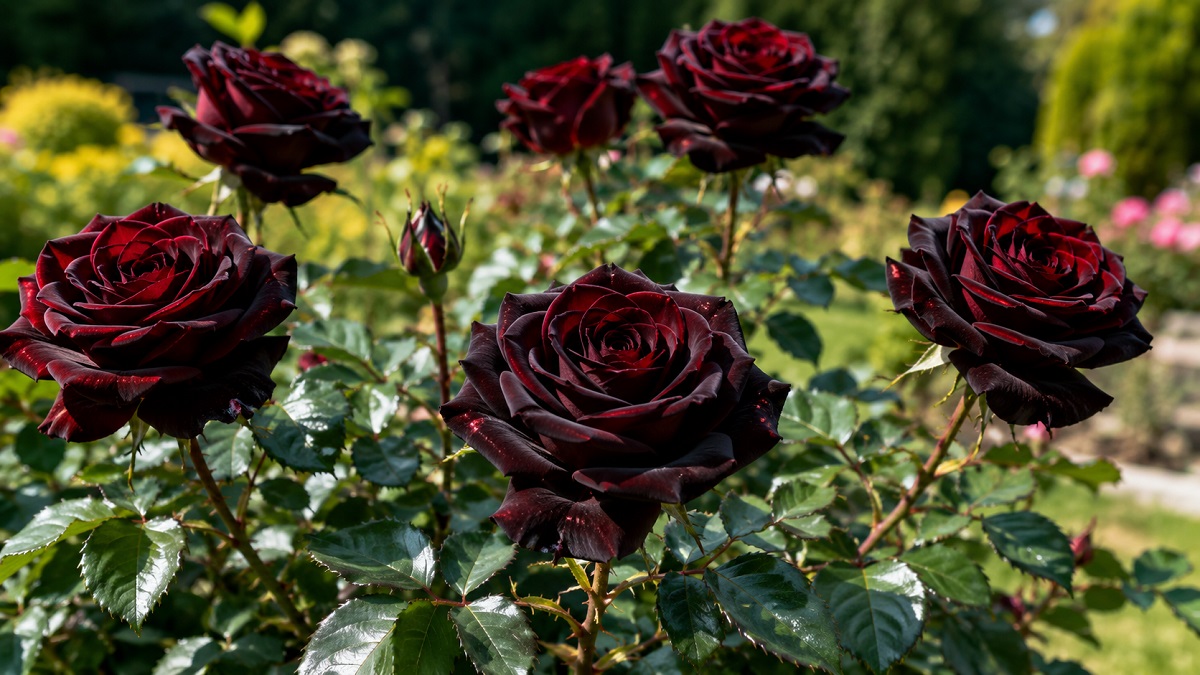
Black Magic Rose (Rosa 'Black Magic') produces dramatic velvety dark-red flowers on upright stems and is well suited to gardens and cut-flower arrangements.
Black Magic rose is one of those roses that immediately catches attention. Its flowers have an unusually deep, velvety red color that can look almost black in certain light, especially while the buds are still tightly closed. Once the flowers begin to open, the petals reveal rich garnet, crimson, and dark red tones rather than a true black color. The result is a sophisticated rose with a dramatic appearance that works beautifully in both traditional and modern gardens.
Botanically sold as Rosa 'Black Magic', this rose is a classic hybrid tea variety introduced by Rosen Tantau in 1995. It develops an upright, relatively narrow habit with long stems and large, high-centered flowers. Rosen Tantau describes the cultivar as vigorous, repeat-flowering, and particularly suitable for cutting, with flowers that open to around 10–12 cm across. It also received the Golden Rose of Baden-Baden award in 2000.
Despite its glamorous appearance, Black Magic does not require mysterious or complicated treatment. Like most hybrid tea roses, it responds best to a sunny position, fertile soil with good drainage, regular moisture, good air circulation, and thoughtful pruning. The biggest difference between a healthy Black Magic rose and a disappointing one is usually not a special fertilizer or secret technique. It is getting the basics right and maintaining them consistently throughout the growing season.
Quick Care Guide
Black Magic rose performs best when it receives plenty of sunlight, steady moisture, fertile soil, and regular deadheading.
Black Magic is a hybrid tea rose best known for its unusually dark flowers and strong, upright stems. It was introduced by Rosen Tantau in 1995 and quickly became popular among gardeners and flower growers who wanted a rose with an especially dramatic bloom. The official Rosen Tantau description notes its upright growth, long stems, slowly opening velvety dark red flowers, glossy foliage, repeat flowering, and suitability for vase cutting.
The name can sometimes create confusion because Black Magic is not a genuinely black rose. There are no naturally occurring roses with petals that are truly black in the way that a black object is black. Instead, this cultivar produces exceptionally dark red petals. In low light, the deepest parts of the flower can appear nearly black, while direct sunlight reveals more of the rich red coloration.
The flowers are one of the main reasons to grow this cultivar. The buds open slowly, allowing the plant to display several stages of the flower at once. A freshly opened bloom can have a formal, high-centered appearance, while older flowers gradually become more open. The dark color also contrasts strongly with green foliage, making even a single plant noticeable in a mixed border.
Black Magic is also useful for gardeners who enjoy bringing flowers indoors. Its long stems and attractive blooms make it especially suitable as a cutting rose. Rosen Tantau lists cutting among its recommended uses and reports an open flower size of approximately 10–12 cm.
Why Grow Black Magic Rose?
Black Magic combines an elegant hybrid tea form with unusually dark red flowers. It is a good choice when the flowers themselves are intended to be the main attraction.
Large, dramatic dark red blooms
Long stems suitable for cutting
Repeat flowering
Upright growth habit
Strong visual contrast with green foliage
Works in formal and informal planting schemes
A Note About Plant Size
Published size information varies depending on climate, rootstock, pruning, and growing conditions. Rosen Tantau lists Black Magic at approximately 70–100 cm, while some North American nursery sources list substantially taller mature plants.
For that reason, allow enough space for the plant to develop naturally rather than planting it tightly against another rose or shrub.
Flowers, Foliage and Growth Habit
The flowers of Black Magic are usually the first feature people notice. The pointed buds are especially dark and can look almost black before opening. As the petals unfold, they reveal a deep red color with a velvety appearance. The blooms are generally carried on long, strong stems, which is one reason this cultivar has been valued as a cut flower.
The flowers are high-centered and formal in appearance, fitting the classic image many people have of a hybrid tea rose. They are particularly effective when viewed close up because the layered petals create a rich texture. In the garden, the dark flowers also look striking against lighter-colored companions such as white, pale pink, lavender, silver, or soft green plants.
The foliage is glossy and relatively dark, helping reinforce the plant's dramatic character. Healthy foliage is important because roses rely on their leaves to produce the energy needed for new shoots and flowers. Removing too many healthy leaves unnecessarily can weaken the plant, so routine maintenance should focus on removing damaged or diseased material rather than stripping the bush.
Black Magic has a slender, upright growth habit rather than the broad, arching shape of many shrub roses. This makes it useful where vertical emphasis is desirable. It can be planted as a specimen, incorporated into a rose bed, or combined with perennials and other ornamental plants. Rosen Tantau specifically lists mixed rose beds, mixed borders, romantic gardens with perennials, and cutting among possible uses.
Choosing the Right Location
Start with sunlight. Black Magic performs best in a position that receives several hours of direct sun each day. A location with roughly six or more hours of direct sunlight is a practical target for most gardens. More sunlight generally means stronger flowering, provided the plant also receives adequate water.
Avoid placing the rose in deep shade beneath dense trees or beside a building that blocks the morning and afternoon sun. A rose may survive in a less-than-ideal location, but reduced light often results in weaker growth, fewer flowers, and foliage that stays damp for longer after rain or irrigation.
Air movement matters too. Give the plant enough room for air to circulate around the foliage. Crowding several roses together may create a beautiful mass of flowers, but poor spacing can make it harder for leaves to dry and can increase the likelihood of fungal problems.
Morning sun is particularly useful because it helps dry dew and moisture from the foliage early in the day. If you live in a very hot climate, some protection from intense late-afternoon heat can be helpful, but the plant should still receive strong light for good flowering.
Soil and Planting Site
Black Magic rose prefers fertile, well-drained soil. The ideal soil should retain enough moisture to support steady growth without remaining saturated around the roots. Heavy clay can often be improved by incorporating suitable organic matter and improving drainage, while very sandy soil may benefit from compost that helps it hold moisture and nutrients.
Before planting, loosen the soil over a broad area rather than creating only a small hole. Rose roots benefit from soil that is easy to penetrate. Remove large stones, persistent weeds, and compacted material from the planting area.
Compost or well-rotted organic matter can be incorporated into poor soil to improve its structure. Avoid filling the planting hole with a completely different soil from the surrounding garden. A dramatic difference between the amended hole and the surrounding ground can sometimes encourage roots to remain concentrated in the planting pocket rather than expanding naturally.
Growing Factor
What Black Magic Rose Prefers
Practical Tip
Light
Full sun
Choose an open position with several hours of direct sunlight.
Soil
Fertile and well drained
Add organic matter when the existing soil is poor.
Moisture
Evenly moist but not waterlogged
Water deeply rather than giving frequent shallow sprinkles.
Air circulation
Good
Allow space around the plant and avoid dense overcrowding.
Feeding
Regular during active growth
Use a rose fertilizer according to the product label.
Pruning
Annual structural pruning
Remove dead, damaged, weak, and crossing growth.
How to Plant Black Magic Rose
Planting a rose correctly gives it a much better start. Container-grown plants can generally be planted when conditions are suitable, while bare-root roses are usually planted during their dormant season according to local climate and nursery recommendations.
1. Prepare the Planting Area
Choose a sunny location and clear away weeds and grass. Loosen the soil to create a broad planting area and mix in mature compost if the soil lacks organic matter.
2. Dig a Suitable Hole
The hole should be wide enough to accommodate the roots without forcing them into a tight circle. If the rose is container grown, the finished soil level should allow the plant to sit at an appropriate depth for its type and rootstock.
3. Inspect the Roots
Gently loosen circling roots on a container-grown rose. For a bare-root plant, spread the roots naturally rather than bending them sharply upward.
4. Backfill Carefully
Return the soil around the roots and firm it gently. Do not compact the ground excessively. Water thoroughly after planting so the soil settles around the root system.
5. Add Mulch
A layer of organic mulch can help conserve moisture and moderate soil temperature. Keep mulch slightly away from the main stem rather than piling it directly against the crown.
Newly planted roses need particular attention during their first growing season. Do not assume that a rose is established simply because it has produced new leaves. Continue watering deeply and consistently while the root system develops.
Watering Black Magic Rose
Consistent watering is one of the most important parts of rose care. Black Magic should receive enough moisture to keep the root zone from repeatedly becoming bone dry, but the soil should not remain saturated.
Instead of watering the foliage from above every day, water slowly at the base of the plant. A soaker hose or drip irrigation system can be particularly useful for rose beds. Deep watering encourages moisture to reach the root zone and keeps the foliage drier.
The exact watering schedule depends on soil, temperature, rainfall, plant size, and whether the rose is growing in the ground or in a container. During hot, dry weather, the plant may require more frequent irrigation. During cool or rainy periods, watering may need to be reduced considerably.
A useful approach is to check the soil rather than following a rigid calendar. If the upper soil is becoming dry and the plant is beginning to show signs of water stress, provide a thorough watering. If the soil is still damp several centimeters below the surface, wait before watering again.
Fertilizing and Feeding
Black Magic is a repeat-flowering hybrid tea rose, so it benefits from adequate nutrition during active growth. A balanced fertilizer formulated for roses can provide the nutrients needed for foliage, stems, roots, and flowers.
Follow the application rate and timing printed on the fertilizer package. More fertilizer is not automatically better. Excessive feeding can encourage lush, soft growth while creating nutrient imbalances and unnecessary stress.
Many gardeners begin feeding after the rose has started active growth in spring and continue at intervals during the growing season. The final feeding should be timed according to local climate and the fertilizer instructions, particularly in areas with cold winters where you do not want to encourage tender late-season growth.
Compost and other well-decomposed organic materials can also be useful as part of a broader soil-building program. They improve soil structure while adding organic matter, although they should not be treated as a substitute for every nutrient a rose may require.
Pruning and Deadheading
Pruning is easier when you think of it as removing unwanted growth rather than cutting the plant simply because it is a certain date. The main objectives are to remove dead or damaged wood, improve the plant's structure, encourage strong new growth, and maintain good airflow.
Major pruning is commonly carried out in late winter or early spring in climates where roses experience a dormant season. Remove dead, diseased, broken, and very weak stems first. Then look for branches that cross or rub against each other.
When reducing healthy canes, make clean cuts just above an outward-facing bud. This encourages new growth to develop away from the center of the plant. Avoid making unnecessary cuts simply to create a perfectly symmetrical shape.
Deadheading is equally important for a repeat-flowering rose. Once a flower has faded, remove the spent bloom and part of its flowering stem according to the plant's structure. Regular deadheading redirects the plant's energy toward new growth and helps keep the bush looking tidy.
Always use clean, sharp pruning tools. Blunt tools can crush stems, while dirty tools can transfer pathogens between plants. If you are pruning a number of roses, cleaning the blades between plants is a sensible precaution, particularly when working with plants that show signs of disease.
How to Encourage More Flowers
Black Magic is naturally capable of repeat flowering, but its performance depends heavily on growing conditions. If flowering is disappointing, begin with the basics before reaching for additional products.
Provide plenty of direct sunlight.
Keep soil moisture reasonably consistent.
Feed during active growth according to fertilizer directions.
Deadhead faded flowers regularly.
Remove diseased foliage promptly.
Avoid excessive nitrogen fertilizer.
Give the plant enough room for healthy air circulation.
A rose that receives excellent light but suffers from drought may stop flowering as vigorously. Similarly, a rose growing in fertile soil but dense shade may produce attractive foliage without the number of blooms you expected. Flowering is therefore best viewed as the result of several conditions working together.
Growing Black Magic Rose in Containers
Black Magic can be grown in a large container, particularly when you want to place the rose on a patio, terrace, balcony, or other sunny outdoor space. Container growing does require more attention to watering and feeding because the available root volume is limited.
Choose a sturdy container with generous drainage holes. A pot that is too small will dry rapidly and restrict the root system. Use a high-quality, well-draining growing medium rather than dense garden soil that can become heavy and compacted inside a pot.
Container roses should be checked regularly during hot weather. A pot can dry out much faster than garden soil, especially when it is exposed to afternoon sun or warm wind. At the same time, make sure excess water can escape freely through the drainage holes.
Feeding is also important because repeated watering can gradually move nutrients through the container. Use a suitable rose fertilizer according to the label and refresh the growing medium when necessary.
Common Pests and Problems
Like other roses, Black Magic can be affected by common garden pests. Aphids are among the most familiar. These small insects often gather around tender shoots, flower buds, and new leaves. A light infestation may be controlled by encouraging beneficial insects and using a strong spray of water to dislodge insects from the plant.
Other rose pests can include spider mites, thrips, scale insects, and beetles, depending on the region. Regularly inspecting the undersides of leaves and new growth makes it easier to detect problems before they become severe.
Avoid automatically treating every insect you see. Some insects are harmless or beneficial, and broad-spectrum insecticides can remove natural predators that help keep pest populations under control. Identify the pest first and choose the least disruptive control method that is appropriate for the situation.
Rose Diseases and Prevention
Roses can encounter fungal diseases such as black spot and powdery mildew. The risk is influenced by weather, humidity, airflow, watering practices, plant spacing, and the health of the surrounding garden.
The first line of defense is good growing practice. Give Black Magic adequate sunlight and space, avoid routinely wetting the foliage, remove heavily diseased leaves, and clear fallen infected plant material from around the base.
Powdery mildew may appear as a white, powdery coating on leaves and young shoots. Black spot typically produces dark lesions on leaves followed by yellowing and premature leaf drop. The symptoms can vary with climate and disease pressure, so accurate identification is useful before applying any treatment.
Rosen Tantau provides disease-resistance information for Black Magic, but resistance should not be interpreted as complete immunity. Even a relatively healthy rose can develop problems under prolonged wet, humid, or poorly ventilated conditions.
Simple Disease-Prevention Routine
Plant the rose in a sunny position.
Allow adequate space around the plant.
Water at soil level when possible.
Remove badly affected leaves.
Clean fallen diseased material from the ground.
Do not overfeed with nitrogen.
Monitor new growth regularly.
Winter Care
Winter care depends heavily on your climate. Black Magic is commonly offered for climates around USDA Zones 7–10, although published hardiness information varies between suppliers and growing conditions can influence performance. Some nursery sources list broader ranges, so gardeners should use their local conditions and the plant's specific nursery information when making winter decisions.
In colder areas, protect the root zone with an appropriate layer of organic mulch after the ground has cooled. The goal is not to keep the soil warm at all times, but to reduce extreme temperature fluctuations and protect roots from repeated freeze-thaw cycles.
Avoid applying a thick layer of wet mulch directly against the canes. Keep the material slightly away from the crown and main stems. In particularly cold regions, additional rose protection may be appropriate depending on the local winter climate.
Do not perform heavy pruning simply because winter has arrived. Major pruning is usually better timed toward the end of the dormant season, when the risk of severe cold has passed in your area.
Propagation
Roses can be propagated through cuttings, but Black Magic is often sold as a grafted rose. A cutting may not produce a plant identical in vigor or performance to a commercially grafted specimen, and propagation success can vary considerably.
If you want to experiment with propagation, healthy non-flowering shoots are generally preferable to weak or diseased material. Cuttings need a clean growing medium, consistent moisture, warmth, and protection from excessive direct sun while they establish roots.
Propagation from seed is not the normal way to reproduce a named hybrid tea cultivar because seedlings are genetically variable and will not necessarily reproduce the characteristics of the parent plant. For gardeners who want the recognizable Black Magic flower, obtaining a correctly identified nursery plant is usually the more reliable approach.
Using Black Magic Rose in the Garden
Black Magic works particularly well when the flowers are allowed to stand out. Plant it where the deep red blooms can be seen against a contrasting background. Pale walls, green hedges, light-colored flowers, and silvery foliage can all make the dark blooms more noticeable.
A single plant can act as a specimen, while several plants can create a dramatic rose bed. Rosen Tantau recommends a planting distance of approximately 40–50 cm for its listed production guidance, although home-garden spacing should also take the plant's eventual size, climate, pruning style, and airflow requirements into account.
Black Magic can also be combined with perennial plants. White flowers can create a high-contrast display, while lavender, purple, pink, or silver companions can create a softer romantic effect. Ornamental grasses can provide movement around the upright rose without competing heavily with its flowers.
Because the blooms are dark, avoid placing the rose where the flowers disappear visually against a very dark background. The same color that makes Black Magic special can become less noticeable if it is surrounded by similarly dark foliage.
Black Magic Rose as a Cut Flower
One of the strongest reasons to grow Black Magic is its suitability for cutting. The upright stems and slowly opening flowers are valuable characteristics when the goal is to enjoy the rose indoors as well as outdoors. Rosen Tantau specifically describes the flowers as ideal for vase cutting.
Cut stems in the cooler part of the day when possible. Choose buds or partially opened flowers depending on the style of arrangement you want. Use a clean, sharp tool to make the cut and place the stems into clean water as soon as practical.
Remove foliage that would sit below the waterline. Change the vase water regularly and keep the arrangement away from intense heat and direct sunlight. These simple steps can help maintain the appearance of the flowers for longer.
Remember that harvesting too many flowers at once can reduce the amount of foliage available for photosynthesis. Take strong stems while leaving enough healthy leaves on the plant to support continued growth.
Common Growing Mistakes
Planting in Too Much Shade
Black Magic needs strong light to perform well. A shaded location may produce a plant with leaves but relatively few flowers.
Watering the Leaves Constantly
Frequent overhead watering can keep foliage wet and may increase disease pressure. Watering at the base is usually a better routine.
Keeping the Soil Permanently Wet
Roses need moisture, but roots also require oxygen. Poor drainage can lead to weak growth and root problems. Improve drainage rather than simply watering less frequently if the site stays saturated.
Over-Fertilizing
Heavy feeding does not guarantee more flowers. Excessive fertilizer can encourage soft vegetative growth and may stress the plant. Use products according to their directions.
Ignoring Deadheading
Leaving every faded flower on a repeat-flowering hybrid tea rose can make the plant look untidy and may reduce the emphasis on producing new flowering shoots. Regular deadheading keeps the display fresh.
Pruning Without a Purpose
Cutting a rose simply to make it smaller can remove productive wood. Begin by removing dead, damaged, weak, and crossing stems, then shape the remaining growth thoughtfully.
Planting Too Closely
Tight spacing can reduce air movement and make maintenance more difficult. Give the rose enough room for its mature size and local growing conditions.
Seasonal Care Guide
Season
Main Tasks
What to Watch For
Early Spring
Prune, remove winter damage, refresh mulch, begin feeding when active growth starts.
New shoots, aphids, fungal symptoms.
Late Spring
Maintain watering, feed as appropriate, deadhead faded flowers.
Rapid growth and early pest activity.
Summer
Water deeply, deadhead regularly, harvest flowers, monitor pests and disease.
Heat stress, drought, spider mites, black spot, mildew.
Autumn
Continue sensible care while growth slows; clean the planting area.
Cool, wet weather and disease buildup.
Winter
Protect roots where necessary and avoid unnecessary heavy pruning.
A newly planted rose may spend its first season concentrating heavily on root establishment. Container-grown plants can begin flowering relatively quickly, while newly planted bare-root roses may need more time to develop a strong framework.
Growth also varies according to climate, soil, watering, rootstock, sunlight, and pruning. Avoid judging a rose solely by how quickly it grows during its first few months. A strong root system and healthy foliage are important foundations for future flowering.
Once established, Black Magic can become a reliable repeat-flowering feature when its basic needs are met. Regular maintenance is usually more valuable than attempting to force rapid growth with excessive fertilizer.
Is Black Magic Rose Really Black?
No. Black Magic is not a true black rose. Its petals are an exceptionally dark red, with the deepest color often appearing almost black in buds and low light. When the flowers open fully and receive brighter light, the red coloration becomes easier to see.
This is actually part of the cultivar's appeal. The flowers have a velvety quality and a rich color that can look different throughout the day. In a garden, the blooms can appear almost mysterious in shade and distinctly crimson in brighter sunlight.
Final Thoughts
Black Magic rose is an excellent choice for gardeners who want a classic hybrid tea rose with an unusually dramatic flower color. Its deep red, velvety blooms, upright growth, long stems, and repeat-flowering habit make it useful both as a garden specimen and as a cutting rose.
The key to growing it well is surprisingly straightforward. Give it plenty of sunlight, plant it in fertile and well-drained soil, water deeply and consistently, feed during active growth, maintain good airflow, and prune with a clear purpose. Regular deadheading will help keep the plant focused on producing another round of flowers.
It is also worth remembering that Black Magic is a rose, not a maintenance-free shrub. Even a relatively healthy cultivar can encounter pests or diseases when conditions are unfavorable. Regular observation is therefore one of the best gardening tools you have. A few minutes spent checking new growth, leaves, buds, and soil moisture can reveal problems before they become serious.
If you have the right sunny location and enjoy roses with strong visual character, Black Magic deserves a place on the shortlist. Its flowers are especially effective when paired with contrasting plants, and the long stems make it possible to enjoy the same dramatic blooms indoors in a vase.
Frequently Asked Questions
Is Black Magic rose easy to grow?
Black Magic is reasonably straightforward to grow when planted in a sunny position with fertile, well-drained soil and consistent moisture. Like other hybrid tea roses, it benefits from regular pruning, feeding, deadheading, and pest and disease monitoring.
How much sun does Black Magic rose need?
Full sun is preferred. Aim for a location receiving several hours of direct sunlight each day. Strong light generally supports better flowering and healthier growth.
What color are Black Magic rose flowers?
The flowers are deep, velvety red rather than truly black. The buds can look almost black, while open flowers reveal richer dark red or garnet tones.
Does Black Magic rose bloom more than once?
Yes. Black Magic is a repeat-flowering hybrid tea rose. Regular deadheading, adequate sunlight, moisture, and nutrition can help support continued flowering during the growing season. Rosen Tantau classifies its flowering behavior as repeat flowering.
Is Black Magic rose fragrant?
It has a light fragrance rather than the powerful perfume associated with some strongly scented old garden roses. Rosen Tantau describes the fragrance as light.
Can Black Magic rose be grown in a pot?
Yes. It can be grown in a sufficiently large container with good drainage, fertile growing medium, and regular watering. Container-grown roses generally need closer attention to moisture and feeding than roses planted in the ground.
Why is my Black Magic rose not flowering?
Insufficient sunlight is one of the first things to check. Also review watering, nutrition, pruning, pest problems, and general plant health. A rose under stress may produce fewer flowers even when the problem is not immediately obvious.
When should I prune Black Magic rose?
In climates with a dormant winter period, major pruning is commonly performed in late winter or early spring. Remove dead, damaged, weak, and crossing growth first, then shape the remaining healthy canes carefully.
Can Black Magic rose be used as a cut flower?
Yes. It is particularly well suited to cutting because of its attractive flowers and long stems. Rosen Tantau specifically lists cutting as one of the cultivar's uses.
How do I keep Black Magic rose healthy?
Grow it in full sun, use well-drained fertile soil, water at the base, maintain reasonable spacing, feed appropriately, deadhead spent flowers, prune damaged or crossing growth, and inspect the plant regularly for pests and disease.