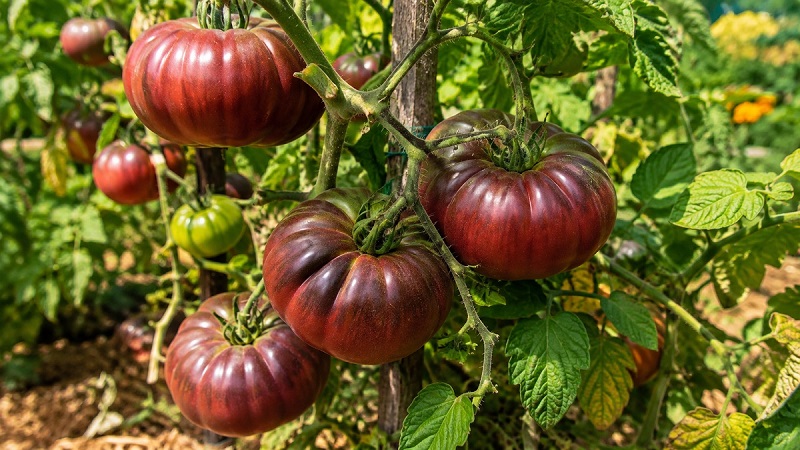
Growing & Caring for Black Krim Tomatoes
Learn how to grow and care for Black Krim tomatoes, including planting, sunlight, soil, watering, fertilizing, pruning, support, harvesting, pests, and common problems.
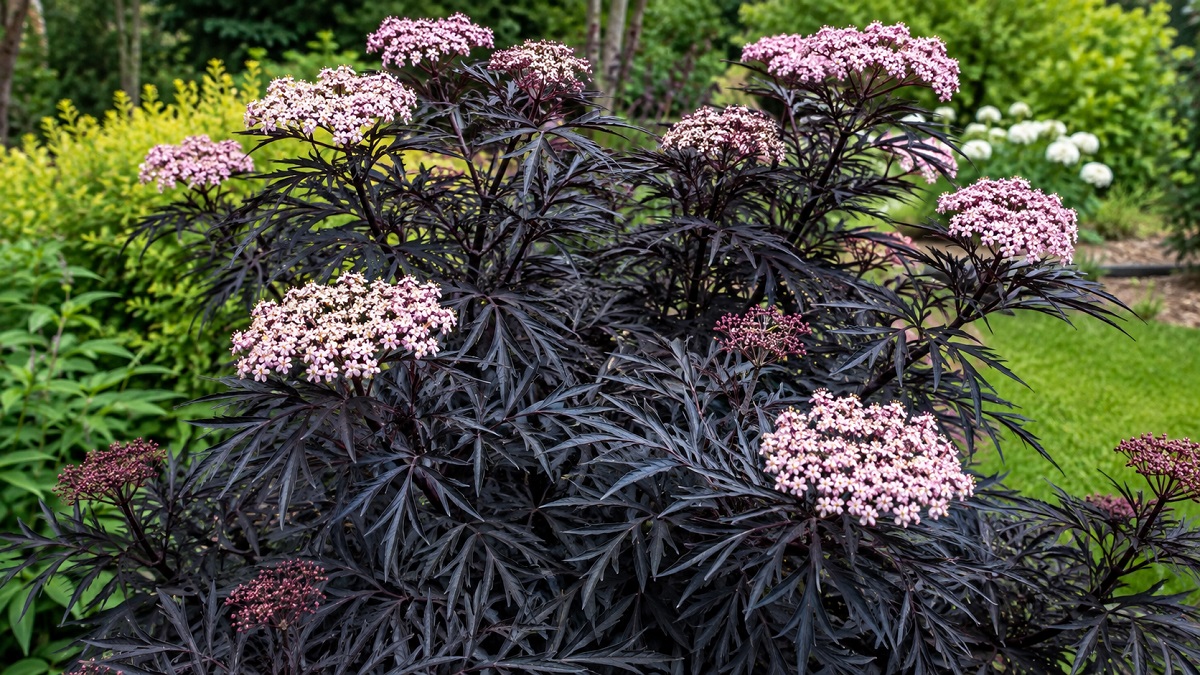
Black Lace Elderberry (Sambucus nigra 'Black Lace') is one of the most striking shrubs you can grow in a landscape. Its finely cut, almost fern-like foliage emerges in a deep burgundy to nearly black color, creating dramatic contrast against green plants. During late spring and early summer, large clusters of soft pink flowers appear above the dark foliage, adding even more visual interest. Later in the season, dark berries may develop, attracting birds and other wildlife.
Gardeners often compare Black Lace Elderberry to Japanese maple because of its elegant foliage. However, unlike many Japanese maples, Black Lace grows quickly, adapts to a wide range of climates, and requires relatively little maintenance. Whether planted as a specimen shrub, hedge, privacy screen, or focal point in a mixed border, it provides year-round beauty.
A fast-growing ornamental shrub known for its dark purple-black foliage, pink flowers, and wildlife-friendly berries.
Black Lace Elderberry was developed as an ornamental cultivar of the European elderberry. It quickly became popular because it combines dramatic foliage with easy care. The leaves are deeply dissected, giving the plant a delicate appearance despite its vigorous growth.
The shrub typically reaches 6 to 8 feet in height and width, though it can become larger under ideal conditions. Its soft pink flower clusters bloom from late spring into early summer and create a beautiful contrast against the dark foliage.
After flowering, berries may develop if another elderberry variety is nearby for pollination. These berries are highly attractive to birds and wildlife. Many gardeners grow Black Lace primarily for its foliage, but the flowers and berries provide additional seasonal interest.
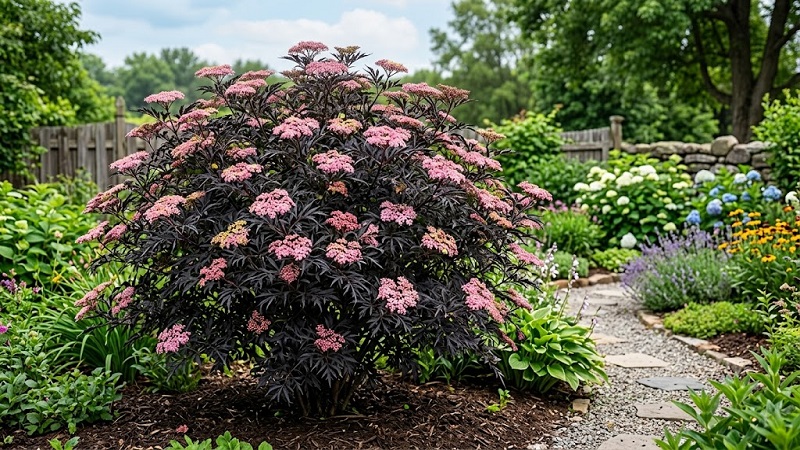
There are many reasons why gardeners choose this beautiful shrub.
Because of its bold foliage color, Black Lace Elderberry often serves as a focal point in landscape designs.
Proper planting helps establish a healthy root system and encourages vigorous growth.
Select a location that receives at least six hours of sunlight daily. Although the shrub tolerates partial shade, its foliage develops the richest dark coloration in full sun.
A 2- to 3-inch layer of mulch helps retain moisture and suppress weeds while protecting roots from temperature fluctuations.
Black Lace Elderberry performs best in full sun. Strong sunlight enhances the deep burgundy-black color that makes this shrub so desirable.
| Light Condition | Performance | Foliage Color |
|---|---|---|
| Full Sun | Excellent | Deepest Color |
| Partial Shade | Good | Slightly Lighter |
| Heavy Shade | Poor | Dull & Sparse |
In hotter regions, afternoon shade can help reduce stress during extreme summer temperatures.
One reason Black Lace Elderberry is easy to grow is its adaptability. It tolerates a variety of soil types as long as drainage is reasonable.
Ideal soil conditions include:
Amending poor soils with compost before planting often improves long-term growth and plant health.
Consistent watering is especially important during the first growing season. Young plants need time to establish strong roots.
Water deeply once or twice per week depending on rainfall and temperature.
Mature plants are somewhat drought tolerant but perform best when soil remains evenly moist.
| Season | Watering Frequency | Notes |
|---|---|---|
| Spring | Moderate | Support new growth |
| Summer | Regular | Increase during heat |
| Fall | Reduced | Maintain moisture |
| Winter | Minimal | Only during dry periods |
Mulching greatly improves moisture retention and reduces watering needs.
This shrub is not a heavy feeder. Excess fertilizer can actually encourage weak, overly soft growth.
Apply a balanced slow-release fertilizer in early spring as new growth begins. Compost or well-rotted organic matter can also provide nutrients naturally.
Avoid fertilizing late in the growing season because new growth may not harden properly before winter.
Pruning helps maintain shape, encourages vigorous growth, and keeps the shrub looking its best.
Late winter or early spring is generally the best time for pruning. Remove damaged, dead, or weak branches before new growth begins.
Older plants can become somewhat woody over time. Every few years, remove some of the oldest stems at ground level to encourage fresh growth.
Black Lace Elderberry responds well to hard pruning if size control is necessary.
Black Lace Elderberry is generally reliable, but occasional issues can occur.
| Problem | Cause | Solution |
|---|---|---|
| Yellow Leaves | Overwatering | Improve drainage |
| Poor Color | Too Much Shade | Increase sunlight |
| Leaf Scorch | Heat Stress | Provide moisture |
| Weak Growth | Poor Soil | Add compost |
| Few Flowers | Excess Pruning | Prune carefully |
The shrub experiences relatively few serious pest issues. Occasionally aphids, spider mites, or scale insects may appear. Most infestations can be managed with strong water sprays or insecticidal soap.
Good air circulation helps prevent fungal diseases. Avoid overcrowding plants and water at soil level rather than wetting foliage whenever possible.
Black Lace Elderberry can be propagated using softwood or hardwood cuttings.
Take cuttings during late spring or early summer when stems are actively growing. Root them in a moist propagation medium and maintain high humidity until roots develop.
Hardwood cuttings taken during dormancy also root successfully. This method is often preferred by experienced gardeners.
Propagation ensures you can create additional plants identical to the parent shrub.
Black Lace Elderberry is one of the most versatile ornamental shrubs available.
Its dramatic foliage allows it to stand alone as a focal point in a garden bed.
Combine it with ornamental grasses, hydrangeas, coneflowers, and other perennials for strong color contrast.
Its fast growth and dense branching make it useful for seasonal screening.
The flowers and berries support pollinators and birds, making it valuable in nature-friendly landscapes.
| Landscape Use | Suitability | Visual Impact |
|---|---|---|
| Specimen Plant | Excellent | Very High |
| Mixed Border | Excellent | High |
| Privacy Screen | Good | Medium |
| Wildlife Garden | Excellent | High |
Apply fertilizer, refresh mulch, and perform pruning before new growth begins. Monitor soil moisture as temperatures rise.
Water regularly during dry periods and enjoy the beautiful flower display.
Observe berry production, clean fallen leaves if necessary, and prepare the shrub for winter.
Minimal maintenance is required. Dormant pruning can be completed before spring growth begins.
Many plants pair beautifully with Black Lace Elderberry.
The contrast between dark elderberry foliage and lighter-colored companions creates eye-catching garden combinations.
Black Lace Elderberry combines elegance, dramatic color, fast growth, and easy care in one exceptional shrub. Its finely cut black-purple foliage provides season-long interest, while pink flowers and wildlife-friendly berries add even more appeal. Whether used as a specimen plant, hedge, border accent, or wildlife feature, this beautiful shrub brings structure and contrast to gardens of all sizes.
With proper sunlight, regular moisture, occasional pruning, and basic maintenance, Black Lace Elderberry can thrive for many years and become one of the most memorable plants in your landscape.
← Back to HomeContinue exploring our gardening guides with more plant profiles, growing tips, and practical advice for creating a healthy, productive garden.