Fragrant Flowering Shrubs: Selection, Care & Design Guide
Discover top fragrant flowering shrubs for every season. Learn plant selection, microclimates, strategic landscape placement, and pruning tips for maximum scent.
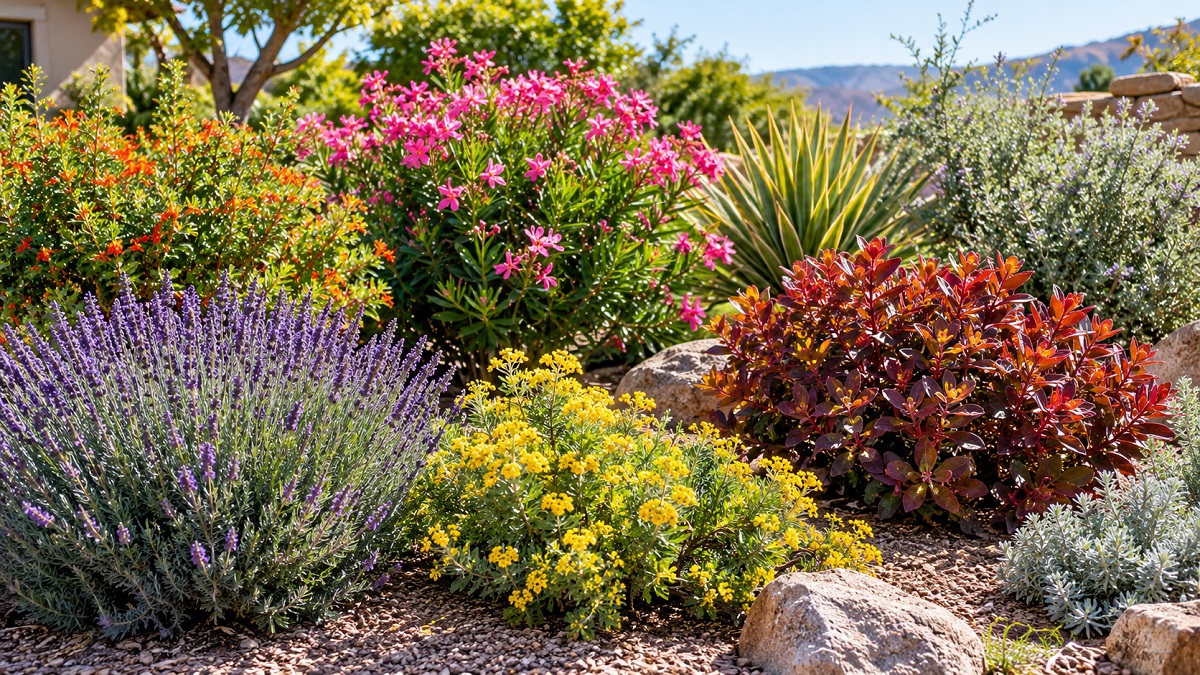
Drought-tolerant ornamental shrubs are a useful choice for gardens where rainfall is limited, watering restrictions are common, or the soil dries quickly during summer. These plants are not simply shrubs that survive without water. The best choices combine attractive foliage, flowers, interesting form, or seasonal color with an ability to cope with periods of dry soil once they are established.
A well-chosen shrub can do much more than fill an empty space. Shrubs can form hedges, frame entrances, soften walls, provide privacy, stabilize planting beds, and create year-round structure. Many drought-tolerant species also attract bees, butterflies, birds, and other garden wildlife.
The key is to match the plant with the conditions of the site. A shrub described as drought tolerant may still need regular watering during its first growing season, particularly after planting. Sun exposure, soil drainage, temperature, humidity, wind, and local rainfall all affect how well a plant handles dry conditions.
Best results come from the right plant in the right place. Most drought-tolerant shrubs need more attention during establishment than after their roots become well developed.
Drought-tolerant ornamental shrubs are woody plants selected for their ability to maintain healthy growth with relatively little supplemental irrigation after establishment. They may have small or leathery leaves, aromatic foliage, deep or extensive root systems, waxy leaf surfaces, or other adaptations that help reduce water loss.
Drought tolerance does not mean a plant never needs water. Even naturally dry-climate shrubs require moisture while young, immediately after transplanting, and during unusually severe heat or prolonged drought. A newly planted shrub has a limited root system and cannot be expected to behave like an established plant.
It is also important to distinguish drought tolerance from poor-site tolerance. A shrub may handle dry weather very well but perform poorly in compacted clay, constantly wet soil, heavy shade, or a cold climate outside its hardiness range. Site conditions still matter.
There is no single list that works equally well for every garden. A shrub that thrives in a hot, dry Mediterranean-style landscape may not be suitable for a humid region or a garden with cold winters. The following plants are examples of ornamental shrubs commonly associated with relatively dry conditions when grown in suitable climates.
Lavender is valued for its fragrant foliage, purple flower spikes, and compact habit. It prefers plenty of sunlight and sharply drained soil. Excess moisture around the roots is often a bigger problem than dry conditions.
Use lavender along paths, near patios, in rock gardens, or toward the front of a shrub border. Regular trimming after flowering can help maintain a compact shape, although hard pruning into old woody stems should generally be avoided.
Rosemary provides evergreen, needle-like foliage and small flowers that can be attractive to pollinators. Its aromatic leaves also make it useful in edible and ornamental planting schemes.
It performs best in full sun and well-drained soil. Established plants can tolerate dry periods, but young rosemary benefits from regular irrigation until the root system develops.
Texas ranger, often grown for its silvery foliage and purple or pink flowers, is well suited to hot, dry landscapes in appropriate climates. It can become a useful flowering shrub where drainage is good and sunlight is plentiful.
Avoid keeping the soil continuously wet. Once established, this shrub generally needs much less supplemental water than many conventional landscape shrubs.
Bottlebrush shrubs are appreciated for their distinctive brush-shaped flowers and evergreen foliage. Depending on the species and climate, they can become substantial landscape plants.
They are particularly useful for sunny borders, screens, wildlife-friendly plantings, and warm-climate landscapes. Young plants should be watered consistently until established.
Rockroses are compact flowering shrubs associated with sunny, dry conditions. Their flowers can appear delicate, but the plants themselves are adapted to exposed sites and lean, well-drained soils.
Rockrose works especially well in rock gardens, Mediterranean-style beds, slopes, and low-water landscapes.
When selecting shrubs for a low-water garden, look beyond the words "drought tolerant" on a plant label. The physical characteristics of the plant can provide useful clues about how it handles dry conditions.
| Characteristic | Why It Helps | What to Look For |
|---|---|---|
| Small or narrow leaves | Can reduce the surface area through which moisture is lost | Fine, narrow, needle-like, or small leaves |
| Waxy foliage | May reduce water loss from the leaf surface | Glossy or wax-coated leaves |
| Silvery foliage | Often associated with plants adapted to intense sun and dry conditions | Gray, silver, or pale-green leaves |
| Deep or extensive roots | Allow established plants to access moisture deeper in the soil | Plants naturally adapted to seasonal dryness |
| Aromatic foliage | Many aromatic plants evolved in regions with hot, dry summers | Rosemary, lavender, sage, and similar plants |
| Flexible growth habits | Plants adapted to dry climates often tolerate heat and periodic water stress | Species suited to the local climate rather than simply marketed as low-water plants |
Start by observing the planting location rather than beginning with a list of plants. Note how many hours of direct sunlight the area receives, how quickly the soil dries, whether rainwater collects there, and how exposed the site is to wind.
Climate is equally important. A shrub can be drought tolerant and still fail because winter temperatures are too low, summer humidity is excessive, or the growing season is unsuitable. Look for plants proven to perform in your local climate.
A common mistake is choosing a shrub based on its size at the garden center. Small nursery plants can eventually become several times larger. Check the expected mature height and width before planting.
Give the plant enough room to develop naturally. Crowding shrubs together can reduce airflow, increase competition for resources, and create a maintenance problem later.
A drought-tolerant garden does not have to look dry or dull. Combine shrubs with different forms of ornamental interest. Evergreen foliage can provide structure throughout the year, while flowering species add seasonal color.
Plants with berries, seed heads, textured bark, or colorful foliage can extend the visual interest beyond the flowering period. A mixture of evergreen and deciduous shrubs can create a more layered landscape.
Good preparation is particularly important in a low-water landscape because you want the root system to establish efficiently. Remove competing weeds and grass from the planting area before digging.
Test drainage by observing how quickly water disappears after irrigation or rainfall. If water remains around the planting hole for an extended period, improve drainage or choose a plant that tolerates wet conditions instead.
Do not automatically create a heavily amended pocket of rich soil around every shrub. Roots eventually grow beyond the original planting hole. The goal is to create a healthy transition between the amended planting area and the surrounding soil rather than an isolated pocket with very different conditions.
Planting during a cooler part of the growing season can reduce transplant stress where local conditions allow. Even a naturally drought-tolerant shrub needs dependable moisture while it develops new roots.
Watering is where many low-water gardens go wrong. Reducing irrigation immediately after planting can cause unnecessary stress, while keeping the soil constantly saturated can damage roots.
During establishment, water deeply enough to moisten the developing root zone. As the plant becomes established, gradually increase the interval between watering sessions rather than giving small amounts every day.
The exact schedule depends on soil type, temperature, rainfall, plant size, and season. Sandy soil usually dries faster than clay, while windy conditions can increase moisture loss. Check the soil before irrigating rather than following a rigid calendar.
Frequent, shallow watering encourages moisture to remain near the soil surface. Deep, appropriately spaced irrigation encourages roots to explore a larger volume of soil.
Drip irrigation or a carefully directed soaker system can make it easier to deliver water to the root zone while minimizing unnecessary wetting of foliage.
Well-drained soil is one of the most important factors for many drought-tolerant shrubs. Plants adapted to dry climates are often poorly suited to roots that remain saturated for long periods.
Sandy or gravelly soils can drain rapidly but may require more frequent watering during establishment. Heavy clay can retain moisture but may become compacted and poorly aerated. Improving soil structure with appropriate organic matter and avoiding compaction can help roots develop.
Soil pH requirements vary considerably among shrubs. Rather than attempting to force every plant into the same soil conditions, group plants with similar preferences together.
Mulch is one of the simplest ways to reduce water loss from the soil. A suitable layer helps slow evaporation, moderates soil temperature, and can reduce competition from weeds.
Organic materials such as shredded bark, composted plant material, or other suitable garden mulch can be used according to local availability and the needs of the landscape. In very dry or fire-prone areas, select mulch materials with local fire-safety recommendations in mind.
Keep mulch away from the trunk or main stems. A thick mound pressed against the base of a shrub can create excessive moisture and encourage pest or disease problems.
Drought-tolerant does not mean fertilizer hungry. Many shrubs adapted to lean soils grow well without heavy feeding. Excessive fertilizer can encourage soft, rapid growth that may require additional water.
Before applying fertilizer, consider whether the plant actually shows signs of nutrient deficiency. A soil test can provide more useful information than applying a general-purpose fertilizer without knowing what the soil contains.
Newly planted shrubs generally benefit more from proper planting, appropriate watering, and good root-zone conditions than from aggressive fertilization.
Pruning requirements vary widely. Some shrubs naturally develop attractive shapes and require little intervention, while others benefit from regular trimming to maintain size or encourage flowering.
The best pruning time depends on whether the shrub flowers on old wood or new growth. Pruning immediately before flowering can remove developing flower buds on some species.
Remove dead, damaged, or diseased branches when appropriate, and use clean, sharp tools. Avoid repeatedly shearing shrubs that naturally have an informal growth habit unless a formal hedge is the intended design.
Severe pruning removes leaves that the plant uses for photosynthesis and can add stress during periods of water shortage. When a shrub is already struggling with extreme heat or drought, focus on providing appropriate moisture and protecting the root zone rather than giving it a major haircut.
One of the most common misunderstandings about drought-tolerant plants is that more water is always better. Excess moisture can reduce oxygen around the roots and contribute to root problems.
A shrub selected for hot, sunny conditions may become weak and poorly shaped in deep shade. Always compare the plant's light requirements with the actual conditions of the planting site.
Keeping mulch piled directly against stems can maintain excessive moisture at the plant base. Leave a visible gap around trunks and main stems.
Newly planted shrubs are not immediately equivalent to mature specimens growing in established landscapes. They need time and consistent care to develop the roots that allow them to tolerate dry conditions.
A plant can be drought tolerant in its native or recommended climate and still struggle somewhere else. Check local hardiness, heat tolerance, humidity, soil, and rainfall conditions before purchasing.
Low-water shrubs are especially effective when used as part of a broader planting design rather than scattered randomly throughout the garden. Repeating a few compatible species can create a cohesive appearance while simplifying maintenance.
Compact evergreen shrubs can provide year-round structure around buildings. Choose varieties that remain comfortably below windows and do not require constant pruning to stay within their allotted space.
Taller drought-tolerant shrubs can form informal screens between outdoor spaces. Combine shrubs of different heights rather than creating a single monotonous row when the available space allows.
Flowering shrubs can become valuable sources of nectar and pollen. Lavender, rosemary, bluebeard, and many other flowering shrubs may attract bees and butterflies when grown in suitable conditions.
Slopes can be difficult to irrigate because water runs downhill before soaking evenly into the soil. Well-adapted shrubs combined with mulch, groundcovers, and appropriate irrigation can help create a more stable planting.
Drought-tolerant shrubs pair naturally with gravel, stone, ornamental grasses, succulents, and other plants adapted to dry conditions. Good drainage is especially important in this style of garden.
Choosing drought-tolerant shrubs is only one part of creating a water-efficient garden. The way the entire landscape is designed can have an equally important effect on irrigation needs.
| Care Area | Recommended Approach | Common Mistake |
|---|---|---|
| Sunlight | Match exposure to the shrub's specific requirements | Assuming every drought-tolerant shrub needs full sun |
| Watering | Water deeply during establishment and reduce frequency as roots mature | Frequent shallow irrigation |
| Soil | Provide suitable drainage and avoid prolonged saturation | Planting dry-climate shrubs in constantly wet soil |
| Mulch | Apply a moderate layer around the root zone | Piling mulch directly against stems |
| Fertilizer | Feed according to plant needs and soil conditions | Heavy fertilization without evidence of nutrient deficiency |
| Pruning | Follow the flowering and growth habit of each shrub | Shearing or hard pruning at the wrong time |
| Spacing | Allow room for mature height and width | Planting based only on the nursery container size |
A drought-tolerant landscape does not need to look like a collection of isolated plants surrounded by bare soil. Repetition, texture, foliage color, and plant height can be used to create a garden that feels full and intentional while still limiting irrigation.
Evergreen shrubs can provide the backbone of the planting. Flowering shrubs can be placed where their seasonal display is most visible. Lower-growing plants can soften the edges, while ornamental grasses and groundcovers can fill gaps between larger specimens.
Consider how plants will look during their least spectacular season. A shrub with beautiful flowers for a few weeks may still have value if its foliage, structure, or bark remains attractive afterward. Choosing plants for more than one season of interest generally produces a more satisfying landscape.
No. Drought-tolerant shrubs still need appropriate planting, watering during establishment, occasional pruning, weed control, and monitoring for pests or disease. Their main advantage is that established plants can often tolerate dry periods with less supplemental irrigation than plants with higher water requirements.
There is no universal schedule. Watering depends on the weather, soil, plant size, season, and drainage. Newly planted shrubs should receive enough water to keep the developing root zone from becoming excessively dry. As they establish, gradually extend the time between watering sessions.
Many prefer full sun, but not all have identical light requirements. Some drought-tolerant shrubs can tolerate partial shade. Always match the plant to the actual light conditions rather than assuming that drought tolerance automatically means full-sun tolerance.
Some can, but drainage is important. Heavy clay can hold water around roots for too long, particularly after irrigation or heavy rain. Select species that tolerate your soil or improve soil structure and drainage where appropriate.
They may need nutrients, but heavy fertilization is usually unnecessary. Base fertilizer use on the plant's requirements and, where possible, soil-test information. Excessive fertilizer can promote lush growth that demands additional water.
Yes. A suitable layer of mulch can reduce evaporation, moderate soil temperature, suppress weeds, and help maintain more consistent moisture around the root zone. Keep mulch away from the stems and trunks of shrubs.
There is no single best shrub for every location. Climate, hardiness, sunlight, soil, drainage, mature size, and local rainfall all influence which species will perform well. A locally adapted shrub is generally a more appropriate choice than selecting a plant solely because it is marketed as drought tolerant.
Yes. Many flowering shrubs provide nectar or pollen for bees, butterflies, and other insects. Choosing several shrubs with different flowering periods can extend the availability of floral resources through more of the growing season.
Drought-tolerant ornamental shrubs can make a garden more resilient without sacrificing beauty. The most successful low-water landscapes are not built around the idea of simply withholding water. Instead, they combine climate-appropriate plants, sensible spacing, healthy soil, good drainage, mulch, efficient irrigation, and thoughtful maintenance.
Give newly planted shrubs enough water to establish properly, then allow them to become increasingly independent as their root systems develop. Pay attention to the conditions in your own garden, because rainfall, soil, temperature, and humidity can make a major difference in how much supplemental irrigation a plant actually needs.
With the right selection and placement, drought-tolerant shrubs can provide flowers, evergreen structure, fragrance, wildlife habitat, screening, and year-round garden interest while reducing the amount of water required to keep the landscape attractive.
Explore more practical guides to growing and caring for beautiful flowers and ornamental plants. Discover planting tips, seasonal care, watering, pruning, propagation, and garden design ideas to help you create a healthier and more attractive landscape.