Belladonna (Atropa belladonna), commonly known as Deadly Nightshade, is a striking yet highly toxic perennial valued for its historic significance, ornamental beauty, and unique woodland-growing habit.
Few plants in botanical history carry as much mystique, danger, and fascination as Atropa belladonna, commonly known as Deadly Nightshade or Belladonna. A perennial herbaceous plant belonging to the Solanaceae family, belladonna has played prominent roles across centuries—from ancient medicine and Renaissance cosmetics to dark folkloric tales of witchcraft. Today, horticulturists, botanical historians, and specialty gardeners grow belladonna for its striking aesthetic, deep historical resonance, and place in ethnobotanical studies.
Growing belladonna is both a rewarding endeavor and a profound responsibility. Because every portion of this plant contains potent tropane alkaloids—primarily atropine, scopolamine, and hyoscyamine—cultivating it demands precise safety measures, meticulous planning, and an understanding of its ecological preferences. In this masterclass guide, we will explore every single aspect of propagating, nurturing, pruning, and safely managing Atropa belladonna in your personal garden or greenhouse.
Safety Notice
Every part of Belladonna (Deadly Nightshade) is highly poisonous to humans and animals. This guide is intended for educational and ornamental gardening purposes only. Always keep the plant away from children and pets, wear gloves when handling it, and seek immediate medical attention if ingestion is suspected.
Quick Care Snapshot
Essential Fast Facts: Atropa belladonna thrives best in temperate, moist environments with calcareous soil.
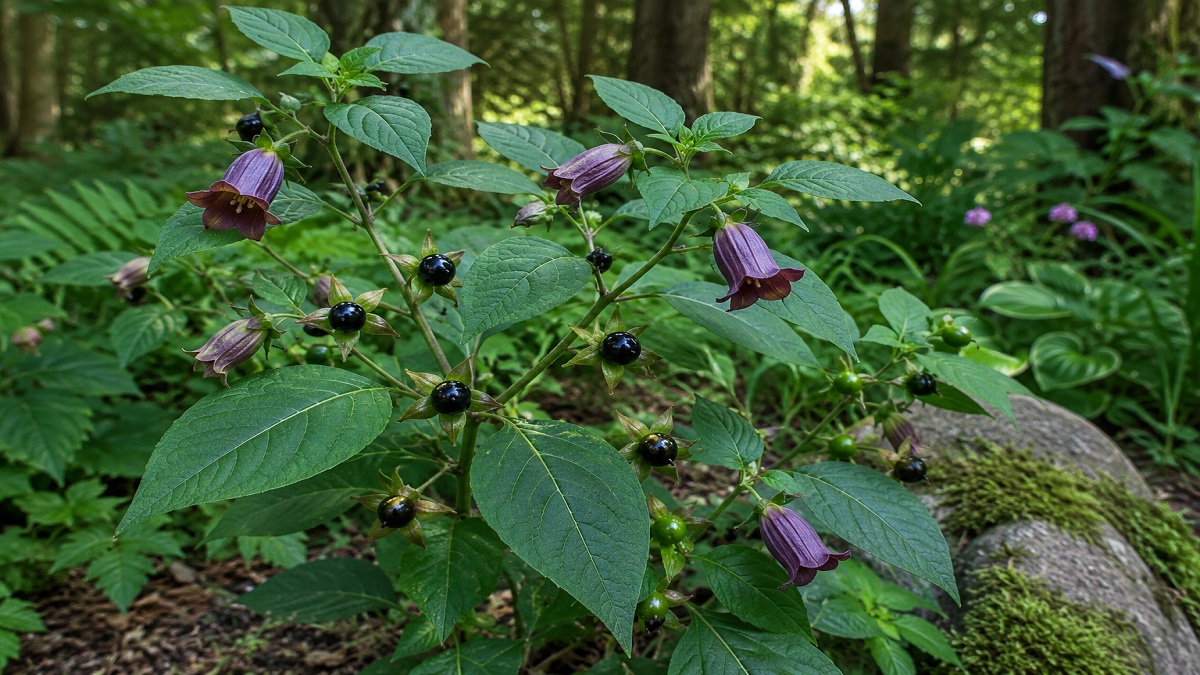
Atropa belladonna is native to Southern, Central, and Western Europe, North Africa, and Western Asia. In its native habitats, it thrives in shaded woodlands, chalk hillsides, disturbed soil clearings, and along the margins of ancient forests. The plant grows as a branching, shrub-like perennial that can reach heights between 3 to 5 feet (0.9 to 1.5 meters), featuring broad, oval-shaped leaves and dull purple, bell-shaped flowers that bloom from mid-summer through early autumn.
The generic name Atropa derives from Atropos, one of the three Fates in Greek mythology, who cut the thread of life. The specific epithet belladonna comes from the Italian phrase meaning "beautiful lady." During the Renaissance, aristocratic women used distilled liquid extracts of the plant as eye drops to dilate their pupils, an effect deemed cosmetically alluring despite causing temporary or permanent vision impairment.
2. Critical Safety Guidelines & Toxicity
Before introducing belladonna into any cultivation space, safety must be your top priority. The entire plant—including leaves, stems, roots, and especially the shiny black berries—contains extremely toxic levels of tropane alkaloids.
WARNING: The sweet taste of belladonna berries makes them dangerously enticing to children, pets, and livestock. Ingestion of even a small number of berries or leaves can result in severe poisoning, respiratory failure, or fatal complications. Always install physical barriers if growing this plant.
When working around belladonna, observe the following mandatory safety precautions:
Always Wear Protective Gloves: Tropane alkaloids can be absorbed through broken skin or micro-abrasions, leading to mild systemic effects like dryness of the mouth or blurred vision.
Restricted Access: Plant belladonna inside locked greenhouses, isolated raised beds, or fenced-off garden quadrants completely inaccessible to children, dogs, cats, or grazing farm animals.
Labeling: Place clear, weatherproof warning signs near the plant stating its scientific and common toxic names.
Disposal: Never burn belladonna foliage or roots. Inhaling the combustion smoke can deliver active alkaloids directly to your respiratory system. Pruned material should be double-bagged and safely discarded in non-compost waste streams.
Essential Equipment for Handling Belladonna
To safely cultivate Atropa belladonna, equip yourself with thick nitrile or leather gardening gloves, long-sleeved protective shirts, dedicated pruning shears that are disinfected immediately after use, and clear protective eye goggles when trimming or harvesting seeds.
Recognizing Accidental Exposure Symptoms
Symptoms of toxicity include extreme dry mouth, severe pupil dilation (mydriasis), rapid heart rate (tachycardia), flushed skin, sensitivity to light, confusion, and dizziness. Seek immediate emergency medical treatment if accidental ingestion occurs.
Replicating the natural woodland environment of Atropa belladonna ensures robust growth, healthy dark green foliage, and vibrant bell-shaped blossoms. Below is a detailed breakdown of its ideal growing conditions.
Environmental Factor
Ideal Specification
Marginal Conditions
Notes & Recommendations
Light Exposure
Dappled Sunlight / Partial Shade
Full Sun (with heavy mulching)
Protects leaves from scorching during intense afternoon summer heat.
Soil pH
7.0 – 8.2 (Slightly Alkaline)
6.0 – 6.8 (Neutral to Mild Acid)
Belladonna strongly prefers limestone-rich or chalky soils.
Soil Texture
Loamy, Moist, Well-Draining
Heavy Clay (requires amendment)
Avoid waterlogged soils; root rot will quickly kill established plants.
Temperature
60°F – 75°F (15°C – 24°C)
Above 90°F (requires shade cover)
Enters dormancy during severe winter frosts.
USDA Zones
Zones 5a through 9b
Zone 4 (requires heavy winter cover)
Herbaceous growth dies back to ground roots in winter freezing.
4. Propagation & Seed Stratification
Propagating Atropa belladonna from seed can test a gardener's patience. The seeds possess a hard outer coat and embryonic dormancy mechanisms designed by nature to prevent out-of-season germination. To achieve high germination rates, cold stratification or chemical scarification is generally required.
Step-by-Step Seed Stratification Method
Follow these exact instructions to break seed dormancy and establish healthy belladonna seedlings:
Soaking: Place your belladonna seeds in a cup of lukewarm water for 24 to 48 hours. Change the water every 12 hours to flush out natural germination inhibitors present in the seed coat.
Cold Stratification: Mix the soaked seeds with a handful of damp sterile peat moss or vermiculite. Place the mixture inside a sealed plastic ziplock bag and store it in your refrigerator (35°F – 40°F / 2°C – 4°C) for 4 to 6 weeks.
Sowing: After cold stratification, sow the seeds on the surface of a fine seed-starting mix enriched with agricultural lime. Lightly dust the seeds with fine compost—do not bury them deeply, as light aids in breaking final seed dormancy.
Warmth & Moisture: Place the seed trays on a germination heat mat maintained at 68°F – 75°F (20°C – 24°C). Keep the humidity high using a clear humidity dome. Germination typically occurs within 14 to 30 days, though some seeds may take up to 6 weeks.
Stem Cuttings (Vegetative Propagation)
If you already have access to a healthy adult belladonna plant, vegetative cuttings offer a faster, clone-exact propagation route:
Take 4 to 6-inch semi-hardwood cuttings in late spring or early summer using sterilized shears.
Strip the leaves from the lower half of the cutting, leaving only 2 to 3 upper leaves.
Dip the cut tip into organic rooting powder and insert it into a moist substrate of 50% perlite and 50% peat moss.
Keep under high humidity and indirect light until new root structures develop (approx. 3–4 weeks).
5. Watering, Soil Management & Feeding
Once established, belladonna is relatively resilient, but consistent environmental care will keep the plant bushy, lush, and disease-resistant.
Watering Requirements
Belladonna prefers consistent soil moisture levels resembling moist woodland floor conditions. Water deep at the root base whenever the top inch of soil feels dry to the touch. Avoid overhead watering to prevent foliar fungal diseases. During hot summer stretches, increase watering frequency while ensuring that excess water drains freely out of the root zone.
Soil Preparation & Amendments
If your garden natural soil is acidic or heavy clay, you must amend it prior to planting belladonna out into the garden bed:
Liming Acid Soil: Incorporate garden lime (calcium carbonate) or crushed oyster shells to lift the soil pH into the preferred 7.0–8.0 alkaline target range.
Improving Drainage: Mix coarse horticultural sand, pea gravel, or expanded shale into heavy soils to prevent standing water around root crowns.
Organic Matter: Work rich leaf mold or well-aged compost into the top 8 inches of planting beds to emulate natural forest floor detritus.
Fertilization Schedule
Belladonna is a moderate feeder. Over-fertilizing with high-nitrogen fertilizers results in weak, leggy stems susceptible to wind breakage. Apply a balanced, slow-release organic fertilizer (such as 5-5-5 or 10-10-10) once during early spring as new shoots emerge. A mid-summer top-dressing of organic compost provides ample nutrients through the flowering stage.
6. Pruning, Season Maintenance & Overwintering
Proper seasonal maintenance guarantees that your Atropa belladonna remains manageable, sturdy, and well-behaved year after year.
Pruning Techniques
In late spring, pinch back the growing tips of young shoots once the plant reaches about 12 to 18 inches in height. This pinching technique encourages lateral branching, leading to a bushier growth habit with significantly more flowering sites. Wear heavy gloves during all pruning tasks!
Throughout summer, remove dead or diseased foliage immediately to maintain clean air circulation through the canopy.
Managing Berries & Self-Seeding
As flowers fade in late summer, dark green berries form, turning into glossy, pitch-black berries filled with tiny seeds. If you do not wish for belladonna to self-seed aggressively across your garden, clip off the immature berries before they fully ripen. Safely dispose of harvested seed pods in sealed trash containers.
Overwintering Protocols
In USDA Zones 5 to 9, the above-ground stems of belladonna die back naturally following the first hard frost of autumn.
Fall Cutback: Cut all dead stems down to roughly 2 inches above soil level after dormancy sets in.
Winter Mulching: In colder zones (Zones 5-6), cover the root crown with a 3 to 4-inch layer of dry straw, leaf mulch, or bark to insulate the root system against deep frost heave.
Spring Renewal: Remove heavy protective mulch in early spring as ground temperatures rise to allow fresh shoots to emerge unhindered.
7. Common Pests and Plant Diseases
Remarkably, despite its severe toxicity to humans and mammals, Atropa belladonna serves as a food source for specialized insects that have evolved tolerance to its deadly alkaloids.
Insect Pests
The most notorious pest of belladonna is the Flea Beetle (Epitrix species). These small, jumping beetles chew tiny, characteristic "shotholes" through the leaves. While established plants easily survive minor feeding damage, young seedlings can quickly suffer under heavy infestation. Treatment includes installing fine floating row covers over young transplants or applying neem oil early in the morning.
Other minor pests include aphids and nightshade-adapted caterpillars. These can generally be washed off with a firm stream of water or treated with insecticidal soap.
Fungal & Bacterial Diseases
Damping-Off: A widespread issue during seed germination caused by overly wet conditions and inadequate air circulation. Use sterile potting media and refrain from overwatering seedlings.
Root Rot (Phytophthora / Fusarium): Results from planting in waterlogged or heavy clay soil. Ensure superior soil drainage and allow the soil surface to dry between waterings.
Powdery Mildew: May appear on foliage in late summer if planted in dense shade with poor ventilation. Thin overcrowded branches and ensure plants receive adequate morning light.
8. Frequently Asked Questions
Is it legal to grow Atropa belladonna in my garden?
In most regions, including the United States, Canada, and the United Kingdom, growing Atropa belladonna as an ornamental or botanical curiosity is legally permitted. However, certain local municipalities or homeowners associations may ban toxic species. Always verify local regulations before planting.
How fast does Belladonna grow from seed?
Belladonna grows moderately fast once germinated. Seeds can take 2 to 6 weeks to germinate after cold stratification. By the end of its first growing season, a plant will typically reach 2 to 3 feet tall, with full maturity and maximum flowering achieved in its second year.
Can I grow Belladonna indoors in pots?
Yes, belladonna can be grown in large containers indoors or on patios. Choose a deep container (at least 5 gallons) with ample drainage holes. Use an alkaline potting mix enriched with crushed limestone, and place the container in a sunroom or under bright grow lights. Keep container plants safely isolated from pets!
What should I do if a pet or child touches the plant?
Simply touching intact leaves rarely causes severe toxicity, but wash the affected skin thoroughly with soap and warm water immediately. If any portion of the plant (berries, foliage, stems) is ingested, contact Poison Control or seek emergency medical/veterinary attention without delay.