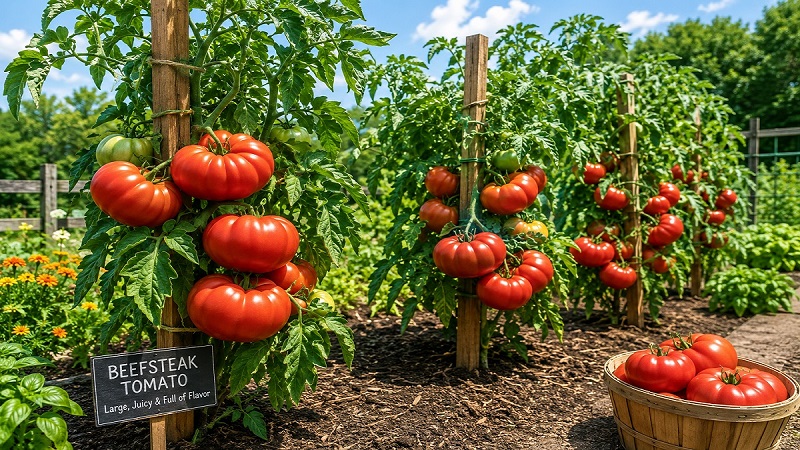
Growing & Caring for Beefsteak Tomatoes
Beefsteak tomatoes demand more of everything. They require more sun, more consistent watering, heavier structure for vertical support, and a lengthier, warm growing season than almost any other tomato type.
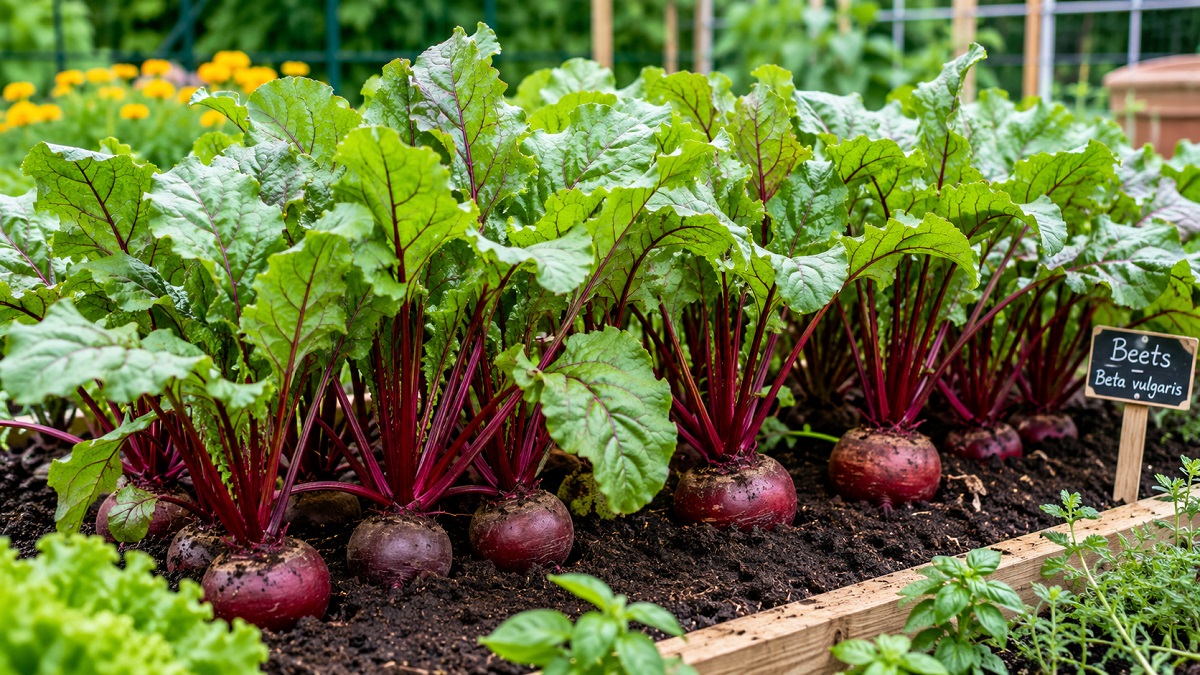
Essential growing information at a glance for healthy, productive beet plants.
Beets (Beta vulgaris) are one of the most rewarding, resilient, and multi-functional crops you can introduce to your backyard garden. Often celebrated for their deep, earthy roots, these cold-hardy gems pull double duty, yielding dynamic, nutrient-rich leafy greens that rival spinach and chard. Whether you are aiming for sweet, dark-crimson globes to pickle, bright golden varieties that won't stain your kitchen hands, or unique candy-striped heirlooms to slice raw into gourmet salads, mastering the fundamentals of beet cultivation is a cornerstone achievement for any home grower.
Despite their rugged reputation, beets can be surprisingly finicky if their core soil, spacing, and hydration requirements are ignored. Many novice gardeners find themselves frustrated by stunted roots, woody flesh, or plants that bolt straight to seed without swelling. This comprehensive handbook covers every aspect of the beet lifecycle—from dialing in your subterranean mineral balance to processing your final harvest—ensuring you skip the common pitfalls and secure a heavy yield of tender, sweet roots year after year.
To successfully cultivate the beet, it helps to understand its unique biological design. What we call a beet seed is actually a botanically clustered fruit ball containing anywhere from two to six individual, viable seeds encased in a rugged, wrinkled husk. This means that for every single "seed" you drop into the earth, a tight family colony of seedlings will emerge, making subsequent thinning an absolute structural necessity rather than an optional chore.
Beets are true biennials, natively programmed to grow leaves and store energy in their taproot during their first season, then use those stored sugars to flower and set seed in their second year after a cold vernalization period. In the home vegetable plot, we treat them as annuals, harvesting them at peak sugar concentration before summer heat or heavy winter freezing prompts them to turn woody and fibrous.
Modern plant breeding and the preservation of heirloom lines offer an incredible palette of color, shape, and flavor profiles. Selecting the right variety dictates not just aesthetic interest on your dinner plate, but also adaptation to your local seasonal timeline.
| Cultivar Group | Popular Varieties | Days to Maturity | Best Used For | Key Characteristics |
|---|---|---|---|---|
| Classic Red & Crimson | Detroit Dark Red, Early Wonder, Merlin | 50 - 60 Days | Pickling, roasting, canning | Deeply rich in betalain pigments, high sugar content, incredibly robust and reliable across poor soils. |
| Golden & Yellow | Touchstone Gold, Golden Grex | 55 - 65 Days | Raw salads, steaming, roasting | Milder, distinctly sweet, slightly less earthy flavor; won't bleed dark red juices when sliced or cooked. |
| Specialty & Striped | Chioggia (Bull's Eye) | 50 - 55 Days | Raw carpaccio, visual garnishes | Striking concentric rings of alternate pink and bright white; retains patterns best when served cold and raw. |
| Elongated Cylindrical | Cylindra, Formanova | 60 - 70 Days | Uniform slicing, high-yield beds | Grows up to eight inches long; allows for massive space-efficiency and perfectly uniform, equal-sized rounds. |
Because the main objective of beet cultivation occurs entirely out of sight under the soil line, structural bed preparation dictates your eventual success or failure. Beets require a highly friable, loose, debris-free medium to expand smoothly. If a swelling beet root collides with an unyielding clay clod, a heavy stone, or compacted hardpan, it will twist, fork, split, or become permanently stunted.
Aim for a sandy or silty loam that drains with ease while maintaining uniform residual moisture. If your home plot consists of dense, heavy clay, do not attempt to dig straight down; instead, construct raised beds at least eight to twelve inches deep, or thoroughly incorporate generous quantities of mature, well-sifted organic compost to break up the dense mineral bonds.
Beets have a remarkably high demand for the micronutrient boron. A severe deficiency in this element manifests as an internal physiological disorder known as "black heart rot." The plant may look normal from the exterior, but the very center of the root develops ugly, unpalatable black, corky dead spots. If your garden soil is heavily leached or extremely sandy, consider applying a highly diluted, specialized organic trace mineral spray, or dissolve a single tablespoon of pure household borax into three gallons of water to lightly and evenly mist over a one-hundred-square-foot planting zone before sowing.
Beets strongly resent having their tender, volatile taproots disrupted or bent during early development. Because of this, transplanting delicate indoor-started seedlings out into open garden beds is generally a risky gamble that results in misshapen or permanently stunted roots. For the absolute best results, always direct-sow your seeds straight into their permanent home outdoors.
Because they thrive in cool ambient temperatures, you can begin sowing beet seed clusters as soon as your local spring soil can be worked without clumping, typically three to four weeks before the historical last spring frost date. Soil temperatures should ideally register at least 50°F (10°C) for rapid, uniform germination, though the seeds will stubbornly sprout in conditions as chilly as 40°F (4°C), albeit at a much slower pace.
To secure a continuous, reliable supply of tender young beets all spring, summer, and autumn, practice succession planting. Rather than dropping your entire seed inventory into the ground at once, sow smaller, dedicated rows or blocks every two to three weeks until mid-summer hits, then pause during the worst of the seasonal heat. Resume sowing in late summer, timing your final batch so it matures roughly two weeks after your first moderate autumn frost.
Plant your beet seed clusters roughly 1/2 inch deep into prepared, moist rows. Space the seed balls roughly 1 to 2 inches apart from one another. If you are planting in traditional straight garden lines, space the rows 12 inches apart to allow easy access for weeding hoes and harvest baskets.
Once your seedlings emerge from the soil—looking like pairs of narrow, bright green or reddish blades—the real work of active care begins. Because each seed cluster drops multiple sprouts in a tight radius, you must thin them out manually. Failing to thin is the single most common reason home gardeners end up with nothing but beautiful greens and thread-like roots.
When the young seedlings reach roughly two to three inches tall, it is time for the first round of thinning. Do not pull the unwanted seedlings straight out by their roots, as this violent upward tug will tear the delicate, intertwined root systems of the keeper seedlings left behind. Instead, take a sharp pair of clean embroidery scissors or micro-tip pruning shears and snip the unwanted sprouts off cleanly at the soil level.
Thin the plants down to a strict spacing of one strong seedling every 3 to 4 inches. If you prefer to harvest tender, baby-sized premium beets, you can thin slightly tighter to 2 inches apart, then pull every other plant as a baby vegetable when they reach golf-ball dimensions, leaving the remaining plants room to swell to full size.
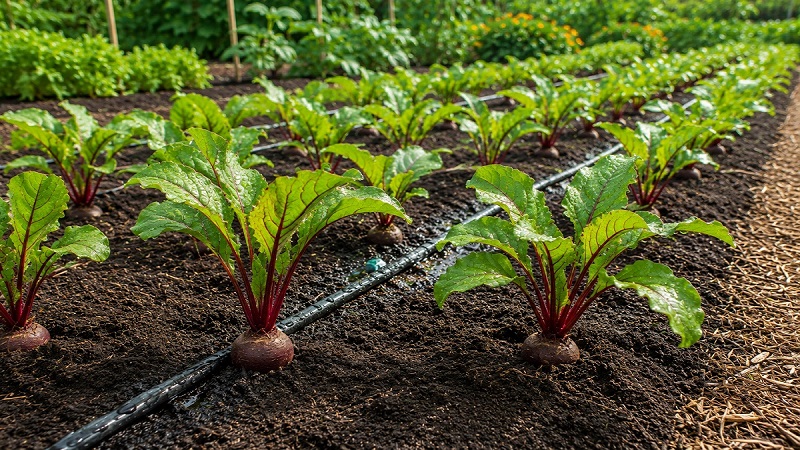
Beets require absolute consistency when it comes to moisture levels. They need roughly one to one and a half inches of water per week. The secret to growing incredibly sweet, crisp, melt-in-your-mouth beets is keeping the soil uniformly damp like a wrung-out sponge.
If the soil undergoes a stressful yo-yo cycle of extreme bone-dry drought followed by sudden, heavy, saturating deluges, the expanding beet roots will develop prominent, tough, woody white concentric rings inside the flesh. Even worse, sudden surges of intense moisture after a long dry spell cause the roots to swell too fast for their outer skins, resulting in deep structural vertical cracks that invite fungal pathogens and rot. Apply a two-inch layer of clean straw, shredded leaves, or clean organic mulch around the plants once they are thinned to stabilize soil temperatures and put a stop to rapid evaporation.
While beets are generally independent and tough, their lush canopy and sweet roots can attract a handful of common garden adversaries. Managing these problems early via proactive organic methods prevents long-term crop losses.
The primary disease threat to beets is Cercospora leaf spot. This fungal condition shows up as numerous small, circular spots with distinctive ash-gray centers and sharp dark purple or reddish borders scattered across older leaves. If left unchecked, it destroys the foliage canopy, robbing the plant of its ability to photosynthesize and feed the expanding root below.
To stop Cercospora from taking hold, always water your garden beds early in the morning via ground-level drip irrigation tape or soaker hoses rather than using overhead sprinklers. This keeps the leaves dry during the warm day. Leave plenty of breathing room between your plants to maximize airflow, and promptly prune away and discard any heavily spotted lower leaves. Practice a strict three-year crop rotation schedule, ensuring you never plant beets, Swiss chard, or spinach in the exact same footprint year after year, as the fungal spores easily overwinter in the soil debris.
Knowing exactly when to harvest your beets depends heavily on your personal kitchen goals. From the moment the first leaves pop up, the entire plant is edible. You can harvest a few individual outer leaves from your plants all season long to use fresh in salads or sautés—just make sure to leave the inner crown intact so the root keeps swelling.
For the roots themselves, keep a close eye on the crown of the plant. As beets mature, the top shoulders of the root naturally push up out of the soil line, giving you an easy visual indicator of their size under the surface.
To harvest, avoid grabbing the stalks and pulling straight up with brute force, as the leaves can easily snap right off in your hands, leaving the root stuck in the ground. Instead, gently loosen the surrounding soil with a hand fork or garden trowel, lift from underneath the base of the root, and pull it out smoothly.
Store your trimmed, unwashed beets in a traditional root cellar, an unheated garage, or your refrigerator vegetable crisper drawer. For the best results over winter, pack them carefully into crates or sturdy plastic bins, layering them in damp sand, clean sawdust, or peat moss so they don't touch one another. Kept close to freezing but protected from actual frost, your homegrown harvest will stay crisp, firm, and wonderfully sweet for three to five months.
Browse through our collection of comprehensive plant profiles to find the perfect additions to your sunny landscape borders and native meadows.