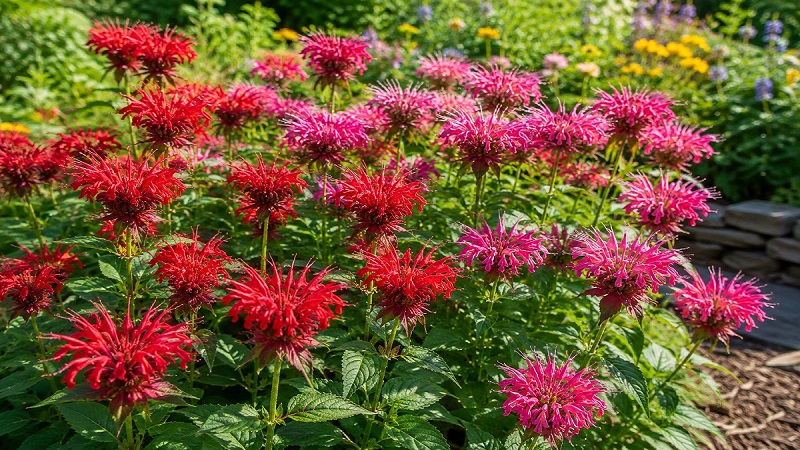
Growing & Caring for Bee Balm (Monarda)
Known alternatively as Bergamot, Horsemint, and Oswego Tea, Bee Balm produces stunning, ragged, crown-like whorls of tubular flowers that act as neon signs for bumblebees, hummingbirds, and butterflies.
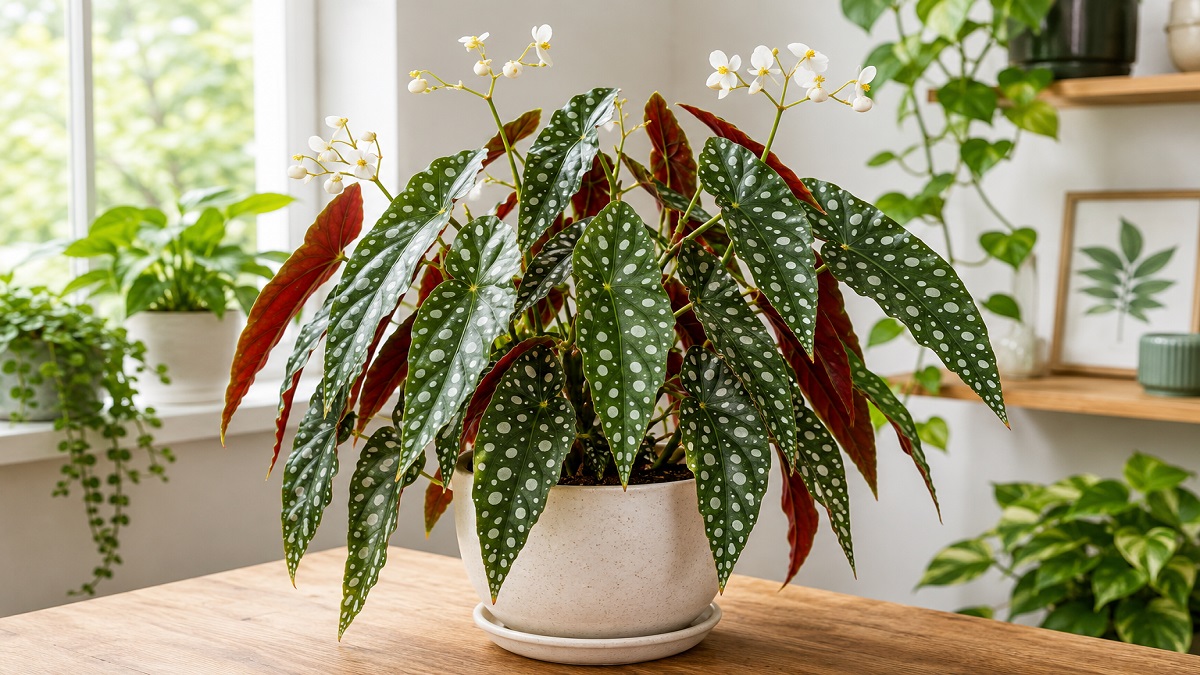
Few indoor plants hold a room captive quite like Begonia maculata, often affectionately known as the Polka Dot Begonia or Trout Begonia. With its striking olive-green wings hand-painted with metallic silver spots and its dramatic, deep-crimson undersides, this cane-type begonia looks almost too artistic to be natural. Native to the subtropical rainforests of South America, specifically Brazil, it brings a bold, high-contrast flair into modern living rooms. However, its sophisticated beauty comes with a reputation for being somewhat dramatic if its core cultural needs are ignored.
If you have ever brought home a thriving Polka Dot Begonia only to watch it drop pristine leaves, develop crispy brown tips, or lose its vivid coloration, you are certainly not alone. Fortunately, keeping this botanical masterpiece flourishing is far easier than most beginners think once you understand its native environment. In this comprehensive guide, we will unpack every single detail of Begonia maculata care—from lighting nuances and precision watering routines to propagation techniques and long-term pruning strategies. By the time you reach the end of this guide, you will have all the tools needed to raise a lush, bushier, and frequently blooming specimen.
At a glance: The foundational requirements to keep your Polka Dot Begonia healthy.
To properly care for Begonia maculata, it helps to understand where it comes from. Originating in the tropical rainforests of Atlantic South America, particularly southeast Brazil, this plant grows under the dappled shade of canopy trees. In the wild, it experiences warm temperatures, high ambient humidity, and moist yet sharply draining soil rich in decomposing leaf litter.
Botanically, Begonia maculata belongs to the cane-like begonia group (often colloquially called Angel Wing Begonias due to the silhouette of their asymmetric leaves). Cane begonias are characterized by tough, bamboo-like woody stems with prominent nodes from which foliage and clusters of flowers emerge. Under optimal conditions indoors, a happy Polka Dot Begonia will produce delicate clusters of white-to-pale-pink bell-like flowers held on drooping reddish stems throughout spring and summer.
The standout feature—the polka dots—isn't just decorative; it's a evolutionary feature. The silver spots on the upper leaf surface are actually tiny pockets of trapped air under the epidermis that reflect light, while the rich ruby-red underside contains anthocyanin pigments designed to capture any stray green light bouncing off lower forest canopy levels. When you look closely at your plant, you are seeing a masterpiece of biological engineering tailored for low-light forest floors.
Lighting is arguably the most critical variable when growing Begonia maculata indoors. Because its foliage is relatively soft and thin compared to thick succulents or rubber trees, direct unfiltered sunlight will scorch the leaves rapidly, creating straw-colored dry patches and causing silver spots to turn brown.
The Ideal Spot: Aim for bright, indirect sunlight. An east-facing window that provides soft morning sun for an hour or two followed by bright indirect light for the rest of the day is ideal. Alternatively, place the plant 3 to 5 feet back from an unobstructed south- or west-facing window behind a sheer curtain.
Signs of Lighting Issues:
Watering a Polka Dot Begonia requires a delicate balance. Their semi-succulent cane stems store a modest amount of moisture, making them susceptible to root rot if overwatered, yet their thin foliage will quickly drop if the root ball dries out completely.
The "Top 50%" Rule: As a general rule, allow the top 1 to 2 inches of soil (roughly half the depth of smaller pots) to dry out before watering again. Insert your finger deep into the medium; if it feels cool and damp, hold off for another couple of days.
How to Water:
Originating from tropical understories, Begonia maculata thrives in high humidity environments. While it can adapt to average household air (around 40% relative humidity), dry ambient air—especially during winter heating seasons—is the primary culprit behind crunchy, browning leaf tips and premature leaf shedding.
Target Humidity Range: Aim for 50% to 70% humidity. If your home regularly drops below 40%, you will likely notice crisp edges on the tips of leaves.
Warning on Misting: Avoid misting the foliage of Begonia maculata directly with a spray bottle. Unlike smooth-leafed Philodendrons, Begonia foliage retains water droplets easily in humid air, creating an ideal breeding ground for powdery mildew and bacterial leaf spots.
Polka Dot Begonias prefer consistent warm temperatures between 65°F and 85°F (18°C – 29°C). They are extremely sensitive to cold drafts and temperatures below 55°F (13°C). Keep your plant away from air conditioning vents, drafty winter windows, or exterior doors that open frequently during cold snaps. Cold stress quickly leads to massive leaf drop and root shock.
The foundation of a long-lived Begonia maculata lies underground. These plants possess fine, delicate root systems that suffocate quickly in dense, heavy gardening soils. They require an airy, rich, well-aerated potting mix that holds subtle moisture without becoming waterlogged.
Instead of using standard commercial potting soil straight out of the bag, create a custom lightweight blend using the following ratio:
Begonias actually prefer to be slightly root-bound; placing them in a container that is too large holds unnecessary soil mass that stays wet for too long, inviting root rot. Choose a container with generous drainage holes made of terracotta or unglazed ceramic if you tend to overwater, or plastic/ceramic if you live in an arid region.
Repot your plant every 12 to 18 months in early spring, selecting a new pot that is only 1 to 2 inches larger in diameter than the current one.
During the active growing season (spring through early autumn), Begonia maculata is a moderately fast grower that benefits from consistent feeding.
| Season | Frequency | Fertilizer Type & Strength |
|---|---|---|
| Spring – Summer | Every 2 to 4 weeks | Balanced liquid fertilizer (10-10-10 or 20-20-20) diluted to 50% strength |
| Early Autumn | Once every 6 weeks | Diluted balanced liquid fertilizer (25% strength) |
| Winter | Pause feeding completely | None (allow plant to rest during lower light periods) |
By nature, Begonia maculata is a cane-forming plant. Left to its own devices, it will grow tall, thin, bamboo-like canes that can become top-heavy and leggy over time, often losing lower leaves as the main stems stretch toward light sources.
Pruning is not harmful to your Begonia—in fact, it is essential for maintaining a full, bushy, aesthetic specimen. Cutting a cane right above a leaf node breaks apical dominance, forcing the stem to send out two or more new side shoots right below the cut.
Because the woody canes grow erect and support large foliage, heavy upper growth can cause stems to tilt or snap under their own weight. Insert slender bamboo stakes, moss poles, or decorative metal trellises into the pot when repotting. Gently secure the main canes to the stake using soft plant ties or Velcro tape, leaving enough slack for the stems to expand as they mature.
Propagating Begonia maculata is immensely satisfying and remarkably simple. Because it is a cane begonia, stem cuttings root readily in both water and potting media within a few weeks.
Water propagation allows you to monitor root growth in real-time while adding a decorative touch to your windowsill.
If you prefer to skip the water-to-soil transition, you can root cuttings directly in moist substrate.
Even attentive plant parents run into hiccups. Use this diagnostic reference to quickly identify and fix common Polka Dot Begonia ailments.
| Symptom | Probable Cause | Corrective Action |
|---|---|---|
| Crispy, brown leaf tips & edges | Low atmospheric humidity or tap water fluoride build-up | Increase ambient humidity above 50%; switch to filtered/distilled water. |
| Yellowing lower leaves & soft stems | Overwatering / Poor soil drainage (Root Rot) | Allow soil to dry out significantly; inspect roots for mushiness and repot in fresh, airy mix. |
| Leaves curling inward or drooping | Underwatering or extreme heat shock | Check soil moisture depth. Give a thorough soak if dry; move away from hot drafts. |
| Powdery white film on leaves | Powdery Mildew (Fungal Infection) | Improve air circulation around plant; treat with organic neem oil or copper fungicide; keep leaves dry. |
| Faded leaves with lost silver contrast | Too much direct sunlight or extreme low light | Relocate plant to a spot with bright, indirect filtered sunlight. |
| Sudden massive leaf drop | Cold drafts, temperature shock, or moving locations | Keep in a stable environment between 65°F–85°F away from drafty doors or vents. |
While relatively resilient, Begonia maculata can occasionally attract standard houseplant pests:
Browse through our collection of comprehensive plant profiles to find the perfect additions to your sunny landscape borders and native meadows.