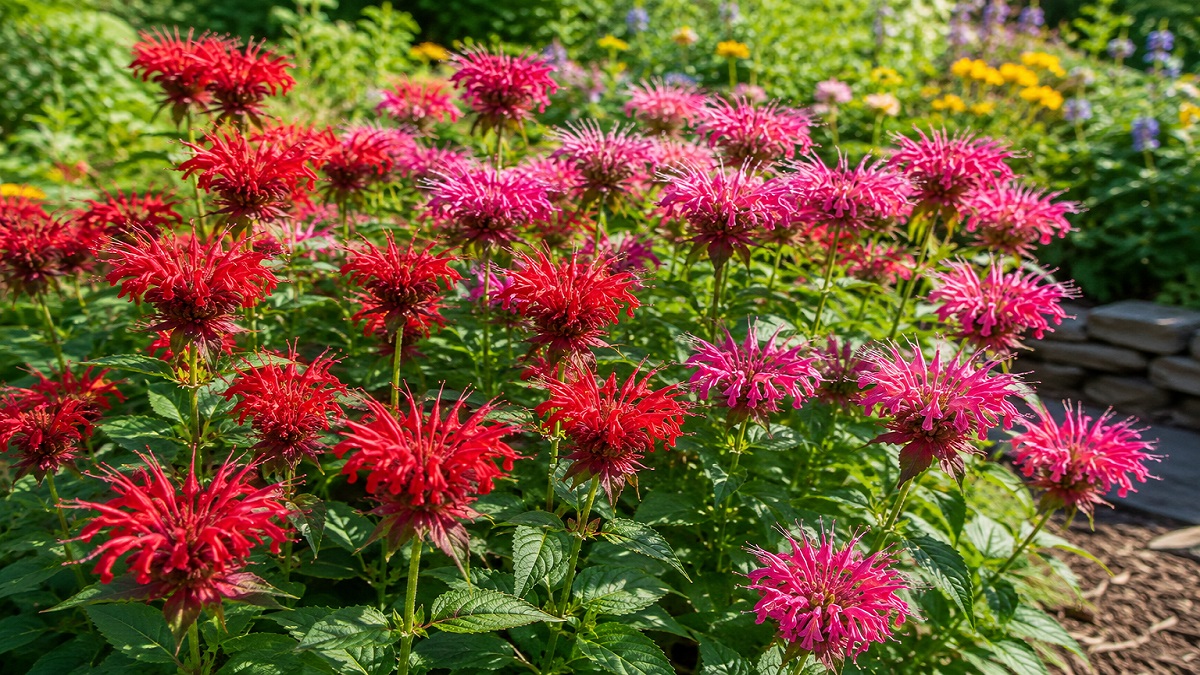
Bee Balm (Monarda) is a colorful perennial prized for its fragrant blooms, pollinator-friendly flowers, medicinal uses, and easy care in sunny gardens.
Few perennials match the visual eccentricity, therapeutic value, and ecological magnetic power of Bee Balm. Belonging to the genus Monarda and nested within the mint family (Lamiaceae), this North American native is a cornerstone of the modern pollinator-friendly garden. Known alternatively as Bergamot, Horsemint, and Oswego Tea, Bee Balm produces stunning, ragged, crown-like whorls of tubular flowers that act as neon signs for bumblebees, hummingbirds, and butterflies. Whether you are aiming to increase honeybee activity, harvest medicinal leaves for herbal infusions, or paint your landscape with vivid shades of crimson, violet, and pink, mastering the growth patterns and maintenance of Bee Balm is an essential achievement for any dedicated gardener.
Historical Context and Botanical Classification
The cultural lineage of Bee Balm spans centuries, stretching back to Indigenous American traditions long before European botanists cataloged the plant. The common nickname "Oswego Tea" stems from the Oswego Nation, who introduced European settlers to the refreshing, medicinal hot infusions made from the leaves of Monarda didyma. Following the Boston Tea Party in 1773, this herbal preparation transformed from a regional survival beverage into a widespread patriotic alternative to heavily taxed British black tea imports.
From a botanical taxonomy standpoint, the genus was named in honor of Nicolas Monardes, a sixteenth-century Spanish physician and botanist who published some of the earliest treaties documenting the medicinal flora of the New World. The plant is characterized by square stems—a classic identifying trait of the Lamiaceae family—opposite, aromatic leaves containing a high concentration of thymol, and terminal clusters of flowers boasting dual-lipped petals that are anatomically customized for long-tongued insects and avian pollinators.
Core Cultivation Overview
To maximize the performance of your Bee Balm stands, establish them in regions that receive six to eight hours of direct sunlight daily. While they endure light afternoon shade—particularly in hot southern zones—insufficient sunlight directly reduces flower counts and amplifies their vulnerability to leaf diseases. They demand rich, organically modified soils with an optimized drainage profile that retains consistent baseline dampness without deteriorating into waterlogged mud.
Comprehensive Soil Mechanics and Hydration Needs
Soil quality dictates the difference between a sparse, stressed plant and a spectacular, self-expanding display. Bee Balm requires a soil pH hovering between 6.0 and 7.0. If you are dealing with dense clay, incorporate high-quality aged compost, decomposed leaf mold, or well-rotted manure to loose the matrix. This addition provides the soft soil structure necessary for their shallow, horizontal rhizomes to spread unimpeded while simultaneously improving water retention.
Hydration is a critical management factor. Unlike Mediterranean mints that tolerate drought, Monarda species are primarily wetland-edge or meadow plants by nature. They want their root systems consistently cool and damp. Extended dry spells compress their blooming window, cause lower leaves to yellow and drop, and weaken the plant’s defenses against fungal attacks. Apply a thick two-inch layer of clean shredded hardwood mulch or pine straw around the base of the stems every spring to limit moisture loss and stabilize root temperatures.
Step-by-Step Planting Protocol from Seed or Division
If you choose to start your Bee Balm journey from seed, note that they benefit significantly from cold, damp stratification. Sow the fine seeds indoors roughly eight to ten weeks prior to your region's average last spring frost date. Press them gently into a damp seed-starting mix without covering them entirely, as they require light exposure to break dormancy. Maintain temperatures around 70°F (21°C), and you will notice sprouts breaking through within two to three weeks.
For gardeners looking for faster establishment, purchasing container-grown nursery plants or obtaining bare-root divisions from a neighbor is highly recommended. Dig a planting cavity twice as wide as the root ball but matching its exact depth. Gently teasing loose any tightly bound, circling roots will encourage them to venture out into the surrounding soil matrix. Position the crown precisely level with the surrounding grade, backfill with your amended soil blend, compress firmly to remove hidden air gaps, and drench the entire site thoroughly with water.
Prominent Species and Cultivar Analysis
The genus includes over fifteen distinct species, but standard domestic landscaping primarily focuses on a select group of resilient species and modern, disease-resistant hybrids. Selecting the right variety requires evaluating your local environment, available space, and specific color goals.
Historically, the major drawback of incorporating Bee Balm into formal garden plans was its tendency to grow tall, lean, and top-heavy, frequently collapsing under the weight of summer rainstorms unless carefully staked. Breeders have addressed this challenge by engineering compact dwarf series like 'Sugar Buzz' and 'Pardon My Purple'. These variations maintain all the nectar quality and blooming duration of their native ancestors while staying under two feet tall, making them perfect additions to container gardens and neat border edges.
Long-Term Maintenance: Pruning, Deadheading, and Mechanical Division
Because Bee Balm spreads via an active underground root network, it requires proactive care to keep it looking tidy and blooming beautifully year after year. Left completely to its own devices, a tight cluster will rapidly deplete the local soil nutrients, causing the older center of the plant to die off while the newer outward shoots aggressively crowd out slower-growing neighbor perennials.
To avoid this crowded situation, perform physical division every three years in early spring as new green shoots begin to emerge from the soil. Dig up the entire root mass with a sharp garden spade. You will notice that the outer edges of the clump are packed with thick, white, healthy roots and energetic new growth buds, whereas the center is a woody, exhausted core. Cut away and discard that worn-out center section, split the vigorous perimeter rings into fist-sized chunks, and replant them immediately into freshly composted soil locations.
Advanced Growth Management: The Chelsea Chop Strategy
If you want to stretch out the blooming window and keep your tall Bee Balm cultivars compact and sturdy, try using the "Chelsea Chop" technique. In late spring—typically late May, around the time of the famous Chelsea Flower Show—slice the top one-third of the stems off roughly half of your Bee Balm collection using clean, sharp pruning shears.
The stems you prune back will quickly redirect their energy into producing lateral side branches, which will yield a dense crop of slightly smaller flowers that open two to three weeks after the unpruned stems finish blooming. This easy trick doubles your overall display duration while lowering the mature height of the stand, reducing the risk of your plants falling over in rough late-summer weather.
Defeating Powdery Mildew and Managing Common Pests
The primary challenge when growing Bee Balm is managing powdery mildew, a fungal infection caused by the pathogen Erysiphe cichoracearum. It shows up as a distinctive dusty white or gray coating across the tops of the leaves, eventually causing them to shrivel, turn brown, and drop off prematurely. While it rarely kills an established root system, it makes the plants look worn down and drastically reduces their overall vigor.
Critical Battle Plan: Powdery Mildew Prevention
Fungal spores thrive in warm, stagnant, humid air surrounding damp leaves. You can prevent infections by following these three core maintenance practices:
1. Generous Spatial Allocation: Thin out up to one-third of the emerging green vegetative stems in early spring to allow fresh air to flow freely through the center of the plant.
2. Ground-Level Hydration: Apply water directly to the soil using soaker hoses or drip irrigation. Avoid overhead watering systems that leave the foliage wet overnight.
3. Immediate Autumn Sanitation: After the first hard frost of winter, cut all affected stems all the way down to the ground and dispose of them in the trash rather than your compost pile to destroy the overwintering spores.
Insects: Stalk Borers and Spider Mites
Beyond fungal issues, keep an eye out for the common stalk borer, a caterpillar that burrows into the square stems of the plant, causing the top portion to suddenly wilt and die. If you notice a tiny entrance hole along a stem surrounded by fine sawdust-like frass, carefully slice open that section of the stem to remove the borer, or cut the damaged stem completely back to the ground line.
During hot, dry summer stretches, two-spotted spider mites can also move in, sucking sap from the undersides of the leaves and leaving behind fine webbing and speckled yellow foliage. You can easily manage minor mite infestations by spraying the plants with a sharp, high-pressure blast of fresh water from the garden hose every morning to disrupt their breeding cycles.
Harvesting Applications, Medicinal Processing, and Kitchen Uses
Beyond its impressive looks in the landscape, Bee Balm stands out as a highly versatile addition to your home herbal apothecary and kitchen counter. The leaves and colorful petals are packed with essential oils, particularly thymol, which gives them a rich, complex aroma reminiscent of oregano, citrus, and mint combined.
For the best flavor and highest oil concentration, harvest your Bee Balm leaves in the morning just as the plant begins forming flower buds but before they fully open. Cut the stems down to just above a node, tie them together in loose bundles with twine, and hang them upside down in a warm, dry, well-ventilated room out of direct sunlight. Once the leaves are completely dry and crisp to the touch, strip them from the stems and store them in airtight glass jars away from heat and light.
Brewing the Classic Oswego Tea Infusion
To brew a comforting pot of classic Oswego Tea, steep one tablespoon of dried Monarda leaves (or two tablespoons of freshly crushed leaves) in eight ounces of boiling water for ten to twelve minutes. This produces a bright, copper-colored herbal tea with a warm, spicy flavor profile. The high thymol content makes this infusion an excellent, soothing home remedy for clearing up minor chest congestion, easing digestive bloating, or using as a comforting throat gargle during cold season.
In the kitchen, the vibrant red and purple petals make a striking edible garnish. Toss them into fresh summer salads, press them into soft goat cheese logs for a beautiful party appetizer, or freeze them inside decorative ice cubes to add a gourmet touch to your backyard iced tea and cocktails.
The Pollinator Web: Ecological Interactions
Integrating Bee Balm into your garden design does much more than just elevate its visual appeal—it actively strengthens your local backyard ecosystem. The long, tubular shape of Monarda flowers functions as a highly specialized feeding station. It holds large reservoirs of carbohydrate-rich nectar deep within the petals, protecting it from smaller insects while saving it for creatures with the long tongues needed to reach it.
"Monarda serves as an invaluable structural bridge in the garden, supplying rich, high-energy food during the hot mid-summer weeks when spring blooms have faded and late-season asters have not yet opened."
Ruby-throated hummingbirds are deeply drawn to bright red cultivars like 'Jacob Cline', frequently defending large stands of Bee Balm from rival birds all summer long. At the same time, bumblebees use their impressive size to press into the flowers, picking up a dusting of pale pollen along their backs as they push deep into the petals to sip the nectar. This cross-pollination process helps ensure healthy seed production for native plants across your entire neighborhood.
Frequently Asked Questions Regarding Monarda
Is Bee Balm an invasive species like standard garden spear-mint?
While Bee Balm does spread using horizontal underground runners, it is a native North American plant rather than an aggressive, invasive foreign species. It expands steadily to create wide, dense clumps but does not take over entire lawns the way aggressive true mints do. You can easily keep it contained within its boundaries through routine spring division or by installing simple plastic root barriers.
Why are the lower leaves of my Bee Balm turning completely black and falling off?
This leaf drop is usually caused by a severe case of powdery mildew or simple underwatering at the roots. When the plant experiences drought stress, it sheds its lower leaves to conserve remaining moisture. You can solve this by applying a thick layer of organic mulch around the base and shifting to deep, ground-level watering rather than quick overhead spraying.
Can I successfully grow Bee Balm in deep, fully shaded woodland settings?
While native varieties like Wild Bergamot occasionally grow along sunny woodland edges, planting them in deep, full shade will lead to weak, leggy stems that easily flop over, minimal flowering, and a much higher chance of severe powdery mildew. Aim for a location that gets at least six hours of direct morning sun for the healthiest, most vibrant growth.
More Profiles from Our Plant Database
Browse through our collection of comprehensive plant profiles to find the perfect additions to your sunny landscape borders and native meadows.