Caterpillars in the Garden: Identification, Plant Damage, Prevention & Natural Control
Introduction
Finding caterpillars in the garden can produce mixed feelings among gardeners. On one hand, caterpillars eventually become beautiful butterflies or moths that help maintain healthy ecosystems. On the other hand, some species are capable of stripping vegetables, herbs, flowers, and fruit trees of their foliage within only a few days. Understanding which caterpillars are beneficial, which become destructive pests, and how to manage them responsibly allows gardeners to protect crops without harming local wildlife unnecessarily.
Most garden caterpillars are simply the larval stage of butterflies and moths. During this phase, they consume large amounts of plant material to fuel rapid growth before entering the pupal stage. While occasional feeding rarely causes lasting damage, large populations can weaken plants, reduce harvests, and leave leaves riddled with irregular holes.
Fortunately, healthy gardens rarely require harsh chemical treatments. Regular inspections, encouraging natural predators, protecting vulnerable crops, and removing caterpillars before populations explode often provide excellent long-term control while preserving beneficial insects.
What Are Caterpillars?
Caterpillars are the immature larvae of butterflies and moths. After eggs hatch, the tiny larvae begin feeding almost immediately. Their primary purpose during this stage is to eat continuously and grow rapidly before transforming into pupae and eventually adult insects.
Depending on the species, caterpillars may complete their larval development within a few weeks or several months. Throughout this period they shed their skin several times, becoming noticeably larger after each molt.
Many caterpillars feed on only one or two plant species, while others consume dozens of different vegetables, ornamentals, shrubs, and trees. This difference explains why some species rarely become garden pests whereas others attack a wide variety of crops.
How to Identify Caterpillars in Your Garden
Correct identification helps determine whether control measures are necessary. Not every caterpillar found in the garden causes significant damage, and some species should be left alone whenever possible.
Common Identification Features
- Soft, segmented bodies
- Three pairs of true legs near the head
- Several fleshy prolegs near the rear
- Distinct chewing mouthparts
- Wide range of colors including green, brown, black, yellow, and striped patterns
- Body lengths ranging from a few millimeters to over three inches
Many species blend perfectly with surrounding foliage, making them surprisingly difficult to spot. Others display bright warning colors, spines, or hair-like structures that discourage predators.
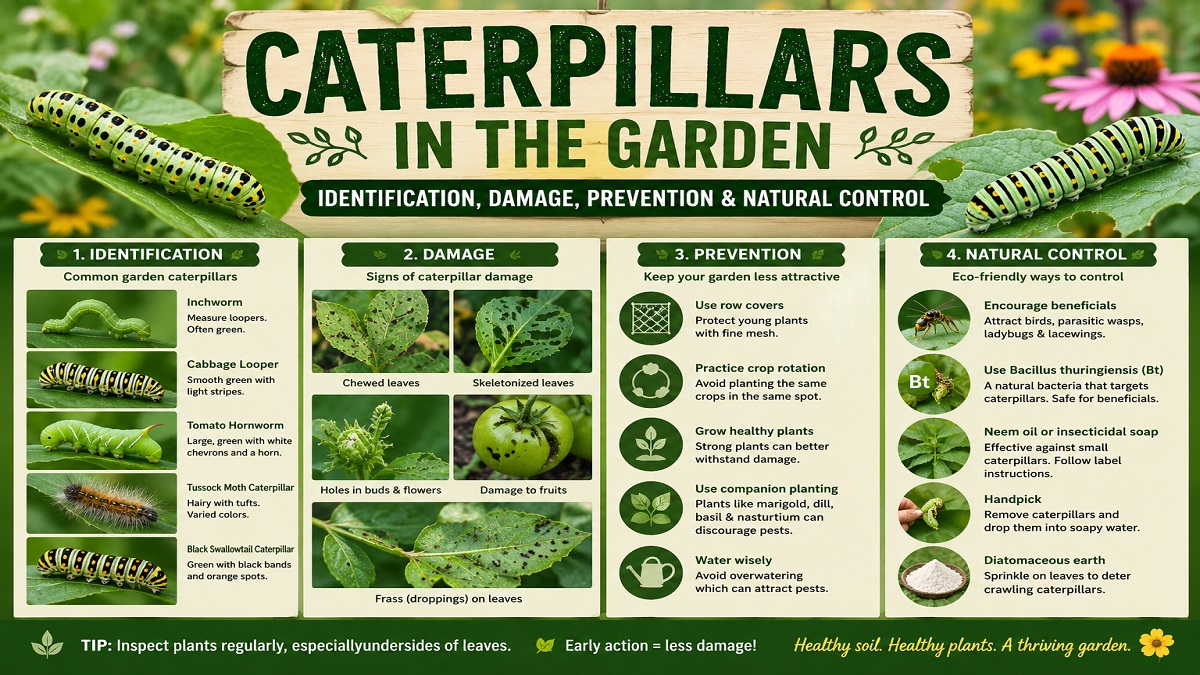
Common Garden Caterpillars
Several caterpillar species frequently appear in vegetable gardens, flower beds, orchards, and home landscapes. Knowing which species are present helps determine the most effective management strategy.
Cabbage Worms
Among the most familiar vegetable pests, cabbage worms attack broccoli, cauliflower, cabbage, kale, Brussels sprouts, and other brassicas. Their green bodies blend into leaves, allowing them to feed unnoticed until extensive damage appears.
Tomato Hornworms
These large green caterpillars are famous for rapidly stripping tomato plants. They also feed on peppers, potatoes, and eggplants. Despite their intimidating appearance, they cannot sting people.
Armyworms
Armyworms travel in groups and can devastate vegetable gardens, lawns, grains, and ornamental plants. Their outbreaks often occur suddenly during warm weather.
Cutworms
Cutworms spend much of the day hidden in soil before emerging at night to chew through young seedlings at ground level. Newly transplanted vegetables are especially vulnerable.
Loopers
Loopers move with a distinctive looping motion because they possess fewer prolegs than most caterpillars. They commonly feed on leafy vegetables and ornamental plants.
Signs of Caterpillar Damage
Gardeners usually notice plant damage before seeing the caterpillars themselves. Since many species feed during the night or remain hidden beneath leaves, careful observation is essential.
Chewed Leaves
Irregular holes throughout leaves are among the earliest symptoms. Small larvae produce tiny holes, while larger caterpillars may consume entire leaf sections.
Skeletonized Foliage
Some caterpillars eat everything except the leaf veins, creating a lace-like appearance known as skeletonization.
Missing Seedlings
Cutworms frequently sever young stems near the soil surface, causing seedlings to collapse overnight.
Leaf Droppings
Dark green or black pellets beneath damaged foliage are caterpillar droppings, often called frass. Fresh frass usually indicates active feeding nearby.
Damaged Fruit
Certain species bore into tomatoes, peppers, beans, apples, or corn, leaving feeding tunnels that reduce crop quality and encourage disease.
Plants Commonly Attacked by Caterpillars
Although feeding preferences differ among species, several types of plants experience repeated caterpillar damage throughout the growing season.
| Plant Group | Common Caterpillar Pests | Typical Damage |
|---|---|---|
| Cabbage Family | Cabbage worms, loopers | Large holes and shredded leaves |
| Tomatoes | Hornworms | Rapid leaf loss and damaged fruit |
| Beans | Armyworms | Chewed leaves and pods |
| Lettuce | Loopers | Holes throughout leaves |
| Peppers | Hornworms, armyworms | Leaf loss and fruit injury |
| Fruit Trees | Tent caterpillars, leafrollers | Defoliation and damaged young leaves |
| Flowers | Various butterfly and moth larvae | Chewed foliage and flower buds |
Why Caterpillars Can Become Serious Garden Pests
A single caterpillar usually causes little concern. Problems develop when dozens or even hundreds hatch simultaneously from egg clusters laid beneath leaves. Young larvae feed together, quickly overwhelming small vegetable gardens before gardeners realize an infestation has begun.
Heavy feeding reduces the plant's ability to photosynthesize, slowing growth and decreasing yields. Leafy vegetables may become unsuitable for harvest, while fruiting plants often produce fewer flowers and smaller fruits after severe defoliation.
Stressed plants also become more susceptible to fungal diseases, bacterial infections, and environmental stress such as drought or heat. For this reason, early detection is one of the most valuable tools in successful caterpillar management.
Natural Predators That Keep Caterpillars Under Control
A healthy garden is home to many beneficial creatures that naturally reduce caterpillar populations. Encouraging these predators creates a balanced ecosystem where pest outbreaks are less common and chemical pesticides become unnecessary. Avoiding broad-spectrum insecticides helps preserve these valuable allies.
Birds
Many songbirds feed caterpillars to their young during nesting season because caterpillars are rich in protein. Chickadees, robins, wrens, bluebirds, and sparrows can remove hundreds of caterpillars from a garden each day. Installing birdhouses, providing fresh water, and growing native shrubs attract these helpful visitors.
Parasitic Wasps
Tiny parasitic wasps lay their eggs inside caterpillars. The developing larvae feed internally, eventually stopping the caterpillar from causing further damage. These wasps are harmless to people and pets but extremely effective against many garden pests.
Ground Beetles
Ground beetles hunt caterpillars, cutworms, slugs, and other pests that hide in mulch or soil. Leaving small areas of leaf litter or organic mulch provides shelter for these beneficial insects.
Spiders
Although many gardeners overlook them, spiders capture numerous insects every day. Orb-weaving spiders trap flying adult moths, while hunting spiders catch crawling caterpillars before they reach vulnerable plants.
Predatory Bugs
Assassin bugs, damsel bugs, and spined soldier bugs feed on caterpillars of various sizes. Maintaining a diverse garden filled with flowering plants encourages these natural predators to remain throughout the growing season.
How to Inspect Plants for Caterpillars
Routine inspection allows gardeners to detect infestations before extensive damage occurs. A few minutes spent examining plants each week can prevent serious crop losses.
- Inspect the undersides of leaves where eggs are commonly laid.
- Look for irregular holes, missing leaf edges, and fresh feeding damage.
- Check for dark pellets of frass beneath plants.
- Search near stems and growing tips where caterpillars often hide.
- Inspect plants early in the morning or around dusk when many species are actively feeding.
- Pay special attention after warm, humid weather, which often favors rapid caterpillar development.
Vegetable gardens containing cabbage, tomatoes, peppers, kale, broccoli, lettuce, and beans deserve especially frequent inspections because these crops are among the favorites of many caterpillar species.
Organic Ways to Control Caterpillars
Organic gardening emphasizes prevention and selective control rather than eliminating every insect. These methods protect crops while minimizing harm to pollinators and beneficial insects.
Hand Picking
For small gardens, hand removal remains one of the most effective techniques. Wearing gloves, simply remove caterpillars from plants and relocate them far from the vegetable garden or place them into a container of soapy water.
Remove Egg Clusters
Butterflies and moths often lay dozens of eggs together beneath leaves. Removing these clusters before they hatch prevents future infestations with very little effort.
Floating Row Covers
Lightweight row covers prevent adult butterflies and moths from reaching crops while still allowing sunlight, air circulation, and rainwater to pass through. Covers work especially well on cabbage-family vegetables.
Encourage Beneficial Wildlife
Plant nectar-rich flowers such as dill, fennel, yarrow, alyssum, cosmos, and marigolds to support beneficial insects that naturally regulate caterpillar populations.
Use Biological Controls
Products containing the naturally occurring bacterium Bacillus thuringiensis var. kurstaki (Bt) specifically target young caterpillars while having minimal impact on birds, mammals, and most beneficial insects when applied correctly. Bt works best when larvae are small and actively feeding.
Chemical Control Options
Chemical insecticides should generally be considered a last resort. Many products kill pollinators, predatory insects, and other beneficial organisms alongside the target pests.
If chemical treatment becomes necessary due to severe crop loss, follow these best practices:
- Identify the caterpillar species before spraying.
- Read and follow all label directions carefully.
- Treat only affected plants instead of the entire garden.
- Avoid spraying flowers visited by bees and butterflies.
- Apply treatments during the evening when pollinators are less active.
- Rotate products when repeated treatments are required to reduce resistance.
Whenever possible, combine limited pesticide use with cultural and biological control methods rather than relying solely on chemicals.
Preventing Caterpillar Problems
Preventive gardening practices are usually more successful than reacting after an infestation has already become severe.
Rotate Crops
Changing planting locations each year interrupts the life cycles of many pests that overwinter in the soil or nearby plant debris.
Keep the Garden Clean
Remove dead plants, weeds, and heavily infested foliage promptly. Good sanitation eliminates hiding places and reduces breeding opportunities.
Grow Healthy Plants
Well-watered plants growing in fertile soil recover from feeding damage much more quickly than stressed plants.
Plant Diversity
Mixed plantings confuse egg-laying butterflies and moths while supporting greater numbers of beneficial insects than large single-crop plantings.
Monitor Frequently
Weekly inspections are often enough to catch problems while caterpillars are still small and easy to control.
Seasonal Caterpillar Activity
| Season | Typical Activity | Recommended Action |
|---|---|---|
| Spring | Eggs hatch and young larvae begin feeding. | Inspect new growth weekly. |
| Early Summer | Rapid feeding and population growth. | Hand pick and protect crops. |
| Late Summer | Second generation may appear. | Continue monitoring susceptible plants. |
| Autumn | Many species prepare for overwintering. | Clean garden debris after harvest. |
| Winter | Pupae remain dormant in protected locations. | Remove old plant material and cultivate lightly if appropriate. |
Should You Remove Every Caterpillar?
Not necessarily. Many caterpillars eventually become butterflies that pollinate flowers and contribute to local biodiversity. If they are feeding on ornamental plants where damage is acceptable, leaving a few caterpillars undisturbed supports beneficial wildlife.
Gardeners often designate a "pollinator corner" planted with native flowers where butterfly larvae can feed without threatening valuable vegetable crops. This simple approach balances conservation with food production.
Control measures become most important when caterpillars begin threatening edible crops, newly transplanted seedlings, or young fruit trees that cannot tolerate extensive defoliation.
Common Mistakes Gardeners Make
- Ignoring the undersides of leaves during inspections.
- Applying pesticides before correctly identifying the pest.
- Spraying beneficial butterflies along with harmful caterpillars.
- Waiting until severe defoliation has already occurred.
- Overfertilizing plants with nitrogen, producing lush growth that attracts feeding insects.
- Removing all insects from the garden instead of encouraging natural predators.
- Neglecting crop rotation and end-of-season cleanup.
Avoiding these common mistakes significantly improves long-term pest management while reducing unnecessary pesticide use.
Frequently Asked Questions
Conclusion
Caterpillars are a natural part of every healthy garden ecosystem. While many eventually become beautiful butterflies and moths, certain species can seriously damage vegetables, herbs, flowers, and fruit trees if left unmanaged. The key to successful control is early identification, regular inspection, and choosing environmentally responsible management practices.
By encouraging birds and beneficial insects, using floating row covers, removing egg clusters, hand-picking caterpillars when necessary, and maintaining healthy plants, gardeners can protect valuable crops while preserving the biodiversity that makes gardens thrive. Thoughtful management ensures productive harvests without sacrificing the beneficial insects that contribute to a vibrant and resilient landscape.