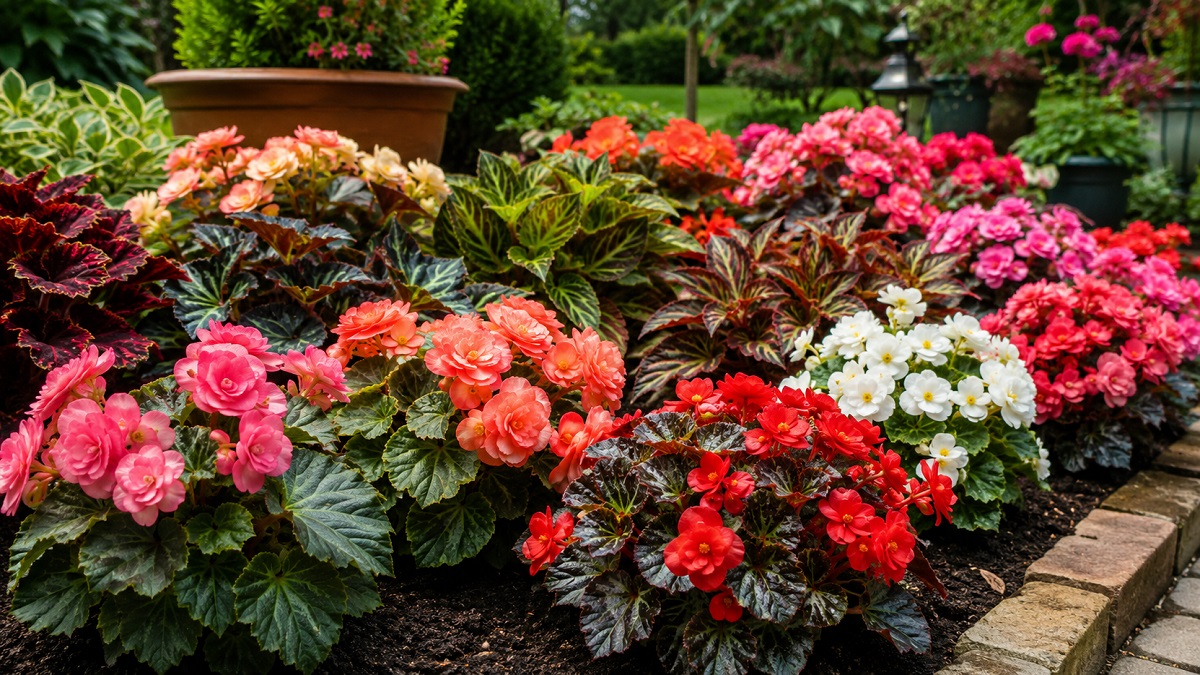
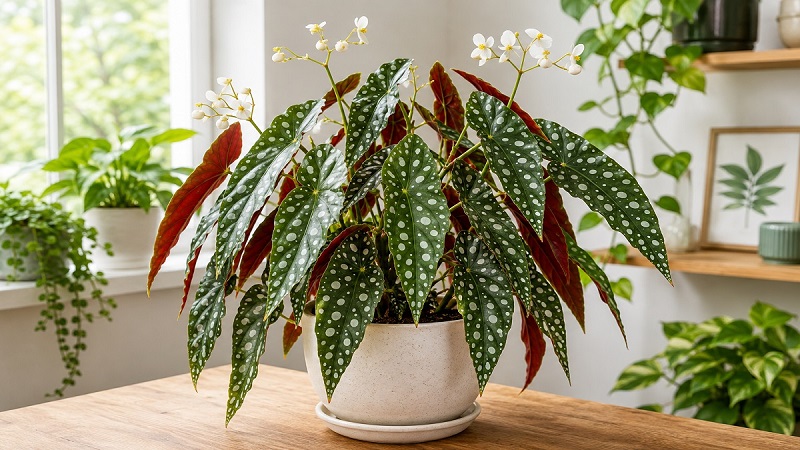
Healthy begonias thriving with vibrant blooms and attractive foliage in a well-maintained garden.
If there is one plant species that bridges the gap between vibrant floral beauty and show-stopping architectural foliage, it is undoubtedly the begonia. With over 2,000 distinct species and thousands more cultivars, the genus Begonia has captivated gardeners, plant collectors, and porch decorators for well over two centuries. Whether you are looking to brighten up a dark corner of your shady backyard, hang overflowing baskets off your covered porch, or build a stunning collection of velvety indoor houseplants, there is a begonia perfectly suited to your space.
However, begonias have occasionally earned a somewhat unfair reputation for being finicky. Have you ever brought home a lush, velvety Rex begonia only to watch it collapse into a soggy pile of stems within two weeks? Or perhaps your outdoor Wax begonias developed crisp brown edges and stopped producing flowers altogether? The secret to success lies in understanding that not all begonias are created equal. Their care requirements vary depending on whether they grow from thick underground tubers, fleshy rhizomes, or woody cane structures.
In this comprehensive guide, we will break down everything you need to know about growing, maintaining, propagating, and overwintering these garden treasures. By tailoring your soil mixes, lighting, and watering habits to your plant's specific biological group, you can enjoy lush leaves and vibrant blooms all year round.
Begonia Care at a Glance
Pro Tip: Begonias hate "wet feet." Always prioritize well-draining soil over frequent watering!
LIGHTBright, Indirect Light
Avoid direct midday sun on tender foliage.
WATERINGModerate & Careful
Allow top 1-2 inches of soil to dry out between waterings.
SOIL MIXRich & Porous
Peat-based potting mix amended with perlite and bark.
TEMPERATURE65°F to 75°F (18°C–24°C)
Protect from cold drafts below 55°F (13°C).
To grow healthy begonias, the very first step is identifying which family your plant belongs to. Botanists and horticulturists typically divide cultivated begonias into four primary categories based on their growth habits and root structure: Wax (Fibrous), Cane (Angel Wing), Rex (Rhizomatous), and Tuberous.
Wax Begonias (Fibrous-Rooted)
These are the workhorses of summer bedding gardens. Known scientifically as Begonia x semperflorens-cultorum, Wax begonias feature compact, mounding stems with smooth, glossy green or deep bronze leaves. They produce endless clusters of small white, pink, or red single or double flowers from spring straight through to the first autumn frost. They are exceptionally versatile and tolerate more direct sunlight than most other varieties.
Cane Begonias (Angel Wing)
Cane begonias get their common nickname from their stiff, bamboo-like stems with pronounced joints (nodes) and distinctive winged leaves. The foliage often features striking silver speckles or metallic streaks over deep forest green or burgundy undersides. Popular varieties like 'Lucerna' or 'Maculata' drop long, pendulous cascades of pink, white, or red flowers. They can grow quite tall—sometimes reaching upwards of five to six feet outdoors or in large indoor containers.
Rex & Rhizomatous Begonias
If you are drawn to intricate patterns, swirl patterns, and iridescent metallic colors, Rex begonias (Begonia rex-cultorum) are sure to take your breath away. Cultivated primarily for their mesmerizing foliage rather than their small blossoms, these plants grow from creeping surface stems called rhizomes. Their leaves range from deep violet-purple, mint green, and silver to crimson red. They make spectacular indoor houseplants, provided you can satisfy their preference for higher humidity.
Tuberous Begonias
Celebrated for producing massive, rose-like flowers that can reach up to six inches across, Tuberous begonias (Begonia x tuberhybrida) sprout from fleshy, rounded underground tubers. They are prized additions to hanging baskets and shaded garden boxes, offering rich shades of orange, yellow, pink, salmon, and white. Tuberous begonias undergo a mandatory winter dormancy period where the top foliage dies back completely before sprouting anew in spring.
Begonia Group
Primary Feature
Best Growing Location
Light Requirements
Dormancy Period?
Wax Begonias
Abundant, non-stop seasonal blooms
Garden beds, patio borders, window boxes
Full sun to partial shade
No (Grown as annuals)
Cane (Angel Wing)
Tall bamboo stems, spotted leaves
Indoor containers, large floor pots
Bright indirect light
No (Slows in winter)
Rex / Rhizomatous
Intricate patterns, metallic colors
Indoor plant collections, terrariums
Medium to bright indirect light
No (Winter semi-rest)
Tuberous
Huge, double rose-like blossoms
Hanging baskets, shaded porches
Dappled morning sun / Shade
Yes (Winter dormant)
2. Light, Climate, and Temperature Needs
In their natural habitats—the understory of tropical and subtropical forests across Central and South America, Africa, and Southern Asia—begonias grow beneath dense tree canopies. This means they are evolutionary adapted to filtered, dappled sunlight and consistently mild temperatures.
When growing begonias indoors, place them near an east-facing or west-facing window where they can soak in gentle morning or late afternoon sun. A south-facing window can also work well, provided you place a sheer curtain between the plant and the glass to diffuse intense midday rays. Direct sun on tender foliage like that of Rex or Tuberous begonias will quickly cause crisp, brown scorching along the margins of the leaves.
Outdoors, most begonias thrive in partial shade or dappled light beneath open tree branches. Bronze-leafed Wax begonias are the notable exception; their higher pigment levels act as natural sunscreen, allowing them to tolerate intense full afternoon sun far better than green-leafed varieties.
Temperature Requirements: Begonias are exceptionally frost-sensitive. They flourish in warm temperatures between 65°F and 75°F (18°C to 24°C) during the daytime, and no lower than 58°F to 60°F (14°C to 15°C) at night. Exposure to cold drafts, frosty windowpanes, or temperatures below 50°F (10°C) can cause sudden foliage drop, root damage, or rapid stem rot.
3. Master the Art of Watering and Soil Selection
If there is one single area where most home gardeners run into trouble with begonias, it is overwatering. Begonias possess juicy, succulent stems and delicate root systems that absorb moisture rapidly but decay easily if left sitting in waterlogged soil.
The Golden Rule of Begonia Soil
Never plant begonias in heavy, dense garden topsoil or cheap moisture-retentive potting mixes. They require an open, aerated substrate that allows surplus water to drain instantly while holding uniform, subtle moisture. A custom mix consisting of two parts high-quality peat moss or coconut coir, one part perlite, and one part fine orchid bark creates the perfect environment for healthy roots.
How and When to Water
Always test the topsoil before pouring in water. Insert your index finger about one to two inches into the soil. If it feels completely dry and cool, it is time to water thoroughly until liquid trickles out of the bottom drainage holes. Always discard any standing water collected in saucers or outer decorative pots within 20 minutes to prevent root decay.
4. Fertilization, Pruning, and Bushy Growth
Begonias are moderate feeders that benefit greatly from steady, low-dose nutrients during their active growing phase (typically spring through early autumn). Using a harsh, high-nitrogen fertilizer can cause weak, leggy stems and soft foliage that attracts sap-sucking pests.
For best results, feed your plants every two to three weeks with a balanced, water-soluble fertilizer diluted to half-strength (such as an N-P-K ratio of 10-10-10 or 20-20-20). If you are growing flowering varieties like Tuberous or Wax begonias, switching to a formula slightly higher in phosphorus (like 10-15-10) in late spring will encourage fuller, more frequent bloom cycles. Stop fertilizing altogether during late autumn and winter when growth naturally slows down.
Pruning for Fuller, Bushier Plants
Without regular maintenance, tall varieties like Cane (Angel Wing) begonias can become top-heavy, leggy, and sparse near the base. Don't be afraid to grab a pair of sharp, sterilized pruning shears!
Pinching Tops: When young plants reach 4 to 6 inches in height, pinch off the soft growing tip just above a leaf node. This prompts the plant to break dormancy on side buds, producing two new stems and resulting in a bushy habit.
Hard Pruning: In early spring, leggy cane begonias can be cut back by up to one-third or half their total height. The plant will respond quickly by sending up fresh, energetic shoots from the base.
Deadheading: Pinch off spent, faded blossoms on flowering begonias to prevent the plant from wasting energy on seed production and to encourage fresh flower buds to emerge.
5. Simple Step-by-Step Propagation Methods
One of the most rewarding aspects of keeping begonias is how easily they propagate. You can easily clone your favorite cultivars to expand your indoor collection or share cuttings with gardening friends!
Method A: Stem Cuttings (Best for Cane & Wax Begonias)
Select a healthy stem tip that measures 4 to 6 inches in length and features at least two or three leaf nodes. Make a clean cut directly below a node.
Remove the lower leaves, leaving only one or two leaves at the top to reduce moisture loss through transpiration.
Dip the cut end into rooting hormone powder (optional, but accelerates root formation).
Insert the stem into a small pot filled with moist, sterile potting mix or a 50/50 blend of perlite and peat moss.
Cover the pot loosely with a clear plastic bag to seal in moisture and humidity. Place it in bright, indirect light. Roots typically form within three to four weeks!
Method B: Leaf Cuttings (Best for Rex & Rhizomatous Begonias)
Rex begonias possess the amazing ability to generate entirely new plantlets straight from the veins of their leaves! Take a mature, healthy leaf and turn it over. Using a clean razor blade, make several small slits across the main veins on the underside of the leaf. Press the leaf flat onto a bed of moist seed-starting mix, pinning it down with bent paperclips or small stones so the cuts make firm contact with the soil. Keep the tray humid and warm; within several weeks, tiny baby plants will sprout from every slit!
6. Managing Common Pests and Fungal Diseases
While begonias are generally robust, keeping a watchful eye out for early signs of trouble will save you a lot of headache down the road.
This is the single most frequent fungal infection affecting begonias. It appears as a fine, white, flour-like powder coating the tops of leaves and stems. Powdery mildew strikes when air circulation is poor, humidity is high, and water drops sit stagnant on leaves overnight.
Treatment: Immediately prune away severely infected leaves. Improve air movement around your plants using a small fan, avoid wetting leaves when watering, and spray affected foliage with a neem oil solution or organic copper fungicide.
Mealybugs look like small, white, cottony tufts tucked away in stem crevices, nodes, and leaf undersides. They suck plant juices, causing yellowing foliage and stunted growth. Spider mites, on the other hand, are microscopic pests that thrive in warm, dry air, leaving fine silk webbing across leaves.
Treatment: Wipe away small clusters of mealybugs using a cotton swab dipped in 70% rubbing alcohol. For larger infestations, wash the foliage with insecticidal soap or horticultural oil spray every 7 to 10 days until pests are gone.
7. Overwintering Outdoor Begonias
If you live in a climate with cold winters (USDA Hardiness Zones 3 through 8), outdoor begonias will not survive freezing temperatures outdoors. However, you do not need to purchase new plants every single spring!
Overwintering Tuberous Begonias
After the first light autumn frost blackens the top leaves of your tuberous begonias, dig up the tubers carefully, leaving the roots intact. Cut off the top stems about two inches above the tuber. Lay the tubers out in a warm, dry, shaded spot for two weeks to cure.
Once cured, brush away excess dry dirt and store the tubers in paper bags filled with dry peat moss or sawdust. Store them in a cool, dark place (45°F to 55°F / 7°C to 12°C) like an unheated basement or root cellar. Re-pot them in fresh soil come spring!
Overwintering Container Begonias Indoors
Cane and Wax begonias growing in porch containers can simply be brought indoors before night temperatures drop below 55°F (13°C). Inspect them thoroughly for pests first, cut back leggy growth by one-third, and place them in your sunniest indoor window for the winter season.
Frequently Asked Questions
Why are the leaves on my begonia turning brown and dropping off?
Crisp brown edges usually signal low atmospheric humidity or dry soil. However, if the leaves are soft, mushy, and yellowing before falling, you are likely overwatering the plant or the pot lacks proper drainage holes.
Can begonias grow indoors as permanent houseplants?
Yes! Rex and Cane (Angel Wing) begonias make fantastic year-round houseplants. As long as you provide them with bright indirect light, consistent warmth, and medium-to-high humidity, they will thrive indoors for years.
Are begonias toxic to pets like cats and dogs?
Yes, begonias contain calcium oxalate crystals, which are toxic to dogs and cats if ingested. The highest concentration of toxins resides in the underground tubers and roots. Keep your plants safely out of reach of curious pets.