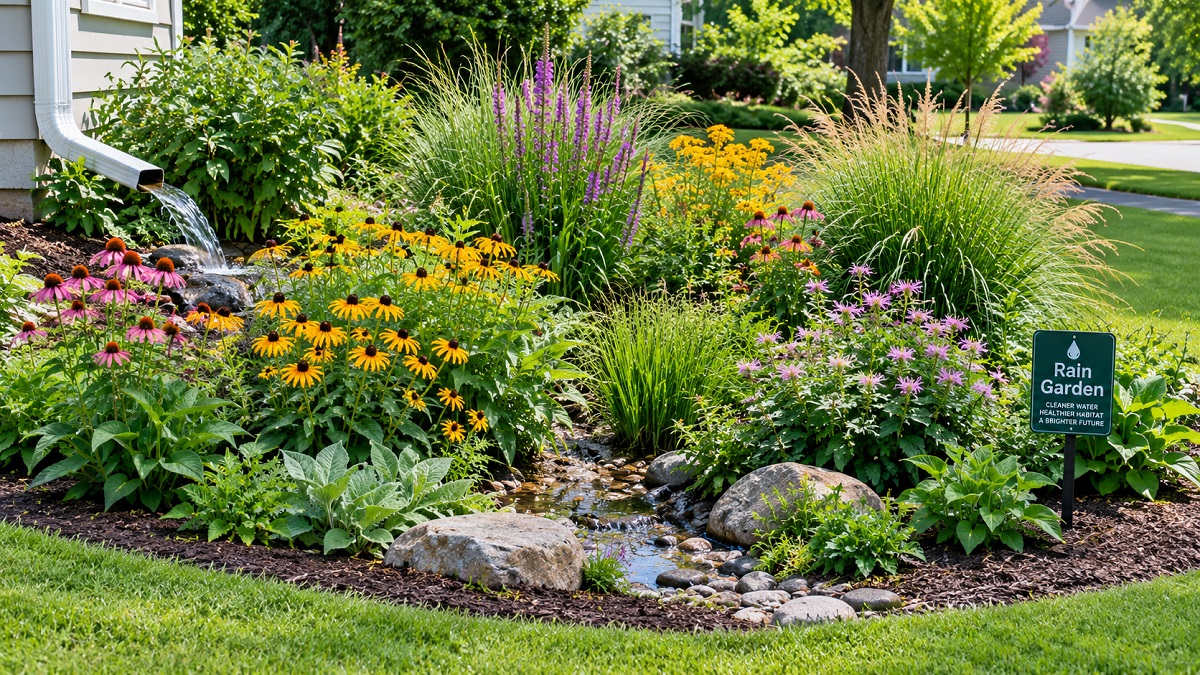
A beautifully planted rain garden designed to capture and slowly infiltrate stormwater runoff while adding seasonal color and wildlife habitat.
A rain garden is a shallow, planted area designed to collect and temporarily hold rainwater flowing from roofs, driveways, patios, sidewalks, and other hard surfaces. Instead of allowing every drop of runoff to move quickly toward a storm drain or low point in the yard, a rain garden gives the water somewhere to spread out, soak into the soil, and gradually return to the surrounding landscape.
Despite the name, a rain garden does not need to look like a pond or remain wet all the time. Most are dry between rainfall events. The depression simply slows water down during and after a storm, while the plants and soil help the area function as part of the garden rather than as a piece of drainage infrastructure.
Rain gardens can be surprisingly attractive. With the right combination of native flowers, ornamental grasses, shrubs, and groundcovers, they can become one of the most interesting areas of a landscape. They also provide habitat and food for pollinators and other beneficial wildlife.
Rain Garden Quick Guide
The key to a successful rain garden is proper placement, drainage, and plant selection.
Best LocationWhere runoff naturally collects
Typical DepthAbout 4–8 inches for many home gardens
SoilLoose, well-draining soil amended when necessary
PlantingNative and moisture-tolerant plants
Water SourceRoof, driveway, patio, or landscape runoff
Water RequirementUsually low after establishment
Main PurposeSlow, spread, and infiltrate stormwater
MaintenanceWeeding, mulching, pruning, and sediment removal
A rain garden is a shallow landscape depression planted with vegetation that receives stormwater runoff. The basic idea is simple: rather than moving rainwater away as quickly as possible, the garden temporarily holds it and allows it to infiltrate the soil.
A typical residential rain garden may be positioned below a downspout, beside a driveway, near a patio, or along another location where water naturally travels during rain. An inlet directs runoff into the planted area, while a carefully shaped basin spreads the water across the garden.
The garden should not normally function as a permanent water feature. Water may remain visible for a short period following a significant rainfall event, but a properly designed rain garden should gradually drain.
Plants are an important part of the system, but they are not the only component. Soil structure, site slope, overflow protection, basin depth, drainage rate, and the amount of runoff entering the garden all influence how well it performs.
How Does a Rain Garden Work?
Rain falling directly onto lawns and planting beds can infiltrate the ground naturally. Hard surfaces are different. Roofs, concrete paths, asphalt driveways, and patios prevent much of the rainfall from entering the soil where it lands.
During a storm, water therefore moves across these surfaces and gathers in channels or low points. A rain garden intercepts some of that flow. Water enters the basin, spreads across the surface, and begins moving downward through the soil.
What Happens During Rain
Runoff enters the rain garden through a downspout, shallow swale, pipe, or natural flow path. The basin slows the movement of water and reduces concentrated runoff.
What Happens After Rain
Water gradually infiltrates the planting soil. As the surface dries, plants return to normal growing conditions. A healthy rain garden therefore moves through wet and dry periods rather than remaining permanently saturated.
Benefits of Rain Gardens
A rain garden can solve a practical drainage problem while also adding another layer of planting to the landscape. Its benefits depend on local soil, rainfall, design, and maintenance, but several advantages are common.
1. Reduces Surface Runoff
By giving rainwater a temporary place to collect, a rain garden can reduce the amount and speed of runoff leaving a property. This is particularly useful where large paved or roofed areas send water toward a single drainage point.
2. Helps Prevent Localized Erosion
Fast-moving water can wash away soil around downspouts, slopes, paths, and garden edges. Redirecting that flow into a planted basin can reduce the force of concentrated runoff.
3. Adds Habitat
A rain garden can provide nectar, pollen, seeds, shelter, and nesting opportunities for insects and birds when planted with appropriate species. Native plants are especially useful when the goal is to support local wildlife.
4. Makes Drainage Areas More Attractive
Drainage problems often produce awkward, unused spaces in a landscape. A rain garden turns such an area into an intentional planting bed instead of trying to hide it.
5. Supports Healthier Soil
Organic matter, plant roots, microorganisms, and mulch can create a living soil environment. Over time, the root systems of established plants can contribute to soil structure and infiltration.
6. Can Reduce Pressure on Stormwater Systems
Managing some rainfall on-site can reduce the volume of water immediately leaving the property. The effect of an individual garden may be modest, but many small systems across a neighborhood can collectively contribute to better stormwater management.
Choosing the Right Location for a Rain Garden
Location is more important than decorative design. A beautiful rain garden placed in the wrong part of the yard can remain saturated, receive too little water, or create problems around a building.
Look first for an area that naturally receives runoff but can safely accommodate temporary moisture.
Good Locations
Below or near a roof downspout
At the lower side of a gently sloping lawn
Near a driveway where runoff can be redirected safely
Beside a patio or other paved area
Along an existing shallow drainage path
In a low section of the landscape that does not threaten structures
Locations to Avoid
Immediately beside building foundations
Areas where underground utilities may be disturbed
Places that remain saturated for long periods
Extremely steep slopes without proper engineering
Areas where contaminated runoff could enter the garden
Sites where redirected water could flow toward neighboring property
Before digging, identify underground utilities and consider local drainage regulations. Large systems or gardens receiving significant runoff may require professional design, particularly on steep or complicated sites.
Assessing Your Site Before You Dig
Spend some time observing the yard during and immediately after rainfall. This can reveal more than looking at the property on a dry day.
Notice where water comes from, where it travels, where it collects, and how quickly it disappears. Follow the path from the downspout or paved surface to the lowest point. If water currently causes erosion, look for the exact place where the flow becomes concentrated.
Check the Slope
A gently sloping site is usually easier to work with than a steep one. The basin should be shaped so that water spreads across the planting area rather than cutting a channel through it.
Test Soil Drainage
Soil that drains too slowly can cause persistent standing water. A simple infiltration test can provide useful information before construction.
Dig a small hole in the proposed location, fill it with water, and observe how quickly the water level falls. Repeat the test when practical because soil moisture and recent rainfall can influence the result.
If the soil drains extremely slowly, a conventional rain garden may need substantial modification, an engineered underdrain, or a different location.
Rain Garden Size and Depth
There is no single size that works for every property. The appropriate dimensions depend on the drainage area, rainfall patterns, soil infiltration, slope, and available space.
For many residential landscapes, a relatively shallow basin is easier to maintain and safer than a deep excavation. A depth of roughly 4 to 8 inches can work for many home situations, although local conditions may justify a different design.
The garden should be large enough to receive runoff without rapidly overflowing during ordinary storms. It is also important to provide a deliberate overflow route for unusually heavy rainfall.
Site Factor
What to Consider
Why It Matters
Roof area
How much roof drains toward the garden?
Determines potential runoff volume.
Soil type
Does water infiltrate quickly or slowly?
Influences basin size and drainage.
Slope
Is the site level or gently sloped?
Affects water movement and basin construction.
Rainfall
How frequent and intense are storms?
Helps determine overflow needs.
Available space
How much planting area can be dedicated?
Limits practical garden dimensions.
Soil and Drainage Requirements
Soil is the working engine of a rain garden. Water needs to move through the planting area rather than sitting at the surface indefinitely.
Existing soil may already be suitable. If it is compacted or contains a large amount of heavy clay, however, improving the soil structure may be necessary.
Well-Drained Does Not Mean Dry
A common misunderstanding is that a rain garden must have extremely sandy soil. That is not necessarily the case. The objective is balanced infiltration: water should enter the soil gradually without disappearing instantly or remaining trapped for excessive periods.
Improving Compacted Soil
Remove compacted layers where appropriate and incorporate suitable organic matter into the planting soil. Avoid creating a sharply contrasting layer that can trap water above an impermeable surface.
If the site has serious drainage limitations, do not assume that simply adding compost will solve the problem. Some locations require a different drainage strategy altogether.
How to Design a Rain Garden
A rain garden does not have to resemble a formal geometric bed. Curved edges often look natural, while simple shapes can be easier to excavate and maintain. Choose the style that fits the rest of the landscape.
Start With the Water Path
Mark the point where runoff will enter. Then decide how the water will move through the basin. The inlet should not dump water directly onto bare soil at high speed.
Create a Broad Basin
A broad, shallow depression generally distributes water more effectively than a narrow, deep hole. Shape the bottom so water does not immediately create a channel from the inlet to the outlet.
Plan an Overflow Route
Every rain garden should have a safe overflow path for rainfall that exceeds its capacity. The overflow should lead away from buildings and toward an appropriate drainage area.
Use Several Plant Heights
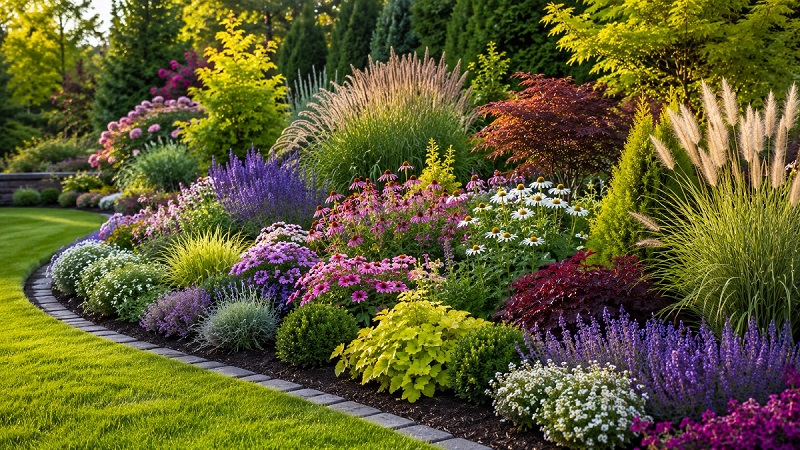
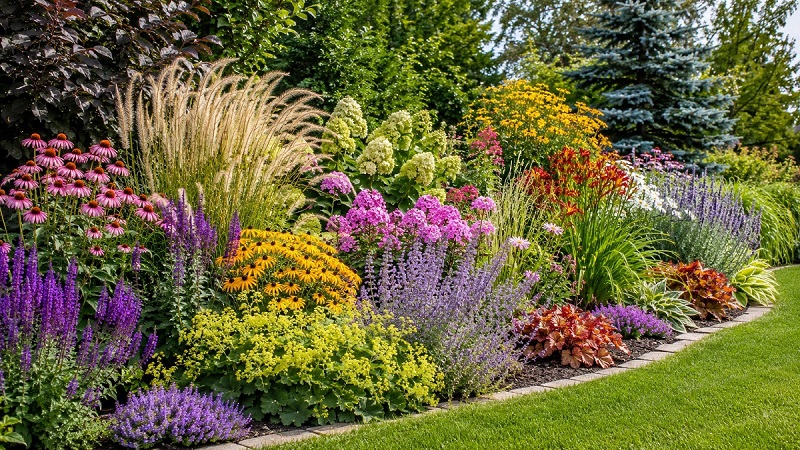
Combine low groundcovers, medium-height flowering plants, grasses, and taller structural plants. Layering creates visual interest and leaves fewer open spaces for weeds.
How to Build a Rain Garden
Once the location and design are established, construction is relatively straightforward for a small residential garden.
Step 1: Mark the Area
Use a garden hose, rope, or marking paint to outline the proposed basin. Walk around the area from several angles to make sure the shape fits the landscape.
Step 2: Locate the Inlet and Overflow
Identify where water will enter and where excess water will leave. Both points should be planned before excavation begins.
Step 3: Remove Existing Vegetation
Remove lawn, aggressive weeds, and unwanted roots from the planting area. Keep desirable native plants nearby if they can be incorporated into the design.
Step 4: Excavate the Basin
Dig gradually rather than removing all the soil at once. Keep the basin broad and shallow, with gently sloping sides.
Step 5: Shape the Soil
Use excavated soil to create a subtle berm where appropriate. The berm should be compact and stable enough to hold temporary water while allowing controlled overflow.
Step 6: Improve the Planting Soil
Correct compaction and incorporate suitable organic material if the existing soil needs improvement. The finished soil should support plant roots while allowing water to infiltrate.
Step 7: Create a Protected Inlet
If water enters with significant force, use stones, gravel, or another suitable erosion-control treatment to slow the flow before it spreads into the planting bed.
Step 8: Install Plants
Place plants according to their moisture preferences and mature sizes. Give larger plants enough room to develop rather than filling every gap immediately.
Step 9: Mulch the Surface
Apply a suitable layer of organic mulch around plants. Keep mulch away from plant crowns and stems.
Step 10: Observe the First Storms
Watch how water enters, spreads, and leaves the garden. Early observation is useful because small drainage problems are easier to correct before plants become established.
Choosing Plants for a Rain Garden
Plant selection is one of the most enjoyable parts of creating a rain garden. The best choices are not simply plants that tolerate wet soil. You need species that can handle the actual cycle of the site: periods of moisture followed by periods that may be considerably drier.
Native plants are often excellent candidates because they are adapted to local climate and seasonal conditions. They can also provide greater ecological value than purely ornamental selections.
Look for These Characteristics
Adaptation to the local climate
Tolerance of occasional wet soil
Ability to handle periods of drying
Appropriate mature height and spread
Strong root systems
Good resistance to local pests and diseases
Value for pollinators or other wildlife
Seasonal interest through flowers, foliage, fruit, or structure
Examples of Plant Groups
Depending on your region, a rain garden can include native sedges, rushes, grasses, asters, bee balm, cardinal flower, swamp milkweed, Joe-Pye weed, goldenrod, iris, and moisture-tolerant shrubs. Exact choices should be matched to local climate and site conditions rather than copied from a plant list designed for another region.
In warmer climates, tropical or subtropical moisture-tolerant plants may also be suitable, provided they can handle the dry periods between storms.
Planting Zones Inside a Rain Garden
Different parts of the basin experience different moisture levels. Organizing plants according to these conditions makes the garden easier to manage.
Rain Garden Zone
Typical Conditions
Suitable Plant Traits
Center
May remain moist for longer after rain
Plants tolerant of periodic saturation
Middle slope
Moist after storms but dries between events
Adaptable moisture-tolerant perennials
Outer edge
Usually dries more quickly
Plants tolerant of average garden conditions
Berm or upper edge
Generally the driest section
Drought-tolerant or average-moisture plants
These zones are not rigid. Actual conditions vary with soil, rainfall, shade, slope, and garden size. Observe your site and adjust planting choices accordingly.
Watering a New Rain Garden
A rain garden may be designed to manage rainfall, but newly planted vegetation still needs regular attention. Young plants have small root systems and cannot immediately tolerate every dry period.
Water new plants when the soil begins to dry according to their needs and local weather. During extended dry spells, supplemental irrigation may be necessary even though the garden is designed around stormwater.
Once plants become established, many native species require considerably less supplemental watering. The exact requirement depends on the plant, climate, soil, and rainfall.
Mulching and Weed Control
Mulch helps protect the soil surface, suppress weeds, and reduce evaporation. Organic materials such as shredded bark, leaf mold, or composted plant material can work well when used appropriately.
Avoid piling mulch against stems or crowns. Thick layers can remain excessively wet around plant bases and may encourage rot or pest problems.
Weed control is especially important during the first growing season. Young rain gardens often contain open spaces between plants, giving weeds an opportunity to establish. Regular hand-weeding is usually easier than allowing unwanted vegetation to become deeply rooted.
Rain Garden Maintenance
A rain garden is not maintenance-free, but its upkeep is usually similar to that of an ordinary perennial planting bed once the plants are established.
Inspect After Heavy Rain
Check the inlet, basin, berm, and overflow area following significant storms. Look for erosion, sediment accumulation, blocked flow paths, or water remaining longer than expected.
Remove Sediment
Soil, leaves, and debris can accumulate where runoff enters the garden. Remove excessive sediment before it blocks the inlet or smothers plants.
Control Weeds
Remove invasive or aggressive weeds before they become established. This is particularly important during the first one or two growing seasons.
Prune Plants When Necessary
Many native perennials can be left standing through winter because their stems provide shelter and seed for wildlife. Cut them back according to the needs of the species and the appearance you want.
Refresh Mulch
Replace or redistribute mulch as it decomposes. Avoid covering plant crowns or creating deep layers that interfere with water movement.
Watch for Erosion
If water begins carving channels through the basin, the inlet may be moving too quickly or the garden may need additional stabilization. Address the source rather than simply filling the eroded channel.
Rain Garden Maintenance Schedule
Task
When to Check
What to Look For
Inspect inlet
After major storms
Debris, erosion, blocked flow
Check overflow
After heavy rainfall
Safe and unobstructed drainage
Weed
Regularly during growing season
Invasive or unwanted plants
Water new plants
During establishment
Dry soil and wilting
Inspect mulch
Several times each year
Thin, displaced, or excessive mulch
Divide or thin plants
As needed
Overcrowding and declining vigor
Remove sediment
As needed
Accumulation near inlet
Common Rain Garden Mistakes
1. Placing It Too Close to the House
A rain garden should manage water without directing moisture toward the foundation. Keep the garden appropriately separated from structures and make sure overflow has a safe destination.
2. Making the Basin Too Deep
A deeper hole is not automatically a better rain garden. Deep basins can create drainage and safety issues and may be unnecessary for residential stormwater management.
3. Ignoring Soil Infiltration
Poorly draining soil can cause water to remain at the surface for too long. Test the site before investing heavily in construction and planting.
4. Choosing Plants Only for Appearance
A plant that looks attractive in a nursery may not tolerate alternating wet and dry conditions. Match the plant to the actual environment.
5. Forgetting the Overflow
Even a well-designed basin can receive more water than it can hold during an unusually heavy storm. Always plan where excess water will go.
6. Allowing Water to Enter Too Fast
Concentrated runoff can wash away mulch and soil. Protect the inlet and spread water across the basin.
7. Overcrowding the Garden
Young plants look small, but many species expand considerably. Follow mature spacing recommendations and allow room for natural growth.
8. Treating It Like a Permanent Pond
Most residential rain gardens are intended to drain between rainfall events. Persistent standing water can indicate unsuitable soil, poor grading, excessive runoff, or inappropriate plant selection.
Rain Gardens and Wildlife
A rain garden can become a small ecological island within an otherwise highly managed landscape. The combination of flowering plants, grasses, seed-producing species, and varied vegetation creates opportunities for wildlife throughout the growing season.
Flowering plants can provide nectar and pollen for bees, butterflies, moths, and other insects. Seed-producing plants may feed birds, while dense vegetation can provide cover for small animals and beneficial insects.
Native plant selection is particularly valuable because local insects and other wildlife often have long-established relationships with regional plant species.
Avoid automatically treating every insect as a pest. A diverse rain garden naturally attracts insects, and many of them are harmless or beneficial.
Rain Gardens for Small Yards
You do not need a large property to use the basic principles of rainwater gardening. A small basin can intercept runoff from a single downspout or a modest paved area.
When space is limited, concentrate on careful water management rather than trying to create a large planting bed. A small garden can still feature attractive native perennials and provide seasonal habitat.
Ideas for Limited Space
Capture runoff from one downspout.
Use a shallow, compact basin.
Choose plants with manageable mature sizes.
Combine rain-garden planting with an existing landscape bed.
Use a small swale to spread water before it enters the planting area.
Include a clearly defined overflow route.
If a traditional rain garden cannot fit safely, other stormwater approaches such as rain barrels, permeable surfaces, vegetated swales, or infiltration features may be worth considering.
Rain Gardens in Different Climates
Rain garden design should always reflect local climate. A garden in a humid region with frequent rainfall will behave very differently from one in a dry climate that receives occasional intense storms.
Wet and Humid Regions
Focus on infiltration, overflow management, and plants that tolerate periods of wet soil without requiring permanent saturation.
Dry Regions
Rain may arrive in large bursts followed by long dry periods. Select plants that can tolerate drought after establishment and design the basin to capture valuable rainfall efficiently.
Cold Climates
Consider freeze-thaw cycles, snowmelt, winter precipitation, and the length of the growing season. Plants should be selected according to local hardiness and moisture conditions.
Warm Climates
Strong summer rainfall can produce large runoff volumes, while heat can dry the upper soil quickly. Plant selection should account for both moisture events and periods of heat.
Rain Garden Troubleshooting
Water Remains for Too Long
Check the soil infiltration rate, basin depth, compaction, and amount of incoming runoff. A drainage problem may require professional assessment if simple grading and soil improvements do not solve it.
Water Disappears Immediately
Extremely rapid infiltration is not necessarily harmful, but if runoff is bypassing the planting area, inspect the inlet and basin shape. The objective is to spread water across the garden rather than allowing it to follow a narrow channel.
Soil Is Washing Away
Look at the point where water enters. High-velocity runoff is often the cause. Stabilize the inlet with appropriate materials and redirect the flow so it spreads more gently.
Plants Keep Dying
Determine whether the problem is too much water, too little water, poor sunlight, unsuitable soil, transplant stress, or an inappropriate plant choice. Do not assume that every rain-garden plant should tolerate saturated soil.
Weeds Are Taking Over
Increase early maintenance and encourage desirable plants to fill the available space. Persistent weeds may also indicate that the planting palette is poorly matched to the site.
The Garden Looks Empty
Newly planted rain gardens often need time to mature. Use plants with different heights and bloom periods, and remember that many native perennials become much fuller after their root systems are established.
Rain Garden Design Tips for a Natural Look
Good stormwater management does not require a garden to look technical. In fact, the most successful residential examples often blend into the surrounding landscape.
Repeat Plant Groups
Repeating the same plant in several parts of the garden creates visual continuity and makes the planting feel intentional.
Layer Heights
Combine ground-level foliage with medium perennials and taller grasses or flowering plants to create depth.
Think in Seasons
Select plants that offer spring, summer, and autumn interest rather than relying on one short flowering period.
Rain Garden vs. Pond: What Is the Difference?
Rain gardens and ponds both involve water, but they serve very different purposes.
Feature
Rain Garden
Pond
Primary purpose
Manage stormwater
Hold permanent or semi-permanent water
Typical appearance
Planted depression
Water body
Water duration
Temporary
Usually much longer-lasting
Drainage
Designed to infiltrate water
Designed to retain water
Plants
Moisture-tolerant landscape plants
Aquatic and pond-edge plants
If your goal is to capture roof or landscape runoff and allow it to infiltrate, a rain garden is usually a more appropriate concept than building a decorative pond.
What Happens as a Rain Garden Matures?
The first year is often the least impressive visually. Plants are establishing roots, soil is settling, and the garden is developing its structure.
During the second and third growing seasons, perennial plants usually begin occupying more space. Root systems become larger, flowering becomes more reliable, and the garden can require less supplemental watering.
Over time, the planting may develop a character of its own. Some plants spread, others decline, and volunteer seedlings may appear. Periodic editing is part of maintaining a healthy, attractive rain garden.
Avoid trying to keep every plant in exactly the same position forever. A rain garden is a living system, and its planting can evolve as conditions change.
Rain Garden Planning Checklist
Observe how rainwater currently moves through the property.
Choose a safe location away from foundations and sensitive structures.
Identify underground utilities before digging.
Test the site's soil infiltration.
Estimate the runoff source and amount.
Design a broad, shallow basin where appropriate.
Plan both the inlet and overflow route.
Protect the inlet from erosion.
Improve compacted soil where necessary.
Select plants suited to local conditions.
Group plants according to moisture tolerance.
Mulch after planting.
Water new plants during establishment.
Inspect the garden after heavy storms.
Remove sediment and invasive weeds.
Adjust the planting as the garden matures.
Frequently Asked Questions About Rain Gardens
What is the main purpose of a rain garden?
A rain garden is designed to capture, slow, spread, and infiltrate stormwater runoff. It can reduce concentrated runoff while providing an attractive planted area.
Does a rain garden stay wet all the time?
Usually not. Most rain gardens are designed to hold water temporarily after rainfall and then drain as the water infiltrates the soil.
Can I put a rain garden under a downspout?
A downspout can be an excellent source of runoff for a rain garden, provided the garden is safely positioned and the incoming water can be distributed without causing erosion or directing moisture toward a building foundation.
How deep should a residential rain garden be?
Many residential rain gardens are relatively shallow, often around 4 to 8 inches deep. The appropriate depth depends on soil infiltration, slope, runoff volume, and local site conditions.
What plants are best for a rain garden?
The best plants are those adapted to the local climate and capable of handling the site's pattern of temporary wetness and drying. Native plants are often excellent choices because they can provide ecological benefits as well as ornamental value.
Can a rain garden help with flooding?
A rain garden can reduce and slow some runoff from a property, but it should not be considered a complete solution for serious flooding. Large drainage problems may require engineered stormwater systems or professional assessment.
Can rain gardens attract mosquitoes?
A properly designed rain garden should drain relatively quickly rather than providing permanent standing water. Persistent puddling can indicate a drainage problem that should be investigated.
Do rain gardens require a lot of maintenance?
They require some regular care, particularly while plants are becoming established. Weeding, mulching, checking drainage, removing sediment, and occasional pruning are typical maintenance tasks.
Can I build a rain garden in a small yard?
Yes. A small rain garden can capture runoff from a single downspout or modest paved area. The design should be scaled to the amount of water and the available space.
Should I use native plants in a rain garden?
Native plants are often a strong choice because they are adapted to local conditions and can support regional wildlife. However, the most important requirement is that the selected plants match the actual moisture, sunlight, soil, and climate conditions of the site.
Final Thoughts on Rain Gardens
A rain garden is a practical example of working with nature rather than immediately trying to move water away. By capturing runoff where it occurs, a thoughtfully designed garden can turn an ordinary drainage problem into an attractive planting opportunity.
The most important decisions happen before planting begins. Study the movement of water, test the soil, choose a safe location, provide an overflow route, and select plants that can cope with the site's changing moisture levels. Once those fundamentals are right, the garden becomes much easier to manage.
Rain gardens also offer an opportunity to make a landscape more diverse. Native flowers, grasses, shrubs, and groundcovers can transform a wet-weather drainage area into a living garden that changes throughout the year.
Start small if necessary. Even a modest rain garden can demonstrate how effective thoughtful planting and water management can be, while giving your landscape another place for plants, pollinators, and seasonal beauty.
Continue exploring our gardening guides with more plant profiles, growing tips, gardening design ideas and practical advice for creating a healthy, productive garden.