10 Fast-Growing Annual Vines for Quick Summer Color
Discover 10 fast-growing annual vines for quick summer color, including morning glory, moonflower, hyacinth bean, nasturtium, and more.
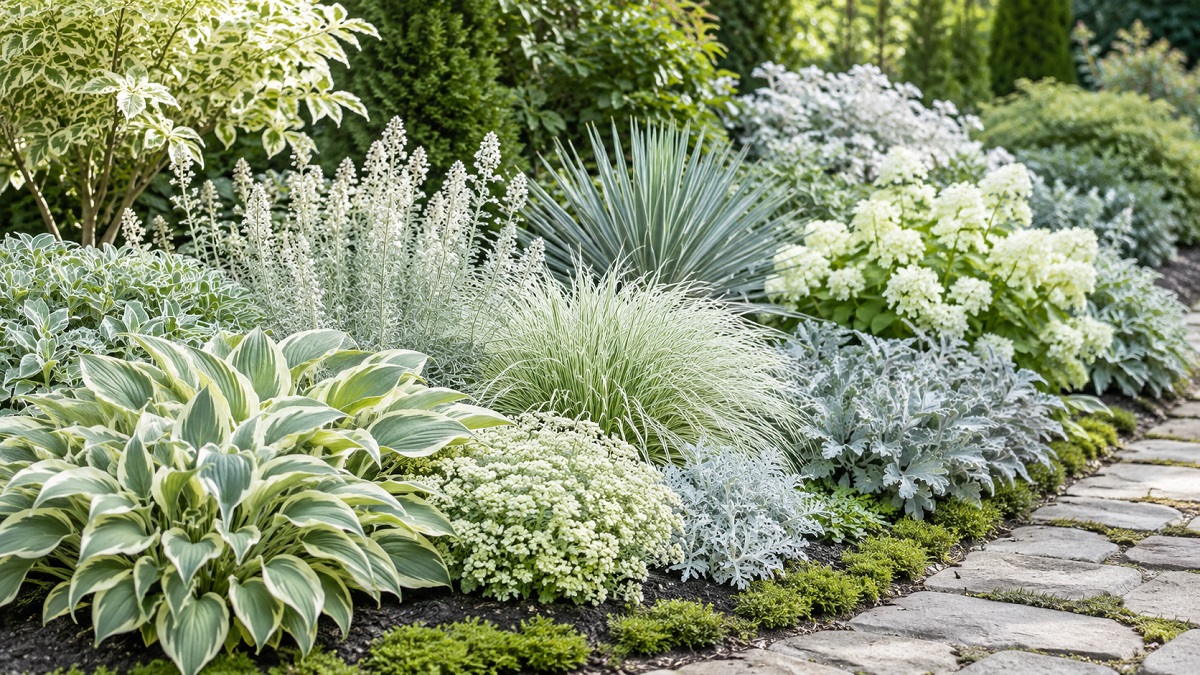
Lighter-colored garden plants can completely change the character of a landscape. While deep green foliage, burgundy leaves, and brightly colored flowers naturally attract attention, plants with pale green, silvery, white, cream, blue-green, or soft yellow tones create a different kind of beauty. They make planting areas feel brighter, more open, and often more peaceful. Used thoughtfully, lighter plants can also make shaded corners appear less gloomy and help individual plants stand out against darker backgrounds.
The term “lighter-colored garden plants” covers a wide range of plants rather than one specific botanical group. Some have naturally pale foliage, such as silver-leaved lamb's ear and dusty miller. Others have variegated leaves marked with white, cream, or yellow. Some are valued mainly for pale flowers, including white roses, white coneflowers, white alyssum, and soft pastel blooms. There are also plants with blue-gray foliage that visually behave like light-colored plants in the garden.
The key to using these plants successfully is balance. A garden made entirely from very pale foliage and flowers can sometimes look flat or washed out. Pairing lighter plants with medium and dark greens gives them definition. Likewise, placing pale foliage near a dark fence, evergreen shrub, stone wall, or shaded background can create a striking contrast without relying on intense flower colors.
Best results: combine pale foliage and flowers with contrasting textures, darker greens, and appropriate light conditions.
Lighter-colored garden plants are plants whose foliage, flowers, or overall appearance is noticeably lighter than the surrounding vegetation. Their colors can range from pale green and lime green to silver, gray-green, blue-green, cream, white, and soft yellow. Some plants are naturally light-colored, while others have variegated leaves caused by patterns of green and non-green tissue.
These plants are particularly useful in garden design because color affects how we perceive space. Dark foliage tends to visually recede and can make a planting appear deeper and more enclosed. Pale foliage and flowers tend to catch available light and attract the eye. This makes lighter plants useful for creating contrast, highlighting pathways, softening hard landscaping, or drawing attention to a particular section of a garden.
It is important to remember that “light-colored” does not necessarily mean “low maintenance” or “shade tolerant.” A silver-leaved plant may require full sun and excellent drainage, while a cream-variegated perennial may prefer partial shade. Always consider the growing requirements of the individual plant rather than choosing one simply because its foliage looks pale.
One of the biggest advantages of lighter-colored plants is their ability to provide contrast. Imagine a border dominated by ordinary green foliage. Adding a few silver, cream, or pale yellow plants can immediately create visual variety. The same principle works in reverse: placing dark foliage behind a pale plant makes the lighter plant appear even brighter.
Pale foliage can be especially effective in gardens where large shrubs or structures create dark backgrounds. Silver foliage, white flowers, and cream-variegated leaves reflect more available light than dark green foliage, helping the planting look brighter.
White, silver, pale green, and soft yellow tones can produce a gentle and relaxing atmosphere. These colors work particularly well in cottage gardens, moon gardens, woodland-inspired plantings, and minimalist landscapes.
A pale plant surrounded by dark green foliage becomes an instant focal point. This can be useful when you want to emphasize an entrance, garden path, seating area, or architectural feature.
There are many plants that can contribute lighter tones to a landscape. The best choice depends on your climate, soil, available sunlight, garden style, and whether you want foliage interest or flowers.
| Plant | Light-Colored Feature | Typical Garden Use | Light Preference |
|---|---|---|---|
| Lamb's Ear | Soft silver foliage | Edging and borders | Full sun |
| Dusty Miller | Silvery-gray leaves | Bedding and containers | Full sun |
| Japanese Forest Grass | Golden or variegated foliage | Shade borders | Part shade |
| Brunnera | Silver-patterned foliage | Woodland gardens | Part to full shade |
| Heuchera | Silver, cream, lime, and pale foliage forms | Borders and containers | Part shade to sun |
| Artemisia | Silver-gray foliage | Rock gardens and borders | Full sun |
| Variegated Hosta | Cream or white leaf margins | Shade gardens | Shade to part shade |
| Silver Mound | Fine silver foliage | Edging and cottage gardens | Full sun |
These are starting points rather than a universal planting list. Growing conditions differ considerably between regions, so select varieties that are appropriate for your local climate. A plant that performs beautifully in a cool temperate garden may struggle in a hot, humid environment, while a drought-tolerant silver-leaved plant may perform exceptionally well in a warm, sunny landscape.
Silver foliage is one of the easiest ways to introduce a lighter tone into a garden. Plants such as lamb's ear, dusty miller, artemisia, and some sage varieties have foliage covered with fine hairs or specialized surfaces that give the leaves their silvery appearance.
Silver plants often look particularly attractive beside dark green shrubs and ornamental grasses. They can also complement purple, blue, pink, and white flowers. Because many silver-leaved plants originate from dry or sunny environments, good drainage and adequate sunlight are often important.
Pale green and chartreuse foliage provides a brighter, fresher appearance without creating the strong contrast of white or silver. Golden Japanese forest grass, lime-colored heucheras, and some ornamental grasses can add this effect.
Pale green plants are useful for transitioning between dark foliage and brightly colored flowers. Their softer color can also make a planting feel more layered because it provides an intermediate shade between very dark and very light plants.
Variegated plants have leaves with areas of different colors. White and cream variegation is particularly valuable in shade gardens, where pale markings can provide visual interest even when flowers are not blooming.
Hostas, brunneras, dogwoods, grasses, and numerous shrubs and perennials are available in variegated forms. However, variegated plants may grow more slowly than fully green forms because the non-green portions of their leaves contain less chlorophyll.
Blue-green foliage is not always extremely pale, but it often has the same visual effect as other light foliage. Plants with blue-gray leaves can soften a planting and provide an excellent background for warmer flower colors.
Lighter-colored flowers can be used alongside pale foliage or as a seasonal source of brightness. White flowers are particularly versatile because they work with almost every foliage color. They can be combined with green, silver, purple, blue, pink, burgundy, and even dark almost-black foliage.
White flowering plants can also be especially attractive during the evening. In low light, white flowers remain more visible than many darker-colored blooms, which is why white-flowered plants are commonly used in moon gardens and near patios or seating areas.
Depending on your growing region, options may include white coneflowers, Shasta daisies, white phlox, white yarrow, white salvia cultivars, and other pale-flowering perennials. Their main advantage is seasonal color without requiring the entire planting to rely on bright or saturated shades.
Soft yellow flowers provide warmth while remaining visually lighter than strong orange or red flowers. Pale yellow can work particularly well with silver foliage and blue-green plants.
Annuals can be an easy way to experiment with a lighter garden color scheme. White alyssum, white petunias, white impatiens, and other pale annuals can be planted in containers, borders, window boxes, and hanging baskets.
Shade is one of the most useful places for lighter-colored plants. Dark corners can sometimes feel visually heavy, especially beneath trees, beside walls, or between large evergreen shrubs. Pale foliage can make these areas feel more open.
Hostas with cream or white margins, silver-leaved brunneras, Japanese forest grass, and certain heucheras can add brightness to shaded borders. Ferns with lighter green fronds can also contribute to the effect without requiring strongly variegated foliage.
However, “shade” does not mean complete darkness. Most shade plants still require some ambient light, and heavily variegated plants may need more light than solid-green varieties to maintain their strongest color. Excessive direct sun can scorch some shade-loving plants, while extremely deep shade can reduce growth and dull foliage.
Sunny gardens are ideal for many silver and gray-leaved plants. Lamb's ear, dusty miller, artemisia, silver mound, and some ornamental herbs can thrive when provided with sufficient sunlight and well-drained soil.
These plants can be especially useful in dry gardens, rock gardens, Mediterranean-inspired landscapes, and low-water borders. Their lighter foliage creates a natural contrast against dark green shrubs while also working well with warm-colored flowers.
In hot climates, however, full sun can be intense. A plant described as sun-loving in one region may benefit from afternoon protection in another. Watch for signs of leaf scorch, wilting, or poor growth and adjust irrigation or placement when necessary.
Good garden design is not simply a matter of collecting plants with similar colors. The strongest planting schemes use contrast, repetition, scale, texture, and spacing. Lighter-colored plants can play several different roles depending on how they are positioned.
One of the simplest techniques is placing pale plants in front of darker foliage. A silver plant beside a deep green evergreen shrub will immediately stand out. Cream-variegated foliage also becomes more noticeable against dark green backgrounds.
Repetition prevents a garden from looking disconnected. Instead of planting one pale plant in one corner, repeat that foliage color elsewhere. Three or four small groups can create a visual rhythm that leads the eye through the garden.
Color is only one part of the picture. Combine broad leaves with narrow grass blades, rounded foliage with finely divided leaves, and upright plants with spreading groundcovers. A silver plant with fuzzy leaves can look completely different from a silver plant with delicate, feathery foliage.
A planting may look completely different in morning sunlight, afternoon sun, cloudy weather, and evening light. White and silver plants tend to become particularly noticeable when the sun is low. Observe the garden before deciding where your brightest plants should go.
Light-colored foliage can help define a walkway. Low-growing silver or pale green plants placed along the edge of a path can create a subtle visual boundary without making the space feel crowded.
Lighter-colored plants rarely need to dominate an entire garden. They often work best when used as highlights within a planting dominated by green foliage.
| Light Plant Color | Good Companion Colors | Design Effect |
|---|---|---|
| Silver | Purple, blue, pink, dark green | Elegant and cool |
| Cream | Green, burgundy, blue | Soft contrast |
| White | Almost any color | Clean and bright |
| Lime green | Dark green, purple, burgundy | Fresh and energetic |
| Blue-green | Yellow, orange, pink, white | Cool and sophisticated |
| Pale yellow | Blue, purple, green, silver | Warm but gentle |
Purple and burgundy foliage are particularly effective partners for pale plants. The dark tones provide a strong background, allowing silver or cream leaves to become focal points. Meanwhile, pale yellow foliage can be softened by nearby blue-green or gray plants.
Containers are an excellent way to experiment with lighter garden colors. A pale foliage plant can be combined with trailing greenery and seasonal flowers to create a layered display on a patio, balcony, porch, or entrance.
Consider using a simple container with one strong foliage plant as the centerpiece. Surround it with lower-growing plants that repeat the same color family. For example, silver foliage can be combined with white flowers and dark green trailing foliage. The result is more cohesive than filling the container with several unrelated flower colors.
Container plants require closer attention to watering because pots generally dry out faster than garden soil. Drainage is equally important. A beautiful silver-leaved plant can decline quickly if its roots remain constantly wet.
Light requirements vary greatly. Silver-leaved plants frequently prefer bright conditions, while some variegated foliage plants perform best in partial shade. Before planting, check the requirements of the specific species and cultivar.
Do not use one watering schedule for every light-colored plant. Some silver-leaved plants tolerate dry conditions, whereas hostas and other shade-loving perennials generally prefer more consistent moisture. Water deeply when needed and allow soil conditions to guide the frequency.
Well-drained soil is particularly important for many plants adapted to sunny, dry conditions. Heavy, constantly wet soil can encourage root problems. If drainage is poor, consider improving the soil structure or choosing plants that naturally tolerate wetter conditions.
Mulch helps conserve moisture and suppress weeds, but it should not be piled directly against plant crowns or stems. A moderate layer of organic mulch can help stabilize soil moisture and temperature while improving the appearance of a planting bed.
Brown, damaged, or diseased foliage can be particularly noticeable on pale plants. Remove damaged leaves when appropriate to keep the planting looking clean. Avoid removing healthy foliage simply because individual leaves are naturally changing color with age.
Some shrubs and perennials benefit from occasional pruning to maintain a compact shape. Always prune according to the plant's growth habit and flowering cycle. Excessive pruning can reduce flowering or weaken plants.
A garden filled entirely with pale green, silver, cream, and white can lose contrast. Instead, introduce darker green foliage and occasional stronger colors to give the lighter plants definition.
Color should never be the only factor when selecting a plant. A beautiful silver plant will not perform well in a poorly drained, shady location if it requires sun and dry soil.
Some highly variegated leaves can scorch under intense sunlight. If a plant is better suited to partial shade, forcing it into a hot exposed position can result in brown leaf edges and poor appearance.
A small nursery plant may eventually become much larger. Give each plant enough space to reach its mature size. Crowding can reduce airflow and make maintenance more difficult.
Color alone does not make a successful planting. Include different heights and textures. Upright grasses, rounded shrubs, spreading groundcovers, and large-leaved perennials can create depth even when the color palette is restrained.
A lighter garden does not have to look the same throughout the year. Combining evergreen or long-lasting foliage with seasonal flowers allows the color scheme to change while maintaining a consistent visual foundation.
In spring, pale flowering bulbs and fresh light-green foliage can provide a soft beginning to the gardening season. During summer, silver foliage and white or pastel flowers can keep the garden bright. In autumn, cream and yellow foliage can complement the changing colors of surrounding trees and shrubs.
Even during periods when flowers are scarce, foliage can continue providing interest. This is one reason foliage-based design is so valuable. Flowers may last for only a few weeks, while a well-chosen foliage plant can contribute color and texture for much longer.
Cottage gardens can use white flowers, silver foliage, pale pinks, soft yellows, and light greens to create a relaxed appearance. Allow plants to overlap naturally while repeating a few colors throughout the border.
Modern landscapes often benefit from a restrained palette. Silver grasses, pale green shrubs, white flowers, and architectural plants can create a clean appearance when arranged in simple groups.
In woodland-style gardens, cream-variegated hostas, silver brunneras, pale ferns, and light-green groundcovers can brighten areas beneath trees. Combine them with natural stone, bark, and darker foliage for a layered effect.
Silver and blue-gray foliage can look natural among rocks and gravel. Many plants with this foliage are also adapted to sunny, relatively dry conditions, making them useful for well-drained rock gardens.
Moon gardens are designed to remain visually interesting in evening light. White flowers, silver foliage, pale grasses, and light-colored containers can become especially noticeable after sunset when combined with suitable outdoor lighting.
Start by examining the location rather than the plant catalog. Determine how many hours of direct sunlight the area receives, whether the soil drains quickly or slowly, how much space is available, and how much maintenance you want to provide.
Next, decide what type of light color you want. Silver foliage gives a different effect from lime green, while cream variegation looks different from white flowers. Consider whether you want year-round foliage, seasonal flowers, or both.
Finally, look at the plants already growing nearby. If your garden is dominated by dark green shrubs, a silver or cream plant may provide exactly the contrast you need. If the garden already contains many pale plants, adding a darker foliage plant may actually improve the overall composition.
Yes. Lighter-colored plants can be particularly useful in small gardens because they can visually open up a planting area. Pale foliage and white flowers attract attention and can make a narrow border feel brighter.
In a small garden, avoid filling every available space with plants. Instead, choose a few dependable light-colored plants and repeat them. This creates continuity without making the garden feel cluttered.
Lighter-colored garden plants are a simple but powerful way to change the mood and appearance of a landscape. Silver foliage, pale green leaves, cream variegation, blue-gray foliage, white flowers, and soft yellow blooms can brighten planting beds and create contrast without relying on intense colors.
The most successful approach is to treat light-colored plants as part of the overall garden composition. Use them against darker foliage, repeat their colors in different areas, combine contrasting textures, and select plants according to their actual growing requirements.
Whether you are designing a shaded woodland border, a sunny cottage garden, a modern landscape, a container display, or a relaxing moon garden, lighter-colored plants can provide structure and visual interest throughout the growing season. Start with a few well-chosen plants, observe how they interact with the light and surrounding foliage, and build the planting gradually.
Continue exploring our gardening guides with more plant profiles, growing tips, gardening design ideas and practical advice for creating a healthy, productive garden.