Growing & Caring for Blueberries
Learn how to grow and care for blueberries, including sunlight, acidic soil, watering, fertilizing, pruning, propagation, harvesting, and common problems.
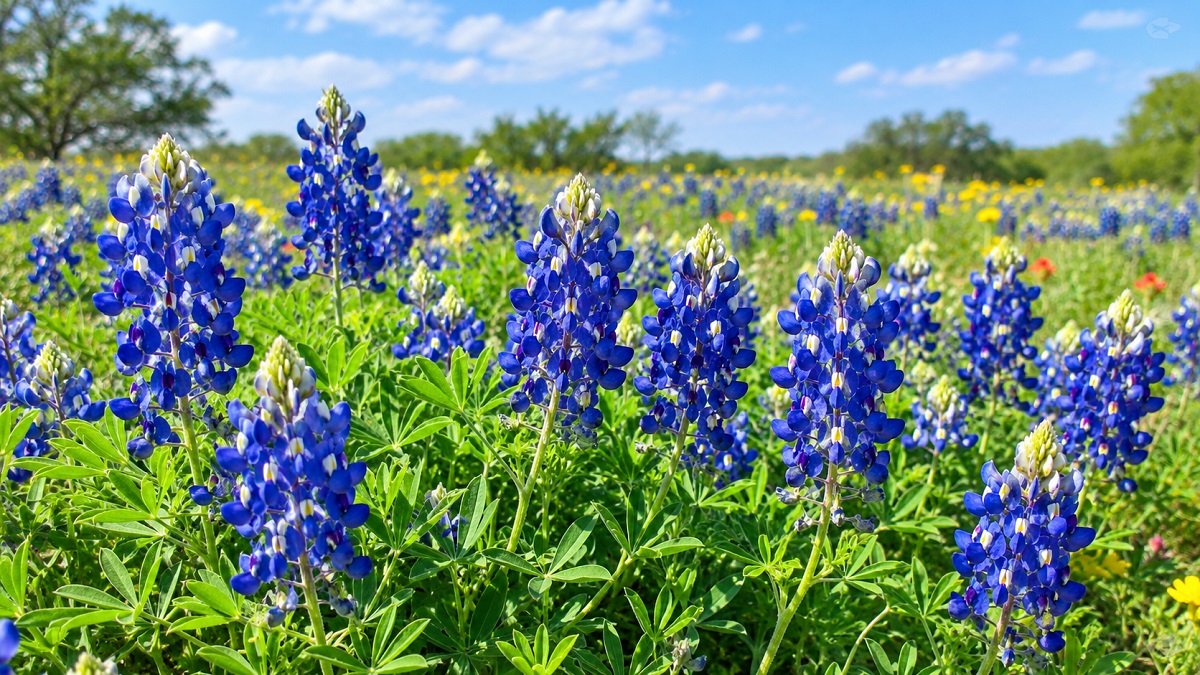
Bluebonnets bring a striking wash of blue to spring gardens, open meadows, and wildflower beds. Their upright flower spikes, soft green foliage, and distinctive white markings make them instantly recognizable. The Texas bluebonnet (Lupinus texensis) is particularly popular for naturalistic planting and is the state flower of Texas.
Although bluebonnets look delicate, they are well adapted to sunny locations, relatively lean soil, and periods of dry weather once established. Their growing cycle differs from that of many familiar garden flowers: seeds are generally sown in autumn, young plants develop through the cooler months, and flowering follows in spring. Understanding this seasonal rhythm is the key to a successful display.
This guide explains how to choose a planting site, sow bluebonnet seeds, manage watering, encourage flowering, and collect seeds for future seasons. It focuses on the Texas bluebonnet, since growing requirements and hardiness can vary among species sold under the common name bluebonnet.
Best approach: Sow in autumn, provide abundant sunshine, and avoid excessively rich or waterlogged soil.
Bluebonnet belongs to the pea family, Fabaceae. Like other lupines, it has compound leaves and flowers arranged along upright stems. The familiar Texas bluebonnet is an annual, meaning it completes its life cycle in one growing season. A new display can return each year when plants are allowed to produce and disperse viable seeds.
Young plants first form low rosettes of leaves. As the weather warms, they develop flowering stems topped with numerous small, pea-shaped blossoms. The flowers are usually deep blue to violet-blue, with contrasting pale or white markings. These markings may change in appearance as individual flowers age.
The foliage is typically light green and softly hairy. Each leaf has several narrow leaflets radiating from a central point, giving it a hand-shaped appearance. After flowering, the plant develops seed pods containing hard-coated seeds.
Bluebonnets are generally grown as cool-season annual wildflowers in their native Texas growing cycle. Seeds germinate in autumn or during favorable cool, moist conditions, and young plants establish before spring. Flowering usually occurs in spring, after which the plants set seed and gradually decline.
Plant size varies with the species, seed source, soil, rainfall, and growing conditions. Texas bluebonnets are often around 12–24 inches (30–60 cm) tall, although taller plants can occur. Allow enough space for natural branching and airflow rather than crowding seedlings into a solid mass.
The upright flower spikes create a strong vertical accent in meadows and informal borders. Their blossoms provide nectar and pollen for visiting insects, while certain butterflies use bluebonnets and related lupines as host plants for their caterpillars.
Bluebonnets are particularly effective when planted in groups. A single plant can be attractive, but a broad patch produces a more natural appearance and makes the flower spikes easier to appreciate from a distance.
Use the following table as a practical reference when planning a bluebonnet planting. The figures primarily describe Texas bluebonnet; other species and local seed strains may differ.
| Characteristic | Specific Details | Care Recommendation |
|---|---|---|
| Common Name | Texas bluebonnet | Check the species on the seed packet before planting. |
| Scientific Name | Lupinus texensis | Use seed identified for the intended growing region. |
| Plant Family | Fabaceae (pea family) | Avoid assuming that the plant is edible because it belongs to the pea family. |
| Life Cycle | Annual | Allow seed pods to mature if you want plants the following year. |
| Typical Height | About 12–24 inches (30–60 cm); sometimes taller | Provide space for flowering stems to develop. |
| Spread | Variable; individual plants branch according to growing conditions | Thin crowded seedlings to improve airflow. |
| Foliage | Softly hairy, palmately compound leaves | Protect the root zone rather than routinely pruning healthy foliage. |
| Flower Color | Usually blue to violet-blue, often with white markings | Grow in groups for a stronger seasonal display. |
| Bloom Period | Spring, commonly March–May in Texas | Timing varies with region, weather, and sowing date. |
| Sunlight | Full sun | Choose an open site receiving approximately 6–8 hours of direct sun. |
| Soil Type | Well-drained, relatively lean soil; neutral to alkaline conditions are generally suitable | Avoid persistently wet soil and excessive organic amendments. |
| Soil Drainage | Essential | Use a raised area or a suitable container if the ground remains waterlogged. |
| Water Requirement | Moderate during germination and establishment; relatively low once established | Water according to rainfall, soil moisture, and local climate. |
| Planting Method | Direct sowing is preferred | Avoid unnecessary transplanting because the plant develops a taproot. |
| Planting Season | Autumn in suitable climates | In Texas, September–November is commonly recommended for best establishment. |
| Germination | Variable because seeds have hard coats | Buy quality seed and follow the supplier's scarification instructions. |
| Fertilizer | Usually unnecessary in suitable soil | Avoid routine high-nitrogen feeding. |
| Pruning | Generally not required | Leave selected plants to set seed if natural reseeding is desired. |
| Propagation | Seed | Collect mature pods before they split and scatter seeds. |
| Wildlife Value | Flowers support pollinators; foliage can support certain butterfly larvae | Grow without unnecessary pesticide applications. |
| Safety | Seeds and other plant parts may contain toxic alkaloids | Do not eat the plant; keep seeds away from children and pets. |
Full sun is one of the most important requirements for healthy bluebonnets. Select a site that receives around six to eight hours of direct sunlight each day, preferably with good exposure during the cooler growing season and spring flowering period.
Open garden beds, sunny slopes, meadow edges, and areas with sparse competing vegetation can work well. Avoid placing bluebonnets beneath dense trees or beside tall plants that cast prolonged shade. Insufficient light may result in weaker growth and fewer flower spikes.
Bluebonnets are especially suited to informal plantings where their seasonal growth can be accommodated. In a mixed border, position them where neighboring perennials will not overwhelm their low winter rosettes or shade them in spring.
In regions with hot summers, the autumn-to-spring growth cycle is particularly important. Plants need favorable cool-season conditions to establish and flower before intense heat arrives. Choose a sunny, well-drained position, but do not assume that the Texas planting calendar will work in every climate.
Where winters are warm or summers arrive early, consult a regional native-plant source or local seed supplier for suitable seed and sowing dates.
Bluebonnets perform best in soil that drains readily and is not excessively rich. In their native Texas habitats, they often grow in open areas with mineral soils, including loams and some clay or limestone-derived soils. Drainage matters more than achieving a particular soil texture.
Neutral to alkaline soil is generally suitable for Texas bluebonnets, and many established populations grow in alkaline, limestone-influenced ground. Test the soil before making major pH adjustments. Do not add lime automatically, since the correct treatment depends on the existing pH and soil composition.
Waterlogged soil can deprive roots of oxygen and increase the risk of root decay. If water stands on the planting area after rain, select a better-drained location or create a raised bed with a free-draining growing medium.
Avoid filling the bed with large amounts of rich compost or manure. Bluebonnets are adapted to relatively lean conditions, and overly fertile soil can favor leafy growth over flowering. Remove dense weeds and competing grasses before sowing so young plants have access to light and space.
Direct sowing is generally the simplest way to grow bluebonnets. The plants develop a taproot, so moving established seedlings can disturb their roots. Sowing in the final growing location also avoids the extra work of raising plants in trays and transplanting them later.
In Texas, autumn sowing is standard. The Texas Department of Transportation recommends a planting window from September 1 through December 15, with sowing by mid-November preferred for best results. These dates are specific to the Texas growing cycle; gardeners elsewhere should adjust planting to their climate and the seed supplier's guidance.
Autumn sowing gives seedlings time to develop roots and a low rosette before spring flowering. Seeds sown too late may have less time to establish, while spring sowing may not reproduce the usual flowering cycle.
Germination time varies with seed condition, temperature, moisture, and the degree of seed-coat hardness. Some seeds emerge within days under favorable conditions, while others may remain dormant much longer. Texas transportation guidance notes that germination can continue over 18 months or more.
Do not assume that every seed has failed simply because seedlings appear unevenly. However, prolonged wetness, poor seed-to-soil contact, unsuitable temperatures, and old or damaged seed can also reduce emergence.
Spacing depends on whether you want a natural meadow or individual plants in a garden bed. For a meadow effect, distribute seed relatively evenly across the prepared area and thin only heavily crowded patches. For a more organized display, follow the recommended spacing on the seed packet and allow room for plants to branch.
Do not bury the seed deeply or cover it with a thick layer of mulch. Both practices can interfere with successful emergence.
Bluebonnets need a different watering approach at different stages of growth. Seeds require enough moisture to begin germinating, and young plants need a reasonably consistent supply while their roots establish. Once established, Texas bluebonnets are relatively drought tolerant and generally need less supplemental watering than many ornamental flowers.
After sowing, water gently to moisten the seedbed. In dry weather, light follow-up watering may be needed to prevent the upper soil layer from drying out completely. The Texas Department of Transportation recommends additional light watering approximately every three days for about three weeks after the initial watering when rain is absent.
Treat that schedule as regional guidance rather than a fixed rule for every garden. Heavy soil, humid weather, rainfall, and container conditions can change how frequently water is needed.
Once bluebonnets have developed established roots, allow the soil to dry appropriately between watering sessions. Water during extended dry spells if plants show signs of moisture stress, but do not keep the ground continuously wet.
Water near the soil surface rather than repeatedly wetting the foliage. Morning watering is useful when irrigation is necessary because it gives the plants time to dry during the day.
Routine fertilizer is usually unnecessary when bluebonnets are planted in an appropriate site. As members of the legume family, they can form root nodules with compatible rhizobium bacteria that help convert atmospheric nitrogen into a form the plant can use.
Heavy feeding, especially with nitrogen-rich fertilizer, may encourage lush foliage without a corresponding improvement in flowers. This is one reason bluebonnets often perform better in relatively lean soil than in heavily enriched ornamental beds.
If plants repeatedly fail to flower, investigate sunlight, drainage, seed quality, plant maturity, and growing conditions before applying fertilizer. The absence of suitable rhizobium bacteria may also affect growth in some locations where compatible lupines have not previously grown.
A compatible lupine inoculant may be helpful where recommended by a local native-plant specialist or seed supplier. Use a product specifically intended for the relevant plant group and follow its directions. An inoculant is not a substitute for good drainage, adequate sunlight, or appropriate planting conditions.
Because Texas bluebonnets are annuals, successful cultivation depends on managing the full growing cycle rather than treating the plant as a permanent flowering perennial.
| Season or Stage | What to Expect | Recommended Care |
|---|---|---|
| Late Summer to Autumn | Seed-sowing period in suitable climates | Prepare the site, control weeds, and sow seed at the locally recommended time. |
| Autumn | Seeds germinate and young plants begin developing | Maintain suitable moisture during establishment and protect seedlings from disturbance. |
| Winter | Low rosettes develop in climates with suitable winters | Avoid excessive watering, heavy feeding, and deep cultivation around plants. |
| Early Spring | Flowering stems begin to rise | Keep competing weeds under control and monitor soil moisture during dry spells. |
| Spring Flowering | Blue flower spikes attract pollinators | Enjoy the display and avoid unnecessary pesticide use. |
| After Flowering | Seed pods develop and mature | Allow selected plants to set seed if you want a natural display next year. |
| Late Season | Plants turn brown and complete their life cycle | Collect mature seed or leave suitable pods to disperse naturally. |
Regular pruning is not necessary. Bluebonnets are small annual wildflowers, not shrubs that require shaping. Removing healthy foliage or cutting flowering stems early can reduce the plant's ability to produce seed.
You can remove badly damaged material if necessary, but leave selected flowers to mature when self-seeding is the goal. In meadow plantings, wait until the seed has matured before mowing or clearing the area.
Bluebonnets can be grown in pots, troughs, and other containers, provided that the container offers enough root depth and excellent drainage. Container cultivation is particularly useful when garden soil stays wet or when you want to create a small seasonal display on a sunny patio.
Select a pot with several unobstructed drainage holes. A deeper container is preferable to a shallow decorative dish because the plant develops a taproot. Avoid containers that remain saturated after watering.
Use a free-draining growing medium rather than dense garden soil alone. Avoid mixes designed to retain very large amounts of moisture, particularly in humid or rainy climates. Sow seeds directly into the final container to minimize root disturbance.
Place the pot in full sun and check moisture more frequently than you would in an established garden bed. Containers dry out faster in warm, windy conditions, but frequent watering should never leave the roots sitting in stagnant water.
Since bluebonnets are annuals, plan the container display around their spring flowering period. If you want plants to return, retain viable seeds and sow them again at the appropriate time for your region.
Seed is the usual method of propagating bluebonnets. Once pollinated flowers fade, seed pods develop along the flowering stems. As the pods mature, they dry and eventually split, scattering seeds away from the parent plant.
Watch the pods after flowering. Collect them when they have matured but before they split open and release their contents. The exact timing depends on weather and plant development, so inspect the pods regularly rather than relying on a fixed date.
Hard seed coats can make germination uneven. Scarification may improve water uptake when performed correctly, but excessive abrasion can damage the seed. Follow the advice provided by your seed supplier for the specific seed lot.
Individual plants generally die after completing their annual life cycle. A patch can return in later seasons if enough viable seed remains in suitable conditions and competing vegetation does not overwhelm the seedlings.
For a reliable display, do not depend entirely on natural reseeding. Collect some mature seed and store it properly so you can supplement the planting if the next season's germination is poor.
Bluebonnets are relatively low-maintenance when planted in a suitable location. Most growing problems result from excess moisture, inadequate sunlight, competition, poor seed quality, or unsuitable growing conditions.
| Problem | Possible Cause | What to Do |
|---|---|---|
| Seeds fail to germinate | Hard seed coats, old seed, poor soil contact, or unsuitable moisture and temperature | Check seed quality, sow at the correct time, and follow appropriate seed-treatment instructions. |
| Seedlings disappear | Drying soil, excessive wetness, pests, or physical disturbance | Inspect the seedbed and adjust moisture and protection to the actual cause. |
| Plants grow leaves but produce few flowers | Insufficient sun, excess nitrogen, or unsuitable growing conditions | Improve sun exposure and avoid unnecessary fertilizer. |
| Yellowing leaves | Waterlogged soil, root stress, or nutrient problems | Check drainage and roots before considering any nutrient treatment. |
| Roots rot | Persistently saturated soil or poor container drainage | Improve drainage and reduce watering when the soil is already wet. |
| Plants become weak or spindly | Insufficient light or excessive competition | Choose a sunnier location and remove competing weeds. |
| Few plants return the following year | Seed was removed, did not mature, or failed to establish | Collect some mature seed and sow a fresh batch in the appropriate season. |
| Flowers fade quickly | Normal seasonal development, heat, or water stress | Maintain appropriate moisture and allow the plants to complete their seasonal cycle. |
Young seedlings can be damaged by slugs, snails, and other plant-feeding organisms, depending on the garden environment. Inspect damaged plants before applying any treatment. Removing hiding places, reducing excessive moisture, and protecting small seedlings may be sufficient in many cases.
Damping-off and root diseases are more likely when seedlings are crowded or the soil remains wet. Good drainage, suitable spacing, and careful watering help reduce these problems. Remove severely diseased plants when necessary and avoid moving contaminated soil into healthy planting areas.
First, check whether the plants have had enough time to develop and whether they received the appropriate seasonal conditions. Then assess sunlight, soil drainage, competing vegetation, and fertilizer use. If those conditions are suitable, investigate seed quality and whether the plants are growing in a region compatible with the species.
Bluebonnets contribute seasonal nectar and pollen to a garden and can help diversify a planting designed for pollinators. Combine them with other locally suitable flowering plants that bloom at different times to provide a longer sequence of resources.
Avoid unnecessary insecticide use while plants are flowering. If a pest treatment is genuinely needed, select a method appropriate for the identified pest and follow the product label, paying particular attention to pollinator protection.
Yes. Bluebonnets and other lupines can contain toxic alkaloids, with concentrations varying by species and plant part. Seeds are a particular concern. Do not eat any part of the plant, and keep harvested seed away from children and pets. Seek advice from a medical professional or veterinarian if ingestion is suspected.
Bluebonnets should also be grown with consideration for their local ecological context. Outside their native range, choose appropriate seed and check local guidance before introducing or naturalizing a plant in open land.
Although the Texas bluebonnet is associated with the southern United States, its success elsewhere depends on climate, seasonal temperature patterns, drainage, and seed source. A sunny garden alone does not guarantee that it will follow the same annual cycle as it does in Texas.
In regions with hot summers and a suitable cool growing season, autumn sowing may work well. In climates with very wet winters, persistently high humidity, or a different seasonal pattern, establishment and flowering may be less predictable.
Gardeners in India and other warm-climate regions should be particularly cautious about applying Texas sowing dates directly. Test a small planting first, seek seed intended for the local climate, and consult regional horticultural advice. Cooler-season conditions and excellent drainage may be more important than a calendar date.
Bluebonnets are not tropical perennials. If the local climate does not provide suitable conditions for their growth cycle, another locally adapted blue-flowering annual may be a more dependable choice.
Texas bluebonnet (Lupinus texensis) is an annual. Individual plants complete their life cycle in one growing season, but the patch may return if mature seeds germinate in subsequent seasons.
Bluebonnets grow best in full sun, ideally receiving around six to eight hours of direct sunlight daily. Shady sites generally produce weaker growth and fewer flowers.
Autumn is the usual sowing season for Texas bluebonnets in suitable climates. Texas guidance recommends September through mid-December, preferably by mid-November. Adjust the timing for your region and seed source.
Usually not. They grow well in suitable, relatively lean soil, and compatible root bacteria help them obtain nitrogen. Excess nitrogen fertilizer can encourage foliage at the expense of flowers.
Keep the seedbed appropriately moist during germination and early establishment. Once the plants are established, reduce supplemental watering and avoid leaving the soil saturated. Adjust irrigation according to rainfall, temperature, and drainage.
Common reasons include inadequate sunlight, excessive nitrogen, unsuitable soil moisture, poor establishment, or an unsuitable growing climate. Check these factors before applying fertilizer or other treatments.
Yes. Use a container with drainage holes and enough depth for the taproot. Sow seeds directly in a free-draining growing medium and place the pot in full sun.
Allow some flowers to develop mature seed pods, or collect and store seeds for autumn sowing. Natural reseeding is not guaranteed, so retaining a supply of seed is a useful precaution.
Deadheading is optional. Remove faded flower spikes if you do not want seed, but leave selected stems intact when you want the plants to reseed naturally.
Bluebonnets contain potentially toxic compounds. Do not allow children or pets to eat the flowers, foliage, or seeds, and store collected seed securely.
Growing bluebonnets successfully is less about intensive maintenance and more about choosing the right conditions. Give them plenty of sunshine, well-drained soil, an appropriate autumn planting period, and enough moisture to establish without keeping the roots wet. Avoid excessive fertilizer and allow plants to finish their natural growing cycle.
With suitable conditions and a little patience, Texas bluebonnets can produce a memorable spring display while adding seasonal color and supporting pollinators. Save some mature seed each year if you want to maintain the planting, and adapt your sowing schedule to the climate where you garden.
Continue exploring our gardening guides with more plant profiles, growing tips, and practical advice for creating a healthy, productive garden.