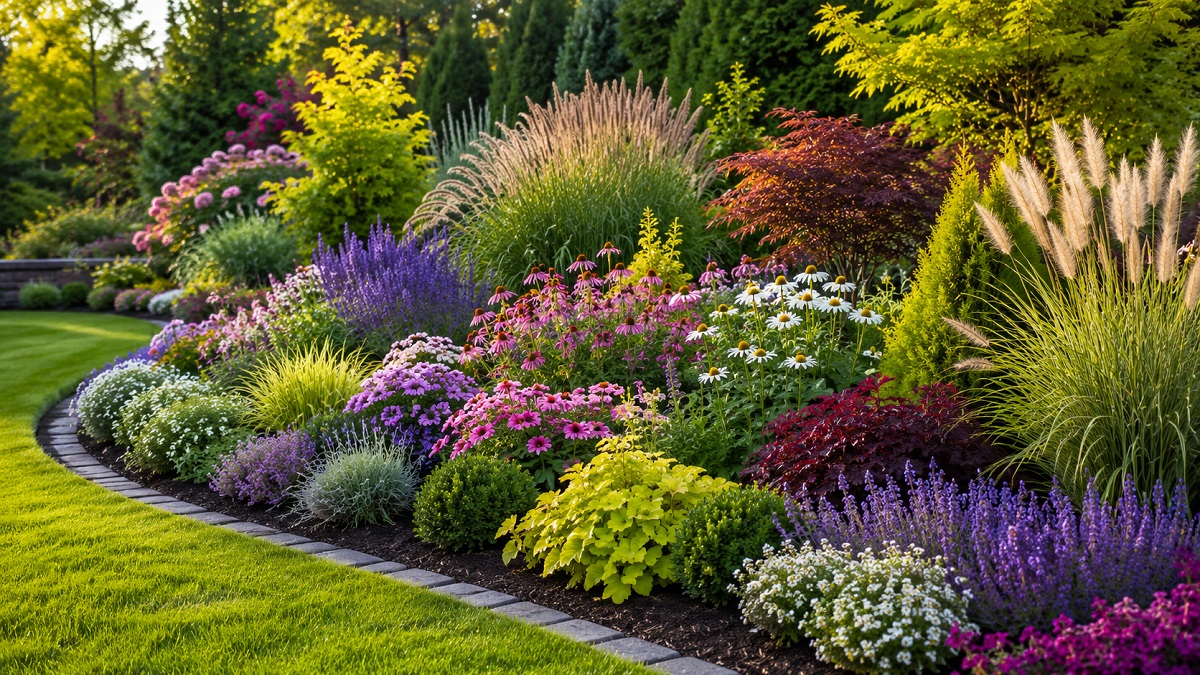
A professionally designed ornamental bed featuring layered perennial flowers, ornamental grasses, shrubs, and attractive garden edging for year-round landscape beauty.
An ornamental bed is a landscaped planting area designed to showcase flowers, shrubs, ornamental grasses, and foliage plants while adding year-round beauty to a garden. Ornamental beds stand as the pinnacle of human expression within the living landscape, serving as a critical bridge between rigid structural architecture and the fluid dynamism of natural ecosystems. Far from being simple repositories for visually appealing flora, an expertly designed ornamental bed functions as a complex, engineered biological tapestry. It requires a profound synthesis of aesthetic philosophy, microclimatic analysis, soil chemical composition, and deep taxonomic awareness. This comprehensive guide serves as an authoritative textbook for landscape architects, advanced horticulturists, and dedicated practitioners seeking to master the creation, installation, and multi-decade preservation of premium ornamental borders.
1. Theoretical Foundations: Spatial Architecture and Compositional Principles
The realization of an impactful ornamental bed depends heavily on foundational art principles adapted for botanical mediums. Unlike static canvas paintings, living structures change constantly through seasonal growth, decay, wind currents, and light refraction. Designers must curate every placement with an eye toward three-dimensional structural stability and multi-season transformation.
The Tri-Planar Layering System
Achieving structural balance in a large ornamental border requires a deliberate division of space into three distinct depth planes: the background anchoring layer, the mid-ground focal field, and the foreground transitional border. Skipping this systemic distribution often results in visual collapse, where smaller varieties are overtaken by more aggressive specimens, reducing the landscape to an undifferentiated mass of green.
The background layer relies on strong structural elements, often called the "bones" of the bed. This plane usually contains dark, fine-textured conifers, deciduous structural shrubs, or tall woody perennials. These elements frame the display and provide a neutral background that makes brighter foreground colors pop. Moving forward, the mid-ground focal field contains the primary dynamic varieties. This is where you introduce bold textures, high-contrast color schemes, and fluctuating seasonal themes. Finally, the foreground transitional border steps down cleanly to meet adjacent lawn surfaces or hardscapes. It uses low, dense creeping plants, mounded perennials, or neatly trimmed specimens that hide the bare, woody lower stems of larger mid-ground plants.
The Golden Ratio & Visual Mass in Landscape Balance
Applying the classical golden ratio (approximately 1:1.618) to modern ornamental borders helps establish a natural, fluid rhythm that keeps eyes moving smoothly across the landscape. Instead of scattering specimen plants evenly throughout the bed, place them in distinct, unequal clusters. For example, group high-impact plants in odd-numbered clusters (threes, fives, or sevens) rather than pairs.
This approach breaks up sterile symmetries and matches how natural plant colonies form in wild ecosystems. Visual weight should also shift deliberately throughout the design; a massive, dark evergreen cluster on one side can be balanced on the other by a wider, lighter mass of airy ornamental grasses like Panicum virgatum, creating a dynamic, stable composition.
Color Theory: Chromatic Interplay Across Seasons
Color choices shape the mood and perceived size of an ornamental bed. Cool color schemes built around blues, deep purples, and soft pinks make borders feel more distant, creating an illusion of space in tight, enclosed urban gardens. Conversely, warm color schemes featuring sharp reds, vibrant yellows, and rich oranges jump forward visually, making wide-open landscapes feel intimate and energetic.
However, successful long-term color design looks beyond simple flower blooms. It uses multi-colored foliage, dark purple stems, and changing autumn leaves to keep the display engaging for twelve months a year, long after summer petals fade.
Key Structural Metrics
Depth Ratio: A minimum bed depth of 6 to 8 feet is essential to successfully support a classic three-tier planting structure without crowding varieties.
Texture Balance: Maintain an optimal baseline ratio of 70% fine/medium foliage textures to 30% bold, broad-leaved structural accents.
Evergreen Anchor: Dedicate at least 25% to 30% of total plant biomass to reliable evergreens to ensure clean structure through winter.
2. Soil Edaphology: Creating an Ideal Root Zone Portfolio
An ornamental bed is only as resilient as the soil ecosystem supporting it. Many long-term plant failures blamed on disease or poor climate actually stem from compacted, nutrient-depleted, or improperly structured soil. Elevating an ornamental bed from average performance to exceptional longevity requires a careful look at soil physics and biological chemistry.
Soil Physics: Balancing Air Spaces and Drainage Capacity
The ideal soil profile for a thriving ornamental bed is a deep, crumbly loam composed of roughly 40% sand, 40% silt, and 20% clay, enriched with high-grade organic matter. This specific physical matrix balances two critical, competing needs: fast water drainage through larger macro-pores and long-term nutrient retention within tiny micro-pores. When soil compacts, these vital pore spaces collapse, pushing out oxygen and trapping toxic gases like carbon dioxide around root networks. Without proper air space, plant roots cannot absorb nutrients efficiently, leaving them vulnerable to opportunistic soil fungi like Phytophthora and Pythium.
The Chemistry of the Root Zone: pH Management and Nutrient Delivery
Soil pH directly controls how easily plants can absorb essential nutrients. Most classic ornamental varieties thrive in slightly acidic to neutral soils, with an optimal pH range between 6.0 and 6.8. In this zone, key nutrients like nitrogen, phosphorus, potassium, calcium, and magnesium remain soluble and easily accessible to root systems.
When soils become highly alkaline (pH above 7.5), iron and manganese lock up tightly in the soil matrix, causing visible iron chlorosis—a condition where young leaves turn pale yellow while their veins remain dark green. This issue frequently affects acid-loving ornamental specimens like Rhododendron, Camellia, and Hydrangea macrophylla. Conversely, highly acidic soils (pH below 5.2) can cause aluminum toxicity while starving plants of essential calcium and magnesium, damaging root tip cells and stunting long-term growth.
Dramatically fuels biological soil webs and expands aggregate stability.
Bulk Density
1.1 – 1.3 grams per cm³
Deep mechanical aeration, avoiding active foot traffic
Ensures reliable oxygen diffusion and easy, unrestricted root pathing.
Cation Exchange (CEC)
15 – 30 meq/100g
Inoculation with humic acids and premium compost fractions
Measures the soil's natural capacity to hold and buffer essential nutrients.
3. Botanical Selection and Curation: Creating Resilient Plant Palettes
Choosing plants for an ornamental bed requires balancing artistic vision with ecological reality. True success means selecting species that harmonize visually while sharing identical needs for sunlight, moisture levels, and soil chemistry.
The Matrix Planting Method
The Matrix Planting approach, inspired by natural plant sociology, represents a major leap forward from traditional block-style mass plantings. Instead of grouping single varieties in isolated, high-maintenance blocks that leave bare soil exposed to weeds, this system weaves plants together in overlapping layers that mimic a wild prairie or forest floor. It relies on a dense base layer of low-growing, non-aggressive ground covers or short sedges (like Carex pennsylvanica or Sporobolus heterolepis). This living mulch covers every inch of open soil, regulating root temperatures and preventing weed seeds from taking hold.
Emerging through this protective green base layer are structural clusters and seasonal accents. These taller plants rise, bloom, and recede in a predictable natural cycle, ensuring the bed remains dynamic and visually engaging throughout the year without requiring constant human intervention or heavy weeding.
High-Performance Species for Diverse Ornamental Ecosystems
To assist in the curation process, the following profiles represent reliable, high-performance specimens suited for distinct environmental conditions:
Architectural Specimen Varieties (Full Sun to Partial Shade)
Acanthus spinosus (Spiny Bear's Breeches): Noted for its deeply incised, glossy dark green foliage and towering, structural flower spikes featuring amethyst and white bracts. Thrives in deep, well-drained loams and provides bold textural contrast against fine-leafed grasses.
Baptisia australis (False Indigo): A tough, deep-rooting legume that delivers spectacular indigo-blue flower racemes in late spring, followed by attractive blue-green foliage and structural black seed pods that persist through winter.
Structural Ornamental Grasses
Calamagrostis x acutiflora 'Karl Foerster' (Feather Reed Grass): A strictly vertical, cool-season grass that provides crisp architectural structure early in the season. Its slender plumes shift from soft pink-bronze to a warm golden wheat color by mid-summer, standing firm through heavy winter snows.
Miscanthus sinensis 'Gracillimus' (Maiden Grass): Offers a fine, narrow-textured ribbon form that creates movement and sound in the garden. It forms dense, elegant mounds that contrast beautifully with broad-leaved perennials.
4. Engineering structural Borders: Edging, Foundations, and Grading
The longevity of an ornamental bed depends as much on its physical infrastructure as its living plants. Without a clear, permanent boundary separating root zones from aggressive lawn turf, maintenance needs skyrocket, and clean design lines quickly blur.
Choosing the right edging materials determines how clean and distinct a bed's perimeter remains over time. While hand-cut spade edges look beautifully natural, they require recutting multiple times a year to stop turf grass from creeping into the soil. For a permanent, low-maintenance solution, heavy-gauge commercial steel edging (1/4-inch thickness) anchored with deep steel stakes is highly effective.
Steel creates sharp, clean sweeping curves that easily withstand heavy commercial mowers and frost heave. Alternatively, installing a flat cobblestone or brick paving strip set on a compacted gravel bed provides a reliable mowing track, allowing lawn care equipment to trim edges cleanly without manual string trimming.
Edging Depth Targets
Spade Edge: Maintain a 4 to 6-inch vertical drop at a clean 90-degree angle.
Steel Strips: Install 6-inch depth profiles, leaving no more than 1/2-inch of exposed metal above the final mulch line.
Grading for Visual Depth and Hydrological Health
Flat, uniform beds often look flat and uninspiring. Strategic landscape grading can alter this, improving both visual depth and water management. Sculpting the soil into subtle, rolling mounds—or berms—creates a natural, elevated stage for focal plants, making them pop against the surrounding topography.
When grading, ensure the center of the bed rises smoothly at a 2% to 5% slope before gently sloping down to meet the edge profile. This gentle slope guides heavy rainwater away from sensitive plant crowns while channeling moisture deep into the surrounding root zones, preventing standing water from pooling during heavy downpours.
An elite ornamental bed requires ongoing, proactive maintenance that adapts to changing seasonal rhythms. A random approach to weeding and pruning often disrupts natural growth cycles, reducing flower production and shortening plant lifespans.
The Science of Mulching: Material Choices and Application Thickness
Mulching is a core requirement for successful long-term plant health, acting as a protective layer that stabilizes soil ecosystems. Applying a consistent 2-to-3-inch layer of double-shredded hardwood mulch or composted leaf mold cuts weed germination by up to 90% while locking in valuable soil moisture during hot summer spells. As these organic mulches slowly break down, they feed beneficial soil microbes and build rich, loose soil structure over time.
However, improper mulching can cause serious health issues. Avoid piling mulch directly against woody shrub stems or piling it into deep "mulch volcanoes" around plant bases. This misplaced moisture rots soft bark and creates entry points for boring insects and destructive fungal pathogens. Keep mulch pulled back at least two inches from all living stems to ensure healthy air circulation.
Irrigation Engineering: Target Delivery via Sub-Surface Drip Networks
Overhead spray irrigation is highly inefficient for ornamental beds, losing substantial water to evaporation and wind drift while soaking foliage and fostering fungal leaf diseases like powdery mildew and black spot. The gold standard for modern water management is a dedicated, pressure-compensating sub-surface drip irrigation system.
By using flexible drip lines spaced 12 to 18 inches apart under the mulch layer, water flows directly to root zones at a slow, deliberate rate (e.g., 0.6 to 0.9 gallons per hour). This focused delivery keeps foliage dry, ensures deep root development, and saves significant water by preventing runoff.
To maintain peak health and visual impact year-round, follow this structured, season-by-season operational schedule:
Spring Operations (Wake-Up and Nutrition Phase)
As soil temperatures rise past 50°F, clear away dead winter foliage from perennial clusters. Carefully pull back old mulch layers to check for frost-heaved roots, pressing them gently back into the soil matrix. Apply a balanced, slow-release organic fertilizer across the bed, following specific soil test recommendations, and top off mulch levels before summer weeds emerge.
Summer Operations (Hydration and Deadheading Phase)
Monitor soil moisture profiles weekly using manual soil probes, ensuring deep, less frequent watering cycles during drought conditions. Promptly deadhead faded spring and early summer flowers to prevent plants from wasting energy on seed production, encouraging a second flush of late-season blooms while keeping the display looking clean and tidy.
Autumn Operations (Division and Soil Enrichment Phase)
As active growth cools down, divide overcrowded perennial clumps like Iris sibirica and Hemerocallis to renew their vigor. Plant spring-blooming bulbs deep within the mid-ground layers, and top the entire bed with a rich 1-inch layer of premium organic compost, letting winter rains wash vital nutrients deep into the sleeping soil infrastructure.
Seasonal Deadlines
Spring Prep: Finish all perennial cutbacks before new green growth extends past 2 inches.
Autumn Planting: Complete all bulb installations at least 4 weeks before the first hard ground freeze.
Frequently Asked Questions Regarding Ornamental Bed Management
How frequently should an established ornamental bed be mechanically tilled?
Never till an established ornamental bed unless you are completely rebuilding it. Frequent rototilling disrupts delicate, beneficial mycorrhizal fungal networks, destroys stable soil structure, and brings millions of buried weed seeds up into the warm surface layer where they quickly germinate. Instead, embrace a gentle "no-till" management philosophy by top-dressing the soil with organic compost and letting earthworms weave it down naturally.
What is the most effective approach for retrofitting an invasive grass infestation within a perennial bed?
Aggressive turf grasses like Bermuda grass or Quackgrass require a targeted, multi-layered approach. Manual pulling often breaks subterranean rhizomes, sparking aggressive new weed growth from the fragments. For minor issues, apply a selective fluazifop-p-butyl herbicide directly to the grass blades; this chemical targets monocot grasses without harming broad-leaved perennial choices. For major infestations, clear the area and lay thick cardboard topped with 4 inches of dense woodchips to completely smother the grass roots.
How can I accurately diagnose nitrogen deficiency versus iron chlorosis?
Look closely at which leaves are discoloring first. Nitrogen is highly mobile within plants, so deficiencies show up first on older, lower leaves as a uniform, pale yellow color while the plant moves remaining nitrogen to new growth. Iron is immobile, so iron chlorosis strikes the youngest, newest leaves at the tips of branches first, turning the leaf tissue pale yellow or white while the veins remain sharp, distinct, and dark green.