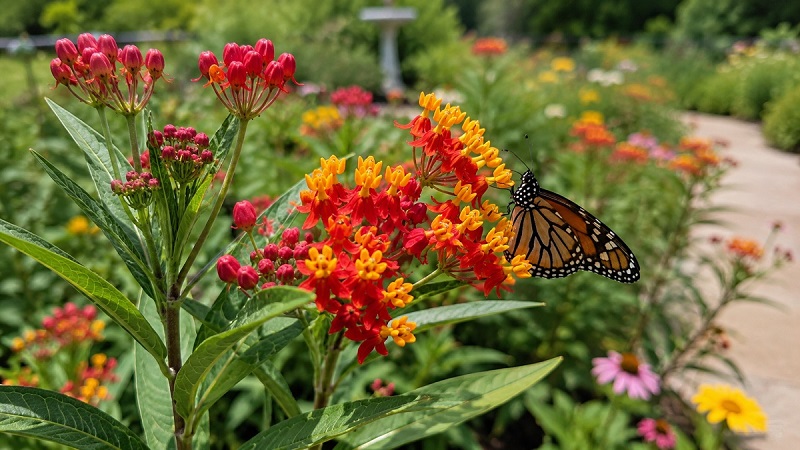
Growing & Caring for Blood Flower (Asclepias curassavica)
Learn how to grow and care for Blood Flower (Asclepias curassavica), including sunlight, soil, watering, planting, pruning, propagation, pests, winter care, and butterfly benefits.
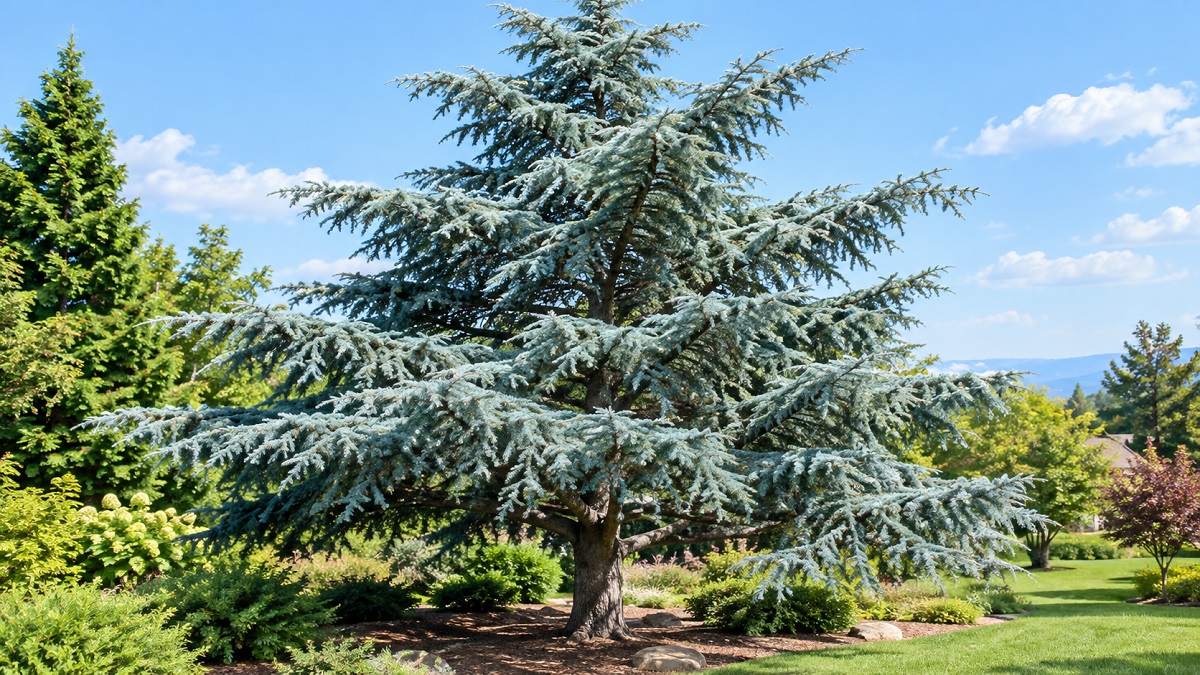
Few evergreen trees have the unmistakable presence of a Blue Atlas Cedar. With its silvery blue to blue-green needles, broad architectural branches, and rugged character, Cedrus atlantica 'Glauca' can become the tree that defines an entire landscape. Young specimens often have a fairly upright, somewhat formal appearance, but as they mature, their branches become broader and more picturesque. An older tree may develop sweeping limbs and an irregular silhouette that looks especially impressive when the tree has enough open ground around it.
Blue Atlas Cedar is not a tree to squeeze into a small planting bed. Given good growing conditions, it becomes a substantial evergreen and deserves to be planted where its eventual height, spread, and branching pattern can be appreciated rather than constantly controlled. Fortunately, once established in a suitable location, it is relatively uncomplicated to maintain. Good drainage, abundant sunlight, sensible watering during establishment, and restrained pruning go a long way toward keeping the tree healthy.
This guide covers the practical side of growing Blue Atlas Cedar, including planting, sunlight, soil, watering, feeding, pruning, winter care, common problems, container growing, and long-term landscape use. It also explains what gardeners should expect as the tree matures, because understanding its eventual size is one of the most important parts of caring for it successfully.
Best results: Give Blue Atlas Cedar full sun, excellent drainage, enough room to mature, and consistent moisture while the root system becomes established.
Blue Atlas Cedar is a blue-foliaged selection of Atlas cedar, a true cedar associated with the Atlas Mountains of North Africa. Unlike plants commonly called cedar that belong to entirely different genera, Blue Atlas Cedar belongs to Cedrus, the same genus as Deodar cedar and Cedar of Lebanon.
Its foliage is one of the tree's greatest attractions. The stiff needles occur both individually on young shoots and in clustered groups on shorter shoots, creating dense tufts of blue-green or silvery blue foliage. Color varies somewhat among individual plants. Some specimens are intensely steel-blue, while others lean toward blue-green.
The branches are another important feature. A young Blue Atlas Cedar may be fairly conical or pyramidal, but its outline generally becomes broader and less symmetrical with age. Mature trees frequently have heavy horizontal limbs and a strongly sculptural form. This natural irregularity is part of the tree's appeal and usually looks better than an attempt to shear it into a formal shape.
Mature specimens can also produce upright cones. These take time to develop and are not normally the main ornamental reason for growing the tree, but they reinforce its distinctive conifer character.
Garden centers sometimes sell Blue Atlas Cedar beside the famous Weeping Blue Atlas Cedar, but they should not be confused. Standard Cedrus atlantica 'Glauca' develops into a large upright tree. Weeping selections, such as 'Glauca Pendula', have flexible, cascading branches and are often trained on supports to create much lower, spreading forms.
Before planting, look beyond the tree's size at the nursery. A Blue Atlas Cedar may appear manageable in a container, but its permanent position should accommodate a large woody plant. The following table summarizes the most useful characteristics for home gardeners.
| Characteristic | Blue Atlas Cedar Details |
|---|---|
| Botanical name | Cedrus atlantica 'Glauca' |
| Common name | Blue Atlas Cedar |
| Plant family | Pinaceae |
| Plant type | Large evergreen coniferous tree |
| Typical mature height | Approximately 40–60 feet in landscapes; old specimens can become larger under favorable conditions |
| Typical mature spread | About 30–40 feet or more as branches broaden with age |
| Growth habit | Upright when young, becoming broad, spreading, irregular, and architectural with maturity |
| Growth rate | Generally moderate when growing conditions are favorable |
| Foliage | Evergreen, needle-like, usually blue-green to silvery or steel-blue |
| Best light | Full sun |
| Soil preference | Well-drained soil; adaptable to several soil types when drainage is good |
| Water needs | Regular watering during establishment; more drought tolerant after developing a strong root system |
| USDA hardiness | Generally grown in Zones 6–9 |
| Flowers | Not grown for showy flowers; produces male and female reproductive structures typical of conifers |
| Cones | Upright woody cones may develop on mature trees |
| Pruning needs | Low; usually limited to removing dead, damaged, crossing, or poorly positioned branches |
| Landscape value | Excellent specimen tree, lawn focal point, large-garden evergreen, or architectural accent |
| Main concern | Planting it where there is insufficient space or where the soil remains persistently wet |
Successful Blue Atlas Cedar care begins before the tree goes into the ground. Location matters more than almost any fertilizer, pruning technique, or seasonal treatment you might use later.
Start by choosing a position with generous overhead and sideways clearance. Avoid placing the tree immediately beneath power lines, close to roof eaves, or only a few feet from a driveway or building. A mature tree may spread widely, and constantly cutting back large branches to compensate for a cramped location usually damages its natural appearance.
Dig the planting hole considerably wider than the root ball but no deeper than necessary. The root flare—the point where the trunk begins to widen into the major roots—should remain at or slightly above the surrounding soil level. Planting a cedar too deeply can leave the lower trunk buried and create unnecessary stress.
Once the tree is positioned correctly, backfill primarily with the soil removed from the hole. Avoid creating a small pocket filled entirely with rich potting mix. Roots need to expand into the surrounding native soil rather than remain concentrated in an artificially amended planting hole.
Water deeply after planting to settle soil around the root system. A layer of organic mulch approximately 2–3 inches deep can help moderate soil temperatures and slow moisture loss. Spread it over the root area while keeping mulch several inches away from the trunk. A mound of mulch touching the bark can retain excess moisture around the trunk and should be avoided.
Blue Atlas Cedar performs best in full sun. A location receiving direct sunlight for most of the day generally encourages sturdy growth, a balanced canopy, and good foliage color.
Some trees will tolerate limited light shade, but deep or prolonged shade is not ideal. Shaded growth can become more open, and branches may stretch toward stronger light instead of maintaining an evenly developed structure.
Sun exposure also matters when you are selecting the tree for its famous blue foliage. The intensity of blue coloration depends partly on genetics, so not every specimen will look identical, but a bright open setting normally showcases the foliage much better than a dark corner between larger trees.
Drainage deserves special attention. Blue Atlas Cedar is considerably happier in soil that drains after irrigation or rainfall than in ground that remains waterlogged for long periods.
The tree can adapt to a range of ordinary garden soils when oxygen can reach its roots. Sandy loam and loamy ground can both work well, while heavier soil may also be usable when its structure and drainage are adequate. A site where water repeatedly collects around the root zone is much more problematic.
Before planting in questionable ground, observe what happens after strong rain. If a planting hole fills with water and stays saturated for an extended period, it is better to improve the overall drainage or choose a more suitable location rather than trying to compensate later with fertilizer.
An organic surface mulch is useful, but large amounts of amendment do not need to be dug into every planting hole. As mulch gradually decomposes at the surface, it contributes organic matter while still allowing the roots to establish themselves in the surrounding soil.
Newly planted trees require more attention to moisture than established ones. During the first growing seasons, the original root ball and surrounding soil should be checked regularly. The goal is an evenly moist root zone without creating permanently saturated conditions.
Deep watering is usually more useful than frequent superficial sprinkling. A thorough soaking encourages moisture to penetrate deeper into the root area, while very shallow watering can wet only the surface.
There is no reliable rule such as watering every three or every seven days for every garden. Soil type, rainfall, temperature, wind, tree size, planting season, and drainage all affect how quickly the root zone dries. Check the soil rather than watering automatically according to the calendar.
Once a Blue Atlas Cedar is well established, it becomes more tolerant of occasional dry periods. Even mature trees, however, may benefit from supplemental water during unusually prolonged drought, especially in hot locations where weeks pass without meaningful rainfall.
Blue Atlas Cedar is not normally a heavy-feeding tree. In reasonably fertile soil, an established specimen may grow perfectly well with little intervention beyond an annual layer of organic mulch.
If a young tree is growing poorly, first investigate sunlight, soil moisture, drainage, root condition, and planting depth. Fertilizer cannot correct roots sitting in saturated soil or a trunk that has been planted too deeply.
Where a genuine nutrient deficiency or very poor soil is suspected, a soil test is a much better starting point than applying large quantities of fertilizer without knowing what is missing. Excessive nitrogen can produce fast, soft growth without addressing the underlying problem.
If fertilizer is needed, use an appropriate landscape-tree product according to its label rather than increasing the rate in an attempt to make the cedar grow faster. Blue Atlas Cedar is a long-term landscape tree; steady, healthy development is more desirable than forcing unusually rapid growth.
A well-sited Blue Atlas Cedar needs surprisingly little pruning. Its naturally irregular mature shape is one of its most valuable ornamental features, so routine shearing should not be part of normal maintenance.
Pruning is primarily used to remove dead, broken, diseased, rubbing, or structurally undesirable branches. Young trees can also be observed for competing leaders or awkward branch development while corrections are still relatively small.
Avoid indiscriminately shortening mature branches merely to keep the tree within a space that was too small from the beginning. Large corrective cuts can permanently change the graceful architecture of the tree.
Repeatedly cutting the top from an upright Blue Atlas Cedar is generally not a good long-term maintenance strategy. The result can look unnatural and may stimulate awkward replacement growth.
If mature height is going to create a conflict with overhead utilities, a roof, or another fixed structure, choosing a different plant at planting time is much better than planning to control a large cedar indefinitely with heavy pruning.
Dead branches can be removed whenever they create a hazard or clearly need attention. For substantial limbs, proper pruning cuts and safe equipment are important. Large mature Blue Atlas Cedars may eventually require professional arborist care because of their height and branch weight.
Blue Atlas Cedar is commonly suited to USDA Hardiness Zones 6 through 9, although local conditions affect performance. A sheltered garden, elevated site, exposed windy property, or unusually wet winter can create different growing conditions even within the same hardiness zone.
Established trees generally cope well with winter temperatures within their suitable range. Young trees are more vulnerable to environmental extremes simply because their root systems have not yet expanded far into surrounding soil.
Continue monitoring moisture as autumn approaches, particularly after a dry growing season. Evergreens retain foliage through winter and can lose moisture on sunny or windy days even while growth is slow.
There is usually no reason to wrap an established landscape specimen routinely. The more important protection comes from appropriate siting, healthy roots, suitable hardiness, and avoiding late-season practices that encourage excessive tender growth.
When growing conditions are good, Blue Atlas Cedar can be a durable landscape specimen, but several problems can affect appearance or vigor. Many begin with environmental stress rather than with a pest.
A limited amount of older interior needle loss is not necessarily alarming. Evergreen does not mean that every individual needle remains attached forever. However, widespread browning, dying branch tips, or rapid canopy decline deserves investigation.
Check soil moisture first. Both prolonged drought and waterlogged roots can contribute to foliage problems. Also consider recent transplantation, winter injury, extreme heat, root disturbance, herbicide exposure, or physical damage.
Persistently saturated ground reduces oxygen around roots and can predispose trees to root decline. Symptoms above ground may initially look similar to drought stress because damaged roots can no longer move water effectively through the plant.
This is one reason simply adding more water to a declining tree can make the situation worse. Always examine soil conditions first.
Uneven sunlight, competition from nearby trees, crowded planting, or physical obstruction can produce an irregular canopy. Blue Atlas Cedar naturally becomes somewhat irregular with age, so not every asymmetrical branch pattern represents a problem.
Depending on region and growing conditions, stressed cedars can occasionally experience problems from sap-feeding insects or other pests. Look for unusual scale-like bumps, sticky residues, abnormal needle discoloration, webbing, or localized dieback.
Correct identification should come before treatment. Broad pesticide applications without knowing the cause can waste time and affect beneficial insects while failing to solve an underlying irrigation or root problem.
Mature Blue Atlas Cedars develop substantial limbs. Damaged, cracked, or poorly attached branches may become more significant as they gain weight. Trees positioned close to buildings, walkways, vehicles, or gathering areas should be inspected periodically, especially after severe weather.
Blue Atlas Cedar is at its best when treated as a specimen rather than background filler. Its foliage color provides contrast with ordinary green evergreens, while its branching pattern gives the landscape structure throughout the year.
In a large lawn, one cedar can form a dramatic focal point. It also works in spacious mixed landscapes where its blue foliage contrasts with deep green broadleaf evergreens, burgundy foliage, ornamental grasses, or flowering shrubs.
Resist the temptation to surround the trunk with numerous shrubs that will eventually crowd the lower branches. Young gardens often look empty because plants have not matured, but filling every space immediately can create unnecessary competition later.
The tree's strongest landscape partner is often open space. Grass, low groundcovers, gravel, or a restrained planting beneath and around it can emphasize the shape of the branches rather than hiding them.
A young Blue Atlas Cedar can be kept in a large container temporarily, but the standard upright cultivar is fundamentally a large landscape tree. Container culture becomes increasingly difficult as the tree develops.
A container specimen needs excellent drainage, a stable pot that is unlikely to blow over, and careful moisture management. Potting media dry much faster than garden soil during summer, while an oversized container with poor drainage can remain excessively wet during cool weather.
Roots in containers also experience greater temperature fluctuations than roots protected by the surrounding ground. In cold climates this can make a container-grown cedar less winter-hardy than a comparable tree planted in the landscape.
Gardeners who want a permanently compact blue conifer for a patio or small bed are usually better served by choosing a genuinely dwarf conifer rather than trying to maintain a standard Blue Atlas Cedar at an artificially small size.
Propagating named conifer cultivars is more involved than collecting a seed and expecting an identical replacement. Seedlings can vary in foliage color, habit, and other characteristics, so a tree grown from seed may not reproduce the strong blue coloration associated with a selected 'Glauca' parent.
Commercial nurseries commonly rely on vegetative techniques such as grafting when they need to preserve the characteristics of selected forms. These methods require more skill than routine seed starting and are not always the most practical project for the average home gardener.
If your objective is simply to add another dependable Blue Atlas Cedar to the landscape, purchasing a healthy nursery-grown specimen with the color and branching habit you want is usually the simplest approach.
Blue Atlas Cedar is generally considered a moderate-growing conifer rather than an extremely fast screening tree. Growth varies substantially according to age, climate, root establishment, moisture, soil conditions, and competition.
A recently planted specimen may spend considerable energy establishing roots before putting on strong visible top growth. This does not necessarily indicate a problem. Once established in favorable conditions, growth usually becomes more noticeable.
Trying to force rapid growth through excessive fertilizer or irrigation is unnecessary. Long-lived woody plants benefit more from balanced conditions that allow sturdy roots and branches to develop steadily.
Usually not if you are considering the standard upright Blue Atlas Cedar. Mature dimensions make it much better suited to medium-to-large landscapes with plenty of permanent space.
This is especially important because the most beautiful Blue Atlas Cedars are often older specimens that have been allowed to develop their naturally broad branch structure. Planting one only to remove major branches every few years defeats much of the reason for choosing the tree.
Smaller gardens can still achieve a similar silvery conifer effect by selecting a compact conifer cultivar whose genetically determined mature size fits the space.
Examine the tree for winter-damaged branches, refresh mulch if necessary, and check irrigation systems before hot weather arrives. Spring is also a convenient time to plant new specimens in regions where summer heat can be intense.
Water young trees deeply when the root zone begins to dry. Established specimens normally need less intervention, although prolonged heat combined with drought may justify supplemental irrigation.
Continue watering recently planted trees during dry autumn weather. Remove obviously damaged branches and keep fallen debris from building excessively around the trunk.
Routine winter work is minimal for an established tree in a suitable climate. After heavy storms, look for cracked or damaged limbs. Avoid piling deicing salts, snow mixed with road salt, or other potentially damaging material over the root area.
| Task | What to Do | What to Avoid |
|---|---|---|
| Planting | Choose a sunny, spacious, well-drained location | Planting beneath utilities or too close to structures |
| Watering | Water deeply during establishment and drought | Keeping soil continuously saturated |
| Mulching | Apply approximately 2–3 inches over the root area | Piling mulch against the trunk |
| Fertilizing | Feed only when conditions or testing indicate a need | Heavy fertilizer applications intended to force growth |
| Pruning | Remove dead, damaged, crossing, or hazardous branches | Routine shearing or repeatedly topping the tree |
| Monitoring | Check moisture, drainage, foliage, and structural condition | Assuming every brown needle means the tree needs more water |
Blue Atlas Cedar is the kind of tree that becomes more impressive as the years pass. Its striking blue needles attract attention when the tree is young, but its real character emerges later as the branches become broader, heavier, and increasingly sculptural. That mature architecture is also why careful placement matters so much.
Rather than thinking of it as a compact ornamental evergreen, think of Blue Atlas Cedar as a permanent landscape specimen. Give it full sun, free-draining soil, adequate moisture while young, and enough open ground to develop without being repeatedly cut back. Keep fertilizer modest, mulch sensibly, and limit pruning to work that genuinely improves health or structure.
In the right garden, those relatively simple choices can produce an exceptional evergreen focal point. A mature Blue Atlas Cedar combines color, texture, scale, and architectural branching in a way few other landscape trees can duplicate, providing year-round interest long after smaller shrubs and perennial displays have changed with the seasons.
← Back to Plant GuidesContinue exploring our gardening guides with more plant profiles, growing tips, and practical advice for creating a healthy, productive garden.