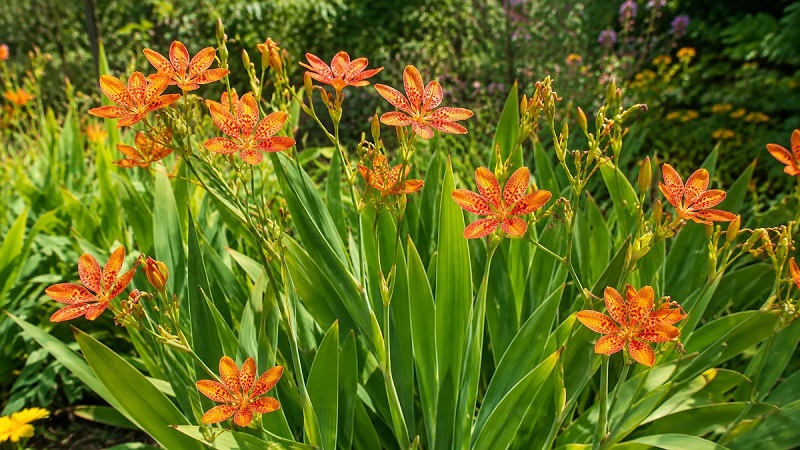
Growing & Caring for Blackberry Lily (Iris domestica)
Learn how to grow and care for Blackberry Lily (Iris domestica), including sunlight, soil, watering, fertilizing, propagation, pruning, pests, and container care.
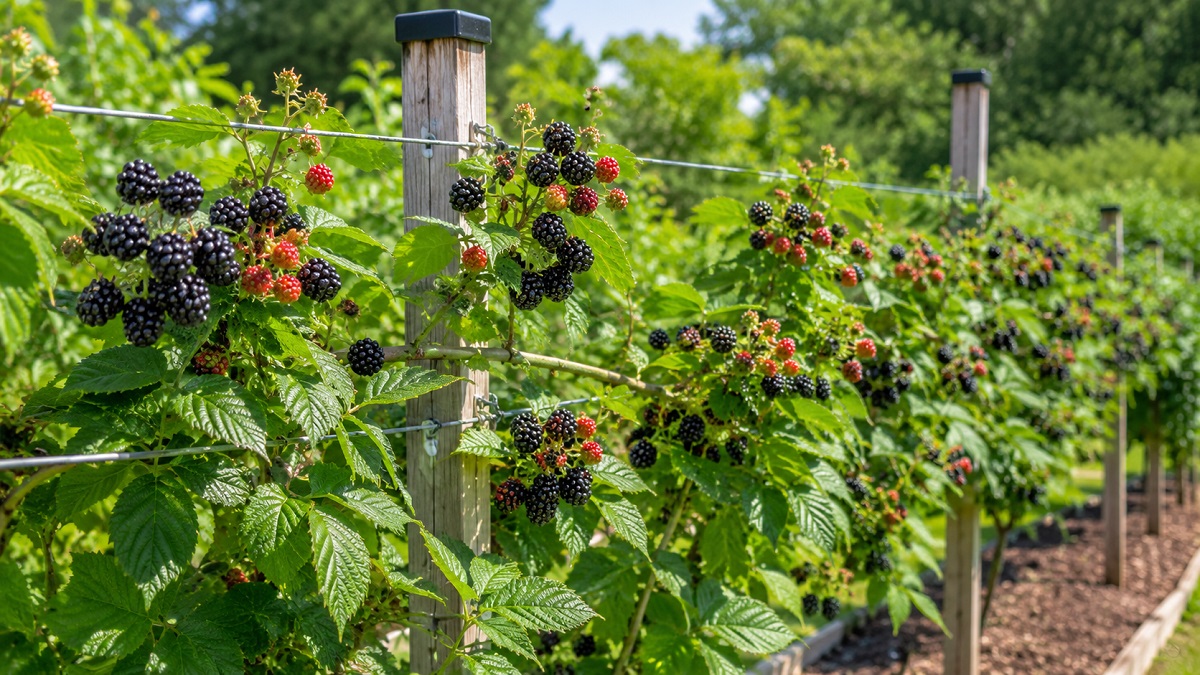
Blackberries are one of those fruiting plants that can make a garden feel especially rewarding. Once established, a healthy blackberry patch can produce generous crops of sweet, juicy berries for fresh eating, desserts, jams, smoothies, and summer snacks. The plants are generally vigorous, but they are not completely carefree. Good sunlight, fertile well-drained soil, regular moisture, sensible pruning, and sturdy support can make the difference between a tangled patch of weak canes and a productive planting loaded with fruit.
The word “blackberry” covers a group of closely related bramble plants with different growth habits. Some varieties grow upright and can support themselves reasonably well, while others produce long trailing or semi-erect canes that need a trellis. Thornless cultivars are particularly useful in home gardens because harvesting and pruning are much easier, although they still benefit from careful handling and support.
For the best harvest, give blackberries sun, fertile soil, steady moisture, and annual cane management.
Blackberries belong to the genus Rubus and are closely related to raspberries. They are perennial plants, but their individual canes usually follow a two-year fruiting cycle. In many traditional blackberry types, new canes called primocanes grow during the first year. During their second year, those canes become floricanes, flower, produce fruit, and then decline after fruiting.
Understanding this growth cycle is important because pruning at the wrong time can remove the very canes that would have produced the next crop. Some modern cultivars are primocane-fruiting, meaning they can produce fruit on first-year growth under suitable conditions. For that reason, always check the growth habit of the cultivar before adopting a pruning routine.
Blackberry plants range from compact upright forms to vigorous trailing plants capable of producing very long canes. The fruits also vary considerably. Depending on the cultivar, berries may be small or large, firm or soft, glossy or slightly dull when ripe, and sweet, tart, or richly flavored.
Blackberries combine ornamental value with useful fruit production. Their foliage provides a green backdrop during the growing season, their flowers attract pollinating insects, and their berries offer a harvest that is difficult to match for freshness. A few well-managed plants can provide a surprisingly large amount of fruit.
Blackberry canes are vigorous by nature. A simple trellis, regular pruning, and adequate spacing keep the planting open and manageable. This also improves air movement around the foliage and makes ripe fruit easier to reach.
The following table provides a practical starting point for growing common garden blackberries. Exact requirements vary among cultivars, climates, and growing systems, so use the plant's specific recommendations when they differ.
| Characteristic / Care | Blackberry Requirement | Practical Growing Tip |
|---|---|---|
| Plant type | Perennial fruiting bramble | Individual canes generally have a limited productive lifespan. |
| Light | Full sun | Provide about 6–8 hours of direct sunlight for strong growth and fruiting. |
| Soil | Fertile, well-drained soil | Improve heavy or poor soil with organic matter before planting. |
| Preferred pH | About 5.5–6.5 | Test the soil before making major pH adjustments. |
| Water | Consistent moisture | Pay particular attention during flowering and fruit development. |
| Spacing | Approximately 3–6 feet | Allow more room for vigorous or trailing cultivars. |
| Support | Often beneficial or essential | Use sturdy wires, posts, or a trellis before canes become difficult to manage. |
| Pruning | Essential for most types | Remove spent fruiting canes and thin excess growth. |
| Fertilizer | Moderate feeding | Use soil-test results and avoid excessive nitrogen. |
| Mulch | Helpful | Use organic mulch to conserve moisture and suppress weeds. |
| Harvest | When berries are fully ripe | Ripe berries should be plump, darkly colored, and easy to detach. |
| Pollination | Many cultivars are self-fruitful | Pollinating insects can still improve fruit set and overall productivity. |
Variety selection is one of the most important decisions you will make. A blackberry that performs beautifully in one region may struggle in another because winter temperatures, summer heat, humidity, rainfall, and disease pressure vary considerably.
Start by identifying cultivars recommended for your climate. Pay attention to cold hardiness as well as summer heat tolerance. In warmer areas, afternoon heat and water availability may matter more than winter protection. In colder climates, winter survival and protection from extreme cold become much more important.
Upright or erect types have relatively stiff canes and are easier to manage in smaller gardens. They may require less elaborate support than trailing cultivars, although a simple trellis can still make harvesting and maintenance easier.
Semi-erect cultivars produce arching canes and generally benefit from strong trellising. They can be excellent choices when the gardener wants large crops but has enough room to train the canes properly.
Trailing types produce flexible canes that need substantial support. They are often particularly vigorous and can produce excellent fruit, but they are not the best choice for a neglected corner of the garden. Give them a strong structure and enough space from the beginning.
Thornless blackberries are usually easier to prune and harvest, especially in gardens where children or pets may be present. Thorny varieties can also be productive and flavorful, but the canes require more careful handling. Whichever type you choose, wear appropriate gloves when pruning unfamiliar plants.
Blackberries perform best in a sunny location with good drainage. A site receiving around six to eight hours of direct sunlight encourages strong cane growth, abundant flowering, and better fruit ripening. Morning sunlight is particularly useful because it helps dry foliage after dew or rain.
Avoid planting directly in a low area where water collects after heavy rain. Blackberry roots need moisture, but they do not thrive in permanently saturated soil. Poor drainage can weaken plants and increase the risk of root-related problems.
Think about access as well. Blackberry plants should not be squeezed into a narrow walkway where their canes will interfere with movement. Leave enough room to walk along the row, inspect foliage, prune old canes, and harvest fruit without constantly fighting through the plant.
If possible, place the planting where it receives good air circulation. Crowded blackberry rows remain damp for longer periods and can be more vulnerable to fungal and bacterial problems.
Blackberries appreciate fertile soil containing plenty of organic matter, but drainage is just as important as fertility. Before planting, remove persistent weeds and loosen the soil deeply enough to provide a comfortable rooting zone.
A soil test is useful because it provides a better starting point than guessing which amendments are needed. Blackberries generally prefer slightly acidic conditions, often around pH 5.5 to 6.5. If the soil is substantially outside this range, correct it gradually according to a reliable soil-test recommendation rather than adding large quantities of amendment without measuring.
Compost or well-decomposed organic matter can improve soil structure, especially in sandy or heavy soils. Avoid filling a planting hole with an isolated pocket of rich compost while leaving the surrounding native soil poor. Roots should be encouraged to grow outward into the entire planting area.
Blackberry plants are commonly planted while dormant or as container-grown plants. The best planting time depends on climate, but early spring is often convenient in regions where winter cold is significant. In mild climates, planting during the cooler part of the dormant season can also work well.
Clear grass and weeds from the planting zone and work organic matter into poor soil if necessary. If you are planting a row, prepare the whole strip rather than creating individual pockets for each plant.
Make the hole wide enough to spread the roots naturally. Avoid forcing or bending roots into a small hole. Set the plant at approximately the same depth at which it was previously growing unless the nursery or cultivar instructions specify otherwise.
Fill around the roots with the prepared soil, gently firming it to eliminate large air pockets. Water thoroughly after planting so the soil settles around the roots.
Apply a layer of organic mulch around the planting area. Keep the mulch slightly away from the base of the canes to reduce prolonged moisture against the crown.
Install a trellis early if your cultivar needs one. It is much easier to train young canes onto a support than to untangle a mature plant after the canes have sprawled across the ground.
Consistent watering is one of the most important aspects of blackberry care. Plants can tolerate short periods of dryness once established, but drought during flowering and fruit development can reduce berry size and overall crop quality.
Water deeply enough to moisten the root zone rather than giving frequent shallow sprinkles. During hot, dry weather, inspect the soil regularly. Sandy soils may need more frequent irrigation, while heavier soils can hold moisture longer.
Drip irrigation or a soaker hose is particularly useful for blackberry rows. These systems deliver water near the root zone while keeping the foliage relatively dry. Avoid repeatedly wetting the leaves late in the day when possible.
Newly planted blackberries require closer attention because their root systems are still becoming established. Do not allow newly planted specimens to repeatedly dry out while they are developing their first substantial flush of roots and shoots.
Blackberries are vigorous growers, but more fertilizer does not automatically mean more fruit. Excessive nitrogen can encourage lush, soft vegetative growth at the expense of balanced fruit production and can create canes that are difficult to manage.
A soil test is the best way to determine whether major nutrient deficiencies exist. Where additional fertilizer is appropriate, a balanced fertilizer can generally be applied in spring as new growth begins, following the product label and local recommendations.
Keep fertilizer away from direct contact with the crown and stems. Water after applying granular fertilizer when required by the product directions.
If plants produce very vigorous leafy growth but relatively few flowers and berries, reconsider the fertility program rather than simply adding more fertilizer. Excessive nitrogen, insufficient sunlight, poor pruning, cultivar characteristics, and environmental stress can all affect fruiting.
A good organic mulch layer can make blackberry maintenance considerably easier. Straw, shredded leaves, aged compost, or another suitable organic mulch can help conserve soil moisture, moderate root-zone temperatures, and suppress competing weeds.
Keep the immediate crown area reasonably clear. Thick mulch pressed directly against the base of the plant can create a damp environment and may make inspection more difficult.
Weed competition is particularly troublesome while plants are young. Grass and aggressive weeds compete for water and nutrients and can make the planting difficult to maintain. Hand weeding, shallow cultivation, and mulch are generally preferable to repeatedly disturbing blackberry roots with deep digging.
Trellising is one of the easiest ways to transform a blackberry patch from a tangled mass into an organized fruiting row. A sturdy support system keeps canes off the ground, improves air movement, makes pruning easier, and puts fruit within comfortable reach.
The exact trellis design depends on the growth habit of the cultivar. Upright types may need only modest support, while trailing cultivars often require multiple wires and stronger posts.
One useful training approach is to guide young primocanes in one direction and fruiting floricanes in another. This makes the annual pruning cycle much easier to understand and reduces the chance of accidentally removing productive canes.
Do not force stiff canes into sharp bends. Tie them loosely with soft garden ties so they have room to expand as they grow.
Pruning is essential to productive blackberry culture. It controls the number of canes, removes old fruiting growth, improves light penetration, and makes harvesting much easier.
For traditional floricane-fruiting blackberries, remember the basic cycle: first-year canes grow vegetatively, then those canes fruit in their second year. After fruiting, the spent floricanes should be removed rather than left permanently in the planting.
After harvest, identify canes that have finished fruiting. These older canes often look rougher and may show dried fruiting laterals. Cut them back to the base and remove them from the planting.
Blackberry plants can produce more shoots than the plant can comfortably support. Thin weak, damaged, or poorly positioned canes and retain the strongest healthy growth appropriate for the cultivar.
Lateral branches can be shortened according to the growth habit and pruning recommendations of the cultivar. This encourages a manageable structure and concentrates fruiting wood where it can be supported.
Primocane-fruiting blackberries require a different approach because first-year canes can produce fruit. Some gardeners grow them for a single late crop and cut all canes back during dormancy, while others manage them for two potential crops. Follow the cultivar's specific instructions rather than applying the traditional floricane system automatically.
Before cutting anything, determine whether your blackberry is floricane-fruiting or primocane-fruiting. The wrong pruning method can remove productive growth and dramatically reduce the next crop.
Use sharp pruning tools and clean them regularly, particularly when moving between plants that appear diseased. Clean cuts heal more readily than ragged, crushed stems.
Blackberry flowers usually appear on suitable fruiting wood during the growing season. The flowers are generally white and provide nectar and pollen for a variety of insects.
After pollination, the familiar blackberry fruit develops from many small drupelets clustered together. A berry that develops unevenly may have missing or poorly developed drupelets. Environmental stress, poor pollination, insect feeding, and other factors can contribute to malformed fruit.
Adequate moisture is especially important once flowering begins. A plant experiencing severe water stress during fruit formation may produce smaller or lower-quality berries.
Many cultivated blackberries are self-fruitful, so a single plant can produce fruit. However, pollinating insects remain valuable because they transfer pollen among flowers and can improve the reliability of fruit set.
Avoid unnecessary insecticide applications during flowering, particularly broad-spectrum products that can harm bees and other beneficial insects. If pest management is necessary, use the least disruptive approach possible and follow the product label carefully.
Planting a diverse garden with flowering plants that provide food for pollinators can also make the surrounding landscape more welcoming to beneficial insects.
Harvest timing has a major effect on flavor. Blackberries should generally be allowed to ripen fully on the plant. Unlike some fruits, they do not improve dramatically after picking, so harvesting too early often results in berries that are firmer and more tart than desired.
A ripe blackberry is usually deeply colored, plump, and easy to detach with a gentle touch. Depending on the cultivar, the mature fruit may be glossy or begin to look slightly dull when fully ripe.
Pick berries frequently during the main harvest period because ripe fruit can deteriorate quickly in hot or wet conditions. Morning harvesting is often convenient because the fruit is cool, although berries should be dry before storing them whenever possible.
Blackberries bruise easily. Use shallow containers and avoid piling large quantities on top of one another. Refrigerate harvested fruit promptly if you are not eating it immediately.
Extended periods of rain can soften ripe berries and encourage fruit rots. During wet weather, inspect the patch frequently and remove damaged or moldy fruit rather than allowing it to remain among healthy berries.
Most blackberry problems become easier to manage when the planting is kept open, watered appropriately, and pruned regularly. The first step whenever a plant looks unhealthy is to inspect the whole growing environment rather than immediately assuming an insect or disease is responsible.
Yellow leaves can result from several causes, including nutrient imbalance, poor drainage, drought stress, root problems, or naturally aging foliage. Look at the pattern of yellowing, recent weather, soil moisture, and the overall vigor of the plant before deciding on a treatment.
Small fruit can result from inadequate moisture, excessive crop load, insufficient sunlight, environmental stress, cultivar characteristics, or other problems. Check irrigation first, then examine pruning and sunlight conditions.
Overripe fruit, rain, high humidity, poor air circulation, and fungal organisms can all contribute to soft or moldy berries. Harvest ripe fruit promptly and remove damaged berries from the planting.
Excessive cane density is a common issue in vigorous blackberry patches. Thin the planting according to cultivar recommendations and train the remaining canes onto their support.
Blackberries can attract a variety of insects and other pests. The exact pest pressure depends heavily on location and season. Regular inspection is therefore more useful than automatically spraying on a fixed schedule.
Look beneath leaves, along young shoots, around flower clusters, and directly on developing fruit. Watch for distorted foliage, holes, discolored leaves, scarred berries, webbing, or insects moving across the plant.
Good sanitation also matters. Remove overripe fruit and fallen berries that can attract pests. Keep the planting open through pruning and remove badly damaged plant material when appropriate.
When a pesticide is necessary, identify the pest first and choose a product specifically labeled for the crop and problem. Follow all label directions concerning application timing, protective equipment, harvest intervals, and pollinator safety.
Disease prevention starts with site selection and cultural care. Blackberries grown in crowded, poorly ventilated conditions are generally more difficult to keep healthy than plants grown with adequate spacing and good air movement.
Fruit rots become particularly noticeable when ripe berries remain wet for extended periods. Harvest ripe fruit regularly, improve air circulation, remove diseased berries, and avoid unnecessary overhead watering.
Leaf-spot diseases can cause spots or discoloration on foliage. Severe infections may reduce the plant's ability to photosynthesize effectively. Remove severely affected material where appropriate and focus on sanitation, spacing, and moisture management.
Cankers, lesions, or dying sections of cane should be investigated rather than ignored. Prune affected material with clean tools according to recommended practices and avoid leaving diseased cane debris around the base of the plant.
Because specific blackberry diseases vary by region, persistent or severe symptoms are best diagnosed through a local extension service, plant diagnostic laboratory, or other qualified horticultural resource.
Winter requirements depend strongly on cultivar and climate. Some blackberry varieties tolerate significant cold, while others are more vulnerable to winter injury. Know the hardiness characteristics of the cultivar before deciding how much protection is necessary.
In areas with harsh winters, trailing canes may need to be removed from the trellis and protected close to the ground. Upright types may require less intervention, but newly planted specimens can still benefit from appropriate protection during severe weather.
Avoid heavy nitrogen fertilization late in the growing season because encouraging tender new growth immediately before cold weather can increase vulnerability to damage.
Blackberries can be propagated in several ways, although purchasing healthy nursery plants is usually the simplest approach for establishing a new garden.
Some blackberry types naturally produce new plants when the tip of a flexible cane contacts moist soil. Gardeners can encourage this process by placing a suitable cane tip into the soil and allowing it to root before separating the new plant.
Depending on the cultivar, blackberries can also be propagated from root material or divisions. Because disease can be spread through infected plant material, propagation should always begin with healthy plants.
For most home gardeners, certified or reputable nursery stock is the safest starting point. It provides a known cultivar and reduces the chance of bringing an unknown disease problem into the garden.
Blackberries can be grown in large containers, particularly compact or upright cultivars. Container culture can be useful where garden soil is unsuitable or where a gardener wants to keep the plant on a patio or terrace.
Choose a large container with drainage holes and use a high-quality, well-draining growing medium. Avoid a tiny pot that dries out rapidly or restricts the root system.
Container-grown blackberries require closer attention to watering because pots can heat up and dry faster than garden soil. Fertilizer should also be applied carefully because nutrients can be depleted through repeated watering.
A container blackberry still benefits from pruning and support. Do not assume that growing in a pot eliminates the need for cane management.
Blackberries need substantial sunlight for strong growth and reliable fruit production. A location shaded by buildings or large trees for much of the day is usually a poor choice.
Frequent watering does not compensate for waterlogged soil. If the site stays saturated after rain, improve drainage or choose a different planting location.
Trailing and semi-erect blackberries can become difficult to manage without support. Installing the trellis before the plants become mature saves considerable effort.
This is one of the most costly mistakes. Floricane-fruiting and primocane-fruiting blackberries do not necessarily follow the same pruning schedule.
More nitrogen may create impressive foliage but not necessarily more berries. Feed according to soil needs and cultivar requirements.
Fully ripe blackberries are delicate. Harvest regularly and remove overripe or damaged fruit from the patch.
Weeds compete for water and nutrients and make pruning and harvesting more difficult. Mulch and regular shallow weed control are much easier than trying to reclaim an abandoned blackberry row.
| Season | Main Tasks | What to Watch For |
|---|---|---|
| Late winter | Prune dormant plants, inspect supports, remove damaged canes. | Winter injury, broken canes, disease symptoms. |
| Spring | Begin feeding if needed, control weeds, train new growth, monitor pests. | Rapid cane growth, flowering, insects, drought. |
| Early summer | Maintain irrigation, support canes, monitor fruit development. | Water stress, fruit damage, disease, excessive cane density. |
| Summer harvest | Pick ripe berries frequently and remove damaged fruit. | Overripe berries, fruit rot, birds, insects, heat stress. |
| After harvest | Remove spent fruiting canes and continue training new growth. | Old floricanes, tangled shoots, cane diseases. |
| Autumn | Maintain moderate moisture, clean the planting, prepare for winter. | Late-season disease, weak growth, winter vulnerability. |
Growing blackberries successfully is mostly about creating the conditions the plants naturally prefer and then staying consistent with maintenance. Start with a cultivar suited to your climate, plant it in full sun and well-drained fertile soil, and provide dependable moisture while the plants establish and develop fruit.
The biggest difference between a difficult blackberry patch and a productive one is often organization. Give vigorous canes a strong support structure, remove old fruiting canes at the appropriate time, thin weak growth, keep weeds under control, and harvest berries regularly when they reach full ripeness.
Once those habits become part of your yearly gardening routine, blackberries can be remarkably rewarding. A well-managed row can remain productive for years, providing fresh fruit at the height of summer while adding useful structure and wildlife value to the garden.
← Back to Plant GuidesContinue exploring our gardening guides with more plant profiles, growing tips, and practical advice for creating a healthy, productive garden.