10 Fast-Growing Annual Vines for Quick Summer Color
Discover 10 fast-growing annual vines for quick summer color, including morning glory, moonflower, hyacinth bean, nasturtium, and more.
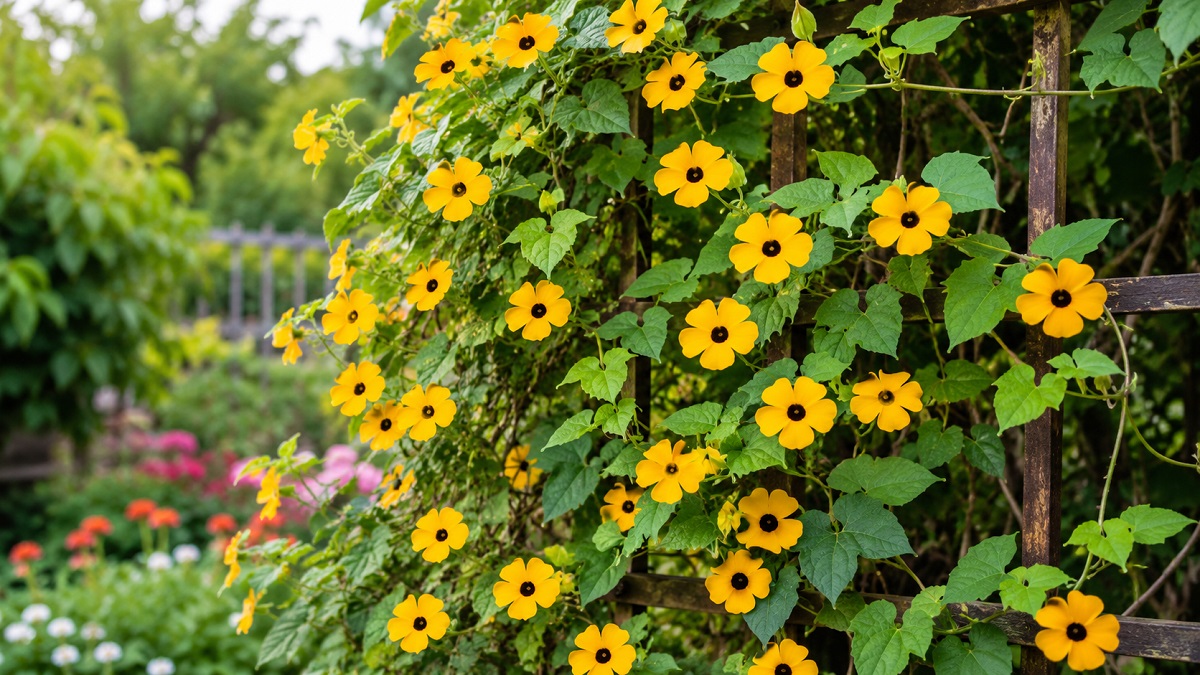
Black-Eyed Susan Vine is one of those plants that can transform a plain fence, trellis, balcony railing, or garden arch into a living wall of color. Its bright, five-petaled flowers usually have a dark central eye, while the twining stems climb and weave through nearby supports. Although it looks somewhat similar to the familiar Black-Eyed Susan flower, it belongs to a completely different plant group and grows as a vine rather than a clumping perennial.
The botanical name most commonly associated with Black-Eyed Susan Vine is Thunbergia alata. It is valued for its rapid growth, long flowering season, attractive foliage, and ability to cover vertical spaces. Depending on climate, it can be grown as a perennial vine outdoors or treated as a fast-growing annual where winter temperatures are too cold.
Growing it successfully is not particularly difficult. The biggest requirements are warmth, plenty of light, reasonably fertile soil, regular moisture, and something for the stems to climb. Once established, the plant can put on substantial growth during warm weather, so providing a suitable support before the vine becomes crowded makes care much easier.
Black-Eyed Susan Vine performs best when warmth, sunlight, moisture, and vertical support are provided consistently.
Before discussing care, it helps to know exactly what Black-Eyed Susan Vine is. The common name can be confusing because the plant is not the same as the upright Black-Eyed Susan commonly grown for its daisy-like flowers. Black-Eyed Susan Vine is a twining member of the Thunbergia group.
| Classification | Details |
|---|---|
| Common Name | Black-Eyed Susan Vine |
| Botanical Name | Thunbergia alata |
| Genus | Thunbergia |
| Family | Acanthaceae |
| Plant Type | Twining flowering vine |
| Growth Habit | Climbing and trailing |
| Flower Character | Five-petaled flowers with a contrasting dark center |
| Foliage | Green, opposite leaves |
| Typical Garden Use | Trellises, fences, arches, containers, hanging arrangements, and screens |
Black-Eyed Susan Vine is a vigorous warm-season climber that is especially useful when you want vertical color without waiting many years for a woody vine to mature. Its stems naturally twine around narrow supports, making it well suited to trellises, strings, wire frames, obelisks, and garden arches.
The flowers are the main attraction. Traditional forms commonly produce yellow or orange flowers with a dark center, although cultivated varieties can introduce other colors and combinations. The foliage creates a green background that helps the flowers stand out.
One reason gardeners enjoy this vine is its ability to keep flowering when conditions remain favorable. It does not need to become a massive woody plant before it starts producing flowers. With sufficient warmth and light, a young plant can develop rapidly and begin covering its support during the growing season.
Black-Eyed Susan Vine combines climbing growth with a long display of colorful flowers. It can soften hard structures, add height to a planting bed, and provide a temporary privacy screen when grown densely on a trellis.
Because it grows vertically, the plant can make good use of limited floor space. A container placed beside a balcony railing or trellis can support a surprising amount of foliage and flowers.
Light is one of the most important factors affecting flowering. Black-Eyed Susan Vine generally performs best in full sun, although it can tolerate partial shade. A location receiving several hours of direct sunlight is preferable if your main goal is abundant flowering.
In very hot climates, some afternoon protection can be helpful, particularly when the plant is grown in a container that can heat up quickly. Morning sun followed by lighter afternoon conditions can provide a useful balance between strong growth and protection from extreme heat.
Avoid planting the vine in a dark corner simply because it is being used to cover a wall or fence. A plant may continue producing foliage in inadequate light, but flowering can become disappointing. If stems become long and weak with large gaps between leaves, insufficient light may be part of the problem.
The location should also have enough vertical space. Black-Eyed Susan Vine is not a plant that should be expected to remain perfectly compact without regular attention. Its stems naturally search for something to climb, and nearby shrubs or other plants can quickly become part of its support system.
If you are planting beside a wall, fence, pergola, or balcony, leave enough room to reach the plant for watering and pruning. Easy access makes routine maintenance much simpler.
Black-Eyed Susan Vine grows best in soil that is fertile but drains freely. It likes consistent moisture, but its roots should not remain in saturated soil for extended periods. Heavy, poorly drained ground can create conditions that encourage root problems and weak growth.
Before planting, loosen the soil and incorporate well-decomposed organic matter if the existing soil is poor. Compost can improve soil structure while also providing a gradual source of nutrients.
For container growing, choose a quality potting mix rather than ordinary garden soil. A container mix should hold enough moisture to prevent the plant from drying rapidly while still allowing excess water to escape through the drainage holes.
There is no need to create an excessively rich planting hole. Extremely high fertility can encourage lots of leafy growth without producing the balance of flowering you want. A healthy soil structure, adequate moisture, and moderate feeding are generally more useful than heavy applications of fertilizer.
Plant Black-Eyed Susan Vine after the threat of damaging cold has passed and temperatures are reliably warm. The plant appreciates warmth and can struggle when exposed to cold conditions immediately after planting.
Dig a planting hole slightly wider than the root ball and set the plant at approximately the same depth at which it was growing in its container. Backfill around the roots, firm the soil gently, and water thoroughly.
If you are planting more than one vine, allow enough space for mature growth and airflow. Crowding several vigorous plants into a narrow area may produce a dense wall quickly, but it can also make watering, pruning, and pest inspection more difficult.
This is one of the simplest ways to make the plant easier to manage. Put the trellis, netting, strings, or other support in place before the vine becomes large.
Young stems can then be guided toward the support as they grow. Waiting until the plant has produced a tangled mass of stems often results in unnecessary breakage when you try to separate them.
Regular watering is important during active growth. The exact frequency depends on temperature, rainfall, soil type, wind, plant size, and whether the vine is growing in the ground or in a container.
Rather than watering according to a fixed calendar, check the soil. When the upper portion of the soil begins to dry, water deeply enough to moisten the root zone. Then allow excess water to drain away.
Container-grown plants generally need closer attention because their limited root volume dries more quickly than garden soil. During periods of intense summer heat, a container may require frequent watering.
Large swings between very dry and very wet conditions can put unnecessary stress on the plant. Consistent moisture supports steady growth and helps the vine maintain its foliage and flowers.
At the same time, avoid turning the soil into a permanently wet environment. If water sits around the roots after irrigation, improve drainage before increasing the watering schedule.
Black-Eyed Susan Vine benefits from access to nutrients during its active growing season. A balanced fertilizer used according to its label directions can support healthy foliage and flowering.
Avoid the temptation to fertilize heavily simply because the plant is growing rapidly. Excessive nitrogen can produce vigorous green growth while reducing the emphasis on flowers. If the soil is already fertile and the plant is growing well, it may need less additional fertilizer than expected.
Container-grown vines often require more regular feeding than plants growing in the ground because nutrients can be depleted or washed from the potting mix through repeated watering. Follow the fertilizer manufacturer's instructions rather than applying concentrated fertilizer more frequently than recommended.
A strong support is essential if you want Black-Eyed Susan Vine to grow vertically. Suitable structures include trellises, garden arches, obelisks, lattice panels, wire frames, and sturdy netting.
The support should be strong enough to handle the combined weight of mature stems, leaves, flowers, and moisture from rain. A flimsy structure may look adequate when the plant is young but can become unstable once the vine reaches full growth.
The plant naturally twines, but young stems sometimes need a little guidance. Gently position them around or toward the support. Soft ties can be used temporarily when necessary, but do not tie stems so tightly that they become constricted as they grow.
Black-Eyed Susan Vine can create a colorful seasonal screen when grown densely across a suitable frame. It is especially useful when you want temporary coverage rather than a permanent evergreen hedge.
Remember that the screen will depend on active growth. In climates where the vine dies back or cannot survive winter outdoors, the privacy effect will be seasonal rather than year-round.
Pruning is mainly about controlling shape, encouraging branching, and keeping the vine where you want it. It does not need to be treated like a woody shrub.
If a young plant produces a long, bare stem, pinching or trimming the growing tip can encourage branching lower down. More branches can eventually mean a fuller-looking plant with better coverage.
During the growing season, remove damaged, dead, or excessively tangled stems. If the vine begins climbing into nearby plants, gently redirect it toward its intended support.
Heavy pruning can remove developing shoots and flowers. If the plant is already compact and flowering well, there may be little reason to cut it back simply for the sake of pruning.
Instead, focus on selective maintenance. Remove what is damaged, redirect what is misplaced, and trim excessively long growth when necessary to maintain the shape of the plant.
A Black-Eyed Susan Vine that produces lots of foliage but few flowers is often receiving conditions that favor vegetative growth more than flowering. Start by looking at light. Insufficient sunlight is one of the first things worth checking.
Next, examine watering and feeding. A plant experiencing repeated drought stress may slow flowering, while excessive fertilizer, especially nitrogen-rich feeding, can encourage leaves and stems.
Regularly guiding the vine across its support can also help create a more evenly distributed canopy. When stems are spread rather than concentrated in one tangled area, more foliage and flowers can receive useful light.
Removing spent flowers can keep the plant looking tidy and may encourage continued flowering by preventing energy from being directed toward seed production. It is not necessary to remove every faded flower immediately, but occasional deadheading is worthwhile when maintaining a long flowering display is a priority.
This vine adapts well to container culture and can be particularly useful on patios, balconies, terraces, and other spaces where planting directly into the ground is not possible.
Choose a container with drainage holes and enough volume to support the plant's root system and top growth. A small pot may dry out very quickly once the vine becomes vigorous.
Place the container where the plant can receive plenty of light and install a trellis or other support. You can also train the stems along a balcony railing if the arrangement is secure and safe.
Container plants usually need more frequent monitoring than garden-grown plants. Check moisture regularly, especially during hot or windy weather. At the same time, make sure the drainage holes remain open.
Black-Eyed Susan Vine is generally straightforward to grow, but vigorous foliage can still attract common garden pests. Regularly inspecting the leaves and young shoots makes it easier to catch problems before they become severe.
Aphids may cluster around tender shoots, flower stems, and the undersides of leaves. They can cause distorted new growth and may leave a sticky substance on foliage.
For a light infestation, a strong stream of water can sometimes dislodge them. Encourage beneficial insects where possible and continue monitoring new growth.
Spider mites tend to become more troublesome in hot, dry conditions. Look for stippled or dull-looking leaves and fine webbing when infestations become established.
Keeping plants from becoming severely drought-stressed can help reduce conditions that favor spider mite problems. Inspect the undersides of leaves during hot weather.
Whiteflies are small insects that may rise from the foliage when a plant is disturbed. Heavy infestations can weaken the plant and leave sticky honeydew on leaves.
Regular inspection is useful, particularly when growing the vine in a sheltered greenhouse, patio, or other enclosed environment where pests can multiply quickly.
Yellow leaves do not automatically mean the plant needs fertilizer. Check the soil moisture first. Both prolonged dryness and excessive wetness can cause foliage problems.
Also check light levels, drainage, root health, and the age of the affected leaves. Looking at the whole plant rather than reacting to one yellow leaf usually gives a more accurate picture.
Black-Eyed Susan Vine can be propagated from seed, and gardeners may also use other vegetative methods depending on the plant and growing conditions. Seed propagation is particularly useful when starting a larger number of plants.
Start seeds in a clean, well-drained growing medium and provide warmth, moisture, and bright light. Keep the medium evenly moist while avoiding waterlogging.
Once seedlings develop enough growth to handle safely, they can be moved into individual containers. Gradually acclimate young plants to outdoor conditions if they were started indoors.
Do not rush seedlings into cold outdoor soil. Warm conditions encourage stronger establishment and reduce the setback associated with planting too early.
Whether Black-Eyed Susan Vine survives winter outdoors depends heavily on climate. In warm regions it may continue growing for longer periods and can behave as a perennial. In colder regions, freezing temperatures can kill the vine.
Gardeners in cold climates often grow it as an annual or bring container-grown plants into a protected location before damaging frost arrives.
If you are overwintering a container plant, inspect it carefully for pests before moving it indoors. Reduce stress during the transition by providing appropriate light and avoiding sudden extremes in temperature or watering.
The amount of winter growth you should expect indoors is usually much lower than during the warm growing season. The goal is simply to maintain a healthy plant until outdoor conditions become suitable again.
| Problem | Likely Cause | What to Check |
|---|---|---|
| Lots of leaves but few flowers | Insufficient light or excessive feeding | Sun exposure and fertilizer use |
| Wilting during hot weather | Dry soil or excessive heat | Root-zone moisture and container size |
| Yellowing foliage | Watering, drainage, nutrient, or root issues | Soil moisture and drainage |
| Messy tangled growth | Insufficient support or training | Trellis size and stem placement |
| Weak elongated stems | Too little light | Move toward a brighter location |
| Slow growth | Cold temperatures, poor light, or root stress | Temperature, light, moisture, and roots |
One of the easiest mistakes is putting the plant outdoors while temperatures are still too cool. Black-Eyed Susan Vine is a warm-season plant, so waiting for reliably warm conditions usually gives it a much better start.
The plant may look delicate when young, but its mature growth can become substantial. A support that is too small or weak can bend, collapse, or become difficult to manage.
Regular moisture does not mean saturated soil. Good drainage is just as important as watering, particularly in containers.
Fast-growing vines can quickly move beyond the area where you intended them to grow. A few minutes of training every week can be easier than trying to untangle several weeks of uncontrolled growth.
| Season | Main Tasks |
|---|---|
| Spring | Plant after cold weather, establish supports, begin regular watering, and encourage early climbing. |
| Summer | Water consistently, guide stems, monitor pests, feed as needed, and remove faded flowers. |
| Autumn | Continue flowering care while temperatures remain favorable and decide whether plants need protection. |
| Winter | In cold climates, protect or overwinter container plants; in warm climates, continue monitoring according to growth. |
One of the best features of Black-Eyed Susan Vine is its flexibility. It can be used to add height to a flower border, soften a fence, decorate an arch, or bring color to a container arrangement.
Its twining habit makes it particularly effective on structures with a reasonably fine framework. A large, solid wall may need additional wires, strings, or a lattice surface for the stems to grab.
For a more natural appearance, allow several stems to spread across the support rather than training every shoot into exactly the same position. For a more formal appearance, guide the stems regularly so that the foliage is distributed evenly.
A container-grown Black-Eyed Susan Vine can be paired with lower-growing plants that tolerate similar light and moisture conditions. The vine provides vertical interest while the companion plants fill the space around the base.
A simple trellis placed at the back of a sunny border gives the vine a clear climbing route. This can turn an otherwise flat planting area into a layered display.
Black-Eyed Susan Vine is an excellent choice when you want a fast-growing flowering climber that can bring color to a vertical space. Its care is relatively straightforward: provide warmth, good light, fertile but well-drained soil, regular moisture, and a support that gives the twining stems somewhere to go.
The plant becomes easier to manage when training begins early. Instead of waiting for the vine to become a tangled mass, guide young stems across the trellis as they develop. Regular inspection also makes it easier to catch watering problems and common pests before they become serious.
Whether grown against a garden fence, over an arch, on a balcony trellis, or in a container, Black-Eyed Susan Vine can turn an ordinary vertical space into a lively seasonal display. Give it the conditions it prefers and enough room to climb, and it can reward you with vigorous foliage and a long succession of cheerful, dark-centered flowers.
← Back to Plant GuidesContinue exploring our gardening guides with more plant profiles, growing tips, and practical advice for creating a healthy, productive garden.