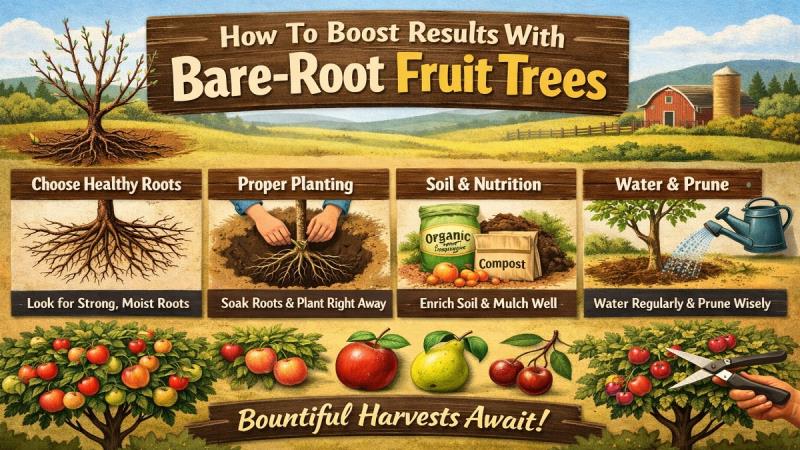
How To Boost Results With Bare-Root Fruit Trees
Learn how to boost results with bare-root fruit trees using proper planting, watering, mulching, and pruning techniques for faster growth and better fruiting.
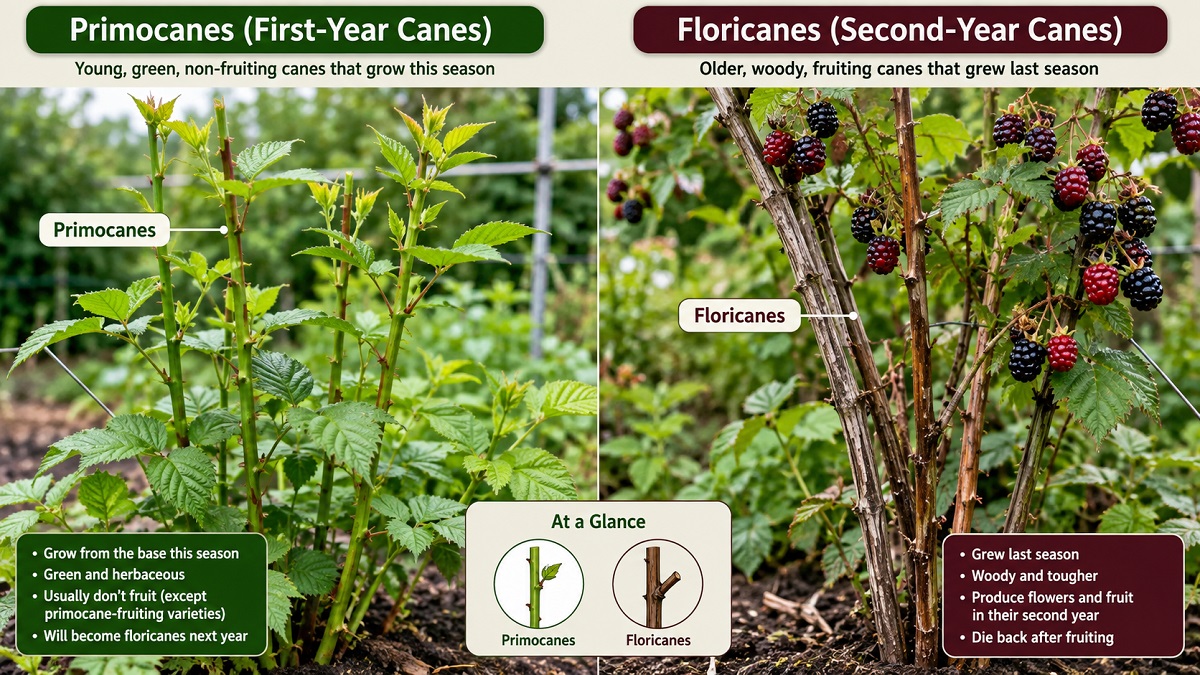
If you grow raspberries or blackberries, you have probably come across the words primocane and floricane. These terms can sound more complicated than they really are, but understanding the difference between the two types of canes makes a huge difference when it comes to pruning, feeding, training, and harvesting cane fruits.
A raspberry or blackberry plant does not simply produce one permanent stem that grows, flowers, and stays productive forever. Instead, it continually produces new canes from the crown or roots. Those canes pass through different stages during their lives. A young cane is generally called a primocane, while a cane in its second fruiting year is known as a floricane.
The important part is that the same plant can have primocanes and floricanes growing at the same time. If you cannot tell which is which, it is very easy to prune away the canes that would have produced your next crop. Once you understand the growth cycle, however, pruning becomes much more straightforward.
The easiest rule to remember: primocanes are the current young canes; floricanes are older canes that normally flower and fruit during their second year.
A primocane is a young cane produced during the first year of its growth. On many raspberries and blackberries, primocanes are mainly concerned with producing leafy growth and building the plant's framework rather than producing a large crop of fruit immediately.
New primocanes usually emerge from the crown or root system in spring. Depending on the variety and growing conditions, they may be green, soft, flexible, and relatively smooth when they first appear. As the season progresses, they become taller, thicker, and more woody.
The job of a first-year cane is important even when it produces no fruit. It captures sunlight, develops leaves, stores carbohydrates, and builds the structure that can support flowers and fruit in a future season. By the end of the growing season, a healthy primocane should have developed into a strong cane capable of surviving winter.
Primocanes can look different depending on the plant. Some raspberry varieties produce canes with a noticeable green or reddish appearance, while blackberry canes may become vigorous, thick, and strongly upright or arching. Some varieties also have prominent thorns, while modern cultivars may be thornless.
No. This is one of the most important points to understand. The term primocane describes the age and growth stage of the cane, not necessarily whether it will produce fruit.
Traditional summer-fruiting raspberries and many blackberries mainly produce their crop on floricanes. Their first-year primocanes grow during one season, overwinter, and then become floricanes the following year.
Some raspberry varieties, however, are described as primocane-fruiting or everbearing. These plants can produce flowers and fruit on the upper portions of current-season primocanes. Depending on the cultivar and pruning system, they may also produce a second crop on the lower portion of those canes during the following season.
A floricane is a cane that has entered its second year of growth. In many raspberries and blackberries, this is the stage when the cane produces flowers and fruit.
During its first year, the cane grows as a primocane. After going through winter, it begins its second growing season as a floricane. Instead of focusing primarily on vegetative growth, the cane uses its stored resources to produce lateral branches, flowers, and eventually berries.
Once a floricane has finished producing its crop, its useful productive life is generally over. The cane gradually weakens and dies. This is why pruning is such an important part of cane-fruit care: removing spent floricanes makes room for fresh primocanes that will provide the next generation of productive growth.
In a healthy planting, this creates a continuous cycle. Old floricanes produce the current crop, while young primocanes develop beside them and prepare to become next year's floricanes.
Think of the two terms as stages rather than completely different types of stems:
Primocane → first year → overwintering → floricane → flowering and fruiting → spent cane.
This basic sequence explains why pruning at the wrong time can remove next year's crop.
Knowing which canes are young and which are old helps you decide what to remove, what to keep, and when to prune. It is especially important when caring for summer-fruiting raspberries, blackberries, and other cane fruits that depend on older canes for their main crop.
The easiest way to understand primocanes and floricanes is to follow one cane through a complete growing cycle.
In spring, new shoots emerge from the plant's crown or root system. These shoots develop into primocanes. At first, they may be thin and flexible, but they can grow surprisingly quickly when supplied with adequate moisture, sunlight, nutrients, and space.
The cane spends much of its first season developing height, leaves, and strength. Healthy foliage is essential because the leaves manufacture carbohydrates through photosynthesis. These resources help the plant prepare for future flowering and fruit production.
Depending on the cultivar, some primocanes may also produce a crop during this first year. This is particularly important with primocane-fruiting raspberries.
After the growing season, the plant slows down as temperatures fall and daylight decreases. In colder climates, the cane must survive winter before it can begin its second season.
When the cane resumes active growth the following year, it is now a floricane. On floricane-fruiting varieties, this is the productive stage.
Floricanes produce flowering laterals, and pollinated flowers develop into berries. The exact timing varies according to the plant, cultivar, climate, and growing conditions.
After fruiting, the old cane gradually becomes less productive and eventually dies. Removing it allows the plant to direct space and resources toward newer canes.
Although both are simply stages in the life of a cane, there are several practical differences that gardeners can use when identifying them.
| Feature | Primocane | Floricane |
|---|---|---|
| Age | First-year cane | Second-year cane |
| Main role | Vegetative growth and plant development | Flowering and fruit production |
| Typical appearance | Often younger, greener, and more flexible | Usually older, woodier, and more mature |
| Fruit production | Depends on the cultivar | Commonly produces the main crop on floricane-fruiting types |
| What happens afterward? | May overwinter and become a floricane | Usually becomes spent after fruiting |
| Pruning importance | Often retained for future production | Usually removed after fruiting |
Identifying canes becomes easier with practice. You do not always need to know the exact age of every stem; instead, look for several clues together.
Young primocanes are often greener and smoother, especially early in the season. As they mature, they become more woody. Floricanes have already passed through a full season of growth and winter, so they are generally more mature in appearance.
Color alone should not be treated as a perfect identification method. Sun exposure, cultivar, climate, and age can all change how a cane looks.
Floricanes that are actively producing can develop short side branches or flowering laterals. These are often a useful clue that you are looking at a fruiting cane rather than a newly emerging primocane.
A vigorous new cane may stand out because it has long, fresh growth with abundant foliage and few signs of previous fruiting. Older canes may have side branches, old fruiting structures, or evidence that berries were produced there previously.
After harvesting, spent floricanes often retain small dried structures where flowers or fruit were previously attached. These clues can help distinguish an older cane from fresh first-year growth.
When in doubt, avoid cutting a questionable cane immediately. Give yourself time to identify the plant's growth pattern, particularly if it is the first year you are growing that variety.
The distinction between primocanes and floricanes becomes especially useful when you learn how different cultivars produce their crops.
Traditional summer-fruiting raspberries and many blackberries produce their primary crop on floricanes. The cane grows during its first season, survives winter, and fruits during its second season.
This means the new primocanes growing alongside fruiting floricanes are not necessarily the source of the current crop. They are being prepared for the following season.
If you remove all the canes after harvesting without leaving the new primocanes in place, you can accidentally remove the next year's crop before it has had a chance to develop.
Primocane-fruiting raspberries are different because they can flower and fruit on first-year growth. Gardeners sometimes call these types fall-bearing or everbearing, although cultivar behavior can vary.
Their ability to fruit on current-season canes gives gardeners more flexibility. One common management approach is to cut all canes down after the season and grow a single crop on new primocanes the following year.
Another approach is to retain some canes, allowing suitable cultivars to produce an earlier crop from the overwintered sections and a later crop from new growth. Whether this is worthwhile depends on the variety, climate, and gardener's preferred harvest period.
Pruning is where the primocane-floricane distinction becomes practical. The goal is not simply to remove old growth. Good pruning creates a balance between productive canes, young replacement canes, sunlight, airflow, and manageable plant structure.
With summer-fruiting raspberries, the floricanes that have produced fruit are generally removed after harvest or during the dormant season, depending on the cultivar and local growing conditions.
The new primocanes should normally be retained. These canes are the future floricanes and will carry the next crop.
Weak, damaged, diseased, or badly positioned canes may also be removed so the remaining growth has sufficient room.
Primocane-fruiting raspberries offer a simpler option for gardeners who want one main late-season crop. In many situations, all canes can be cut back to the ground during dormancy, allowing a fresh crop of primocanes to develop the following season.
However, gardeners who want two harvest periods may use a different pruning system. This requires leaving selected canes and understanding exactly where that particular cultivar produces fruit.
Blackberry pruning depends heavily on the type of blackberry. Erect, semi-erect, trailing, thornless, and primocane-fruiting cultivars can have different training and pruning requirements.
On traditional floricane-fruiting blackberries, old floricanes are removed after they finish fruiting, while strong new primocanes are retained for the next year's crop. Young canes may also be tipped or trained according to the growth habit of the cultivar.
Always check the cultivar's specific recommendations before making major pruning cuts. The basic primocane-floricane cycle is useful, but it does not replace variety-specific instructions.
Raspberries are a good example of why cane age matters. A mature raspberry planting can contain a mixture of new shoots, developing primocanes, fruiting floricanes, and spent canes.
The plant is constantly replacing old canes with new ones. This is normal and desirable. A productive raspberry patch should not look as though every cane is exactly the same age.
In a floricane-fruiting raspberry bed, the current fruiting canes and next year's replacement canes often grow side by side. This is why pruning the entire planting indiscriminately can be so damaging to future production.
Raspberry roots and crowns can also produce more new canes than the gardener needs. Removing weak or overcrowded primocanes can help maintain better spacing and improve air circulation.
Dense cane growth creates a humid, crowded environment. Good spacing allows leaves to dry more quickly after rain or irrigation and makes it easier to inspect plants for insects, disease symptoms, and ripening fruit.
Training suitable canes onto a support system can also keep fruiting growth organized and make harvesting considerably easier.
Blackberries can be more vigorous than raspberries, and some cultivars produce long arching canes that can quickly become difficult to manage without support.
Like raspberries, many traditional blackberry varieties use a two-year cane cycle. First-year primocanes grow vegetatively, overwinter, and then become floricanes that flower and fruit.
After fruiting, those floricanes are removed. The new primocanes are then trained into position so they are ready for the following season.
Thornless blackberries can make this process more pleasant, but their canes can still be vigorous and difficult to handle. Wearing suitable gloves and working methodically can make pruning much easier, particularly with thorny varieties.
This is one of the most common mistakes with floricane-fruiting plants. After harvesting, the old floricanes should generally be removed, but the young primocanes should be retained because they are the future fruiting canes.
A cane can look young and still be important to the next crop. With primocane-fruiting varieties, a young cane can even produce fruit during its first season.
Two raspberry plants can look almost identical while responding very differently to pruning. Before making major cuts, find out whether the plant is summer-fruiting, fall-fruiting, primocane-fruiting, or capable of producing crops on both cane ages.
Keeping every cane is not necessarily better. Overcrowding can reduce airflow, make harvesting difficult, and create a dense canopy where pests and diseases are harder to spot.
Tipping and heading canes can be useful, but the correct height depends on the plant type and training system. Avoid using a one-size-fits-all cutting height for every raspberry or blackberry.
Dead, broken, severely damaged, or obviously diseased canes should not be kept simply because they are technically floricanes or primocanes. Plant health comes first.
Good cane management starts long before pruning. Strong plants are better able to produce vigorous replacement canes and quality fruit.
Most raspberries and blackberries perform best with plenty of sunlight. Strong light supports photosynthesis, healthy foliage, flower production, and fruit development.
Cane fruits need reliable moisture, particularly while new primocanes are growing and while fruit is developing. Avoid allowing the root zone to swing repeatedly between very dry and excessively wet conditions.
Mulching around the plants can help moderate soil moisture and temperature while also reducing competition from weeds. Keep mulch slightly away from the base of individual canes to avoid creating unnecessarily damp conditions around the crown.
Excessive fertilizer can encourage soft, overly vigorous growth rather than balanced plants. A soil test can be useful when you suspect a nutrient problem. The best fertilizer program depends on soil conditions, plant age, cultivar, and local climate.
Trellises, wires, posts, and other support systems can make cane fruits much easier to manage. Keeping fruiting canes organized improves access to berries and makes pruning less confusing.
Do not wait until pruning season to look at your plants. A quick inspection throughout the growing season can reveal broken canes, unusual discoloration, pest damage, overcrowding, or signs of disease.
Cane color and thickness are useful clues, but they are not enough on their own. Cultivars vary considerably. The safest approach is to combine visual clues with knowledge of the plant's fruiting habit.
It is tempting to think of pruning as simply cutting a plant back to make it look tidy. Cane fruits work differently. Their productivity depends on managing a succession of different-aged canes.
Once you understand this cycle, the apparent messiness of a raspberry or blackberry patch starts to make sense. New canes are not unwanted shoots. They are the plant's replacement framework. Old fruiting canes are not necessarily healthy growth that should remain indefinitely. They have completed their main job and need to make room for the next generation.
This is also why pruning instructions can seem contradictory. One gardener may recommend removing all canes to ground level, while another may tell you to preserve new canes for the following year. Both approaches can be correct when they are being applied to different types of plants or different cropping systems.
The key question is always: Where does this particular plant produce its fruit? Once you know the answer, the pruning decision becomes much easier.
If the terminology still feels confusing, forget the botanical words for a moment and think of the canes as young and old.
A young first-year cane is a primocane. It is growing and preparing for its future role. An older second-year cane is a floricane. On traditional cane-fruiting varieties, it is usually the cane carrying the flowers and berries.
After the floricane has finished producing, the plant replaces it with new primocanes. Those new canes grow, mature, overwinter, and eventually become the next set of floricanes.
That simple cycle is the foundation of raspberry and blackberry pruning.
Primocanes and floricanes are simply two stages in the life of raspberry and blackberry canes, but knowing the difference can completely change the way you manage a berry patch. Primocanes are the young first-year canes that develop the plant's future structure, while floricanes are older canes that commonly flower and fruit during their second season.
The most important thing to remember is that not every cane should be treated the same way. Traditional floricane-fruiting varieties need their healthy young primocanes preserved so they can produce a future crop. Primocane-fruiting varieties give gardeners more flexibility because they can produce berries on first-year growth.
Before pruning, identify the variety, observe the canes, and understand where that plant produces its berries. Once you begin thinking in terms of cane age rather than simply “good” and “bad” stems, raspberry and blackberry pruning becomes much less intimidating.
Explore more practical fruits and vegetables gardening guides covering planting, growing, pruning, seasonal care, and harvesting. Discover helpful tips for choosing the right plants, improving fruit production, and keeping your edible garden healthy and productive throughout the growing season.