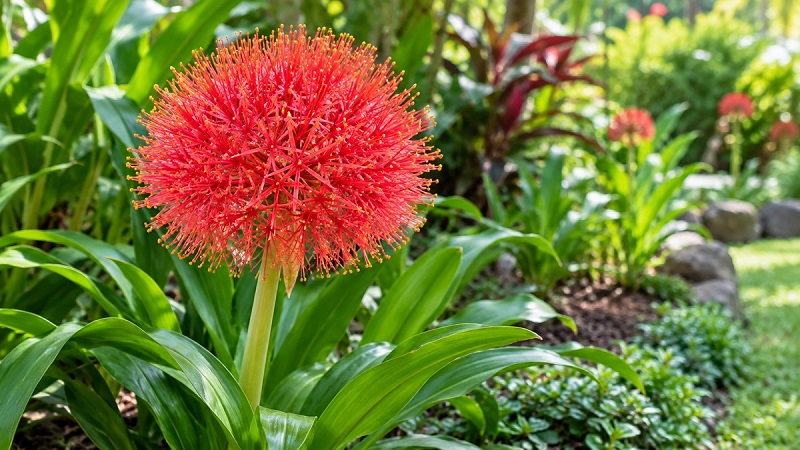
Growing & Caring for Blood Lily (Scadoxus multiflorus)
Learn how to grow and care for Blood Lily (Scadoxus multiflorus), including light, soil, watering, flowering, propagation, containers, pests, and winter care.
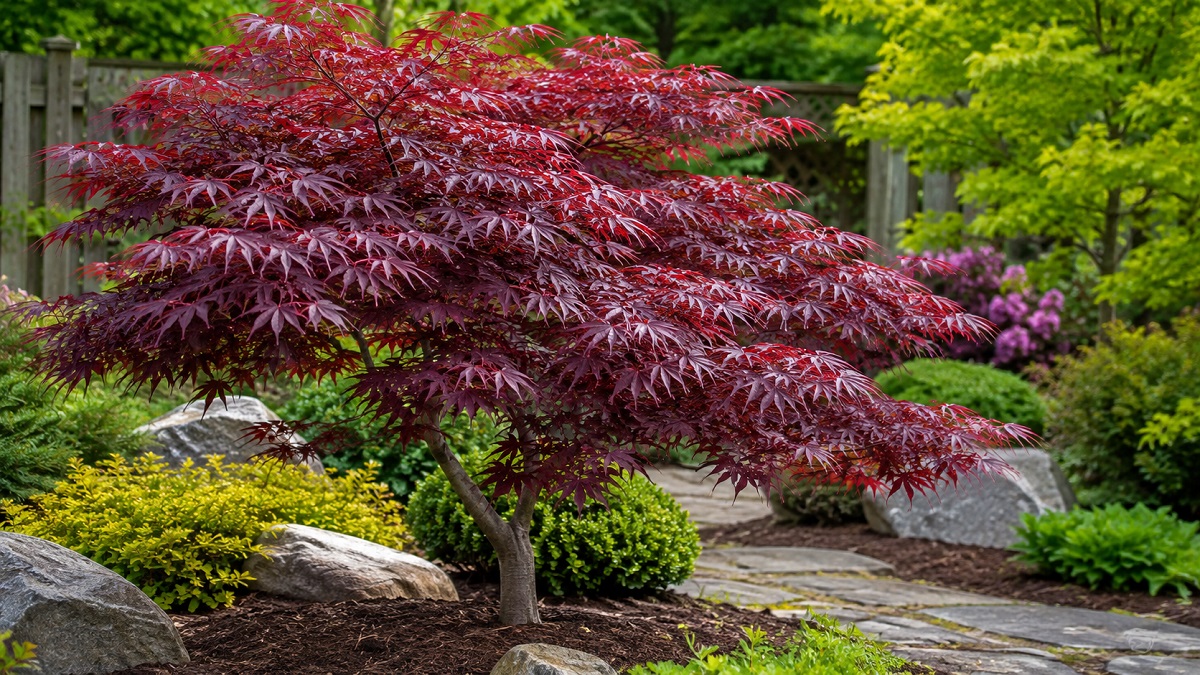
Bloodgood Japanese Maple (Acer palmatum 'Bloodgood') is one of the most popular Japanese maple cultivars for gardens and residential landscapes. Its deeply lobed foliage emerges in rich reddish-purple tones, holds its color well through the growing season, and often becomes even more striking in autumn. The tree also develops an elegant branching structure that gives it plenty of winter interest after the leaves have fallen.
Despite its refined appearance, Bloodgood Japanese Maple is not especially difficult to grow when it is planted in the right location. The biggest factors are protection from harsh afternoon heat and drying winds, good drainage, consistent moisture, and avoiding unnecessary pruning. A young tree may need a little extra attention while it establishes its root system, but once established, it can become a long-lived and dependable landscape specimen.
This guide explains how to grow and care for Bloodgood Japanese Maple from planting through maturity, including sunlight, soil, watering, fertilizer, pruning, seasonal care, container growing, common problems, and practical tips for keeping the foliage healthy and colorful.
The key to success: provide bright light without excessive afternoon heat, evenly moist soil, good drainage, and shelter from drying winds.
Bloodgood Japanese Maple is a selected cultivar of Acer palmatum, a species native to Japan, Korea, and parts of China. It belongs to a group of ornamental maples valued for delicate foliage, attractive branching, and strong seasonal interest. 'Bloodgood' has become especially popular because its dark foliage provides a dramatic contrast against green shrubs, lawns, stonework, and lighter-colored garden plants.
The leaves are palmate, meaning the lobes spread outward from a central point much like the fingers of an open hand. Bloodgood typically produces foliage in shades of red, purple-red, or burgundy rather than the green associated with many standard maple trees. In autumn, the foliage can develop brighter red and crimson tones before dropping.
The tree's beauty is not limited to its leaves. Its branching structure gradually becomes an important part of the plant's character. With age, a well-grown Bloodgood Japanese Maple can develop an attractive layered appearance, with branches extending outward from the trunk and creating a refined silhouette.
Bloodgood is often described as a small tree, making it much more suitable for residential gardens than large shade-producing maples. Its eventual size depends on climate, soil, age, pruning, and growing conditions, so it is still important to give it enough room to develop naturally rather than planting it directly against a building or beneath crowded utility infrastructure.
Bloodgood Japanese Maple combines colorful foliage with a graceful tree form. It can serve as a focal point in a front garden, courtyard, woodland-style planting, Japanese-inspired landscape, or mixed perennial border.
Its relatively modest scale also makes it useful where a large shade tree would overwhelm the space. The branching structure becomes particularly noticeable in winter, giving the garden some form even when the tree is dormant.
The defining feature of 'Bloodgood' is its dark red foliage. However, foliage color is influenced by light and environmental conditions. A tree growing in very deep shade may not display the same intensity of color as one receiving suitable morning or filtered sunlight.
Use the following table as a quick reference when planning a planting site or establishing a new Bloodgood Japanese Maple. Individual trees can respond differently depending on climate, soil, exposure, and age.
| Characteristic | Bloodgood Japanese Maple |
|---|---|
| Botanical name | Acer palmatum 'Bloodgood' |
| Plant family | Sapindaceae |
| Plant type | Deciduous ornamental tree |
| Foliage | Deep red, burgundy, and reddish-purple |
| Flower color | Small reddish flowers, usually not the primary ornamental feature |
| Sunlight | Morning sun, filtered sun, or partial shade; protect from harsh heat where necessary |
| Soil | Fertile, moisture-retentive but well-draining soil |
| Watering | Regular and consistent, especially during establishment and dry weather |
| Drainage | Good drainage is important; avoid persistently waterlogged soil |
| Growth rate | Generally slow to moderate |
| Pruning | Light structural pruning; remove dead, damaged, or poorly positioned branches |
| Landscape role | Specimen tree, accent planting, courtyard tree, woodland garden |
| Container growing | Possible with a suitably sized container and careful watering |
| Winter interest | Attractive branching and trunk structure after leaf drop |
Location is one of the most important decisions when planting Bloodgood Japanese Maple. Although Japanese maples are often associated with shade gardens, Bloodgood generally benefits from some sunlight to maintain strong foliage color and a healthy, compact form. The challenge is finding the balance between enough light and too much intense heat.
In many gardens, morning sun followed by afternoon shade is an excellent arrangement. Morning sunlight is usually less intense than late-afternoon summer sun, while protection later in the day can reduce heat and moisture stress. In cooler climates, the tree can often tolerate more sun.
In hot climates, especially where summer temperatures are high, a position exposed to strong afternoon sun may cause leaf scorch. Brown or crispy edges can develop when the foliage loses moisture faster than the roots can replace it. This does not necessarily mean the tree is dying, but repeated severe stress can weaken it and reduce its ornamental quality.
Avoid exposed locations where strong winds constantly strike the foliage. Wind can increase moisture loss and may damage the tree's relatively fine branches. A sheltered position near a house, fence, larger tree, or group of shrubs can provide useful protection, provided the maple still receives adequate light and has enough room for its roots and canopy.
Aim for bright filtered light, morning sun, or partial shade in locations with hot summers. A tree that receives appropriate sunlight usually develops better foliage color than one planted in very deep shade. However, more sunlight is not automatically better. In a hot climate, reducing intense afternoon exposure can be more beneficial than maximizing total hours of direct sun.
Bloodgood Japanese Maple performs best in soil that holds moisture while allowing excess water to drain away. This combination is important because the tree's roots should have access to water and oxygen at the same time.
Heavy, compacted soil can create problems when it remains wet for long periods. On the other hand, extremely sandy soil may drain so quickly that the root zone becomes dry soon after watering. Improving organic matter can help create a more balanced growing environment.
Before planting, loosen compacted soil over a broad area rather than digging only a narrow hole. Incorporating suitable organic matter into poor soil can improve its structure, but avoid creating an isolated pocket of dramatically different soil inside a heavy native soil profile.
Japanese maples generally tolerate mildly acidic to neutral soil conditions. Instead of trying to force the soil to a particular pH without testing, concentrate first on drainage, organic matter, moisture, and overall soil health. If a soil test identifies a serious nutrient or pH imbalance, correct it according to the test recommendations.
Planting is best done when temperatures are moderate and the tree is not under severe heat or drought stress. In many climates, spring or fall can work well. Container-grown trees can be planted during other suitable periods if they receive careful watering afterward.
Select a location with suitable light, good drainage, and protection from harsh wind. Think about the tree's mature dimensions rather than its size when purchased. Give the canopy enough room to spread naturally.
Dig a hole that is broad enough to accommodate the root system without forcing roots into a tight circle. The hole should not be excessively deep. The root flare should remain near the soil surface rather than being buried deeply.
If the tree is container-grown, gently inspect the outer roots. If roots are tightly circling the root ball, carefully loosen or redirect them before planting. Handle the root system gently to avoid unnecessary damage.
Set the maple upright and check its position from several directions. The upper surface of the root ball should be at or slightly above the surrounding soil level as appropriate for the site. Avoid burying the trunk.
Return the excavated soil around the roots and water thoroughly. Watering helps settle soil around the root system and removes large air pockets. Do not compact the soil aggressively with heavy pressure.
Spread a layer of organic mulch over the root zone while keeping the mulch away from direct contact with the trunk. A mulch ring helps moderate soil temperature and slows moisture loss.
Consistent watering is particularly important during the first few growing seasons. Newly planted trees have a limited root system and can dry out quickly, even when the surrounding landscape appears adequately watered.
Rather than watering according to a rigid calendar, check the soil and weather. Hot, windy conditions may require more frequent watering, while cool or rainy weather may require little or none. The goal is to keep the root zone reasonably moist without turning it into a permanently saturated environment.
Deep, thorough watering is generally more useful than frequent light sprinkling. Apply water slowly enough that it can move into the root zone instead of running away from the planting area.
Bloodgood Japanese Maple usually does not need aggressive fertilization. Excessive nitrogen can encourage soft, rapid growth that may be more vulnerable to environmental stress and can also shift attention away from the tree's natural form.
A healthy tree growing in reasonably fertile soil may require little additional fertilizer. If growth is weak or foliage shows signs of a nutrient deficiency, start with a soil test rather than automatically applying a strong fertilizer.
When fertilizer is appropriate, follow the product label and avoid applying more than recommended. Fertilizer should not be placed directly against the trunk or concentrated around a small portion of the root system.
Young trees should be allowed to establish a strong root system before being pushed into rapid top growth. Good soil, appropriate moisture, and proper planting are usually more important than frequent feeding.
Mulch is one of the simplest ways to make Japanese maple care easier. Organic materials such as shredded bark, wood-based mulch, or composted organic material can help conserve soil moisture and moderate temperature fluctuations around the roots.
Spread mulch across the root zone rather than piling it directly around the trunk. The familiar “mulch volcano” should be avoided because constant moisture against the trunk can contribute to bark problems.
Refresh mulch as it decomposes. There is no need to build an excessively thick layer. A moderate, even layer is more useful than a deep pile.
One of the easiest ways to reduce the natural beauty of a Japanese maple is to prune it too aggressively. Bloodgood generally looks best when its graceful branching structure is allowed to develop naturally.
Pruning should have a clear purpose. Remove dead, broken, diseased, or crossing branches, and selectively thin branches when necessary to improve structure or visibility. Avoid repeatedly shearing the tree into an artificial shape.
Timing depends on the type of pruning and local conditions. Light corrective pruning can often be performed when the tree is dormant or during appropriate periods of the growing season. Avoid unnecessary pruning during periods of extreme heat or drought because the tree is already under environmental stress.
If a mature specimen requires major structural correction, it may be better to spread the work over time rather than attempting a dramatic one-time transformation.
Spring is when Bloodgood Japanese Maple begins producing fresh foliage. Watch newly emerging leaves during sudden temperature changes. Late cold snaps can damage tender new growth, although established trees often recover and produce another flush of leaves.
Check the mulch layer, inspect the trunk and branches, and begin monitoring soil moisture as temperatures rise. Spring is also a useful time to correct minor structural problems before the canopy becomes dense.
Summer care focuses heavily on moisture and heat protection. During extended hot or dry periods, check the soil around the root zone regularly. A sheltered location and adequate mulch can make a significant difference.
Leaf scorch is more likely when high temperatures combine with drought, strong wind, or excessive direct afternoon exposure. Scorched leaves cannot be restored, so prevention is more useful than trying to correct the damage after it appears.
Autumn is one of the most attractive seasons for Bloodgood Japanese Maple. Depending on growing conditions, the foliage can develop intense red and crimson shades before dropping.
Keep the tree adequately watered if autumn weather is unusually dry. Do not assume that cooler weather eliminates the need for moisture. A healthy root system going into winter helps the tree enter dormancy in better condition.
Once the leaves fall, the branching architecture becomes easier to see. Young trees in exposed areas may benefit from protection against severe winter winds and temperature fluctuations.
Avoid disturbing frozen soil around the root zone. Continue checking moisture during extended dry winter periods in climates where the ground remains workable and the tree is not receiving adequate natural precipitation.
Bloodgood Japanese Maple can be grown in a container, particularly when the tree is young or when a gardener wants a focal point for a patio or courtyard. Container culture requires more attention than growing the tree in the ground because the available root volume is limited.
Choose a container with drainage holes and enough capacity for the tree's root system. Avoid using an oversized pot with poor drainage simply to reduce the frequency of repotting.
Use a quality container-growing medium that drains well while retaining enough moisture for the roots. Garden soil taken directly from the ground can become compacted inside containers and may not provide the desired balance of drainage and aeration.
Container-grown maples can dry out much faster than in-ground specimens, particularly during hot weather. Check the moisture level frequently and water thoroughly when necessary. At the same time, make sure the container never remains standing in water.
Repotting is eventually necessary when roots fill the available growing medium. The exact interval depends on the tree's size, container, growth rate, and growing conditions. When repotting, handle the roots carefully and avoid moving the tree into a dramatically oversized container.
Leaf scorch appears as brown or crispy areas along leaf margins or between veins. It can result from heat, drought, wind, excessive sun exposure, or a combination of these conditions. It is especially common when a tree receives intense afternoon sun and the soil becomes dry.
Improve watering consistency, add appropriate mulch, and consider whether the planting site provides enough protection. Severely damaged leaves will not return to their original appearance, but healthy new growth may develop if environmental conditions improve.
Bloodgood's red coloration can vary. Light levels, seasonal conditions, temperature, tree age, and environmental stress can all influence foliage appearance. Very low light may reduce the intensity of red coloration.
Avoid responding by immediately applying large amounts of fertilizer. First evaluate light, water, soil, and overall plant health.
Wilting can indicate drought stress, but it should not automatically be interpreted as a need for more water. Check the soil before irrigating. If the soil is already saturated, adding more water can make the underlying problem worse.
Individual branches may die because of physical damage, environmental stress, disease, root problems, or other causes. Remove clearly dead branches with clean pruning tools and examine the surrounding tree for additional symptoms.
Japanese maples can occasionally be affected by insects such as aphids, scale insects, or other sap-feeding pests. A small population does not always require treatment, especially when beneficial insects are present.
Regularly inspect the undersides of leaves, young shoots, and branch junctions. If a pest problem becomes significant, identify the pest before choosing a treatment. Avoid unnecessary broad-spectrum pesticide applications that can harm beneficial insects.
Bloodgood Japanese Maple is a named cultivar, so growing it from seed will not reliably reproduce the exact characteristics of the parent tree. Seed-grown plants can differ in foliage, form, and other traits.
For gardeners who want an exact 'Bloodgood' plant, purchasing a properly identified nursery-grown tree is generally the simplest approach. Propagation of selected cultivars is commonly handled through specialized nursery techniques rather than casual home seed collection.
If propagation is attempted at home, success can vary considerably depending on timing, plant material, humidity, rooting conditions, and technique. Young plants also require careful attention to moisture and environmental stress.
Bloodgood works particularly well as a specimen tree where its foliage and branching can be appreciated from several angles. Planting it in a lawn can create a strong focal point, while placing it among low-growing perennials and shrubs can give the garden a more layered appearance.
Its dark foliage pairs nicely with plants that have silver, blue-green, golden, or bright green leaves. Light-colored stone, gravel, walls, and pathways can also create an attractive background for the red canopy.
In woodland-style gardens, use companion plants that appreciate similar moisture and light conditions. Ferns, hostas, shade-tolerant perennials, and low-growing groundcovers can help create a natural transition around the tree.
A sunny location can sound ideal for a tree, but intense afternoon heat can be problematic in warm climates. Consider the quality of the sunlight, not just the number of hours.
Japanese maples appreciate moisture, but moisture does not mean permanently saturated soil. Good drainage is essential.
Newly planted trees need consistent attention while their roots establish. A tree that appears healthy at planting can suffer quickly if the root ball repeatedly becomes very dry.
Removing large amounts of healthy growth simply to make the tree look smaller can weaken its natural form. Selective pruning is usually more appropriate.
Mulch should protect the root zone, not bury the trunk. Keep a clear space around the base of the tree.
More fertilizer does not automatically produce a healthier ornamental tree. Excessive feeding can encourage undesirable growth and may contribute to plant stress.
Long-term care is mostly about maintaining good growing conditions rather than constantly treating problems. Start with the right location, prepare the soil properly, water consistently while the tree establishes, and use mulch to protect the root zone.
Once established, pay attention to changes rather than following a rigid maintenance schedule. A mature tree growing in suitable soil may need surprisingly little intervention. Monitor the foliage, branches, soil moisture, and overall vigor so that problems can be addressed early.
Resist the temptation to constantly reshape the canopy. Bloodgood Japanese Maple has a naturally elegant form, and allowing that structure to develop is one of the easiest ways to improve its appearance.
Finally, remember that foliage color is not completely under the gardener's control. Seasonal temperature, sunlight, water availability, and other environmental factors can affect how red the leaves appear. A healthy tree does not have to look exactly the same every season.
Growing Bloodgood Japanese Maple successfully comes down to providing the conditions it naturally prefers: appropriate light, fertile and well-drained soil, consistent moisture, protection from harsh environmental conditions, and restrained pruning. Once these fundamentals are in place, the tree can provide several seasons of interest with colorful foliage in spring and summer, brilliant autumn tones, and an elegant branching silhouette through winter.
For gardeners looking for a small ornamental tree with strong visual impact, Bloodgood is an excellent choice. Give it room to develop, avoid extremes of drought and waterlogging, and protect it from the most intense conditions in hot climates. With thoughtful placement and basic maintenance, a Bloodgood Japanese Maple can become one of the defining features of a garden.
Continue exploring our gardening guides with more plant profiles, growing tips, and practical advice for creating a healthy, productive garden.