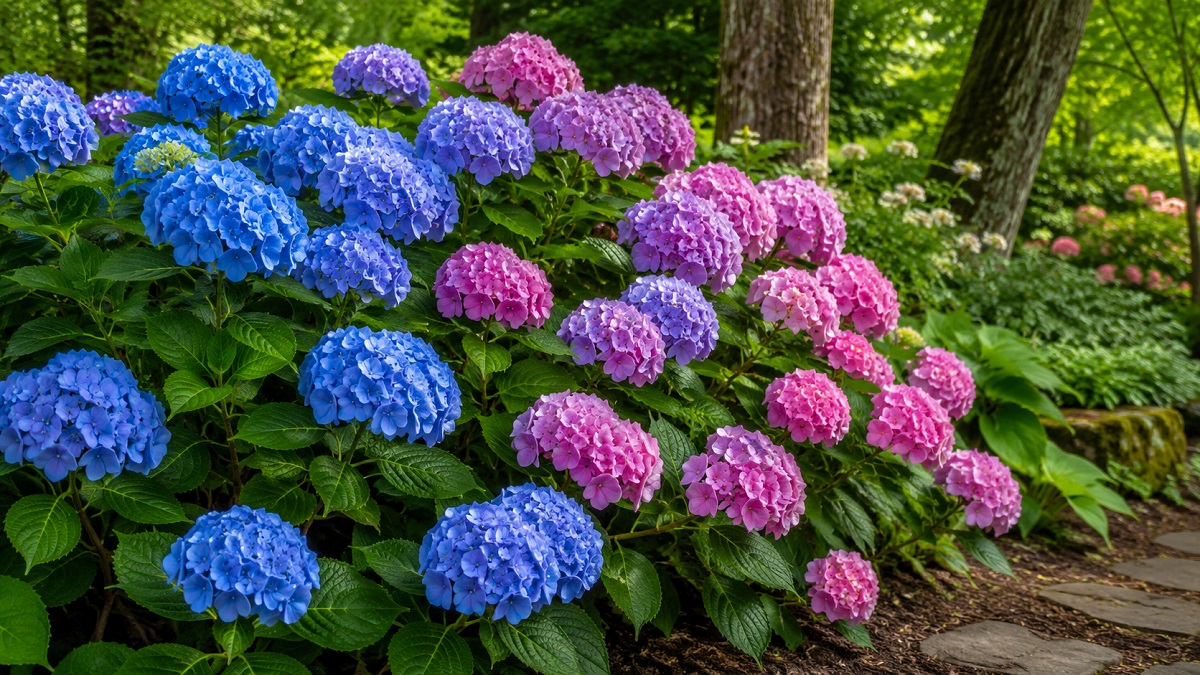
Bigleaf Hydrangeas (Hydrangea macrophylla) produce spectacular mophead and lacecap blooms, adding vibrant color to shaded gardens throughout summer.
Few plants possess the magical, nostalgic charm of the Bigleaf Hydrangea (Hydrangea macrophylla). Known for their immense, pillow-like bloom heads and deep emerald foliage, these classic shade-loving shrubs have been the crown jewel of cottage gardens and formal landscapes for generations. Whether you know them as French hydrangeas, mopheads, or lacecaps, mastering their cultivation offers one of the most rewarding journeys in home horticulture.
However, Bigleaf Hydrangeas are also famous for confusing home gardeners. One year they produce breathtaking clouds of blue blossoms; the next, they yield nothing but massive green leaves, or unexpectedly flip from sapphire blue to dusty rose pink. If you have ever felt defeated by a non-blooming hydrangea, or felt bewildered by the chemistry of altering soil pH, this comprehensive manual is designed for you. This guide covers planting, watering, pruning, soil pH, flower color changes, winter protection, common problems, and long-term care.
Quick Care Essentials
Key Takeaway: Morning sun, afternoon shade, moist soil, and no late-season pruning are the pillars of success.
LIGHT NEEDSMorning sun & afternoon shade (3–5 hrs sun)
WATERING1 to 1.5 inches weekly; consistent moisture
SOIL TYPERich, well-draining loam, high in organic matter
HARDINESS ZONESUSDA Zones 5 through 9 (varies by cultivar)
1. Understanding Bigleaf Hydrangeas: Mopheads vs. Lacecaps
To care for a Bigleaf Hydrangea successfully, you must first understand its botanical identity. Native to the coastal regions of Japan, Hydrangea macrophylla thrives in maritime, humid climates where winter extremes are tempered by ocean breezes and summer air remains moist. In the wild, these woody deciduous shrubs naturally inhabit forest edges, where tall canopies filter intense midday sunlight.
The species is divided into two distinct morphological flower forms, both requiring identical cultural care:
Mophead Hydrangeas (hortensias): These are the iconic varieties featuring large, spherical flower clusters packed tightly with large, showy, sterile sepals. The weight of these massive blossoms can occasionally cause branches to arch gracefully toward the ground, especially after summer rains.
Lacecap Hydrangeas: Offering a more subtle, delicate aesthetic, lacecap flowers consist of a flat central disk made up of tiny, fertile flowers surrounded by an outer ring of showy, sterile florets. Beneficial pollinators like bees and hoverflies overwhelmingly prefer lacecaps, as the central fertile blossoms provide easy access to nectar and pollen.
2. Top Cultivars and Reblooming Breakthroughs
Historically, traditional Bigleaf Hydrangeas had a major flaw: they bloomed strictly on "old wood" (stems produced during the previous summer). If an unexpected spring freeze killed the overwintering stems, or if an overly enthusiastic gardener pruned the shrub in winter, the plant would lose all its flower buds for the entire upcoming year.
The introduction of remontant (reblooming) hydrangeas in the early 2000s revolutionized home gardening. Reblooming cultivars bloom on both old wood in early summer AND new wood generated during the current season. Even if severe winter cold damages old stems, the plant will produce fresh wood and still flower beautifully by late summer.
Cultivar Name
Bloom Style
Blooming Habit
Mature Size (H x W)
Key Strengths
Endless Summer® Original
Mophead
Reblooming (Old & New Wood)
3–5 ft x 3–5 ft
Extremely reliable for Zone 4/5 gardeners; vivid color changes.
Nikko Blue
Mophead
Old Wood Only
4–6 ft x 4–6 ft
Classic vintage variety; huge, classic deep blue blooms in acidic soil.
Twist-n-Shout®
Lacecap
Reblooming (Old & New Wood)
3–5 ft x 3–4 ft
Sturdy red stems, rich autumn foliage color, exceptional cold hardiness.
Deep purple/blue blooms, dark violet stems, superb heat tolerance.
3. Planting Site, Light Requirements, and Soil Preparation
Location is everything when establishing Bigleaf Hydrangeas. The single most common mistake gardeners make is planting them in scorching, full afternoon sun. Hydrangea macrophylla leaves feature large surface areas with high transpiration rates. Exposed to harsh afternoon rays, leaves lose water faster than roots can draw it up from the soil, causing intense wilting even if the soil is wet.
Ideal Exposure: Aim for a spot that receives 3 to 5 hours of cool morning sunlight (from dawn until about 11:00 AM) followed by dappled, ambient afternoon shade. In northern climates (Zones 5-6), plants can tolerate a bit more midday light, whereas in southern zones (Zones 8-9), heavy afternoon shade is mandatory to prevent sunscald.
Soil Mechanics: Hydrangeas demand rich, humus-dense soil that holds steady moisture while draining freely. Clay soils must be generously amended with organic matter such as leaf mold, composted pine bark, or well-rotted manure to prevent root rot. Sandy soils should be enriched with peat moss and compost to boost moisture retention capacity.
4. Watering Mechanics and Nutrient Management
The word "Hydrangea" derives from Greek roots meaning "water vessel," giving a clear clue about its hydration needs. However, keeping hydrangeas happy does not mean keeping them submerged in mud.
Watering Protocol: Apply 1 to 1.5 inches of water weekly at the base of the plant rather than sprinkling over top of the leaves. Overhead watering saturates dense flower heads, causing stems to snap, and creates ideal conditions for fungal leaf spots. Drip irrigation or a slow-soaker hose placed under a 2- to 3-inch layer of shredded bark mulch is the gold standard for maintaining root humidity.
Fertilization Schedule: Avoid heavy synthetic fertilizers high in nitrogen. Excess nitrogen promotes giant, dark green leaves at the absolute expense of flower formation, and creates weak, leggy growth vulnerable to winter freeze. Apply a balanced, slow-release organic fertilizer (such as 10-10-10 or 4-6-4) twice per year: once in early spring as new shoots emerge, and once again in late spring during flower bud development. Do not fertilize after July 1st, as late growth won't harden off properly before autumn freezes.
5. The Science of Changing Flower Color (Pink vs. Blue)
One of the most fascinating aspects of growing Bigleaf Hydrangeas is the ability to manipulate bloom color. Contrary to popular belief, soil pH itself does not directly paint the flowers. Instead, color is determined by the presence and bioavailability of aluminum ions in the soil. Soil pH controls whether aluminum is chemically soluble and available for plant roots to absorb.
Note: White Bigleaf cultivars (like 'Madame Emile Mouillère' or 'Wedding Gown') lack the anthocyanin pigments required for color shifting. White hydrangeas will remain white regardless of soil chemistry, though they may naturally age to subtle dusty pink or green as blooms fade.
Target Bloom Color
Required Soil pH
Soil Chemistry Status
Recommended Soil Additives
Application Timing
Deep Sapphire Blue
Acidic (pH 5.2 – 5.5)
High bioavailable aluminum
Aluminum sulfate or elemental sulfur + acidifying peat
Early spring, prior to active growth
Purple / Mauve Blend
Transitional (pH 5.8 – 6.2)
Moderate aluminum access
No additives needed if natural soil pH sits in this range
N/A
Vibrant Pink / Magenta
Alkaline / Neutral (pH 6.5 – 7.0)
Aluminum bound & unavailable
Dolomitic lime or garden lime + high-phosphorus fertilizer
Early spring & early autumn
How to Turn Blooms Blue: To achieve true blue flowers, lower the soil pH below 5.5. Apply aluminum sulfate solution (1 tablespoon per gallon of water for established shrubs) every few weeks in spring. Alternatively, incorporate elemental sulfur into the surrounding soil for a slower, long-term pH drop. Using high-potassium, low-phosphorus fertilizers helps transport aluminum into the plant efficiently.
How to Turn Blooms Pink: To keep blooms pink, prevent aluminum absorption by raising soil pH to 6.5–7.0. Add garden lime (dolomitic limestone) to the root zone once or twice per year. Additionally, feed with fertilizers high in phosphorus (the middle number in N-P-K), as phosphorus binds chemically with aluminum in soil to form insoluble aluminum phosphate, keeping it out of root systems.
6. Pruning Demystified: Old Wood vs. New Wood
Improper pruning is the single biggest cause of missing flower displays on Bigleaf Hydrangeas. Knowing when and how to cut depends entirely on whether your variety flowers on old wood or new wood.
Pruning Old-Wood Cultivars (Traditional Mopheads & Lacecaps)
Traditional cultivars produce their flower buds inside stems during late summer (August through September) for the following year's bloom. If you prune these shrubs in fall, winter, or early spring, you cut away all next year's flower buds!
Follow these precise steps for pruning old-wood hydrangeas:
Prune Immediately After Flowering: Perform all major pruning cuts in mid-to-late summer, right as flowers begin to fade (usually July or early August). This leaves plenty of time for new stems to mature and set spring flower buds before cold weather arrives.
Remove Dead Wood in Spring: Wait until spring leaf-out is completely underway (late April or May). Gently scratch stem bark with your fingernail; if it reveals green beneath, the stem is alive. If it is brown, brittle, and dry, prune it back to the ground or to the highest green bud node.
Thin Old Stems: Every 2 to 3 years, remove up to one-third of the oldest, thickest, woody stems right down at ground level. This thins out the canopy to boost air circulation and spurs vibrant new basal shoots.
Pruning Reblooming / Remontant Cultivars (Endless Summer Series, BloomStruck, etc.)
Reblooming varieties offer generous flexibility. Early flowers spring from overwintered old wood, while second-wave blooms appear on fresh new growth in late summer. You can deadhead spent early summer flowers by snipping stem tips right below the flower base to encourage rapid second-wave growth. Minimal pruning is always best for maximum flower output.
7. Winterizing for Cold Climates (Zones 5–6)
In USDA Zones 5 and 6, winter cold creates a major challenge. The bush itself easily survives winter temperatures, but cold winds and drastic freeze-thaw cycles dry out and kill sensitive flower buds exposed on old wood above snowlines. Protecting old wood stems is essential to guarantee summer flowers.
The Cage & Leaf Insulation Method:
Wait until after the first hard, killing frost when the plant drops all its foliage and enters dormant state (typically mid-to-late November).
Carefully draw the dormant stems inward toward the center and loosely secure them using soft garden twine or burlap strips.
Erect a temporary cylinder made of heavy wire mesh or chicken wire around the outside of the bush, anchoring it firmly with garden stakes.
Fill the interior of the cage with coarse, dry insulating material like dry oak leaves, pine needles, or shredded straw. Avoid heavy compost or wet leaves, which rot stems.
Remove the wire cage and loose insulating material in spring, only after the danger of severe freeze has passed and dormant buds begin to swell.
8. Troubleshooting Common Pests and Leaf Diseases
Bigleaf Hydrangeas are generally hardy, but dense foliage and humid conditions can attract a few common pests and pathogens.
Avoid heavy high-nitrogen chemical fertilizer that creates soft sap growth.
Blast underside of leaves with sharp water spray; insecticidal soap.
Crisp, brown leaf margins
Leaf Scorching / Salt Build-up
Provide afternoon shade shelter; increase deep soaking frequency.
Flush root zone deeply with fresh water to leach out excessive salts.
9. Frequently Asked Questions
Q: Why did my Bigleaf Hydrangea fail to bloom this summer?
Non-blooming is almost always caused by one of three issues: late-spring hard freezes killing overwintered buds, pruning stems at the wrong time of year (fall/winter/early spring), or excessive nitrogen fertilizer promoting lush leaves instead of flowers.
Q: Can I grow Bigleaf Hydrangeas successfully in pots or containers?
Yes! Compact cultivars (such as the Cityline series) thrive in containers. Choose a container at least 16–18 inches in diameter with multiple drainage holes. Keep in mind that potted hydrangeas require more frequent watering during summer heat and need winter root protection in cold climate zones (like moving the pot into an unheated garage over winter).
Q: Why do hydrangeas wilt during warm sunny afternoons even when soil is moist?
This temporary wilting is a natural survival defense. On hot days, large leaf surfaces lose moisture through transpiration faster than root systems can absorb water from the soil. As long as the plant recovers naturally in the cool evening shade, there is no need to add additional water. Overwatering waterlogged soil damages roots and worsens wilting!
Q: How do I dry bigleaf hydrangea blooms for indoor arrangements?
Leave flower heads on the shrub until early fall when they feel papery and turn dusty shades of green, mauve, or vintage pink. Cut stems at a 45-degree angle and place them in a vase filled with 2 inches of water in a cool room out of direct sunlight. Allow the water to evaporate completely—the blooms will dry naturally while retaining their full shape and antique color.
Ready to build your dream garden? Bookmark this guide or return home for more expert horticulturist advice!