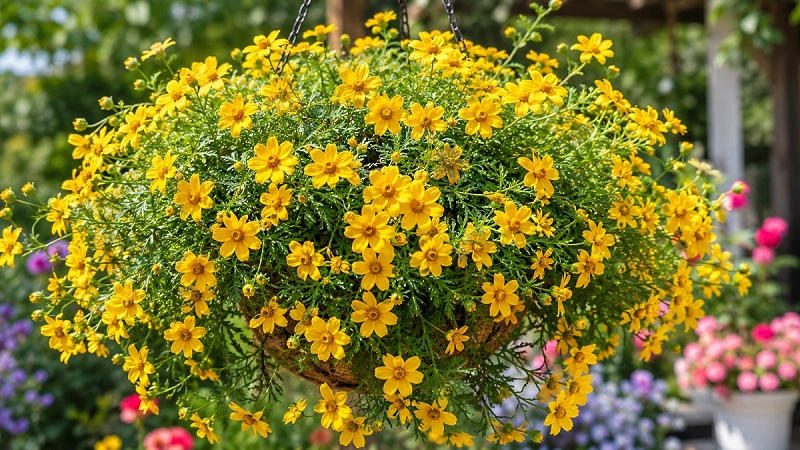
Growing & Caring for Bidens (Beggarticks)
Learn how to grow and care for Bidens (Beggarticks). Discover planting, sunlight, watering, fertilizing, pruning, propagation, pest control, and tips for abundant blooms.
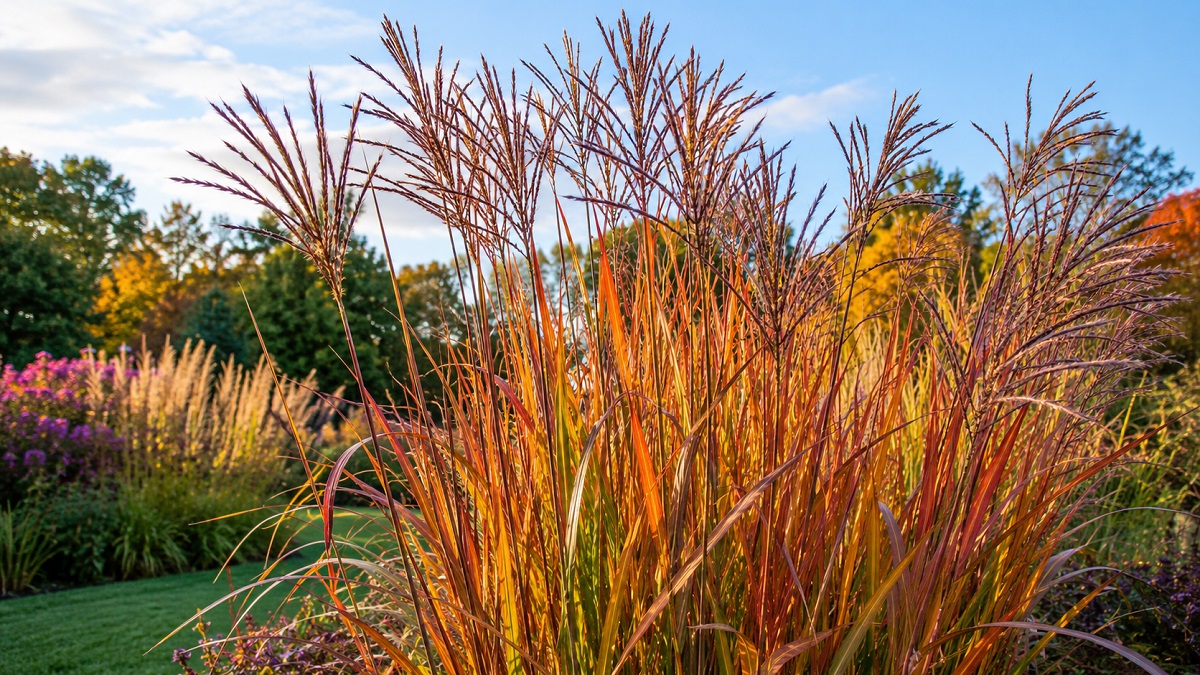
Known affectionately as the "monarch of the prairie," Big Bluestem (Andropogon gerardii) is one of the most foundational and iconic warm-season native grasses of North America. Once covering millions of acres across the tallgrass prairie ecosystem, this resilient perennial grass continues to earn a prominent spot in modern residential landscapes, meadow restorations, and erosion control projects. Renowned for its dramatic height, shifting seasonal colors, and deep root structure, Big Bluestem provides both ecological restoration power and incredible architectural interest in home gardens.
Whether you are seeking to replace traditional lawn space with a low-maintenance native ecosystem, create a natural privacy screen along your property border, or attract local birds and butterflies, Big Bluestem is an unbeatable candidate. In this comprehensive manual, we will explore every nuance of growing, establishing, and caring for this magnificent prairie giant from seed selection to winter management.
Big Bluestem is a perennial warm-season grass native to the central and eastern regions of North America. As a warm-season species, it remains dormant during the cool temperatures of early spring, waking up in late spring when soil temperatures reach around 60°F (15°C). Once active, its growth rate is astonishing—often shooting up several inches per week during the hottest summer days when cool-season turfgrasses are brown and dormant.
The plant forms tight clumps (or tufts) that slowly expand via short rhizomes. In early summer, the foliage appears blue-green or slate blue, giving the grass its common name. As late summer turns into autumn, the stems transform into vibrant shades of bronze, rich copper, fiery red, and deep purple-plum.
Beyond its aesthetic appeal, the secret strength of Big Bluestem lies underground. A mature stand of Big Bluestem generates a deep, fibrous root structure that can plunge anywhere from 6 to 10 feet (1.8 to 3 meters) into the earth. This underground biomass serves several crucial natural functions: it anchors topsoil tightly against erosion, creates porous channels that maximize rainwater infiltration, and traps carbon deep within the earth.
As modern landscape design shifts toward ecological sustainability and climate resilience, native grasses like Big Bluestem are replacing over-watered, high-input lawn turf. Incorporating this native specimen into your outdoor design brings numerous practical and environmental advantages:
1. Extreme Drought Tolerance: Thanks to its extensive root systems, established Big Bluestem can survive long stretches of dry summer weather without artificial irrigation. While conventional lawns brown out or die, Big Bluestem thrives in heat and drought.
2. Exceptional Architectural Structure: Reaching mature heights between 4 and 8 feet, it provides vertical movement, privacy screening, and sound dampening. The rustling sound of mature Big Bluestem stems blowing in autumn breezes adds a soothing sensory experience to gardens.
3. Low Resource Demand: Big Bluestem requires zero synthetic fertilizers, chemical pesticides, or weekly mowers. In fact, adding too much nitrogen actually hurts the plant by causing its tall stems to fall over (flop).
4. Ecological Habitat Support: It serves as a larval host plant for several species of butterflies, including the Delaware Skipper and Dusted Skipper. Small mammals and ground-nesting birds use its dense foliage for nesting cover, while songbirds feed heavily on the late-season seeds.
There are two main methods for establishing Big Bluestem in your landscape: planting bare seeds or installing grown live plugs/potted nursery stock. The choice depends on your project timeline, overall budget, and total planting area.
Seeding is the most economical approach if you are restoring a large meadow area, naturalizing a ditch, or planting a vast prairie garden.
1. Timing: Sow seeds in late autumn (dormant seeding) or late spring (mid-May to early June) when soil temperatures reach 60°F. Late fall seeding allows winter stratification to break seed dormancy naturally.
2. Site Preparation: Remove all existing weed vegetation and turfgrass completely. Soil disturbance should be kept minimal to avoid bringing buried weed seeds to the surface.
3. Sowing: Big Bluestem seeds feature small awns ("fluffy hairs") that can make hand broadcasting or mechanical seeding tricky. Use a carrier like clean, dry sand or sawdust to distribute seeds evenly. Lightly rake the seeds into the soil surface—ensure they are buried no deeper than 1/4 inch deep.
4. Germination Expectations: Keep the soil consistently moist for the first 3 to 4 weeks. Native grass seed germination requires patience; under suitable moisture and warm soil conditions, Big Bluestem seeds may begin germinating within a few weeks, although emergence can vary. During its first year, Big Bluestem invests almost all its energy underground developing roots, so top growth will look sparse initially.
For landscape beds, border gardens, or smaller residential projects where quick visual results are desired, installing 2-inch plugs or 1-gallon container plants is recommended.
1. Spacing: Space plugs 18 to 24 inches apart on center. While they may look small upon planting, individual clumps will expand to 2 to 3 feet in width at full maturity.
2. Hole Preparation: Dig holes twice as wide as the root ball and equal in depth. Avoid adding rich compost, potting soil, or fertilizer to the planting hole; native grasses prefer native, unamended soil.
3. Initial Watering: Water deeply immediately after planting. Maintain regular watering (about 1 inch per week) for the first month until plants are well established.
| Factor | Starting from Seed | Installing Live Plugs / Containers |
|---|---|---|
| Best Used For | Large meadow restorations, acres, naturalizing site borders | Residential garden beds, borders, targeted privacy screens |
| Relative Cost | Very Low ($) | Moderate to High ($$$) |
| Establishment Speed | Slow (2 to 3 years to reach full size) | Fast (Full impact within 1 to 2 seasons) |
| Weed Control Needs | High vigilance required during Year 1 | Low; easy to mulch around individual plugs |
| Cultivar Options | Limited mostly to wild-type species | Access to specific named cultivars (e.g., 'Blackhawks') |
Once established, Big Bluestem is one of the lowest-maintenance landscape plants available. However, a few key cultural practices ensure your plants stay upright, tidy, and healthy year after year.
Full sun is non-negotiable for Big Bluestem. Choose a planting location that receives at least 6 to 8 hours of direct, unshaded sunlight every day. When grown in partial shade or near dense tree canopies, the stems become weak, leggy, and floppy, causing the entire grass clump to lean over into nearby garden beds.
Big Bluestem thrives in a broad range of soil conditions—from heavy clay to poor, rocky sand. The main requirement is adequate soil drainage; it dislikes wet, waterlogged roots during winter.
Do not fertilize Big Bluestem. Adding synthetic fertilizers rich in nitrogen causes rapid, top-heavy leaf growth that outpaces root stability, leading to flopping. If your soil is extremely depleted, a light 1/2-inch layer of organic compost applied around the base in early spring provides all the nutrients needed.
During the first growing season, water young plants regularly whenever the top 2 inches of soil feel dry. Once established (typically by year two or three), Big Bluestem rarely requires supplemental watering except during severe, multi-week heatwaves. Overwatering can lead to floppy stems and root rot.
Do not cut down Big Bluestem in autumn! The standing copper-colored foliage and decorative "turkeyfoot" seed heads provide valuable winter texture in the garden while offering shelter and seeds for native birds.
Wait until late winter or early spring (typically late February through March) to cut the stems back down. Cut the entire plant back to 2 to 4 inches above ground level before new green shoots emerge. You can use sharp hedge shears, a brush cutter, or a string trimmer equipped with a blade attachment for larger plantings.
While wild-type Big Bluestem is fantastic for prairie plantings, plant breeders have developed several outstanding garden cultivars selected for compact growth, unique autumn color displays, and sturdier stems.
A standout compact cultivar ideal for smaller modern landscapes. The foliage emerges dark green in spring, turns a deep purple hue by mid-summer, and matures into an intense, near-black purplish-charcoal color after autumn frosts. Height: 4 to 5 feet tall.
Selected for its brilliant autumn color transitions. Leaves feature a deep green hue with subtle red tips in early summer, turning rich burgundy as nights cool. Following the first severe freeze, the entire plant turns a vivid cardinal red. Height: 5 to 6 feet tall.
Developed for extreme weather endurance, 'Windwalker' features narrow, arching blue-green leaves that change to burnt orange and dusty pink in autumn. It handles extreme heat, drought, and freezing prairie winds without breaking stems. Height: 6 feet tall.
Thanks to thousands of years of natural adaptation, Big Bluestem is virtually free of major pest infestations and disease outbreaks. However, improper growing conditions can occasionally trigger minor issues:
Foliage Flopping: This is the most common complaint among home gardeners. Flopping happens for three specific reasons: insufficient direct sunlight, overwatering, or soil enriched with excessive nitrogen fertilizer. To fix flopping stems, move the plant to a sunnier spot, withhold water, and eliminate fertilizer applications.
Rust Fungus: In hot, overly humid summers with poor air circulation, orange-brown powdery rust spots may develop on leaf blades. While rust looks unappealing, it rarely causes permanent damage to the plant's health. Improve airflow around plants by avoiding overcrowding and water only at ground level rather than sprinkling overhead foliage.
Root Rot: Occurs when Big Bluestem is planted in poorly draining, saturated soil. Ensure your planting location drains properly after rainfall to prevent underground rhizome decay.
Continue exploring our gardening guides with more plant profiles, growing tips, and practical advice for creating a healthy, productive garden.