Growing & Caring for Bearded Iris (Iris germanica)
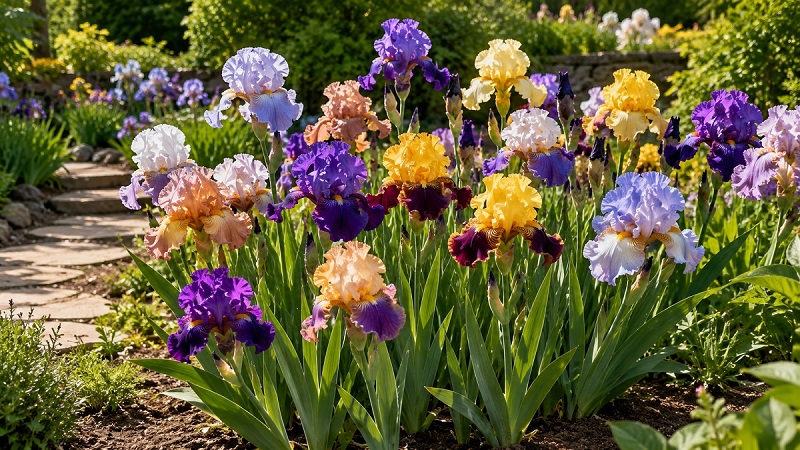
Bearded irises (Iris germanica) stand as the undisputed royalty of the spring perennial border.
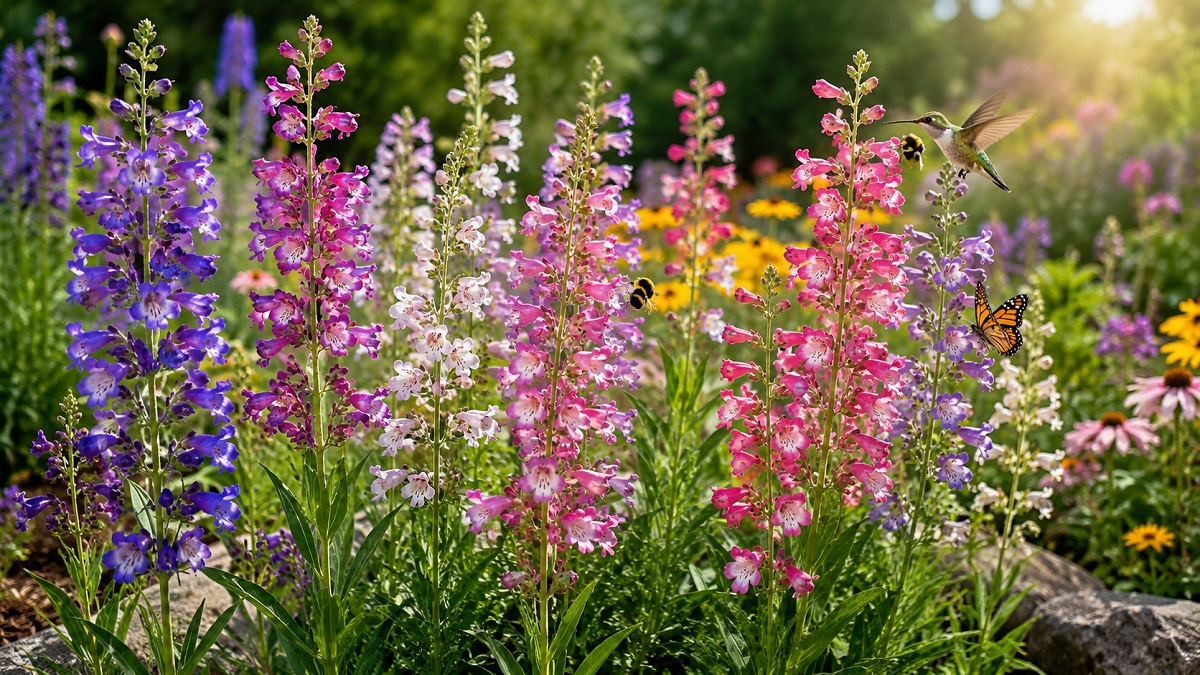
Few native North American perennials match the sheer versatility, striking structural form, and ecological value of the genus Penstemon, universally known by the common name Beardtongue. Comprising over 250 distinct species and an ever-expanding library of beautifully bred cultivars, Beardtongue has graduated from a wild prairie regular into an essential pillar of contemporary landscape design. Whether you are aiming to construct a rugged, drought-resistant xeriscape, a buzzing pollinator sanctuary, or a refined, English-style cottage garden borderscape, there is a Penstemon perfectly adapted to meet your ecological and aesthetic challenges.
The name "Beardtongue" stems from a highly unique botanical feature found within the individual flowers. The genus belongs to the family Plantaginaceae (formerly categorized under Scrophulariaceae). Every blossom features a prominent, sterile fifth stamen—known botanically as a staminode—that projects visibly from the throat of the tubular, two-lipped corolla. In many popular species, this distinct structure is densely coated in fine, golden-yellow hairs, creating the unmistakable illusion of a fuzzy tongue protruding from an open mouth. This adaptation isn't just a curiosity; it plays a mechanical role in filtering out inefficient insects while welcoming robust, high-value pollinators like bumblebees and hummingbirds.
Geographically, the genus Penstemon represents the largest near-exclusive native genus of flowering plants in North America. Aside from a single exceptional species that crossed the land bridge into Northeast Asia (Penstemon frutescens) and a small handful native to the mountain ranges of Guatemala, Beardtongues are authentically American. They can be found adapting seamlessly to an astonishing array of environments. You will find them scaling alpine scree fields in the Rocky Mountains, blanketing arid desert washes in Arizona, settling down in the sweeping shortgrass prairies of the Midwest, and thriving within the moist, open woodlands of the Atlantic seaboard.
Because they evolved across these drastically differing biomes, their physical forms vary just as wildly. Low-growing alpine varieties, such as Penstemon davidsonii, hug the ground tightly at a mere 2 to 4 inches in height, forming dense, woody, evergreen mats designed to survive howling mountain winds and freezing temperatures. Conversely, statuesque species like Penstemon grandiflorus or Penstemon digitalis can readily push up stout, vertical flower spikes reaching anywhere from 3 to 5 feet into the air. The leaves are typically arranged oppositely along the stems, varying in appearance from lance-shaped, deep emerald green blades to fleshy, blue-grey glaucous foliage capable of storing moisture during long spells of drought.
With hundreds of species available, choosing the right Penstemon for your specific garden setup can feel daunting. Horticulturists generally divide them into geographic groups, as Western species demand vastly different conditions than Eastern ones. Below is a detailed breakdown of the most reliable, visually stunning species and cultivars currently used in residential and commercial landscapes.
Hailing primarily from the eastern and central regions of the United States, Penstemon digitalis is perhaps the toughest, most adaptable member of the entire genus. Unlike its desert-dwelling cousins, this species handles clay-heavy soils and high humidity with absolute ease. The straight species features clean green foliage and striking spikes of white, bell-shaped flowers. However, it has yielded some of the industry's most popular cultivars:
A true superstar of the American West, this species is renowned for its intense, electric-blue to deep violet flowers arranged in neat rows along stiff, upright stems. It forms a lush, evergreen mat of ground-hugging leaves during the winter months, then shoots upward in late spring. It is incredibly drought-tolerant, long-lived, and forms stunning, large colonies over time if left undisturbed in sunny, dry borders.
For gardeners seeking something entirely unique, Penstemon pinifolius offers a brilliant solution. It features fine, needle-like foliage that mimics a miniature pine bush, growing only 6 to 12 inches tall. In mid-summer, it erupts with bright, tubular scarlet-red or soft yellow ('Mersea Yellow') flowers that act like magnets for migrating hummingbirds. It is perfect for rock gardens, sunny slopes, and structural troughs.
| Species / Cultivar | Height | Flower Color | Soil Preference | Best Garden Placement |
|---|---|---|---|---|
| P. digitalis 'Husker Red' | 30 - 36 inches | White / Soft Pink | Loam, Clay, Moist Neutral | Mixed Borders, Cottage Gardens |
| P. strictus | 24 - 30 inches | Electric Blue / Violet | Lean, Sandy, Gritty Gravel | Xeriscapes, Native Meadows |
| P. pinifolius | 6 - 12 inches | Scarlet Orange / Yellow | Sharply Drained Sand / Rock | Rock Gardens, Border Edges |
| P. grandiflorus | 24 - 48 inches | Lavender / Large Pink | Arid, Extremely Poor Soil | Prairies, High Plains Gardens |
| P. barbatus 'Elfin Pink' | 12 - 15 inches | Clear Rose Pink | Average, Well-Drained Soil | Small Spaces, Container Accent |
Achieving lasting success with Beardtongue requires understanding one foundational truth about the genus: they despise wet feet. More Penstemons are killed by overly generous, attentive gardeners watering them too frequently or planting them in rich, heavy, soggy soils than by any pest, disease, or historic drought.
To get the strongest, straightest stems and the maximum density of colorful blooms, position your Beardtongue in a location that receives a minimum of six to eight hours of direct, unfiltered sunlight daily. When planted in partial shade, these plants quickly become leggy, lose their compact structural integrity, flop over, and produce far fewer flower spikes. Additionally, ensure the site has excellent air circulation to minimize fungal issues during humid summer spells.
For Western and alpine species, soil structure is everything. They thrive in lean, poor, rocky, or sandy soils with a neutral to slightly alkaline pH. If your garden is burdened with heavy, water-retaining clay, you must modify the planting zone. Rather than mixing in fine organic compost—which can actually hold onto too much moisture—incorporate generous amounts of coarse builder's sand, pea gravel, expanded shale, or crushed pumice to dramatically open up the soil profile. For Eastern species like Penstemon digitalis, standard garden loam is acceptable, but excellent drainage remains highly critical.
When you first install young Beardtongue plants from the nursery, water them thoroughly once or twice a week to help their extensive root systems establish deep into the surrounding soil. Once established (typically after their first full growing season), cut back watering significantly. Rainfall will generally supply all the moisture they need. In times of severe, extended heatwaves, a light supplemental watering once every two to three weeks is more than sufficient.
Beardtongues are historically adapted to lean, nutrient-poor soils. Applying heavy applications of synthetic nitrogen fertilizers or thick blankets of rich manure will backfire spectacularly. It forces rapid, weak, watery vegetative growth that ruins the plant's form and shortens its lifespan. Instead, apply a thin, half-inch layer of organic leaf mold or simple chopped bark mulch around the base of the plant in early spring. Keep all mulch an inch away from the crown to prevent moisture-induced rot.
Integrating Beardtongue into your home ecosystem is an excellent way to support native wildlife. The distinctive, elongated, tubular shape of the Penstemon flower is an evolutionary masterstroke designed to interact perfectly with specific insects and birds. The flowers act as landing pads for large, native bumblebees, which boldly crawl deep inside the corolla tube to reach the rich nectar reserves at the base, getting thoroughly dusted with pollen in the process.
Bright red and deep pink species, such as Penstemon barbatus and Penstemon pinifolius, have evolved specifically to capture the attention of hummingbirds. These birds possess the long bills and tongues necessary to navigate the deep blooms easily. Furthermore, Beardtongues serve as vital host plants for several native butterfly and moth larvae, including the beautiful Chalcedon Checkerspot and the Baltimore Checkerspot. By planting a diverse mix of Penstemon species, you provide essential food sources that span from early spring through the heat of mid-summer.
From a design perspective, Beardtongue offers fantastic vertical accents. The strong, upright flower spikes break up the monotony of mounded or rounded garden plants. Try grouping three to five specimens together in mid-border positions, pairing them alongside fine-textured ornamental grasses like Little Bluestem (Schizachyrium scoparium) or Prairie Dropseed (Sporobolus heterolepis). The combination of movement from the grasses and structure from the Penstemon creates a beautiful, naturalistic look.
In rock gardens or gravel beds, low-growing varieties like Penstemon linarioides or Penstemon caespitosus look wonderful tumbling over stone retaining walls or nestled between large boulders. They also pair naturally with other drought-tolerant perennials like Purple Coneflower (Echinacea), Black-Eyed Susan (Rudbeckia), Sea Holly (Eryngium), and various species of stonecrop (Sedum).
Browse through our collection of comprehensive plant profiles to find the perfect additions to your sunny landscape borders and native meadows.